
Repair problem
Has A Bad Smell Troubleshooting Guides
Published FixGraph guidance for diagnosing and responding to has a bad smell.
Matching published guides
Choose a guide that matches the service, equipment, and conditions you are seeing.
-
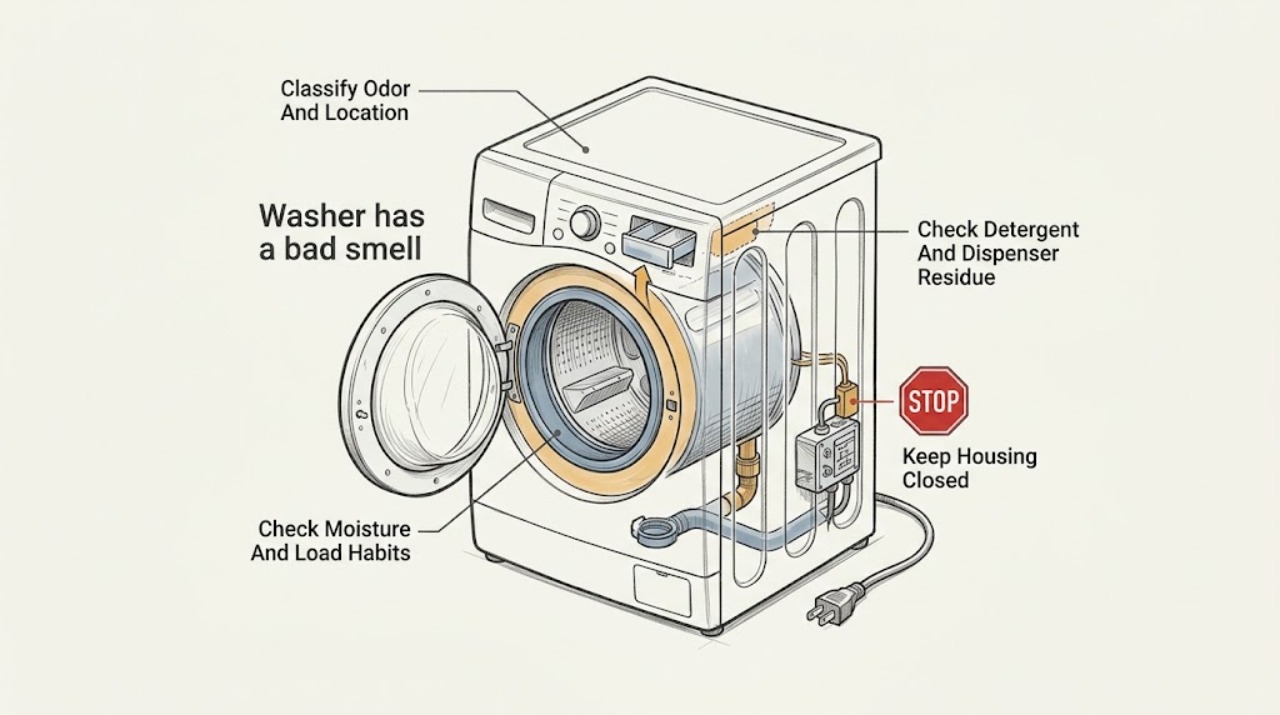
Amana washer has a bad smell: What to Check and What to Do Next
First identify the odor rather than masking it. A damp, sour, or mildew smell usually points to wet laundry left in the basket, moisture in a front-load door seal, detergent or fabric-softener residue, or an overdue Clean Washer cycle.
-
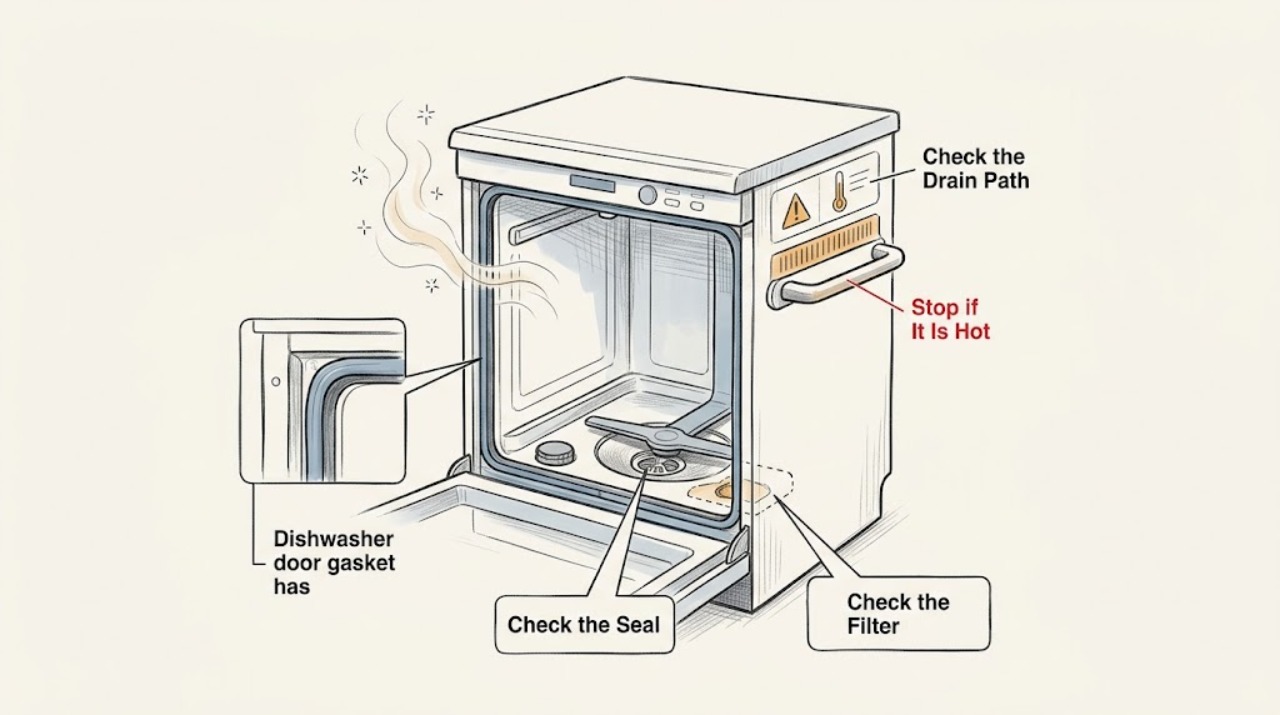
Bosch dishwasher door gasket has a bad smell: What to Check and What to Do Next
If a Bosch dishwasher door gasket smells bad, first identify whether the odor is strongest on the gasket or instead comes from the filter, sump, spray arms, drain path, or a hot or electrical area. With the dishwasher off and cool, wipe the accessible door gasket and seal with a damp cloth to remove food particles and residue; do not pull the seal out or use chlorine, abrasive cleaners, or mixed chemicals.
-
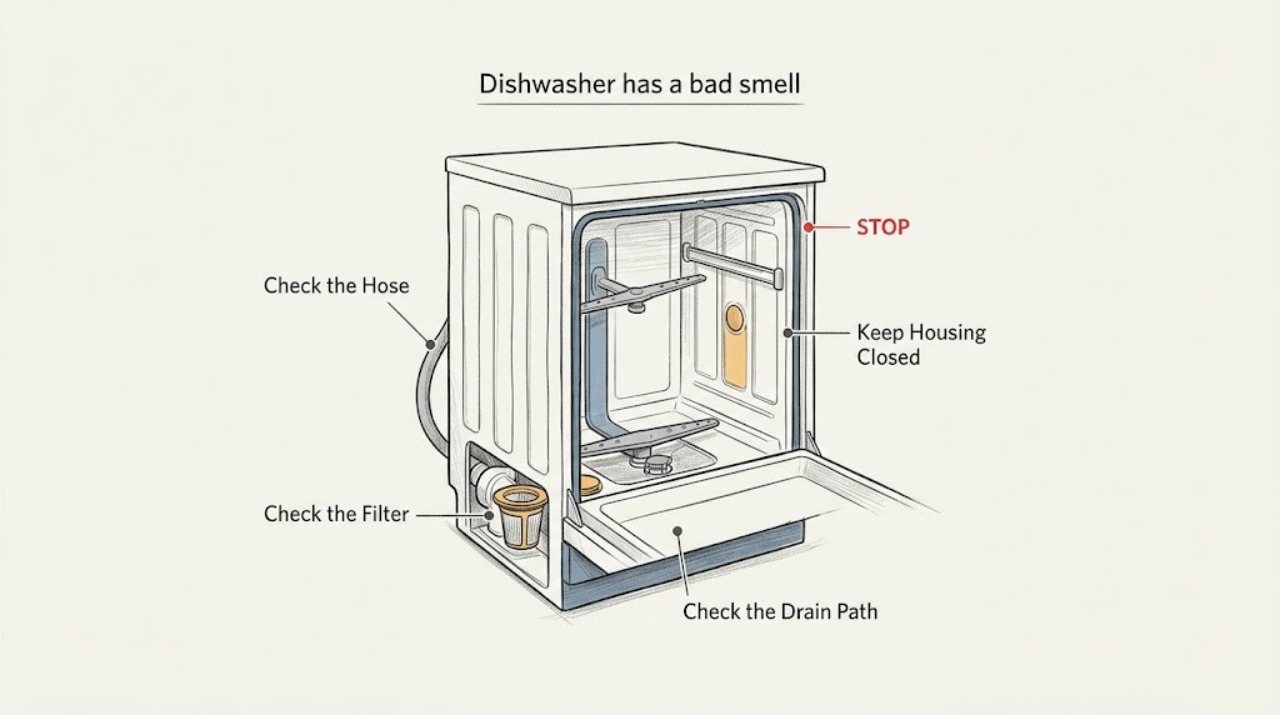
Bosch dishwasher has a bad smell: What to Check and What to Do Next
A Bosch dishwasher that smells usually has food debris in the filter or spray arms, residue on the door seal or inner door, or deposits and standing water caused by incomplete draining. Start by identifying whether the odor is food-like, sour or drain-like, chemical, or burning, and whether water remains in the tub.
-
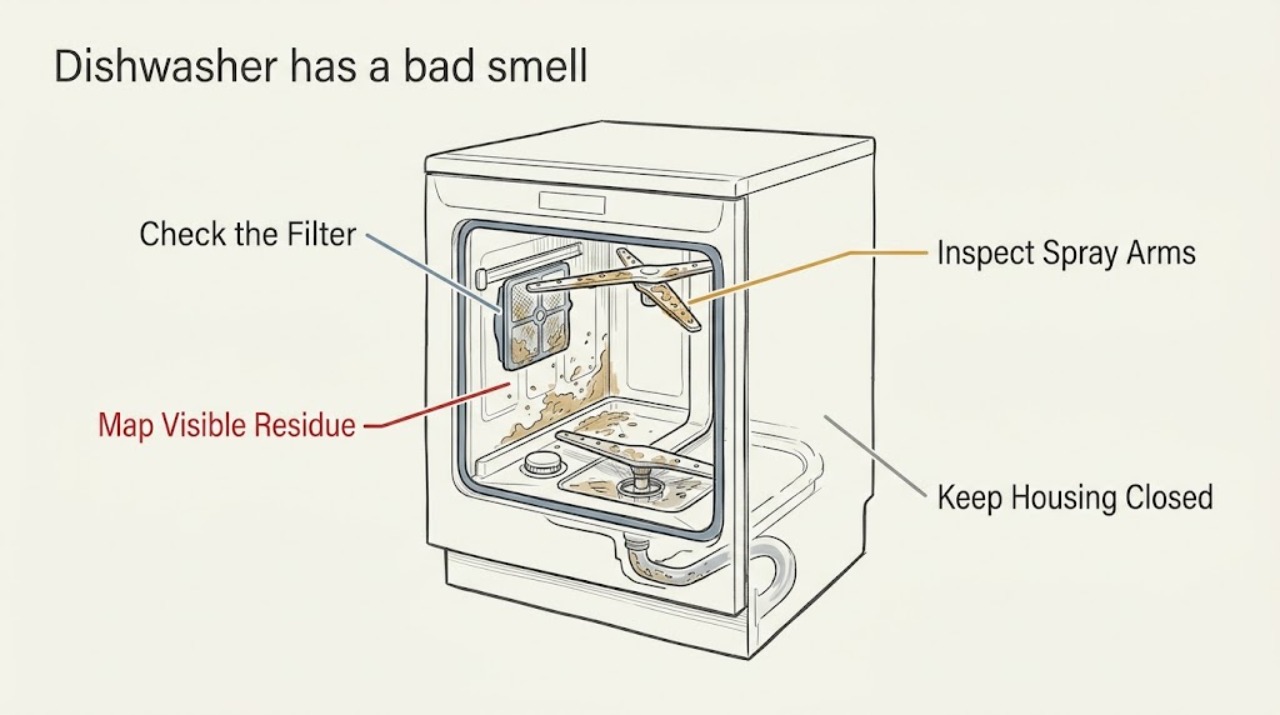
Dishwasher has a bad smell food residue is visible: What to Check and What to Do Next
When a dishwasher smells bad and food residue is visible, start with the residue rather than masking the odor. Empty the racks, remove only loose food from the tub bottom, then inspect the filter, sump or pump-inlet area, spray-arm openings, door seal, and drain path according to the exact model instructions.
-
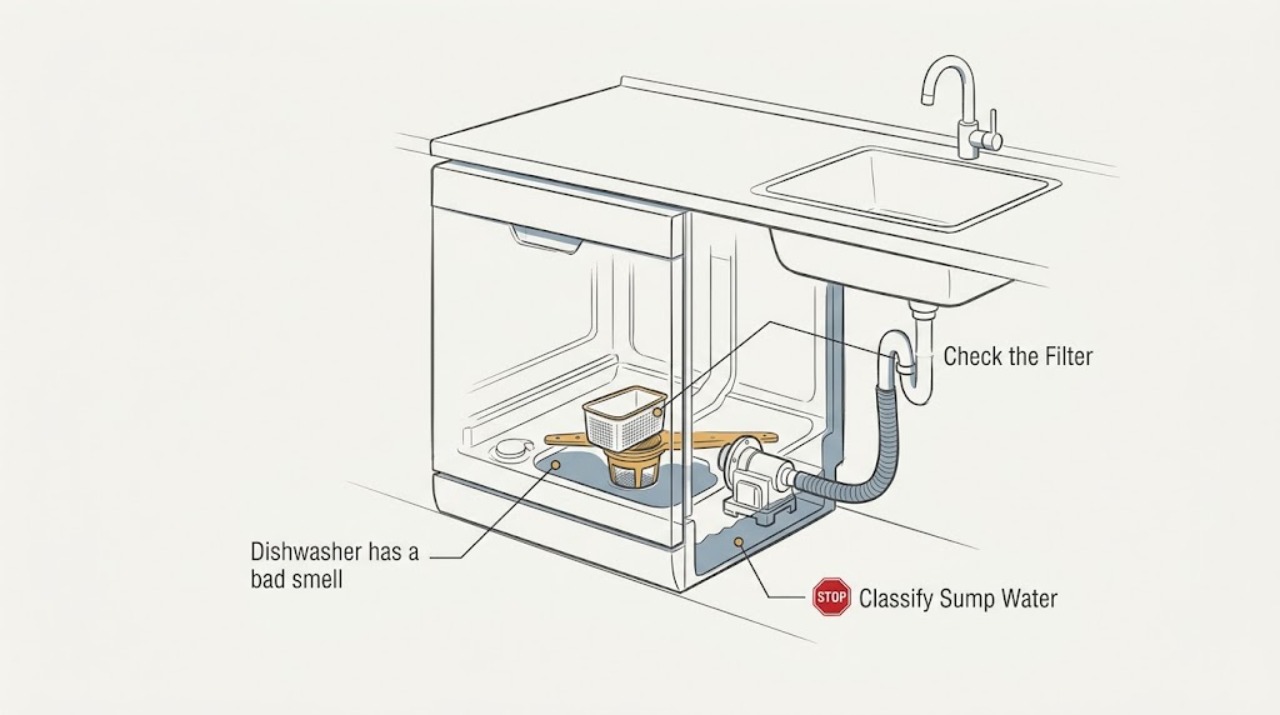
Dishwasher has a bad smell water may sit in sump: What to Check and What to Do Next
A small amount of clean water in a dishwasher's filter area or sump can be normal because it helps keep seals from drying, but dirty water that builds up, smells, returns after a cycle, or sits across the tub points to a drainage or backflow problem. First distinguish the normal filter-area water from excess or dirty water, then inspect and clean the model-approved filter and accessible sump area.
-
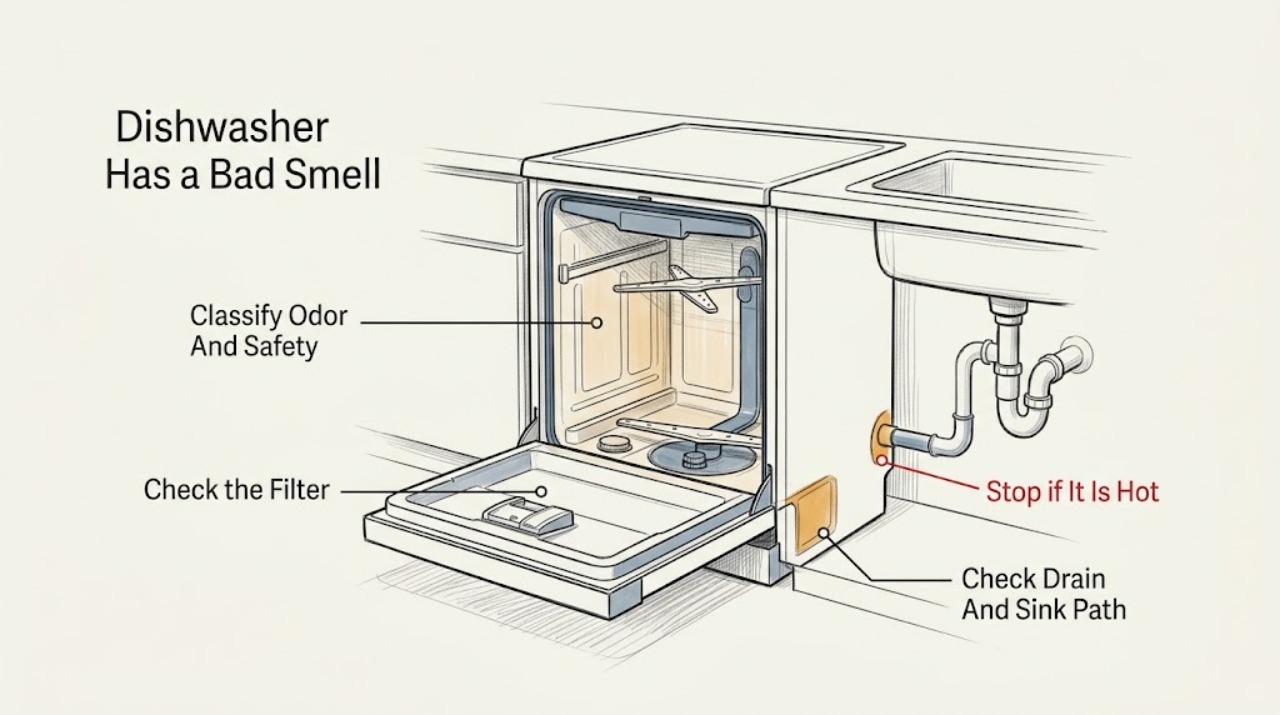
Dishwasher Has a Bad Smell That Remains Between Cycles: What to Check and What to Do Next
A dishwasher odor that returns between cycles is most often held by food soil, a dirty filter or drain area, moisture in the tub and door seal, or water that is not draining or is backing up from the sink connection. First distinguish a musty or food odor from burning, chemical, sewage, or gas-like odors, then inspect the accessible filter, drain area, spray arms, tub, and door seal with the dishwasher off.
-
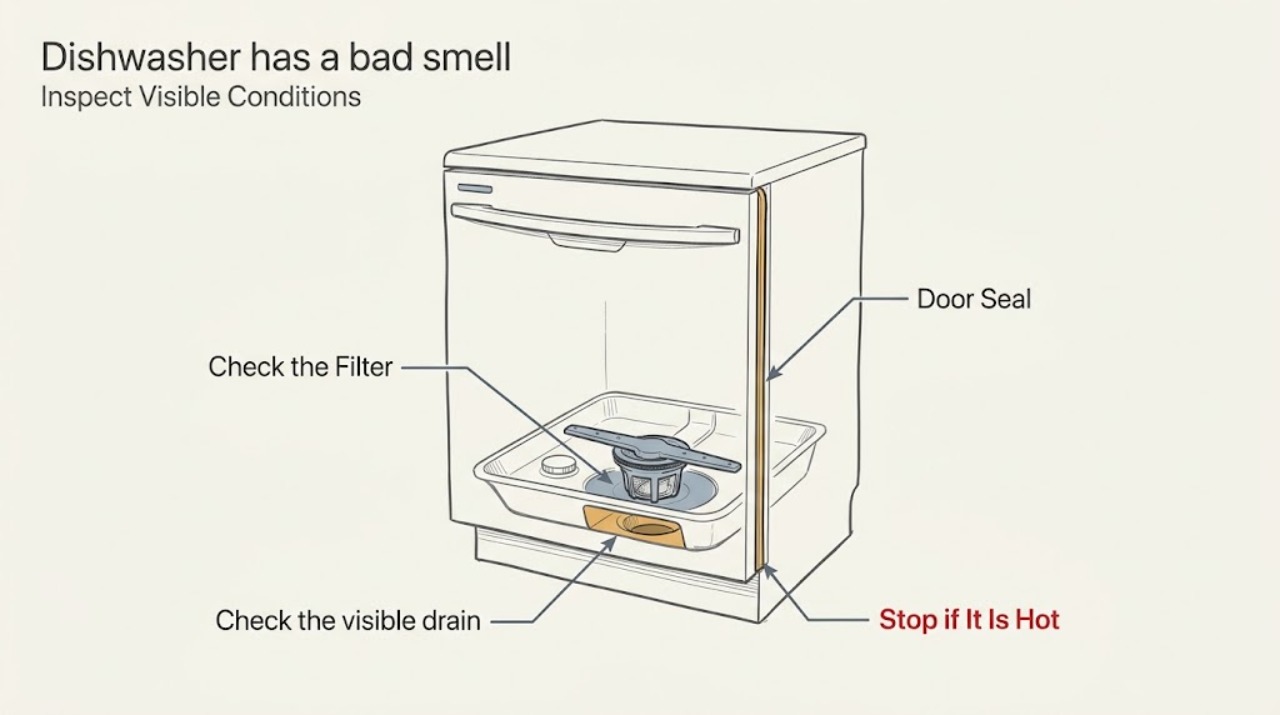
Dishwasher has a bad smell: What to Check and What to Do Next
A bad dishwasher smell most often comes from food debris, stagnant water, a dirty filter or spray area, a door seal, or a drain path that is not clearing. Start with safe observations: note whether water remains in the filter area after a cycle, inspect the filter only if it is owner-accessible and the appliance is safely disconnected, look for visible debris at the bottom and door seal, and check the under-sink drain connection without disconnecting plumbing.
-
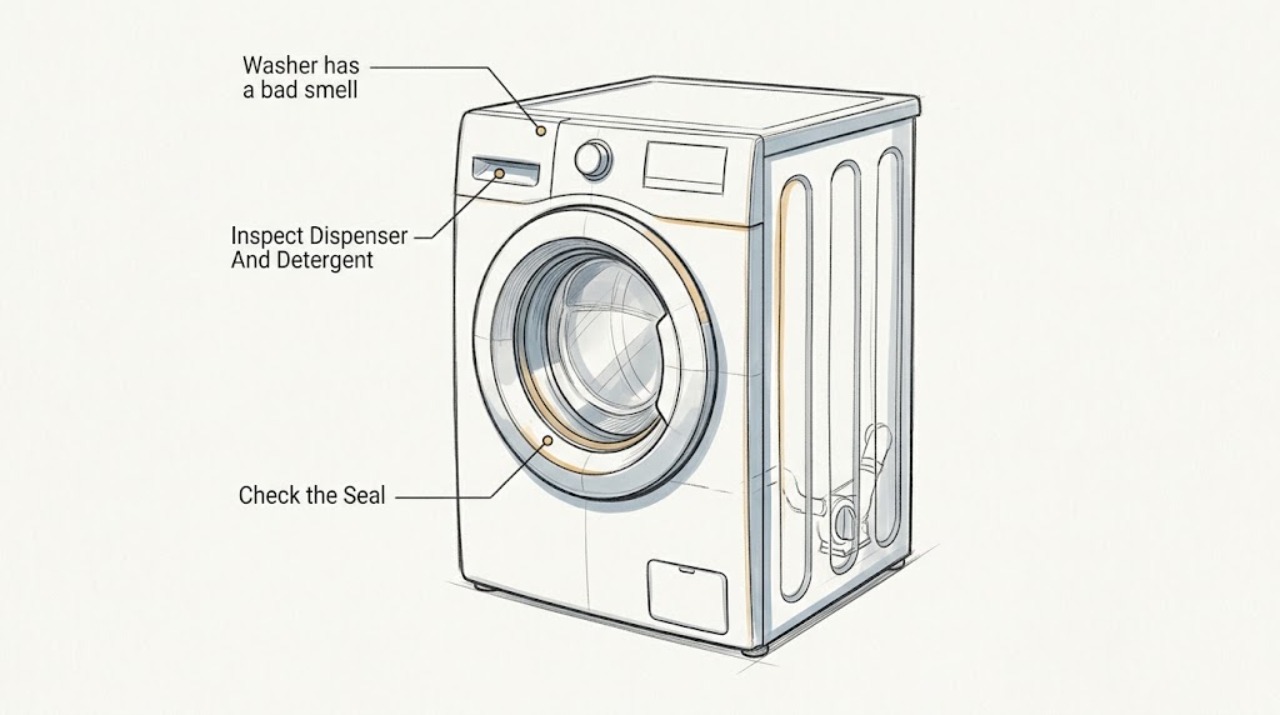
Electrolux washer has a bad smell: What to Check and What to Do Next
Classify the odor before trying to clean the washer. A musty smell concentrated at the door seal or dispenser usually points to trapped moisture or residue; a sewage-like smell with standing water or gurgling points to the drain path; and a burning, hot-plastic, chemical, or electrical smell is a stop-use condition.
-
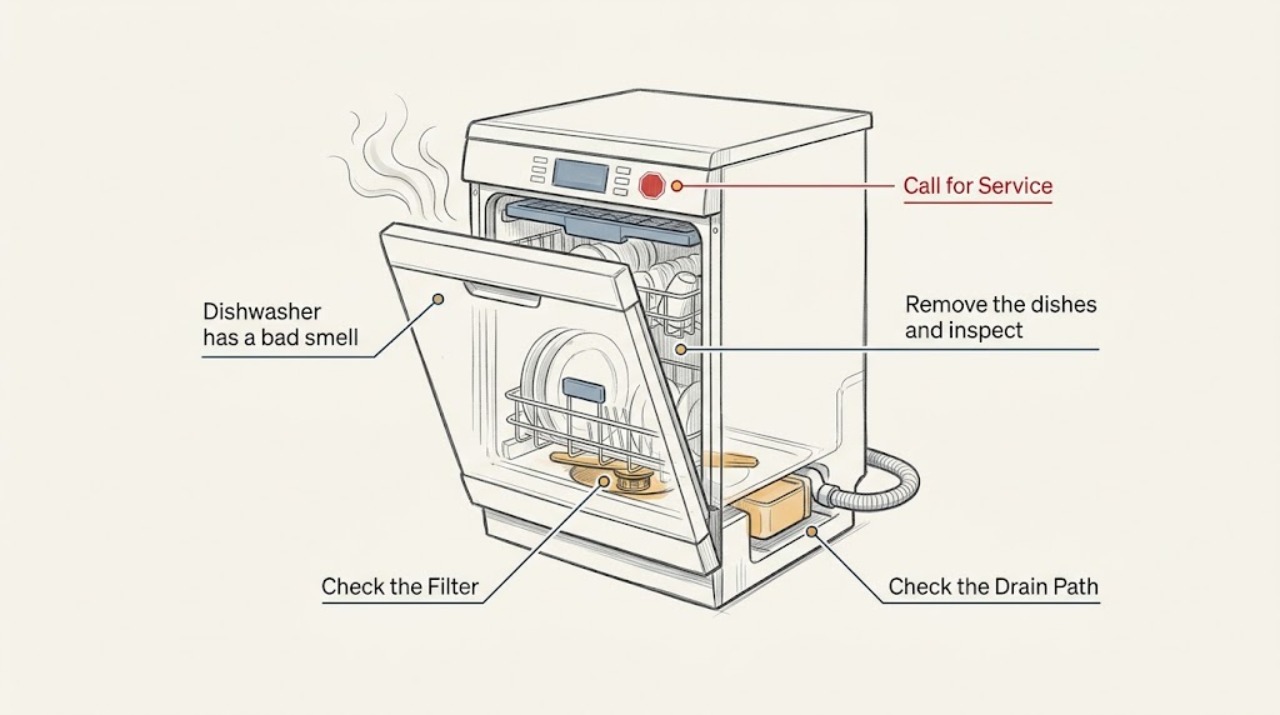
Frigidaire dishwasher has a bad smell: What to Check and What to Do Next
A bad smell from a Frigidaire dishwasher is commonly separated by timing, location, and whether water or food soil remains: a new-installation smell may be temporary, while odor from the filter, glass trap, sump area, or standing water points to trapped residue or a drainage issue. Remove dishes and visible loose debris, then with the dishwasher off and cool, clean the model-approved filter and glass trap.
-
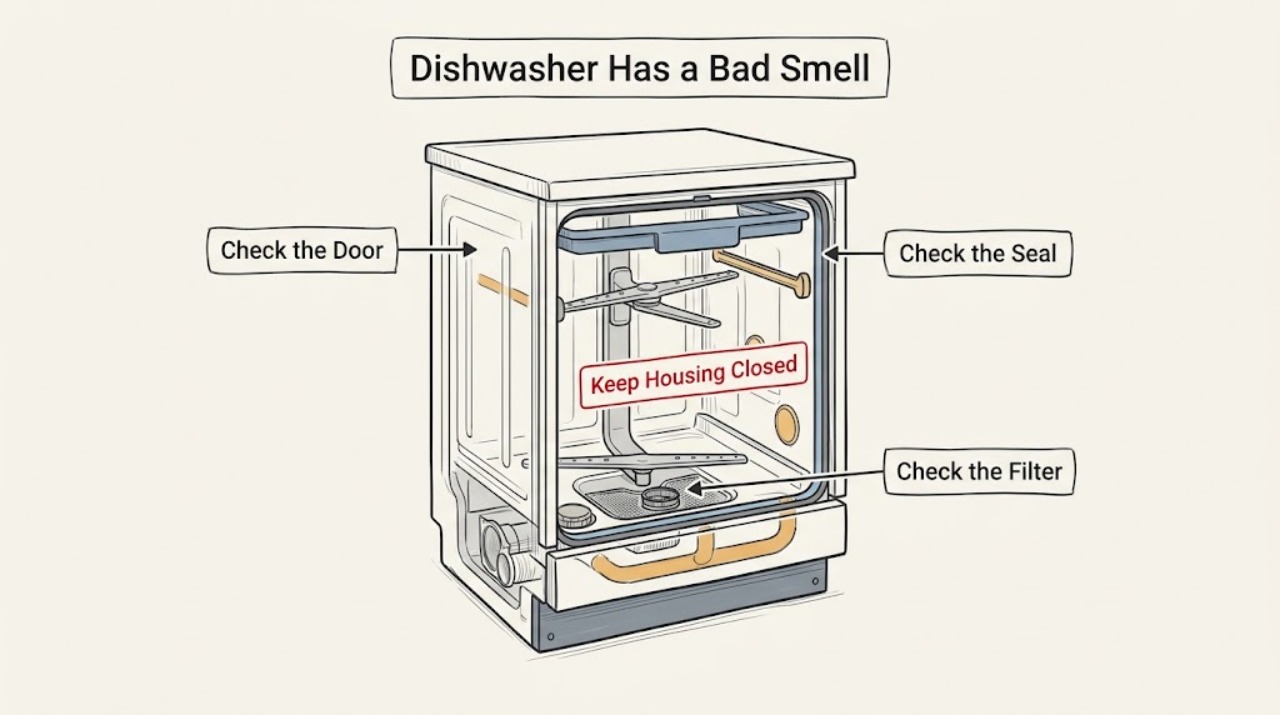
GE Dishwasher Has a Bad Smell: What to Check and What to Do Next
A bad smell in a GE dishwasher usually comes from food residue, a dirty or restricted filter, buildup near the pump inlet or spray-arm jets, mildew on the gasket, or dirty water returning through an incorrectly routed drain hose. A small amount of clean water near the sump may be normal, but dirty water that builds up between cycles is not.
-
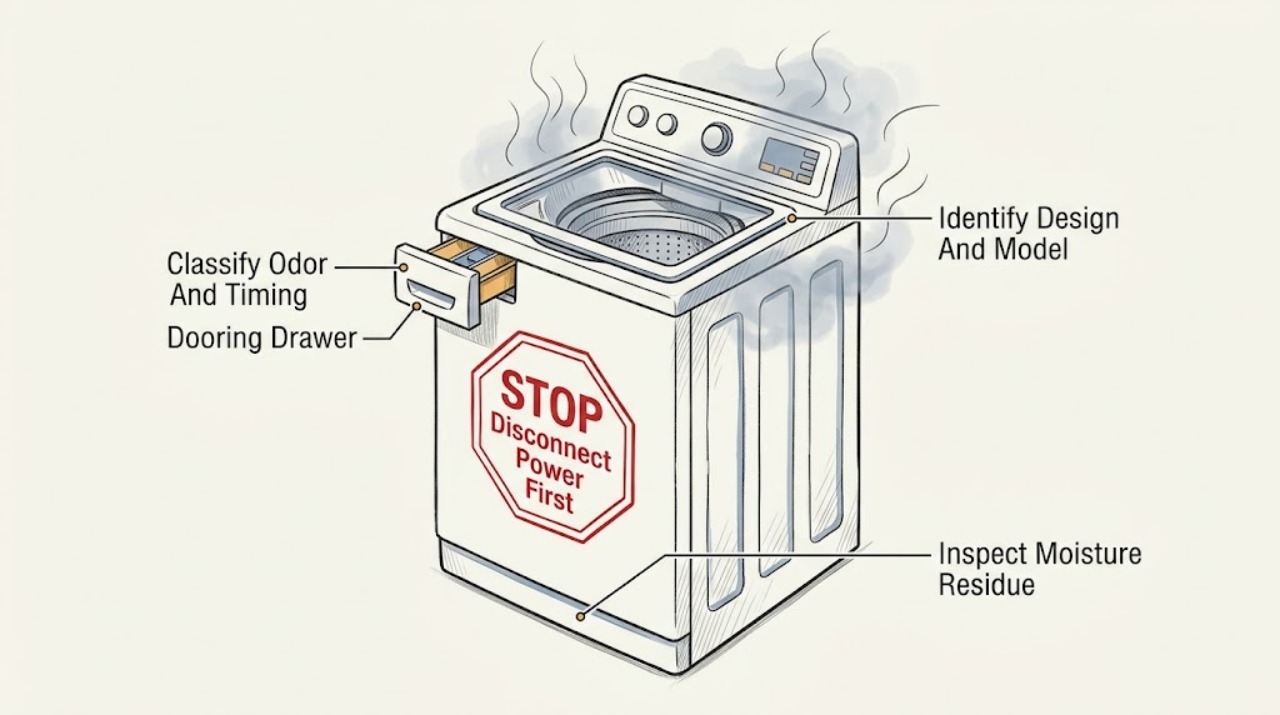
GE washer has a bad smell: What to Check and What to Do Next
First classify the odor before cleaning a GE washer. A musty or mildew smell usually points to retained moisture, detergent or fabric-softener residue, a dirty gasket or dispenser, a restricted pump filter, or drain-hose siphoning; GE's top-load and front-load guidance uses different access and cleaning procedures.
-
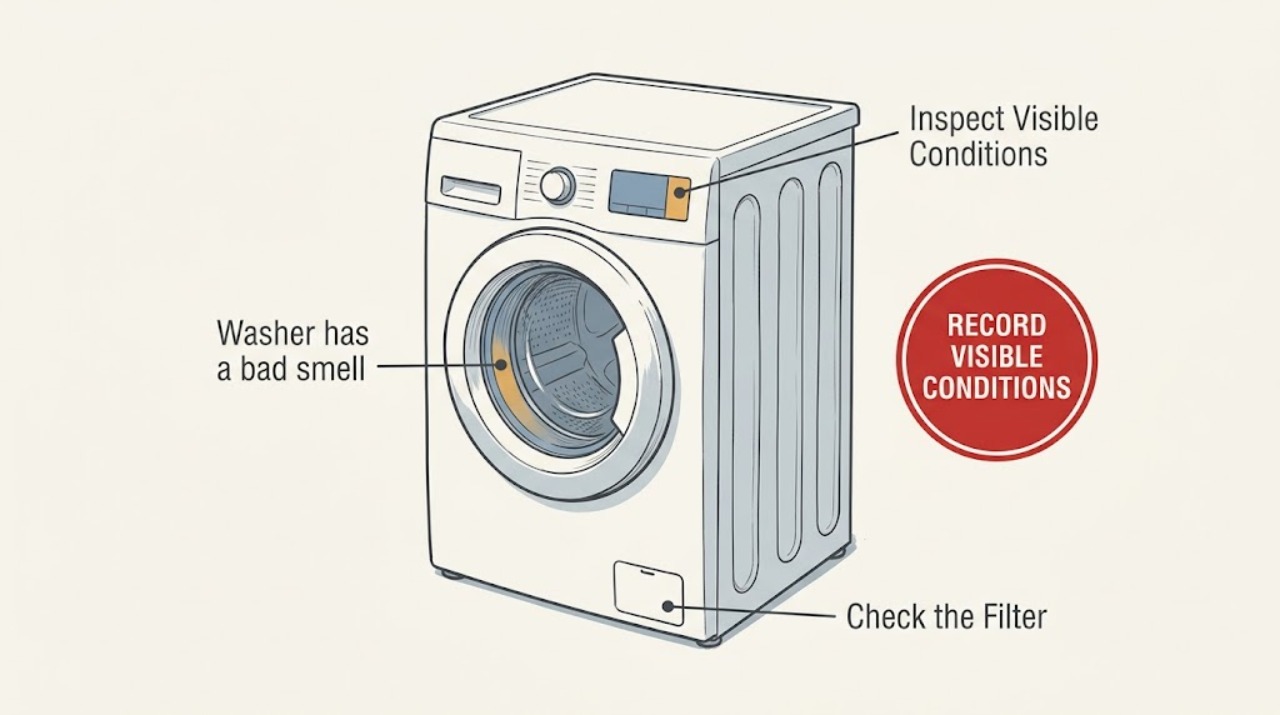
Hotpoint washer has a bad smell: What to Check and What to Do Next
First classify the smell from your Hotpoint washer: musty or mildew-like odors commonly point to damp residue around the door seal, detergent drawer, drum, or filter; a sewage-like smell that is strongest at the drain points to hose or household plumbing; a burning-rubber, burning-plastic, or electrical odor during operation is a stop-use warning.
-
Kenmore Washer Has a Bad Smell: What to Check and What to Do Next
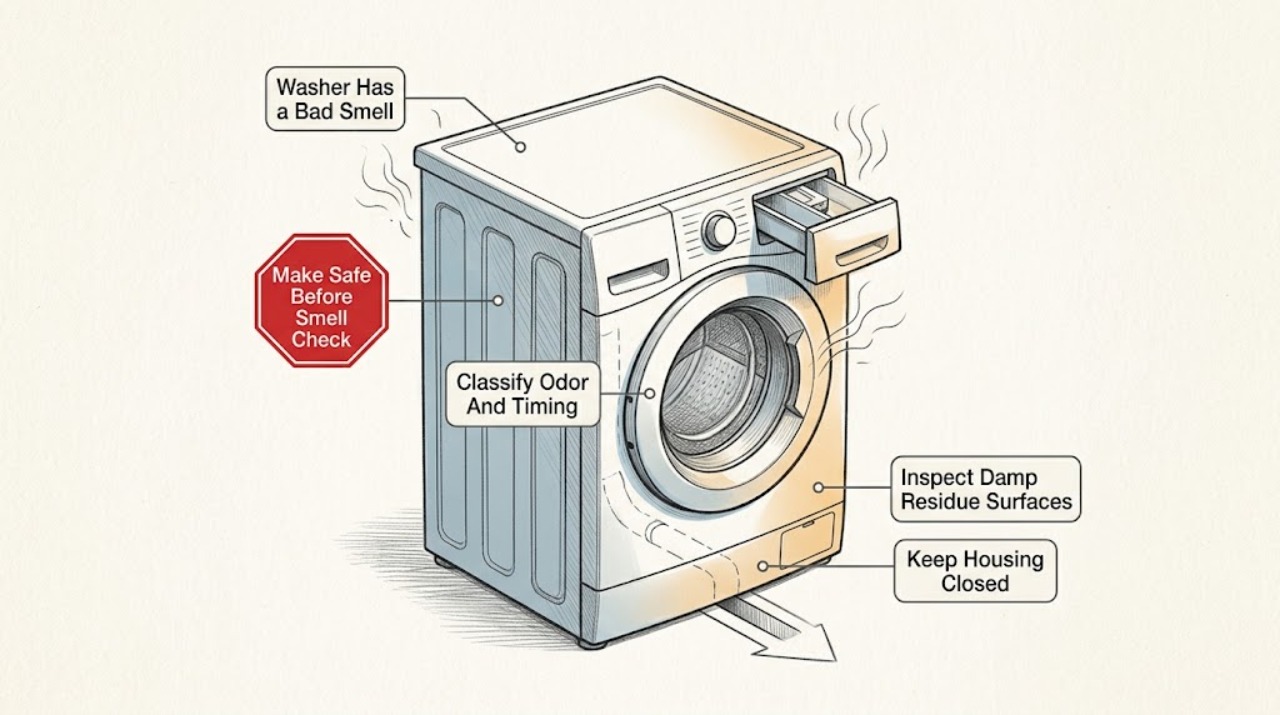
Classify the smell before cleaning a Kenmore washer. A musty or sour odor that is strongest at the door gasket, dispenser, lid rim, or drum often points to retained moisture, detergent residue, or biological growth; a sewage-like odor near the drain points more toward the drain hose, standpipe, trap, or backflow; a burning, melting-plastic, ozone, or electrical odor is a stop-use condition.
-
Kitchenaid dishwasher has a bad smell: What to Check and What to Do Next
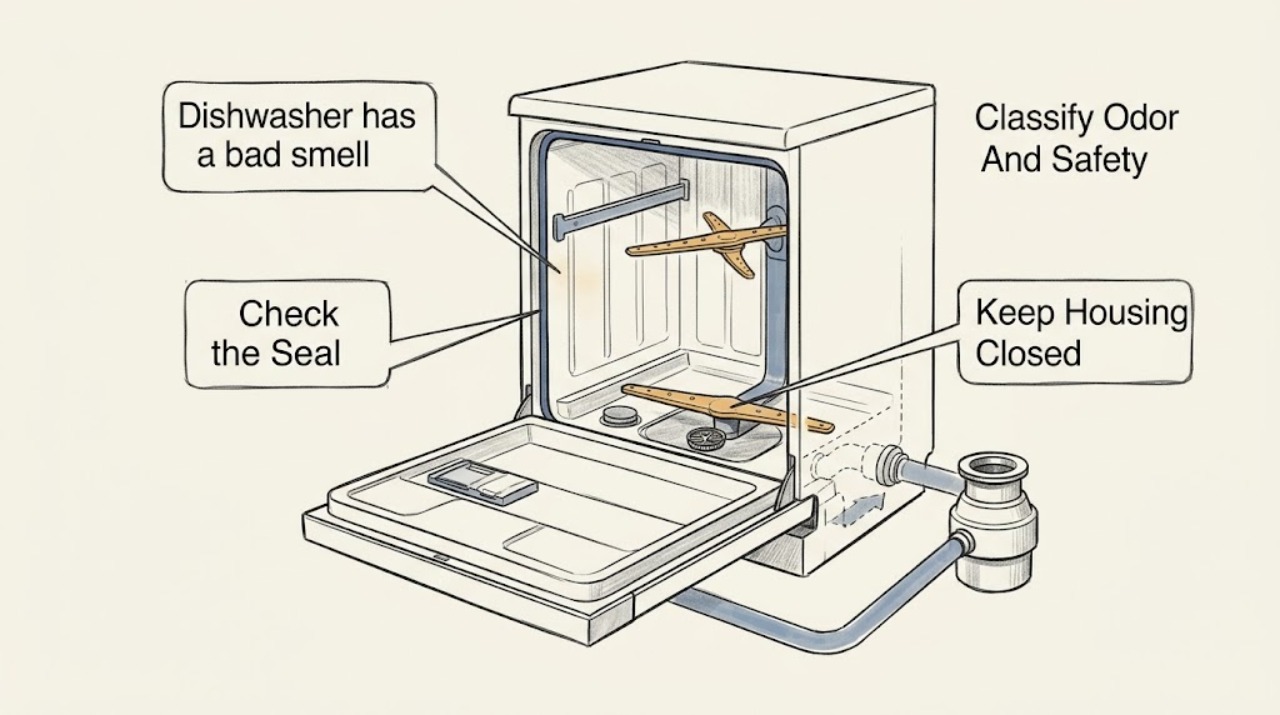
First identify the odor and whether water or debris remains after a cycle. A rotten or fishy smell commonly points to food debris in the filter, spray arms, tub, or door edges; a sewage-like or wet-dog odor makes standing water or a drain-path problem more likely; a musty smell can come from residue on the door gasket.
-
LG Washer Has a Bad Smell: What to Check and What to Do Next
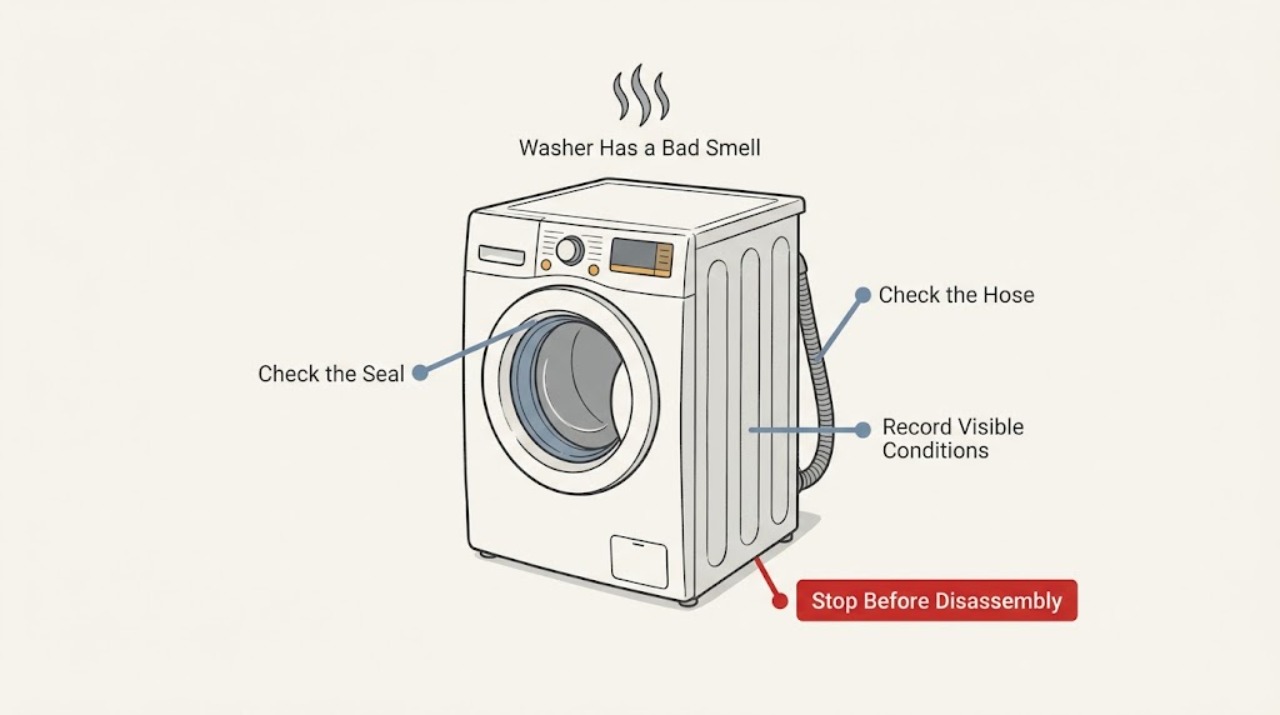
First classify the odor before cleaning: a musty or moldy smell usually points to damp residue in the tub, gasket, dispenser, or filter; a drain-like smell can follow standing water or an incorrectly routed drain hose; a burning-rubber or electrical odor is a stop condition until the source is ruled out.
-
Maytag dishwasher has a bad smell: What to Check and What to Do Next
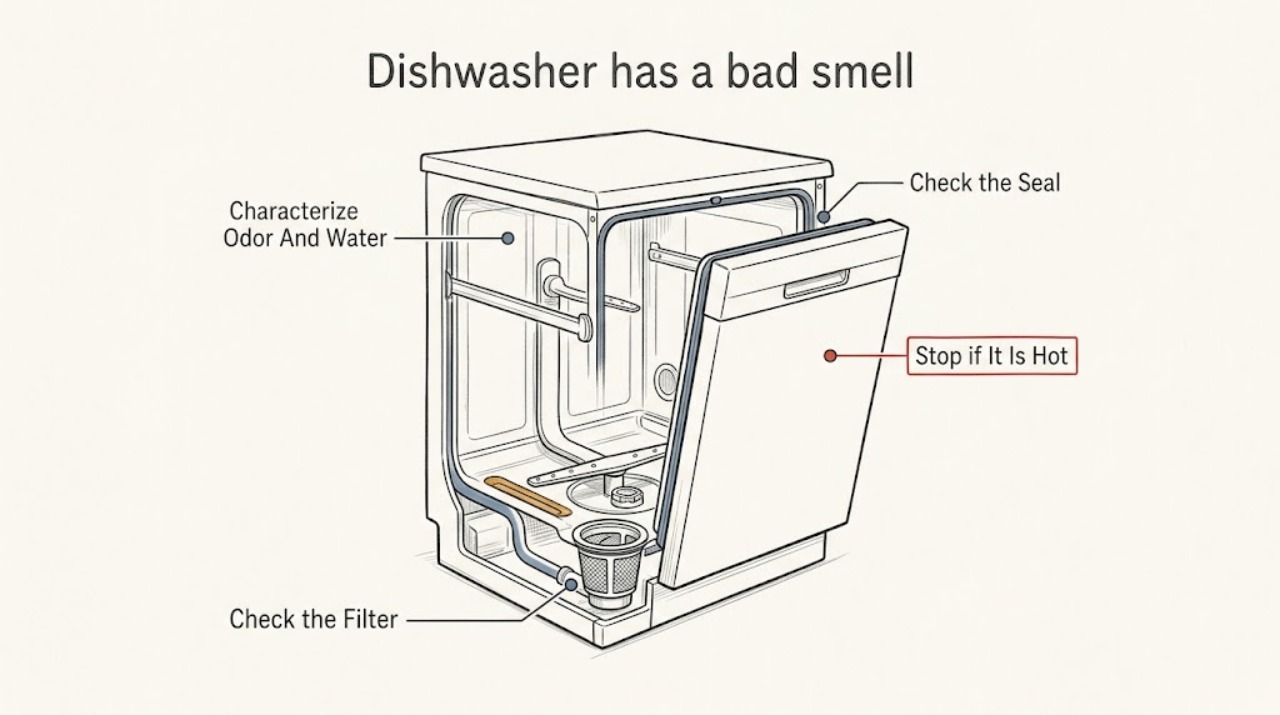
A Maytag dishwasher odor usually starts with trapped food soil, a filter or foreign-object cup that needs attention, residue on the tub or door gasket, or water that is not leaving through the drain path. First empty the dishwasher and identify whether the odor is musty, sour, sewage-like, chemical, or burning; stop using it for smoke, melting, a strong electrical or burning smell, or a leak near electrical parts.
-
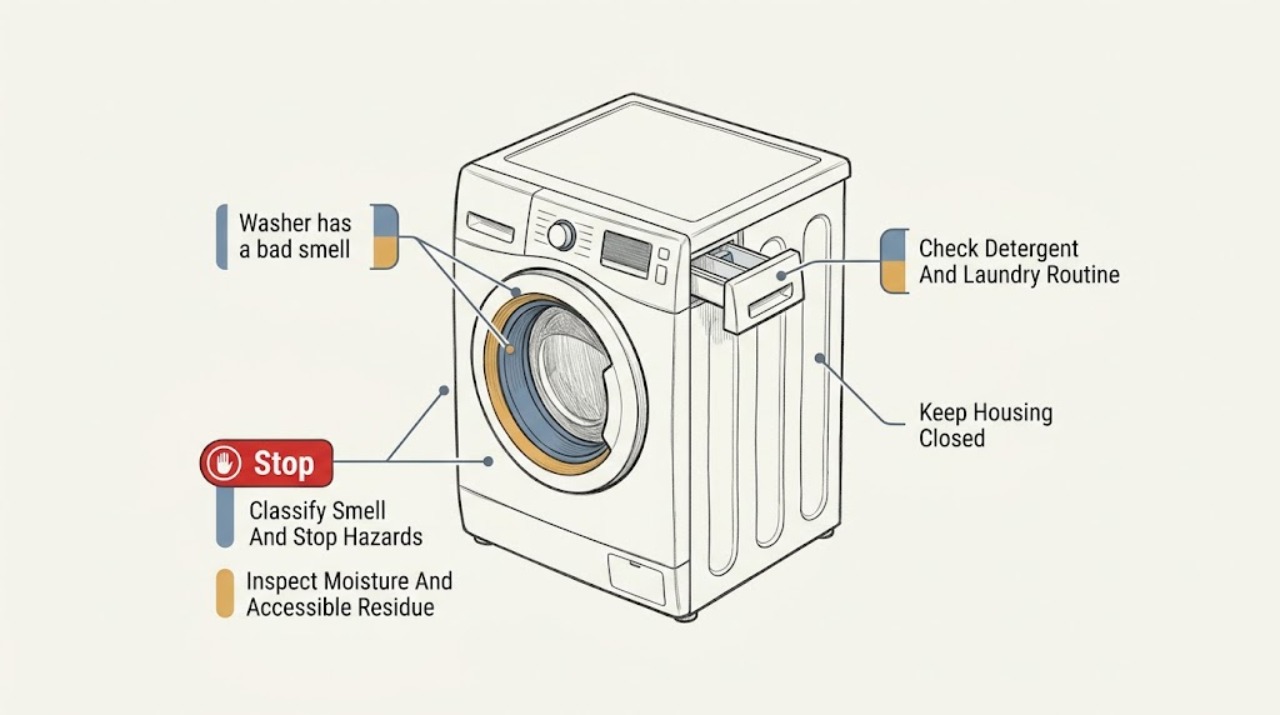
Maytag washer has a bad smell: What to check and what to do next
Classify the smell before cleaning a Maytag washer. A musty or mildew odor with damp laundry or residue usually points to moisture, detergent buildup, a closed door or lid, or a missed Clean Washer cycle.
-
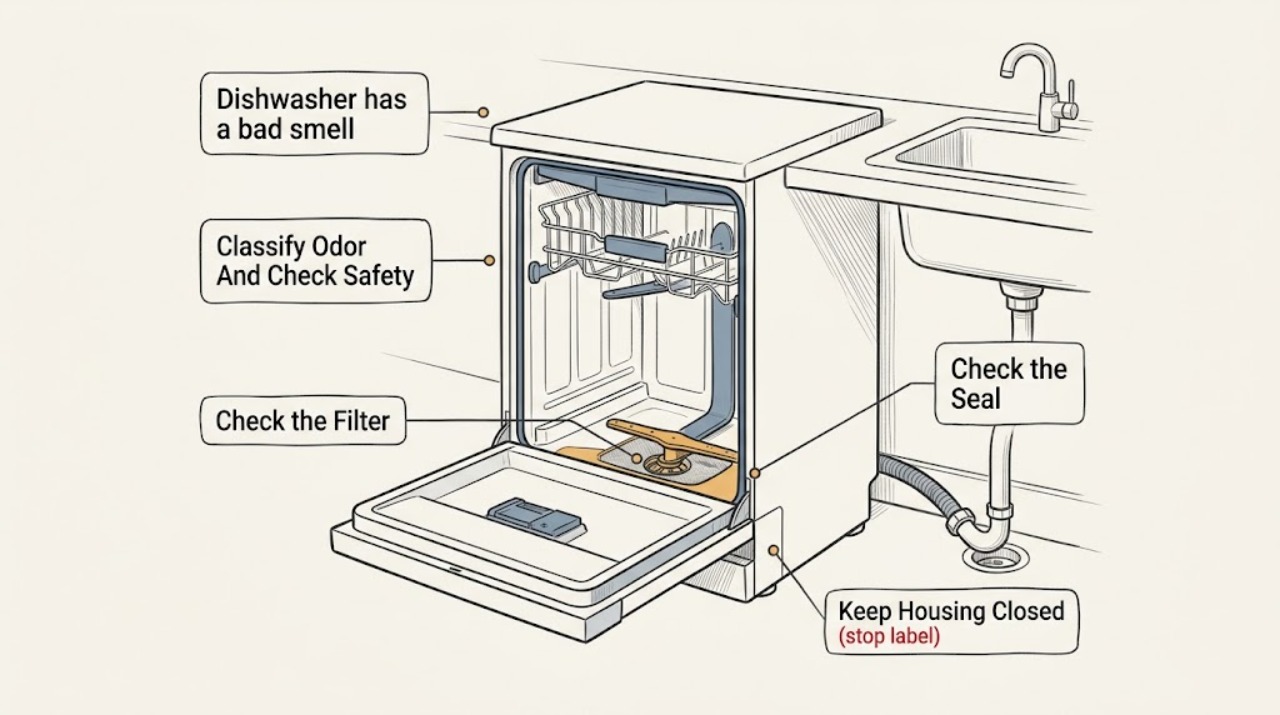
Samsung dishwasher has a bad smell: What to Check and What to Do Next
A Samsung dishwasher's musty or food smell usually comes from moisture and trapped food or grease in the filter, drain area, spray nozzles, door seal, racks, or inner door. Turn the dishwasher off, remove debris carefully, and clean only the model-accessible parts described in the manual.
-
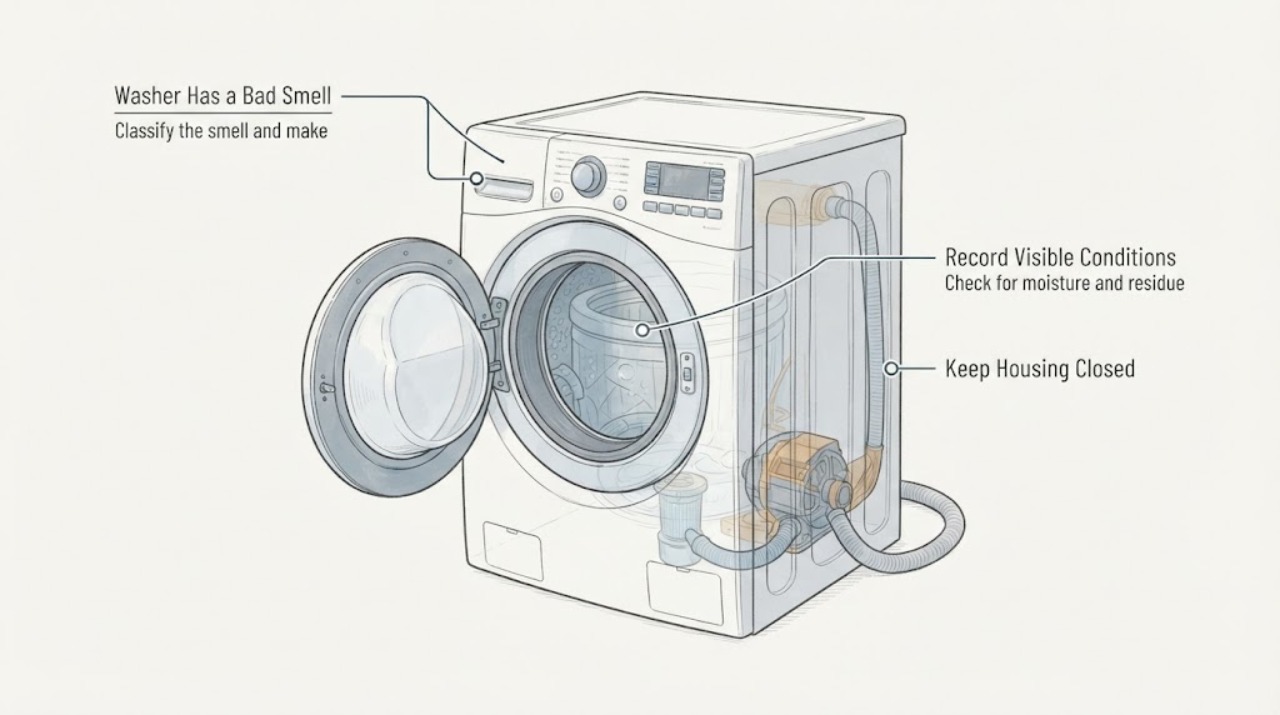
Samsung Washer Has a Bad Smell: What to Check and What to Do Next
Start by identifying the odor rather than adding a cleaner. A musty or moldy smell commonly points to trapped moisture, detergent residue, wet laundry, or a dirty pump filter; a sulfur or sewage smell can point to drain-hose installation and wastewater siphoning; a burning or electrical smell requires the washer to stay off, except that Samsung notes a mild motor-insulation odor can occur during the first couple of cycles of a new washer.
-
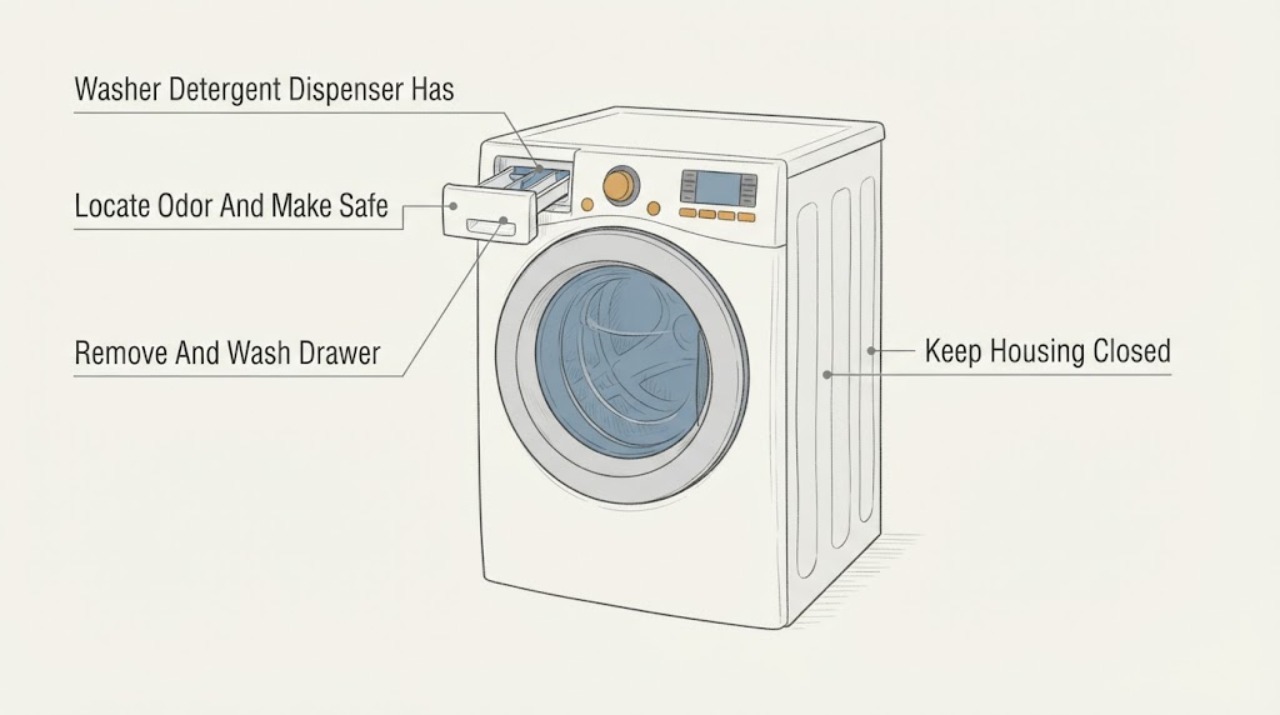
Washer Detergent Dispenser Has a Bad Smell: What to Check and What to Do Next
A bad smell from a washer detergent dispenser is most often caused by trapped moisture, detergent or softener residue, a clogged siphon or insert, or odor elsewhere in the washer that is being noticed at the drawer. Remove power before cleaning an accessible drawer, remove its inserts only as the model manual allows, rinse and brush away residue, clean the housing, and dry the parts before reinstalling them.
-
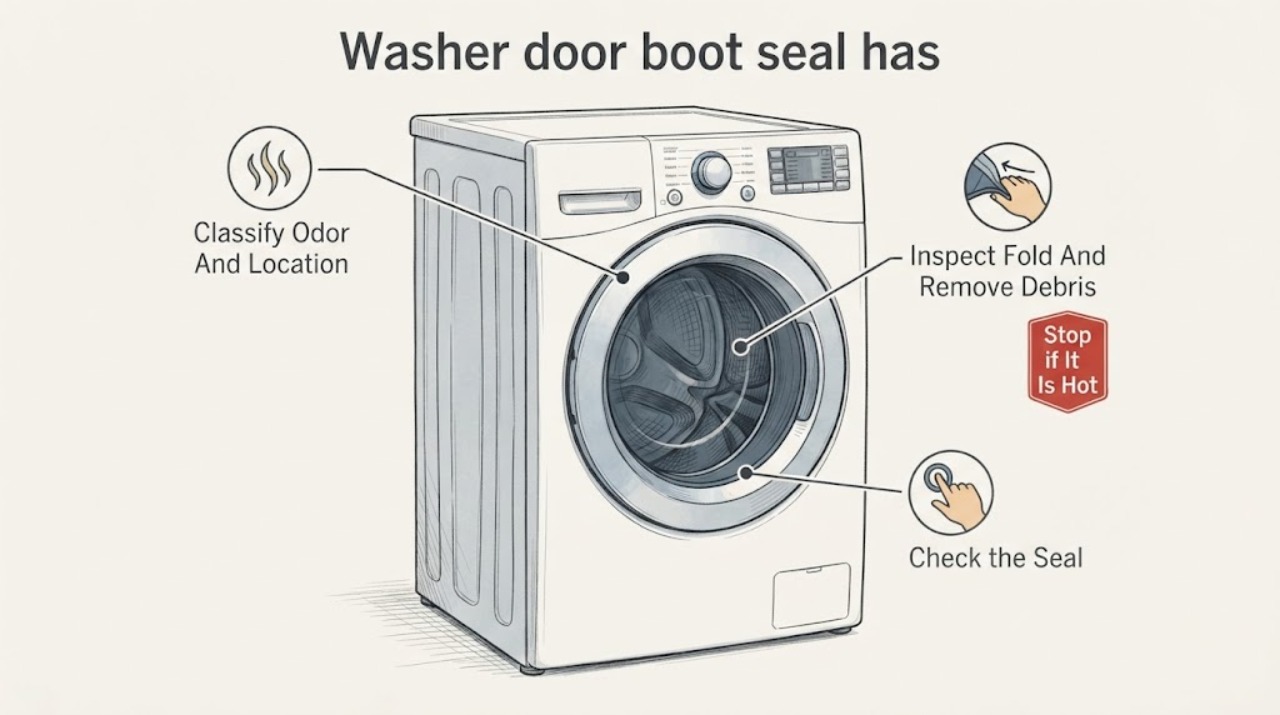
Washer door boot seal has a bad smell: What to Check and What to Do Next
A washer door boot seal can smell because its folds retain normal rinse water, lint, hair, detergent, or fabric-softener residue; closed-door moisture can then support mold or other odor-causing buildup. Empty the washer, inspect the seal fold, remove debris, clean it only with the exact manual's approved method, wipe it dry, and leave the door and dispenser open.
-
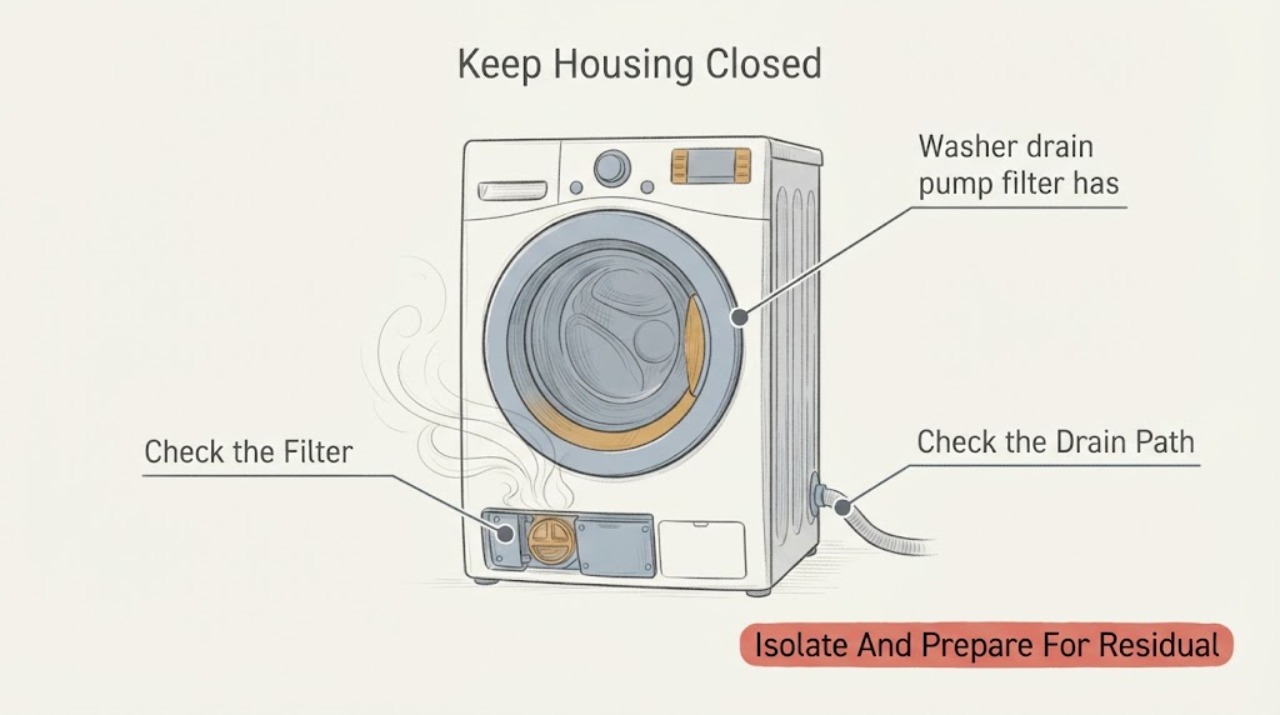
Washer drain pump filter has a bad smell: What to Check and What to Do Next
A bad smell at a washer drain-pump-filter area most often means lint, coins, detergent residue, or retained dirty water is sitting in the filter, filter housing, or drain path. First confirm that the washer actually has an owner-accessible filter; many front-load and combo models do, while top-load designs may not.
-
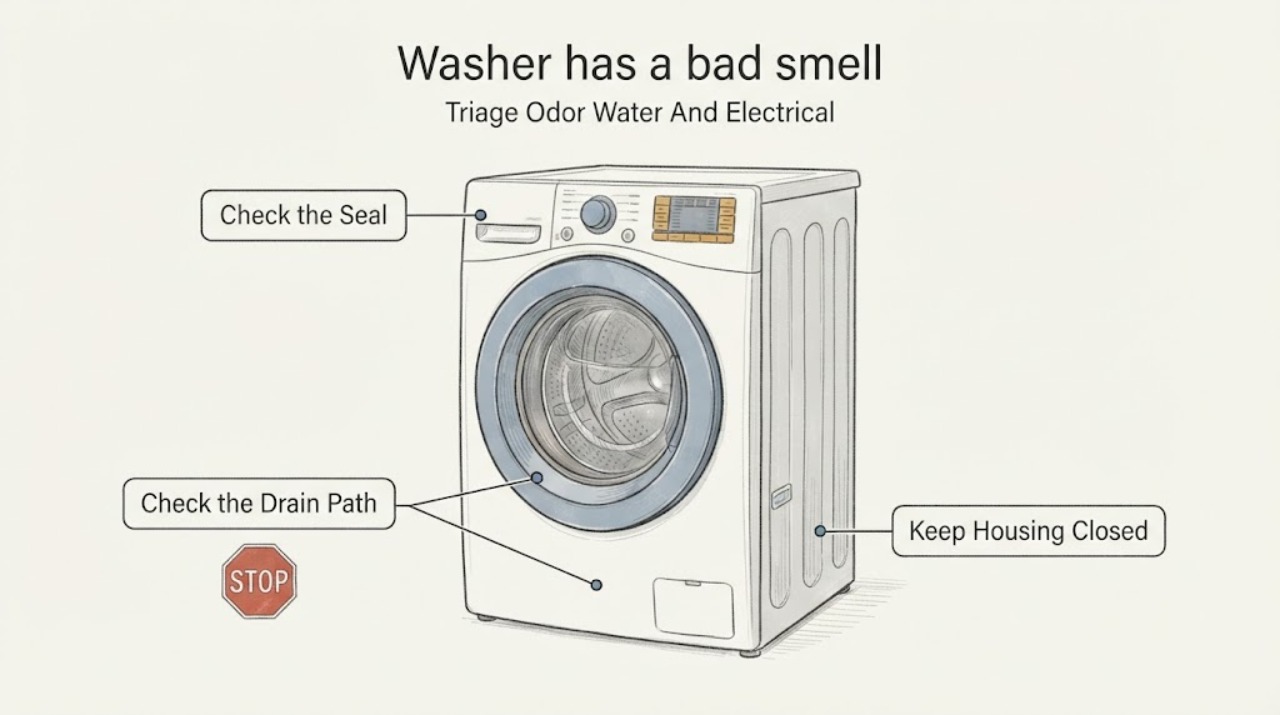
Washer has a bad smell moisture remains in seal: What to Check and What to Do Next
Moisture left in a washer door seal can be normal in some front-load designs, but water trapped with lint, detergent residue, or a small object can stagnate and create a musty smell. After the cycle, remove laundry promptly, wipe the gasket folds and door dry, and leave the door and detergent drawer open for ventilation.
-
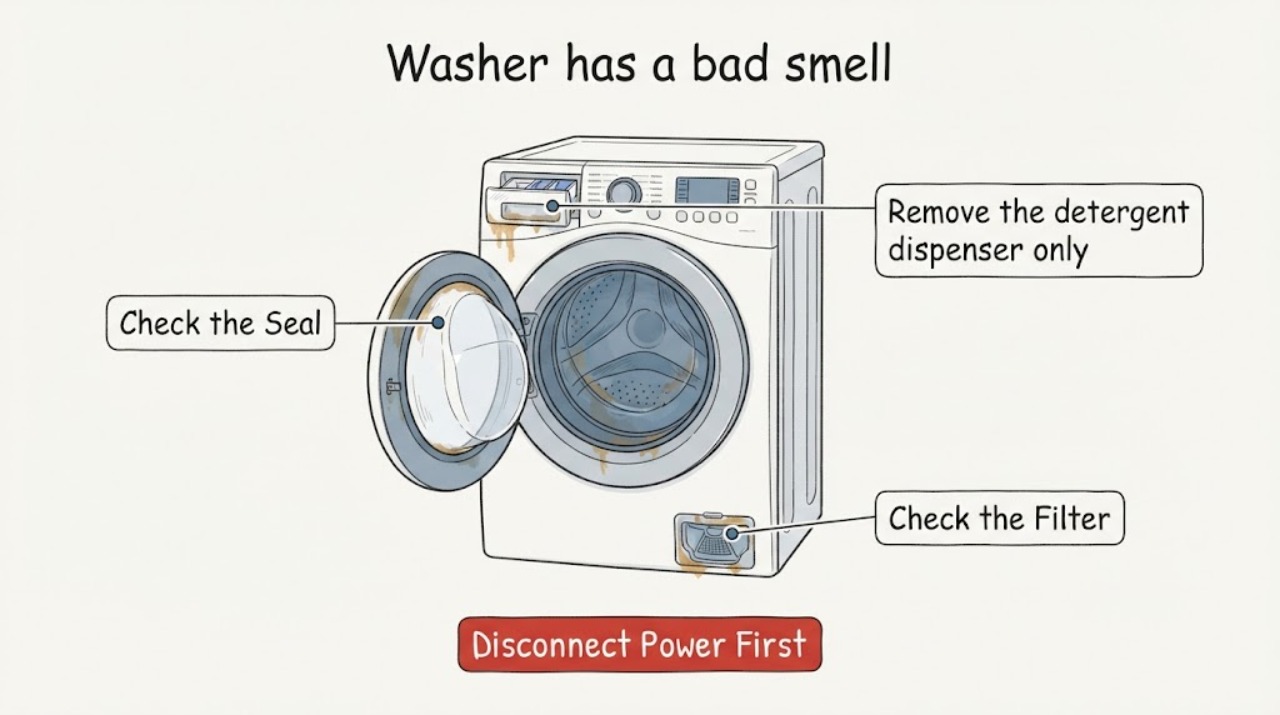
Washer has a bad smell visible residue is present: What to Check and What to Do Next
Visible slime, detergent film, lint, or mold-like residue together with a bad-smelling washer usually means moisture and soil are collecting in the door gasket, detergent dispenser, drain path, or tub. Remove laundry and obvious loose debris, clean only accessible surfaces using the washer manual, and run the machine’s Clean Washer or Tub Clean cycle with the one cleaner the manual allows.
-
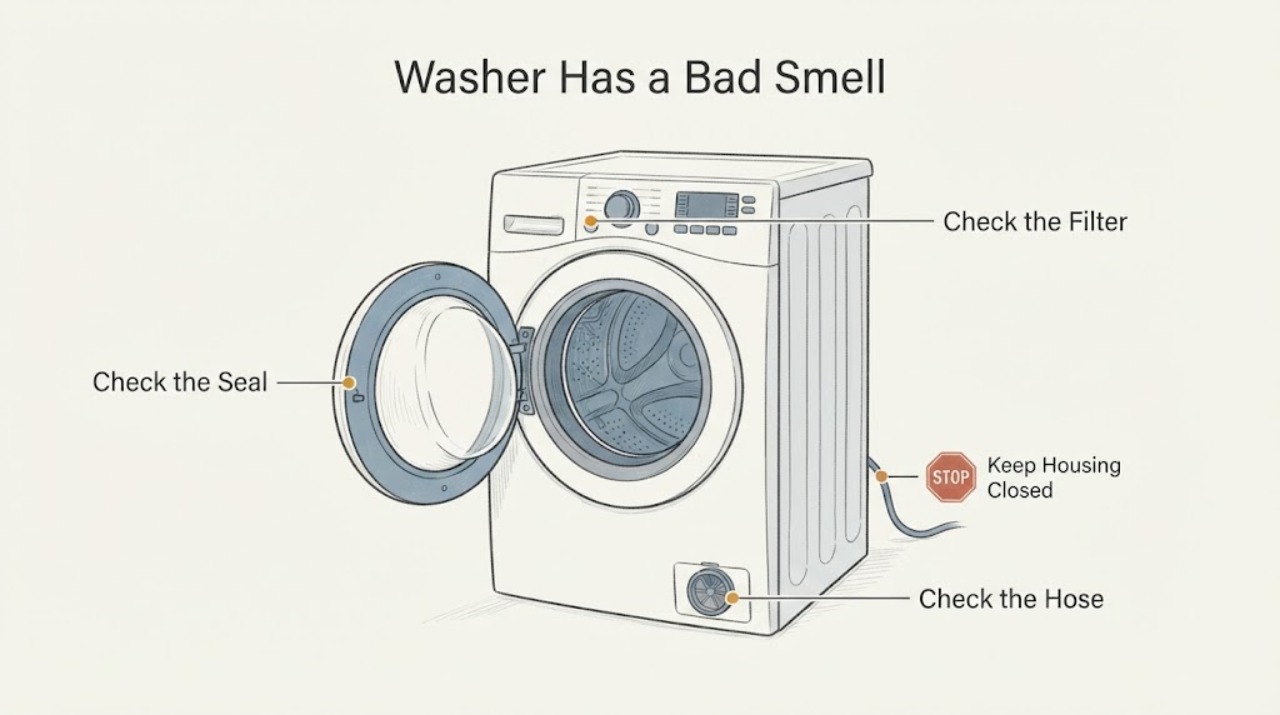
Washer Has a Bad Smell and Odor Persists After the Cycle: What to Check and What to Do Next
A washer odor that remains after a cycle is commonly caused by trapped moisture, detergent or fabric-softener residue, a damp gasket or dispenser, laundry left in the drum, or a drain path that leaves water behind. First identify whether the smell is musty, sewage-like, detergent-like, or burning, and whether it is present in the empty washer or only on clothing.
-
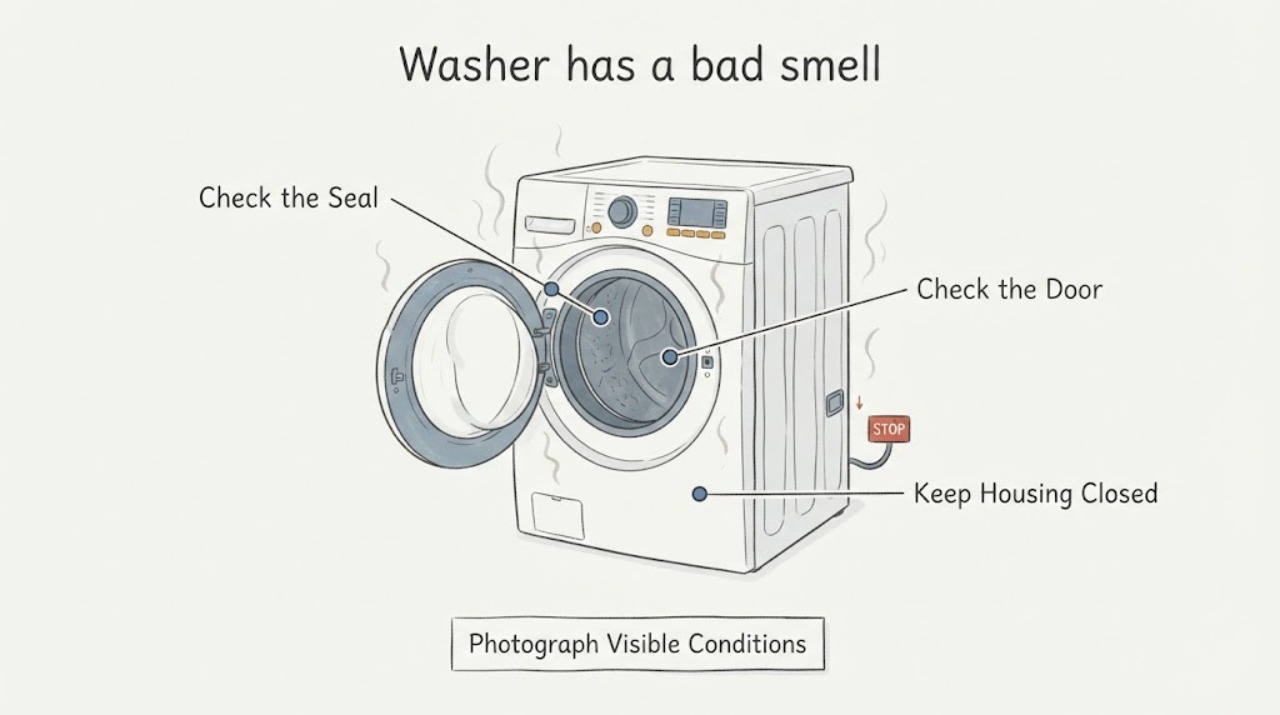
Washer has a bad smell: What to Check and What to Do Next
First classify the odor and check the easy, visible sources: wet laundry left in the tub, residue in the door seal or detergent drawer, standing water, a drain-path smell, or a burning odor. Remove laundry promptly, dry the accessible seal and dispenser, and use only the washer's model-approved cleaning procedure; never combine bleach, vinegar, detergent, or other chemicals.
-
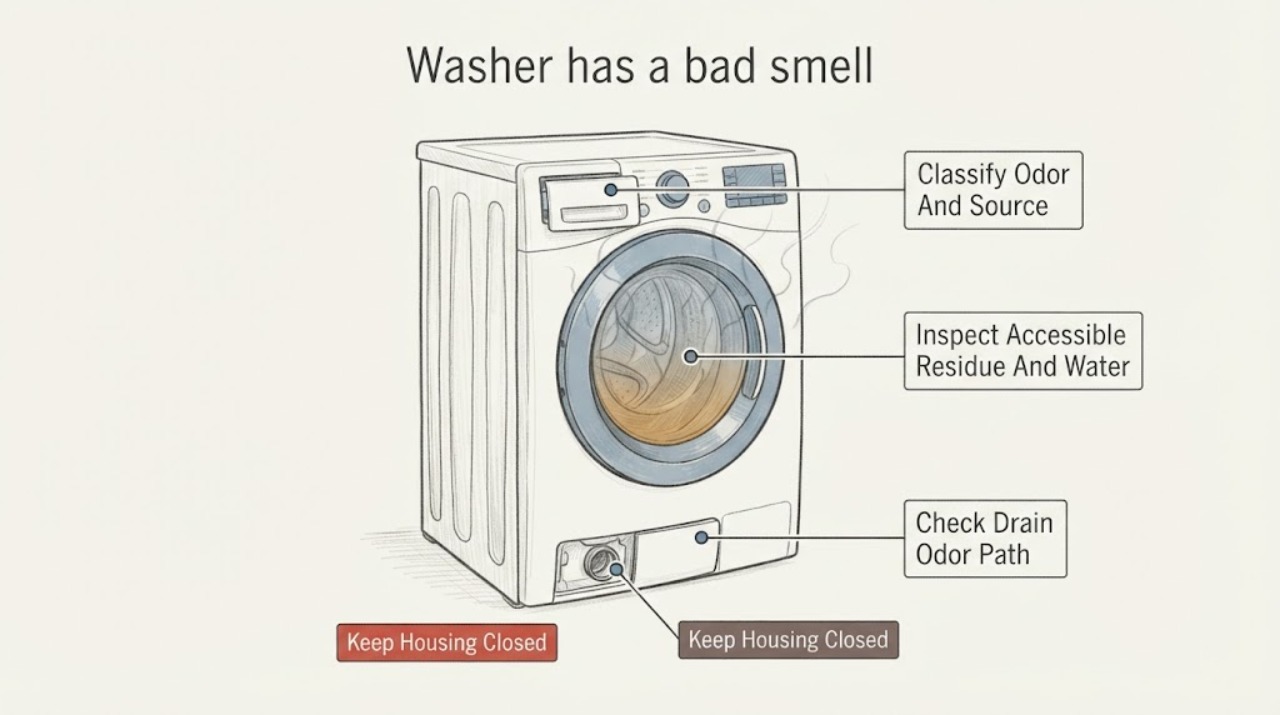
Whirlpool washer has a bad smell: What to Check and What to Do Next
First distinguish a musty or sour laundry-room odor from a sewage or drain odor, detergent or bleach fumes, and a hot-plastic or burning smell. With the Whirlpool washer stopped and cool, note where the smell is strongest, inspect only the accessible door or lid seal, dispenser, drum, drain hose, and floor for residue or water, and record the exact model.