
On this page
Start here
Quick answer
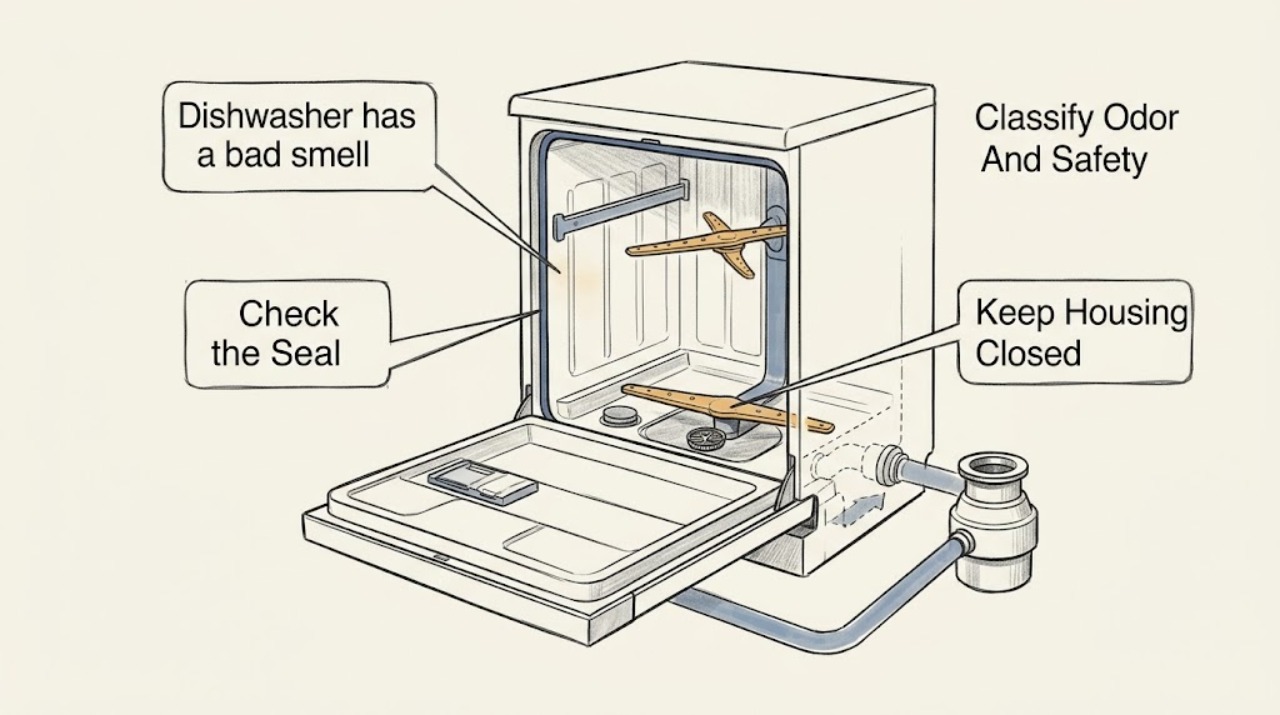
First identify the odor and whether water or debris remains after a cycle. A rotten or fishy smell commonly points to food debris in the filter, spray arms, tub, or door edges; a sewage-like or wet-dog odor makes standing water or a drain-path problem more likely; a musty smell can come from residue on the door gasket. With the dishwasher empty, off, and cool, inspect the accessible tub, filter area, spray arms, and gasket. Clean the filter only if your exact KitchenAid model has a user-cleanable filter, reinstall it fully, and run the model-approved cleaning cycle. Check whether the dishwasher drains and whether water remains beyond the normal filter-area amount. Do not remove panels, reach into the pump, use a wire brush or scouring pad, mix cleaners, or keep operating a dishwasher with a burning smell, leak, damaged gasket, or persistent sewage odor. Arrange qualified service when odor remains after cleaning or drainage, water, or electrical symptoms continue.
Before you begin
Safety first
- This article covers odor classification, visible tub and gasket inspection, model-approved filter cleaning, and safe drainage observations only. Pump access, drain-hose disassembly, panel removal, internal electrical work, and leak or wiring repair belong to qualified professionals.
Work through in order
Diagnostic checks
Use only checks that match the exact appliance or system and its official guide.
-
Check 1
Stop the dishwasher and note whether the smell is rotten or fishy, rancid or sour, sewage-like or wet-dog, musty, plastic-like, or burning. From a safe position, look for smoke, scorching, damaged wiring, water on the floor, a cracked gasket, or a damaged latch without touching hot or electrical parts.
Expected result: The odor is food-like, musty, sewage-like, plastic-like on a new appliance, burning or electrical, or accompanied by water, heat, smoke, or visible damage.
Next step: For burning odor, smoke, heat, damaged wiring, a leak, a cracked gasket, or a damaged latch, stop use and arrange qualified service. Otherwise empty the dishwasher and continue with the matching cleaning and drainage checks.
Stop if: Do not run another cycle to mask a burning smell, touch a hot or wet electrical area, or continue if water is reaching the floor.
Why this matters
Why: Odor character helps prioritize food and grease residue, gasket moisture, drainage, or a new-appliance material smell. Burning odor, a leak, or electrical damage is not a cleaning branch.
-
Check 2
With the dishwasher empty, off, and cool, remove the lower rack and inspect the filter area, filter, tub bottom, spray-arm openings, and door edges for food, grease, mineral film, or other visible debris. Use the exact model manual to determine whether the filter is removable; do not reach into the pump or remove a maintenance-free filter system.
Expected result: Food or grease is visible on a removable filter or in the tub, the filter is clean, the filter is damaged or will not lock, or the model has a maintenance-free filter or foreign-object cup.
Next step: Clean only a removable filter as the manual directs, rinse away loose debris, and reinstall it until fully locked. If the filter is damaged, missing, or the model uses another design, stop guessing and request model-specific guidance.
Stop if: Do not operate without the filters properly installed, use a wire brush or scouring pad, or reach into the pump or sharp debris.
Why this matters
Why: Visible residue supports a food or grease source, while a clean or non-removable filter makes a drain, gasket, mineral, or hidden-residue branch more relevant. A damaged or unsecured filter can affect water circulation and needs model-specific handling.
-
Check 3
Wipe the door gasket, door edges, tub surfaces, and accessible spray-arm area with the model-approved soft cloth or sponge and mild cleaning method. Remove only loose visible residue; do not use abrasive tools or force debris into spray holes.
Expected result: Dark or slimy residue is on the gasket, grease or mineral film coats the tub, spray-arm openings are obstructed, or the accessible surfaces are clean but the odor remains.
Next step: Dry the gasket and accessible surfaces. If the model permits a maintenance cycle, use only the approved cleaner and cycle; if the odor persists, move to the drainage check and service branch.
Stop if: Do not mix cleaners, use chlorine with vinegar or another acid, remove the gasket, or operate with a visibly damaged seal.
Why this matters
Why: Gasket residue and interior buildup can retain musty or stale odors. Clean surfaces with a persistent odor point toward trapped debris, standing water, drain trouble, or another condition that cleaning alone cannot prove.
-
Check 4
After a normal cycle has safely finished, look at the filter area and tub without reaching into the pump. Note whether only the small amount of water described by KitchenAid remains in the filter area, or whether water is pooled across the tub; also observe whether the sink or disposer drain smells or drains poorly.
Expected result: Only normal filter-area water is present, water is pooled in the tub, the dishwasher leaves food or dirty water, the drain or disposer is slow, or water appears on the floor.
Next step: Check only the visible drain and disposer conditions allowed by the manual. If pooled water, a persistent sewage odor, a blocked or kinked hose, or a leak remains, stop use and arrange qualified service.
Stop if: Do not remove access panels, dismantle the drain hose, reach into standing water near electrical components, or keep running cycles with a leak.
Why this matters
Why: A small filter-area amount can protect seals, while pooled tub water, dirty water, a slow shared drain, or floor water supports a drainage or leak branch. A sewage-like odor with standing water should not be treated as ordinary residue.
-
Check 5
If the filter is correctly installed, the tub drains normally, and there is no leak, burning odor, or other hazard, run one model-approved empty maintenance or cleaning cycle using only the cleaner and settings named in the owner's manual. Do not combine products or add detergent unless the manual says to.
Expected result: The odor clears, improves but returns, or remains unchanged after the maintenance cycle; the cycle fails to drain or a leak appears.
Next step: If the smell remains or returns, stop repeating cleaning cycles and arrange qualified dishwasher service. If a leak, burning smell, or drain failure appears, stop use immediately and preserve the observations for the technician.
Stop if: Do not repeatedly run chemical cycles, mix cleaners, or continue operating after a leak, burning smell, smoke, or electrical symptom.
Why this matters
Why: Improvement after cleaning supports removable residue, but recurrence or no change suggests trapped debris, drainage, gasket, mineral, or another model-specific condition. A failed drain or leak is outside deodorizing.
-
Check 6
Prepare a service note with the full KitchenAid model number, odor description, whether the smell appears before or after a cycle, filter style and condition, standing-water observation, drain or disposer symptoms, gasket condition, cleaning product used, and any leak or electrical warning.
Expected result: The evidence points to filter or residue, gasket moisture, drainage, a new-appliance smell, or remains inconclusive after the safe checks.
Next step: Give the note and safe-distance photos to a qualified appliance technician. Keep the dishwasher out of use when odor is persistent, sewage-like, burning, or associated with standing water or a leak.
Stop if: Do not select a pump, filter, gasket, or electrical part from the odor alone and do not open internal panels to confirm the cause.
Why this matters
Why: A structured record helps a technician distinguish a maintenance issue from a blocked drain, leak, damaged seal, or internal fault without asking the homeowner to open the machine.
Use your observations
Decision map
Find the observation that best matches what you see, then follow the next safe action.
-
PATH 01Safety boundary
What you see
The smell is rotten, fishy, rancid, or stale and visible food or grease is present on the filter, spray arms, tub, or door edges, with normal drainage.
Do this next
Clean the model-approved filter and accessible surfaces, reinstall the filter securely, and run one approved maintenance cycle. If the odor returns while the surfaces and filter are clean, arrange service.
Why this path and its safety boundary
Why it matters: Food or grease residue is more likely than a drain or electrical fault.
Safety stop: Do not use abrasive tools, run without a filter, or keep cleaning if a leak or burning odor appears.
-
PATH 02Safety boundary
What you see
The odor is musty and dark or slimy buildup is visible on the door gasket or in damp crevices, without standing tub water or a leak.
Do this next
Wipe the gasket and accessible surfaces with the approved soft method, dry them, and leave the door slightly ajar after a cycle only if the model and installation allow it. Replace a damaged gasket through qualified service.
Why this path and its safety boundary
Why it matters: Gasket residue and retained moisture are more likely contributors.
Safety stop: Do not remove a gasket, use harsh or mixed chemicals, or operate if the seal is cracked and leaking.
-
PATH 03Safety boundary
What you see
The smell is sewage-like or wet-dog, water is pooled in the tub after a cycle, dishes remain dirty, or the connected drain or disposer is slow.
Do this next
Check only visible drain or disposer conditions permitted by the manual, then arrange qualified service if water or odor remains. Do not dismantle the drain path.
Why this path and its safety boundary
Why it matters: A drain blockage, hose routing issue, backflow, or another drainage condition is more likely than surface odor alone.
Safety stop: Stop for floor water, a leak, persistent sewage odor, or any access that would require panels or standing-water contact near electrical parts.
-
PATH 04Safety boundary
What you see
The dishwasher is new and the odor is a temporary plastic-like smell, with normal cleaning, drainage, and no heat or electrical warning.
Do this next
Follow the model's normal use and cleaning instructions and monitor whether the smell diminishes. Arrange service if the smell is strong, worsening, persists unusually, or changes to burning or electrical.
Why this path and its safety boundary
Why it matters: KitchenAid describes some new-appliance odors as temporary material smells that should dissipate; this does not apply to burning or electrical odor.
Safety stop: Do not treat smoke, scorching, melting plastic, or a burning smell as normal break-in odor.
-
PATH 05Safety boundary
What you see
The odor remains after the model-approved filter, surface, and maintenance checks, or it is burning, electrical, overwhelming, associated with a leak, or paired with damaged wiring.
Do this next
Stop using the dishwasher and arrange qualified appliance service; use a licensed electrician when the evidence points to household wiring or supply. Provide the model and service note.
Why this path and its safety boundary
Why it matters: The cause may be trapped debris, drainage, a seal or leak, or an internal or electrical fault that cannot be identified safely from odor alone.
Safety stop: Do not run more cycles, add more cleaner, open panels, or select a replacement part from the smell alone.
Helpful context
Understand the symptom
Use the odor as a clue, not a diagnosis
KitchenAid groups rotten or fishy odors with food debris, rancid or stale odors with grease buildup, sewage-like or wet-dog odors with drainage, and musty odors with residue on damp gasket areas. The descriptions are clues only; record whether dishes are dirty, water remains, a leak is visible, or the smell is electrical or burning before cleaning.
Confirm your filter style before removing anything
KitchenAid dishwashers can use a manual-clean filter or a maintenance-free filtration design. The filter may be at the bottom of the tub, but the removal method and whether cleaning is needed depend on the exact model. A filter that is not fully seated can also create a performance problem, so do not run the dishwasher with a missing or unsecured filter.
Cleaning does not repair a drain or electrical fault
A maintenance cycle can remove residue, but it cannot correct a clogged drain hose, standing water caused by a drainage fault, leak, or electrical problem. A persistent sewage odor, floor water, burning smell, damaged wiring, or damaged door gasket is a service boundary rather than a cue to keep adding cleaner.
Prevent odor after the cause is corrected
KitchenAid recommends regular filter and interior maintenance, avoiding overloaded racks that block water circulation, using a rinse cycle when a full load will wait, and leaving the door slightly ajar after a cycle when the model and installation allow it. These habits reduce residue and moisture; they do not replace a drain diagnosis.
Safety boundary
Stop conditions
- Stop immediately for smoke, flame, a burning or electrical smell, hot or damaged wiring, a leak reaching the floor, a cracked door gasket or latch, or any shock hazard; keep clear and arrange urgent qualified help.
- Do not remove access panels, reach into the pump, dismantle the drain hose, touch standing water near electrical parts, or open internal wiring compartments.
- Do not operate without a required filter properly installed, use a wire brush or scouring pad, scrape seals, or force a filter or foreign-object cup.
- Do not mix cleaners, add detergent to a cleaner cycle unless the manual says to, or repeatedly run vinegar or chemical cycles to mask a persistent odor.
- Stop when the odor is persistent, overwhelming, sewage-like with drainage symptoms, or cannot be matched to the exact KitchenAid model guidance; arrange qualified service.
Only after diagnosis
Potential parts
- dishwasher filter assembly
Consider this category only if the exact model has a removable filter and the filter is damaged, missing, or cannot lock after qualified diagnosis.
Confirm the complete KitchenAid model and filter style before ordering; do not assume that all KitchenAid dishwashers use the same filtration system. - dishwasher door gasket
Consider this category only if the gasket is visibly damaged or a qualified technician confirms that a leak or retained-residue problem originates at the seal.
Confirm the exact model and seal design before ordering and have a professional handle leak diagnosis if fit or installation is uncertain. - dishwasher drain hose or drain component
Consider this category only after a qualified diagnosis confirms a blocked, kinked, damaged, or incorrectly routed drain component.
Confirm model, routing, connection requirements, and installation instructions before ordering; odor alone does not identify a drain part. - dishwasher drain pump
Consider this category only if a technician confirms a pump fault after the filter and accessible drain path are clear and the model-specific diagnosis supports pump replacement.
Confirm the complete model and approved part information with the technician before ordering or installing.
When checks do not resolve it
Need a professional?
Arrange qualified KitchenAid dishwasher service when odor remains or returns after the model-approved filter, surface, and maintenance checks; when sewage-like odor, standing tub water, poor drainage, a leak, damaged gasket, or latch is present; or when the model's filter or drain design is unclear. For a burning or electrical smell, smoke, hot or damaged wiring, floor water, or shock hazard, stop using the dishwasher and obtain urgent appliance or electrical help from a safe location.
Safety scope: This article covers odor classification, visible tub and gasket inspection, model-approved filter cleaning, and safe drainage observations only. Pump access, drain-hose disassembly, panel removal, internal electrical work, and leak or wiring repair belong to qualified professionals.
Common questions
FAQ
Why does my KitchenAid dishwasher smell like rotten food or fish?
KitchenAid associates those odors with food debris in the filter, spray arms, tub, or door edges. Inspect the model-approved filter and accessible surfaces, clean and reinstall the filter correctly, and arrange service if the odor returns or drainage is poor.
Can standing water cause a bad smell in a KitchenAid dishwasher?
Yes. KitchenAid says stagnant water can produce a sewage-like odor, while a small amount in the filter area can be normal for seal protection. Water pooled across the tub after a cycle, poor drainage, or a persistent sewage smell needs qualified service.
How do I clean the filter in a KitchenAid dishwasher to remove odor?
First check the exact model manual because KitchenAid uses both manual-clean and maintenance-free filtration systems. If the filter is removable, rinse and gently clean it as directed, then lock it fully back into place. Do not use a wire brush or run the dishwasher without required filters.
Why does my KitchenAid dishwasher still smell after cleaning?
Food debris may remain in the filter, spray arms, tub, or gasket, or the dishwasher may have standing water, mineral buildup, a drain problem, or a leak. If the odor remains after the model-approved checks and one maintenance cycle, stop repeating cleaning and arrange service.
When is a KitchenAid dishwasher smell an emergency?
Stop using it for smoke, a burning or electrical smell, hot or damaged wiring, a leak reaching the floor, shock, or a cracked gasket or latch. A persistent sewage-like smell with standing water also needs prompt qualified service rather than more cleaner.
Read the exact guide
Official sources
- Cleaning the Filter - DishwasherKitchenAid Product Help · KitchenAid product-help instructions for applicable dishwasher filter systems and odor maintenance; exact model instructions control.
- Removing Odors in your DishwasherKitchenAid Product Help · KitchenAid product-help guidance for dishwasher odor maintenance; apply filter and cleaning steps only to the exact model's design.
- Cleaning the Dishwasher InteriorKitchenAid Product Help · KitchenAid interior-cleaning guidance for residue and odor maintenance; follow the exact manual and cleaner instructions for the model.
- Water Remains In Filter Area - DishwasherKitchenAid Product Help · KitchenAid guidance distinguishing normal water in the filter area from drainage concerns; it does not authorize pump or drain-hose disassembly.
- How to Clean the Dishwasher FiltersKitchenAid Product Help · KitchenAid filter guidance describing manual-clean and maintenance-free designs; the exact owner manual determines the applicable filter procedure.
- Why Does My Dishwasher Smell? Possible Causes & FixesKitchenAid · KitchenAid's odor guide for dishwasher food, grease, drainage, gasket, cleaning, and escalation patterns; exact model instructions govern filter and drain work.
Community feedback
Share a repair observation
Share a plain-text repair observation. Accepted observations are published automatically; this page may take a moment to update.