
Kitchenaid appliance guidance
Kitchenaid Dishwasher Repair Guides
Troubleshooting and repair guidance for published Kitchenaid Dishwasher problems, symptoms, and maintenance questions.
Published Kitchenaid Dishwasher guides
Choose the guide whose symptom or condition most closely matches what you are seeing.
-
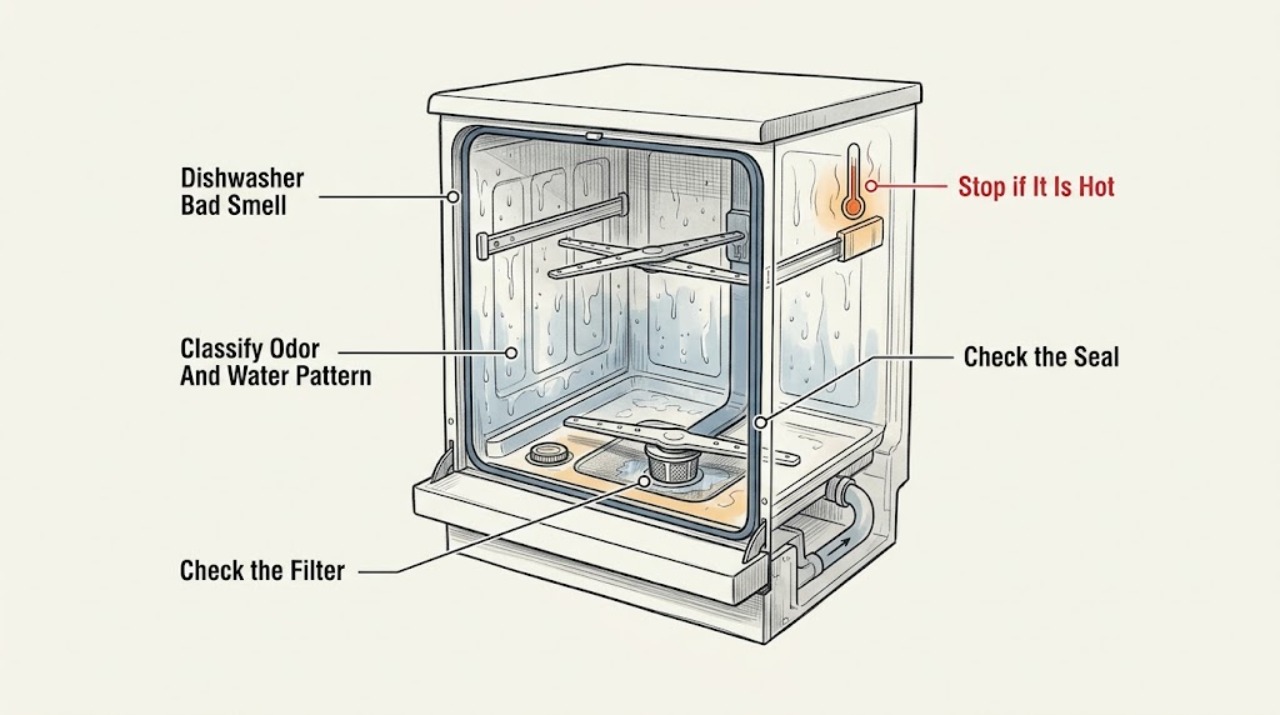
KitchenAid Dishwasher Bad Smell: Find Food, Drainage, and Moisture Sources
Start by classifying the odor and checking whether water remains after a completed cycle. Rotten-food or fishy smells usually point to food soils in the filter, spray arms, tub, door edges, or drain area; a sewage-like or wet-dog smell makes standing water, a clogged drain path, a kinked or sagging hose, or drain backflow more concerning.
-
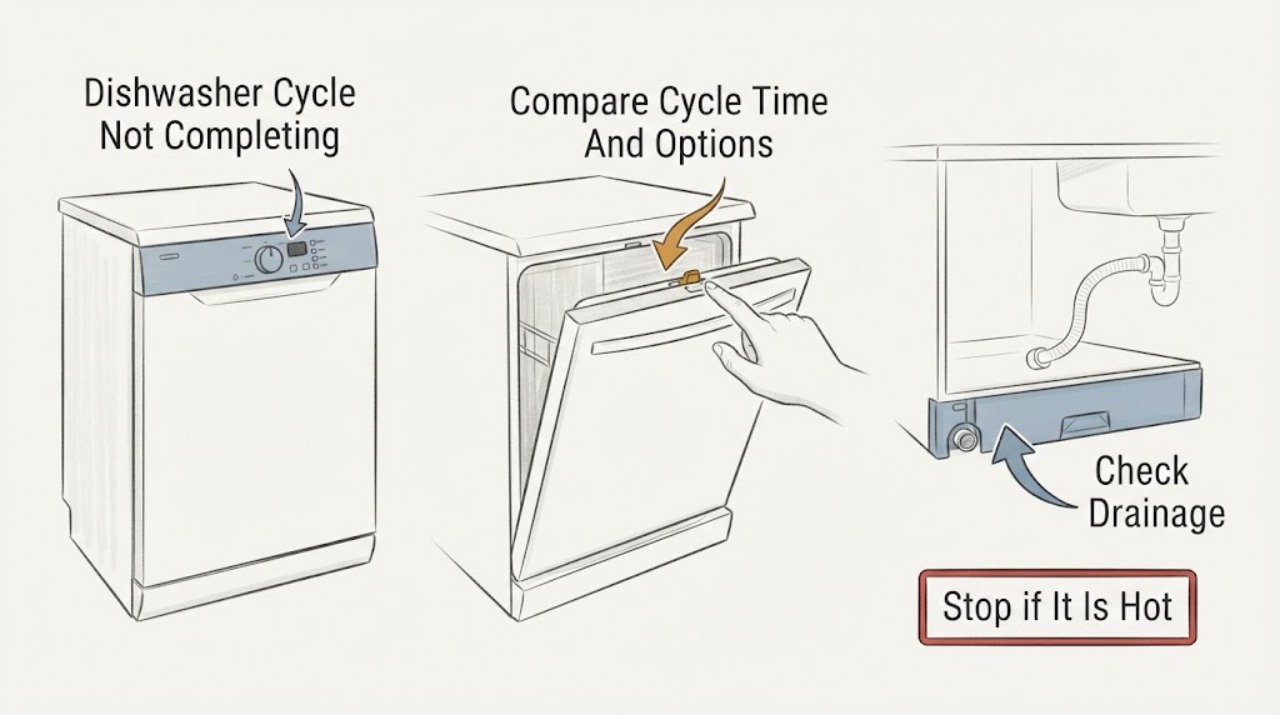
KitchenAid Dishwasher Cycle Not Completing: Check Pause, Drainage, and Controls
First compare the elapsed time with the selected cycle and options: KitchenAid says cycle length can vary with soil level, water temperature, sensors, and Heated Dry or Sani Rinse, and typical cycles range from about 1.5 to 4 hours. If the cycle stopped, check whether the door was opened, power was interrupted, Start/Resume is flashing, or a delay or control lock is active.
-
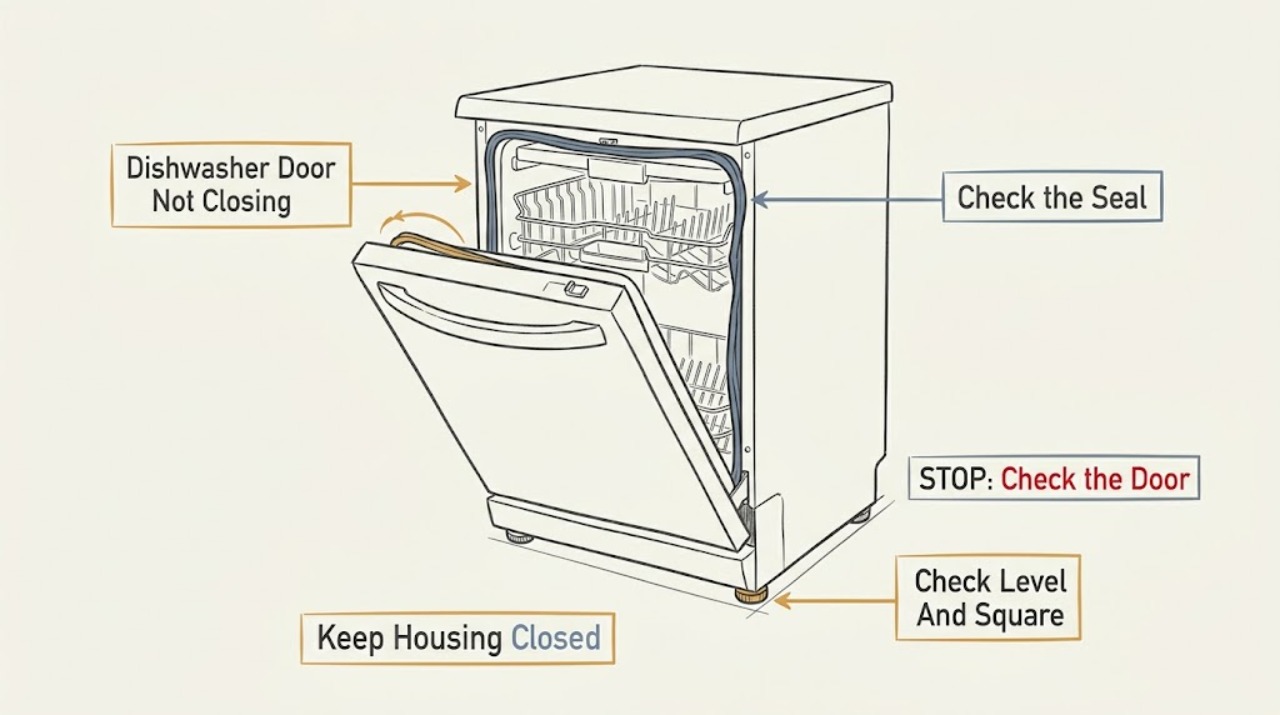
KitchenAid Dishwasher Door Not Closing: Check Clearance, Leveling, and the Latch
Start with the simple mechanical causes: remove any silverware, large food particles, or rack items protruding into the door seal, then check whether the dishwasher is level and square in its cabinet. KitchenAid says an out-of-square tub opening can prevent the door from sealing, and a damaged latch can keep the door from opening or closing properly.
-
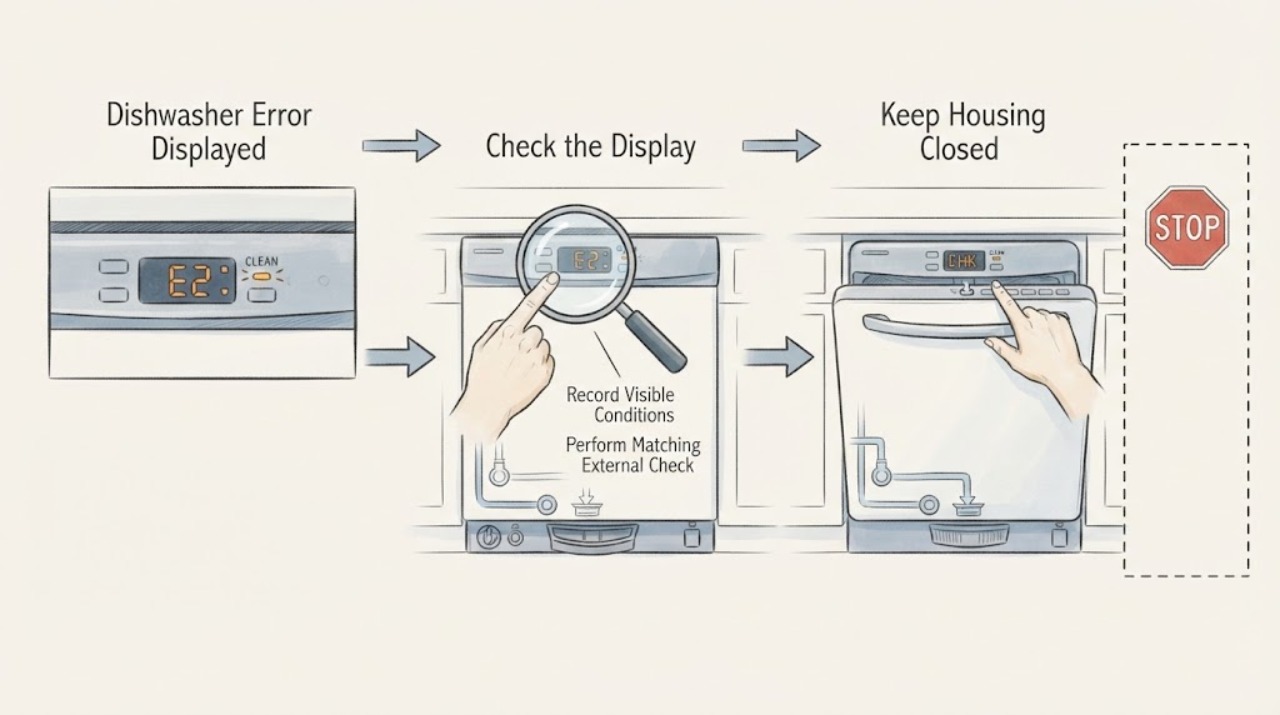
KitchenAid Dishwasher Error Displayed: Record the Exact Code or Light Pattern First
Do not guess from a single blinking light or combine code tables from different dishwasher models. Record the full KitchenAid model number, whether the panel shows a digital code or lights, and the complete repeating pattern, including pauses.
-
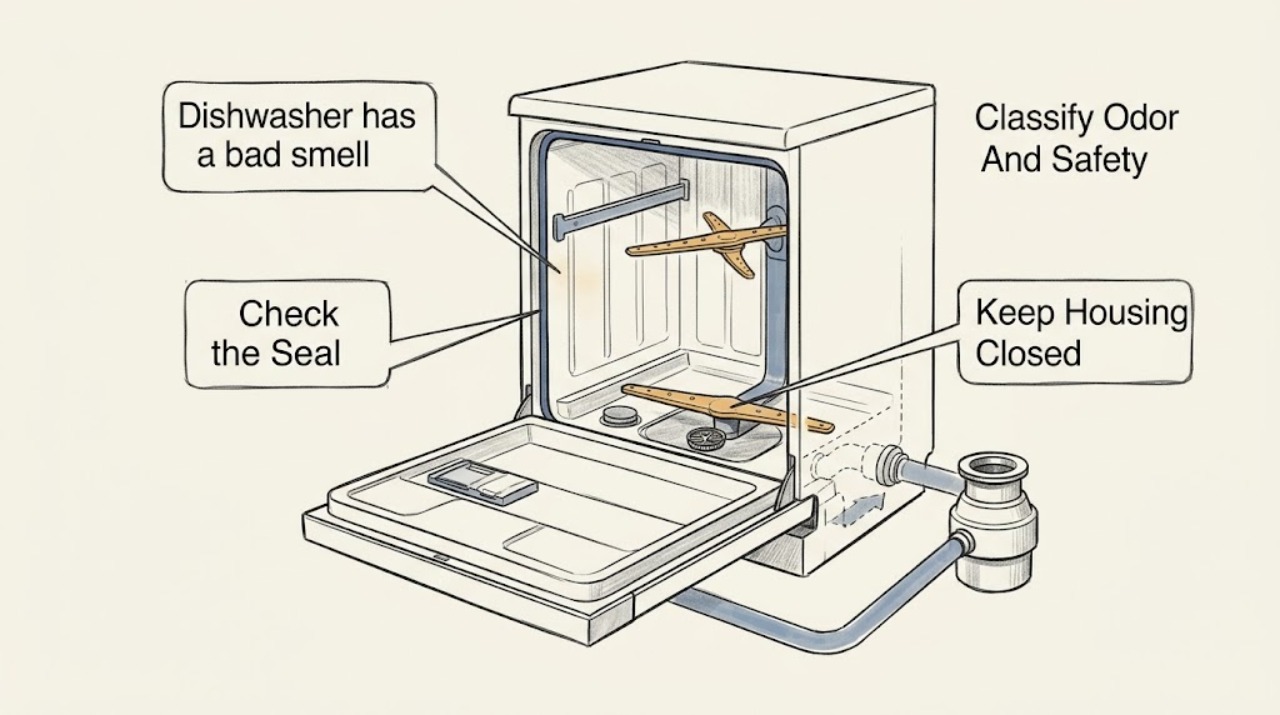
Kitchenaid dishwasher has a bad smell: What to Check and What to Do Next
First identify the odor and whether water or debris remains after a cycle. A rotten or fishy smell commonly points to food debris in the filter, spray arms, tub, or door edges; a sewage-like or wet-dog odor makes standing water or a drain-path problem more likely; a musty smell can come from residue on the door gasket.
-
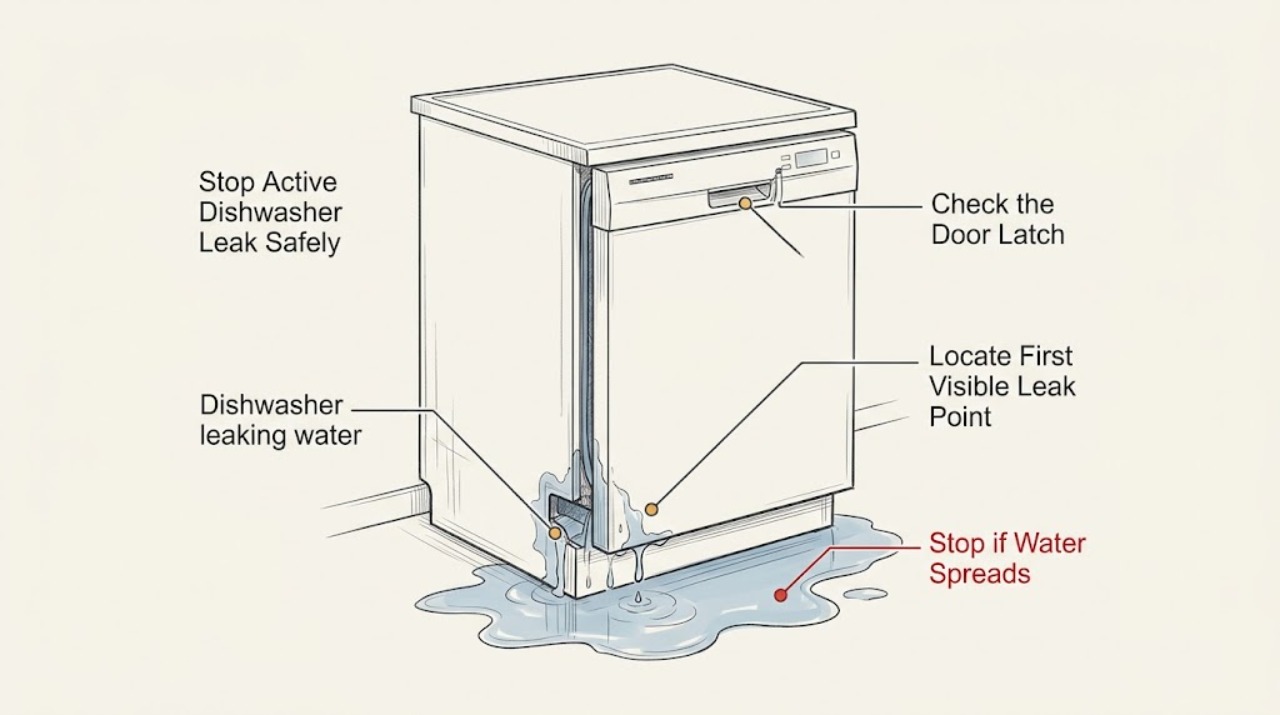
KitchenAid dishwasher leaking water: What to Check and What to Do Next
Stop a KitchenAid dishwasher leak before trying to identify the part. If water is actively escaping, cancel or stop the cycle only if the controls and floor are safe to approach; keep clear of water near electrical connections, and shut off power and the dishwasher water supply from a safe, accessible location if the leak continues.
-
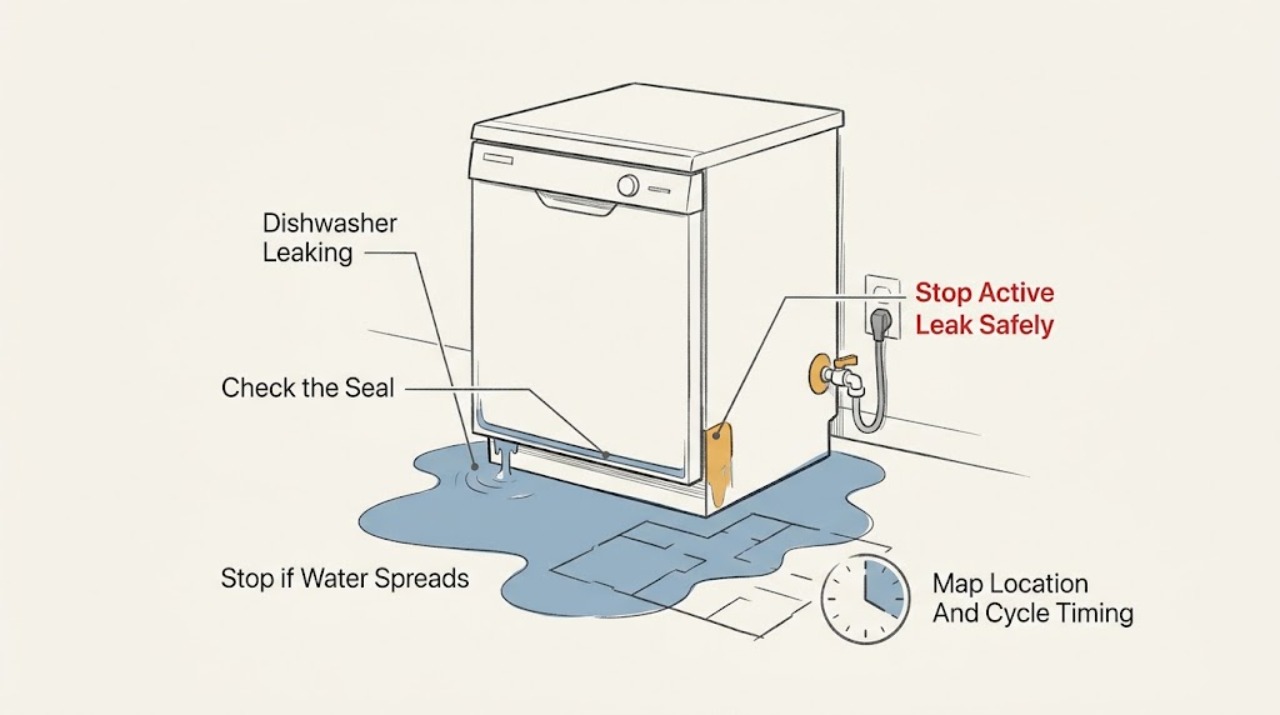
KitchenAid Dishwasher Leaking: Locate the Water Before Choosing a Fix
If a KitchenAid dishwasher is actively leaking, stop the cycle, keep people away from the water, switch off power at the breaker if it is safe to do so, and close the dishwasher's water supply. Do not run another cycle to reproduce the leak.
-
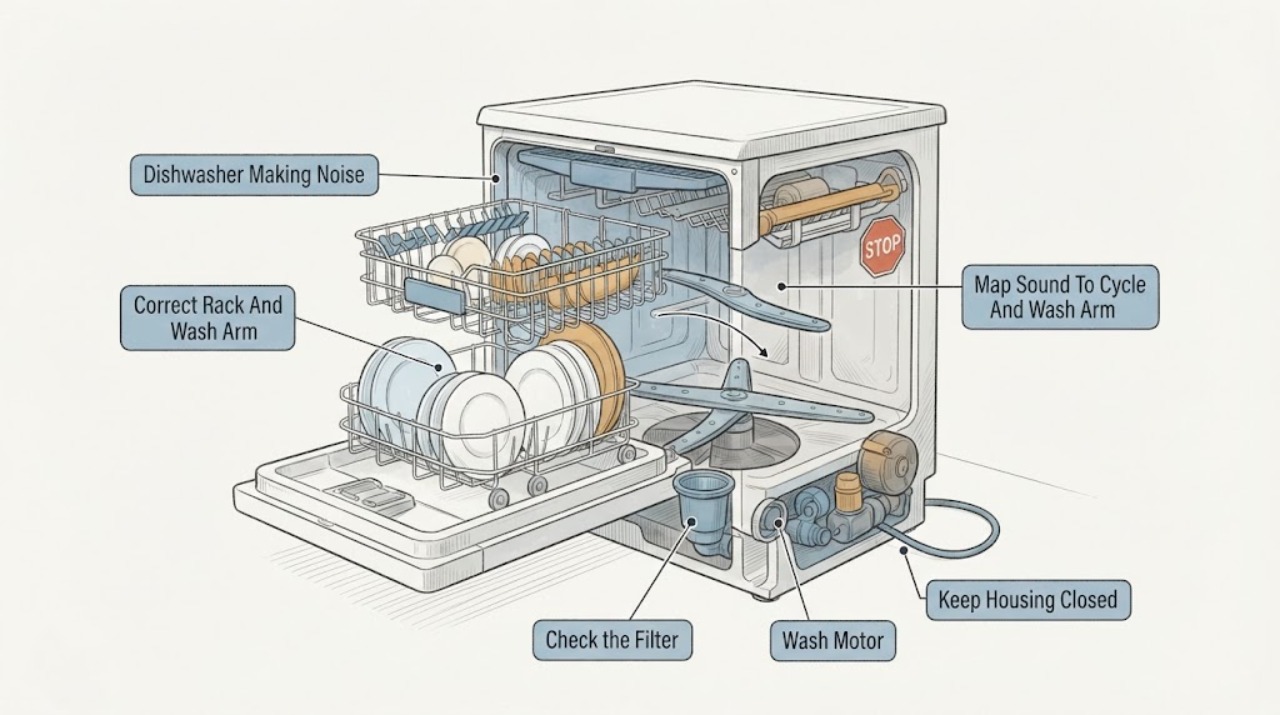
Kitchenaid Dishwasher Making Noise: Match the Sound to the Cycle Before Servicing
A KitchenAid dishwasher can normally hum, hiss, rush, swish, click, or briefly gurgle as it fills, sprays, drains, or dries. Identify where and when the sound occurs before treating it as a failed part.
-
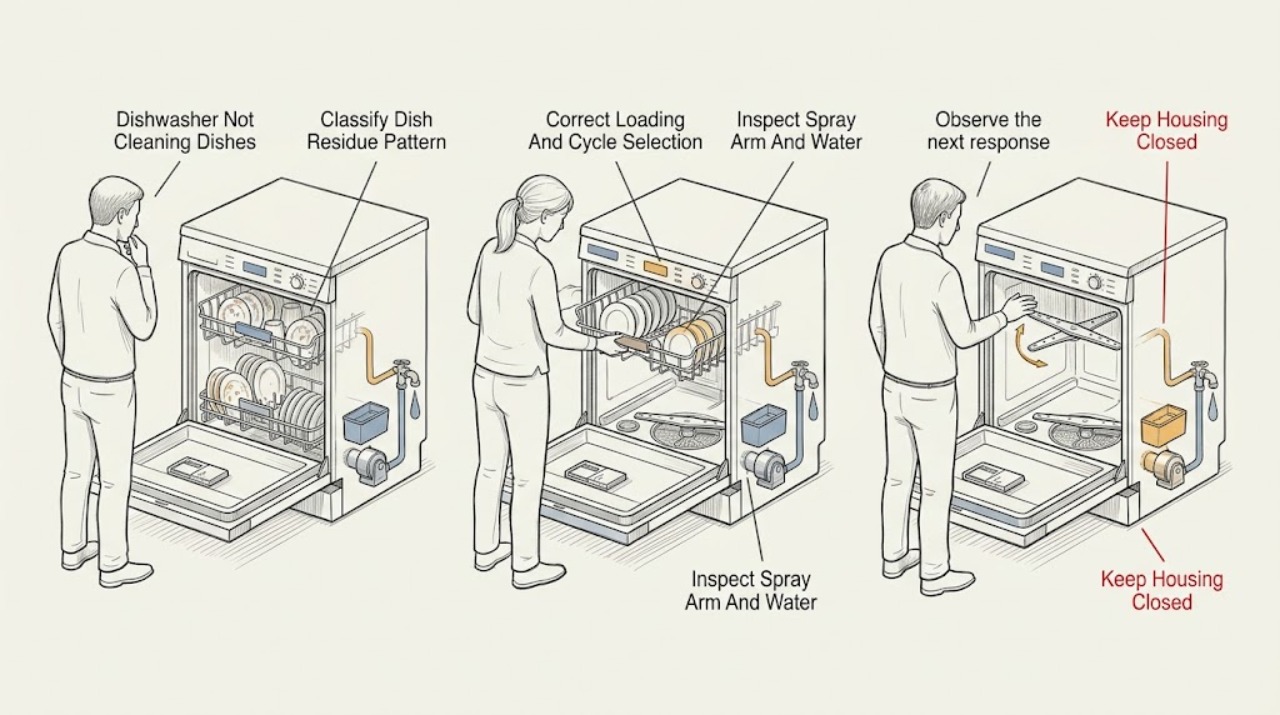
KitchenAid Dishwasher Not Cleaning Dishes: What to Check and What to Do Next
If a KitchenAid dishwasher leaves food or film on dishes, start with the water path rather than replacing a part: check that the racks and dishes do not block the spray arms or detergent dispenser, confirm the selected cycle matches the soil, and use fresh automatic-dishwasher detergent in the correct dispenser. With the machine off, spin the accessible spray arms by hand and clean the filter only as the exact model manual allows.
-
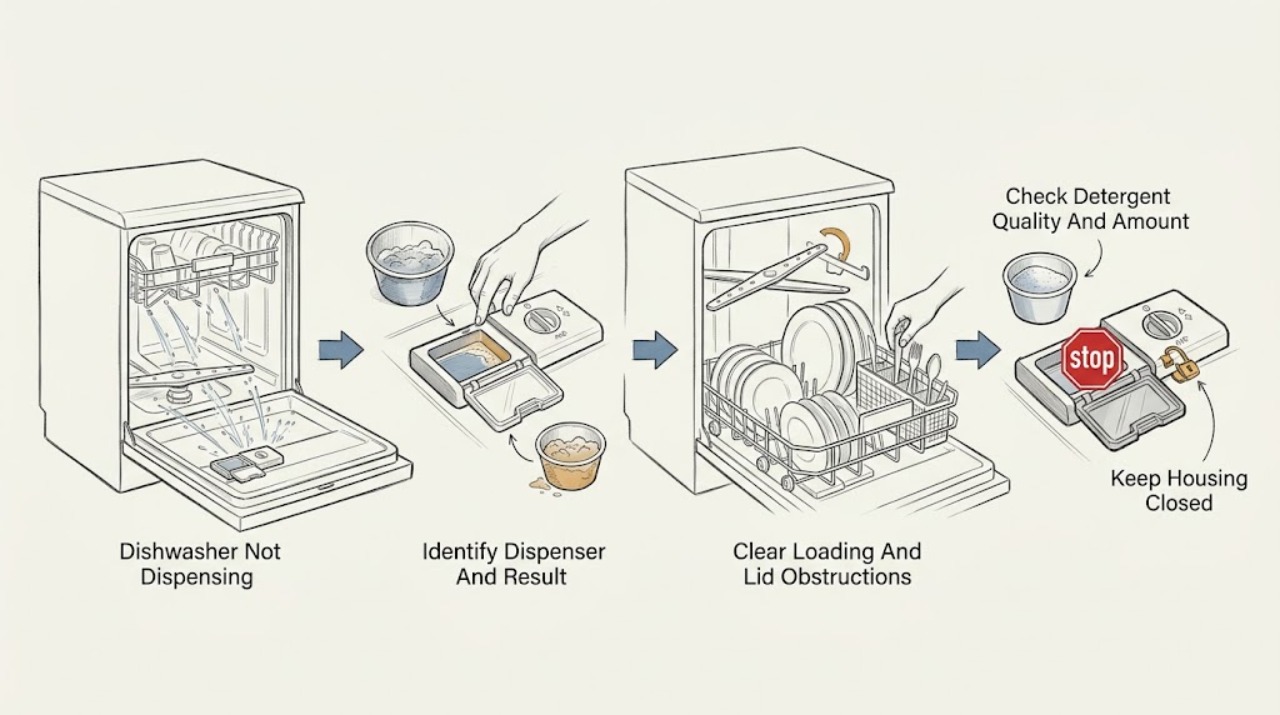
KitchenAid Dishwasher Not Dispensing: Check Detergent and Rinse-Aid Paths
First identify what is not dispensing: detergent from the main compartment, rinse aid from its reservoir, or water reaching the detergent cup. For detergent, remove any pan handle, utensil, rack, or excess powder that blocks the lid, use fresh automatic-dishwasher detergent, and make sure the dispenser is not caked with residue.
-
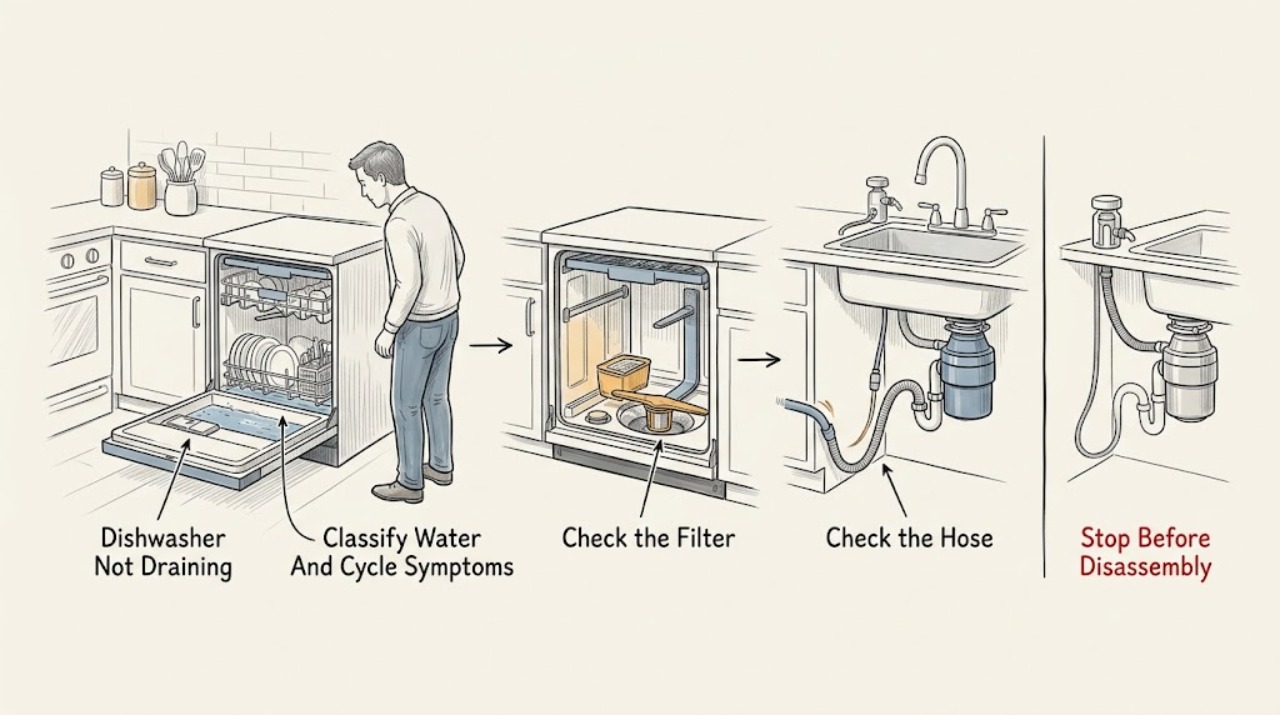
KitchenAid Dishwasher Not Draining: What to Check and What to Do Next
A KitchenAid dishwasher that leaves water behind most often has a restricted filter or sump, a blocked sink or garbage-disposer connection, an obstructed air gap, a kinked or poorly routed drain hose, excess suds from the wrong soap, or a drain-pump problem. First distinguish the small amount of water that KitchenAid says can remain in the filter area from water spread across the tub or returning from the sink.
-
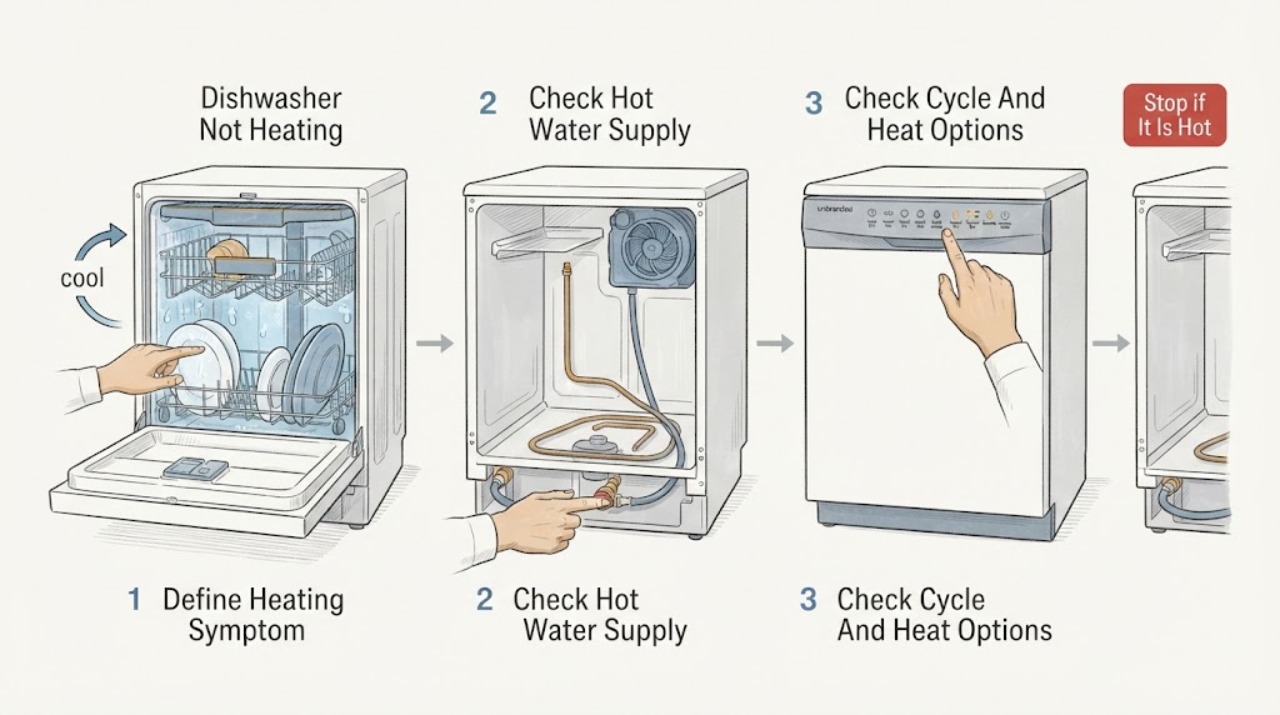
KitchenAid Dishwasher Not Heating: Check Water Supply, Cycle, and Heat Results
First define what is not heating: incoming wash water, the final rinse and drying phase, or the dishes at the end. KitchenAid says dishwashers perform best with incoming water around 120°F (49°C), and that a cold supply can lengthen cycles because the appliance may spend more time heating.
-
KitchenAid Dishwasher Not Starting: Check Water, Controls, Door, and Power
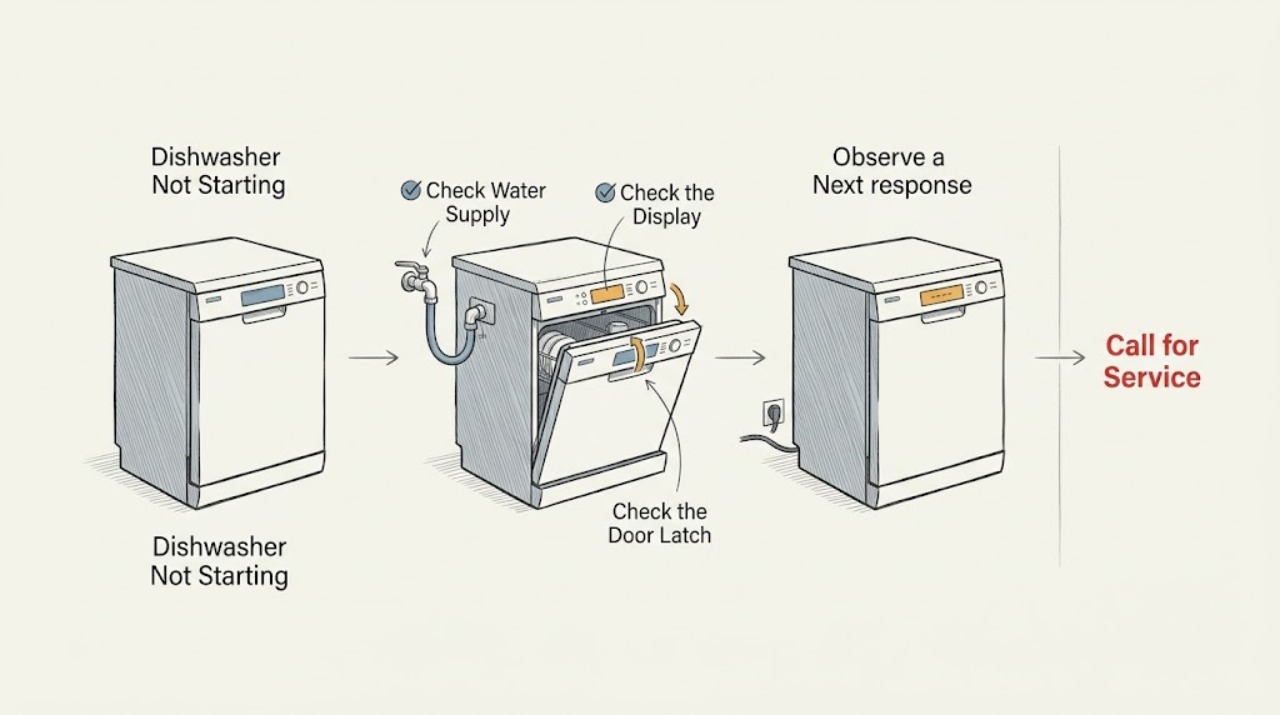
Check the external conditions in order: confirm the water valve under the sink is open, look for a lit control-lock indicator, wake the dishwasher or cancel Delay Wash, and close the door until the latch engages. KitchenAid says a door that is not fully latched can prevent a cycle from starting or resuming, and some models also use a lower rack position or door-opening feature that affects closure.
-
KitchenAid Dishwasher Not Turning On: Separate Power, Controls, Door, and Water Checks
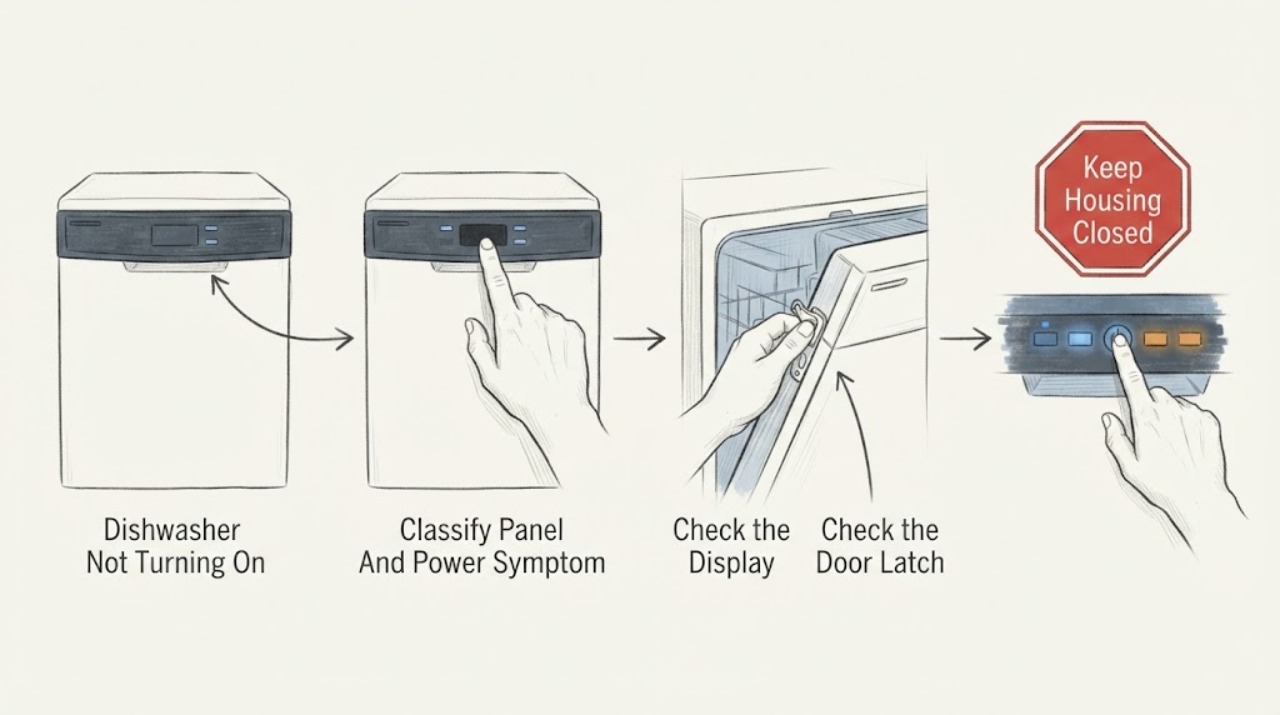
First decide whether your KitchenAid dishwasher has no power at all or has lights/buttons but will not start. If the display is dark, check the household breaker and the appliance's power connection only from a dry, safe position; do not open the electrical compartment.
-
KitchenAid Dishwasher Not Working: Route the Symptom Before Troubleshooting
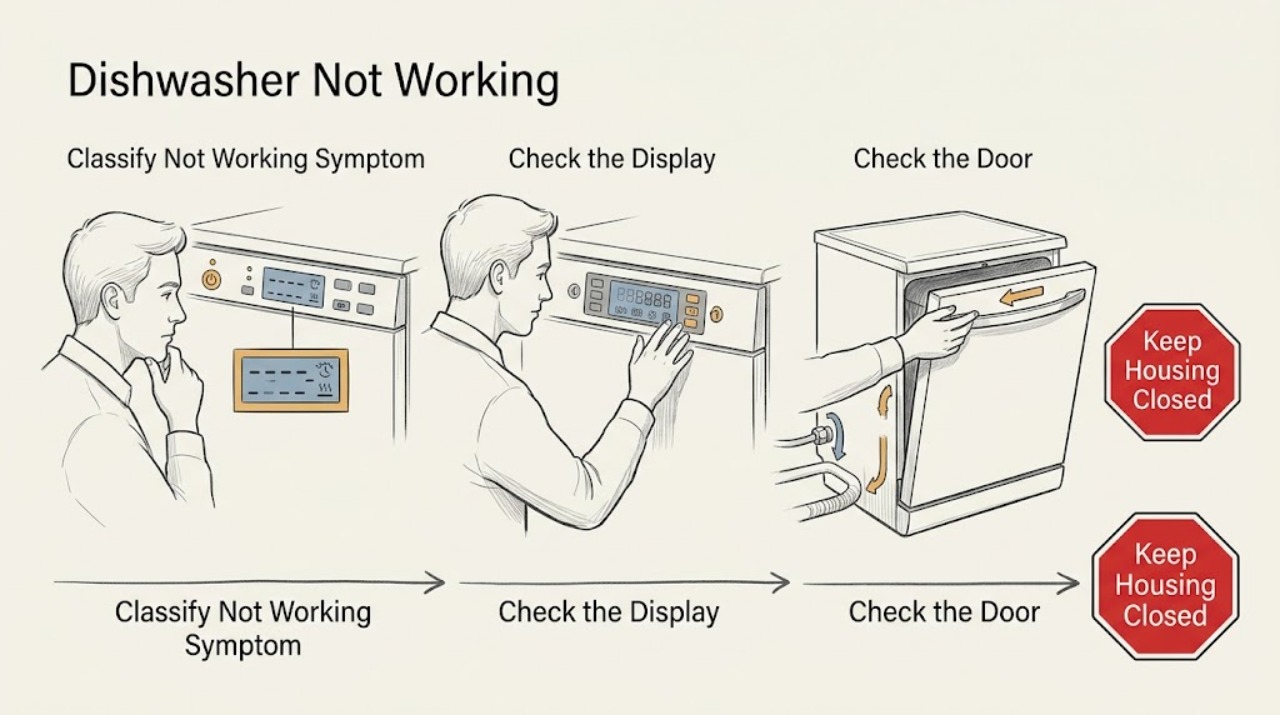
Treat “not working” as a routing symptom, not a single diagnosis. First record the KitchenAid model number and decide which of these is actually happening: no lights or power, lights on but controls do not respond, a cycle will not start, a cycle stops partway, water remains, or a code or repeating light pattern appears.
-
KitchenAid Dishwasher Overheating: Separate Normal Heat and Steam from a Fault
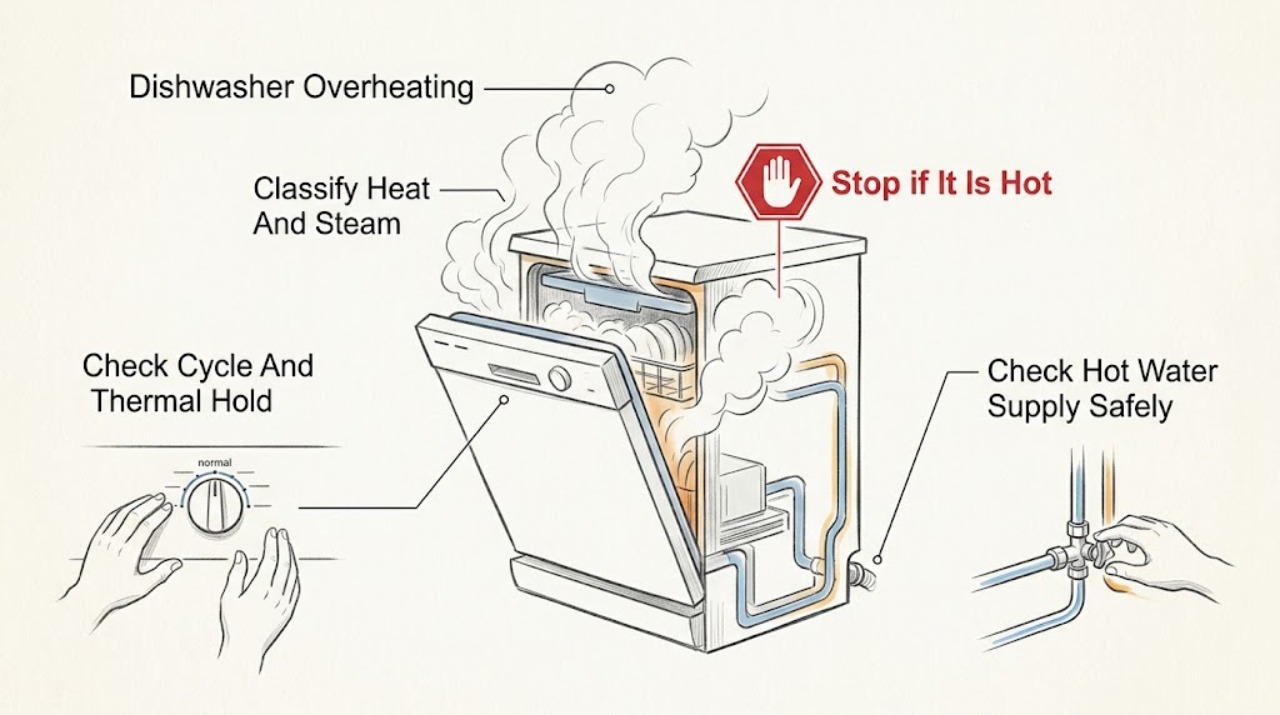
A warm tub and some steam during or after a high-temperature, sanitize, or heated-dry phase can be normal: KitchenAid says its dishwashers may pause to heat water, and the interior should feel warm and may contain steam. Do not treat about 120°F incoming water as an overheating limit; KitchenAid presents it as a water-temperature recommendation for cleaning performance.
-
Kitchenaid Dishwasher Soap Not Dissolving: Check the Dispenser, Load, Detergent, and Water
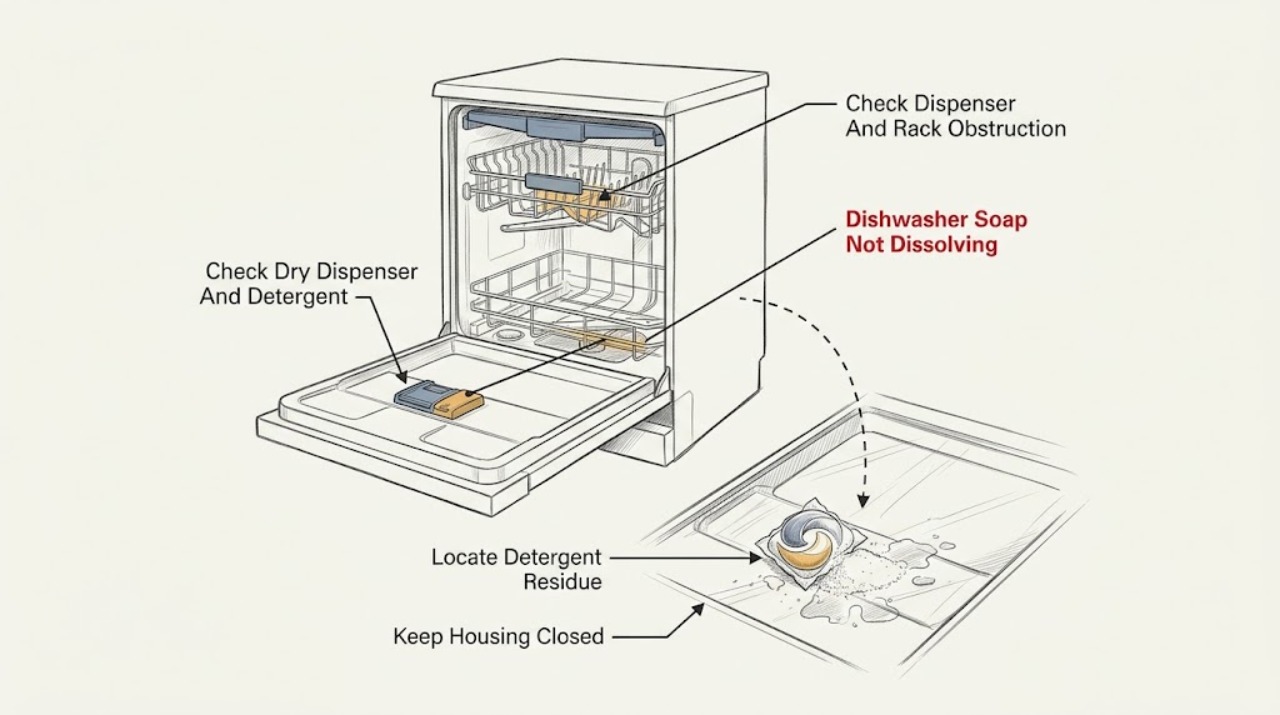
First identify where the residue is: detergent still caked in the KitchenAid dispenser, an intact pod or powder left in the tub, or white film and dirty dishes after the detergent released. For residue in the dispenser, the opened KitchenAid guidance points to old or moisture-exposed detergent, a wet dispenser, a blocked dispenser door, an upper rack in the lowest position, and a dishwasher that needs cleaning.
-
KitchenAid Dishwasher Sparking: Stop Use and Identify the Safe Service Boundary
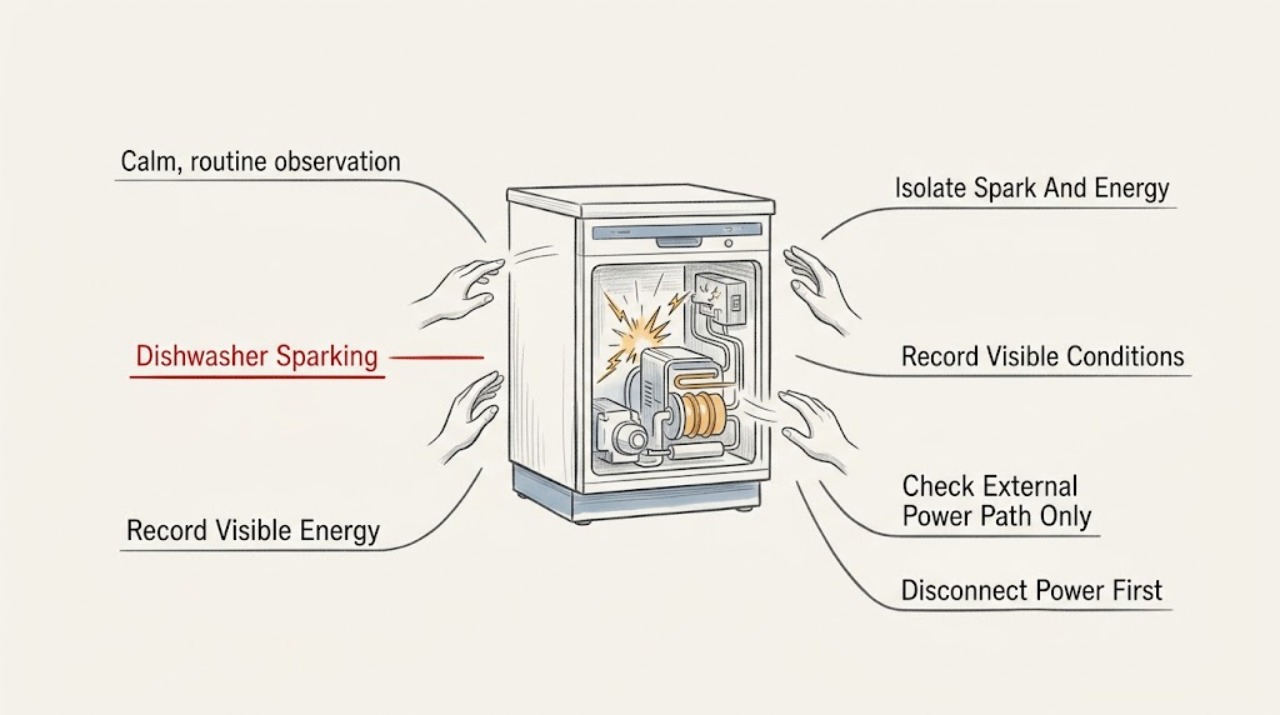
A visible spark, flash, arc, or crackling from a KitchenAid dishwasher is a stop-use symptom, not a reason to run another cycle. If the controls respond and it is safe, cancel the cycle; from a dry, safe position switch off the dishwasher breaker and close the water supply if water is also involved.