
On this page
Start here
Quick answer
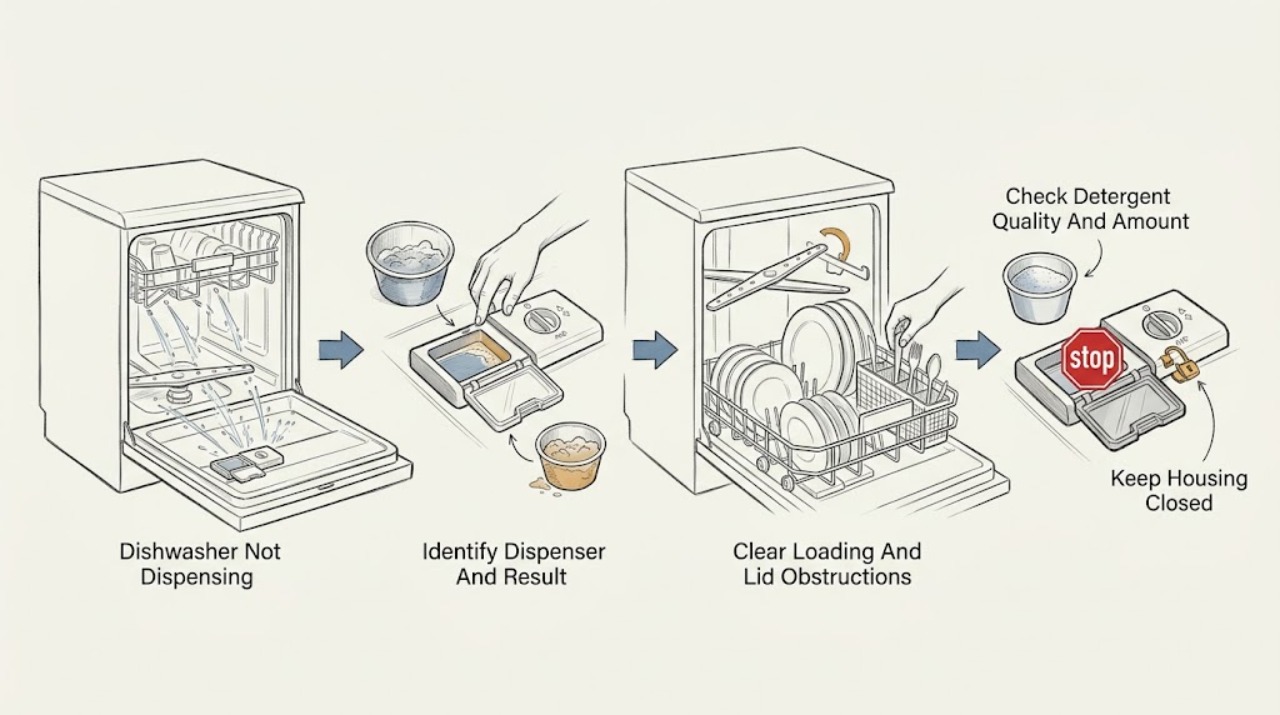
First identify what is not dispensing: detergent from the main compartment, rinse aid from its reservoir, or water reaching the detergent cup. For detergent, remove any pan handle, utensil, rack, or excess powder that blocks the lid, use fresh automatic-dishwasher detergent, and make sure the dispenser is not caked with residue. KitchenAid says water must reach the detergent dispenser and a blocked spray arm can delay release. For rinse aid, check the reservoir level, use the model's adjustment, and confirm the dishwasher is level; these controls vary by model. Run the next cycle with the dispenser empty and the racks loaded so nothing touches the lid. If the lid or latch is cracked, remains stuck after the accessible checks, rinse aid leaks, the door will not close, or the problem continues with correct loading and fresh supplies, stop selecting parts by symptom and arrange KitchenAid service or use the exact model's replacement-parts information.
Before you begin
Safety first
- Owner checks stop at model-approved loading, fresh product, accessible dispenser and gasket cleaning, visible spray-arm clearance, rinse-aid level and adjustment, and non-invasive leveling observation. Dispenser latch, actuator, valve, wiring, control, door-panel, pump, and electrical testing require qualified service.
Work through in order
Diagnostic checks
Use only checks that match the exact appliance or system and its official guide.
-
Check 1
Record the complete KitchenAid model number and inspect the dispenser after a completed cycle. Decide whether the main detergent lid stayed closed, detergent remained in an open cup, rinse aid remained at the same level, or the dishwasher produced poor cleaning or drying without an obvious dispenser change.
Expected result: The detergent lid is closed, the lid opened but product remains, rinse aid is not being used, the dispenser leaks, or the dispenser works but cleaning or drying is poor.
Next step: Follow the detergent branch for the main cup, the rinse-aid branch for its reservoir, and the water-reach branch when the lid opened but detergent remains. Use the exact model manual before removing a dispenser or filter.
Stop if: Stop for a cracked dispenser, leaking rinse aid, damaged wiring, smoke, burning odor, standing water near electrical parts, or a need to open the door panel.
Why this matters
Why: These patterns select different checks. A closed detergent lid points to obstruction, clumping, residue, or a latch issue; detergent left in an open cup points toward water reach or dissolution; unchanged rinse-aid level points to its reservoir or adjustment; poor cleaning can also come from loading or spray-arm problems.
-
Check 2
With the dishwasher unloaded or safely accessible, check that no plate, pan, utensil, rack, or handle touches or covers the detergent dispenser. Check the lid movement for visible caked detergent or residue and remove only the amount that the model's care instructions permit; do not force the latch.
Expected result: An item blocks the lid, the lid is held by caked detergent or excess powder, the dispenser is clean and unobstructed, or the lid is cracked, detached, or mechanically stuck.
Next step: Rearrange the lower rack, remove excess or clumped detergent, and close the clean lid gently. Run one cycle with fresh automatic-dishwasher detergent. If the lid remains stuck or is damaged, stop and arrange model-specific service.
Stop if: Do not pry the lid, bend its hinge, bypass the latch, use a sharp tool in the dispenser, or remove the inner door panel.
Why this matters
Why: KitchenAid says loading can keep the dispenser from opening, too much powder can bind the lid, and residue can make it stick. A clean, unobstructed dispenser that remains mechanically stuck makes a dispenser or latch fault more likely, but not a particular replaceable part.
-
Check 3
If the lid opens but detergent clings to the cup or remains undissolved, empty the old product and use fresh automatic-dishwasher detergent in the amount and compartment specified by the exact KitchenAid manual and product label. Keep the container tightly closed and dry between uses.
Expected result: The detergent is old, damp, clumped, overfilled, in the wrong compartment, or fresh and correctly measured product still remains after the cycle.
Next step: Use one fresh, correctly measured load and inspect the cup afterward. If fresh detergent remains while the lid opened, continue to the spray-arm and water-reach check; if the lid does not open, return to the obstruction or service branch.
Stop if: Do not use hand dish soap, laundry detergent, mixed chemicals, or an improvised dispenser; stop if the dispenser leaks or its latch is damaged.
Why this matters
Why: KitchenAid says aged detergent can clump and stick to the dispenser door, while excess powder can prevent the lid from closing. Fresh, correctly measured detergent removes a supply condition but does not prove the dispenser, spray arm, inlet, or control is healthy.
-
Check 4
Before starting the next cycle, spin the accessible middle or model-specified spray arm by hand and check that dishes, utensils, and the dispenser are not in its path. Load items so water can reach the dispenser and confirm the detergent cup is not overfilled.
Expected result: The spray arm meets a dish or rack, its openings appear blocked, a loaded item touches the dispenser, the cup is overfilled, or the arm and loading path are clear.
Next step: Rearrange the load and clear only the accessible spray-arm obstruction permitted by the manual, then run one normal cycle. If the spray arm does not move freely, water action is absent, or detergent remains with a clear path, arrange service.
Stop if: Do not reach into a running dishwasher, remove spray-arm or pump parts without model instructions, or perform a live water-valve or dispenser test.
Why this matters
Why: KitchenAid says a blocked spray arm can delay detergent release and that water unable to reach the dispenser can leave detergent undissolved or release it too late. A clear accessible path makes a hidden wash-system or dispenser fault more plausible, not a specific failed component.
-
Check 5
If the complaint is rinse aid not dispensing, inspect the rinse-aid reservoir level and its cap or lid with the dishwasher door open. Refill and adjust only according to the exact KitchenAid instructions, then check that the dishwasher is level and square without removing panels or changing the dispenser assembly.
Expected result: The reservoir is empty or low, the adjustment is at an unsuitable setting, the cap or lid does not close, the dishwasher is visibly out of level, or the level and controls appear normal.
Next step: Refill and adjust only as the model manual permits, correct an obvious loading or leveling issue without disassembling the appliance, and observe the next completed cycle. Escalate if the reservoir leaks, the lid will not close, or rinse aid remains unused.
Stop if: Do not pour detergent into the rinse-aid reservoir, overfill it, pry its cap, alter the dispenser mechanism, or remove the dishwasher door panel.
Why this matters
Why: KitchenAid identifies an empty reservoir, adjustment setting, and leveling as rinse-aid checks. Rinse aid affects drying, water spots, and filming; it does not supply the main detergent wash. A damaged lid or unchanged reservoir after correct use requires service rather than a guessed part.
-
Check 6
After one model-approved cycle with unobstructed loading, fresh correctly measured detergent or correctly filled rinse aid, and a clear spray path, document whether the dispenser lid opened, whether water reached the cup, whether product remained, and whether the dishwasher leaked or showed an error.
Expected result: The dispenser works after an external correction, the lid remains stuck, detergent remains despite a clear path, rinse aid leaks or remains unused, the dishwasher leaks, or an internal latch, actuator, wiring, valve, or control would need access.
Next step: Stop use if there is leaking or electrical risk and arrange qualified KitchenAid service with the exact model and cycle observations. Use only model-specific replacement information if a technician confirms the dispenser assembly is the fault.
Stop if: Do not pry or bypass the dispenser door, perform live electrical tests, remove the inner door, replace an actuator or valve by guesswork, or continue cycles through a leak or burning odor.
Why this matters
Why: KitchenAid supports external loading, product, spray-arm, rinse-aid, and leveling checks and says a broken dispenser door may need a model-specific replacement. Persistent failure does not identify a compatible latch, actuator, valve, wiring, or control from the symptom alone.
Use your observations
Decision map
Find the observation that best matches what you see, then follow the next safe action.
-
PATH 01Safety boundary
What you see
The main detergent lid stays closed and a pan, utensil, rack, excess powder, or caked product is visible near the dispenser.
Do this next
Rearrange the load, remove visible excess or clumped detergent using the model-approved method, add fresh correctly measured detergent, and run one cycle.
Why this path and its safety boundary
Why it matters: A loading or residue condition is more likely than an internal dispenser failure. KitchenAid specifically warns that items can block the lid and that excess or old detergent can bind it.
Safety stop: Escalate if the lid remains stuck or is cracked; do not pry or bypass the latch.
-
PATH 02Safety boundary
What you see
The detergent lid opened, but powder, gel, or a tablet remains in the cup or appears to release late, and no item blocks the lid.
Do this next
Check spray-arm movement and loading, use fresh correctly measured product, and inspect the next cycle. Arrange service if the cup remains full with normal water action.
Why this path and its safety boundary
Why it matters: Water reach, a blocked spray arm, overfilling, damp detergent, or a dispenser position issue is more likely than a simple lid obstruction. A clear spray path and fresh product that still remain shift the case toward service.
Safety stop: Do not test the dispenser actuator or inlet wiring with power applied.
-
PATH 03Safety boundary
What you see
The main detergent cup behaves normally, but the rinse-aid level does not decrease or dishes show excess moisture, spots, or filming.
Do this next
Check the reservoir level, model-approved adjustment, cap closure, and visible leveling condition. Escalate for a leak, broken cap, or unchanged level after correct use.
Why this path and its safety boundary
Why it matters: The rinse-aid reservoir, adjustment, cap, or dishwasher leveling is more relevant than detergent loading. Rinse aid affects final-rinse drying and spotting rather than the main detergent release.
Safety stop: Do not put detergent in the rinse-aid reservoir or open the dispenser mechanism.
-
PATH 04Safety boundary
What you see
The dispenser or rinse-aid door is cracked, detached, leaking, repeatedly stuck, or still fails after correct loading, fresh product, spray-arm, and rinse-aid checks.
Do this next
Keep the dishwasher out of service if it leaks or presents electrical risk and arrange qualified KitchenAid service with the model, dispenser type, and observed cycle result.
Why this path and its safety boundary
Why it matters: The condition may involve a model-specific dispenser door, latch, actuator, valve, wiring, or control, but KitchenAid's public guidance does not justify selecting one component from the symptom alone.
Safety stop: Do not pry, bypass, remove the inner door, perform live tests, or order a dispenser kit without confirming the exact model and failed assembly.
Helpful context
Understand the symptom
“Not dispensing” can describe two different reservoirs
Check the dispenser after a completed cycle before changing anything. If the main detergent cup is still closed or full, the lid may have been blocked, the detergent may have clumped, or the dispenser may need cleaning. If the detergent cup opened but detergent remains, water may not have reached it or the product may not have dissolved. If the rinse-aid reservoir level does not fall, use the rinse-aid branch instead; rinse aid is released during the final rinse and its adjustment and reservoir design vary by model. A dispenser problem is not the same as a dishwasher that fails to fill, wash, or drain.
Start with loading and fresh detergent
KitchenAid says a large pan, handle, utensil, or rack can block the dispenser door or keep water from reaching the cup. Too much powder can also bind the lid, while old detergent exposed to air can clump and stick. Empty the cup, remove only visible residue with the model-approved method, and use fresh automatic-dishwasher detergent stored closed and dry. Pre-measured detergent belongs in the main compartment when the model instructions call for it; do not fill past the model's instructions.
Water delivery and rinse aid need separate checks
A dispenser lid can open and still leave detergent behind if the spray arm is blocked or the loaded items shield the cup from the water action. Spin the accessible spray arm by hand before starting a cycle and rearrange items if it meets resistance, following the model manual. If the issue is rinse aid, check its level and adjustment rather than changing detergent. KitchenAid also links rinse-aid performance to a level dishwasher; an out-of-level tub can affect washing and door sealing.
Know when the dispenser itself needs service
A cracked, detached, or repeatedly stuck detergent or rinse-aid door is different from a one-time loading error. KitchenAid says a replacement kit, if needed, is selected by the dishwasher model. Do not pry the lid, bypass its latch, remove the door panel, or test a dispenser solenoid or wiring. If detergent remains after correct loading, fresh product, a clear spray path, and an appropriate rinse, record the model and arrange qualified service.
Only after diagnosis
Potential parts
- detergent or rinse-aid dispenser assembly
Consider this category only if the exact model's dispenser door or latch is confirmed broken or mechanically nonfunctional after loading, residue, detergent, spray-arm, and rinse-aid checks.
Confirm the complete dishwasher model and the manufacturer's fit information; do not infer compatibility from the symptom or from another KitchenAid model.
When checks do not resolve it
Need a professional?
Safety scope: Owner checks stop at model-approved loading, fresh product, accessible dispenser and gasket cleaning, visible spray-arm clearance, rinse-aid level and adjustment, and non-invasive leveling observation. Dispenser latch, actuator, valve, wiring, control, door-panel, pump, and electrical testing require qualified service.
Common questions
FAQ
Why is my KitchenAid dishwasher detergent dispenser not opening?
Check for a pan handle, utensil, dish, or rack blocking the lid, then look for excess or clumped detergent and visible residue. Use fresh automatic-dishwasher detergent and follow the exact model's loading instructions. If the clean lid remains stuck or is cracked, arrange service.
Why does detergent remain in the KitchenAid dishwasher dispenser after the lid opens?
KitchenAid says water must reach the dispenser and a blocked spray arm or loaded item can delay release. Check spray-arm movement, dispenser clearance, overfilling, and detergent freshness. If fresh product remains with a clear water path, arrange model-specific service.
What should I do if my KitchenAid dishwasher is not dispensing rinse aid?
Check that the rinse-aid reservoir is full, adjust its release setting only as the exact model instructs, and confirm the dishwasher is level and square. Rinse aid affects drying, water spots, and filming; it is separate from the main detergent cup. A leaking or unchanged reservoir needs service.
Can I use any detergent if the KitchenAid dispenser is not releasing it?
Use automatic-dishwasher detergent only, in the compartment and amount specified by the package and exact KitchenAid manual. KitchenAid recommends fresh detergent stored tightly closed and dry; old or clumped product can stick to the dispenser door. Do not use hand dish soap or laundry detergent.
Should I replace the KitchenAid dishwasher dispenser?
Not from the symptom alone. KitchenAid says a broken or detached dispenser door may need a replacement kit whose part number depends on the dishwasher model. Confirm the exact model and have the latch or dispenser fault verified before ordering or opening the door panel.
Read the exact guide
Official sources
- Dull Surfaces on Dishes - DishwasherKitchenAid Product Help · KitchenAid Product Help wash-performance article; spray-arm and dispenser arrangement must be checked against the exact model.
- Detergent Dispenser Lid will not Open or Close - DishwasherKitchenAid Product Help · KitchenAid Product Help dispenser-lid article; exact lid and latch design varies by dishwasher model.
- Detergent Door will Not Open - DishwasherKitchenAid Product Help · KitchenAid Product Help article for dishwasher detergent doors; loading and detergent details remain model-dependent.
- Detergent Dispenser is Not OpeningKitchenAid Product Help · KitchenAid dishwasher dispenser guidance; exact dispenser construction and replacement part depend on the dishwasher model.
- Not Dispensing Rinse Aid - DishwasherKitchenAid Product Help · KitchenAid Product Help rinse-aid article; reservoir size, adjustment controls, and leveling details vary by model.
Community feedback
Share a repair observation
Share a plain-text repair observation. Accepted observations are published automatically; this page may take a moment to update.