
On this page
Start here
Quick answer
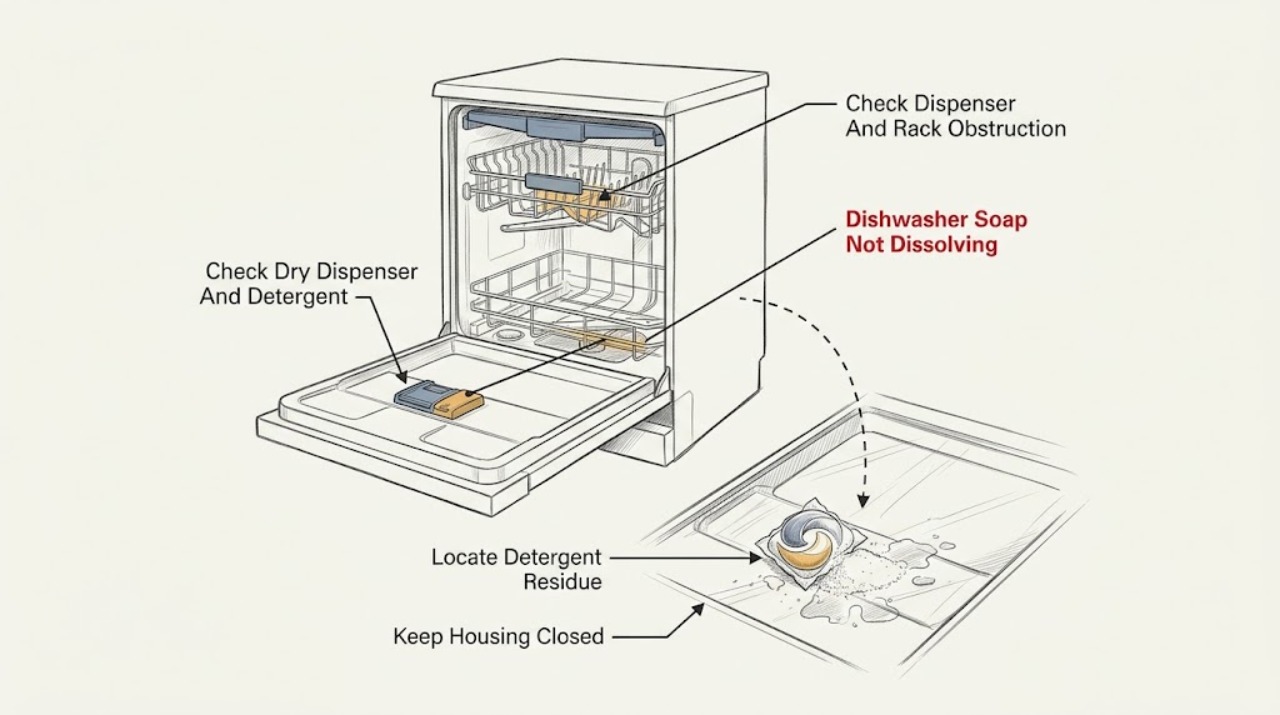
First identify where the residue is: detergent still caked in the KitchenAid dispenser, an intact pod or powder left in the tub, or white film and dirty dishes after the detergent released. For residue in the dispenser, the opened KitchenAid guidance points to old or moisture-exposed detergent, a wet dispenser, a blocked dispenser door, an upper rack in the lowest position, and a dishwasher that needs cleaning. With the dishwasher stopped and safe to handle, dry the dispenser, replace clumped detergent, load only automatic-dishwasher detergent in the main compartment, keep pans and the upper rack from blocking the lid, and check the accessible spray arm for free movement. KitchenAid also says cooler incoming water can make detergent activation and cleaning less effective and recommends running the nearby hot-water faucet until hot before starting; use the exact model guide for any model-specific setting. If the dispenser still will not open or release, water does not reach the compartment, there is excessive suds or a leak, or the issue persists after the external checks, stop repeated cycles and arrange qualified service. Do not force the dispenser, remove internal parts, mix cleaning chemicals, or work on the dishwasher while energized.
Before you begin
Safety first
- The user may identify the residue location, dry and inspect the accessible dispenser, replace stale detergent, rearrange dishware, check accessible spray-arm clearance with the dishwasher stopped, and run nearby hot water before a normal cycle. Qualified personnel must handle dispenser latches, pumps, valves, heaters, wiring, control boards, drainage components, and internal panels.
Work through in order
Diagnostic checks
Use only checks that match the exact appliance or system and its official guide.
-
Check 1
After the cycle has ended and the dishwasher is safe to open, identify the residue location and type: powder or pod still in the dispenser, detergent in the tub, detergent stuck to the door, or white film and dirty dishes with an empty dispenser. Record the cycle and option used, whether the dispenser lid opened, and whether the issue happens every cycle or only with a short cycle.
Expected result: The dispenser is still closed, the lid opened but detergent is caked, the pack is intact in the tub, the dispenser is empty but dishes have film, or the issue occurs only on a particular cycle.
Next step: Follow the matching branch: inspect the dry dispenser and detergent, then obstructions and spray-arm access, then water and detergent conditions. If there is a leak, excessive suds, smoke, odor, or electrical warning, stop instead of running another cycle.
Stop if: Do not reach into a running dishwasher, force the dispenser lid, or remove internal parts to determine where detergent went.
Why this matters
Why: The location separates a release or obstruction problem from detergent choice, water-temperature, loading, or wash-performance factors. It does not by itself prove a failed dispenser actuator, heater, pump, or control.
-
Check 2
With the dishwasher stopped, wipe the dispenser dry with a soft dry cloth and inspect for caked powder, old detergent, or residue around the lid. Replace detergent that has clumped or been exposed to air, keep fresh detergent tightly closed in a cool, dry place, and add only the package-directed amount immediately before starting. Use automatic-dishwasher detergent only; do not use hand dish soap or laundry detergent.
Expected result: The dispenser was wet, detergent is clumped or stale, the wrong detergent was used, the amount was excessive, or the compartment is clean and the correct fresh detergent is being used.
Next step: Correct only the detergent and moisture issue, then use one normal model-appropriate cycle. If fresh detergent still remains, continue to the obstruction and water-access checks; do not scrape the latch or force the lid.
Stop if: If wrong detergent has produced heavy suds or water is escaping, stop the dishwasher and let suds dissipate; do not add another chemical cleaner or run repeated cycles.
Why this matters
Why: KitchenAid links moisture and aged detergent to sticking and poor dissolution, and warns that incorrect detergent can cause suds and poor performance. A clean dry dispenser with fresh automatic detergent makes those explanations less likely but does not prove water reached the cup.
-
Check 3
Before closing the door, inspect the dispenser lid and the space in front of it. Move a pan handle, utensil, cutting board, or other item that touches or blocks the lid. Check whether the upper rack is in its lowest position and could prevent the dispenser from opening; raise it only if the exact rack design permits. Do not force a rack, lid, or latch.
Expected result: A dish or rack blocks the dispenser, the lid is overfilled with powder and cannot close, the lid closes and has clear travel, or the lid is damaged or remains stuck without an obstruction.
Next step: Correct the accessible load or rack position and run one normal cycle if no other hazard exists. If the lid is damaged, remains stuck, or detergent still does not release, stop and arrange qualified service using the exact model manual.
Stop if: Do not bend the dispenser door, wedge it open, pry the latch, or remove the inner door panel.
Why this matters
Why: KitchenAid identifies load and rack interference as a direct reason for a dispenser lid not to open or for detergent to release too late. If the path is clear but the lid remains stuck, a model-specific dispenser or latch issue is possible but not safe to diagnose by force.
-
Check 4
With the dishwasher off and the racks accessible, check that the model-permitted spray arm can move freely and is not blocked by dishware. Avoid overloading the racks and keep the dispenser in the path of the spray. Before starting the next cycle, run the hot-water faucet nearest the dishwasher until it is hot, as KitchenAid recommends; do not alter the water heater or perform an internal pressure test.
Expected result: The spray arm meets a dish or feels obstructed, the load blocks the dispenser, the nearby water is initially cold, the issue is limited to short cycles, or the accessible arm and load are normal.
Next step: Rearrange the accessible load and use the exact model's normal cycle after the nearby water is hot. If the dispenser still contains detergent or the dishwasher is not filling, spraying, or heating normally, stop repeated testing and arrange service.
Stop if: Do not touch a moving spray arm, remove a spray-arm assembly without model instructions, or open electrical access panels.
Why this matters
Why: KitchenAid says a blocked spray arm or dispenser can delay detergent release, while cooler incoming water can lengthen heating and affect detergent activation and cleaning. These checks do not establish an internal fill valve, pump, heater, or circulation fault.
-
Check 5
Record the exact model, detergent type and age, dispenser dry/wet and open/closed state, rack and load position, spray-arm result, selected cycle, nearby-water observation, and whether the dishwasher cleaned or drained normally. If the external checks do not explain the residue, do not remove the dispenser, wiring, pump, valve, heater, or control panel.
Expected result: Fresh detergent remains after a clear, dry dispenser path; the dispenser never opens; the dishwasher has weak or absent spray, poor filling, no heat, standing water, a leak, or recurring residue despite correct detergent and loading.
Next step: Stop repeated cycles, disconnect power only if safe, close the water supply if there is an active accessible leak, and arrange qualified KitchenAid dishwasher service. Provide the model and recorded observations without recreating the failure.
Stop if: Stop immediately for water on the floor, smoke, burning odor, sparks, exposed wiring, repeated breaker trips, or chemical exposure.
Why this matters
Why: An internal dispenser latch, water-delivery, circulation, heating, control, or drainage issue may be involved, but the public KitchenAid guidance does not identify a universal internal part or safe user repair for every model.
Use your observations
Decision map
Find the observation that best matches what you see, then follow the next safe action.
-
PATH 01Next step
What you see
Detergent is caked in the dispenser, the compartment was wet, or the product is old and clumped.
Do this next
Wipe the compartment dry, replace clumped detergent, store the replacement tightly closed in a cool dry place, and use the package-directed amount in one normal cycle. Escalate if fresh detergent still remains.
Why this path and its safety boundary
Why it matters: KitchenAid says moisture and air-exposed old detergent can make detergent stick and fail to dissolve or release at the correct time.
-
PATH 02Next step
What you see
A pan, utensil, rack, or excessive powder prevents the detergent lid from closing or opening fully.
Do this next
Rearrange the load and, where the exact design permits, move the upper rack from its lowest position. Do not pry the lid. Use service if the clear lid remains stuck or damaged.
Why this path and its safety boundary
Why it matters: The detergent may release late or not at all because the dispenser path is physically blocked; this is a loading or access issue before it is a dispenser-part diagnosis.
-
PATH 03Next step
What you see
The dispenser opens but detergent remains, the spray arm is blocked, the load blocks the dispenser, or incoming water is cold at the start.
Do this next
Correct only the accessible load and spray-arm obstruction, run the nearby faucet until hot before starting, and use a normal model-appropriate cycle. Persistent weak spray, no fill, or no heat needs service.
Why this path and its safety boundary
Why it matters: KitchenAid says blocked spray or dispenser access can delay release, and cooler incoming water can extend heating and affect detergent activation and cleaning.
-
PATH 04Next step
What you see
The dispenser is empty but dishes have white film or soil, or an intact pack remains mainly after a short cycle while the dispenser and load are clear.
Do this next
Follow the package and exact-model detergent instructions, use fresh automatic-dishwasher detergent, run the nearby hot faucet before starting, and clean the dishwasher on the model's maintenance schedule. Do not compensate with excessive detergent.
Why this path and its safety boundary
Why it matters: The detergent may have released but not fully dissolved or cleaned under the selected conditions. KitchenAid notes detergent form, amount, fresh storage, water temperature, cycle choice, and hard-water deposits can affect results.
-
PATH 05Next step
What you see
Hand dish soap or another non-automatic product created suds, water is leaking, the dispenser never opens despite a clear path, or residue persists through correct fresh detergent and loading.
Do this next
Stop the dishwasher and allow suds to dissipate; do not add chemicals or run repeated cycles. For a persistent dispenser or performance fault, disconnect power only if safe and arrange qualified service.
Why this path and its safety boundary
Why it matters: Suds can push water out and create a leak or poor performance, while a persistent clear-path release failure may require an internal dispenser, water, heating, circulation, or control diagnosis.
Helpful context
Understand the symptom
Find out whether the detergent released at all
A KitchenAid dishwasher problem described as soap not dissolving can mean several different symptoms. Check whether powder or a pod is still in the dispenser, whether it stuck to the door or tub, or whether the dispenser is empty but the dishes have white film. The first pattern points to release, obstruction, or moisture; the last can involve detergent, water temperature, loading, hard-water deposits, or wash performance.
Keep the dispenser dry and use fresh automatic detergent
KitchenAid says old detergent exposed to air can clump and that moisture in the dispenser can make detergent stick. Wipe the compartment dry, replace clumped product, store fresh detergent in a tightly closed container in a cool dry place, and add the package-directed amount just before starting. Use only automatic-dishwasher detergent; hand dish soap can create suds and push water out.
Clear the dispenser lid and spray path
Before closing the door, make sure pans, handles, utensils, the upper rack, and excess powder do not block the dispenser lid. KitchenAid also says a blocked spray arm can delay detergent release, so check only the accessible spray-arm path with the dishwasher stopped and rearrange the load if needed. Do not pry the lid or remove internal parts.
Use hot incoming water without changing the appliance
KitchenAid says cooler incoming water can make the dishwasher spend longer heating and can affect detergent activation and cleaning. Run the hot-water faucet nearest the dishwasher until it is hot before starting, then use the cycle and detergent instructions for your exact model. Do not change the water heater setting or perform a pressure or heating-element test as a troubleshooting shortcut.
Know when a release problem needs service
If fresh detergent remains after the dispenser is dry, unobstructed, and correctly loaded, or if the dishwasher has weak spray, no fill, no heat, standing water, a leak, smoke, odor, or electrical symptoms, stop repeated cycles. A dispenser latch, valve, pump, heater, control, or drainage fault is model-specific and should be handled by qualified service without opening an energized appliance.
When checks do not resolve it
Need a professional?
Arrange qualified KitchenAid dishwasher service when fresh automatic-dishwasher detergent remains after the dispenser is dry, unobstructed, and correctly loaded; when the dispenser never opens; or when the dishwasher also has weak spray, no fill, no heat, standing water, a leak, smoke, burning odor, sparks, or repeated breaker trips. Stop immediately for water on the floor, chemical exposure, or any electrical or fire warning.
Safety scope: The user may identify the residue location, dry and inspect the accessible dispenser, replace stale detergent, rearrange dishware, check accessible spray-arm clearance with the dishwasher stopped, and run nearby hot water before a normal cycle. Qualified personnel must handle dispenser latches, pumps, valves, heaters, wiring, control boards, drainage components, and internal panels.
Common questions
FAQ
Why is the soap still in my KitchenAid dishwasher dispenser?
KitchenAid points to old or clumped detergent, a wet compartment, a blocked dispenser lid, an upper rack in the lowest position, and a dishwasher that needs cleaning. Dry the dispenser, use fresh automatic-dishwasher detergent, clear the lid path, and follow the exact model guide. If the clear dispenser still does not release detergent, arrange service.
Can a wet detergent dispenser keep the soap from dissolving?
Yes. KitchenAid says moisture inside the dispenser can make detergent stick and fail to release at the correct time. Wipe the compartment dry with a soft dry cloth before adding fresh detergent, and replace any product that has clumped from air exposure.
Can a dish or upper rack block the KitchenAid detergent door?
Yes. KitchenAid says pans, utensils, and an upper rack in the lowest position can obstruct the dispenser, and too much powder can keep the lid from closing. Rearrange the accessible load and use the model guide for rack positions; do not pry or force the lid.
Does cold water stop dishwasher detergent from dissolving?
Cool incoming water can affect detergent activation and cleaning and may lengthen the cycle while the dishwasher heats. KitchenAid recommends running the hot-water faucet nearest the dishwasher until hot before starting. Follow the exact model and package instructions rather than adding excessive detergent or changing internal settings.
What detergent should I use in a KitchenAid dishwasher?
Use detergent intended for automatic dishwashers only and follow the product package and KitchenAid model instructions. KitchenAid says fresh detergent should be added just before starting and stored tightly closed in a cool, dry place; never substitute hand dish soap or laundry detergent.
Why is the dispenser empty but white film remains on my dishes?
That pattern means the detergent may have released but cleaning conditions were poor. KitchenAid points to detergent type and amount, loading, spray-arm or dispenser obstruction, water temperature, hard-water deposits, and dishwasher cleaning. Correct only the accessible load and detergent conditions, run nearby hot water before starting, and use the exact model maintenance instructions.
What should I do if I accidentally used hand dish soap?
KitchenAid says hand dish soap creates suds unlike automatic dishwasher detergent; suds can push water out and cause leaking or poor performance. Stop the dishwasher and allow the suds to dissipate, do not add another chemical or run repeated cycles, and follow the model guidance or qualified service if water escaped or the problem persists.
When should a KitchenAid dishwasher detergent problem be serviced?
Arrange service when fresh detergent still remains after the dry, clear, correctly loaded dispenser and accessible spray-arm checks, or when the dishwasher has no fill, weak spray, no heat, standing water, a leak, smoke, odor, sparks, or repeated breaker trips. Do not remove the dispenser, pump, valve, heater, wiring, or control panel yourself.
Read the exact guide
Official sources
- How Water Temperature Affects Cycle TimeKitchenAid Product Help · KitchenAid dishwasher water-temperature guidance used for the nearby-faucet check; it does not authorize changing appliance internals or water-heater settings.
- Detergent Usage GuidelinesKitchenAid Product Help · KitchenAid detergent guidance used for type, freshness, storage, and amount; exact package and model instructions control dosage.
- Detergent Dispenser Lid will not Open or Close - DishwasherKitchenAid Product Help · KitchenAid dispenser-lid guidance used for visible loading and lid checks; it does not authorize latch or inner-door repair.
- Detergent Remains at End of Cycle - DishwasherKitchenAid Product Help · KitchenAid dishwasher dispenser guidance used for the residue and release branches; exact dispenser and rack design remain model-specific.
- KitchenAid Manuals & LiteratureKitchenAid · Official model lookup used to gate dispenser, rack, filter, cycle, water, and service boundaries.
- Getting the Best Results when Using a DishwasherKitchenAid Product Help · KitchenAid general performance guidance; exact cycle, package, and model instructions remain controlling.
- Dishes are not CleanKitchenAid Product Help · KitchenAid wash-performance guidance used for wrong-detergent and suds boundaries; it does not replace model-specific service instructions.
- Dull Surfaces on DishesKitchenAid Product Help · KitchenAid wash-performance guidance used for detergent-release and white-film branches; water hardness and model details vary.
Community feedback
Share a repair observation
Share a plain-text repair observation. Accepted observations are published automatically; this page may take a moment to update.