
On this page
Start here
Quick answer
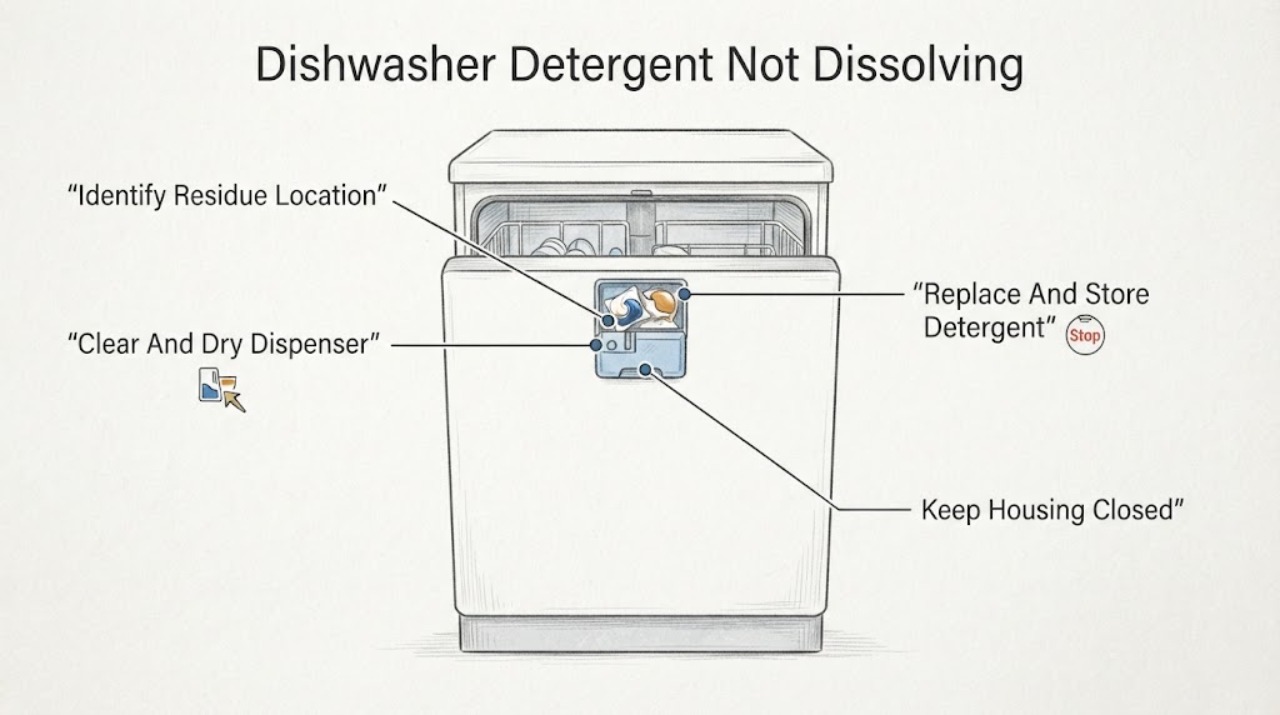
First determine where the detergent remains: a closed or blocked dispenser points to loading and dispenser access, while a wet or caked dispenser points to moisture or old detergent. KitchenAid says to keep the dispenser dry, replace detergent that has clumped after air exposure, store it tightly closed in a cool dry place, and keep the upper rack from blocking the lid. Use only automatic dishwasher detergent in the main compartment and follow the package and model manual for dose and cycle. If the detergent is fresh and the compartment opens but residue remains, check the incoming water: KitchenAid says about 120°F (49°C) helps detergent activate, and a cool supply can leave detergent and soils behind. Clean the dispenser and the accessible filter only as the exact manual permits. Persistent residue, a dispenser that will not open, poor filling or washing, a leak or an error needs KitchenAid or qualified service rather than a guessed dispenser or heater part.
Work through in order
Diagnostic checks
Use only checks that match the exact appliance or system and its official guide.
-
Check 1
After the cycle, record whether detergent is in a closed dispenser, caked in an open dispenser, partly dissolved in the tub or absent while the dishes remain dirty.
Expected result: The lid stayed closed or blocked, the compartment is wet/caked, or the lid opened but detergent remains or cleaning is poor.
Next step: Follow the matching dispenser, detergent and water checks below. Do not diagnose a heater or dispenser assembly from this observation alone.
Why this matters
Why: A closed or wet/caked compartment points to access and storage; an open compartment with residue makes detergent type, dose, cycle and water temperature the next checks.
-
Check 2
With the dishwasher stopped, clean caked detergent from the accessible dispenser, wipe the compartment dry, and check that a large dish, pan handle or the upper rack cannot block the lid.
Expected result: The dispenser was obstructed, wet or caked, or it is clean, dry and able to open freely.
Next step: Reposition the load or upper rack only within the normal loading instructions, then use a fresh dose. Do not force the lid or remove the dispenser without the exact model manual.
Why this matters
Why: Obstruction or moisture can keep the lid from opening or make detergent stick; a freely opening dry dispenser shifts attention to the detergent and water conditions.
-
Check 3
Replace detergent that is hardened, clumped or old; use only automatic dishwasher detergent in the main compartment, close the lid and store the product tightly closed in a cool, dry place.
Expected result: Fresh detergent dissolves normally, or fresh detergent still remains after the dispenser opens.
Next step: Follow the package and model manual for dose and cycle. If fresh detergent still remains, continue to the water-temperature check instead of increasing the dose arbitrarily.
Why this matters
Why: Improvement supports a detergent storage/type problem; no improvement means the wash-water, cycle or dispenser operation still needs checking.
-
Check 4
Run the nearby kitchen tap until hot before starting a cycle; if safe and practical, measure the tap water and compare it with KitchenAid's approximately 120°F (49°C) guidance and the exact model manual.
Expected result: Incoming water is materially cooler than the guidance, or it is hot but detergent still remains with a freely opening dispenser.
Next step: Address a supply-valve or household hot-water issue through the normal plumbing/manual path. Do not open the dishwasher or test its heater live; arrange service if the temperature problem persists at the appliance.
Why this matters
Why: Cool incoming water can prevent detergent from activating fully and can lengthen cycles; hot incoming water makes storage, loading, cycle and model-specific dispenser behavior more relevant.
-
Check 5
Use the exact KitchenAid manual for any permitted filter or interior cleaning, then record the model, detergent type, cycle, dispenser-door result, water-temperature result and remaining residue before contacting service.
Expected result: The dispenser still will not open, fresh dry detergent still remains, the dishwasher does not fill or wash normally, or a leak, error or damaged control is present.
Next step: Stop using the appliance for a leak, electrical damage or unsafe condition and arrange KitchenAid or qualified appliance service. Do not bypass the dispenser or access live internal parts.
Why this matters
Why: The remaining problem may involve a model-specific dispenser, water, heating or circulation system that cannot be identified safely from residue alone.
Use your observations
Decision map
Find the observation that best matches what you see, then follow the next safe action.
-
PATH 01Next step
What you see
The dispenser is closed or the upper rack/load blocks its lid at the end of the cycle.
Do this next
Reposition the load or raise the upper rack only as the normal loading system permits, then retry with the correct detergent placement. If the lid still cannot open, arrange model-specific service.
Why this path and its safety boundary
Why it matters: The detergent may never have entered the main wash; KitchenAid identifies loading and rack position as causes of a dispenser that cannot open fully.
-
PATH 02Next step
What you see
The lid opens, but detergent is hardened in the cup or the compartment was wet when it was loaded.
Do this next
Clean the accessible cup, dry it fully, replace the stale/clumped product and store the new detergent tightly closed in a cool dry place.
Why this path and its safety boundary
Why it matters: Moisture and old air-exposed detergent can make the product stick and dissolve poorly.
-
PATH 03Next step
What you see
Fresh detergent is used in a freely opening dispenser, but the incoming water is cool and the cycle is long or leaves soil behind.
Do this next
Check the nearby hot-water supply and valve through the normal household/manual path; if the appliance still receives cool water, use qualified service rather than opening the dishwasher heater circuit.
Why this path and its safety boundary
Why it matters: KitchenAid says cool incoming water can prevent detergent from activating fully and can lengthen cycles.
-
PATH 04Next step
What you see
Fresh dry detergent, an unobstructed dispenser and adequately hot incoming water do not resolve the residue, or the dishwasher also leaks, fails to fill/wash or shows an error.
Do this next
Stop for a leak or electrical hazard and arrange KitchenAid or qualified appliance service with the exact model and observations. Do not bypass the dispenser or test live components.
Why this path and its safety boundary
Why it matters: A model-specific dispenser, water, heating or circulation fault remains possible, but the symptom does not identify a replaceable part.
Helpful context
Understand the symptom
Separate a dispenser problem from a dissolving problem
At the end of the cycle, note whether the detergent is still inside a closed dispenser, caked in an open compartment, partly dissolved in the tub, or gone while the dishes remain dirty. KitchenAid treats those observations differently. A closed lid or detergent stuck to a wet compartment points first to dispenser access and storage; a dispenser that opens with residue still present makes detergent type, dose, cycle length and water temperature more relevant.
Clear the dispenser and the rack path
With the dishwasher stopped and the door safe to open, wipe caked detergent from the dispenser and dry the compartment before adding a new dose. Check that a pan handle, cutting board or the upper rack is not blocking the lid. KitchenAid says the upper rack may need to be moved higher when it prevents the dispenser from opening fully. Do not force the lid or remove the dispenser assembly without the exact model instructions.
Use fresh automatic dishwasher detergent
Use detergent intended for automatic dishwashers, place it in the main compartment and follow the package and model manual for the amount. KitchenAid says detergent exposed to air can clump, and powder may dissolve poorly in cooler water. Replace a hardened or stale product and keep the replacement tightly closed in a cool, dry place. Do not substitute hand dish soap or homemade detergent; suds can cause poor wash performance and leaking.
Check the incoming hot water without opening the dishwasher
KitchenAid says the dishwasher performs best when incoming water is about 120°F (49°C), because the temperature helps detergent activate. Run the nearby kitchen tap until hot, then use a cup and thermometer only if you can do so safely; a persistently cool supply, closed valve or water-heater issue should be handled according to the model manual or by a qualified professional. Do not probe the dishwasher heater or test live wiring.
Escalate when the dispenser or wash system remains abnormal
Use the exact KitchenAid manual before removing a filter or accessing any component. KitchenAid notes that filter access varies by model and recommends professional help when a blockage remains after the permitted cleaning. Arrange service when the dispenser will not open after the load and cleaning checks, the dishwasher does not fill or wash normally, a water-temperature problem persists, residue returns with fresh dry detergent, or there is a leak, error or damaged control. Do not choose a dispenser, heater or control part from residue alone.
When checks do not resolve it
Need a professional?
Arrange KitchenAid or qualified appliance service when the detergent dispenser will not open after the loading and cleaning checks, fresh dry detergent still remains with hot incoming water, the dishwasher has a filling/heating/washing fault, or a leak or error recurs.
Common questions
FAQ
Why is detergent still in my KitchenAid dishwasher dispenser?
KitchenAid lists a blocked lid, wet or caked detergent and old air-exposed detergent among the first checks. Make the compartment dry, remove buildup, keep the rack/load from blocking the lid and use fresh automatic dishwasher detergent.
Can cold water keep dishwasher detergent from dissolving?
Yes. KitchenAid says incoming water around 120°F (49°C) helps detergent activate and that cooler water can leave detergent and soils behind. Check the household hot-water supply and the model manual rather than opening the dishwasher heater circuit.
Can I put hand dish soap in the KitchenAid dishwasher?
No. KitchenAid says to use automatic dishwasher detergent. Hand dish soap can create suds that contribute to leaking and poor wash performance.
Should I replace the detergent dispenser immediately?
No. First document whether the lid is blocked, wet, caked or physically unable to open, then clean and dry it and check the rack position. If replacement is still indicated, KitchenAid says the correct part depends on the dishwasher model number.
Read the exact guide
Official sources
- How To Troubleshoot a Dishwasher: Issues and Solutions | KitchenAidKitchenAid · Official KitchenAid troubleshooting overview used for detergent clumping, temperature, correct detergent type, filter/manual scope and professional escalation.
- Dishwasher Water Temperature Troubleshooting - Product Help | KitchenAidKitchenAid · Official KitchenAid support for cool incoming water, hot-water supply checks, model options and technician escalation.
- Detergent Dispenser is Not Opening - Product Help | KitchenAidKitchenAid · Official KitchenAid support for load obstruction, old detergent, dirty dispenser and model-number-dependent replacement decisions.
- Detergent Usage Guidelines - Product Help | KitchenAidKitchenAid · Official KitchenAid detergent guidance covering packs, liquid, powder, the main dispenser, dose and model-specific manual differences.
- Detergent Remains at End of Cycle - Dishwasher - Product Help | KitchenAidKitchenAid · Official KitchenAid support for powder and pack detergent remaining after a cycle, including dispenser moisture, storage, loading and service guidance.
Community feedback
Share a repair observation
Share a plain-text repair observation. Accepted observations are published automatically; this page may take a moment to update.