
On this page
Start here
Quick answer
Start by identifying the odor rather than adding a cleaner. A musty or moldy smell commonly points to trapped moisture, detergent residue, wet laundry, or a dirty pump filter; a sulfur or sewage smell can point to drain-hose installation and wastewater siphoning; a burning or electrical smell requires the washer to stay off, except that Samsung notes a mild motor-insulation odor can occur during the first couple of cycles of a new washer. Empty the tub, inspect only safe visible areas, and use the exact model's Self Clean, Pure Cycle, or cleaning instructions. Never mix bleach with vinegar or another cleaner, never run Self Clean with laundry inside, and never leave bleach sitting in the washer. Stop immediately for smoke, arcing, a hot plug or outlet, a strong burning or electrical odor, a leak near electrical parts, or a washer that will not shut off; isolate power only from a safe, dry location and arrange qualified service.
Before you begin
Safety first
- Keep the washer off for smoke, arcing, a hot plug or outlet, strong burning or electrical odor, a leak near electrics, a washer that will not turn off, or uncontrolled water. Do not open the cabinet, bypass safety devices, or repeat cycles to test the smell.
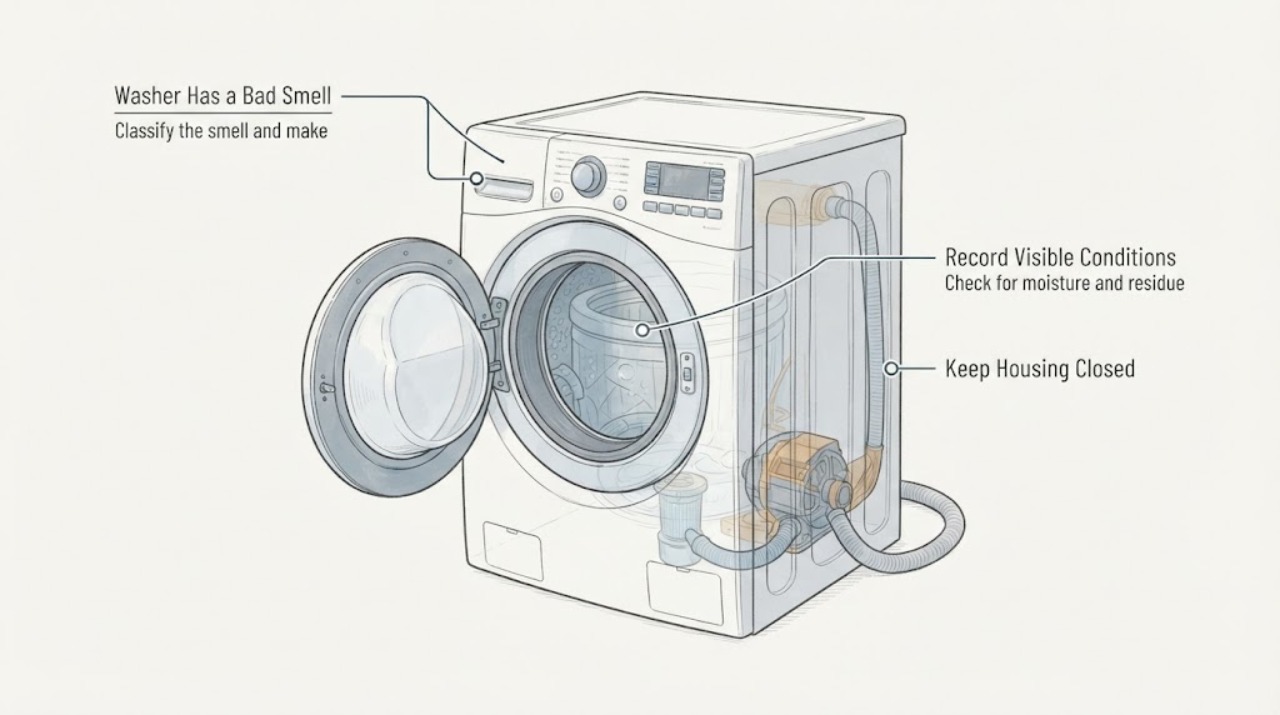
Work through in order
Diagnostic checks
Use only checks that match the exact appliance or system and its official guide.
-
Classify the smell and make the washer safe
Pause or turn off the washer, keep the door or lid closed until the drum or tub is fully still, and note whether the odor is musty or moldy, sulfur-like or sewage-like, detergent-like, or burning or electrical. Look from a safe position for smoke, sparks, a hot plug or outlet, a leak, melted plastic, or a washer that will not turn off. Do not restart it to test a hazardous smell.
Expected result: There is smoke, arcing, a hot plug or outlet, a strong burning or electrical odor, a leak close to the cord or controls, or the washer will not stop.
Next step: Stop using the washer. Keep clear and isolate power only from a safe, dry location; if the area is wet, do not touch the plug, cord, or appliance. Arrange qualified appliance or electrical service, and use emergency help for smoke or fire.
Stop if: Do not run another cycle, open the cabinet, or touch wet electrical equipment.
Why this matters
Why: This is an electrical, fire, or water-safety event rather than an ordinary odor-cleaning problem.
-
Record the model and where the odor is strongest
With the washer off and dry, record the full model number, front-load or top-load style, cycle used, and whether the smell is strongest at the door seal, detergent drawer, tub, drain area, rear hose, cord, or outlet. Note whether wet clothes or standing water were left inside. Use the exact model manual for any control sequence or access panel.
Expected result: The odor is strongest around a damp seal or drawer, inside the tub, at the drain connection, or near the cord or outlet; the washer style and model are known or unknown.
Next step: Continue only with the matching low-risk branch below. If the model is unknown, identify it before using a model-specific cycle or opening a filter panel.
Stop if: Do not generalize a filter location, cycle name, or error guidance from another Samsung model.
Why this matters
Why: Location and washer style separate a moisture or residue path from a drain or electrical path, while the model determines which cleaning cycle and filter access are valid.
-
Check for moisture and residue in accessible areas
When there is no burning or electrical odor and the washer is off, inspect the accessible door gasket or lid area, detergent drawer, tub rim, and floor for pooled water, slime, lint, or detergent residue. Wipe only surfaces that the model instructions identify as user-cleanable, and do not pry the gasket, remove cabinet panels, or reach into a moving or energized appliance.
Expected result: Moisture or residue is trapped in the seal, drawer, tub rim, or floor area; the surfaces are dry but the odor is still present; or water is pooled near the washer's electrical parts.
Next step: For a dry, accessible residue path, clean and dry it using the exact Samsung model instructions. For pooled water near electrics, stop, keep the washer off, and arrange service after power is safely isolated.
Stop if: Do not pour cleaner into a pooled or leaking washer and do not energize it while the floor, cord, outlet, or controls are wet.
Why this matters
Why: Trapped moisture and leftover detergent or additives can support mold and mildew. Pooled water near electrical parts changes this to a leak and electrical-safety investigation.
-
Use the documented empty-tub cleaning cycle for mildew odor
If the smell is musty or moldy and there is no electrical or leak hazard, remove all laundry and follow the exact model's Self Clean, Self Clean+, or Pure Cycle instructions. Samsung says routine Self Clean is run with an empty tub and normally without added cleaner; its mildew-specific procedure is different, so use that procedure only when it matches your model and symptom. If an approved bleach procedure is used, use only the instructed amount and location, start the cycle immediately, never add laundry, never mix it with another chemical, and do not leave bleach in the washer.
Expected result: The empty cleaning cycle completes with visible residue or odor remaining, or the tub is clean and the odor is reduced or gone.
Next step: Wipe away residue, run the model-documented rinse if required, and let the door or lid and detergent drawer dry open. If odor or mold remains after several correct attempts, request service.
Stop if: Never run Self Clean with clothing inside, and do not combine bleach, vinegar, ammonia, detergent, or other cleaners.
Why this matters
Why: Residual odor after a correct cleaning cycle suggests moisture or contamination in another accessible path, such as the drawer, seal, or front-load pump filter; a clean, dry tub with no recurring odor supports a residue or moisture cause.
-
Follow the front-load pump-filter path only when applicable
For a front-load model that has a user-accessible pump or debris filter, follow the exact Samsung model instructions to inspect and clean it only after the washer is off, cool, and safely dry. Prepare for residual water as the manual directs; do not force a stuck filter, reach into the pump, or assume a top-load model has the same filter.
Expected result: The filter contains lint or debris and the model instructions permit cleaning, the filter is missing or damaged, water cannot be controlled safely, or the washer is top-load or the filter location is not documented.
Next step: Clean only as the model manual allows, dry the area, and observe whether the odor or draining improves. Stop and request service for a stuck or damaged filter, uncontrolled water, a recurring odor, or an undocumented access point.
Stop if: Do not remove panels or disassemble the pump to reach a filter.
Why this matters
Why: Samsung identifies an unclean front-load pump filter as a possible odor source and notes that top-load washers do not use that same pump-filter arrangement. A blocked, damaged, or inaccessible filter needs model-specific service.
-
Inspect visible drain-hose installation for a sewage smell
If the odor is sulfur-like or sewage-like, inspect the external drain hose, its standpipe or drain connection, visible kinks, and the area for backup. Compare the hose insertion and support with the exact Samsung installation instructions. Make only a safe, dry, visible correction that the manual permits; do not pull hard on the hose, remove the retaining hardware, disconnect a wet connection, or pour drain chemicals into the washer.
Expected result: The hose is inserted too far, unsupported, kinked, submerged, or the household drain backs up; the hose installation appears correct but the sewage odor returns; or the retaining holder is missing or damaged.
Next step: Correct only the model-documented external routing and secure the hose. If there is backup, a damaged or missing holder, a leak, or a returning odor, leave the washer off and arrange qualified plumbing or appliance service as appropriate.
Stop if: Do not remove the rear retaining screw or disassemble the drain path as a home odor fix.
Why this matters
Why: Samsung explains that incorrect drain-hose placement can let wastewater siphon back into the washer. A household drain backup, missing holder, or recurring smell after the visible check may require plumbing or appliance service.
-
Handle a burning smell as a separate service branch
If the odor is burning, hot plastic, or electrical, stop the cycle and inspect only from a safe distance for smoke, discoloration, heat, or a damaged cord or outlet. Samsung notes that motor-coil insulation can produce a burning or unusual smell during the first couple of cycles of a new washer; do not assume that exception applies to an older washer, a strong odor, or any odor accompanied by heat or smoke.
Expected result: The washer is new and the smell is mild and limited to the first couple of cycles with no heat, smoke, or electrical sign; or the smell occurs after that, is strong, or includes smoke, heat, arcing, or a hot connection.
Next step: For the limited new-washer observation, do not add chemicals; monitor only under the exact manual's guidance and stop if the odor persists or worsens. For every other burning or electrical odor, keep the washer off, isolate power only from a safe dry location, and request service.
Stop if: Do not keep running cycles to see whether a burning or electrical odor clears.
Why this matters
Why: The limited new-washer observation may be the temporary condition Samsung describes. Any continuing or hazardous burning odor can indicate a motor, wiring, cord, outlet, or control problem that cannot be safely confirmed by odor alone.
-
Dry the washer and prevent the odor from returning
After the correct cleaning or visible drain check, remove wet laundry promptly, wipe accessible moisture, and leave the door or lid and detergent drawer open so air can circulate. Use only the detergent type and amount specified for the exact model and avoid adding extra product as an odor remedy. Keep the washer level and do not overload it.
Expected result: The odor stays gone after the washer dries, or it returns after wet laundry sits inside, after excess detergent, or despite correct drying and cleaning.
Next step: Continue the model's routine maintenance schedule if the odor is gone. If it returns after several correct attempts, document when it returns and request service rather than repeatedly adding cleaner.
Stop if: Do not leave bleach or another cleaner in the tub between cycles.
Why this matters
Why: Samsung identifies wet clothes, detergent buildup, and lingering moisture as recurring odor contributors. A returning odor despite correct maintenance suggests a drain, filter, seal, or internal contamination issue needing closer diagnosis.
Use your observations
Decision map
Find the observation that best matches what you see, then follow the next safe action.
-
PATH 01Next step
What you see
The odor is musty or moldy, with moisture, slime, or visible mold at the seal, drawer, or tub, and there is no smoke, heat, or nearby electrical water.
Do this next
Use the exact model's empty Self Clean, Self Clean+, or Pure Cycle guidance. Follow any mildew-specific product instruction exactly, never mix chemicals, wipe residue, and leave the door or lid and drawer open to dry. Request service if several correct attempts do not clear it.
Why this path and its safety boundary
Why it matters: Trapped moisture or detergent residue is more likely than a motor fault.
-
PATH 02Next step
What you see
The odor is sulfur-like or sewage-like and the visible drain hose is too far into the drain, unsupported, kinked, or associated with a backup.
Do this next
Make only the model-documented, visible routing correction and secure the hose. Use plumbing service for a household drain backup; use appliance service for a missing holder, leak, or returning odor.
Why this path and its safety boundary
Why it matters: Incorrect drain-hose installation or a drain-path problem may be allowing wastewater to siphon back.
-
PATH 03Next step
What you see
A burning or electrical odor occurs after the first couple of cycles, or any odor is accompanied by smoke, heat, arcing, a hot plug, or discoloration.
Do this next
Stop immediately, keep clear, isolate power only from a safe dry location, and request qualified appliance or electrical service. Do not restart for another test.
Why this path and its safety boundary
Why it matters: The limited new-washer motor-insulation explanation no longer safely fits; an electrical or motor problem is possible.
-
PATH 04Next step
What you see
Water is pooled under or behind the washer, reaches the cord, outlet, or controls, or the washer will not turn off.
Do this next
Keep the washer off. Do not touch wet electrical equipment; isolate power only from a safe, dry location and arrange qualified service. Close the water supply only if it is safe and dry to reach.
Why this path and its safety boundary
Why it matters: A leak or power-control issue creates a shock, fire, and water-damage boundary that odor cleaning cannot address.
-
PATH 05Next step
What you see
The odor returns after the correct empty-tub cleaning, drying, and visible drain or filter checks, or the source cannot be localized.
Do this next
Leave the washer off if the smell is strong or electrical. Otherwise stop repeated cleaning, record the model, washer style, odor type, water state, cleaning method, and drain observations, then request model-specific service.
Why this path and its safety boundary
Why it matters: An internal residue, seal, filter, pump, drain, or electrical source remains possible, and repeated chemical cleaning could create a new hazard.
Helpful context
Understand the symptom
The odor type changes the safe next step
Musty, sour, or moldy odors are usually handled as a moisture and residue problem. Sulfur or sewage odor calls for a visible drain-hose and standpipe check, because wastewater can siphon back when the hose is installed incorrectly. A burning or electrical odor is a stop condition unless the washer is new and the odor is mild and limited to the first couple of cycles described by Samsung. Do not use the same cleaning response for every smell.
Keep model and washer style in view
Samsung's controls and access points differ between front-load, top-load, and combination models. Record the model number and whether the washer is front-load or top-load before selecting a cycle or opening a filter panel. A front-load washer may have a pump filter; Samsung notes that top-load washers do not have that same pump-filter arrangement.
Cleaning is not a license to mix chemicals
Use one cleaning method documented for the exact model. Samsung's routine Self Clean guidance normally uses an empty tub without added cleaner, while its mildew-specific procedure has separate instructions. Never combine bleach, vinegar, acids, ammonia, detergent, or another washer cleaner, and rinse away any approved product as the model instructions require.
Safety boundary
Stop conditions
- Stop immediately for smoke, arcing, a hot plug or outlet, a strong burning or electrical odor, a leak near electrical parts, or a washer that will not turn off. Keep clear and isolate power only from a safe, dry location.
- Do not reach into a moving tub, open the cabinet, bypass a door or lid interlock, pull hard on a drain hose, or remove retaining hardware to chase an odor.
- Never mix bleach, vinegar, ammonia, acids, detergent, or washer cleaners. Never run Self Clean with laundry inside, and never leave bleach sitting in the washer.
- Do not assume a cleaning cycle, pump-filter location, drain-hose setup, or code meaning applies across Samsung washer models. Use the exact model instructions.
When checks do not resolve it
Need a professional?
Arrange service for persistent odor after several correct cleaning attempts, a returning sulfur or sewage odor, a damaged or missing drain-hose holder, an inaccessible or damaged pump filter, a leak, a burning or electrical odor, smoke, heat, arcing, a hot cord or outlet, or a washer that will not turn off.
Safety scope: Keep the washer off for smoke, arcing, a hot plug or outlet, strong burning or electrical odor, a leak near electrics, a washer that will not turn off, or uncontrolled water. Do not open the cabinet, bypass safety devices, or repeat cycles to test the smell.
Common questions
FAQ
Why does my Samsung washer smell musty or moldy?
Samsung points to trapped moisture, detergent or additive residue, wet laundry left in the machine, and an unclean front-load pump filter as common contributors. Empty the tub and follow the exact model's cleaning procedure, then leave the door or lid and detergent drawer open to dry. If the smell remains after several correct attempts, request service.
Why does my Samsung washer smell like sewage?
A sulfur or sewage odor can occur when the drain hose is inserted too far into the drain or standpipe and wastewater siphons back into the washer. Inspect only the visible hose setup against the exact model instructions. A backup, leak, missing retaining holder, or returning odor needs plumbing or appliance service rather than repeated chemical cleaning.
Is a burning smell from a Samsung washer always dangerous?
Samsung notes that motor-coil insulation can produce a burning or unusual smell during the first couple of cycles of a new washer. Do not rely on that explanation for an older washer, a strong or recurring odor, or any smell with smoke, heat, arcing, a hot plug, or discoloration. Stop and arrange service for those conditions.
Can I use bleach and vinegar together to remove a washer smell?
No. Never mix bleach with vinegar, ammonia, acids, detergent, or another cleaner. Samsung's routine Self Clean guidance normally uses an empty tub without added cleaner, while its mildew-specific procedure has separate instructions. Follow one method for the exact model, never add laundry to Self Clean, and do not leave bleach in the washer.
When should I stop using a Samsung washer because of a smell?
Stop for smoke, arcing, a hot plug or outlet, a strong burning or electrical smell, a leak near electrical parts, pooled water, or a washer that will not turn off. Keep clear and isolate power only from a safe, dry location. For a musty or sewage smell that persists after the documented visible checks, leave the machine off and request qualified service.
Read the exact guide
Official sources
- How to clean your Samsung washerSamsung · Samsung cleaning overview; model-specific features and access points differ.
- Samsung washing machine or laundry smells badSamsung · Samsung support guidance; exact controls and cleaning instructions vary by washer model and region.
- Samsung washing machine has a mildew smell or visible moldSamsung · Samsung support guidance; follow the exact model's controls and warnings.
- Power issues with Samsung washing machineSamsung · Samsung support guidance; electrical installation and model behavior may vary.
Community feedback
Share a repair observation
Share a plain-text repair observation. Accepted observations are published automatically; this page may take a moment to update.