
On this page
Start here
Quick answer
First classify the smell from your Hotpoint washer: musty or mildew-like odors commonly point to damp residue around the door seal, detergent drawer, drum, or filter; a sewage-like smell that is strongest at the drain points to hose or household plumbing; a burning-rubber, burning-plastic, or electrical odor during operation is a stop-use warning. Turn the washer off, keep the door or lid open only when the appliance is safe and the manual permits it, and do not run another cycle until a burning odor, smoke, sparking, hot plug, or leak near electrics has been assessed. For a musty odor on a dry, intact appliance, clean only the model-approved accessible areas and run only the model's documented maintenance cycle. Never mix bleach with vinegar, ammonia, or another cleaner. If the smell persists, water does not drain, the odor is sewer-like, or any safety symptom appears, leave the washer off and arrange qualified Hotpoint service or plumbing help.
Before you begin
Safety first
- Keep the washer off for burning or electrical odor, smoke, sparks, overheating, leaks near electrics, trapped water, a damaged seal, or mixed-cleaner fumes. Do not open the cabinet, test energized parts, or bypass the door or lid interlock.
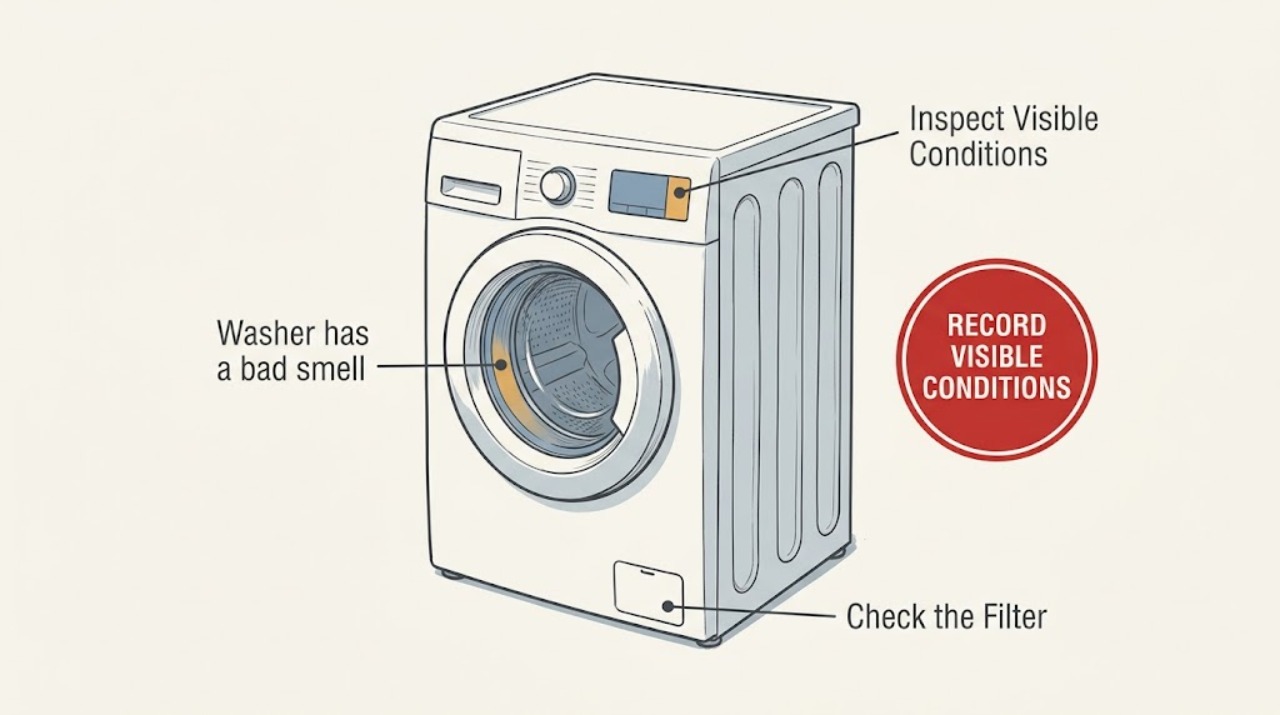
Work through in order
Diagnostic checks
Use only checks that match the exact appliance or system and its official guide.
-
Check 1
Stop the washer and identify the odor from a safe position without leaning into fumes: musty or mildew-like, sewage-like, detergent or chemical, burning rubber or plastic, electrical or smoky. Record whether it occurs while filling, washing, draining, spinning, or while the washer is off.
Expected result: The smell is damp and strongest inside the tub or seal, strongest at the drain, appears after a cleaning product was used, or appears during operation with heat, smoke, sparks, or a hot connection.
Next step: For smoke, burning odor, sparks, a hot plug, or a leak near electrics, stop immediately and isolate power only from a dry, safe location; do not restart. For chemical fumes, leave for fresh air and do not add another product. Otherwise continue with the matching safe odor check.
Why this matters
Why: Odor location and timing separate residue and moisture from drain or plumbing, chemical exposure, and potential electrical or mechanical faults. A burning or smoky odor is not an ordinary maintenance smell.
-
Check 2
For a musty odor, switch the washer off, wait for it to be safe to handle, and visually inspect the accessible door seal or lid area, detergent drawer, and drum opening for trapped laundry, sludge, mold-like residue, standing water, or a damp area. Do not reach behind a seal, remove a panel, or touch mold or residue with bare hands.
Expected result: Residue or trapped moisture is visible in the seal, drawer, or drum; the area is clean but the odor remains; or the washer has a leak or damaged seal.
Next step: If the appliance is dry and intact, clean only the accessible area using the exact model guidance and allow it to air dry. Stop for a leak, torn seal, electrical wetness, or persistent odor and arrange service; do not run a high-temperature cycle to compensate for a fault.
Why this matters
Why: Hotpoint identifies the seal, drawer, drum, and damp buildup as common odor sources. A damaged seal or active leak can create a water and appliance-safety issue rather than a simple cleaning task.
-
Check 3
Check the detergent drawer and product use without mixing anything: look for undissolved detergent, softener film, an obstructed compartment, excessive suds, or a concentrated product used outside its label or model instructions. Remove the drawer only if the exact manual permits it and the washer is off and safe.
Expected result: The drawer has residue or a blocked channel, products were overused or combined, the drawer is clean, or fumes or irritation appeared after a product was added.
Next step: For visible buildup and no fumes, clean with the model-approved method and rinse or dry as directed. Never mix bleach, vinegar, ammonia, descaler, detergent, or other cleaners. For fumes, leave the area, ventilate from a safe position, and seek poison or medical guidance as appropriate.
Why this matters
Why: Hotpoint says detergent or conditioner buildup can contribute to odor and a blocked dispenser can affect washing. Mixed products can create a chemical exposure risk; a clean drawer with a persistent odor points elsewhere.
-
Check 4
For a sewer-like odor or an odor strongest during pump-out, inspect only visible drain routing: check for a kinked or blocked hose, a hose pushed too far into the standpipe, a backed-up sink or standpipe, or water left in the drum. Do not disconnect a hose with water under pressure or pour chemical drain cleaner into the washer.
Expected result: The hose is kinked or incorrectly positioned, the household drain backs up, the washer drains slowly or leaves water, or the visible routing and drain are clear but the odor returns.
Next step: Correct only a visible routing issue using the exact installation instructions and arrange plumbing help for a blocked household drain. Keep the washer off for trapped water, a leak, a pump that only hums, or a returning odor after the visible check; do not dismantle the pump.
Why this matters
Why: A restricted or incorrectly positioned waste path can retain contaminated water or allow odor to travel back toward the washer. A clear route with recurring odor may require a pump, trap, standpipe, or internal inspection.
-
Check 5
If there is a musty odor but no damage, use only the exact Hotpoint manual's washer-cleaning or service-wash cycle and one compatible labeled product. Before starting, confirm the drum is empty, there is no leak, the door or lid closes normally, and no burning or chemical odor is present; do not improvise a temperature, dose, or chemical combination.
Expected result: The maintenance cycle completes and the odor clears, the odor returns, the washer cannot complete the cycle, or a new smell, leak, heat, smoke, or control fault appears.
Next step: Air dry the appliance as the manual directs and monitor one normal load only when no safety symptom remains. Stop and arrange qualified service for recurrence, incomplete drainage, a damaged seal, or any burning, smoky, electrical, or leak symptom.
Why this matters
Why: A completed model-approved maintenance cycle can remove accessible residue, but recurrence or a new symptom suggests retained water, drain or seal trouble, or an internal fault. A cycle that cannot complete is not fixed by more cleaner.
-
Check 6
After the safe checks, record the exact model, smell type and location, cycle stage, display lights or error code, water level, drain behavior, seal or drawer condition, and any recent cleaner or installation change. Do not open the cabinet, test energized parts, or continue running cycles to reproduce a burning odor.
Expected result: The source is not clear, the odor persists after model-approved cleaning, a fault indication returns, or the smell is accompanied by electrical, mechanical, leak, or chemical-exposure symptoms.
Next step: Leave the washer off and arrange qualified Hotpoint appliance service; use plumbing service when the household drain or trap is implicated. For suspected chemical exposure, move to fresh air and follow local poison or medical guidance.
Why this matters
Why: Persistent or mixed symptoms need model-specific diagnosis. A repeated odor with water or operation changes may involve a pump, drain path, seal, motor, wiring, or control rather than surface residue.
Use your observations
Decision map
Find the observation that best matches what you see, then follow the next safe action.
-
PATH 01Next step
What you see
The smell is musty or mildew-like, is strongest inside the drum or around the door seal or drawer, and there is no leak, smoke, heat, or electrical symptom.
Do this next
Clean only accessible parts using the exact model guidance, run one documented maintenance cycle with one compatible labeled product, and allow the washer to air dry. Request service if the odor returns or the seal, filter, or drain is damaged.
Why this path and its safety boundary
Why it matters: Hotpoint identifies dampness, bacteria, soap or limescale residue, the seal, drawer, and filter as likely maintenance paths.
-
PATH 02Next step
What you see
The odor is strongest at the standpipe, sink connection, or drain hose, especially during pump-out, and water drains slowly or remains in the drum.
Do this next
Inspect only visible hose placement and household-drain flow. Correct a documented routing issue or arrange plumbing service for a backup; keep the washer off for trapped water, a leak, or a pump that only hums.
Why this path and its safety boundary
Why it matters: The waste path may be restricted, incorrectly routed, or allowing odor to return; this is not solved by adding more detergent or cleaner.
-
PATH 03Next step
What you see
The smell started after bleach, descaler, vinegar, detergent, or another cleaner was added, or fumes cause coughing, eye irritation, or breathing discomfort.
Do this next
Stop using products, leave to fresh air, and ventilate only if it can be done without entering fumes. Never mix cleaners. Follow the product label and contact local poison or medical services for exposure guidance; do not run the washer until the area and appliance are safe.
Why this path and its safety boundary
Why it matters: Chemical exposure is possible, and adding another product can intensify the hazard.
-
PATH 04Next step
What you see
The smell is burning rubber, burning plastic, electrical, or smoky, or appears with heat, sparks, a hot plug, repeated trips, or a motor or pump noise.
Do this next
Stop immediately, keep clear, and isolate power only from a dry safe location if accessible without touching damaged equipment. Do not restart or open the cabinet; arrange qualified appliance service and emergency help for smoke or fire.
Why this path and its safety boundary
Why it matters: This may be an electrical, drive, pump, or mechanical overheating condition, not a residue problem.
-
PATH 05Next step
What you see
The odor appears with a torn door seal, visible leak, water near electrical parts, or moisture that does not dry.
Do this next
Stop the washer, close the water supply only if safely reachable, and isolate power from a dry safe location. Do not run another cycle or replace an internal part by guesswork; arrange qualified service.
Why this path and its safety boundary
Why it matters: The seal or water path may be allowing contamination or water damage, creating a safety and repair issue beyond cleaning.
-
PATH 06Next step
What you see
The odor improves after one exact-model cleaning cycle but returns with normal laundry, or the washer still has a blocked filter, poor drain, or repeated error indication.
Do this next
Keep records of the cycle and odor location, leave the washer off if water or an error persists, and request Hotpoint service. Do not keep adding cleaner or repeat high-temperature cycles indefinitely.
Why this path and its safety boundary
Why it matters: Surface residue may not be the root cause; retained water, a drain restriction, seal problem, or internal component may remain.
Helpful context
Understand the symptom
The smell type changes the safe next step
A damp, musty, or mildew-like odor often comes from moisture and residue that remain in the seal, drawer, drum, or filter. A sewer-like odor that is strongest at the drain or standpipe needs a hose and household-plumbing check. A burning-rubber, burning-plastic, electrical, or smoky odor while the washer runs is not a cleaning problem: stop the appliance, isolate it only from a safe dry location, and arrange qualified service. Do not run another cycle to compare smells.
Hotpoint models and regions differ
Hotpoint's official guidance covers both front-load and other washer designs, but door seals, lids, filters, cleaning cycles, drain routing, and indicator lights vary by model and region. Use the exact manual for any filter access, service-wash temperature, cleaner, error code, or door or lid procedure. A step that is appropriate for an accessible front-load filter may not apply to a top-load or compact washer.
Clean only a safe, intact appliance
For a musty odor with no leak or electrical symptom, inspect accessible surfaces after the washer is off and cool. Remove visible residue from the seal or drawer only as the manual allows, and use one approved cleaner or maintenance cycle at a time. Never combine bleach, vinegar, ammonia, descaler, detergent, or another chemical; CDC warns that mixed products can release dangerous vapors.
Persistent odor needs a source, not stronger chemicals
If the smell returns after model-approved cleaning, clothing still smells, drainage is slow, the filter or pump hums, or the odor is strongest at the waste connection, the underlying drain, filter, seal, or internal component may need inspection. Record the smell type, location, cycle stage, model, and any water or control symptom for service. Do not open the cabinet or keep adding cleaning products.
Safety boundary
Stop conditions
- Stop immediately for smoke, burning rubber or plastic odor, electrical smell, sparks, a hot plug or outlet, repeated breaker trips, or a motor or pump that sounds overheated. Isolate power only from a dry safe location and do not restart.
- Stop for a leak, torn door seal, standing water near electrical parts, wastewater backup, trapped water, or a pump that only hums. Close water valves only if safely reachable and arrange qualified appliance or plumbing service.
- If cleaners were mixed or fumes cause coughing, eye irritation, dizziness, or breathing discomfort, leave for fresh air and do not add another product. Follow the product label and obtain poison or medical guidance as appropriate.
- Do not open the cabinet, test energized parts, force a filter with a full tub, bypass a door or lid interlock, or use a generic cleaner, temperature, dose, or reset sequence in place of the exact model instructions.
- Keep the washer out of use when the odor persists after the model-approved cleaning path, returns with poor drainage or an error, or the smell source cannot be safely identified.
Only after diagnosis
Potential parts
- door seal or lid seal
Consider this category only after qualified inspection confirms that a torn, distorted, or leaking seal is the source of moisture or odor.
Seal shapes and installation differ by Hotpoint model and washer style. Confirm the exact model and service diagnosis before selecting a part. - drain pump or pump filter assembly
Consider this category only when persistent trapped water, poor drainage, a returning drain indication, or qualified testing identifies the pump or filter path.
Filter access and pump assemblies vary by model and region. Do not open a full filter or choose a part by appearance alone. - detergent dispenser assembly
Consider this category only if the drawer or internal dispenser channel remains damaged or blocked after model-approved cleaning and qualified inspection.
Drawer and dispenser components are model-specific; confirm the exact model and diagnosis before any replacement.
When checks do not resolve it
Need a professional?
Arrange qualified Hotpoint appliance service when a musty odor returns after the exact model cleaning path; the washer has a damaged seal, persistent residue, poor drainage, a returning error, a pump that only hums, unusual mechanical noise, or an odor source that is not visible. Use plumbing service for a backed-up household drain or trap. Treat smoke, burning or electrical odor, sparks, overheating, repeated breaker trips, a leak near electrics, or chemical-fume exposure as immediate safety issues.
Safety scope: Keep the washer off for burning or electrical odor, smoke, sparks, overheating, leaks near electrics, trapped water, a damaged seal, or mixed-cleaner fumes. Do not open the cabinet, test energized parts, or bypass the door or lid interlock.
Common questions
FAQ
Why does my Hotpoint washer smell musty?
Hotpoint says dampness, bacteria, dirt, limescale, and soap residue can accumulate in the washer, especially around the rubber door seal, detergent drawer, drum, and filter. Inspect only safe accessible areas and use the exact model cleaning guidance; a returning odor or drainage problem needs service.
Can I run a hot cleaning cycle to remove a Hotpoint washer odor?
Only if the exact model manual specifies a cleaning or service-wash cycle and the washer has no leak, damaged seal, trapped water, chemical fumes, burning odor, or electrical symptom. Use one compatible labeled product and do not improvise temperature or dose. Hotpoint's regional guidance includes high-temperature maintenance examples, but models differ.
What if the smell seems to come from the drain?
Check only visible drain-hose routing and whether the household standpipe or sink backs up. A kink, blockage, incorrect insertion, or trapped water can keep odor near the washer. Arrange plumbing help for a backed-up household drain, and appliance service for a pump that hums, persistent trapped water, or a returning odor.
Can I mix bleach and vinegar to clean a smelly washer?
No. Never mix bleach with vinegar, ammonia, descaler, detergent, or another cleaner. CDC warns that mixing bleach or disinfectants with other cleaners can release dangerous vapors. Use one model-approved labeled product at a time and follow its instructions.
Should I keep using the Hotpoint washer if it smells like burning?
No. Stop immediately for burning rubber or plastic odor, electrical smell, smoke, sparks, a hot plug, repeated breaker trips, or overheating. Isolate power only from a dry safe location, do not restart or open the cabinet, and arrange qualified service; seek emergency help for smoke or fire.
When should a bad washer smell be treated as a service issue?
Arrange service when the odor returns after the exact model cleaning path, drainage is poor, water remains, the filter or pump hums, the seal leaks or is damaged, an error returns, or the smell source is not safely visible. Treat smoke, electrical odor, sparks, overheating, leaks near electrics, or chemical fumes as immediate safety concerns.
Read the exact guide
Official sources
- Washing Machine Troubleshooting - Quick fixes & Tips - HotpointHotpoint · Official Hotpoint troubleshooting guidance; the page is regional and exact washer model instructions control.
- Hotpoint's Washing Machine Cleaning GuideHotpoint · Official Hotpoint cleaning guidance; drawer, filter, cycle, and product instructions vary by exact model and region.
- Cleaning and Disinfecting with BleachCenters for Disease Control and Prevention · Government chemical-safety guidance used for safe handling of household cleaners; the washer manual and product label control appliance cleaning.
Community feedback
Share a repair observation
Share a plain-text repair observation. Accepted observations are published automatically; this page may take a moment to update.