
On this page
Start here
Quick answer
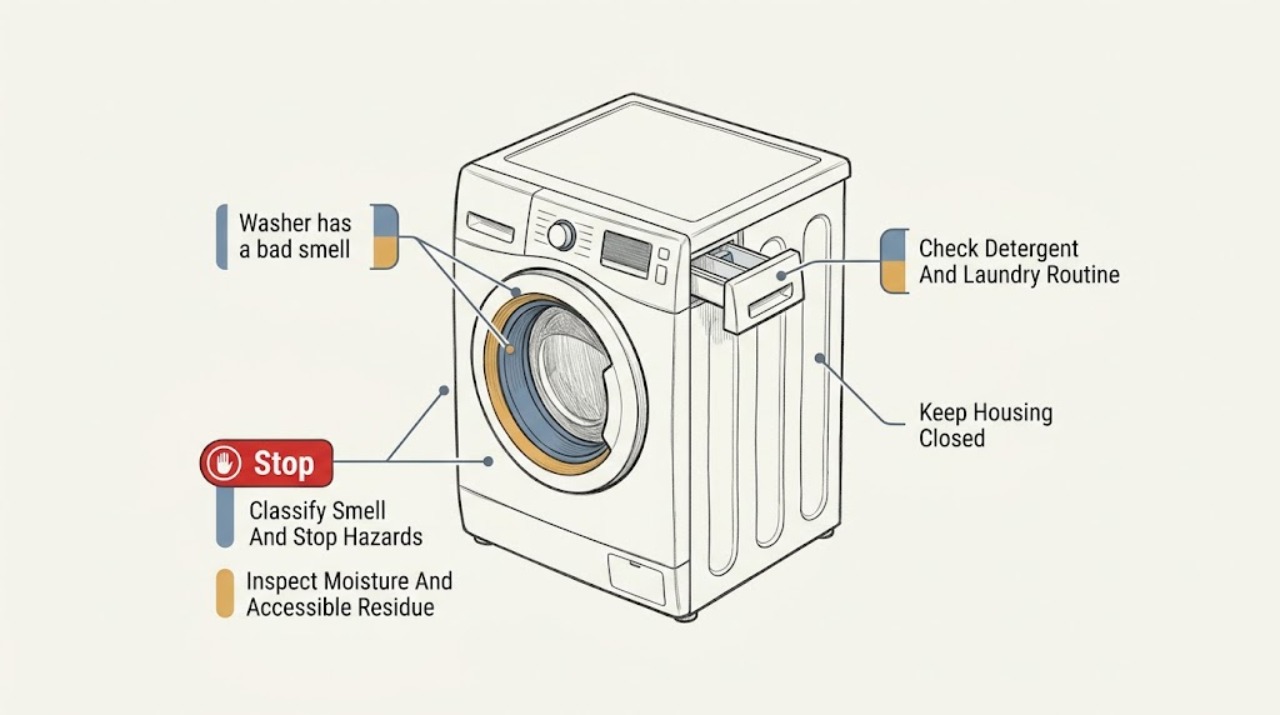
Classify the smell before cleaning a Maytag washer. A musty or mildew odor with damp laundry or residue usually points to moisture, detergent buildup, a closed door or lid, or a missed Clean Washer cycle. A sewage or drain odor points toward standing water, a drain hose or household drain, or a plumbing connection. A burning, melting, electrical, or gas odor is not a cleaning problem: stop the washer, clear the area, and arrange qualified service; if gas is suspected, do not operate switches or phones in the building. For a non-hazardous mildew smell, remove laundry promptly, use only the HE detergent amount specified for the machine, leave the door or lid open between loads, and run the model's Clean Washer cycle with one approved cleaner method only. Never mix bleach with another cleaner, and stop if there is a leak, wet electrical equipment, smoke, or irritation.
Before you begin
Safety first
- This page covers odor classification, dry-position observation, accessible cleaning of intact surfaces, and one model-approved Clean Washer cycle only. Do not work on live electrical or gas parts, open panels, dismantle pumps or seals, use mixed chemicals, or handle a wet energized appliance.
Work through in order
Diagnostic checks
Use only checks that match the exact appliance or system and its official guide.
-
Check 1
Stop the current cycle with the normal control if the panel and floor are dry, remove yourself from the appliance if the area is unsafe, and classify the odor from a safe position as musty or mildew-like, sewage or drain-like, chemical or chlorine, burning or melting, electrical, or gas-like.
Expected result: The odor is limited to the empty drum or damp laundry with no smoke, leak, hot electrical area, or irritation, or it is accompanied by smoke, heat, sparking, a gas odor, chemical fumes, or water near power.
Next step: For a non-hazardous odor, continue with the matching observation below. For burning, smoke, sparking, gas odor, chemical fumes, or wet electrical equipment, keep clear and seek qualified or emergency assistance from a safe location.
Stop if: Do not touch a wet plugged-in washer, operate switches where gas or fumes are suspected, or start a cleaning cycle over a burning, electrical, gas, or chemical smell.
Why this matters
Why: A mild musty odor supports an interior-moisture or residue check. Sewage odor needs drain-path and plumbing consideration. Burning, electrical, gas, or chemical-fume symptoms are safety hazards and should not be diagnosed by running another wash.
-
Check 2
With the washer empty, cool, and disconnected from active use, inspect the accessible drum or tub, door or lid opening, rubber seal, detergent dispenser, and visible water path for damp laundry, standing water, slime, mildew-like residue, trapped debris, or a leak. Use only a soft, damp cloth on intact surfaces if the model instructions allow; do not reach into a moving drum or remove panels.
Expected result: Moisture or residue is concentrated in the door seal, dispenser, drum, or lid area; water remains after a completed cycle; or these areas are clean and dry while the odor persists.
Next step: Document the location and clean only the accessible, intact surfaces according to the exact Maytag manual. If water remains, the seal is torn, the dispenser is blocked, or odor persists, stop routine cleaning and arrange service.
Stop if: Do not scrub a torn seal, reach into moving parts, open the cabinet, pour cleaner into standing water, or use a wet cloth around the cord or outlet.
Why this matters
Why: Moisture and residue in the opening or dispenser support a musty odor path. Standing water after a cycle points toward drainage or pump issues. A clean, dry opening with persistent odor makes a concealed drain, pump, plumbing, or electrical source more likely.
-
Check 3
Record whether wet laundry was left in the basket, whether the door or lid is kept closed between loads, and whether the detergent is HE and used at the amount specified by the detergent and Maytag instructions. Do not add extra detergent or fragrance products to mask the smell.
Expected result: Wet laundry commonly sits in the washer, the door or lid stays closed, non-HE or excess detergent is used, or the routine already follows the model guidance.
Next step: Remove laundry promptly, leave the door or lid open when safe, and use only the model-approved detergent amount. If no routine change improves the odor, proceed to one model-approved Clean Washer cycle or request service.
Stop if: Do not mix products, exceed detergent directions, close a wet washer to contain the smell, or use heat to dry an appliance with a burning or electrical odor.
Why this matters
Why: Maytag identifies damp laundry, trapped moisture, non-HE detergent, and excess detergent or residue as contributors to mildew odor. If the routine is already correct and the odor returns, a hidden residue, drain, seal, or service issue becomes more likely.
-
Check 4
Only for a non-hazardous mildew or residue odor and an otherwise dry, intact washer, empty the basket and follow the exact Maytag manual for its Clean Washer cycle. Use one approved method—an appliance cleaner or the manual's bleach alternative—not a mixture; ventilate the room and do not interrupt the cycle unless the manual directs a safe stop.
Expected result: The odor decreases after the completed cycle, residue remains, the cycle produces excess suds or a leak, or the washer emits a chemical, burning, or electrical odor.
Next step: After a successful cycle, leave the door or lid open to dry and continue the model's maintenance routine. If odor persists, a leak appears, or the washer behaves abnormally, stop using it and request service.
Stop if: Never mix bleach with cleaner, vinegar, ammonia, detergent, or another disinfectant; do not use unapproved bleach forms or cleaning products, and leave the area if fumes irritate breathing or eyes.
Why this matters
Why: Improvement supports moisture or detergent residue as the cause. Persistent odor suggests retained water, a drain or pump path, seal or dispenser contamination, or another source. Suds, leakage, or hazardous fumes mean the cleaning procedure is not a safe remedy.
-
Check 5
If the odor is sewage-like, inspect only the visible drain entry and nearby household plumbing for standing water, a slow or backing-up drain, or odor that is strongest at the standpipe rather than inside the washer. If the odor is burning or electrical, observe from a safe distance for smoke, heat, sparking, a tripped breaker, or a damaged cord or outlet; do not move the appliance.
Expected result: The odor is strongest at the household drain, water remains in the tub, the drain path backs up, or there is any burning, hot-plastic, electrical, smoke, sparking, or damaged-power symptom.
Next step: Stop using the washer. Arrange plumbing service for a drain or sewer source and qualified appliance or electrical service for burning or electrical symptoms. Keep the appliance untouched if it or the electrical area is wet.
Stop if: Do not pour drain chemicals into the washer or household drain, reset a tripped breaker repeatedly, unplug a wet appliance, open panels, or run another cycle.
Why this matters
Why: A drain or plumbing odor points away from simple mildew cleaning and toward a drain-path or household plumbing assessment. Burning or electrical symptoms indicate a possible motor, wiring, control, or power fault and are not safe for user diagnosis.
Use your observations
Decision map
Find the observation that best matches what you see, then follow the next safe action.
-
PATH 01Safety boundary
What you see
The odor is musty or mildew-like, wet laundry or residue is present, and there is no smoke, gas odor, leak, or wet electrical area.
Do this next
Use the model-approved Clean Washer procedure once with one approved cleaner method, then leave the door or lid open and remove wet laundry promptly.
Why this path and its safety boundary
Why it matters: Moisture, detergent film, a closed door or lid, and missed washer cleaning are more likely than a motor or control fault.
Safety stop: Stop if the cycle leaks, produces unusual fumes, creates excess suds, or the odor persists after a correct cleaning.
-
PATH 02Safety boundary
What you see
The odor resembles sewage or stagnant drain water, is strongest near the drain entry, or water remains after the cycle or backs up in the household drain.
Do this next
Keep the washer out of service, document the water level and drain location, and arrange qualified appliance or plumbing service; do not pour chemicals into the system.
Why this path and its safety boundary
Why it matters: A drain hose, pump, trapped water, standpipe, trap, or household plumbing issue is more likely than ordinary drum residue.
Safety stop: Do not run repeated drain cycles, remove the pump or hose, or use drain opener in the washer.
-
PATH 03Safety boundary
What you see
The smell is burning, melting, hot insulation, or electrical, or it is accompanied by smoke, heat, sparking, a tripped breaker, or an abnormal motor sound.
Do this next
Stop using the washer and seek qualified appliance or electrical service from a safe, dry location. Keep the appliance untouched if the floor, cord, outlet, or cabinet is wet.
Why this path and its safety boundary
Why it matters: A motor, belt, wiring, control, outlet, or other electrical fault is possible; cleaning and another cycle could increase fire or shock risk.
Safety stop: Do not restart, reset repeatedly, open panels, touch wet equipment, or attempt to identify the failed electrical part.
-
PATH 04Safety boundary
What you see
The odor started after bleach, cleaner, detergent, vinegar, ammonia, or another product was added, or it causes coughing, eye burning, or breathing irritation.
Do this next
Leave the area for fresh air and follow local poison or emergency guidance if symptoms occur. Do not add another chemical or enter to continue cleaning until the area is safe.
Why this path and its safety boundary
Why it matters: The problem may be an incompatible chemical mixture or concentrated residue, not washer odor. CDC warns that bleach mixed with other cleaners can release dangerous vapors.
Safety stop: Never mix cleaning products, and do not operate the washer, switches, or ventilation equipment in a way that creates an ignition or exposure risk.
-
PATH 05Safety boundary
What you see
The washer is dry and intact, the correct HE detergent routine and one model-approved Clean Washer cycle were followed, but odor returns quickly or is accompanied by water, poor draining, or residue that cannot be reached.
Do this next
Stop repeated cleaning experiments and request Maytag or qualified appliance service with the odor type, cycle history, cleaning method, water observations, and photos.
Why this path and its safety boundary
Why it matters: Retained water, a pump or drain path, door or lid seal, dispenser, vent, valve, or another concealed component may be sustaining the odor.
Safety stop: Do not dismantle the pump, remove a seal, open the cabinet, or add stronger chemicals to reach concealed residue.
Helpful context
Understand the symptom
The smell category changes the safe next step
Musty, sour, or mildew-like odor is usually associated with moisture and residue inside the washer, especially when wet clothes sit in the basket or the door or lid is kept closed. A sewage-like smell is more suggestive of trapped water, a drain-path problem, or household plumbing. Burning plastic, hot insulation, electrical arcing, or gas odor should not be covered with cleaner or tested with another cycle; those are stop-use symptoms.
Clean only an otherwise safe washer
Maytag recommends a Clean Washer cycle and model-approved cleaner to control odor-causing residue. Before using it, empty the washer and check that there is no active leak, smoke, damaged cord, standing water around the electrical connection, or chemical fume. The exact cycle and whether bleach is allowed depend on the model. Use one approved method, follow the manual and product label, and never combine bleach, cleaner, vinegar, ammonia, or another chemical.
Keep the interior dry between loads
Maytag advises removing wet laundry promptly and leaving a front-load door or top-load lid open between uses so moisture can evaporate. Use only the detergent type and amount the model requires; non-HE detergent or excess detergent can leave residue and suds. If odor returns quickly after a correct cleaning cycle and drying routine, look for retained water, a drain or pump issue, a seal or dispenser problem, or a service-level fault.
Safety boundary
Stop conditions
- Stop using the washer for burning, melting, electrical, gas, smoke, sparking, or abnormal heat odors; these are not cleaning symptoms.
- Do not touch a wet plugged-in washer, cord, outlet, or surrounding water; keep clear and obtain qualified help.
- Never mix bleach, washer cleaner, vinegar, ammonia, detergent, or another chemical; use one model-approved cleaning method only.
- Do not pour drain chemicals into the washer, open the cabinet, dismantle the pump or seal, or use heat to mask an odor.
- Stop for a sewage odor with standing water or backup, a leak, repeated odor after correct cleaning, breathing or eye irritation, or any need to work near wiring or power.
Only after diagnosis
Potential parts
- washer door or lid seal
Consider this category only if inspection confirms a torn, displaced, or permanently contaminated seal that retains moisture and a qualified diagnosis links it to the odor or a leak.
Confirm the exact Maytag model and front-load or top-load configuration; do not stretch, cut, glue, or replace a seal around an energized or wet appliance. - washer detergent dispenser or siphon insert
Consider this category only if the exact model has a removable dispenser part that is cracked, blocked, or retaining residue after the manual's accessible cleaning procedure.
Confirm the model and dispenser design; do not pour mixed chemicals into the dispenser or assume a similar insert fits. - washer pump filter or drain pump
Consider this category only if standing water, poor draining, sewage odor, or an inaccessible drain path is confirmed and qualified diagnosis identifies a filter or pump issue.
Confirm the exact Maytag model and whether it has a user-accessible filter; drain water may be hot and pump work is not a wet-area DIY repair. - washer drain hose or hose connection
Consider this category only when the visible drain path is damaged, loose, kinked, or associated with backup and the exact model installation guidance supports replacement.
Confirm the model, routing, drain entry, and connection requirements; do not use drain chemicals or move a wet appliance to reach the hose.
When checks do not resolve it
Need a professional?
Request qualified Maytag or appliance service when odor is burning, electrical, or gas-like; smoke, sparking, abnormal heat, a leak, poor draining, standing water, a damaged cord or outlet, or repeated odor after one correct Clean Washer cycle is present. Arrange plumbing service when sewage odor or backup is strongest at the household drain. For chemical fumes or symptoms, leave the area and follow local emergency or poison guidance.
Safety scope: This page covers odor classification, dry-position observation, accessible cleaning of intact surfaces, and one model-approved Clean Washer cycle only. Do not work on live electrical or gas parts, open panels, dismantle pumps or seals, use mixed chemicals, or handle a wet energized appliance.
Common questions
FAQ
Why does my Maytag washer smell like mildew?
Maytag links mildew odor to moisture, wet laundry left in the basket, a closed door or lid, non-HE or excess detergent, and residue from infrequent cleaning. Empty the washer, use one model-approved Clean Washer method, remove wet laundry promptly, and let the interior dry between loads.
Can I use bleach and washer cleaner together?
No. Maytag's interior-cleaning procedure says not to add detergent or other chemicals when using the approved cleaner method, and CDC warns that bleach or disinfectant mixed with another cleaner can release dangerous vapors. Follow the exact model manual and use one approved method at a time.
What does a sewage smell from a Maytag washer mean?
A sewage-like odor that is strongest at the drain, accompanies standing water, or returns with poor draining points toward the drain hose, pump, trapped water, standpipe, or household plumbing rather than ordinary drum residue. Stop repeated cycles and arrange qualified appliance or plumbing service.
Is a burning smell from a washer something a cleaning cycle can fix?
No. Burning, melting, hot insulation, smoke, sparking, abnormal heat, or electrical odor is a stop-use condition. Do not restart or reset repeatedly, touch wet power equipment, or open the cabinet; seek qualified appliance or electrical help from a safe location.
Read the exact guide
Official sources
- Removing Odor or Smell - WasherMaytag Product Help · Maytag top-load support page used for wet-laundry, detergent-film, and Clean Washer distinctions; exact model instructions control the cleaning method.
- Cleaning and Disinfecting with BleachCenters for Disease Control and Prevention · CDC chemical-safety guidance used only to reinforce that bleach or disinfectant must not be mixed with other cleaners and that fumes can be dangerous to breathe.
- Removing Odors from the Interior of a WasherMaytag Product Help · Maytag maintenance procedure used for one-method cleaning, no added chemicals, manual-specific cycle use, and drying the interior afterward.
- Removing Odors or Smells - Front Load WasherMaytag Product Help · Maytag front-load support page used for moisture evaporation, door-open practice, Clean Washer, dispenser, wet laundry, detergent, and steam-model distinctions.
- CPSC Warns of Generator, Carbon Monoxide and Fire Hazards Ahead of Hurricane SeasonU.S. Consumer Product Safety Commission · CPSC guidance used only for the rule not to touch a wet plugged-in appliance and to obtain qualified evaluation before use.
- WASHER/DRYERMaytag · Maytag washer/dryer owner's manual used for no-control-tampering, no-user-servicing, gas-odor response, and detergent or moisture safety; exact installed model controls.
Community feedback
Share a repair observation
Share a plain-text repair observation. Accepted observations are published automatically; this page may take a moment to update.