
Hotpoint appliance guidance
Hotpoint Washer Repair Guides
Troubleshooting and repair guidance for published Hotpoint Washer problems, symptoms, and maintenance questions.
Published Hotpoint Washer guides
Choose the guide whose symptom or condition most closely matches what you are seeing.
-
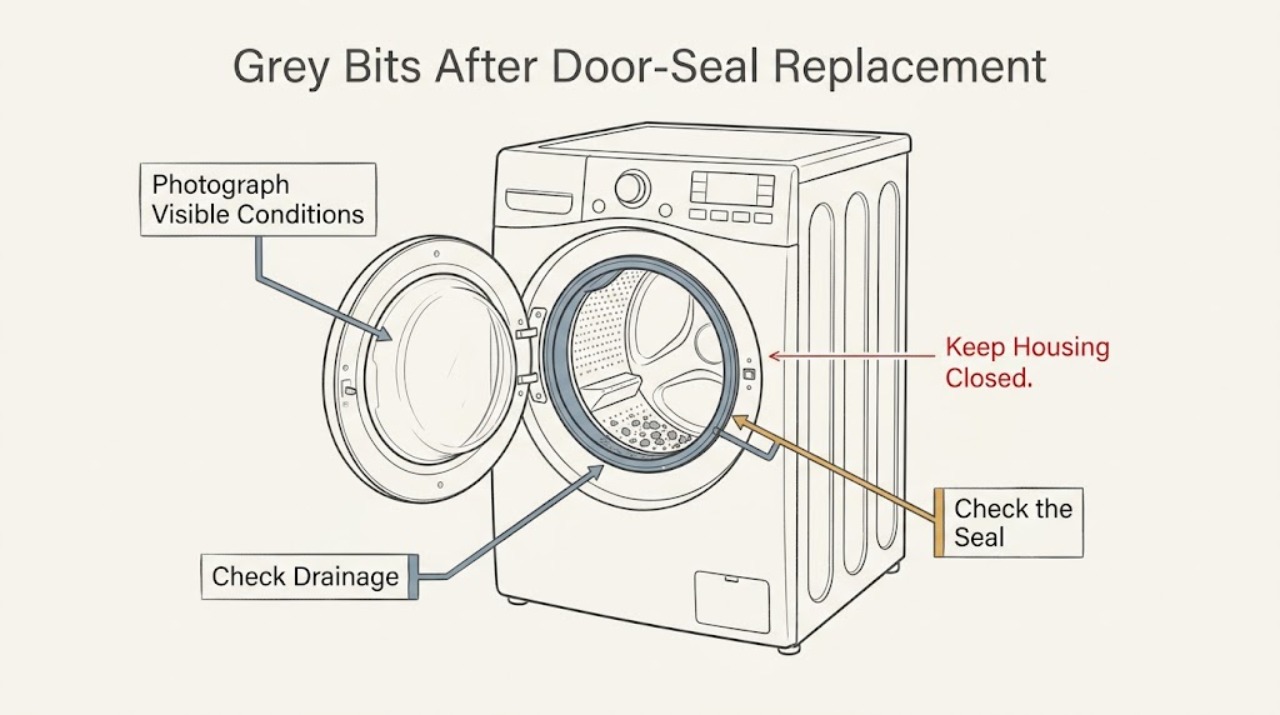
Hotpoint FML 942 Grey Bits After Door-Seal Replacement: Identify the Source Safely
Grey bits that appear after replacing the Hotpoint FML 942 door seal should not be dismissed as normal break-in or used to prove a bearing failure. First stop the washer, unplug it from a dry safe position, photograph and save a sample, and compare the bits with the new seal and any visible rub mark around the seal lip or drum opening.
-
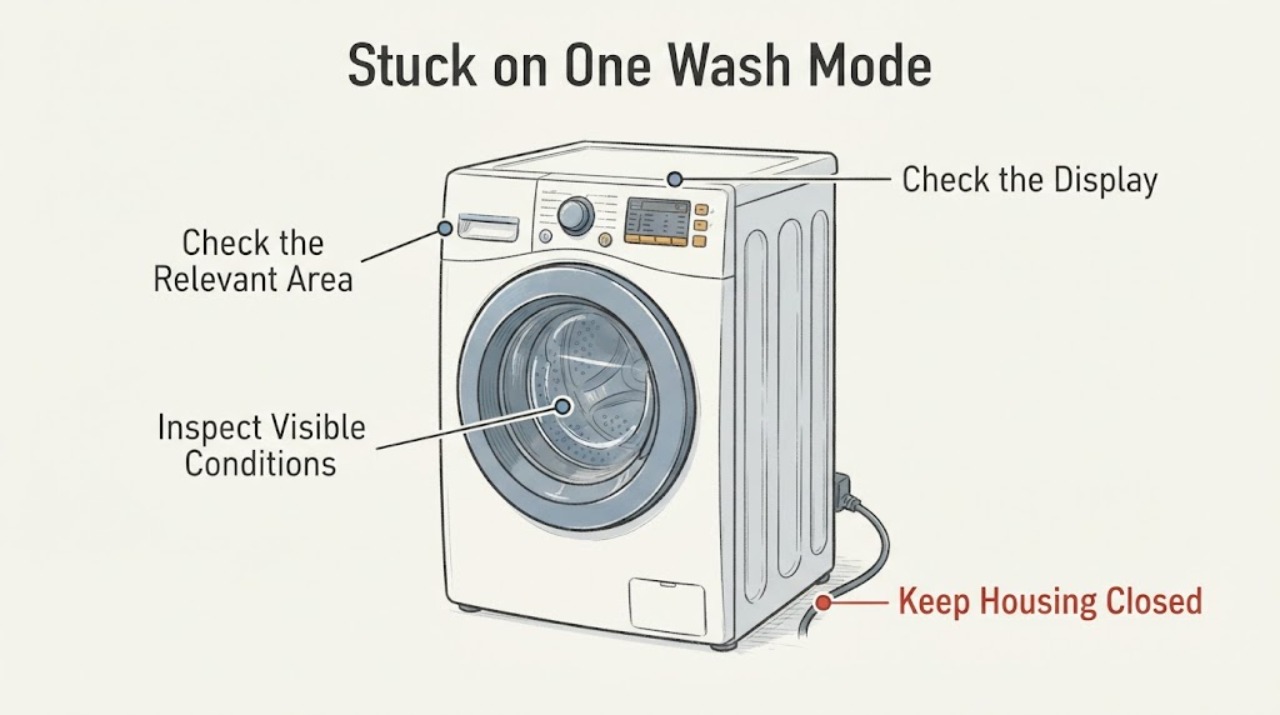
Hotpoint NSWA 843C WW UK F158109 Stuck on One Wash Mode
The Hotpoint NSWA 843C WW UK is an 8 kg front-loading washer, and F158109 is its 12NC identifier in Hotpoint's product data. If it stays on one programme, first determine whether the machine is idle, already running, showing a lock indicator, or showing a fault.
-
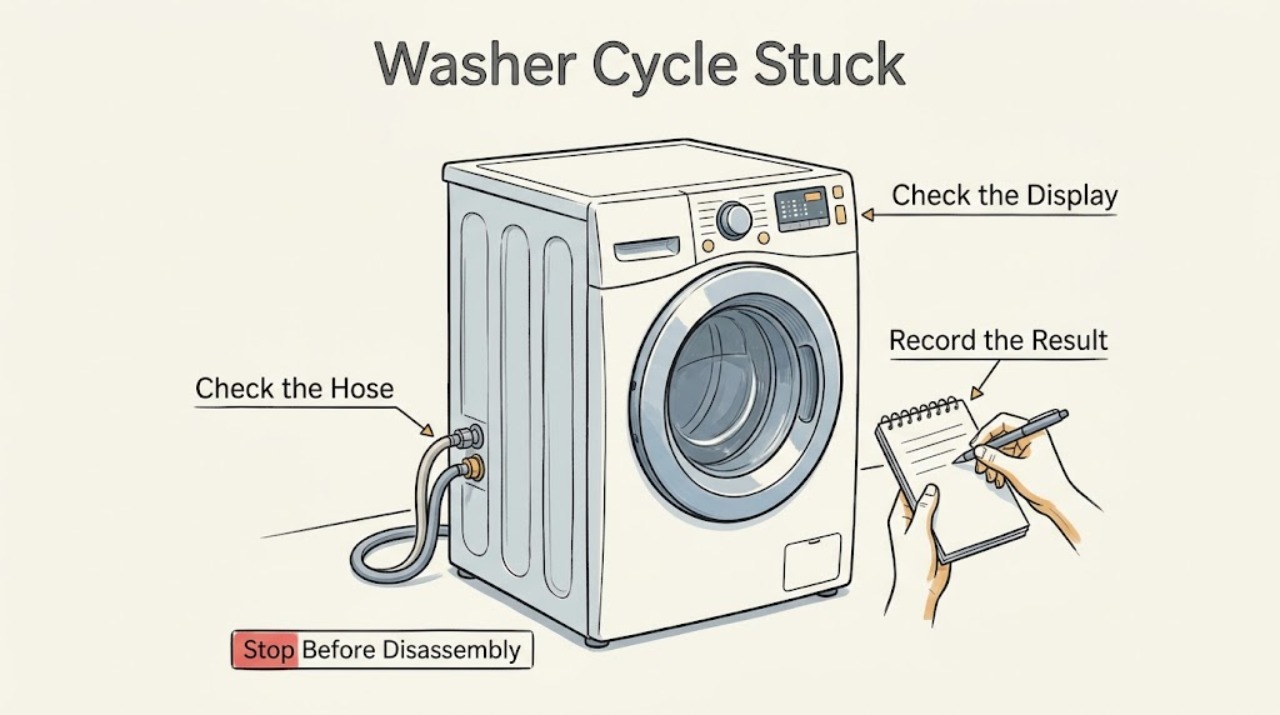
Hotpoint Washer Cycle Stuck: What to Check and What to Do Next
A Hotpoint washer that appears stuck should be diagnosed by the phase where it stopped: filling, washing or heating, draining, spinning, or waiting for the door or lid lock. Check the corresponding indicator or code, keep the door or lid closed while the drum moves, and inspect only accessible water-supply, drain, and load conditions.
-
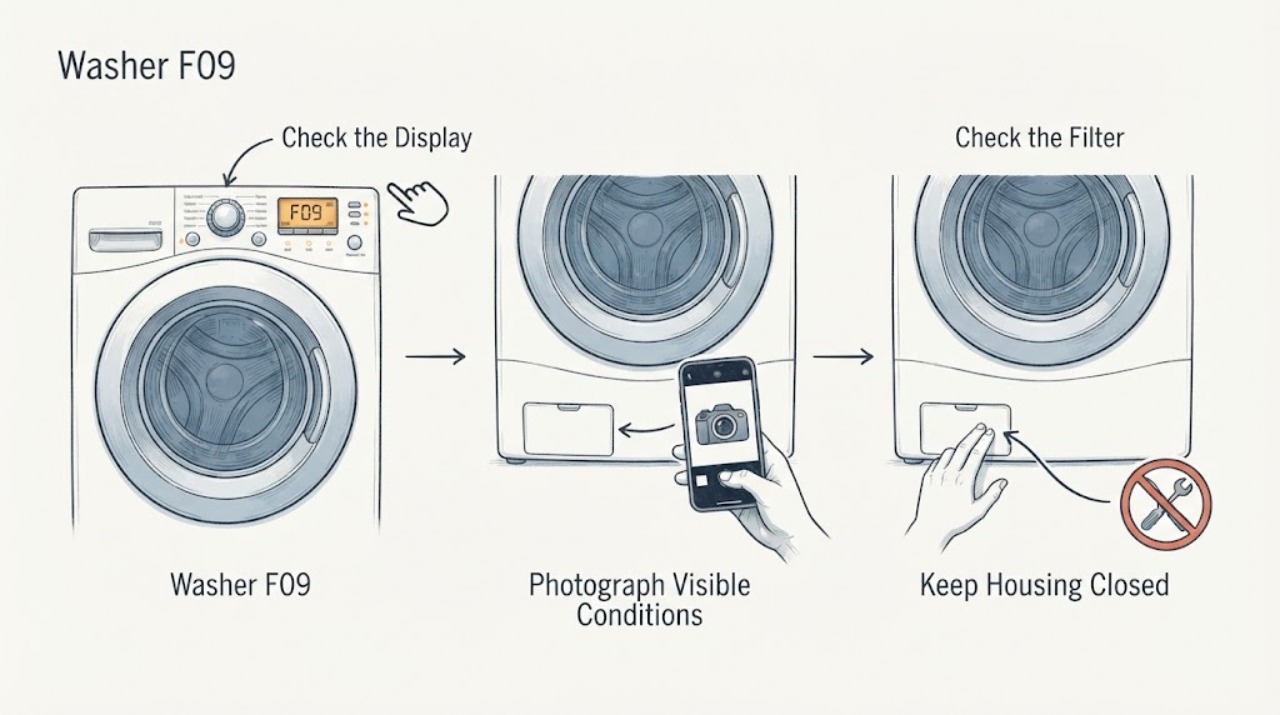
Hotpoint Washer F09: Confirm the Market and Display Before Resetting
Do not treat F09 as a universal Hotpoint code across countries or product platforms. Hotpoint's opened UK washing-machine guide labels F09 a software fault when the washer is not operating, multiple lights or displays are active, or a programme cannot be selected, and it directs the owner to service.
-
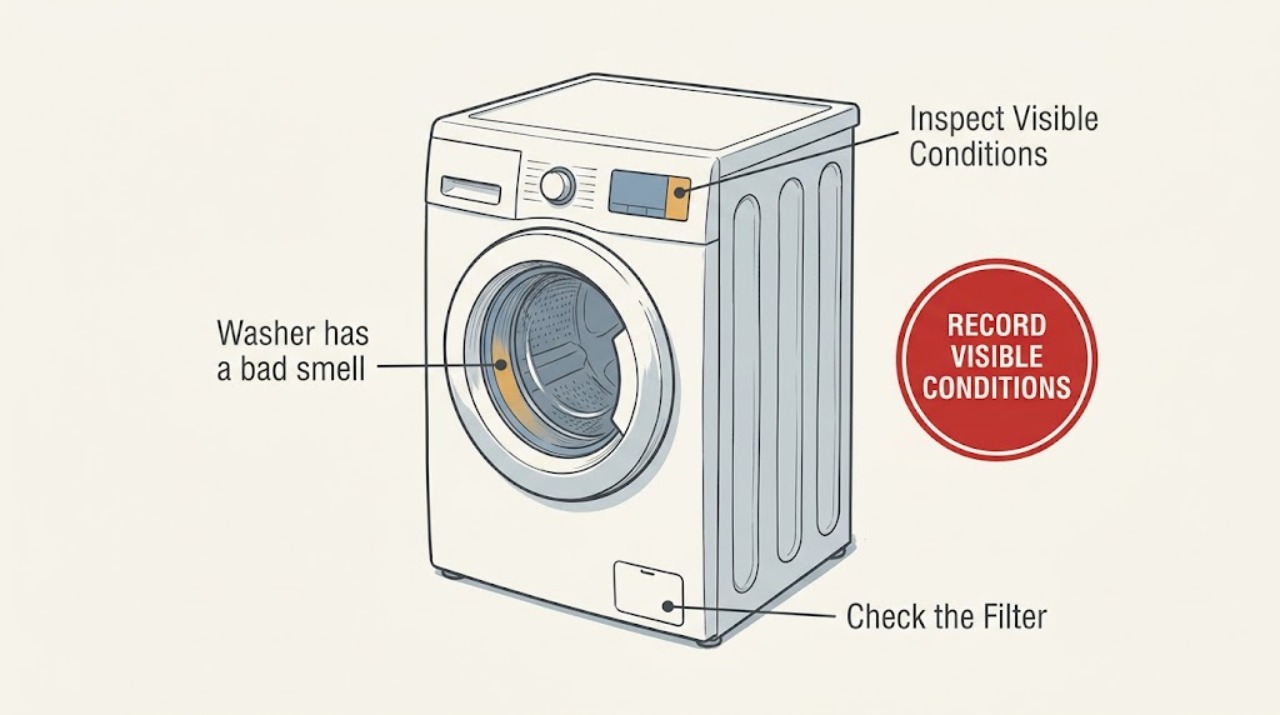
Hotpoint washer has a bad smell: What to Check and What to Do Next
First classify the smell from your Hotpoint washer: musty or mildew-like odors commonly point to damp residue around the door seal, detergent drawer, drum, or filter; a sewage-like smell that is strongest at the drain points to hose or household plumbing; a burning-rubber, burning-plastic, or electrical odor during operation is a stop-use warning.
-
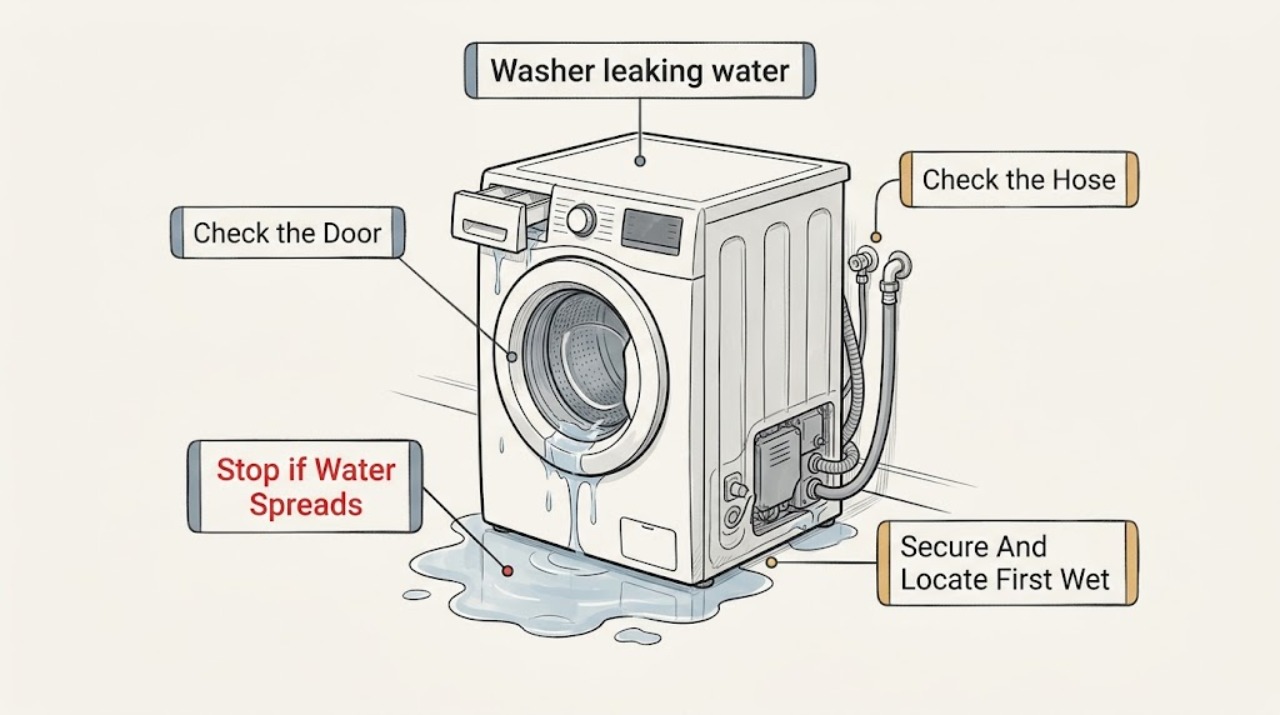
Hotpoint washer leaking water: What to Check and What to Do Next
Find the first wet point and note when the Hotpoint washer leaks: while filling, during washing, during drain or spin, or while idle. A front-load leak at the door points toward debris or a damaged door seal; water from the dispenser points toward product buildup or blocked dispenser ports; a rear leak points toward an inlet or drain hose, installation, or household plumbing; and a leak during agitation may be oversudsing or overflow on a top-loader.
-
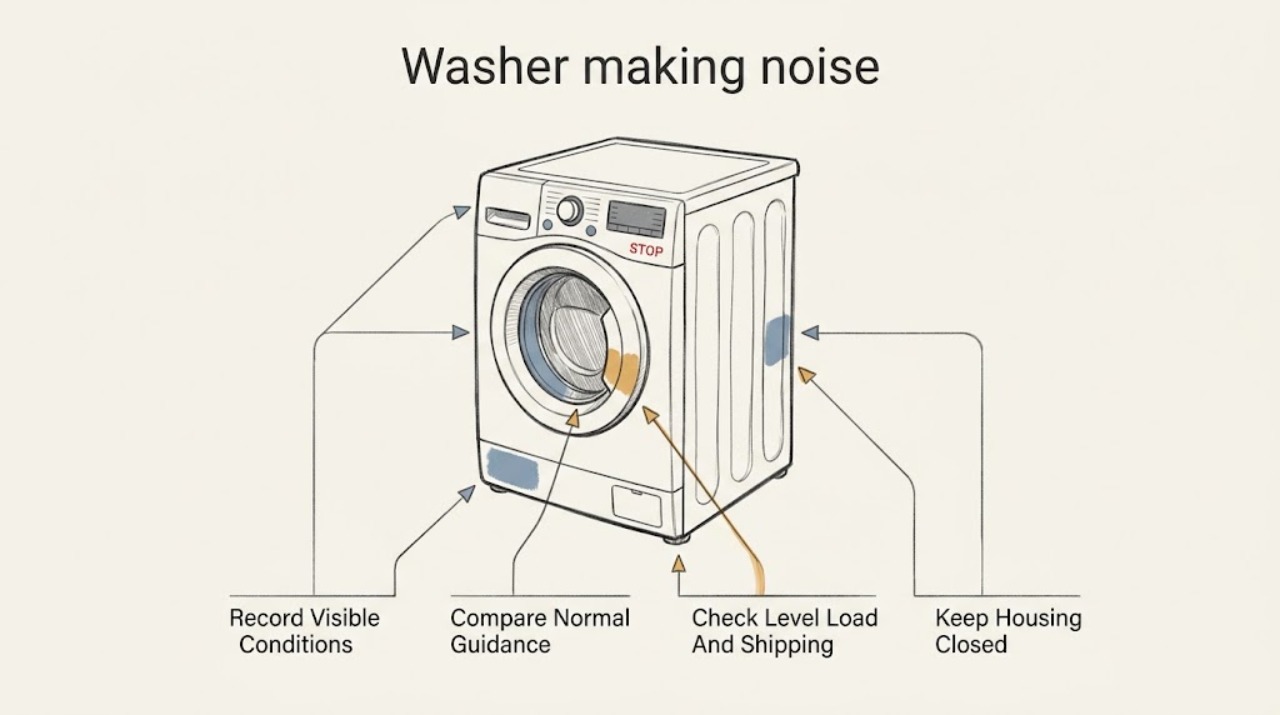
Hotpoint washer making noise: What to Check and What to Do Next
Identify the sound and the cycle stage before assuming a failed part. A Hotpoint washer can normally click while the lid or mode mechanism engages, hum while filling or draining, gurgle at the end of drain, or make a gentle-cycle click from the clutch; the opened GE Appliances support article specifically says that gentle-cycle clicking is normal on GE and Hotpoint washers.
-
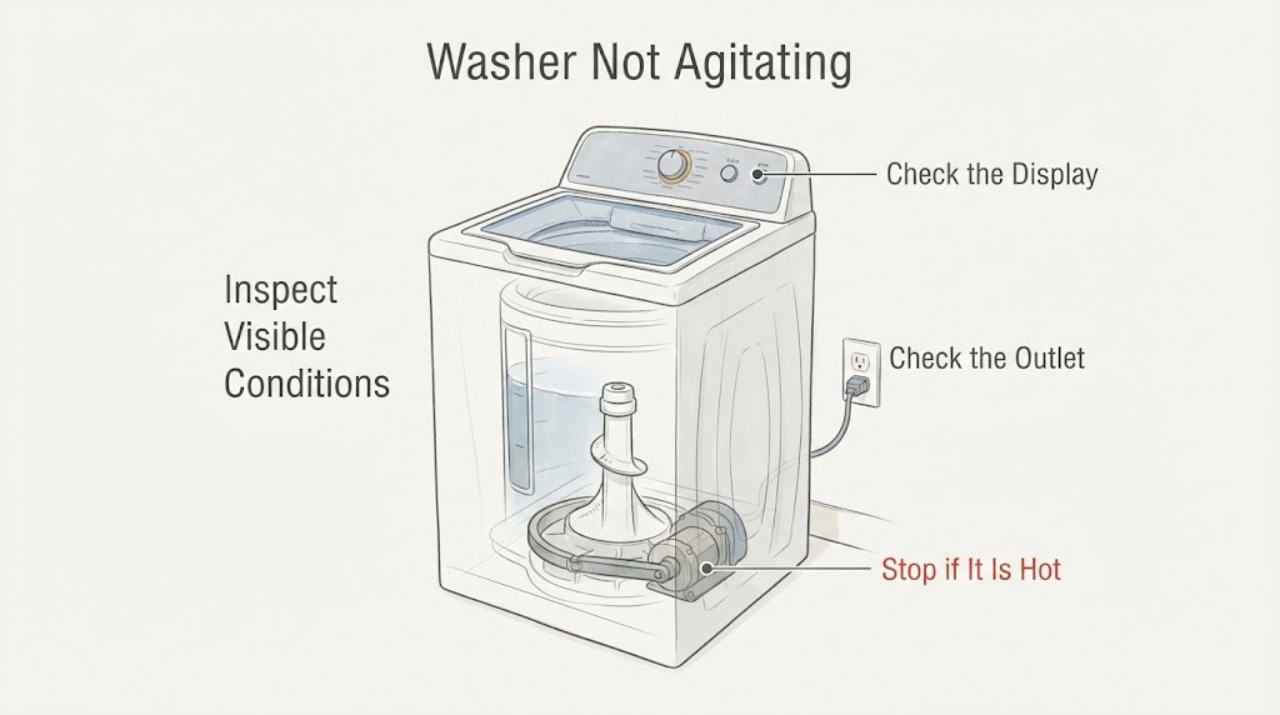
Hotpoint Washer Not Agitating: Safe Checks and Motor Reset Limits
If your Hotpoint is a top-load washer with an agitator or infusor, first confirm that the lid is closed and that the washer has finished filling; some models wait about 20–30 seconds before engaging the drive. A quiet washer may still be agitating, so mark one item, run a brief wash portion, and check whether the item moved.
-
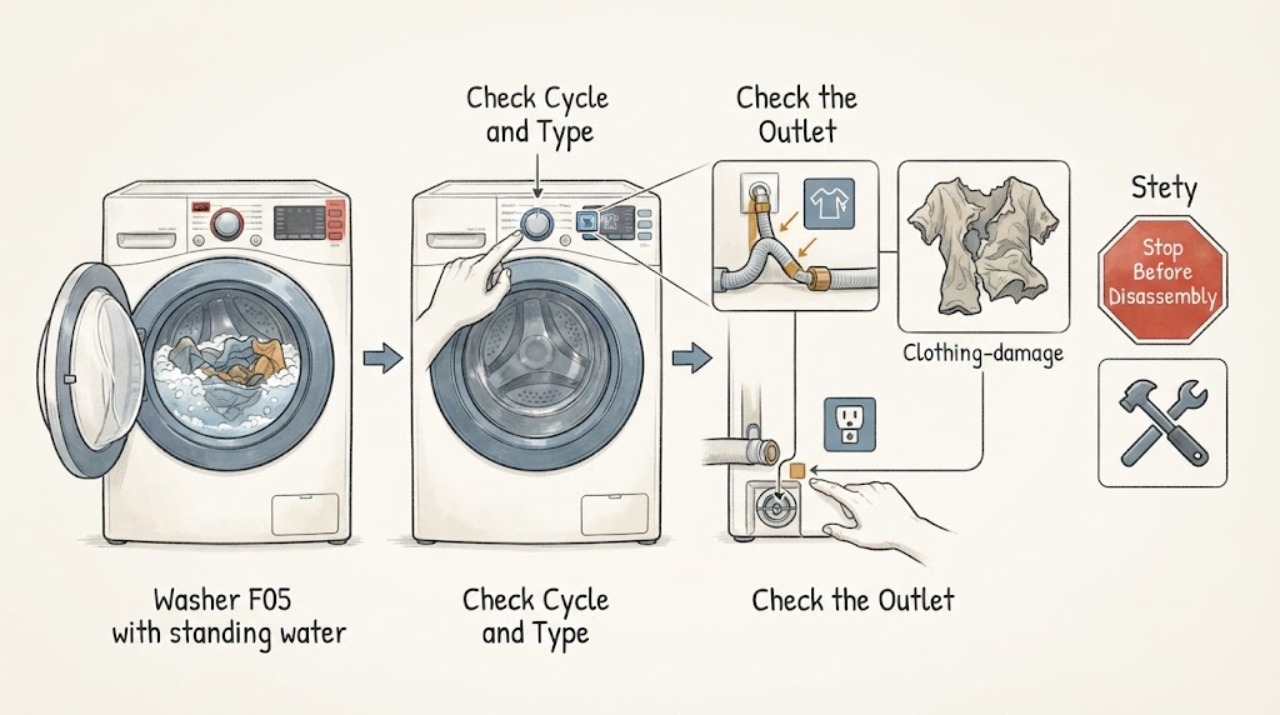
Hotpoint washer F05 with standing water and torn clothing: separate the two faults
Hotpoint's opened F05 guidance is a UK washing-machine guide: it describes F05 as a waste-pipe blockage or pump issue when the door stays locked or water remains in the drum, and tells the owner to check only the model-approved pump filter, waste hose, and under-sink plumbing before service. It does not explain torn clothing, so treat the two complaints as separate tracks.
-
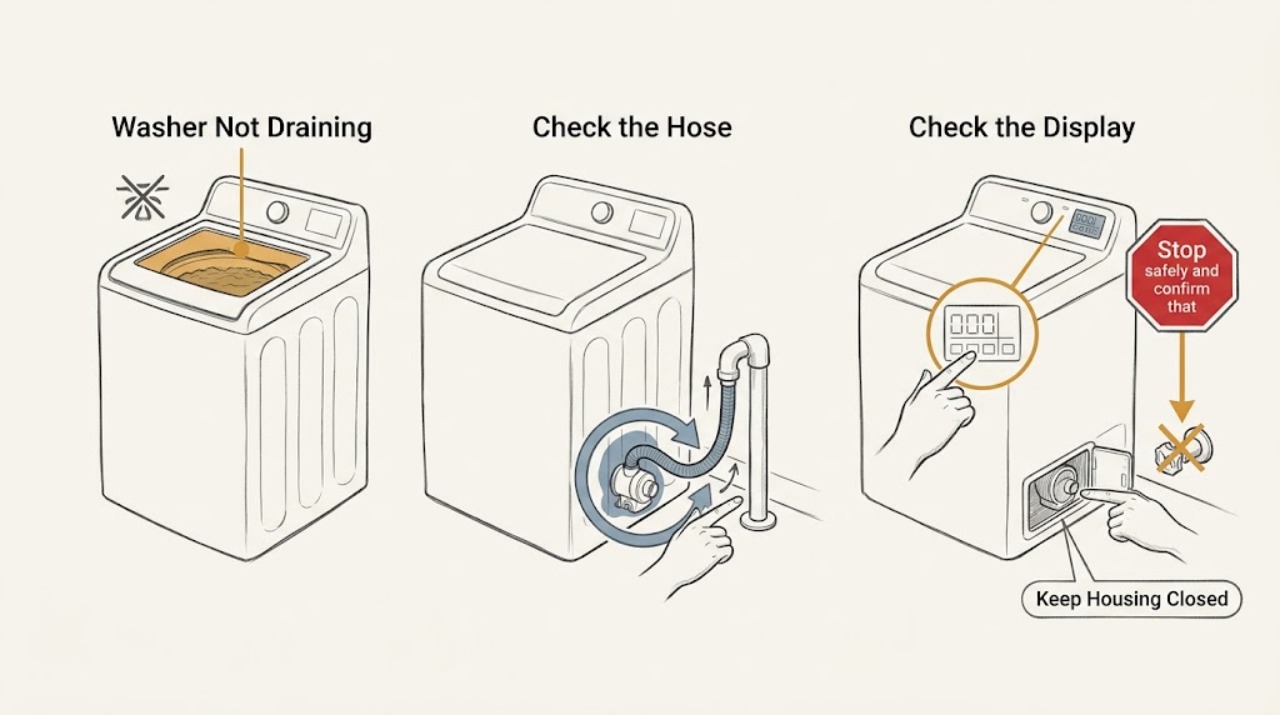
Hotpoint Washer Not Draining: What to Check and What to Do Next
First note whether the washer is paused normally, leaves water in the basket, hums without moving water, or drains slowly and then stops. Keep the lid or door closed until the basket is still, and keep the washer off if water is near the cord, outlet, controls, or other electrical equipment.
-
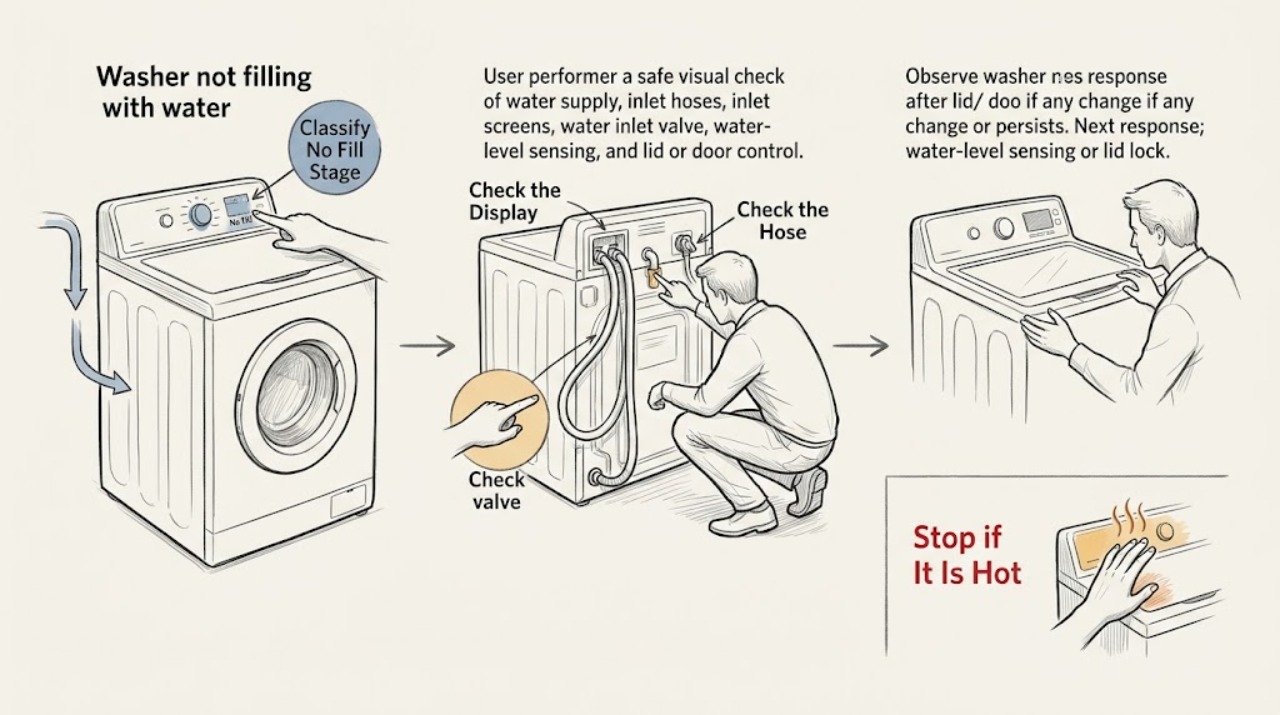
Hotpoint washer not filling with water: What to Check and What to Do Next
First decide whether the Hotpoint washer never starts filling, fills slowly, receives only hot or cold water, or begins filling and then stops. Confirm the cycle is not paused, the lid or door is closed, and both household water valves are open.
-
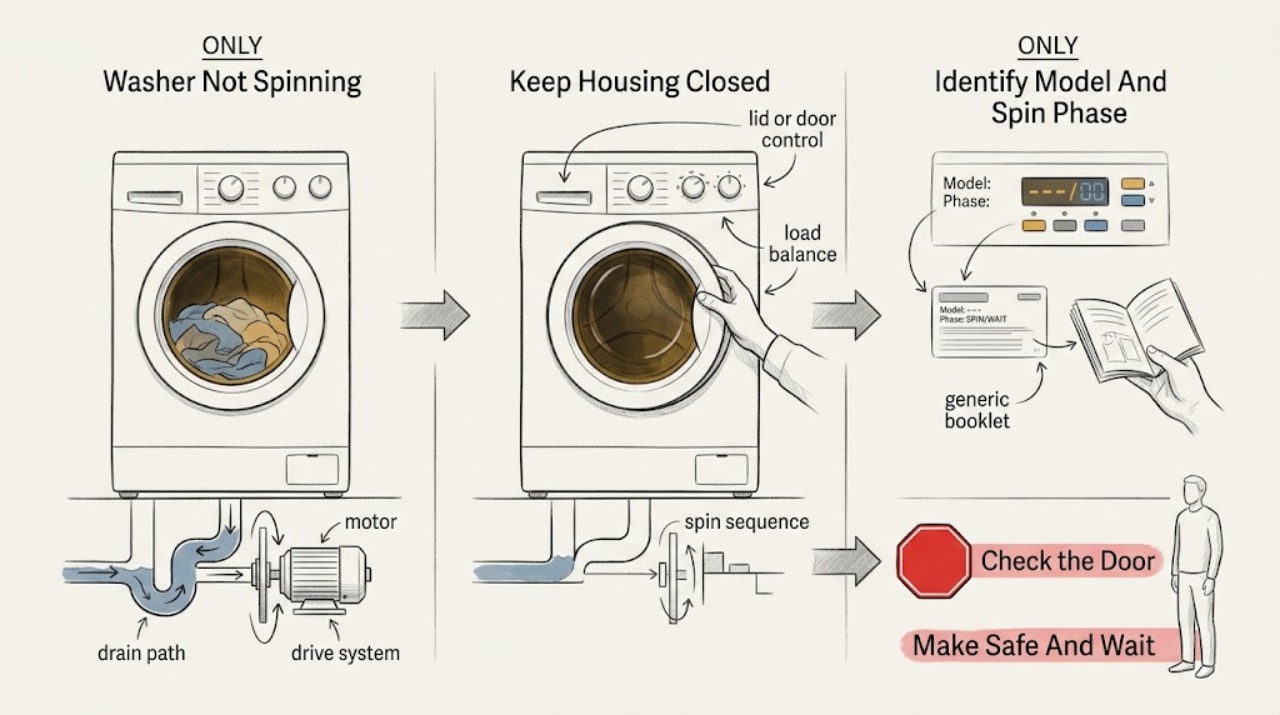
Hotpoint Washer Not Spinning: Check the Cycle, Load, and Safe Service Boundary
A Hotpoint washer may be waiting through a normal pause or pump-out, unable to spin because the lid or door is not safely closed, stopping for an unbalanced load, or failing to spin because it has lost power, cannot drain, or has a motor or drive fault. Wait through the model's documented pause rather than advancing a timer, then note whether the tub is full, whether the pump drains, whether the lid or door locks, and whether a spin or balance indicator appears.
-
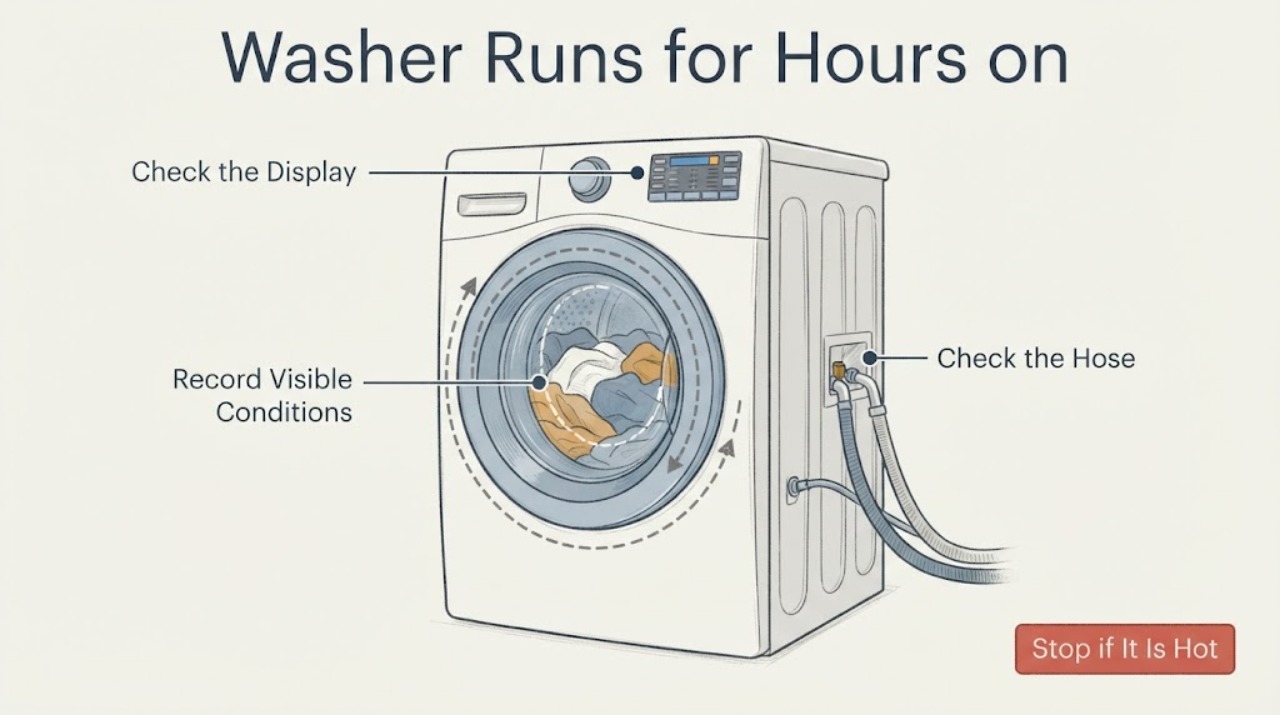
Hotpoint Washer Runs for Hours on a 90°C White Wash
A Hotpoint washer does not have one universal runtime for a 90°C White or cotton-family programme. Hotpoint says the displayed time is approximate and can change with incoming water temperature and pressure, detergent, load size/type, selected options and load balance; the machine may spend extra time redistributing an unbalanced load.
-
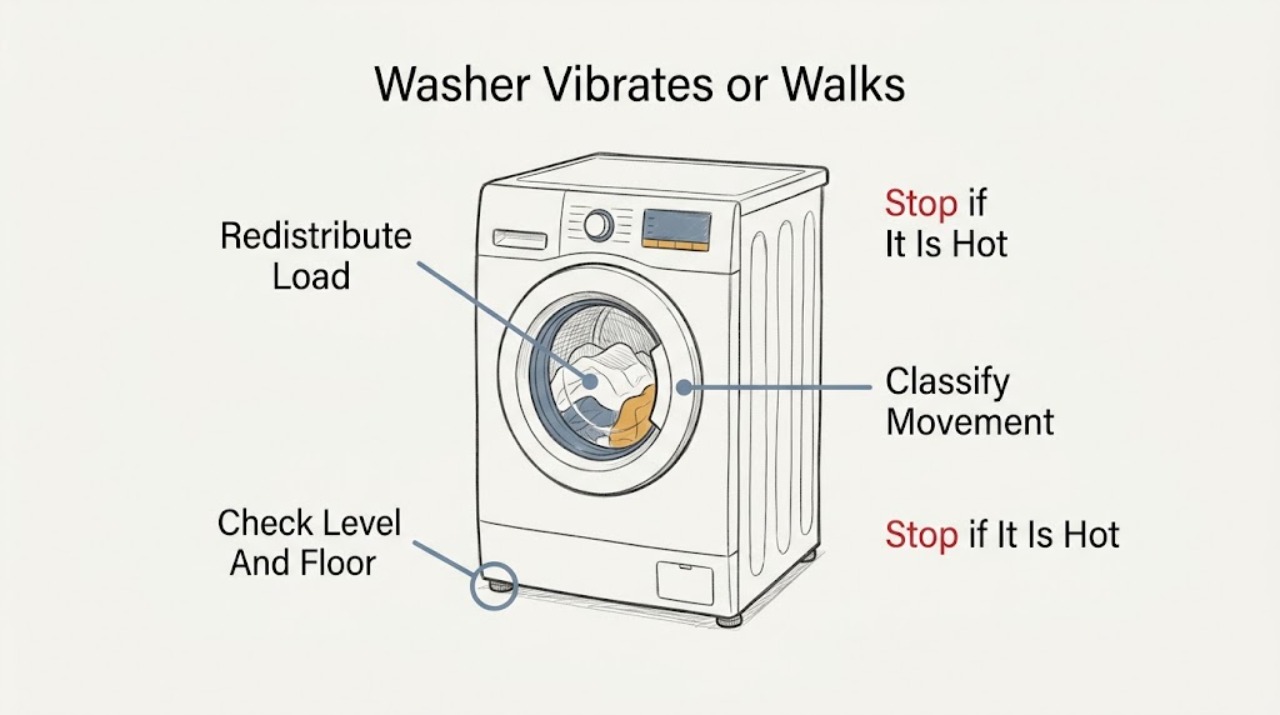
Hotpoint Washer Vibrates or Walks: What to Check and What to Do Next
If a Hotpoint washer vibrates or walks, stop the cycle and first note whether the movement occurs during fill, agitation, drain, or spin, and whether the tub is empty or carrying a single, bulky, or tangled load. Redistribute the laundry, check from outside that the washer is level on a solid floor, and look for an object or drain hose striking the cabinet.
-
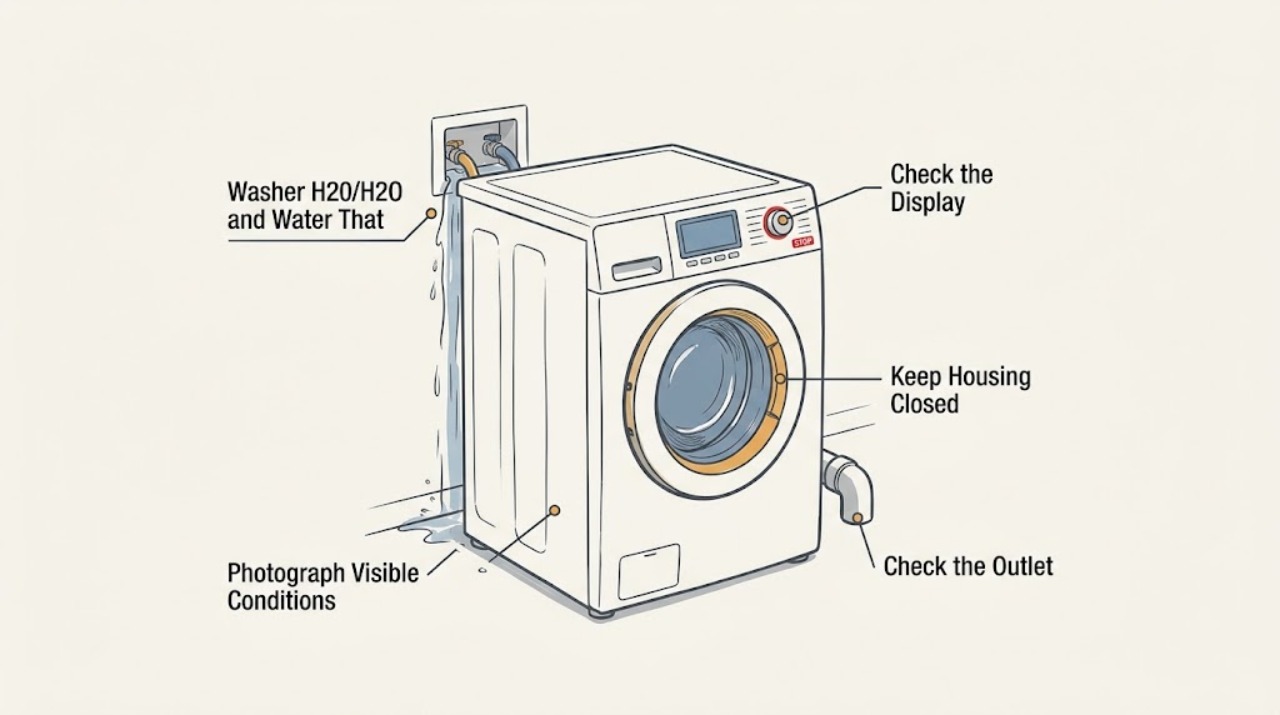
Hotpoint Washer H20/H2O and Water That Will Not Stop
Treat a Hotpoint washer that keeps taking in water, overfills, or loads and drains continuously as a water and flooding risk first. Close the visible water tap if it is safely reachable, stop the washer from its controls, and keep away from any wet plug, outlet, cord, or electrical area; do not keep restarting it.
-
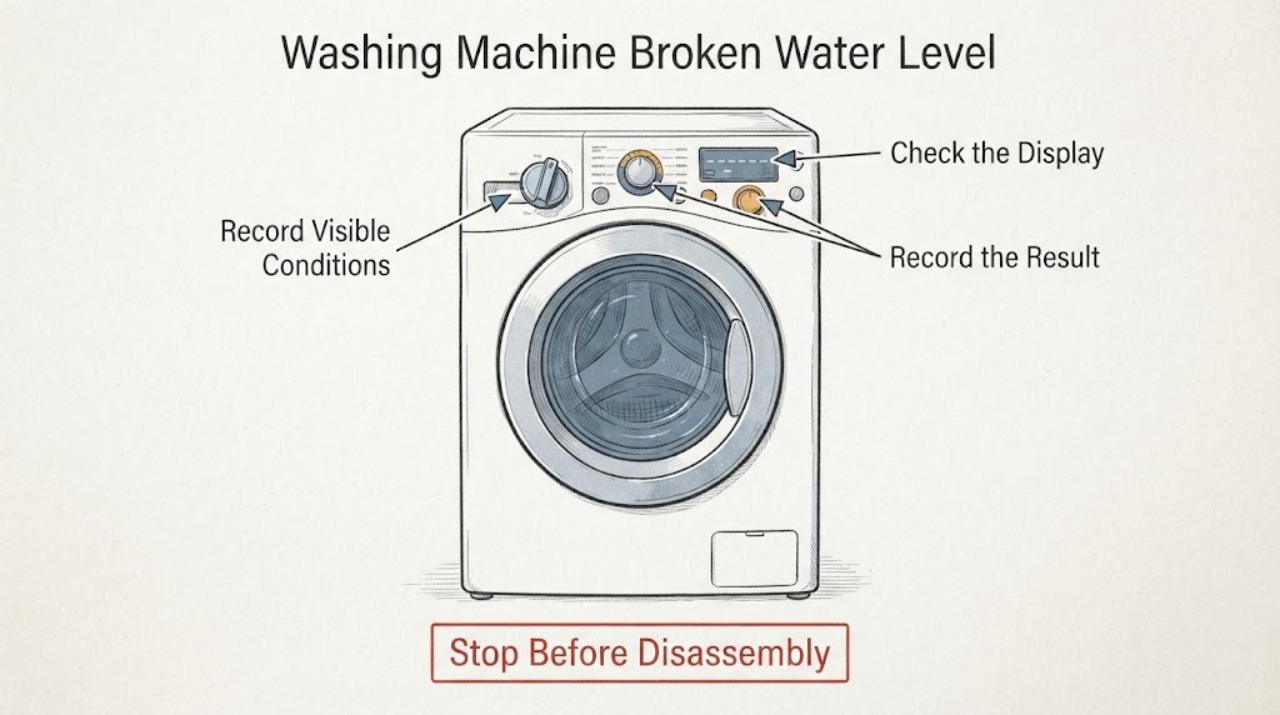
Hotpoint Washing Machine Broken Water Level Dial | Fix Guide
Do not choose a replacement knob or assume the washer uses the same water-level mechanism as another Hotpoint model. First photograph the control panel and record the complete model number and purchase region.
-
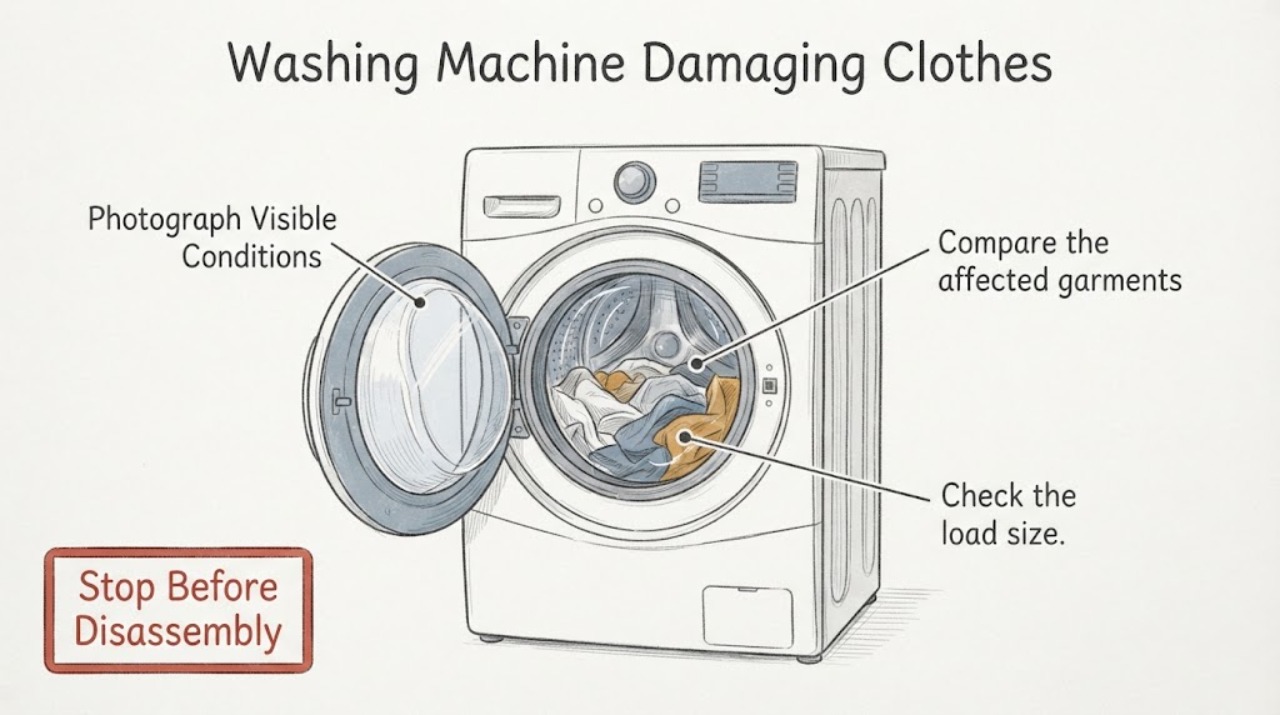
Hotpoint Washing Machine Damaging Clothes: Separate Laundry Causes from Washer Damage
First classify the damage instead of assuming the Hotpoint washer has a failed part. Dye transfer, fading, detergent marks, stretching, and localized holes or snags point to different checks.
-
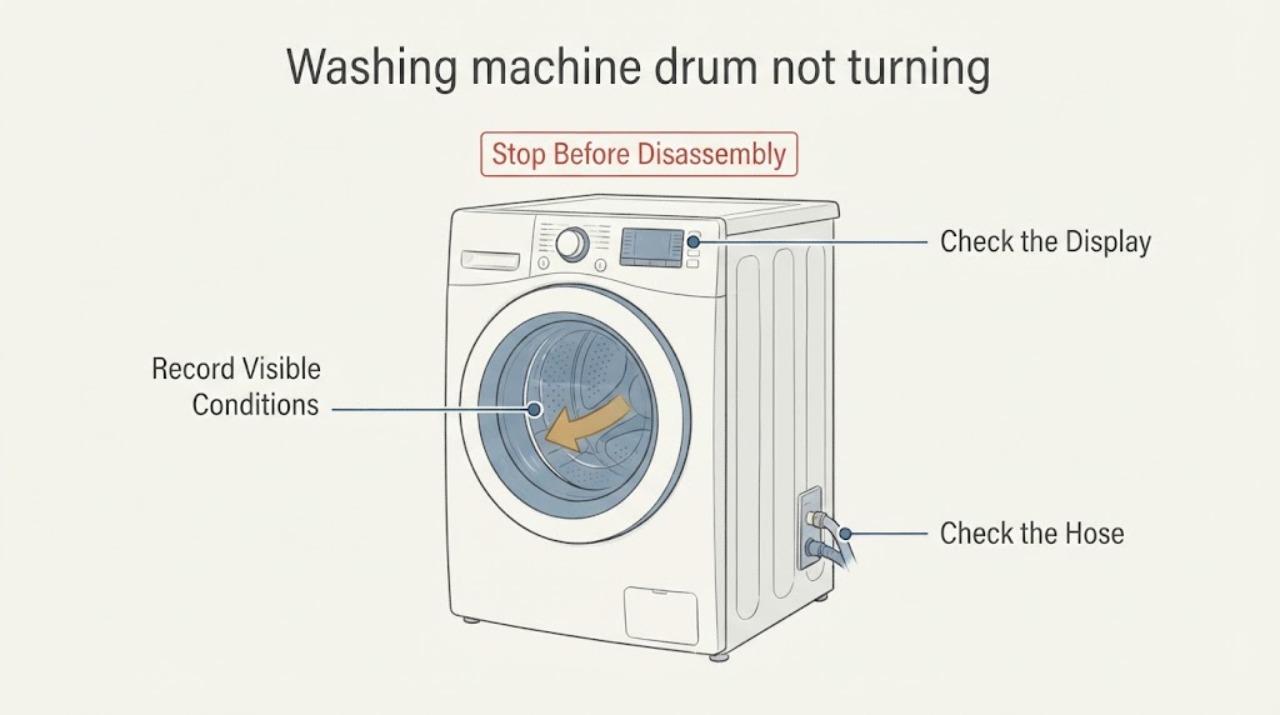
Hotpoint washing machine drum not turning | Fix Guide
“Not turning” can mean the washer has no power, will not start, fills but never moves the drum, or aborts spin after an unbalanced load or drainage problem. First note which stage fails.
-
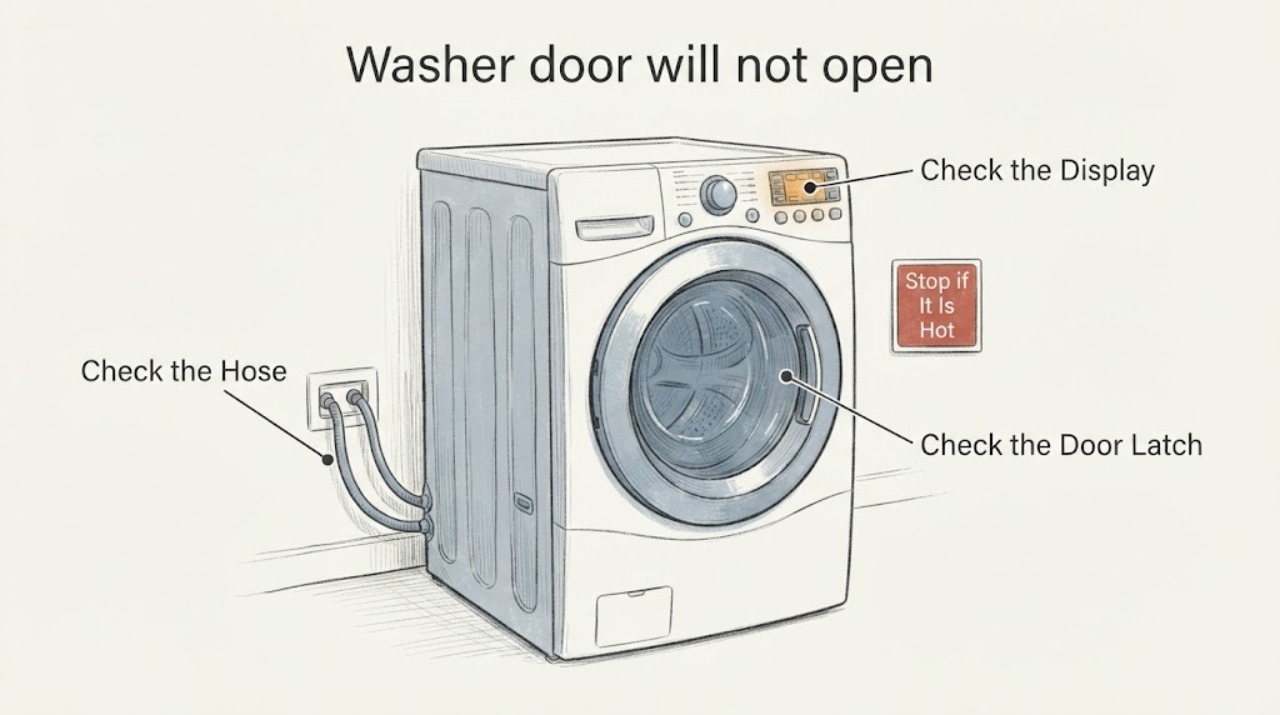
Hotpoint WMAL641GUK washer door will not open after setting a wash cycle
Do not pull, pry, or defeat the door lock on a Hotpoint WMAL641GUK just because the door feels like it is not interlocked. After setting a wash programme, a locked door can be normal while the drum is moving, water is present, or the machine is still hot.
-
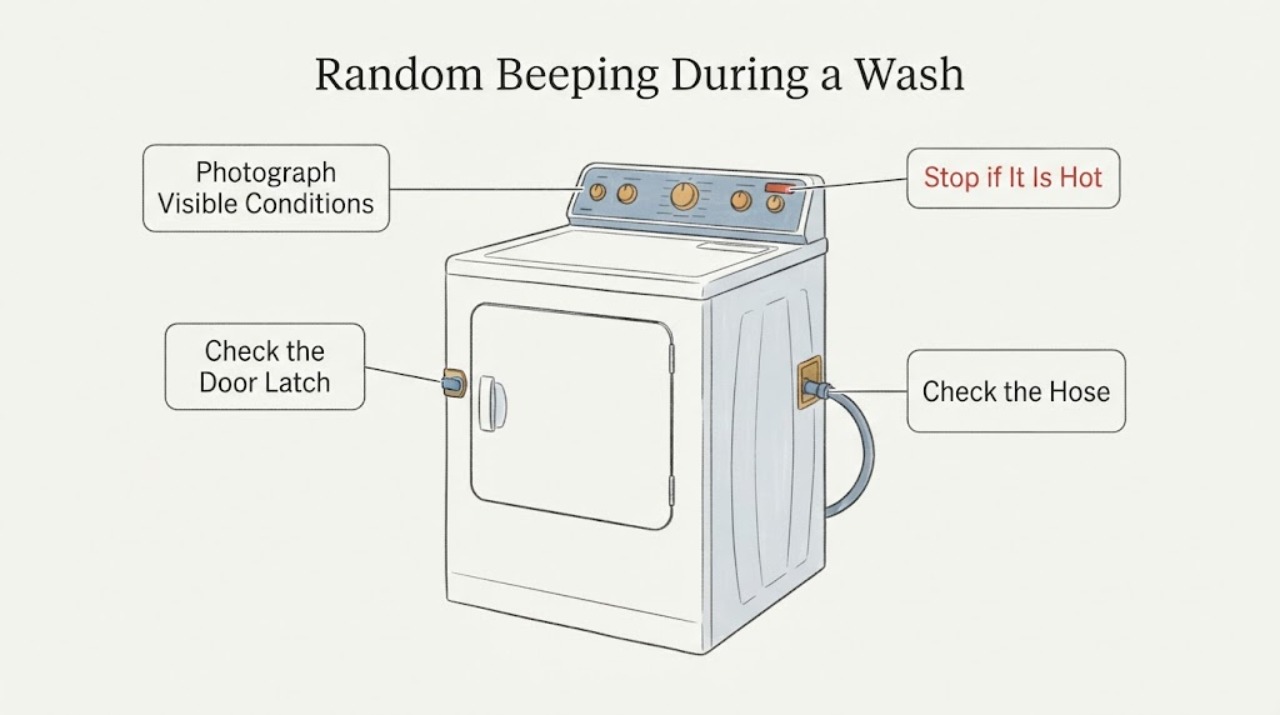
Hotpoint WMFUG842P Random Beeping During a Wash: What to Check
A random beep on the Hotpoint WMFUG842P is not enough to identify a control-board fault. First note whether the display or indicator lights change, whether the drum keeps turning, whether the machine pauses, and whether water remains or the door-lock symbol appears.
-
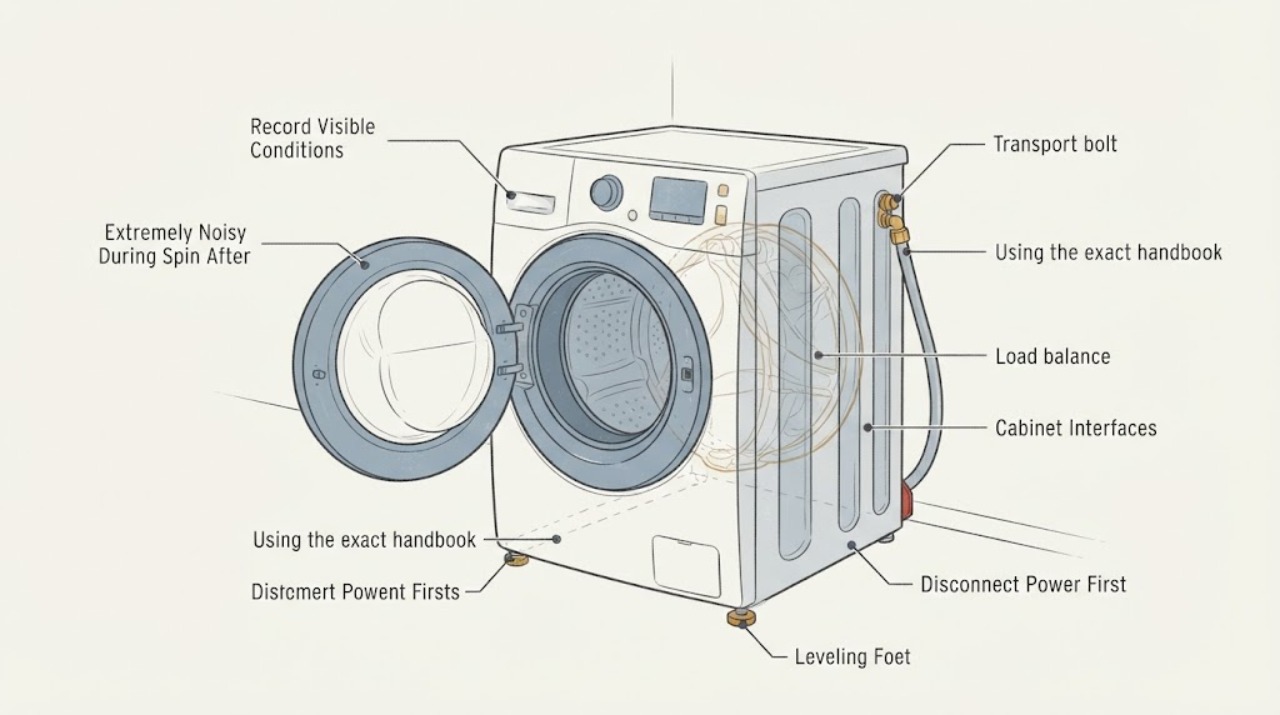
Hotpoint WMXTF942G Extremely Noisy During Spin After a Cellar Move
For a Hotpoint WMXTF942G that became extremely loud during spin after being moved into a cellar, stop repeated high-speed tests and start with the move and installation history. Hotpoint says a noisy or unstable washer on first use can result from protective transport brackets or bolts left in place; excessive vibration can also come from an unbalanced load, feet that were not adjusted, or the machine being trapped against walls or cabinets.