
On this page
Start here
Quick answer
First classify the odor and check the easy, visible sources: wet laundry left in the tub, residue in the door seal or detergent drawer, standing water, a drain-path smell, or a burning odor. Remove laundry promptly, dry the accessible seal and dispenser, and use only the washer's model-approved cleaning procedure; never combine bleach, vinegar, detergent, or other chemicals. A burning smell, sewage-like odor, visible leak, poor draining, or an odor that remains after the documented cleaning cycle needs appliance service rather than repeated chemical experiments.
Work through in order
Diagnostic checks
Use only checks that match the exact appliance or system and its official guide.
-
Check 1
With the washer idle and safe to approach, classify the odor from outside the open door or lid: musty or mildew-like, sour or sewage-like, detergent or chemical-like, damp-cloth only, or burning or electrical-like. Note whether the smell is strongest at the tub, door seal, dispenser, rear hose area, or laundry room.
Expected result: The odor is a mild musty smell, a drain or sewage smell, a sharp chemical smell, or a burning or electrical smell.
Next step: Record the odor and strongest location before cleaning; for burning, smoke, heat, or sparking, stop using the washer and request service.
Stop if: Do not continue testing a washer that smells hot, burns, smokes, sparks, or makes the surrounding area unsafe.
Why this matters
Why: Musty odors often track moisture or residue. Drain odors shift attention to the drain path. A chemical smell can indicate an incompatible or excessive cleaner. Burning or electrical odor is a safety fault path, not a cleaning problem.
-
Check 2
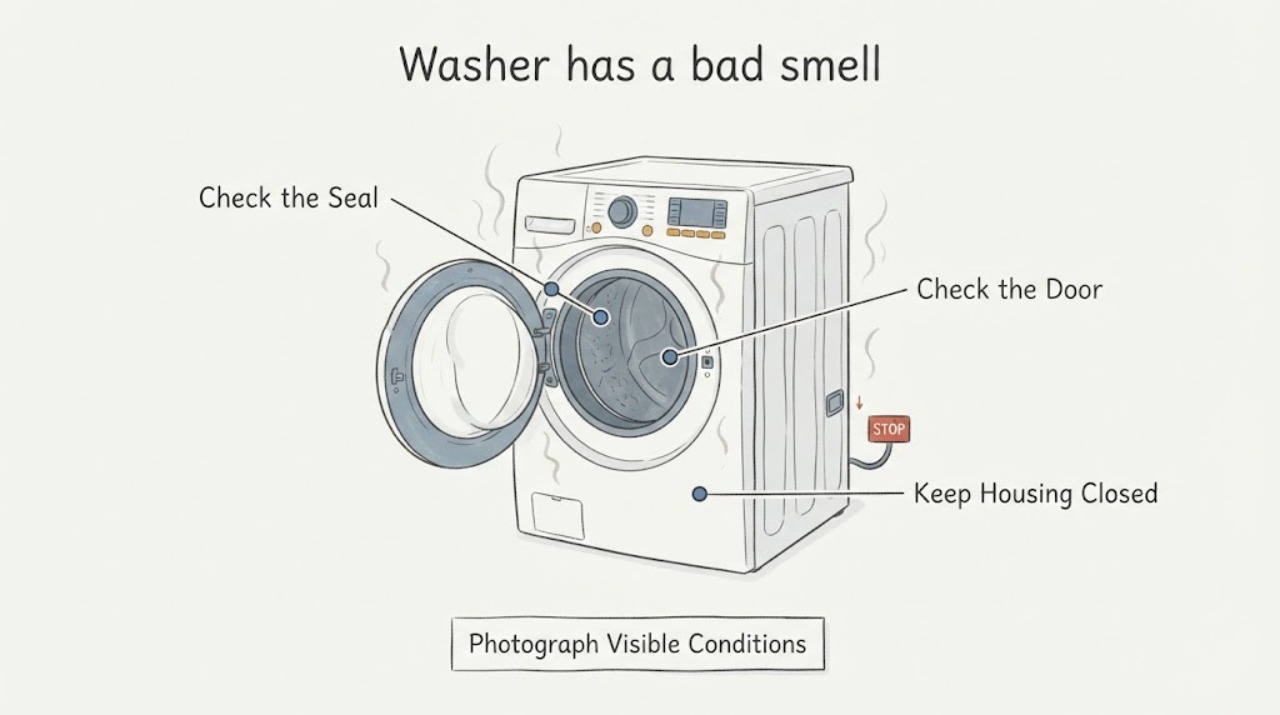
Look at the accessible tub opening, front-load door gasket folds if present, lid area, and detergent dispenser without removing panels or forcing the seal. Check for lint, hair, sludge, visible mildew-like residue, pooled water, or a foreign item; photograph the condition before disturbing anything.
Expected result: The surfaces are clean and dry, or residue, trapped debris, water, or damage is visible in the seal or dispenser.
Next step: Wipe only accessible surfaces with the model-approved method, dry them, and leave the door or lid open between uses; ask service about a damaged seal or dispenser if the condition persists.
Stop if: Stop if the seal is torn, the cabinet is wet internally, the dispenser will not release normally, or access requires disassembly.
Why this matters
Why: The washer makers identify gasket and dispenser residue or retained moisture as common odor contributors. A torn or distorted seal can also be a leak risk and is a parts or service question, not a reason to use harsher chemicals.
-
Check 3
Review the last few loads: whether wet clothing stayed in the washer, whether the door or lid was left closed after use, whether detergent or softener amount changed, and whether the odor transfers to clean laundry. Check the model label or manual for the specified detergent type and amount.
Expected result: Wet laundry was left inside, the interior stayed closed and damp, excess or non-specified detergent was used, or the laundry smells clean while the empty washer does not.
Next step: Correct the documented usage issue, dry the accessible interior, and follow the model's own maintenance schedule before considering a replacement part.
Stop if: Do not pour an improvised cleaner into the washer or combine products to counteract a smell.
Why this matters
Why: Trapped moisture and detergent residue can create a musty smell without a failed part. Samsung and Whirlpool both link prompt unloading, ventilation, and correct detergent use with odor prevention.
-
Check 4
Visually inspect the floor around the washer and the exposed portions of the drain hose and supply connections without pulling the appliance out or loosening a connection. Look for dampness, a puddle, a loose-looking hose, a drain smell at the standpipe, or water that remains in the tub after a completed cycle.
Expected result: The area is dry and the tub empties normally, or there is a leak, standing water, poor draining, or a sewage-like odor at the drain path.
Next step: Photograph the wet area and note when it appears; stop using the washer and arrange appliance or plumbing service if water, poor draining, or a sewage odor is present.
Stop if: Do not disconnect a hose, reach into a filter or pump, move a heavy washer, or touch a wet electrical connection.
Why this matters
Why: A drain or plumbing condition can leave odor-causing water behind or return odor through the washer. A leak or poor drain is a repair diagnosis, not a reason to keep running cleaning cycles.
-
Check 5
Check the control panel and manual for a Clean Washer, Tub Clean, or Self Clean cycle and read its exact product and load requirements before starting anything. Confirm that the tub is empty and that no other detergent, bleach, vinegar, or cleaner will be added at the same time.
Expected result: The model has a documented cleaning cycle, the procedure is unclear or unavailable, or the odor is burning, sewage-like, or accompanied by a leak or poor draining.
Next step: If the manual supports the cycle, follow only that procedure and record the result; otherwise schedule service and provide the model number and odor description.
Stop if: Never mix cleaning products, run an unknown cycle with chemicals, or continue using the appliance when it has a burning odor or active leak.
Why this matters
Why: A documented cycle can address routine residue on models that support it, but cycles and approved products are not universal. An unclear procedure or a non-routine symptom is a reason to use the manual or service rather than guess.
-
Check 6
After the model-approved maintenance attempt, compare the odor with the original observation and note whether it returns after the next load. Record any changed draining, vibration, leak, error display, residue, or smell transferred to clothing.
Expected result: The smell clears and stays away, improves only briefly, remains unchanged, or is joined by a leak, poor draining, burning odor, or error.
Next step: Request appliance service for persistent or returning odor and provide the model, odor type, maintenance procedure used, photographs, and any related symptoms.
Stop if: Stop further home troubleshooting when the odor persists after the documented procedure or any safety symptom appears.
Why this matters
Why: A lasting improvement supports a maintenance or moisture cause. A brief or absent improvement suggests residue in a hidden component, drain-path issue, damaged seal, or another fault that requires model-specific diagnosis.
Use your observations
Decision map
Find the observation that best matches what you see, then follow the next safe action.
-
PATH 01Safety boundary
What you see
The smell is mild and musty, with wet laundry, a closed door or lid, or visible residue and no leak, poor draining, or burning odor.
Do this next
Correct the moisture or detergent-use issue, dry accessible surfaces, and follow the model's documented clean-washer procedure once.
Why this path and its safety boundary
Safety stop: Do not combine cleaners or keep escalating chemicals if the smell returns.
-
PATH 02Safety boundary
What you see
Residue, mildew-like buildup, or a damaged front-load door gasket or dispenser is visible.
Do this next
Use the model's approved cleaning instructions for accessible surfaces and ask a technician to assess any torn seal, leak, or inaccessible buildup.
Why this path and its safety boundary
Safety stop: Do not force the gasket, remove panels, or use abrasive or unapproved chemicals.
-
PATH 03Safety boundary
What you see
The odor is sewage-like, the tub retains water, or a drain hose or floor connection appears wet.
Do this next
Stop using the washer if water or poor draining is present and arrange appliance or plumbing service with photographs of the drain path and wet area.
Why this path and its safety boundary
Safety stop: Do not disconnect hoses, reach into a pump filter, or move the appliance while troubleshooting.
-
PATH 04Safety boundary
What you see
The odor is burning or electrical-like, or there is smoke, heat, sparking, or a safety concern.
Do this next
Stop the appliance, keep clear of smoke or heat, and arrange qualified appliance service; use emergency services if there is an active fire or immediate danger.
Why this path and its safety boundary
Safety stop: Do not run another cycle, open service panels, or attempt a chemical cleaning.
-
PATH 05Safety boundary
What you see
The model-approved cleaning cycle and drying routine do not clear the odor, or it returns with each load.
Do this next
Request a technician diagnosis of the seal, dispenser, drain path, pump filter where applicable, and hidden tub or hose residue.
Why this path and its safety boundary
Safety stop: Do not order a seal, drawer, or filter solely from the symptom; fit and access are model-specific.
Helpful context
Understand the symptom
What a bad washer smell usually tells you
A musty smell commonly follows trapped moisture, wet laundry, detergent residue, or buildup on a front-load door gasket, dispenser, pump filter, or drum. A sewage-like smell can point to drain-hose setup or water returning through the drain path. A burning odor is a different safety path and should not be treated as routine mildew. The exact layout and cleaning cycle vary by model, so the owner's manual and the washer maker's instructions control any cycle, cleaner, or part decision.
Use one documented cleaning method at a time
Manufacturer guidance consistently emphasizes removing wet loads promptly, drying the washer between uses, using the specified detergent amount, and cleaning the dispenser, gasket, and tub on the model's schedule. Whirlpool explicitly says not to add detergent or other chemicals when running its clean-washer procedure; treat that as a general warning against mixing products, not as permission to use a Whirlpool-specific dose on another model.
Keep the checks observational and model-safe
The sequence below starts with visible, low-risk checks. Do not remove panels, reach into a pump or drain opening, disconnect hoses, or work around a burning-smell washer while it is powered. If the odor is accompanied by smoke, heat, sparking, or a leak onto electrical equipment, stop using the appliance and arrange service.
Only after diagnosis
Potential parts
- washer door boot seal
Relevant only if a model-specific inspection finds a torn, distorted, leaking, or persistently contaminated front-load gasket after the approved cleaning routine.
Confirm the full washer model and revision in the manual or with the manufacturer before ordering; top-load models may not use this part. - washer dispenser drawer
Relevant only if the dispenser is cracked, cannot drain or release properly, or remains damaged after accessible cleaning and model-specific inspection.
Dispenser shape and plumbing vary by model; verify exact model fit and whether only an insert or drawer assembly is required. - washer pump filter
Relevant only on models equipped with a serviceable pump filter and only after poor draining or retained water is confirmed by the manual or a technician.
Filter access and fit are model-specific; do not open the filter area or order a replacement without confirming the exact model and safe procedure.
When checks do not resolve it
Need a professional?
Arrange appliance service for a burning or electrical odor, smoke, heat, sparking, active leak, sewage-like smell, poor draining, a damaged gasket, or a smell that remains or returns after the washer's documented maintenance procedure.
Have this ready
- Provide the washer brand and model from its rating label, odor type and location, when it appears in the cycle, photographs of the seal or dispenser and any water, the detergent or cleaner used, and whether clothes remain wet or acquire the smell. Ask the technician to assess the door seal, dispenser, drain path, pump filter where applicable, and hidden residue.
Common questions
FAQ
Why does a washer smell musty even when it still runs?
A washer can operate while moisture, wet laundry, detergent residue, or buildup remains in the gasket, dispenser, tub, drain, or pump filter. Check visible areas and usage history first; persistent odor after the model-approved maintenance routine needs diagnosis.
Can I use bleach and vinegar together to clean the smell?
No. Never mix bleach, vinegar, detergent, or other cleaning products. Follow only the washer's model-specific procedure and use one approved product or cycle at a time.
When should I call for a washer repair instead of cleaning it?
Call for a burning or electrical odor, smoke, heat, sparking, active leak, sewage-like smell, poor draining, a torn gasket, or an odor that remains or returns after the documented cleaning procedure.
Should I replace the door seal, dispenser, or pump filter?
Only conditionally. A seal, drawer, or filter is relevant when the exact model and an inspection confirm that part is damaged, leaking, blocked, or contaminated. Do not choose a part from odor alone.
What information helps a washer technician find the odor source?
Give the full model number, odor type and location, when it occurs, photos of visible residue or water, detergent and cleaner history, whether laundry remains wet, and any leak, drain, vibration, or error symptoms.
Read the exact guide
Official sources
- Samsung washing machine or laundry smells badSamsung Support · Supports distinguishing burning, sewage, and mildew odors; checking drain setup, retained moisture, pump-filter condition where applicable, cleaning cycles, and service escalation.
- LG Washer - Troubleshooting Odor / BuildupLG USA Support · Supports visible checks of detergent dispenser and door gasket, the connection between poor draining and odor, model-specific tub-clean instructions, and service for persistent odor.
- Removing Odors from the Interior of a WasherWhirlpool Product Help · Supports monthly or model-directed clean-washer routines, prompt unloading, ventilation, correct detergent use, and the warning not to combine detergent or other chemicals in the cleaning procedure.
Community feedback
Share a repair observation
Share a plain-text repair observation. Accepted observations are published automatically; this page may take a moment to update.