
Brand-independent appliance guidance
General Washer Repair Guides
Brand-independent troubleshooting and repair guidance for common washer problems and maintenance questions.
General washer guides
Use these guides when the problem is not limited to a specific manufacturer.
-
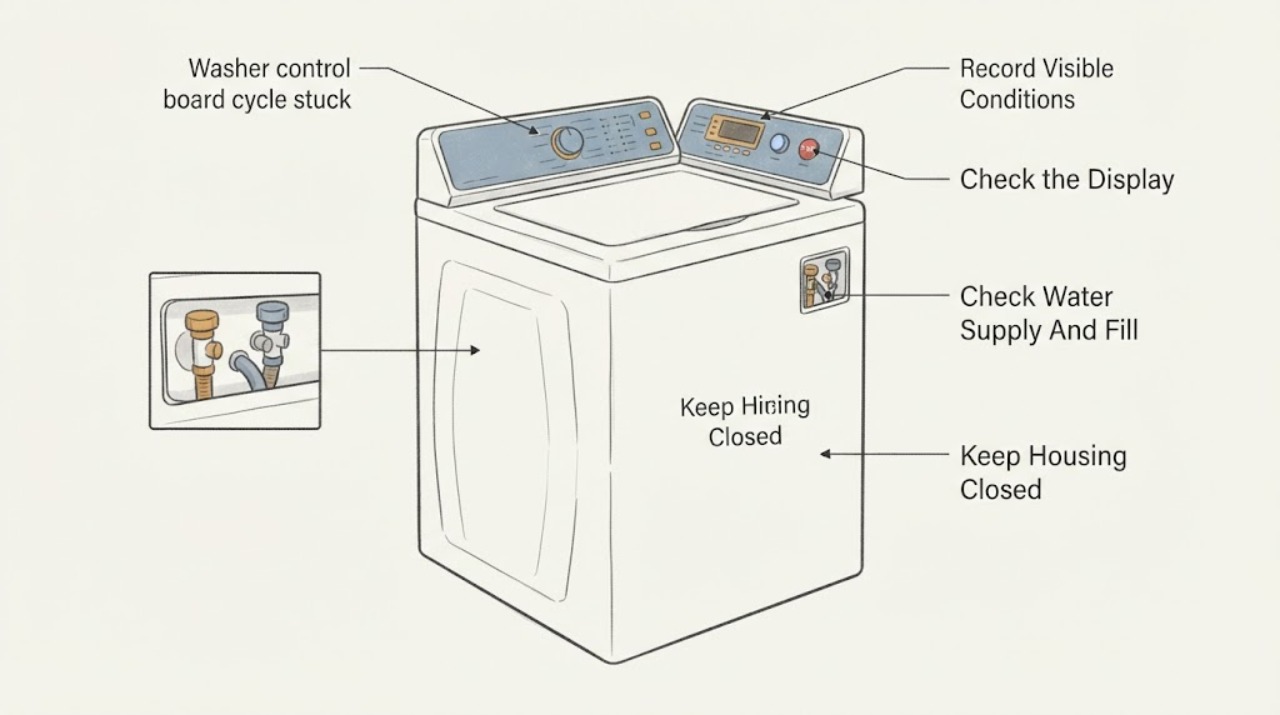
Washer control board cycle stuck: What to Check and What to Do Next
A washer that appears stuck is not proof that the control board has failed. A normal soak or sensing pause, control lock, door or lid-lock feedback, unbalanced load, excess suds, water-supply or drain problem, or a power interruption can keep the cycle from advancing.
-
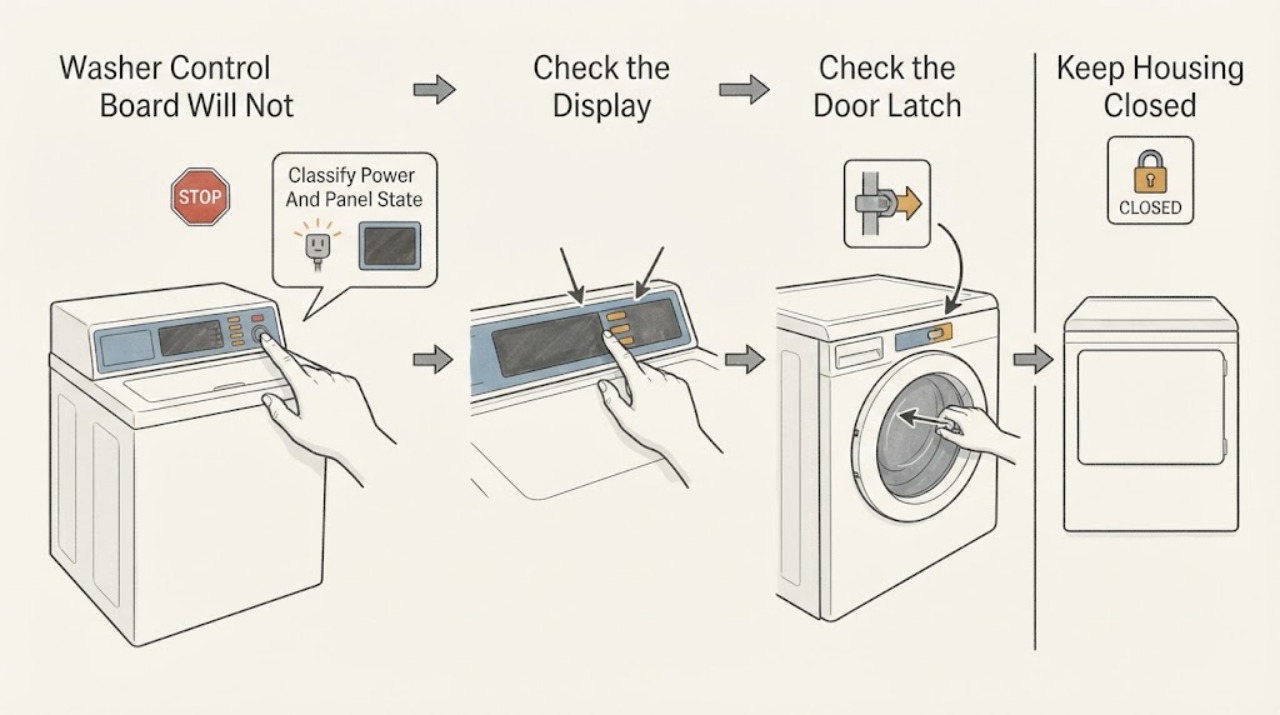
Washer Control Board Will Not Start: What to Check and What to Do Next
A washer that will not start may have no power, a control lock, an unrecognized door or lid state, a required water condition, a delayed or paused cycle, or a control fault; the symptom alone does not prove that the control board is bad. First classify whether the display is blank or the panel has power.
-
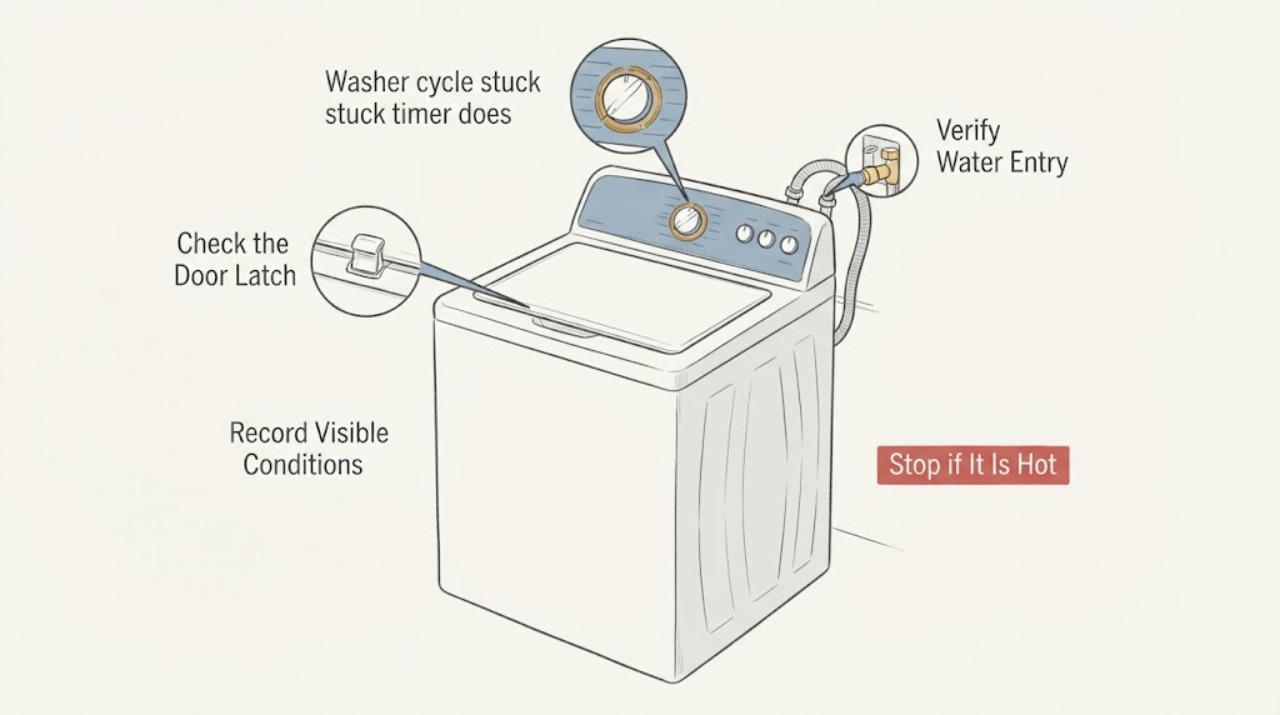
Washer cycle stuck timer does not advance: What to Check and What to Do Next
A washer timer that does not advance may be waiting for a normal condition rather than failed: the displayed time is an estimate and can hold while the machine balances a load, heats water, or reduces excessive suds. It can also stop progressing when the lid or door is not latched, water is not entering, the washer cannot drain, an unbalanced load prevents spin, or a control fault interrupts the cycle.
-
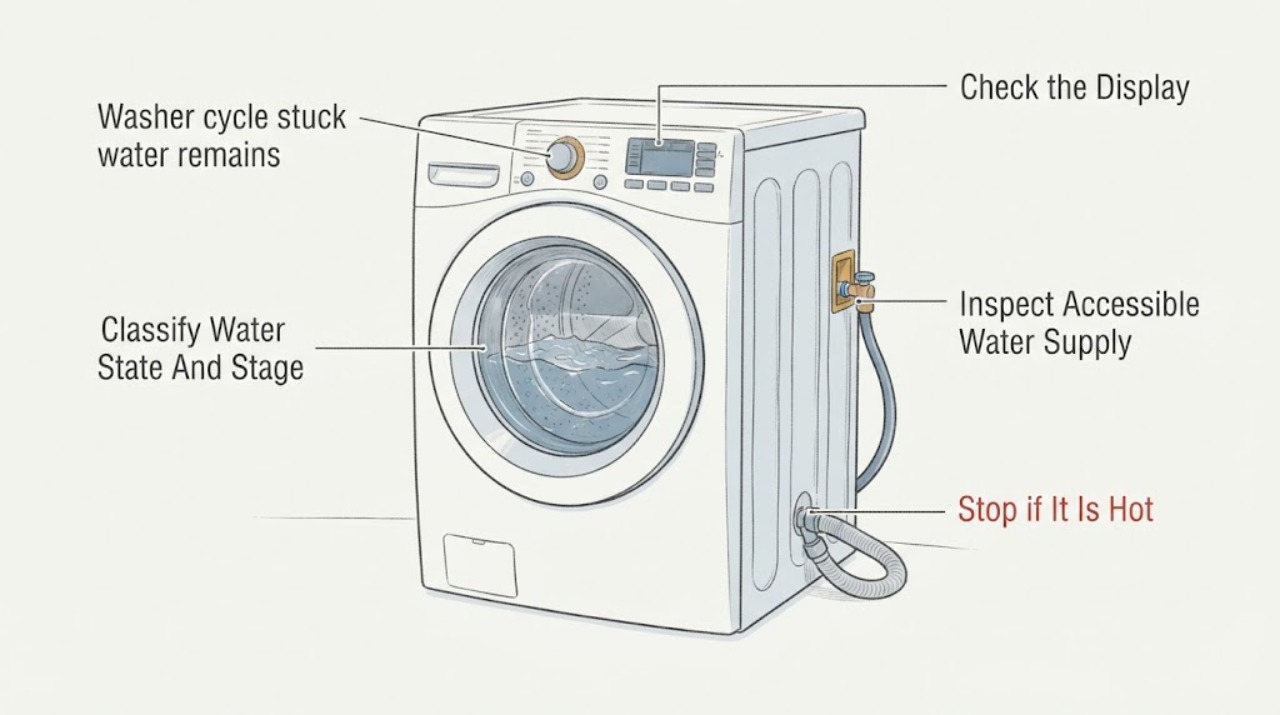
Washer cycle stuck water remains or is absent: What to Check and What to Do Next
First separate a washer that has water left in the tub from one that never filled. If a completed cycle leaves water or very wet clothing, keep hands out of the tub, check the display and load, and use the model-approved Drain & Spin option only when the washer is stable and there is no leak or other hazard.
-
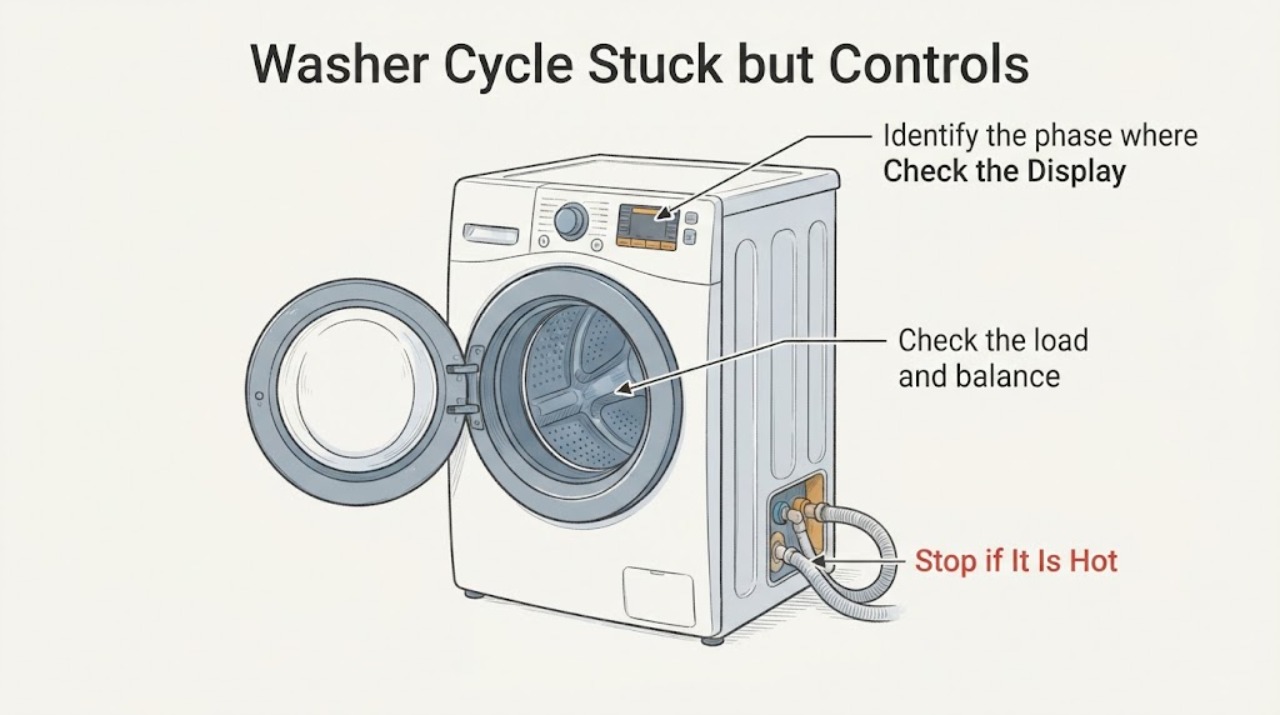
Washer Cycle Stuck but Controls Respond: What to Check and What to Do Next
A washer that appears stuck while its controls still respond may be extending the cycle to balance a load, absorb water, reduce suds, heat water, or complete a drain and spin step. First record the displayed phase and whether the washer is filling, tumbling, draining, spinning, or simply pausing.
-
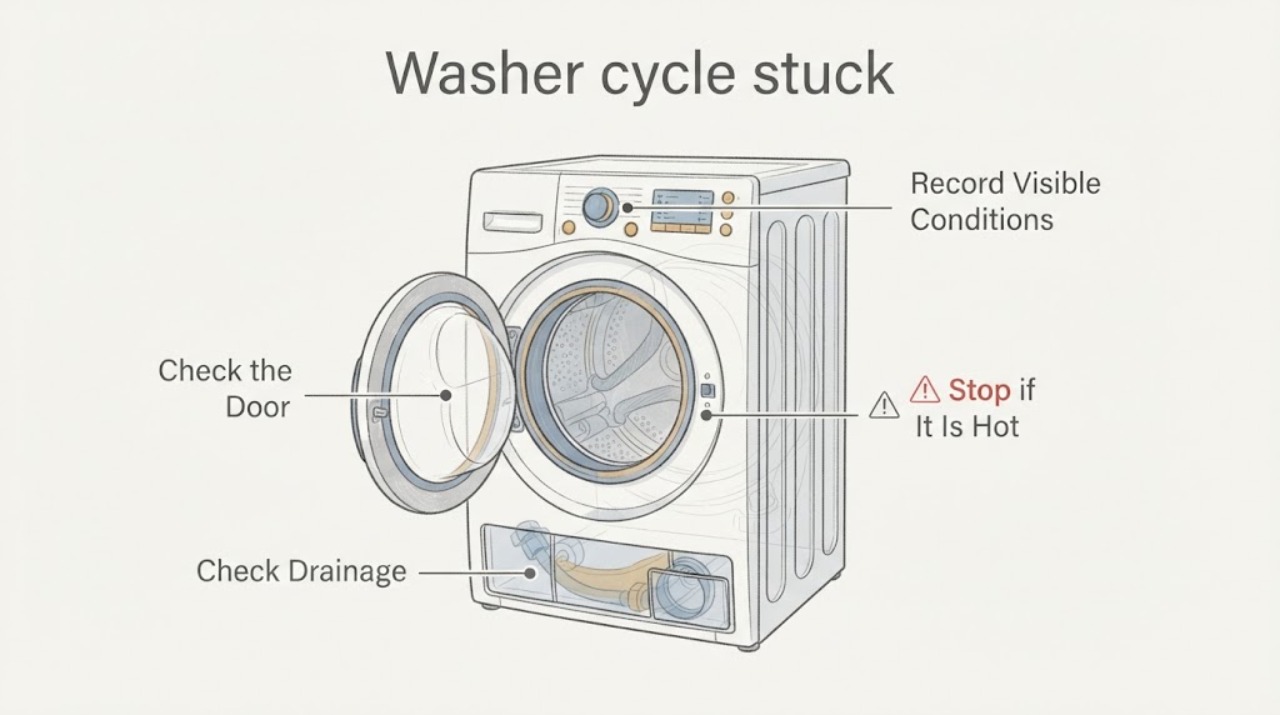
Washer cycle stuck: What to Check and What to Do Next
A washer that appears stuck may be holding its displayed time while it balances the load, heats water, handles excess suds, or waits for filling or draining. First record the displayed phase and whether the tub is filling, draining, or spinning; then make only safe visual checks of the load, lid or door, visible hose, water valves, and any leak.
-
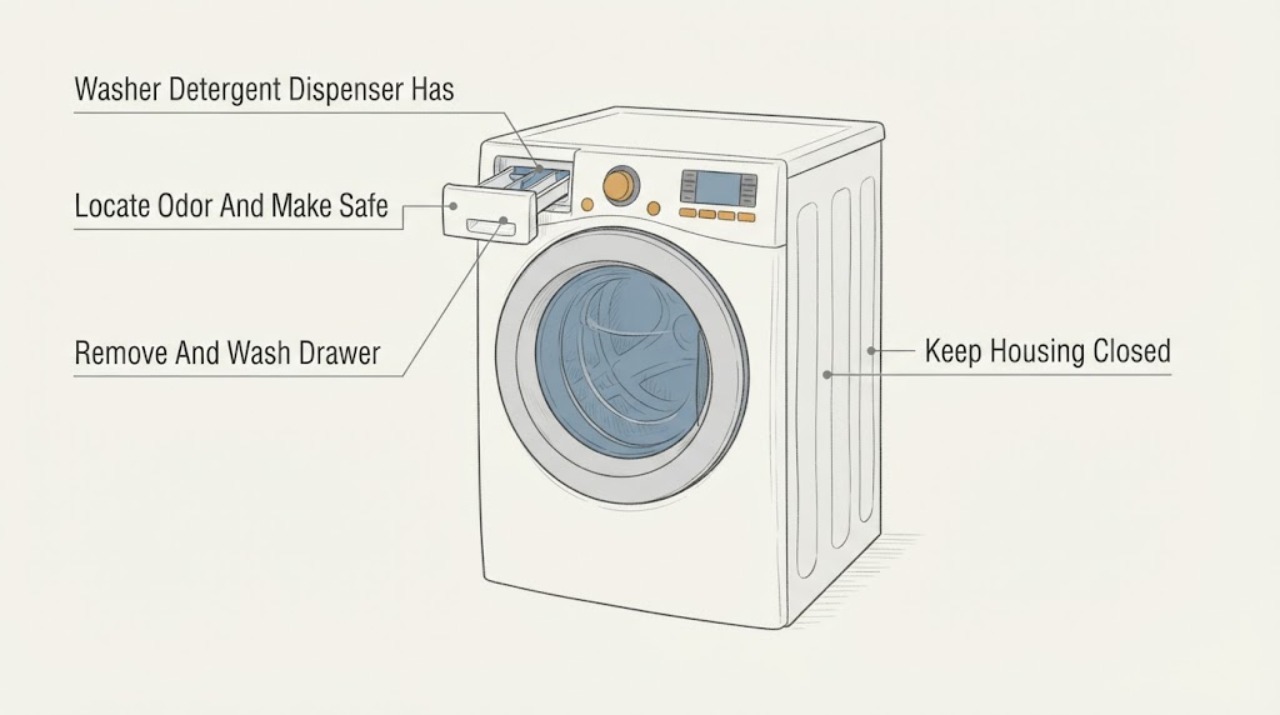
Washer Detergent Dispenser Has a Bad Smell: What to Check and What to Do Next
A bad smell from a washer detergent dispenser is most often caused by trapped moisture, detergent or softener residue, a clogged siphon or insert, or odor elsewhere in the washer that is being noticed at the drawer. Remove power before cleaning an accessible drawer, remove its inserts only as the model manual allows, rinse and brush away residue, clean the housing, and dry the parts before reinstalling them.
-
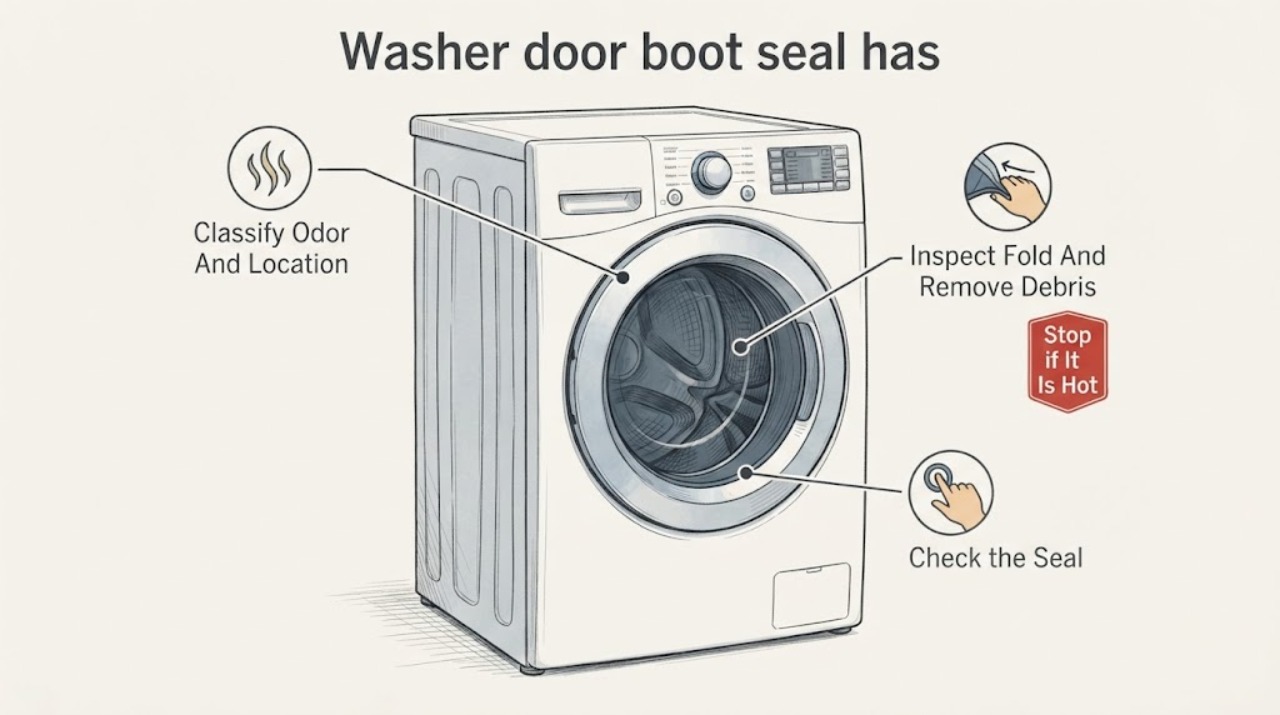
Washer door boot seal has a bad smell: What to Check and What to Do Next
A washer door boot seal can smell because its folds retain normal rinse water, lint, hair, detergent, or fabric-softener residue; closed-door moisture can then support mold or other odor-causing buildup. Empty the washer, inspect the seal fold, remove debris, clean it only with the exact manual's approved method, wipe it dry, and leave the door and dispenser open.
-
Washer door boot seal leaking water: What to Check and What to Do Next
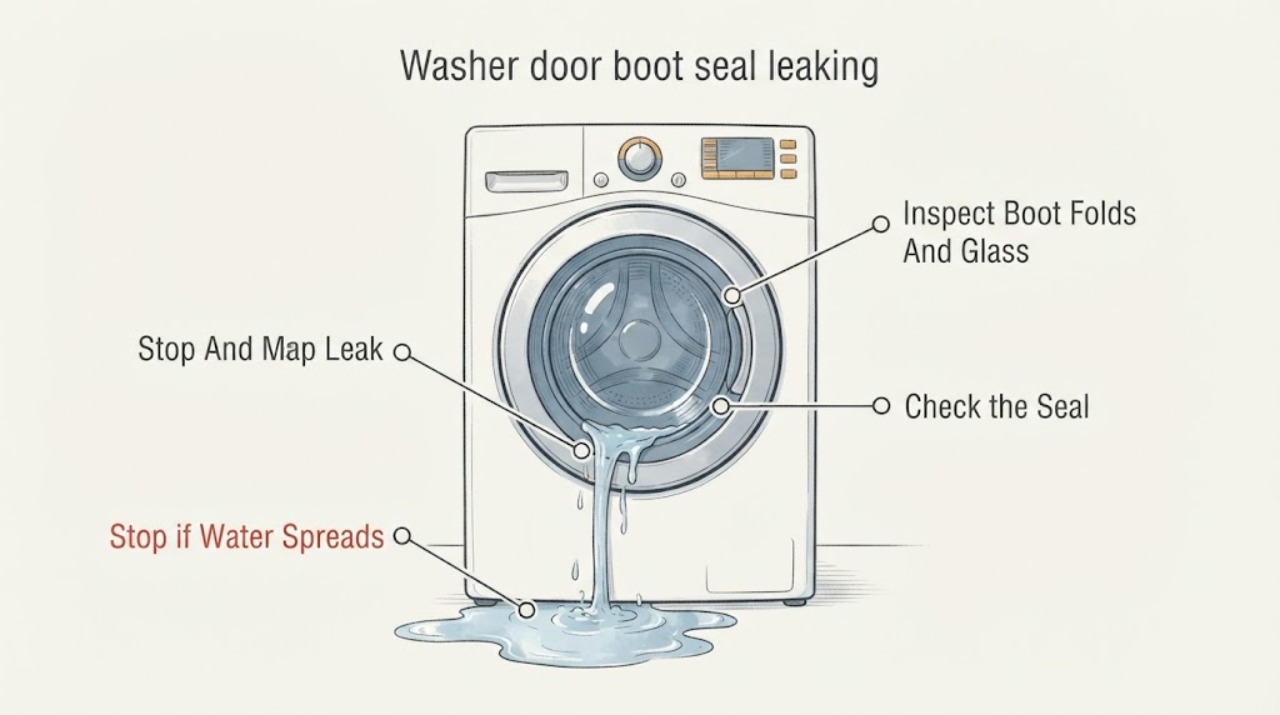
Stop the cycle and identify whether water is escaping from the door boot seal, the dispenser, the drain-filter area, the rear hoses, or the household drain. With the washer off and the drum safe to access, inspect the rubber boot's folds, inner glass contact area, drain holes, and seal-to-door edge for hair, lint, coins, trapped fabric, detergent residue, cracks, or a section pulled out of position.
-
Washer door lock will not start: What to Check and What to Do Next
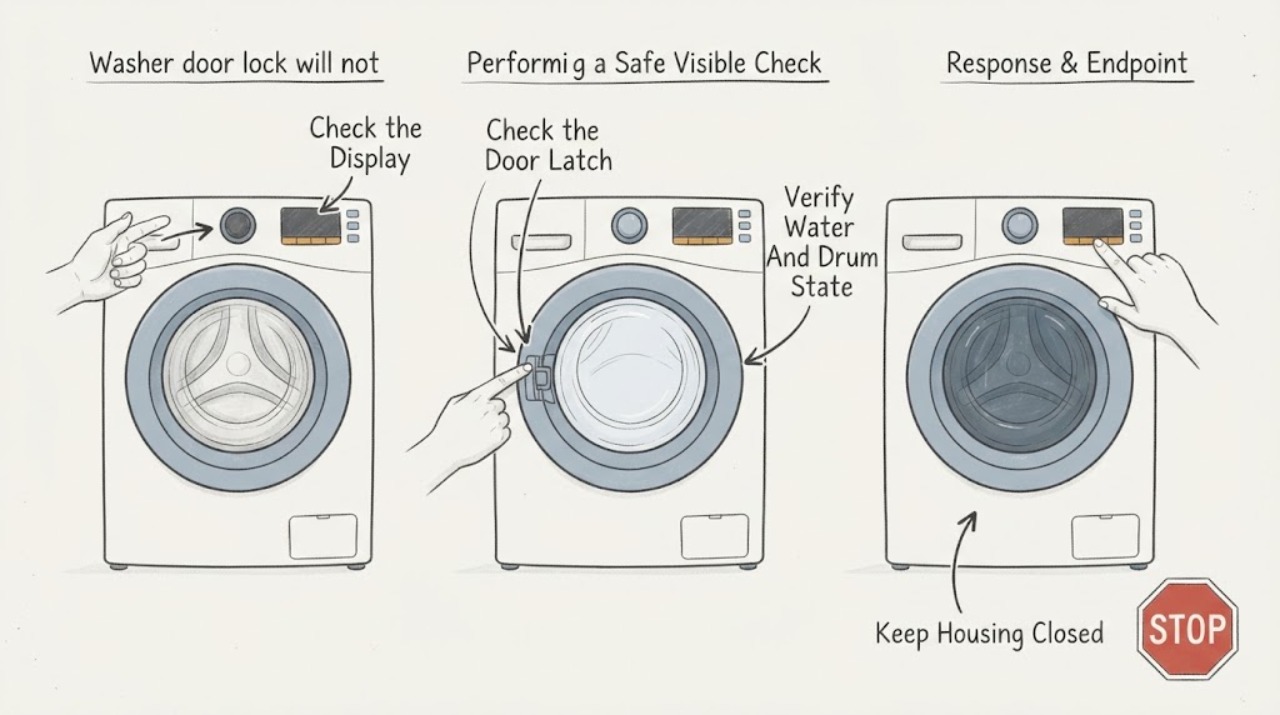
When a washer will not start because the door lock is not engaging, first remove clothing or debris from the door gasket and latch, close the door firmly, and check the display for a control-lock or door-lock message. Confirm the water valves are open and use the exact owner's guide for the Start-button timing or reset sequence.
-
Washer drain hose leaking water: What to Check and What to Do Next
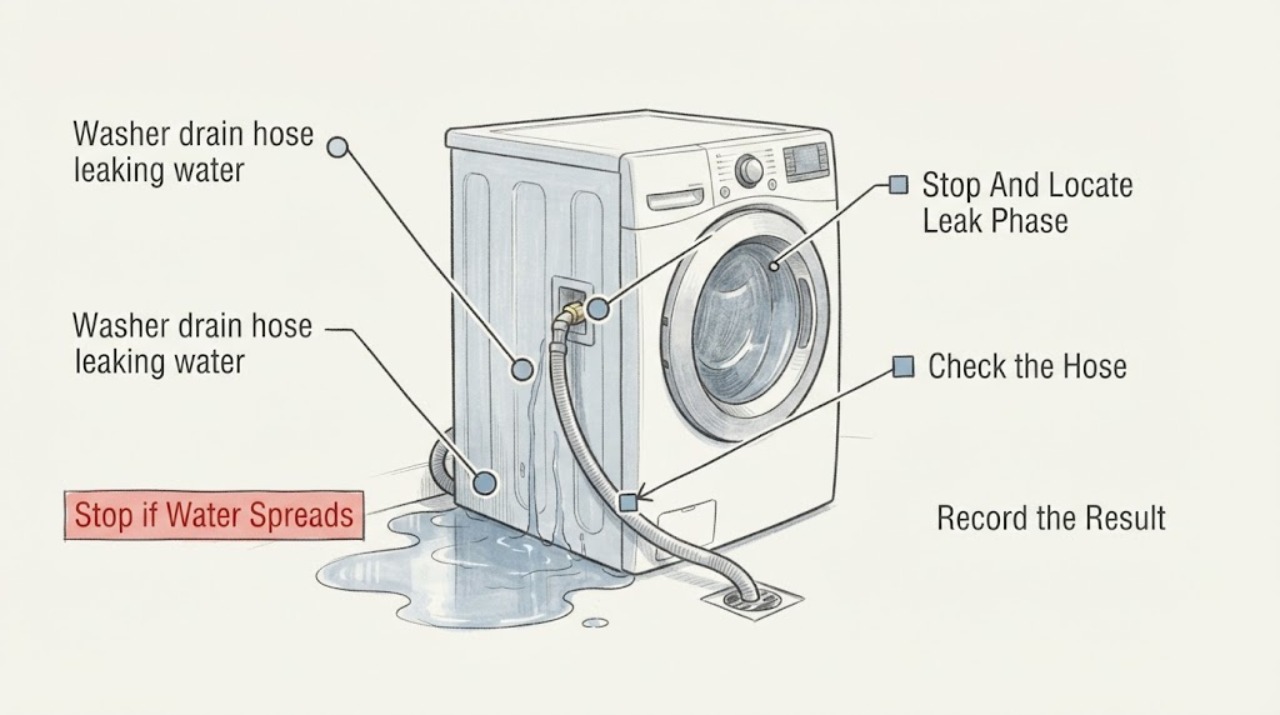
A washer drain hose can leak because the hose is cracked, pinched, or pulled loose; its holder or connection is not securing it; the hose is inserted incorrectly; or the household standpipe is restricted and overflowing. Stop the cycle, keep water away from electrical parts, and identify whether water appears from the hose body, its washer connection, the standpipe, the pump-filter area, or underneath the cabinet.
-
Washer drain hose not draining: What to Check and What to Do Next
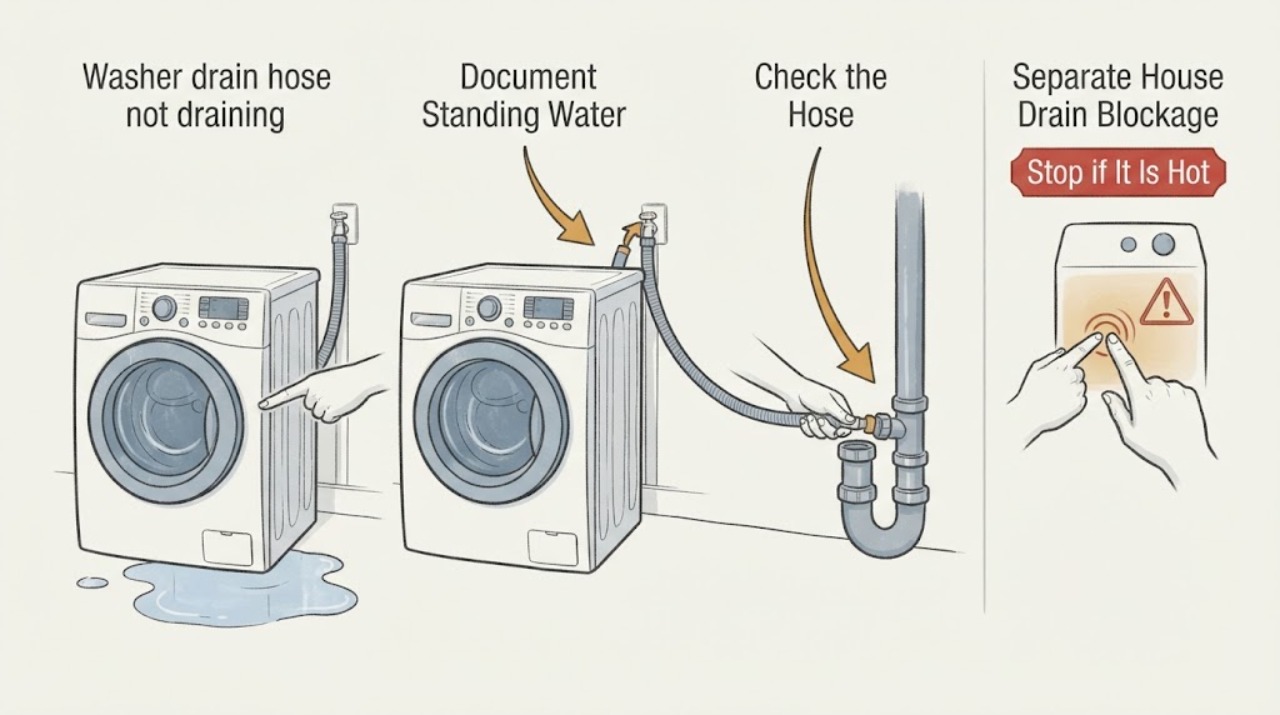
A washer drain hose that will not drain is most often kinked, crushed, routed incorrectly, clogged, frozen, or connected to a blocked household drain; a clogged pump filter or pump can create the same symptom. First switch the washer off, note whether water remains in the tub, and inspect the visible hose without moving the machine.
-
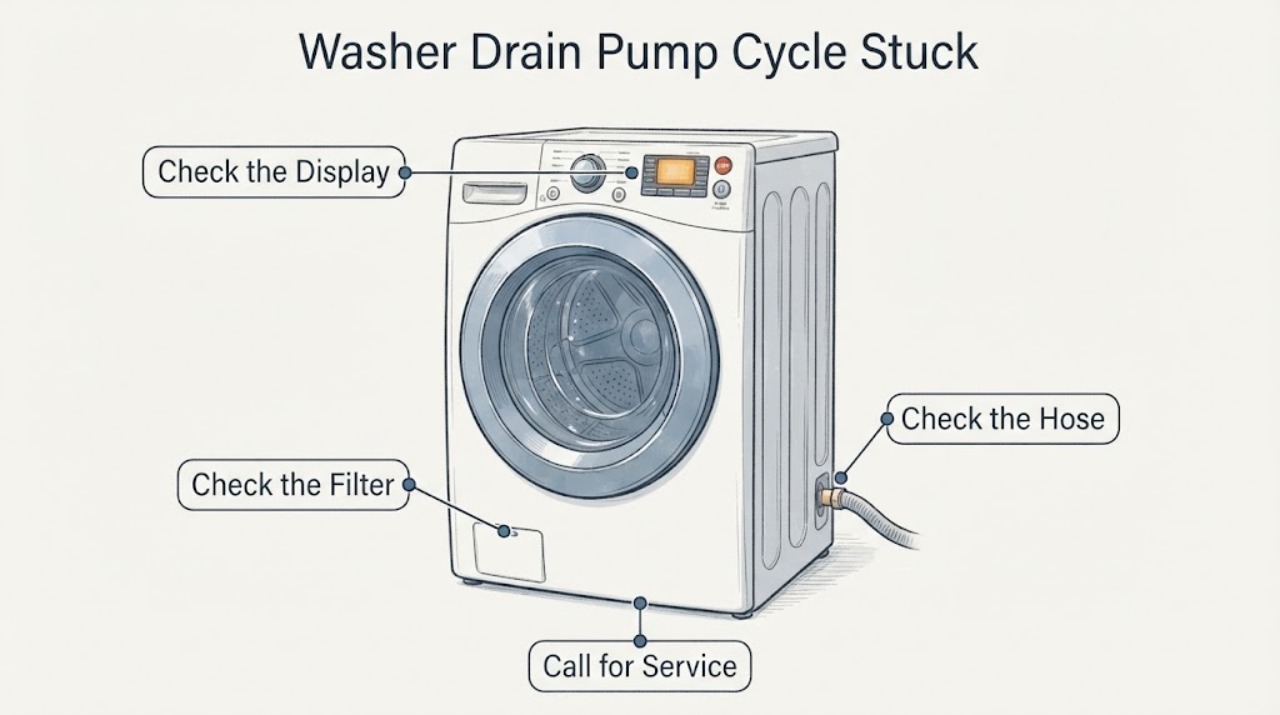
Washer Drain Pump Cycle Stuck: What to Check and What to Do Next
A washer that stays in a drain-pump portion of the cycle may be trying to remove water but not reaching its empty-level check. Stop the cycle, allow recently hot water to cool, and disconnect power before any filter check.
-
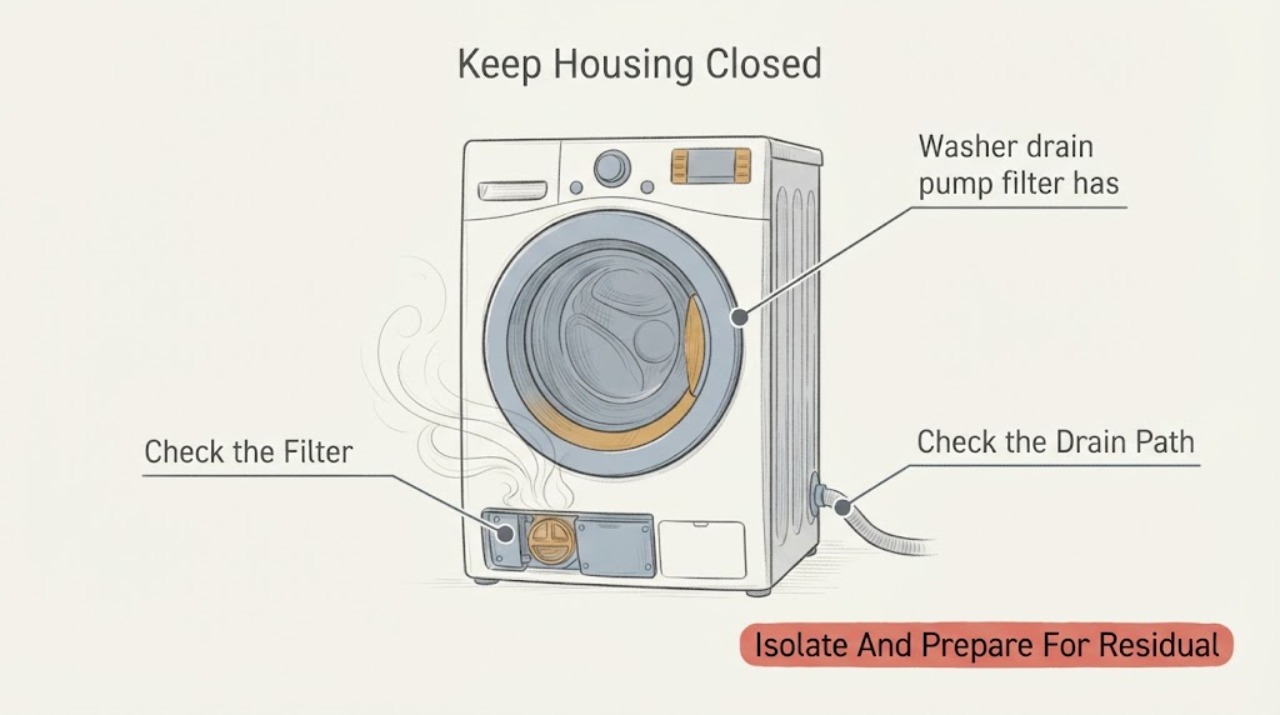
Washer drain pump filter has a bad smell: What to Check and What to Do Next
A bad smell at a washer drain-pump-filter area most often means lint, coins, detergent residue, or retained dirty water is sitting in the filter, filter housing, or drain path. First confirm that the washer actually has an owner-accessible filter; many front-load and combo models do, while top-load designs may not.
-
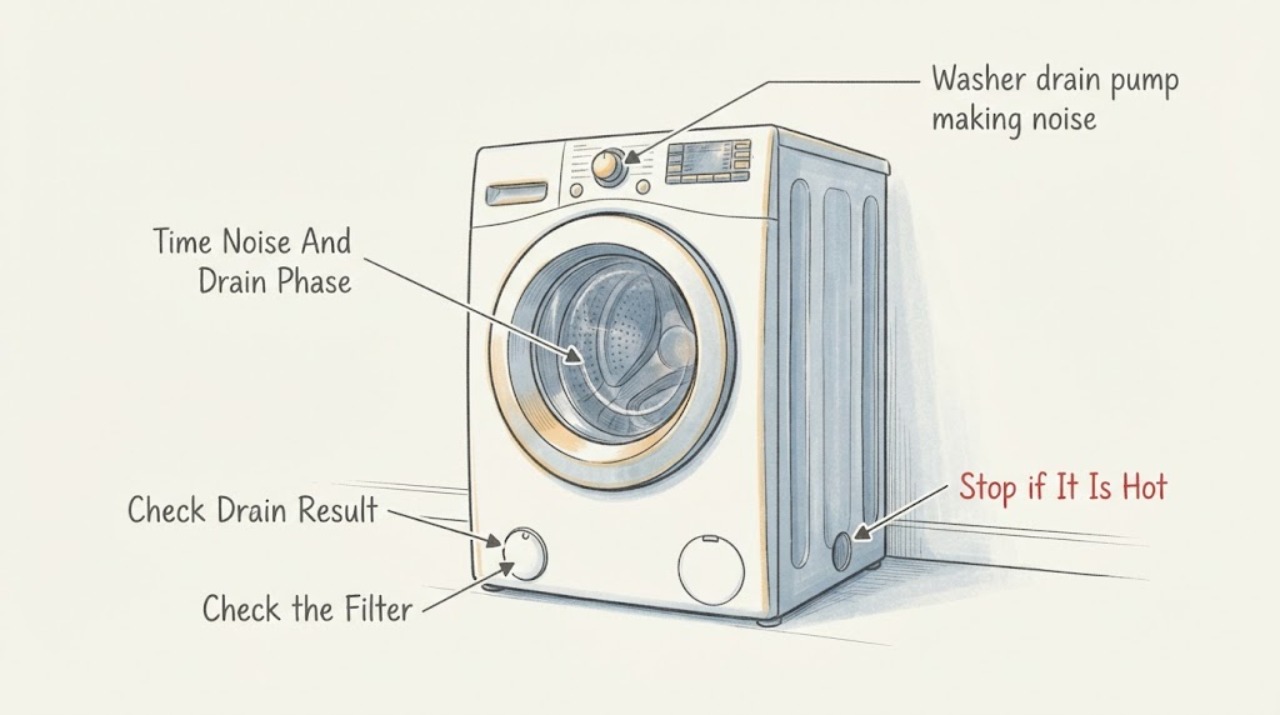
Washer drain pump making noise: What to Check and What to Do Next
A washer drain pump normally makes a hum, gurgle, or slurping sound while it removes water, especially near the end of draining. A new grinding, rattling, scraping, or unusually loud hum can indicate a coin or thread in the pump filter, a restricted drain path, a hose striking the cabinet, or a worn pump; the noise alone does not prove the pump motor has failed.
-
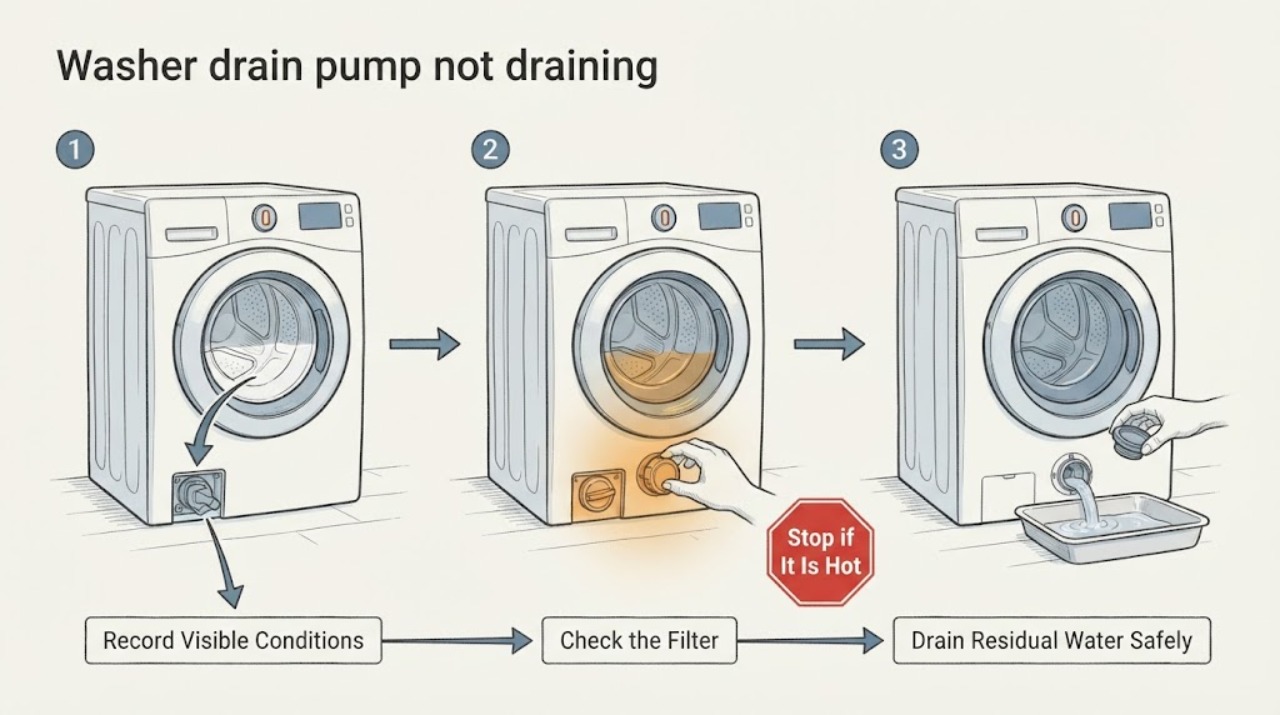
Washer drain pump not draining: What to Check and What to Do Next
A washer that will not drain can have a blocked filter or pump, a kinked or compressed drain hose, a blocked standpipe, a drain-hose installation problem, or a pump/control fault. First stop the cycle and check the owner's manual for the exact filter location: not every washer has a user-accessible pump filter, and front-load and top-load designs differ.
-
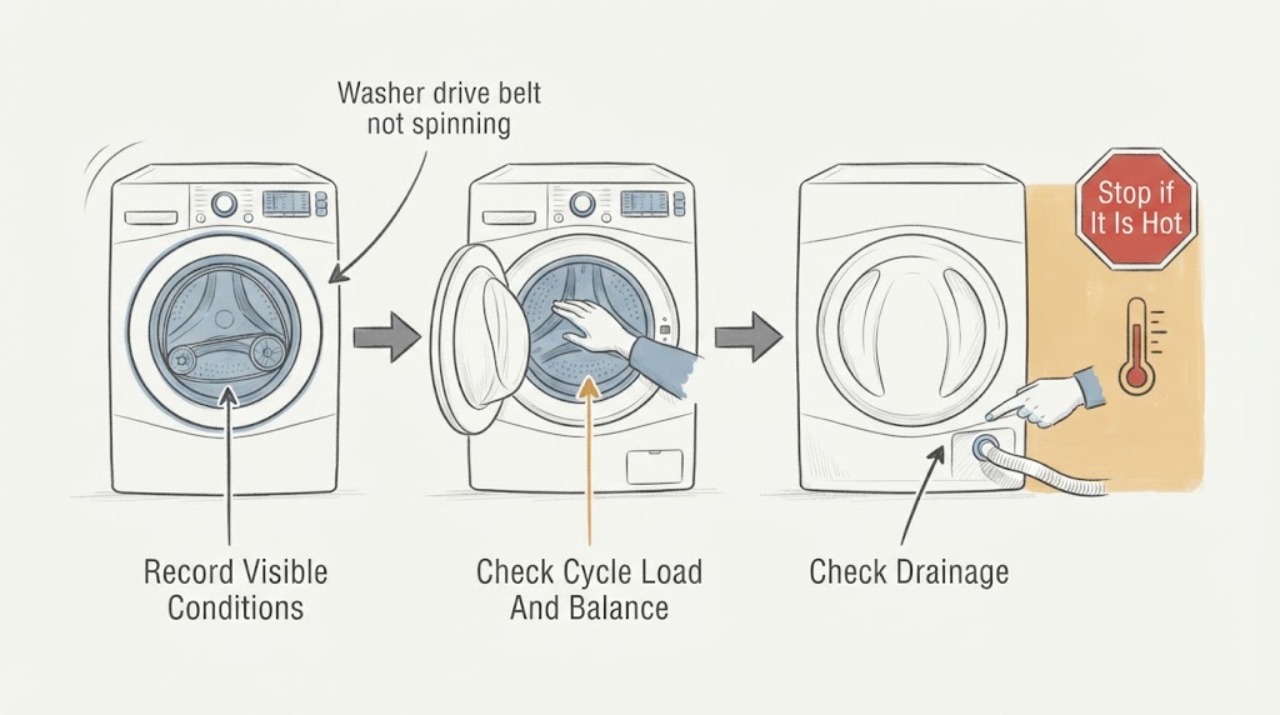
Washer drive belt not spinning: What to Check and What to Do Next
A washer that will not spin may have a worn, broken, loose, or displaced drive belt, but a belt is only one possible cause. First check the selected cycle, door or lid closure, standing water, load balance, and any displayed error without opening the cabinet.
-
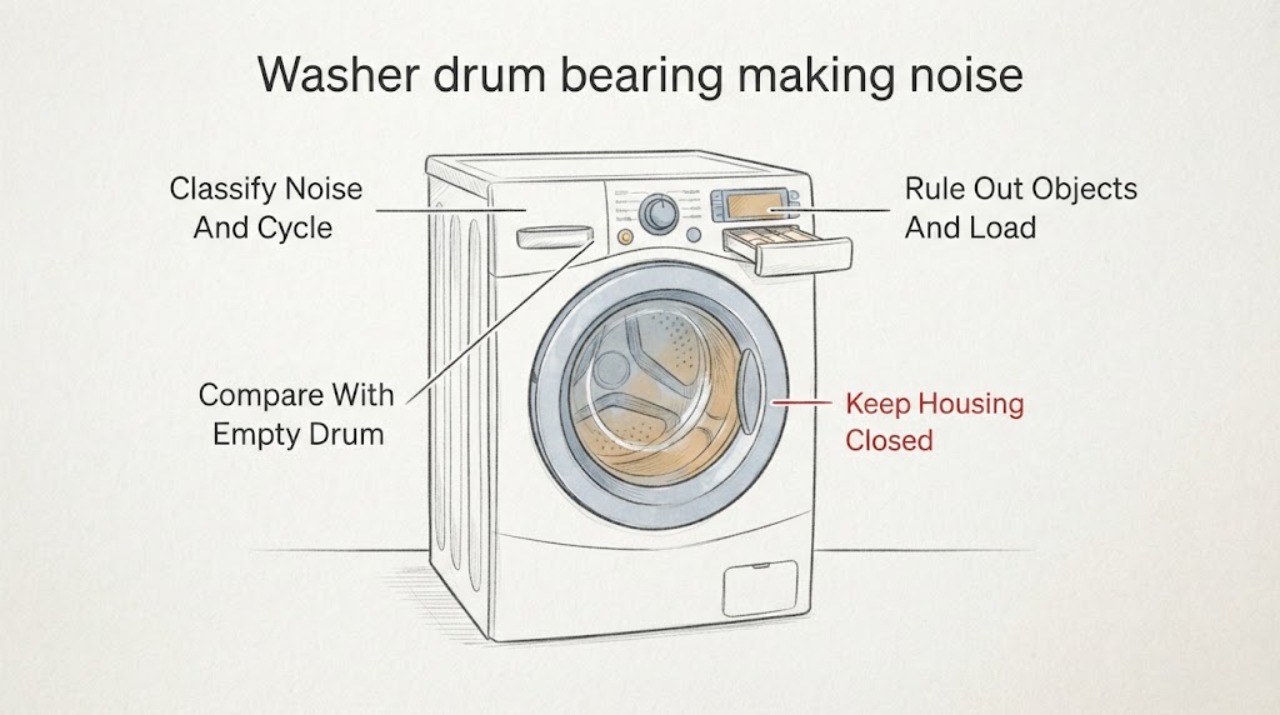
Washer drum bearing making noise: What to Check and What to Do Next
A washer that sounds as though its drum bearing is failing should not be diagnosed from noise alone. First note whether the sound occurs only with a particular load or during high-speed spin, then run the manufacturer's safe empty-drum check.
-
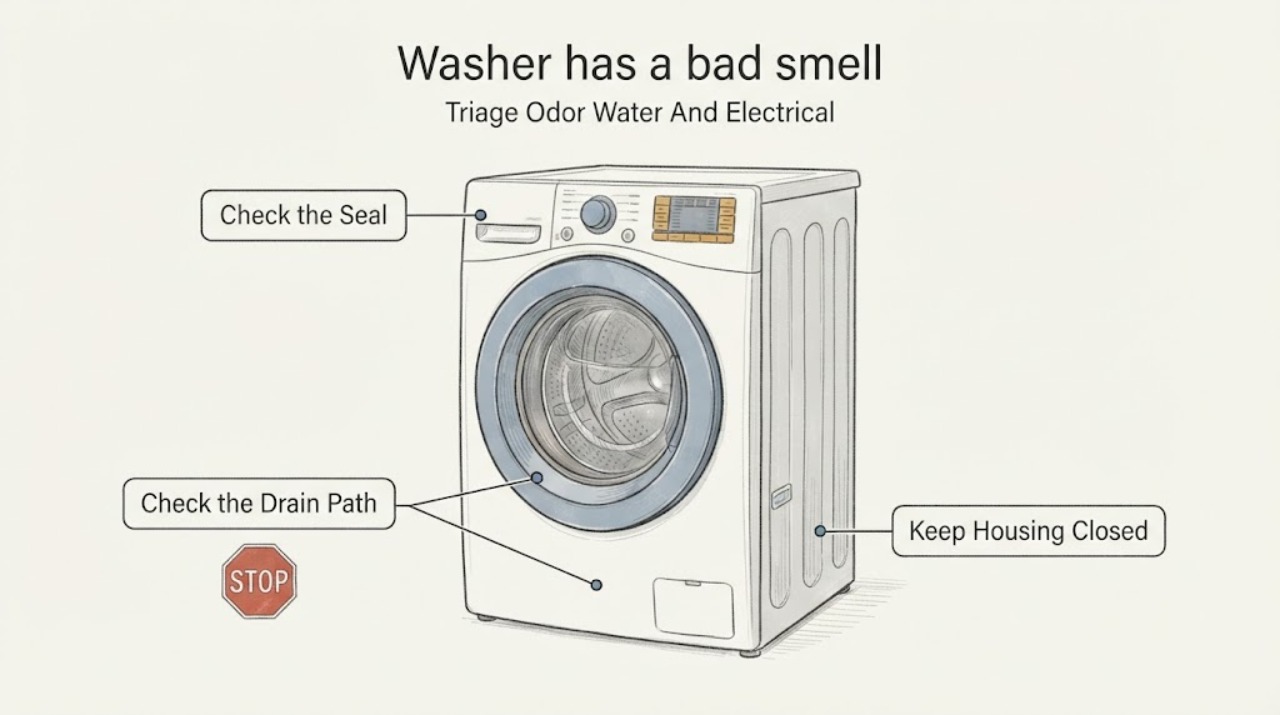
Washer has a bad smell moisture remains in seal: What to Check and What to Do Next
Moisture left in a washer door seal can be normal in some front-load designs, but water trapped with lint, detergent residue, or a small object can stagnate and create a musty smell. After the cycle, remove laundry promptly, wipe the gasket folds and door dry, and leave the door and detergent drawer open for ventilation.
-
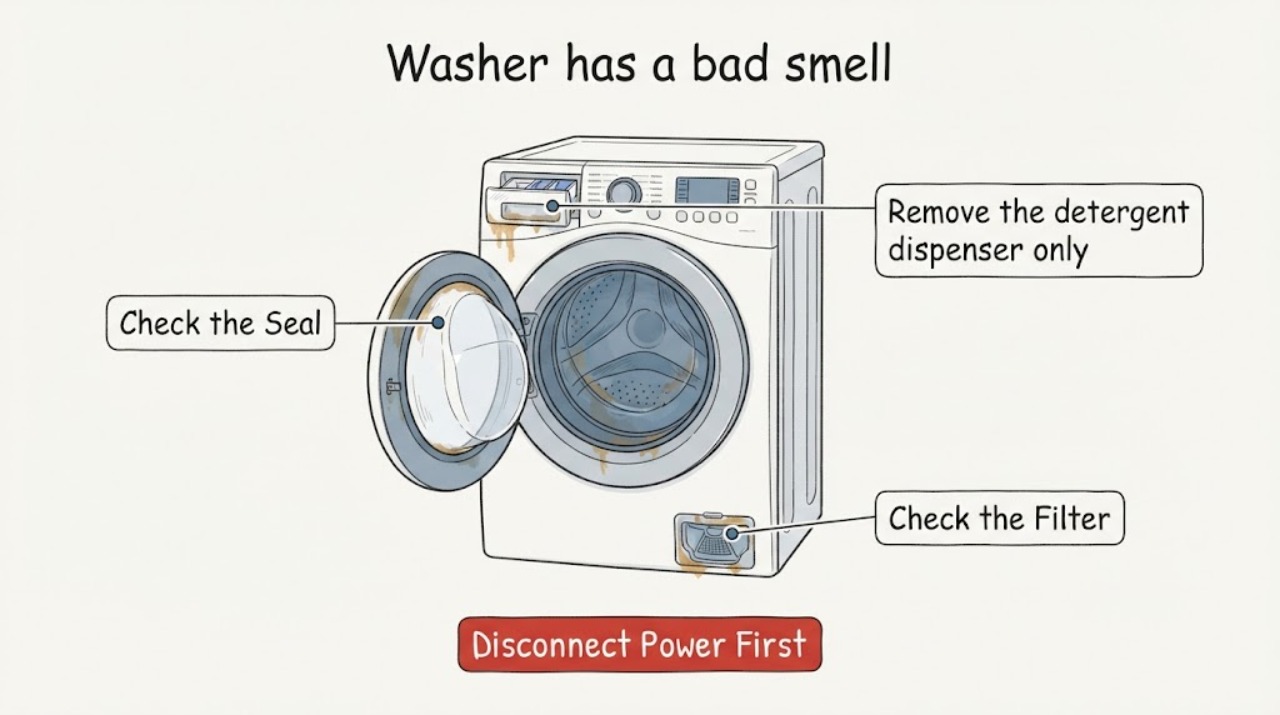
Washer has a bad smell visible residue is present: What to Check and What to Do Next
Visible slime, detergent film, lint, or mold-like residue together with a bad-smelling washer usually means moisture and soil are collecting in the door gasket, detergent dispenser, drain path, or tub. Remove laundry and obvious loose debris, clean only accessible surfaces using the washer manual, and run the machine’s Clean Washer or Tub Clean cycle with the one cleaner the manual allows.
-
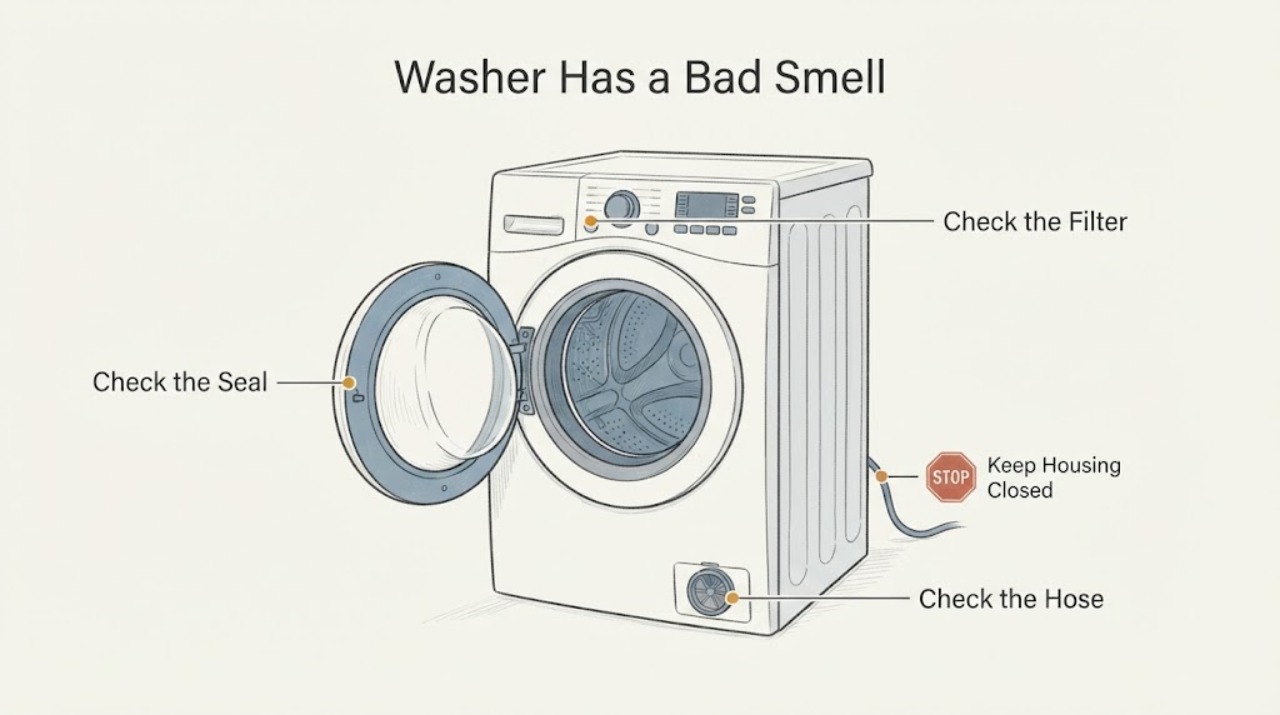
Washer Has a Bad Smell and Odor Persists After the Cycle: What to Check and What to Do Next
A washer odor that remains after a cycle is commonly caused by trapped moisture, detergent or fabric-softener residue, a damp gasket or dispenser, laundry left in the drum, or a drain path that leaves water behind. First identify whether the smell is musty, sewage-like, detergent-like, or burning, and whether it is present in the empty washer or only on clothing.
-
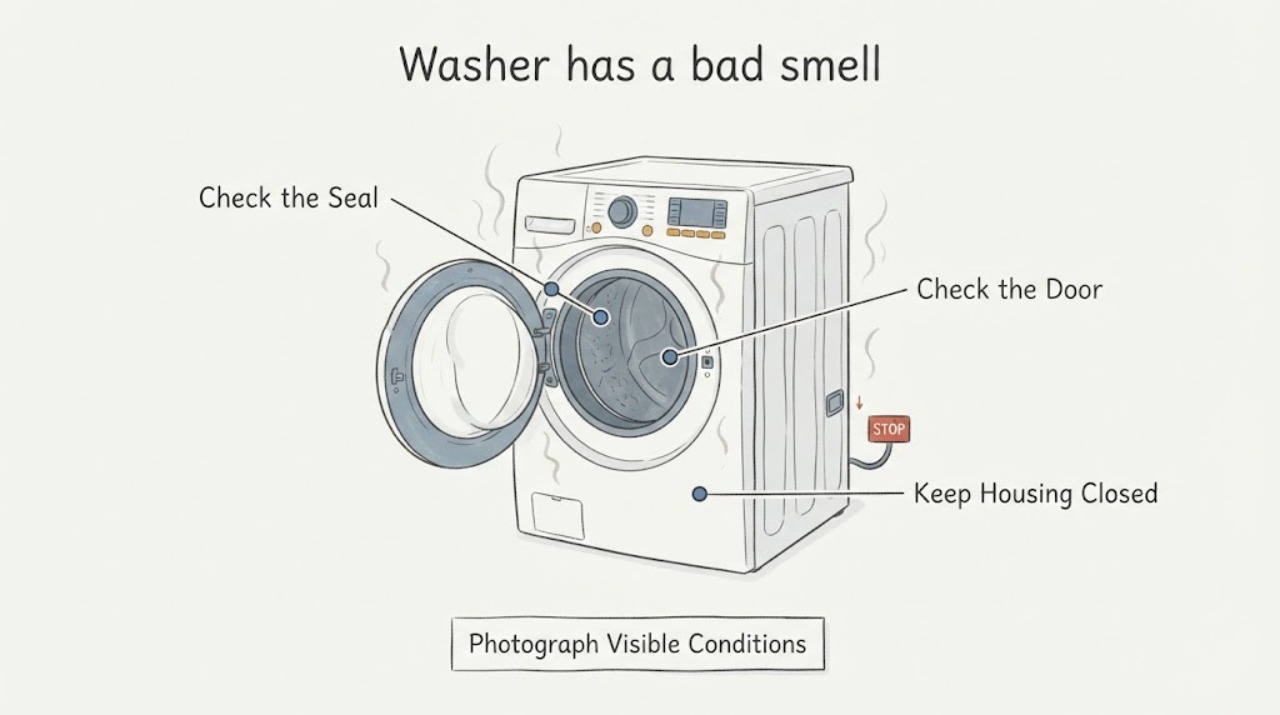
Washer has a bad smell: What to Check and What to Do Next
First classify the odor and check the easy, visible sources: wet laundry left in the tub, residue in the door seal or detergent drawer, standing water, a drain-path smell, or a burning odor. Remove laundry promptly, dry the accessible seal and dispenser, and use only the washer's model-approved cleaning procedure; never combine bleach, vinegar, detergent, or other chemicals.
-
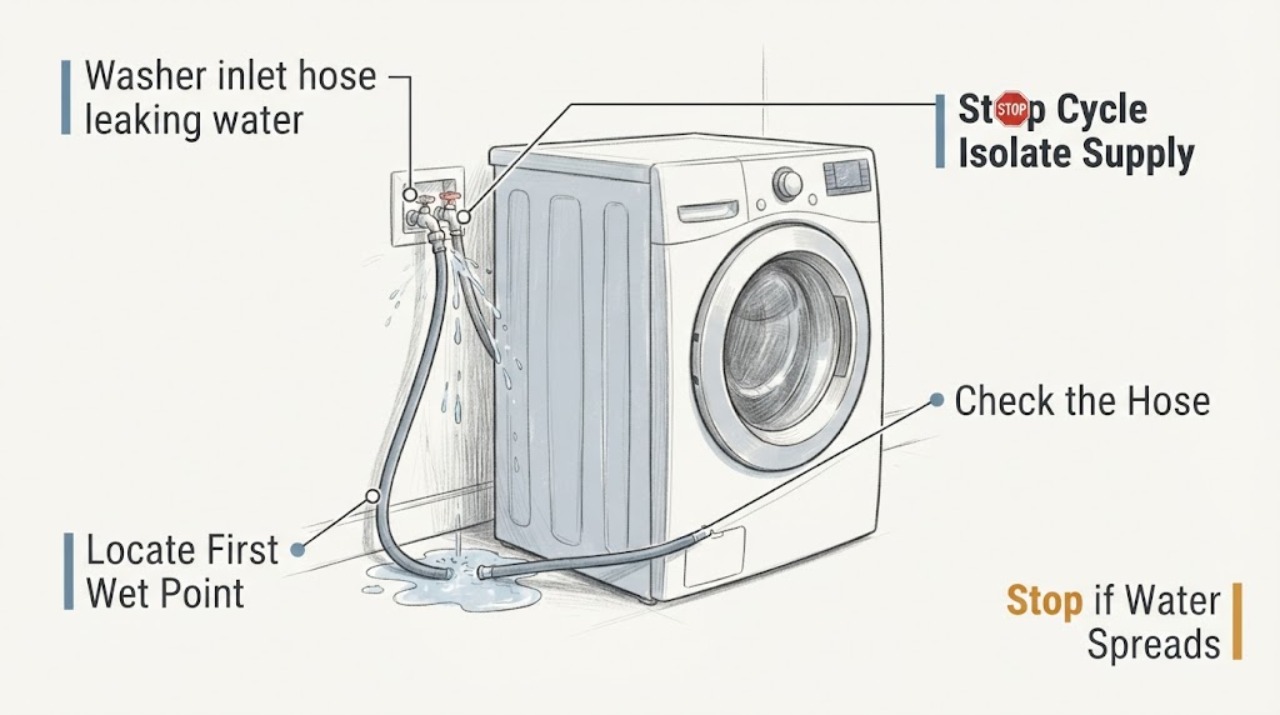
Washer inlet hose leaking water: What to Check and What to Do Next
Stop the washer, close the hot and cold supply faucets, and keep water away from the plug, outlet, and controls. Then use a flashlight to locate the first wet point: the faucet connection, either inlet-hose coupling, the hose body, or the washer's inlet valve.
-
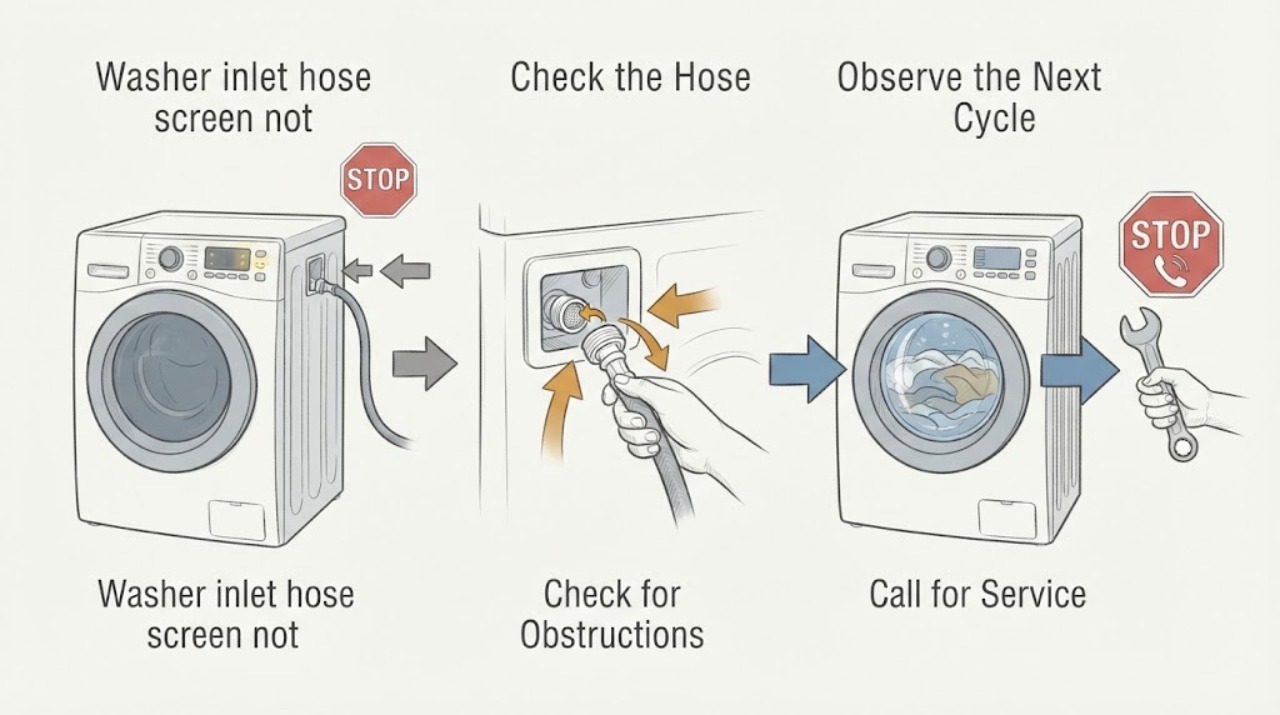
Washer inlet hose screen not filling with water: What to Check and What to Do Next
A washer that will not fill, or fills only slowly, may have a closed or weak household supply, a kinked inlet hose, a clogged inlet-hose or washer-valve screen, freezing, an anti-flood restriction, a drain hose that is siphoning water away, or an inlet valve, door-lock, pressure-sensing, or control fault. Turn off the water and disconnect power before separating a hose.
-
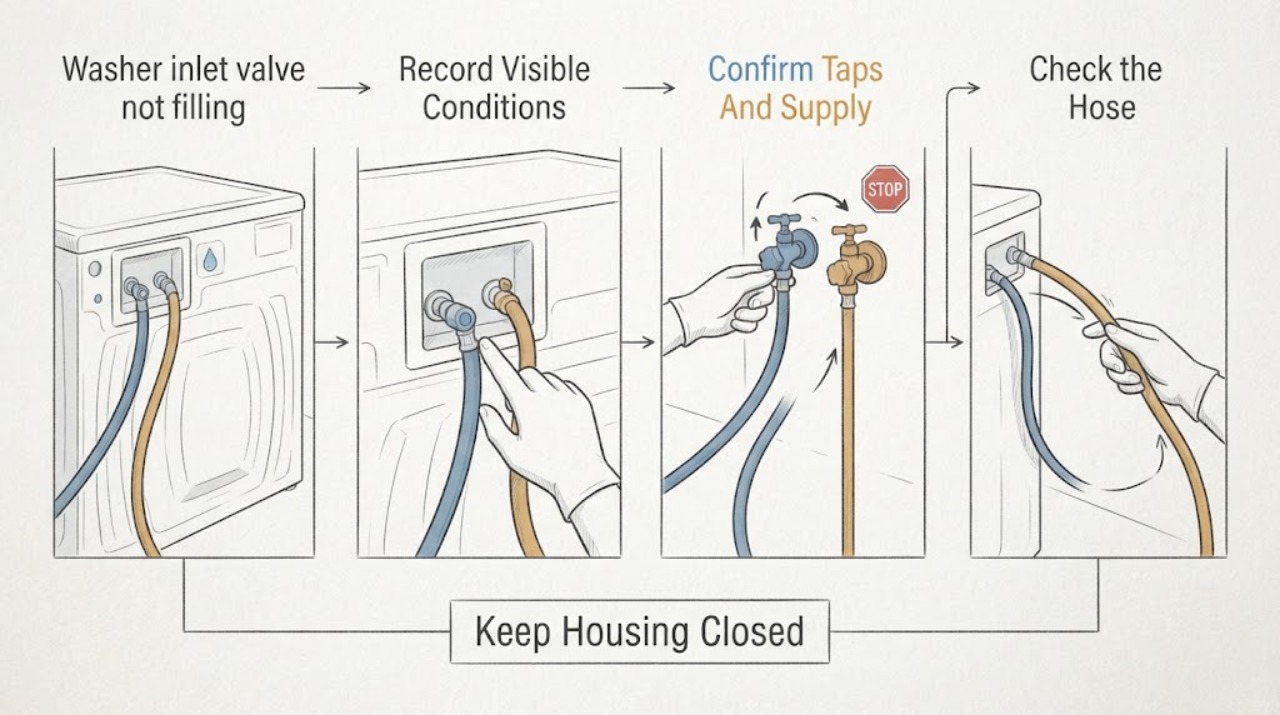
Washer inlet valve not filling with water: What to Check and What to Do Next
A washer that is not filling has not necessarily proved that its inlet valve is bad. First check the displayed error or fill behavior, confirm both household water taps are open, and inspect the hot and cold inlet hoses for kinks, crushing, freezing, damage, or crossed connections.
-
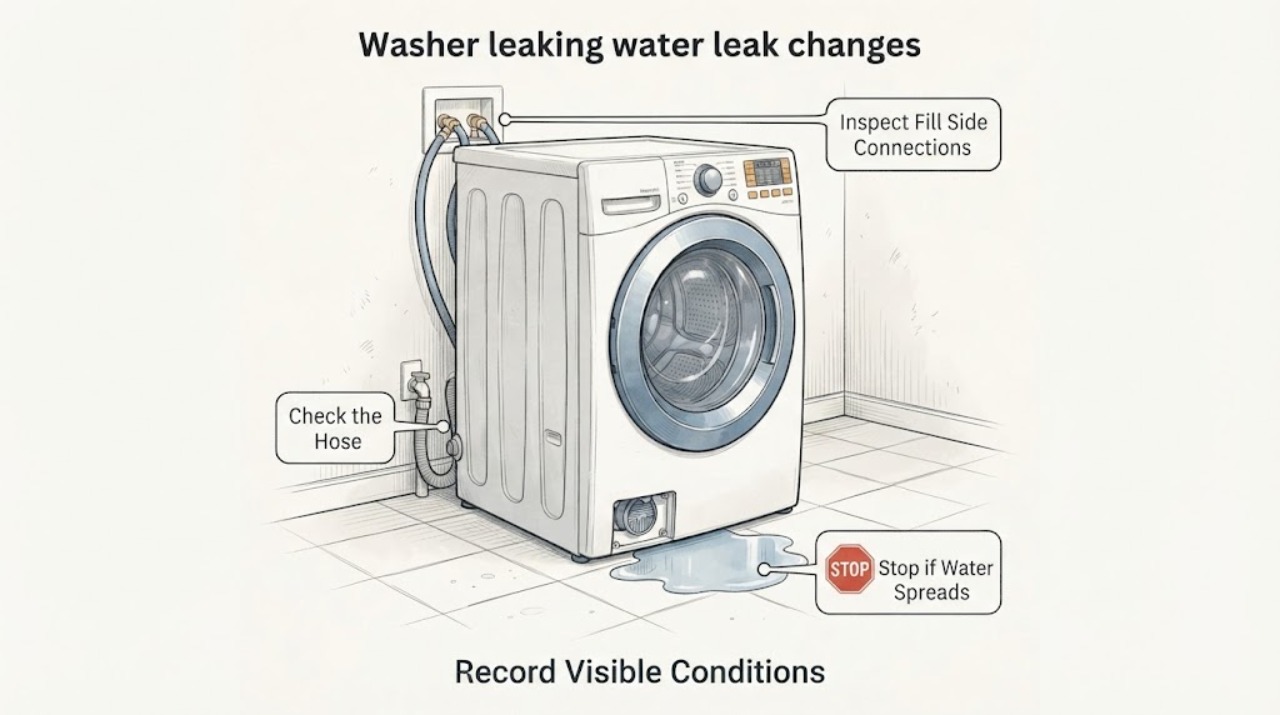
Washer leaking water leak changes with fill or drain: What to Check and What to Do Next
A washer leak that changes with filling or draining is usually tied to the phase in which water is moving. A leak during fill favors an inlet hose, tap, valve, dispenser, door seal, or excess-suds path.
-
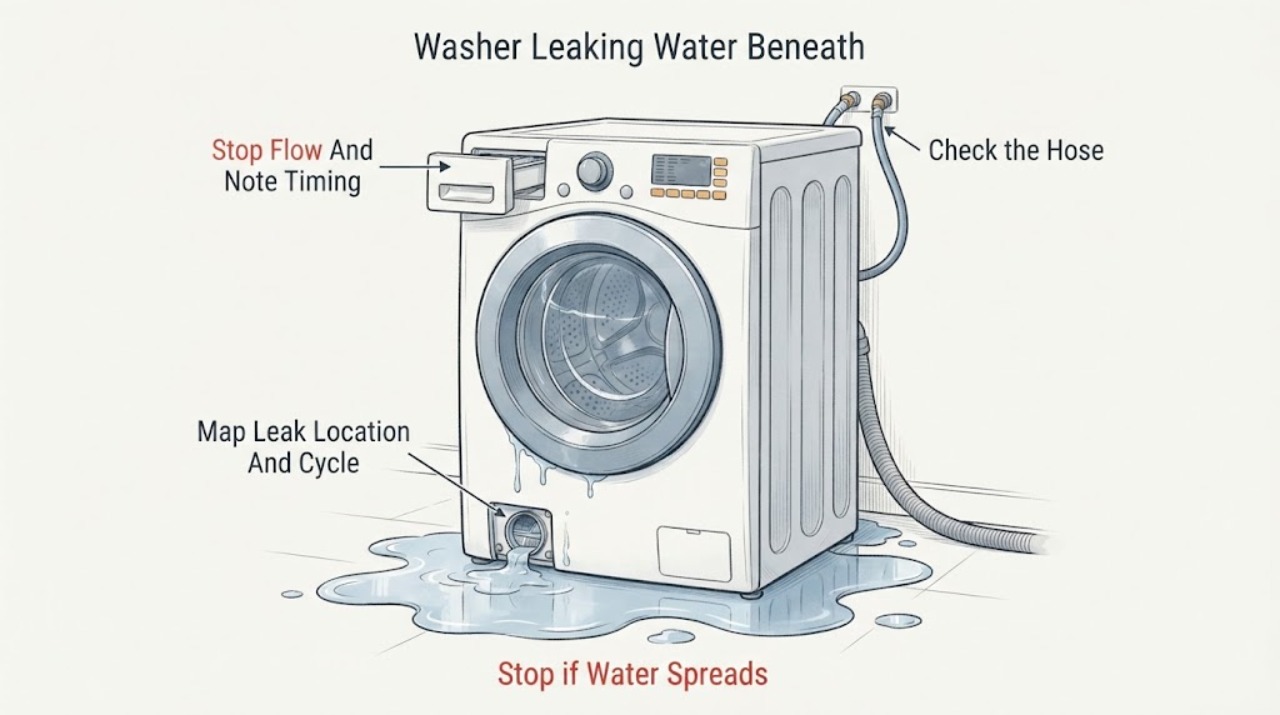
Washer Leaking Water Beneath or Around the Washer: What to Check and What to Do Next
Treat water beneath or around a washer as a source-location problem first. From a safe standing position, stop the cycle, contain the water, and turn off the household washer water valves if water is still entering.
-
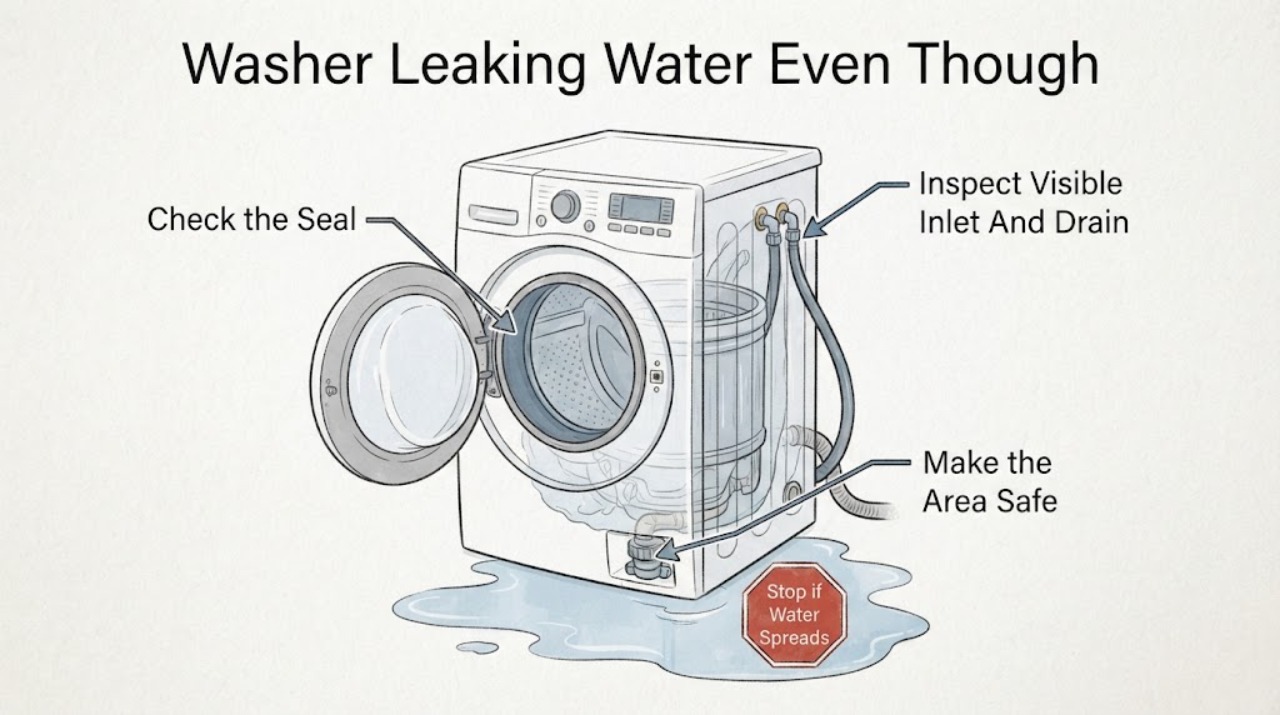
Washer Leaking Water Even Though the Door or Lid Closes
A washer can leak even when its door or lid closes because the latch does not prove that the seal, tub, hoses, or drain path is intact. Stop the cycle, keep away from pooled water, and turn the washer off from a dry position; do not touch a plug or breaker if water is near electrical parts.
-
Washer leaking water: What to Check and What to Do Next
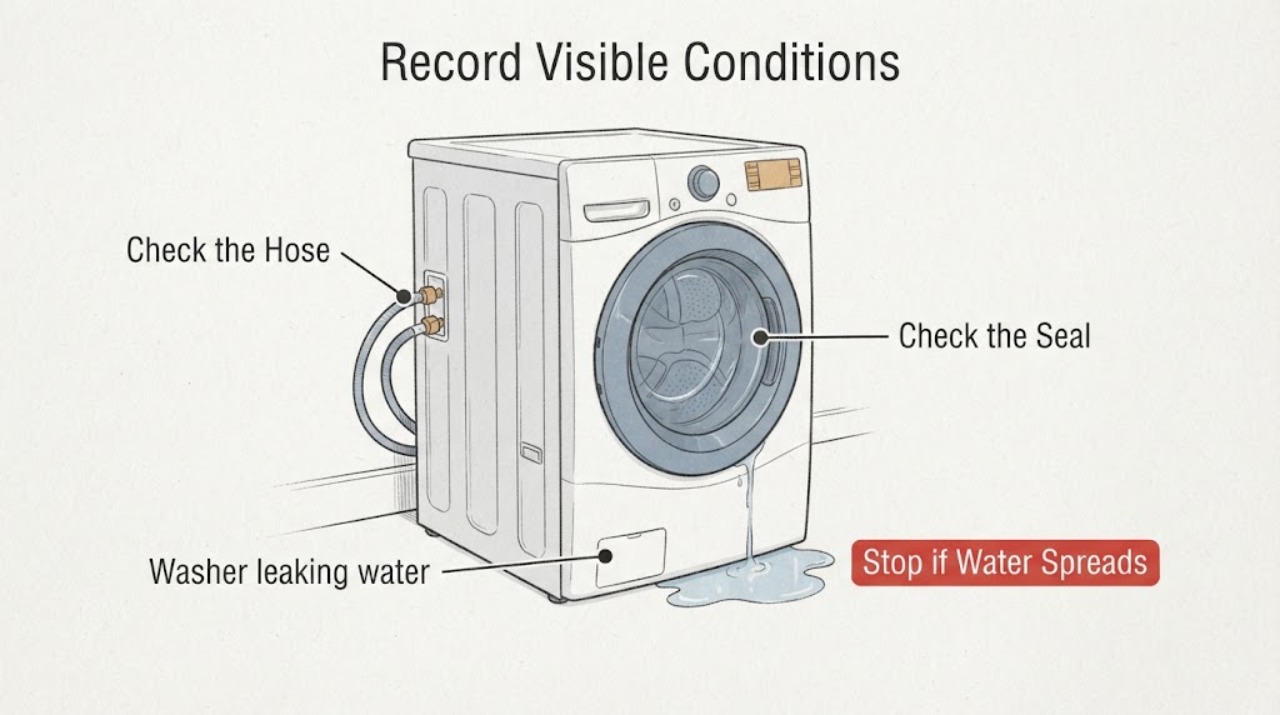
Stop the washer when you see active leaking, keep hands and feet dry, and do not unplug it while standing in water. From a dry position, note whether the leak starts during filling, washing, draining, or spinning, and whether water appears at the front, rear, underneath, dispenser, door seal, inlet hoses, drain hose, or household standpipe.
-
Washer leveling feet vibrates or walks: What to Check and What to Do Next
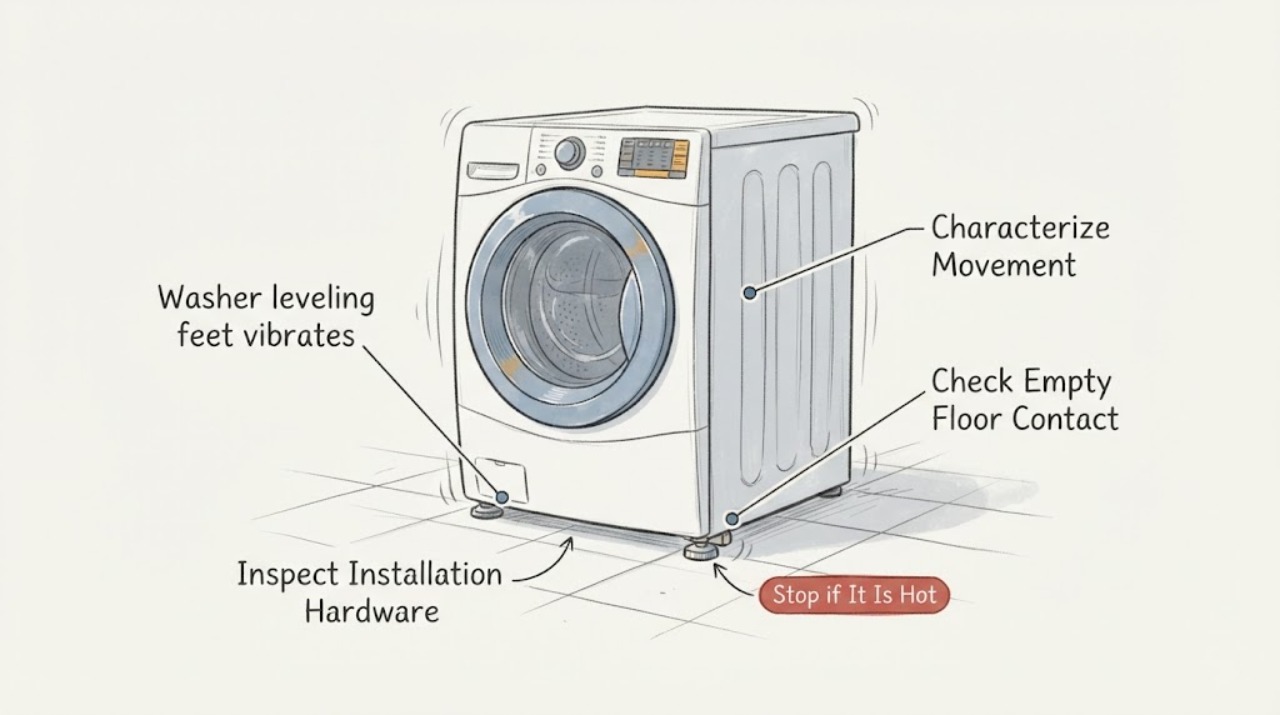
A washer that vibrates or walks often has one or more leveling feet not firmly contacting the floor, a loose foot lock nut, or a floor that flexes or lets the appliance slide. An unbalanced load, shipping bolts left in place after installation, a pedestal or riser issue, and a hose or cabinet touching a wall can produce similar movement.
-
Washer lid lock not spinning: What to Check and What to Do Next
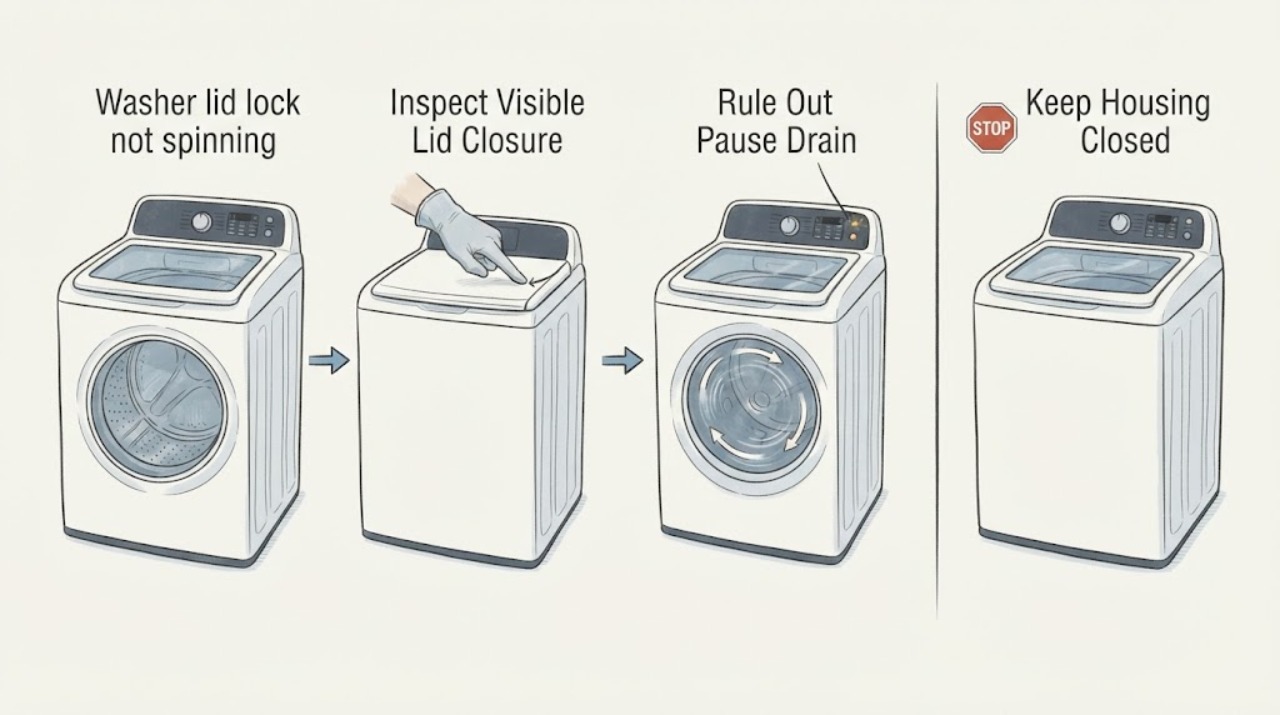
A top-load washer may refuse to spin because the lid is not closed or the lid-lock system has not confirmed closure, but a lid-lock symptom does not prove the lock itself is bad. First note whether the washer fills and drains, whether it pauses normally between agitation and spin, and whether a lid-lock light or error appears.
-
Washer lid switch will not start: What to Check and What to Do Next
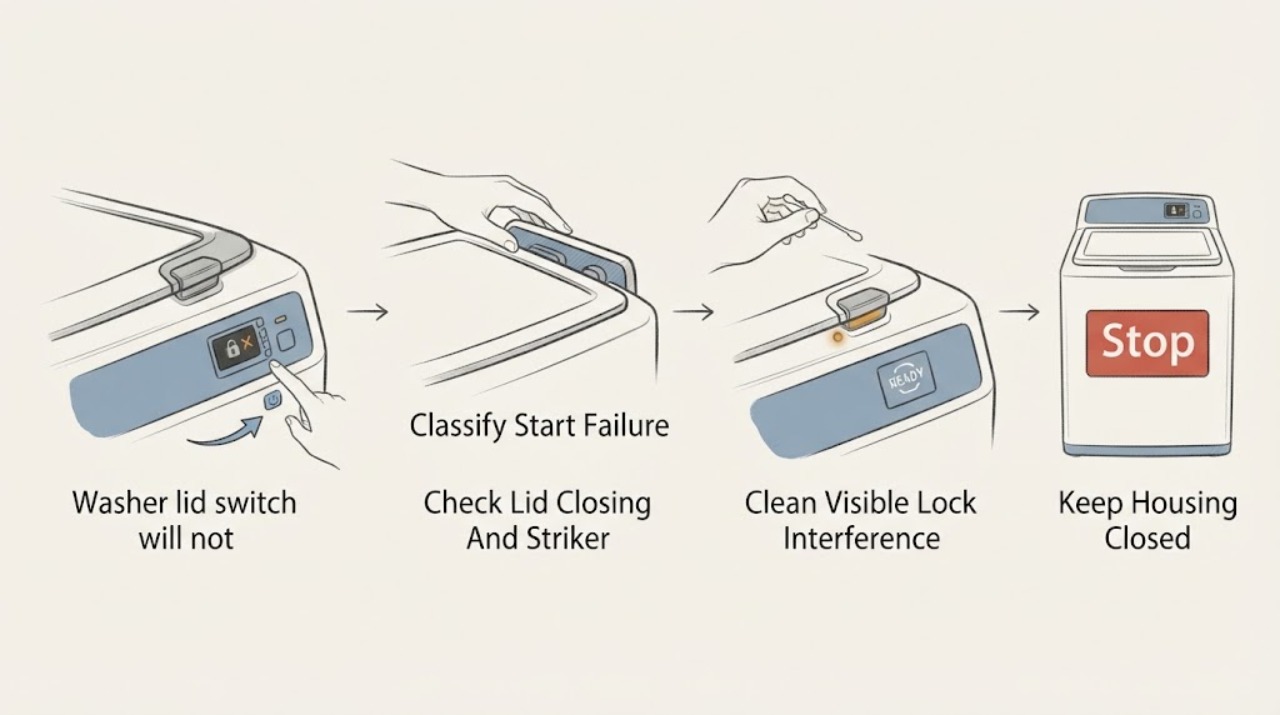
A top-load washer that will not start because it does not recognize the lid as closed may have an obstructed or misaligned lid striker, a damaged lid switch probe or magnet, debris at the lock, or a model-specific lid-lock or control fault. First note whether the washer has display lights or any response, close the lid firmly without slamming it, and inspect only the visible striker, probe or magnet, and lock opening.
-
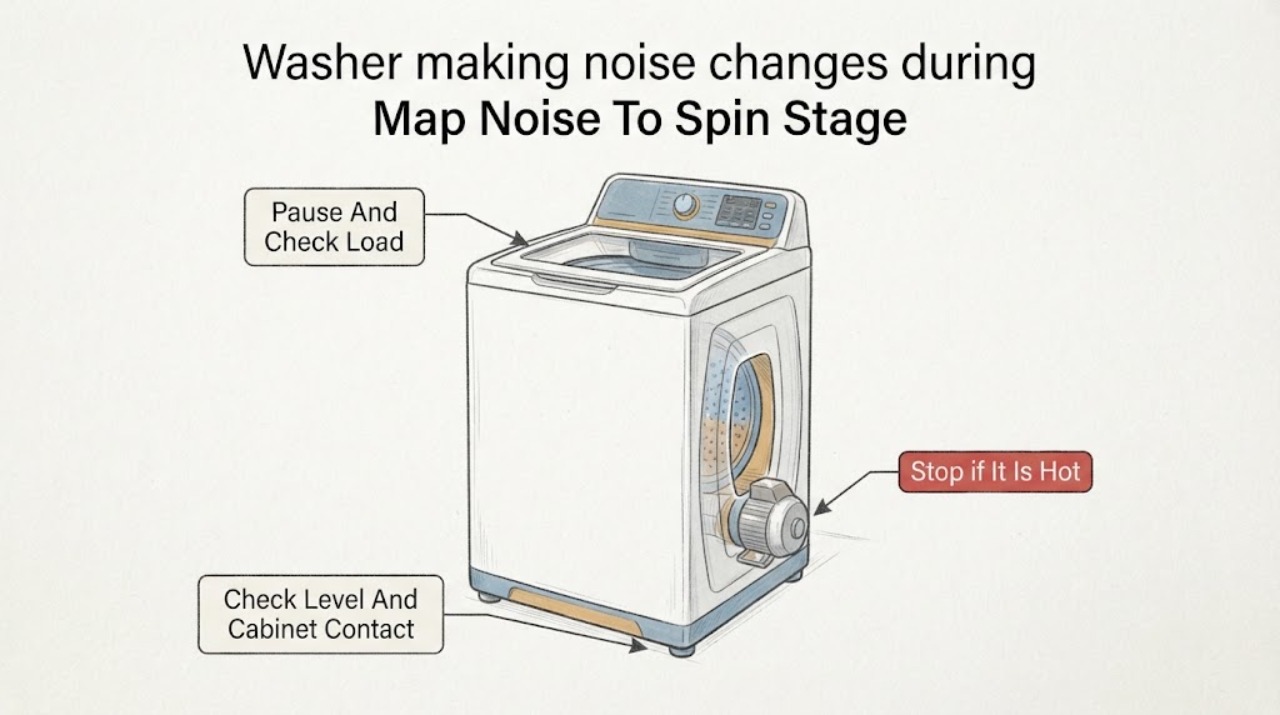
Washer making noise changes during spin: What to Check and What to Do Next
Noise that changes as a washer accelerates, pauses to rebalance, or reaches high spin is often related to load distribution, a washer that rocks, a hose or nearby object contacting the cabinet, or a normal motor or pump transition. Pause the washer using its normal control and note whether the noise follows a lopsided load, a particular speed, the drain step, or the drum even when empty.
-
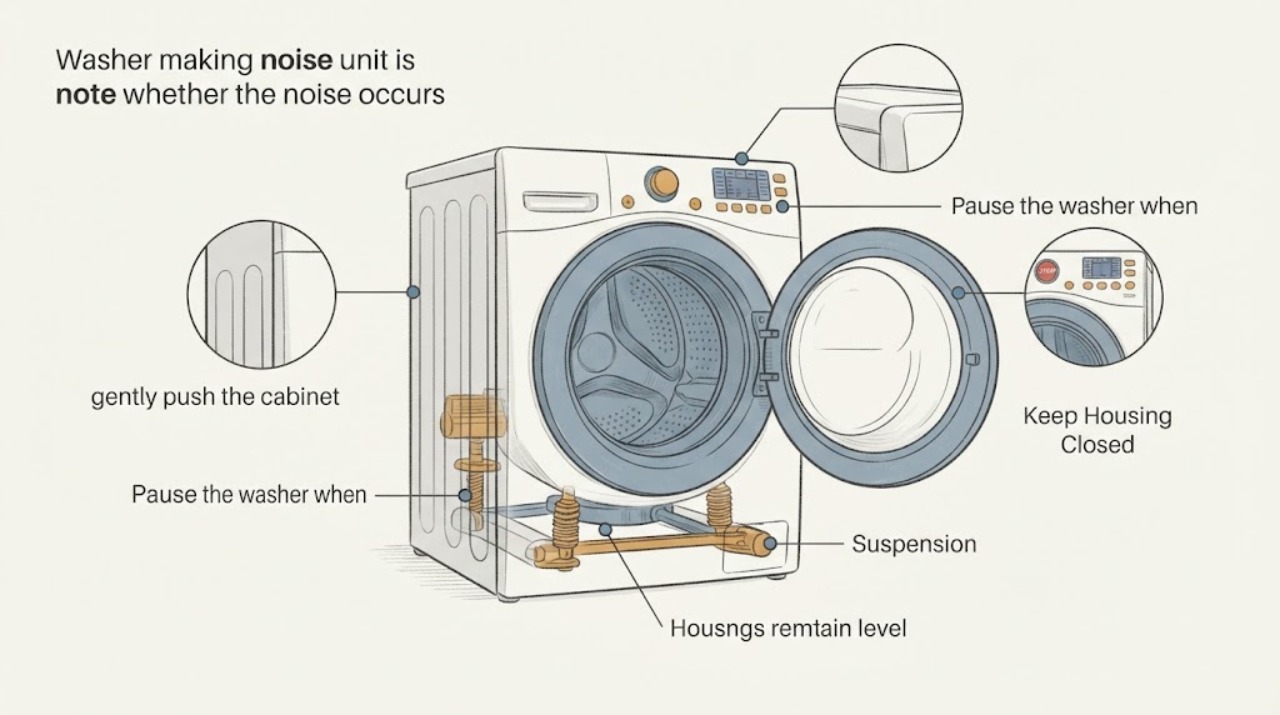
Washer making noise unit is level: What to Check and What to Do Next
A level washer can still make noise from an unbalanced load, a coin or wire in the drum or drain path, shipping bolts or packing left after installation, a hose or nearby object striking the cabinet, normal pump or motor sounds, a flexible floor, or an internal drive or suspension fault. First classify the sound and whether it occurs during fill, agitation, drain, or spin.
-
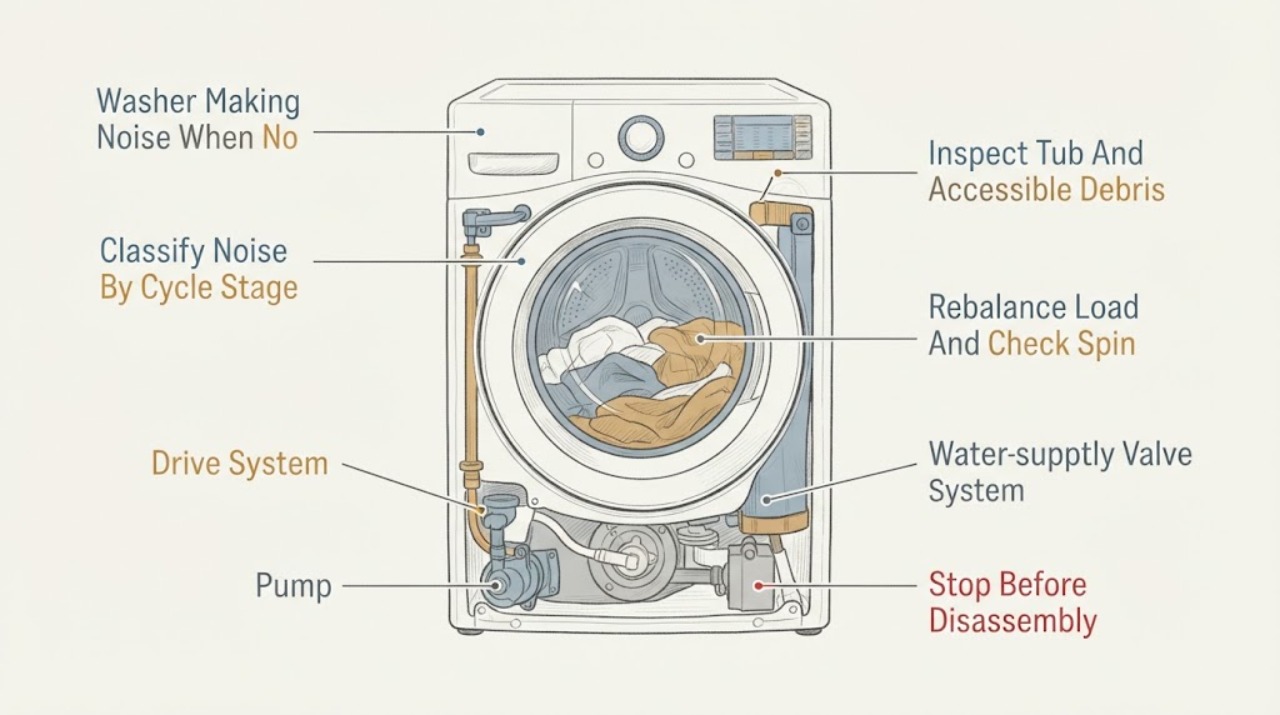
Washer Making Noise When No Loose Objects Are in the Tub: What to Check and What to Do Next
If the tub is clear but the washer still makes noise, identify the sound and the cycle stage before assuming an internal part has failed. A click, splash, or steady motor sound can be normal in some models; pounding or rattling during spin is more often linked to an unbalanced load, an unlevel washer, or nearby objects touching the cabinet.
-
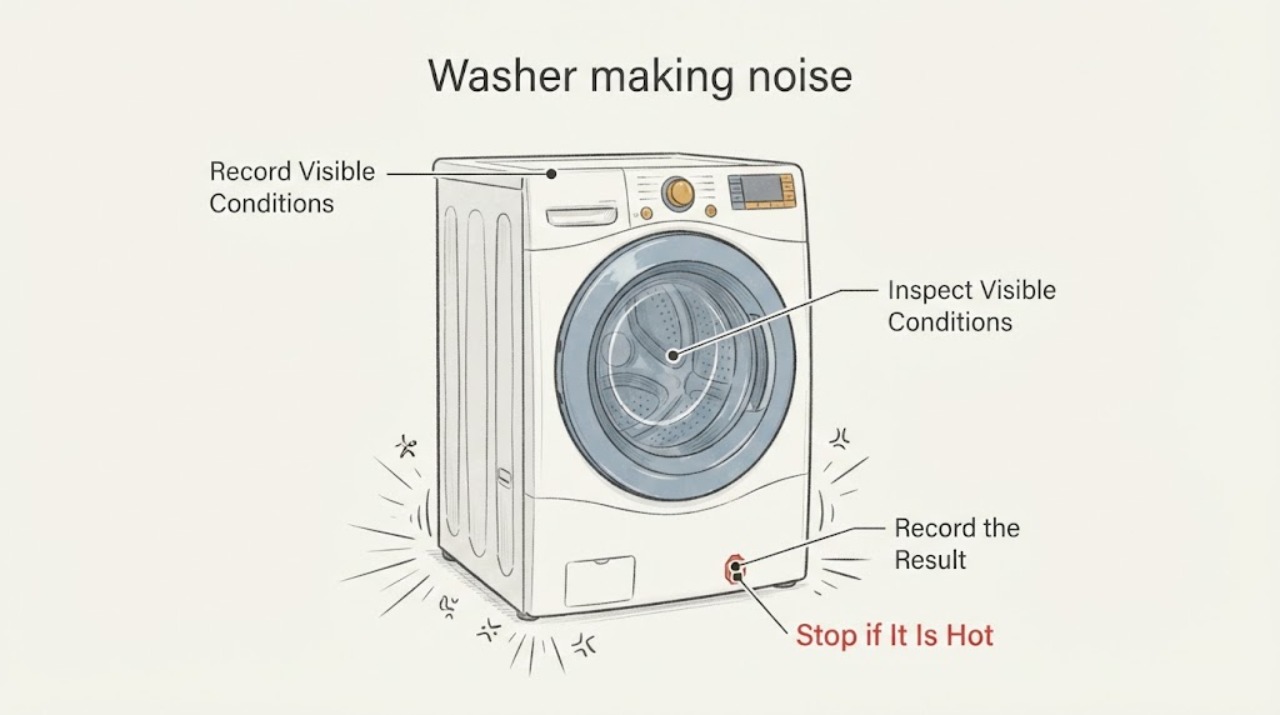
Washer making noise: What to Check and What to Do Next
First identify when the noise occurs and whether the washer is moving, leaking, or making metal-on-metal contact. Spraying, splashing, sloshing, and some brief clicks or clunks can be normal; pounding during spin, a washer that walks, grinding or rubbing, a harsh rattling, or a new noise with poor drum movement is not a reason to keep testing.
-
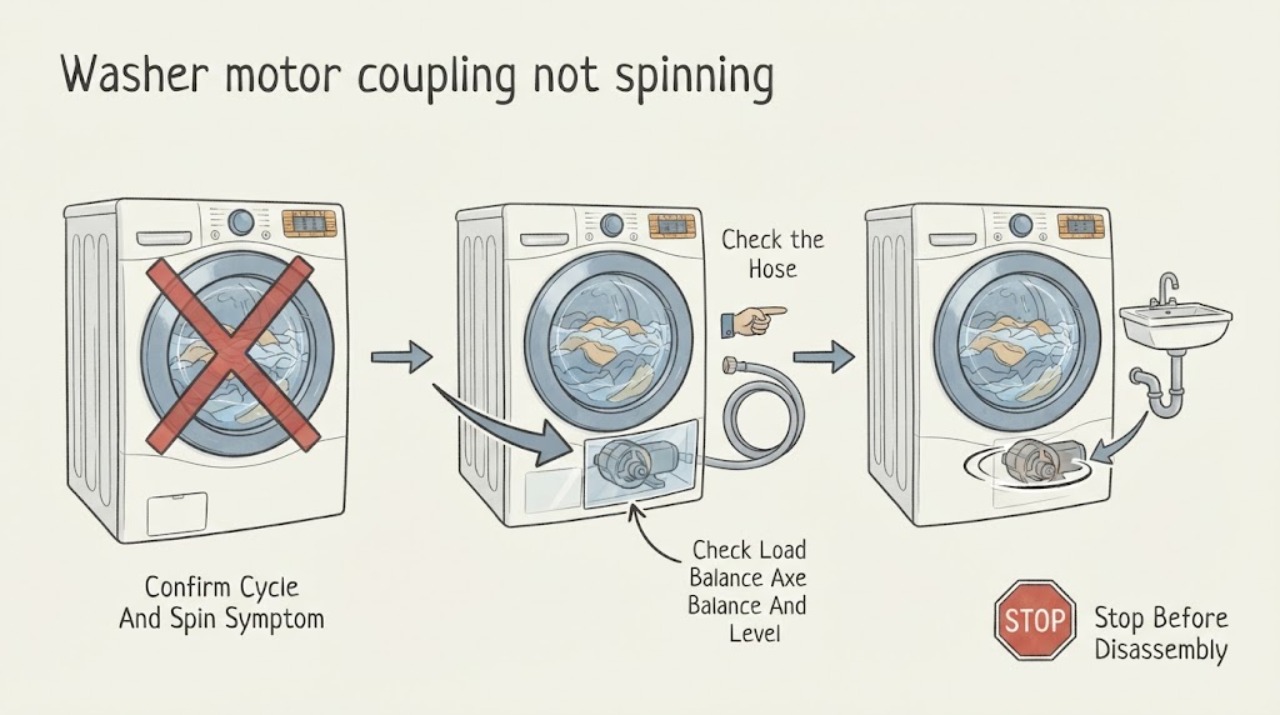
Washer motor coupling not spinning: What to Check and What to Do Next
A washer that fills and drains but leaves the agitator or basket still can have a drive-system problem, including a failed motor coupling on models that use one, but a load, spin setting, lid or door interlock, drain problem, or another drive fault can look similar. First confirm that a real spin cycle is selected, the lid or door is closed, the load is not tightly packed or badly unbalanced, and water is draining.
-
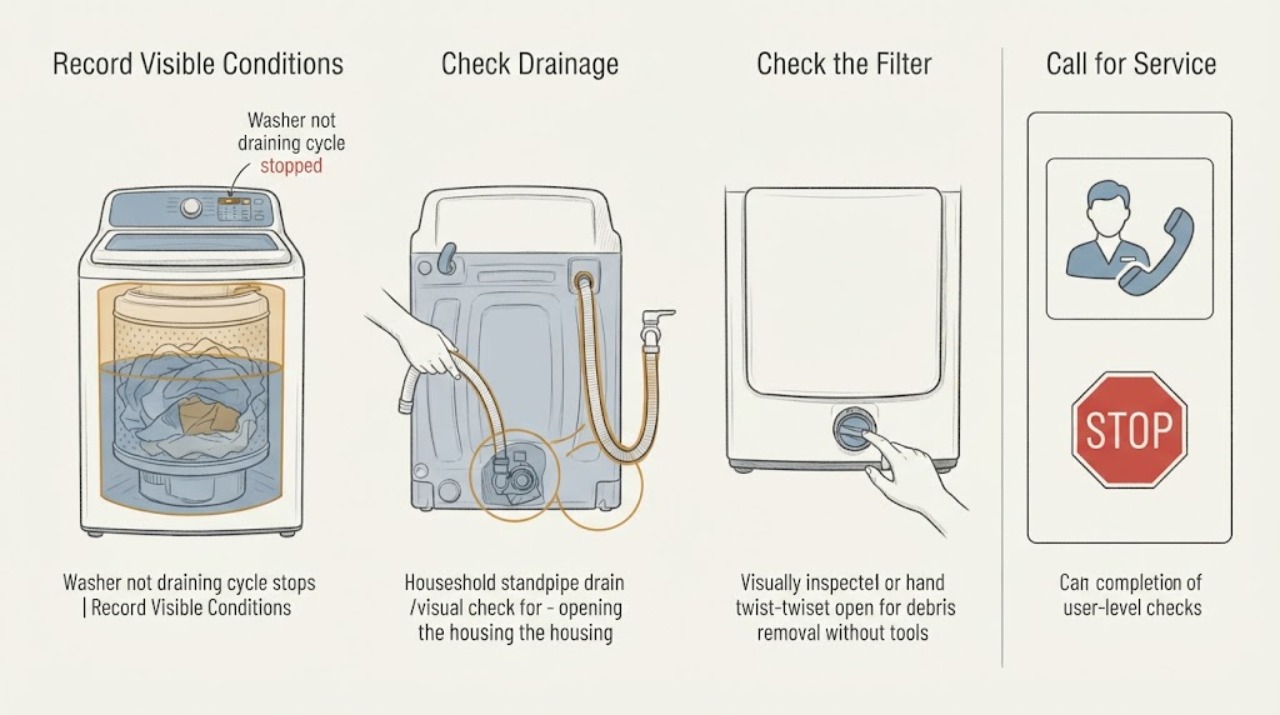
Washer not draining cycle stops at drain: What to Check and What to Do Next
When a washer stops at the drain portion of a cycle, first keep it off long enough for any hot water to cool, note whether water remains and whether an error code appears, and check the visible drain hose and household drain for a restriction or incorrect routing.
-
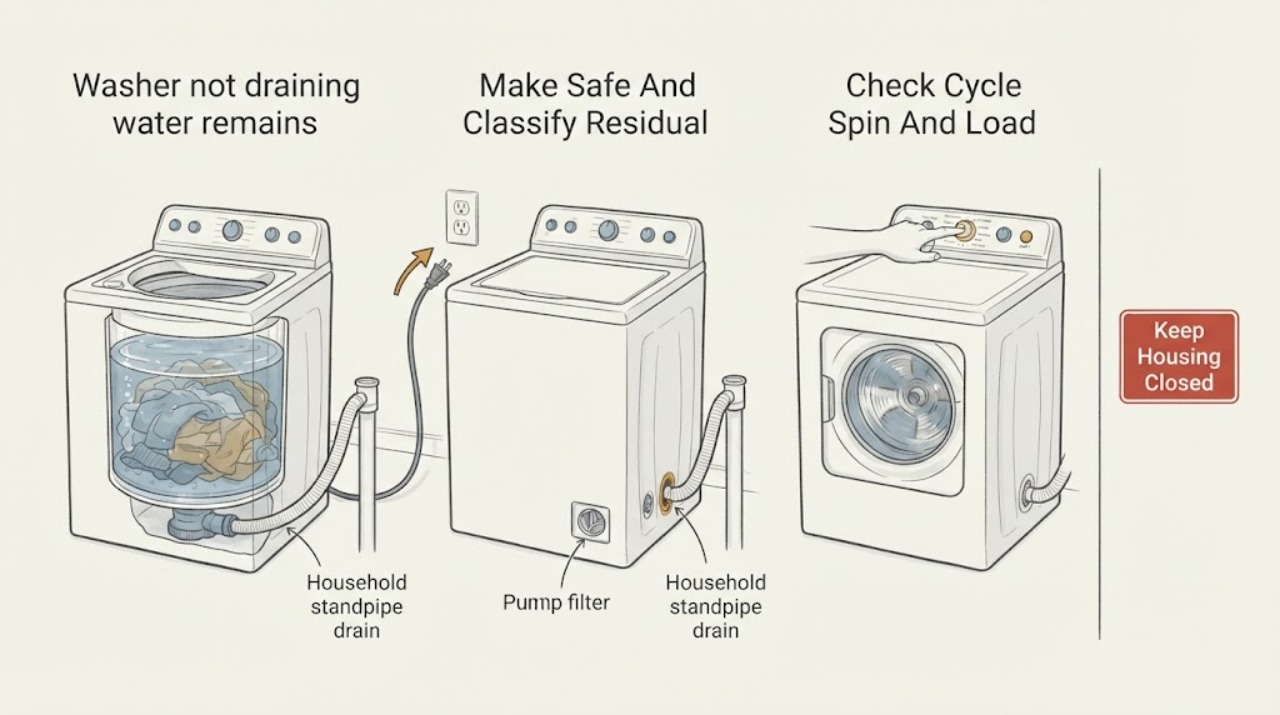
Washer not draining water remains in tub: What to Check and What to Do Next
If water remains in a washer tub, first decide whether the machine truly failed to drain or whether a low-spin setting, an unbalanced load, or a paused cycle left wet clothes behind. Keep hands out of standing water, stop the appliance, and disconnect power only from a dry, safe point when water is near electrical parts.
-
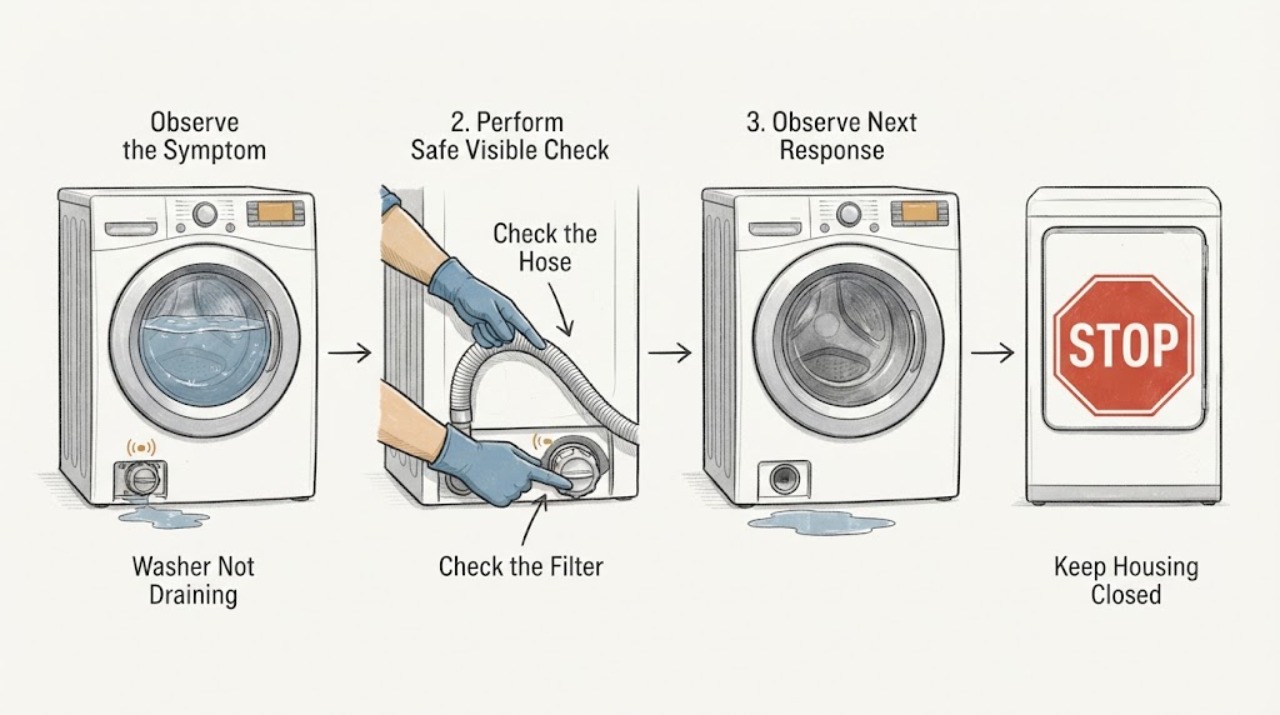
Washer Not Draining and the Pump May Hum: What to Check and What to Do Next
If a washer will not drain but you hear a hum, the drain-pump motor may be receiving power while water is blocked by the pump filter, pump inlet, drain hose, or household drain. A hum is not proof that water is moving.
-
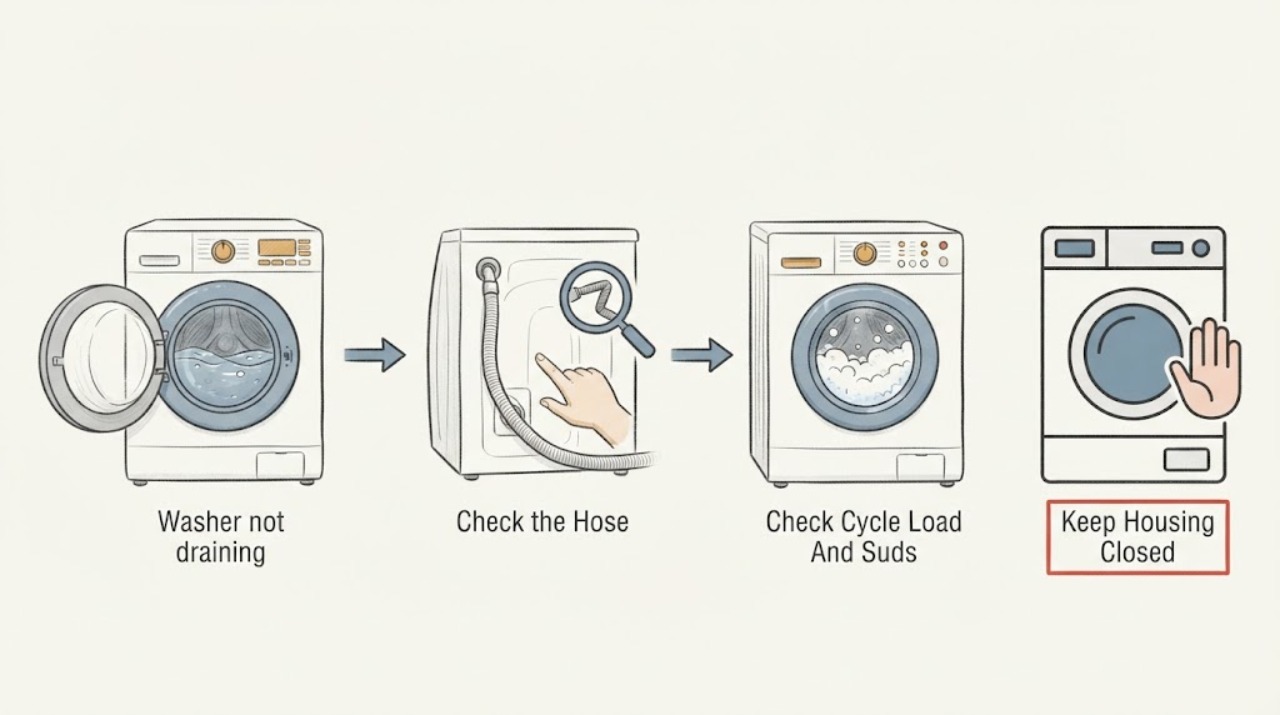
Washer not draining: What to Check and What to Do Next
If a washer leaves water in the tub, stop the cycle and unplug it before any access. First record whether the problem is standing water or merely wet clothes, the selected cycle, load balance, any display code, and any leak or unusual sound.
-
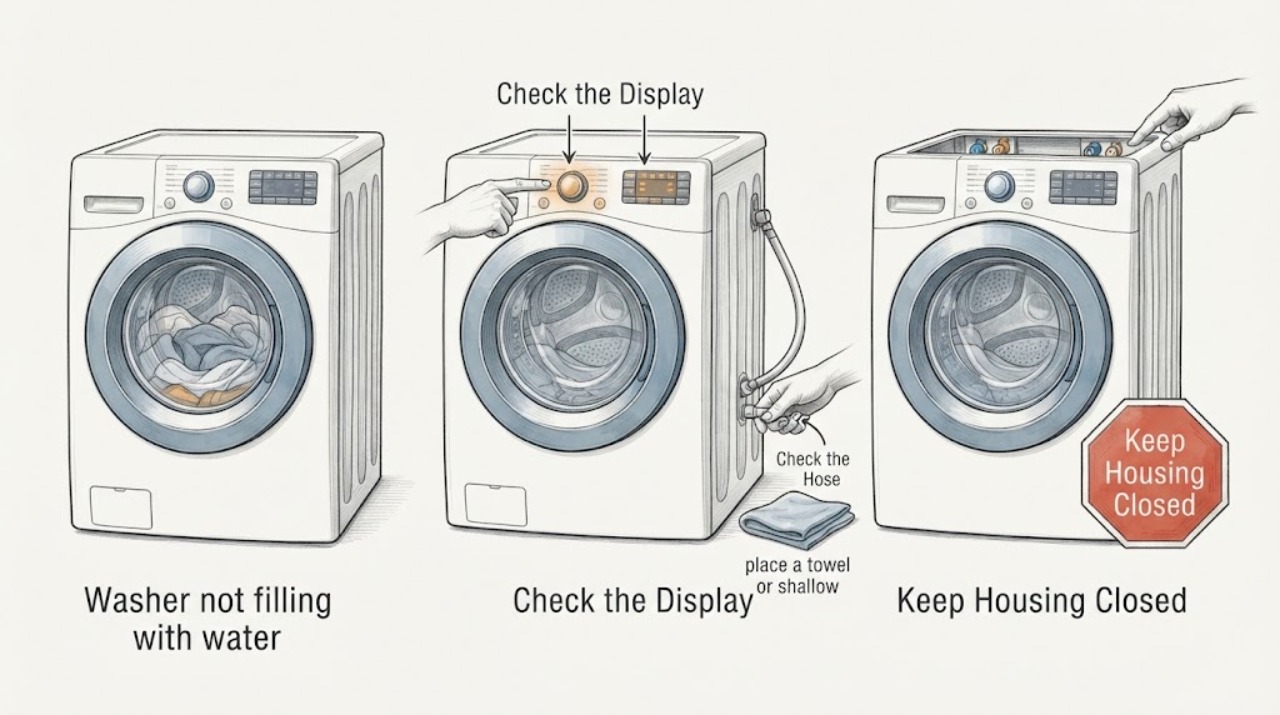
Washer not filling with water no water enters tub: What to Check and What to Do Next
If no water enters a washer tub, first check whether the cycle is still sensing the load or whether a fill error is present. Then confirm that the household water valves are fully open, hot and cold hoses are connected to the correct inlets, and neither hose is kinked, crushed, frozen, or damaged.
-
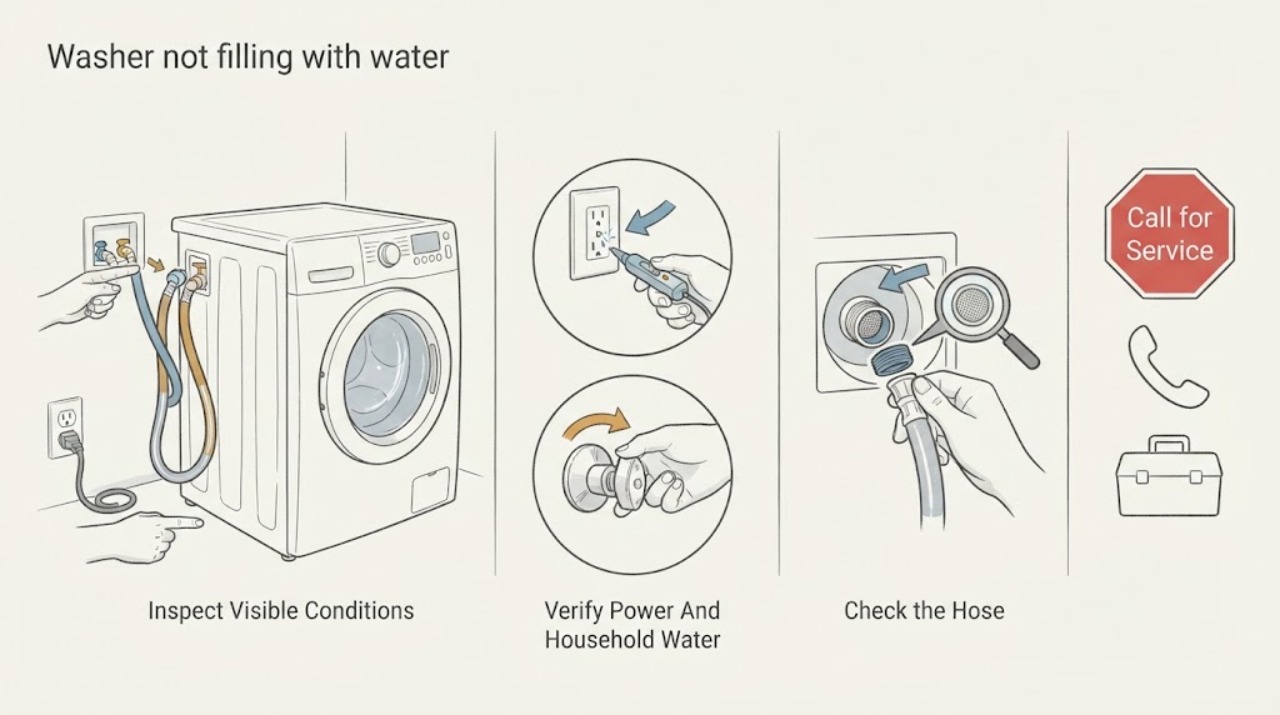
Washer not filling with water cycle starts: What to Check and What to Do Next
When a washer starts its cycle but no water enters, first decide whether it is in a normal sensing or lock step, actually calling for water, or filling and immediately losing water. Keep the lid or door closed and allow the model's initial sensing period to finish; some high-efficiency top-load cycles briefly sense before adding water.
-
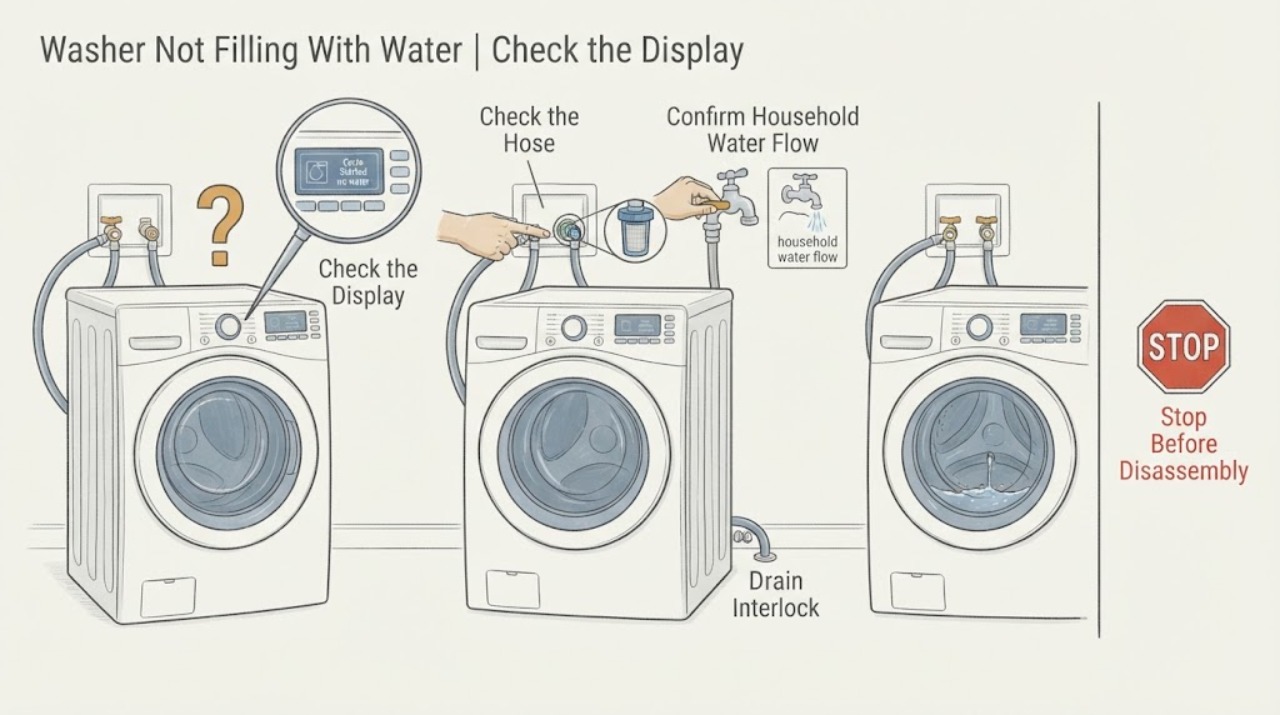
Washer Not Filling With Water While Supply Valves Are Open: What to Check and What to Do Next
If the washer's supply valves are open but the tub is not filling, check whether the washer is intentionally sensing the load, whether the door or lid is closed, and whether the display shows a water-inlet warning. Then inspect the visible inlet hoses for bends or crushing, confirm that water actually flows from the household faucet, and check the inlet filters only by the exact owner-manual procedure.
-
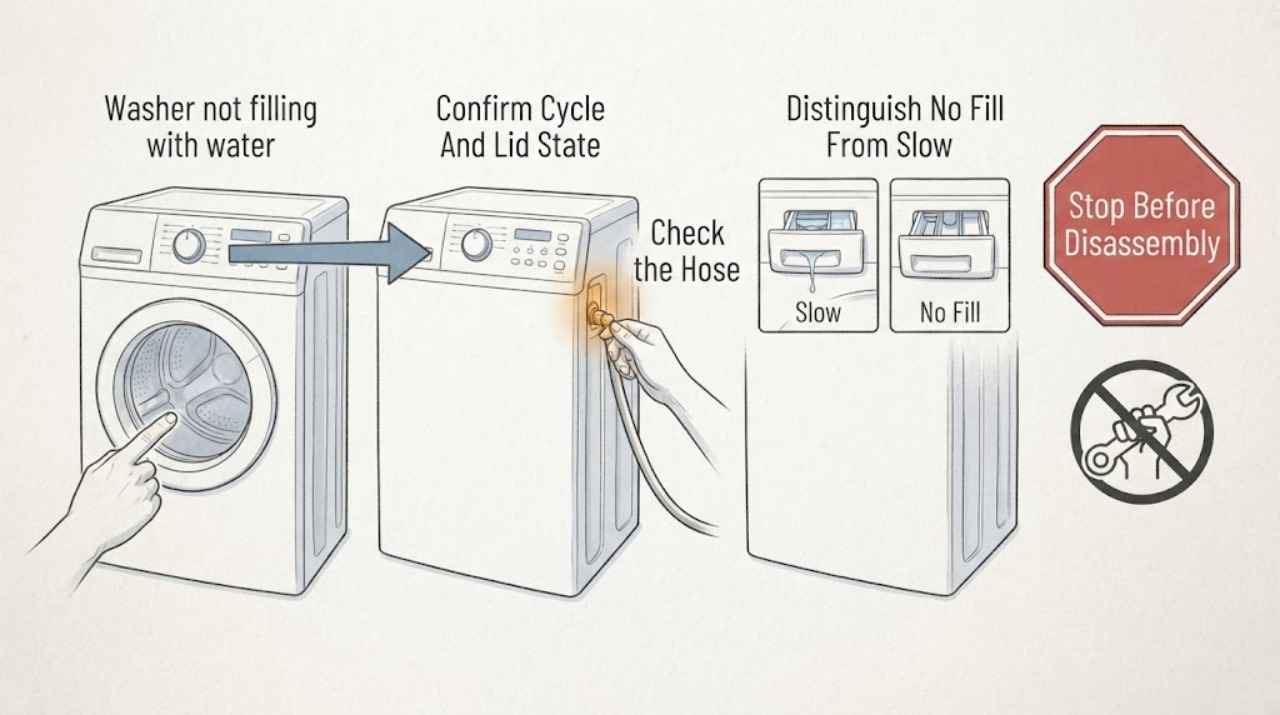
Washer not filling with water: What to Check and What to Do Next
If a washer is not filling, first confirm that a cycle has started with the lid or door closed, then check the household water supply and accessible inlet hoses. A kinked hose, closed valve, incorrect hose connection, or a drain hose that allows siphoning can stop or immediately remove incoming water.
-
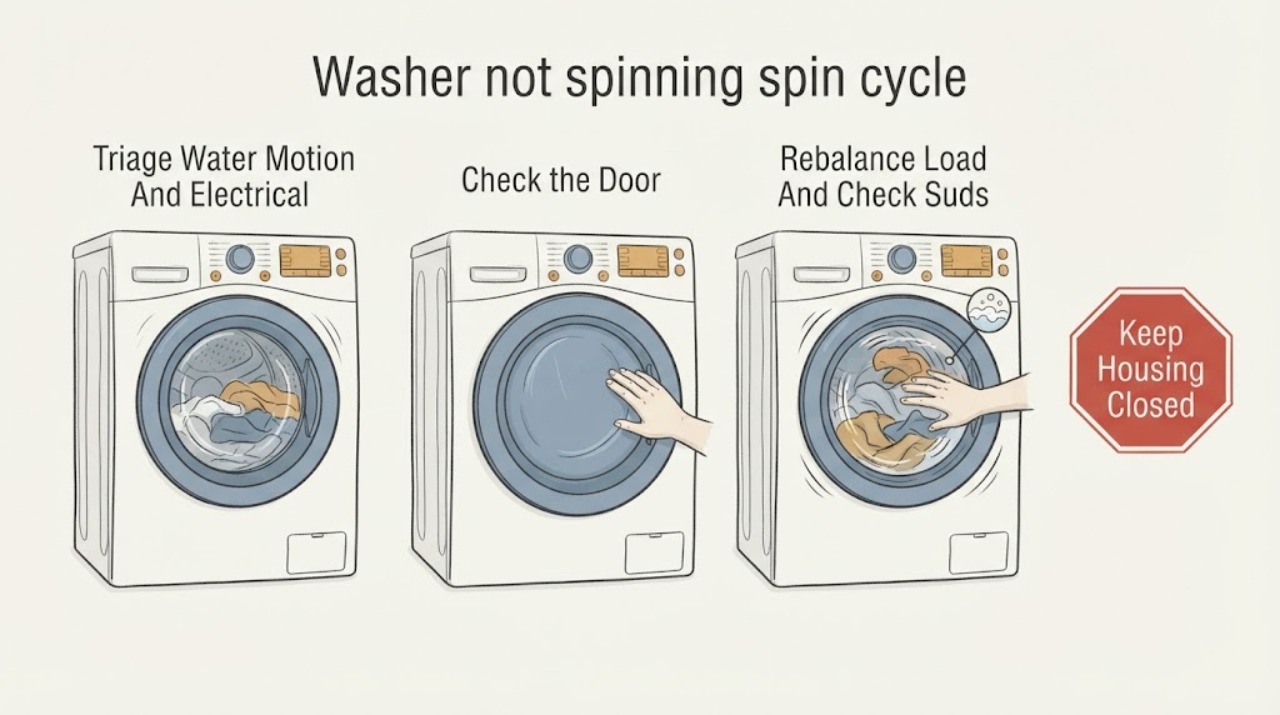
Washer not spinning spin cycle is silent or slow: What to Check and What to Do Next
A washer may spin slowly by design on Delicate, Hand Wash, Low Spin, or No Spin settings, and it may pause while pumping out water or rebalancing a load. If the spin cycle is silent or slow, first check the selected spin setting, door or lid closure, load balance, excessive suds, standing water, drain hose, level, and any displayed error.
-
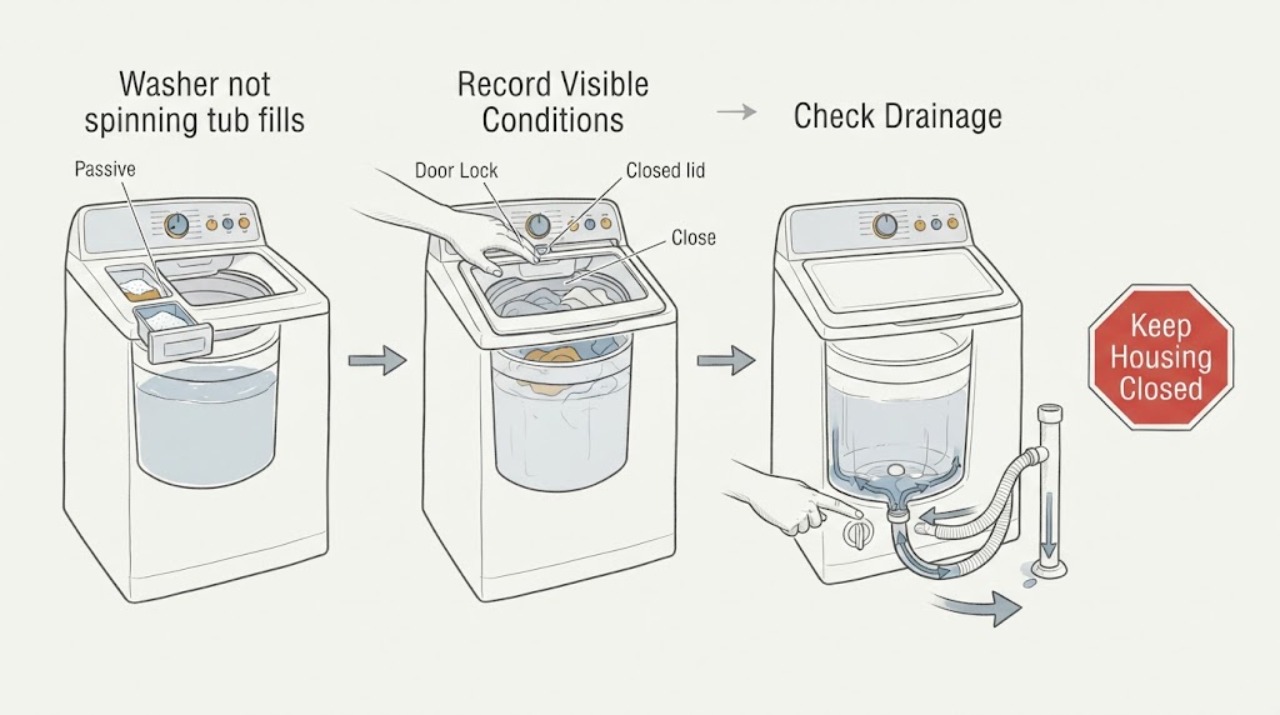
Washer not spinning tub fills and drains: What to Check and What to Do Next
When a washer fills and drains but the tub does not spin, first confirm that the selected cycle is supposed to include a spin and that the lid or door is fully closed and latched. The washer may also refuse to spin when the load is unbalanced, the drain hose or filter restricts discharge, excess suds extend the cycle, or a pause or control condition remains active.
-
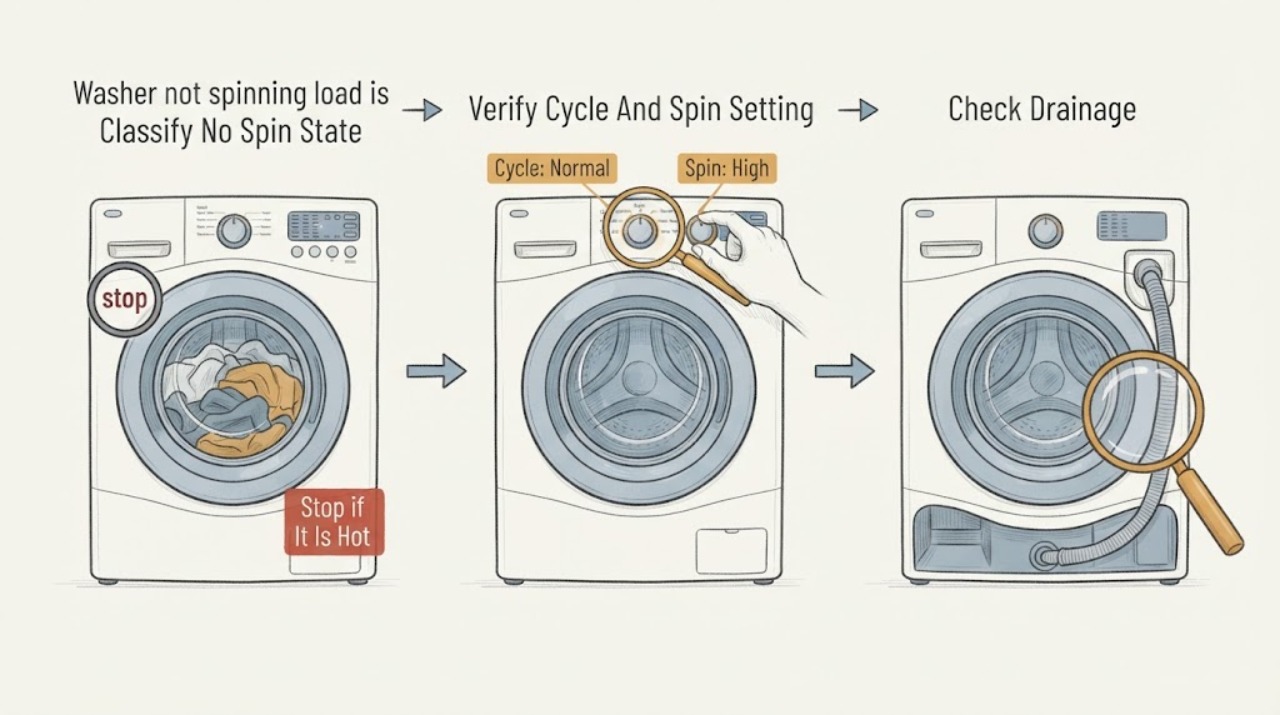
Washer not spinning load is balanced: What to Check and What to Do Next
If a washer is not spinning even though the load is balanced, first determine whether it cannot drain, cannot lock, has no selected spin, stops at a normal balancing pause, or never turns the drum at all. Save any display code, confirm the cycle and spin setting, and use the normal pause control before inspecting anything.