
On this page
Start here
Quick answer
Do not force a locked washer door. A front-load washer may keep the door locked while the drum is moving, water remains inside, the water or laundry is hot, or a child/control lock is active. Stop or pause the cycle using the washer's normal control, wait for the drum to stop and the water to cool, and check whether water remains. If the model manual supports a drain or spin-only program, use that exact program; if water does not leave or the door remains locked, disconnect power only when safe and arrange service. A model-specific emergency-release procedure may exist, but there is no universal safe way to pry the door, bypass the lock or reach into the cabinet.
Before you begin
Safety first
- Do not force or pry the door, bypass or bridge the lock, remove panels, reach into the cabinet, touch wiring, tip a water-filled washer or run a cycle with a damaged latch. Disconnect power and water only when safe and use qualified service for internal access.
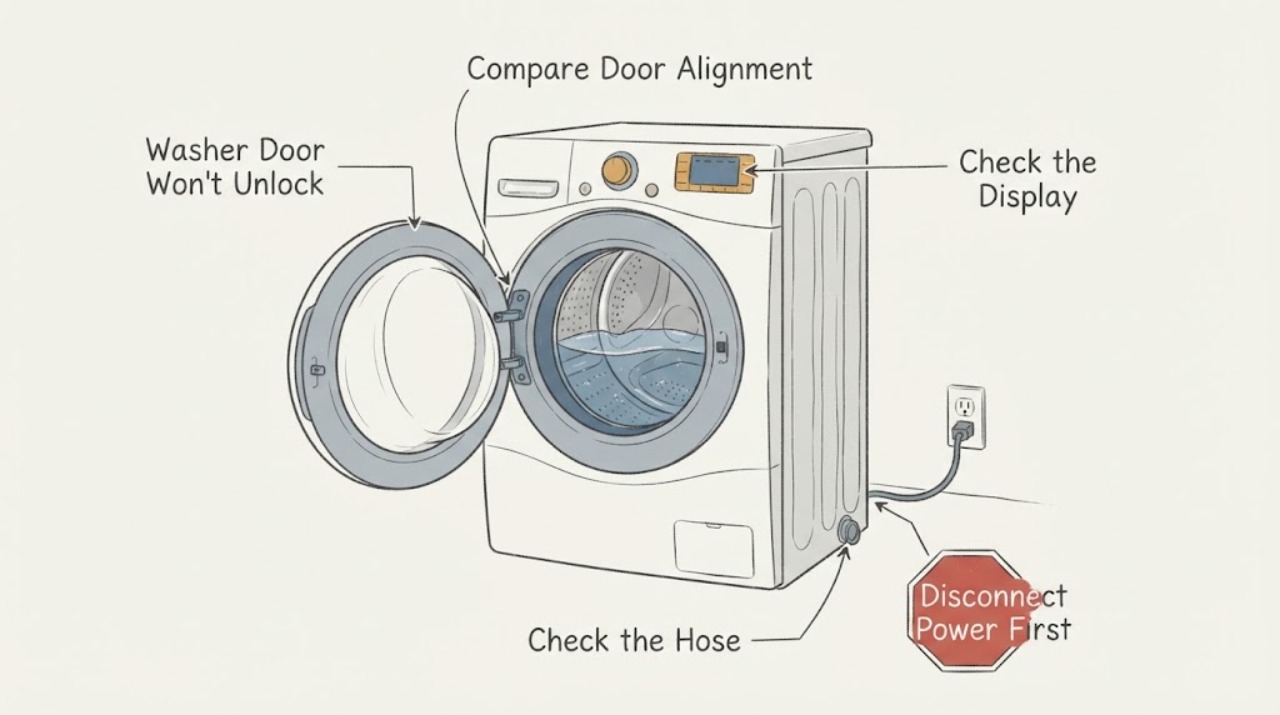
Work through in order
Diagnostic checks
Use only checks that match the exact appliance or system and its official guide.
-
Check 1
Press the washer's normal Start/Pause or Cancel control once, keep hands away from the door gap, and wait until the drum has stopped. Do not pull the handle or open the door while the machine is washing, drying or spinning.
Expected result: The drum is still moving, the door-lock indicator is blinking, the machine is hot, or the door unlocks after the normal pause/cancel state completes.
Next step: If the door unlocks, open it normally. If the drum is motionless but the lock remains, continue with the water-level and control checks; never use force to overcome the lock.
Stop if: Stop immediately if the door or handle is cracking, the machine is moving violently, smoke or electrical odor is present, or the drum does not stop normally.
Why this matters
Why: A moving drum, heat or an active safety state can intentionally keep the lock engaged. Samsung explicitly warns against forcing the door during operation, and Whirlpool notes that unlocking can take time while spinning or draining stops.
-
Check 2
Look through the door without opening it and check whether water is visible, whether the load or glass is unusually hot, and whether the washer shows a child-lock, key, padlock or error indicator. Do not put hands into the drum or touch hot water.
Expected result: Water is visible, the load/glass is hot, a child/control lock is displayed, or the drum appears empty and cool.
Next step: Wait for cooling when hot, follow the exact manual for the child/control-lock indicator, and continue only with the model's documented drain or unlock controls. If the drum is empty and cool but the lock remains, continue to the drain and power checks.
Why this matters
Why: Water or excessive temperature can keep a door locked to prevent flooding or injury, while a child/control lock can block the normal opening command. An empty, cool drum removes those particular conditions but does not prove that the lock hardware is good.
-
Check 3
If water is present or the washer stopped before draining, use only the exact model's documented Drain, Drain & Spin or Spin-only program. Confirm the drain hose is routed as the installation manual requires; do not remove a pump cover during a cycle or improvise a drain by tipping the machine.
Expected result: The model-specific drain program removes the water and the lock releases, or the pump runs without removing water/does not respond and the door remains locked.
Next step: If the water drains and the lock releases, remove the load normally. If water remains, stop the cycle and arrange service rather than opening the lock or filter while water is hot or under pressure.
Why this matters
Why: Electrolux says the key indicator can remain on when water is left in the drum and recommends draining before opening. Whirlpool likewise directs an unresolved locked door toward a drain-and-spin path, but exact program names and behavior vary by model.
-
Check 4
When the drum is stopped, the washer is cool, no water is spilling and the electrical area is dry, disconnect power using the plug, isolator or breaker only if it is safe to reach. Follow the exact manual's wait interval, then restore power once; do not repeatedly cycle power or test an uncontrolled machine.
Expected result: The lock releases after the documented power reset, or the lock remains engaged and the controls are unresponsive.
Next step: If it remains locked, preserve the display/error information and contact the manufacturer's service channel. Do not remove the top, bridge lock wires or reach for the latch from inside the cabinet.
Why this matters
Why: Whirlpool documents a short power disconnect as a possible control reset before a model-specific drain-and-spin step. A reset cannot prove that a door-lock, drain or control component is sound, and a persistent lock requires service.
-
Check 5
Find the rating-plate brand and complete model number from the door frame, cabinet or the location shown in the owner's manual. Record the exact lock symbol/error, cycle selected, whether water was visible and whether a power failure or interrupted cycle preceded the lock.
Expected result: The brand and model are confirmed, or the washer remains unidentified.
Next step: Use the exact manual for the confirmed model. If the model cannot be identified, leave the door locked, keep the washer disconnected when safe and arrange manufacturer or qualified appliance service rather than using a generic mechanical release.
Why this matters
Why: Emergency releases, child-lock controls, drain access and door-lock behavior are model-specific. The absence of a model prevents selecting a safe release sequence or compatible lock part.
-
Check 6
Only if the exact manual explicitly provides an emergency door-opening procedure for this model, verify that the appliance is off and unplugged, the drum is stopped and the water is drained/cool before following that manual. Do not generalize Electrolux's trigger, a Whirlpool service procedure or a Samsung drain method to another washer.
Expected result: The exact manual documents a release with all safety preconditions met, or no applicable manual procedure is available.
Next step: Follow only the matching manual or have an authorized technician release the door. If no exact procedure is available, keep the washer out of service and schedule repair.
Why this matters
Why: Electrolux documents an emergency unlock trigger only if applicable to the model and directs service when the key remains; other brands use different access arrangements. A generic pry, cable pull or panel removal can cause flooding, shock or injury.
Use your observations
Decision map
Find the observation that best matches what you see, then follow the next safe action.
-
PATH 01Next step
What you see
The drum is moving, water is visible, the load is hot, or the lock indicator is still active during a cycle.
Do this next
Pause/cancel normally, wait for motion and heat to end, then use the exact model's documented drain path if water remains.
Why this path and its safety boundary
Why it matters: The lock may be protecting against movement, flooding or heat, so forcing the door would defeat a safety function.
-
PATH 02Next step
What you see
The drum is empty and cool, water has drained, the normal cancel/power steps were completed, but the door remains locked or the controls do not respond.
Do this next
Keep the washer disconnected when safe, do not pry or bypass the interlock, and arrange manufacturer or qualified service with the model, display and cycle details.
Why this path and its safety boundary
Why it matters: The remaining issue may involve the lock, drain confirmation or controls, but the symptom does not identify which part and no model is supplied.
-
PATH 03Next step
What you see
A full model-specific manual confirms an emergency release and all stated conditions are met, including power off, stopped drum and safe water level/temperature.
Do this next
Follow only that manual's release steps; if the lock remains or the procedure is absent, stop and use service rather than improvising access.
Why this path and its safety boundary
Why it matters: The release is a controlled procedure for that model, not a general washer technique.
Helpful context
Understand the symptom
A locked door is often a safety state, not proof that the latch is broken
The lock may be doing its job while the drum is moving, the tub is full, the water is hot or a control lock is active. The safe first decision is the state of the washer, not the force needed to pull the handle. Manufacturer guidance from Electrolux, Whirlpool and Samsung uses the same broad boundary while reserving control names, drain sequences and emergency releases for the exact model manual.
No model means no universal emergency-release instruction
The assigned topic supplies no brand or model. Some manufacturers document an emergency release behind a filter flap, while others use a different design or require service. Do not remove a panel, pull a cable, insert a tool or bypass the interlock based on a generic video. Locate the rating plate and use the matching manual before considering any model-specific release.
When checks do not resolve it
Need a professional?
Arrange service when water will not drain, the door remains locked after the exact model's safe drain/power steps, the lock or handle is damaged, the controls are unresponsive, an error persists, or the model-specific emergency release is unavailable.
Safety scope: Do not force or pry the door, bypass or bridge the lock, remove panels, reach into the cabinet, touch wiring, tip a water-filled washer or run a cycle with a damaged latch. Disconnect power and water only when safe and use qualified service for internal access.
Have this ready
- Provide the full brand/model, serial if available, exact lock symbol or error, cycle and options selected, whether water or heat was present, drain behavior, any preceding power failure and what the manual's documented steps did.
Common questions
FAQ
Can I pull the door open if the washer has finished?
No. Confirm that the drum has stopped, the water is gone and the load is cool, then use the normal unlock control. Samsung warns against forcing the door during operation, and Electrolux directs users to a model-specific emergency procedure or service when the key remains.
Will a drain or spin cycle unlock the door?
It can when water is keeping the lock engaged, but the program name and controls vary. Electrolux documents a Spin path for its applicable models, while Whirlpool documents a model-specific Drain and Spin path. Use the exact owner's manual and do not start a cycle if the washer is unsafe or the drain is blocked.
Is there a universal emergency cable or latch release?
No. Some models document an emergency trigger, but the location and conditions differ. With no brand or model supplied, do not remove panels or pull a cable from a generic guide; identify the appliance or call service.
Read the exact guide
Official sources
- Door Will Not Lock or Unlock - Front Load WasherWhirlpool · Official Whirlpool Product Help article used for cross-brand safety patterns and explicitly treated as Whirlpool-specific for its cancel, power-reset and Drain and Spin controls.
- How can I open the door of my washing machine during operation?Samsung UK · Official Samsung UK support article used only for manufacturer-documented general safety conditions; its button names and drain procedure are not transferred to an unidentified washer.
- The door of the washing machine cannot be openedElectrolux Australia · Official Electrolux Australia support article explicitly applies to Front Load Washer and Front Load Washer Dryer. It is used as a model-bounded example, not a universal control sequence for an unidentified washer.
Community feedback
Share a repair observation
Share a plain-text repair observation. Accepted observations are published automatically; this page may take a moment to update.