
Brand-independent appliance guidance
General Washer Repair Guides – Page 2
Brand-independent troubleshooting and repair guidance for common washer problems and maintenance questions.
General washer guides
Use these guides when the problem is not limited to a specific manufacturer.
-
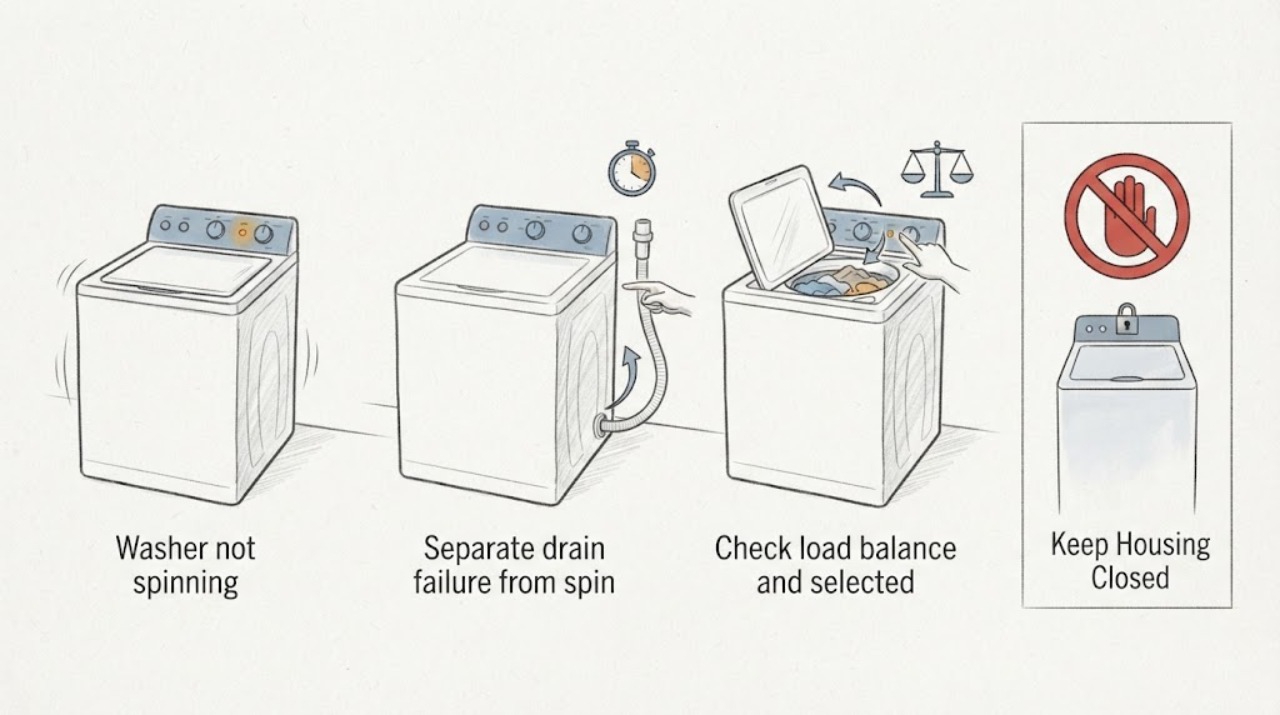
Washer not spinning: What to Check and What to Do Next
Start with the non-invasive causes: an unbalanced or bulky load, a low/no-spin selection, a door or lid that is not fully latched, or water that has not drained. Pause safely, redistribute a small load only when the controls permit it, and check the visible drain hose for a kink.
-
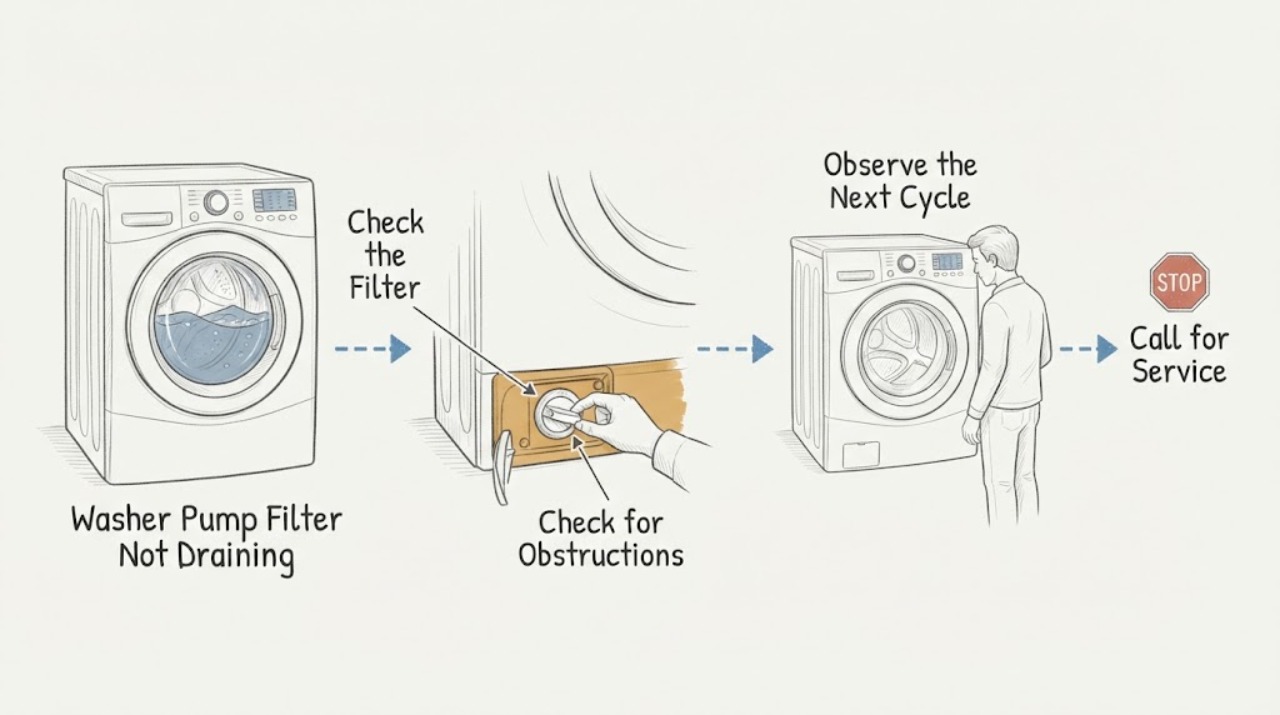
Washer Pump Filter Not Draining: What to Check and What to Do Next
If a washer pump filter is not draining, first confirm that the washer actually has an owner-accessible filter; many top-load models do not, and some front-load models require service. Unplug the washer, treat remaining water as potentially hot, and use the model's residual-water procedure with a shallow container and towels before opening an accessible filter.
-
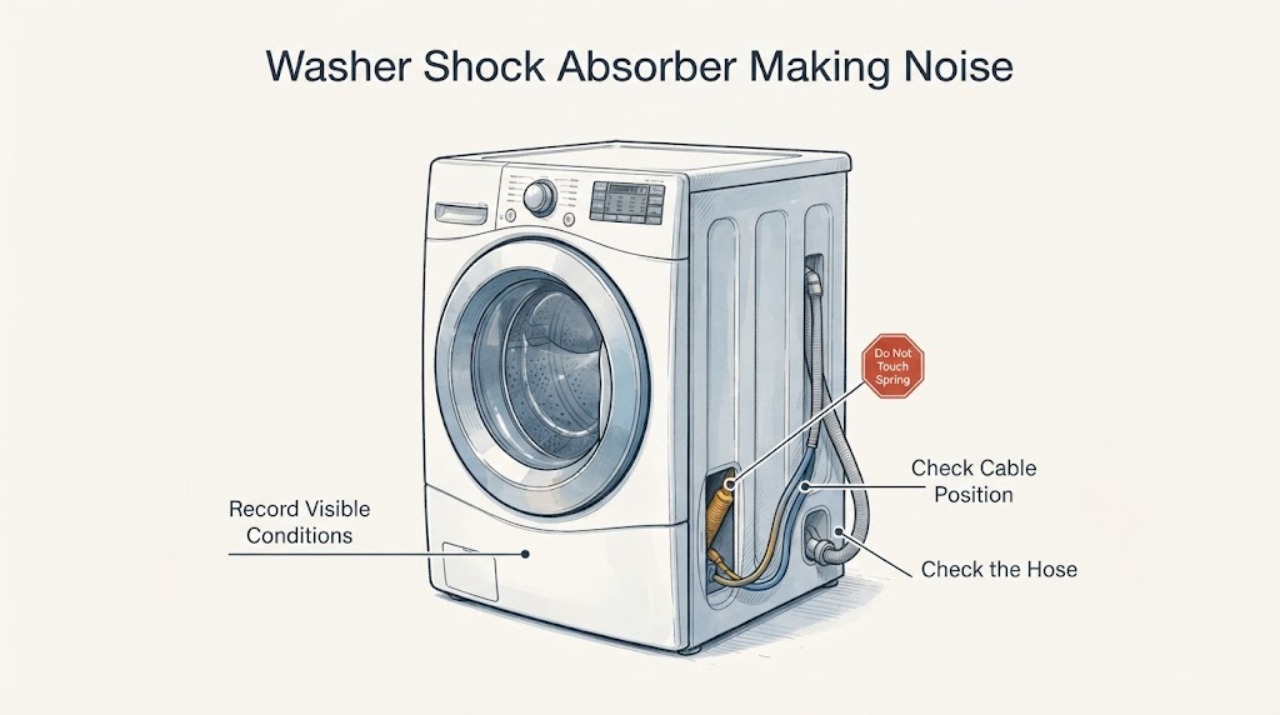
Washer Shock Absorber Making Noise: What to Check and What to Do Next
A washer noise that seems to come from a shock absorber is most convincing when it appears during spin with tub bouncing, cabinet impact, or repeated out-of-balance movement. Worn or damaged shock absorbers can let the tub move excessively, but an uneven load, an unlevel floor, leftover shipping bolts, a hose or nearby cabinet striking the washer, a foreign object, or a drum bearing can sound similar.
-
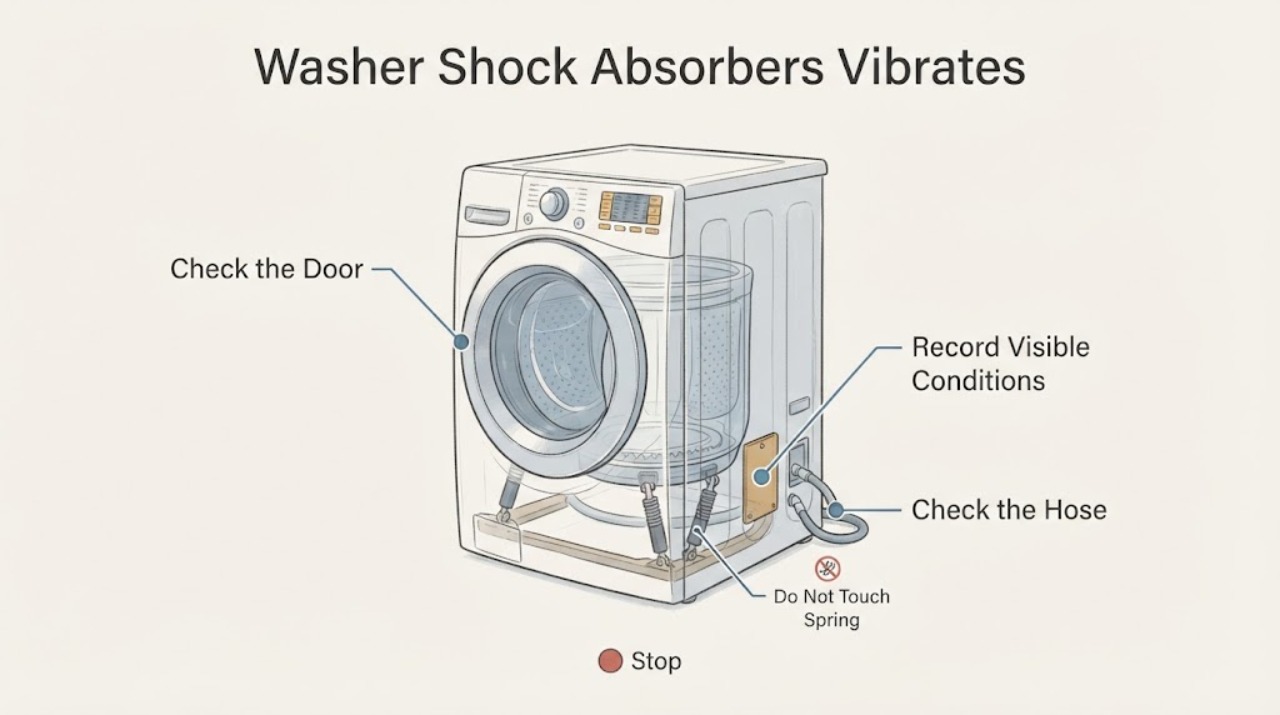
Washer Shock Absorbers Vibrates or Walks: What to Check and What to Do Next
A washer that vibrates or walks during spin may have an unbalanced load, an unstable or unlevel floor, retained shipping hardware, or a hose or nearby object striking the cabinet. Worn shock absorbers, suspension mounts, springs, or other drum-support parts are more likely when the washer is stable and clear but still moves or bangs with a balanced or empty test.
-
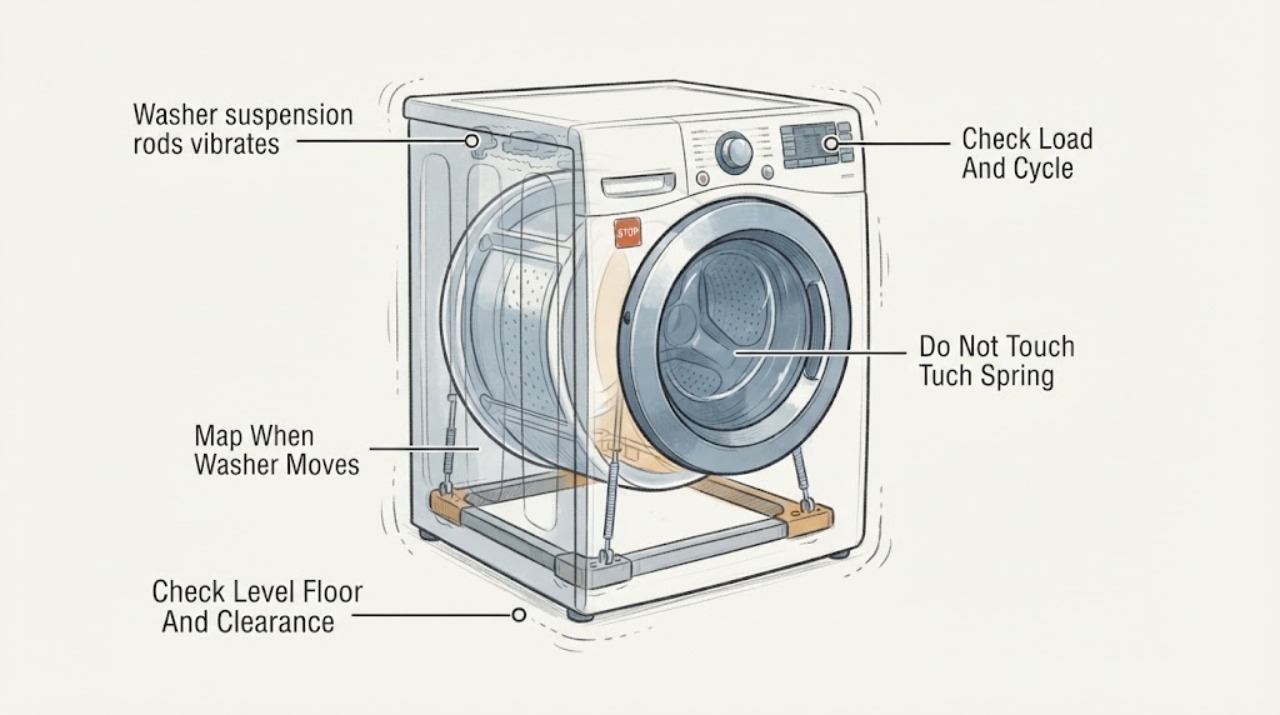
Washer suspension rods vibrates or walks: What to Check and What to Do Next
Suspension rods can contribute to a washer that vibrates or walks, but load balance, leveling, a flexible floor, shipping material left after installation, and loose installation hardware are common look-alikes. First stop the cycle and note whether movement occurs only with one load or with an empty tub.
-
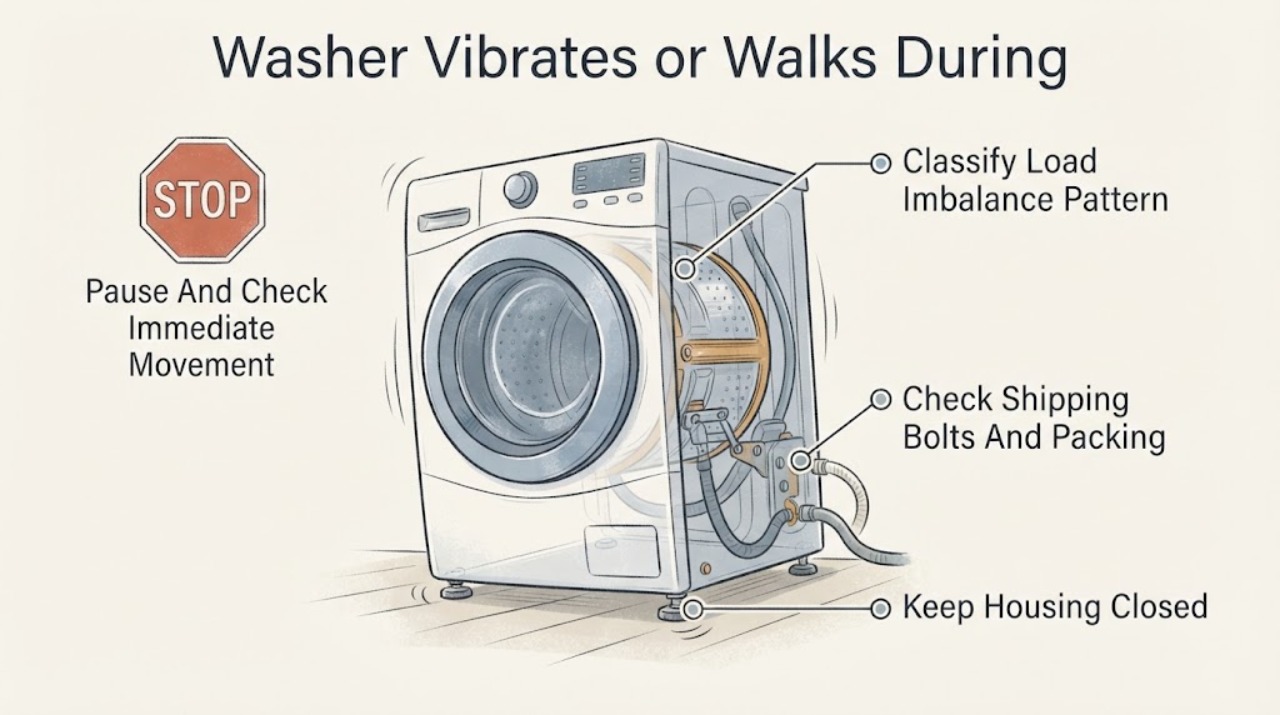
Washer Vibrates or Walks During Spin: What to Check Next
A washer that vibrates or walks during spin is usually responding to an unbalanced load, an unlevel or unstable installation, shipping hardware left in place after installation, or contact with a hose, wall, shelf, or cabinet. Pause the machine and keep clear of the moving tub.
-
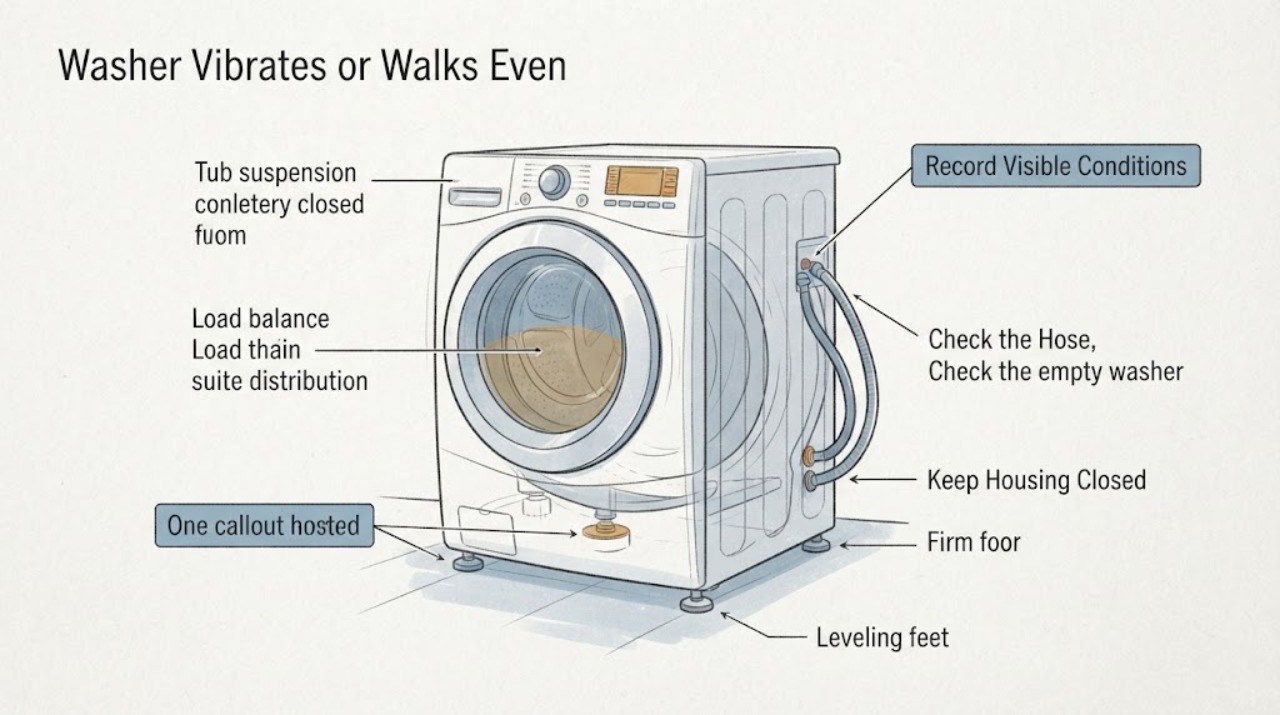
Washer Vibrates or Walks Even Though the Floor Is Firm: What to Check and What to Do Next
A firm floor does not rule out a washer that walks. The machine can still move when one or more feet are not firmly locked to the floor, the surface is slippery, the load is tangled or concentrated, shipping bolts or packing material remain, a pedestal is not secured, or an internal suspension or drive problem is developing.
-
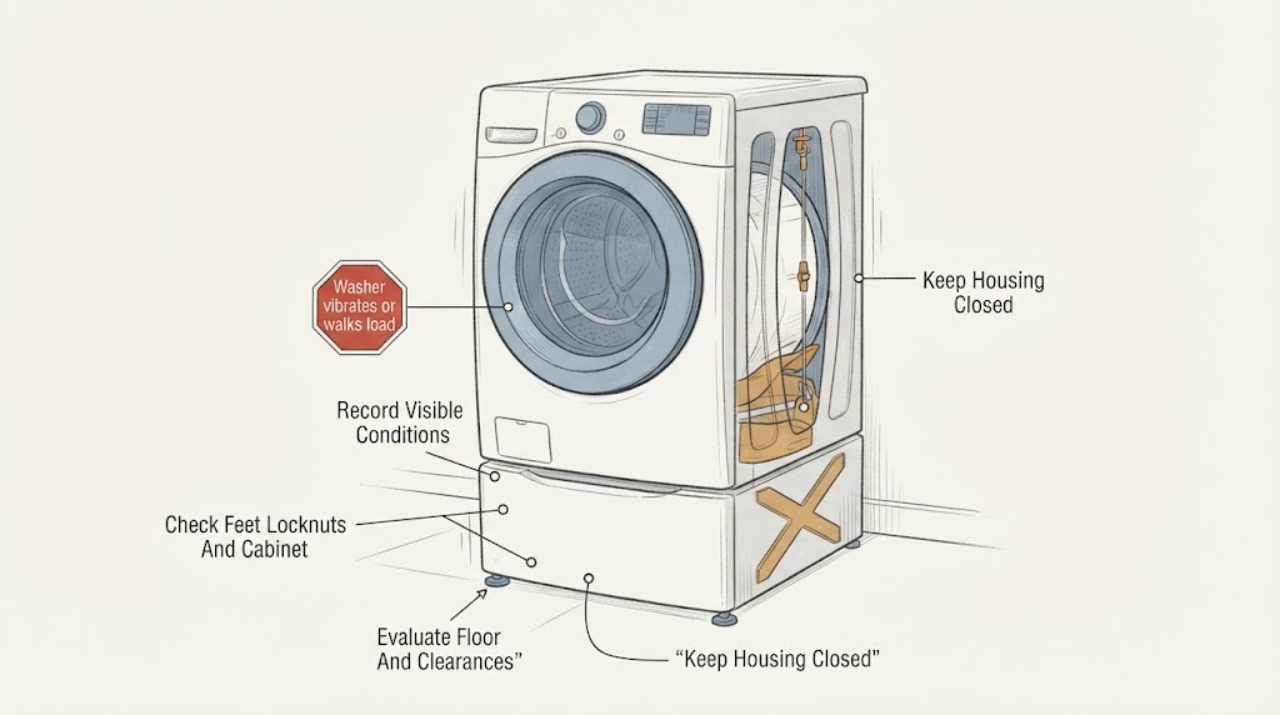
Washer vibrates or walks load is balanced: What to Check and What to Do Next
When a washer still vibrates or walks with a balanced load, check the installation before assuming the tub or motor has failed. Stop the cycle if the cabinet is moving sharply, striking a wall, pulling a hose, or making a new grinding sound.
-
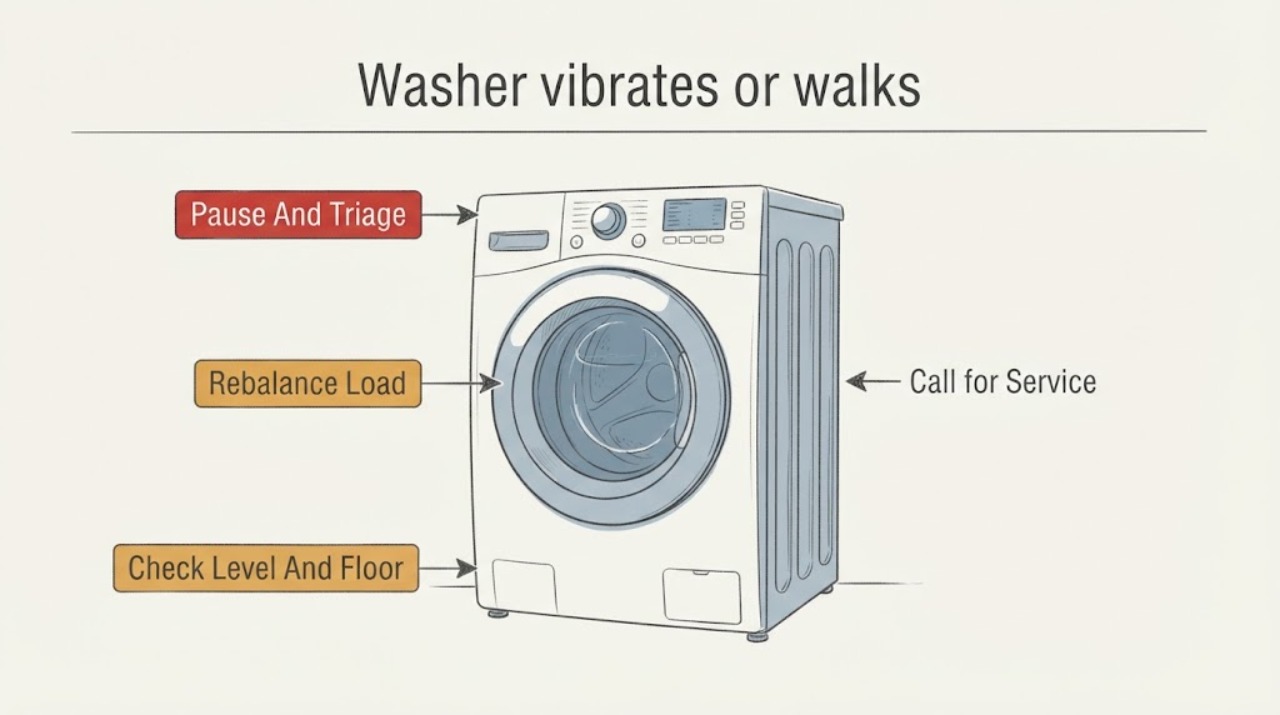
Washer vibrates or walks: What to Check and What to Do Next
A washer that vibrates during spin may have an uneven load, an overloaded or single bulky item, loose contact at one or more feet, an uneven or flexible floor, or shipping hardware that was not removed after installation. Pause the cycle, wait for the drum to stop, and correct only a clearly accessible condition described by the model manual.
-
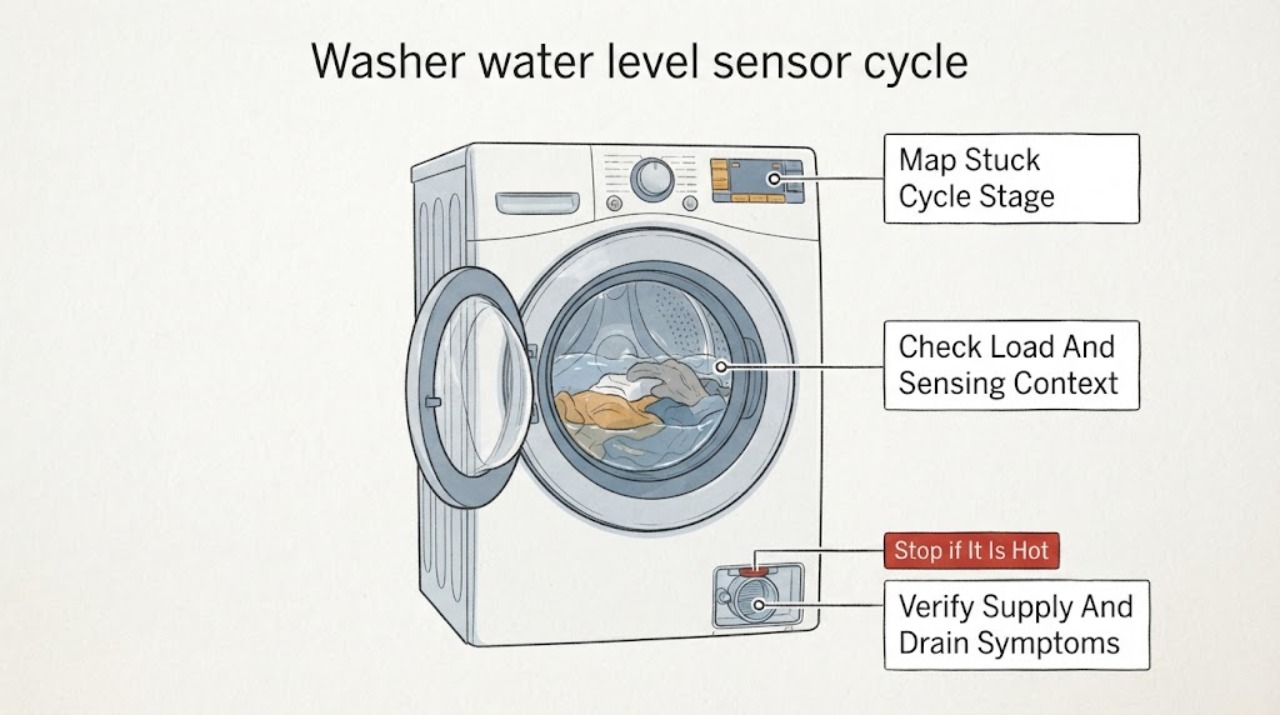
Washer water level sensor cycle stuck: What to Check and What to Do Next
A washer can appear stuck while it is sensing load size, waiting for water, pausing with the lid or door open, removing excess suds, or waiting for a drain. First note where the cycle stops, whether water is entering or leaving, and what the display says.
-
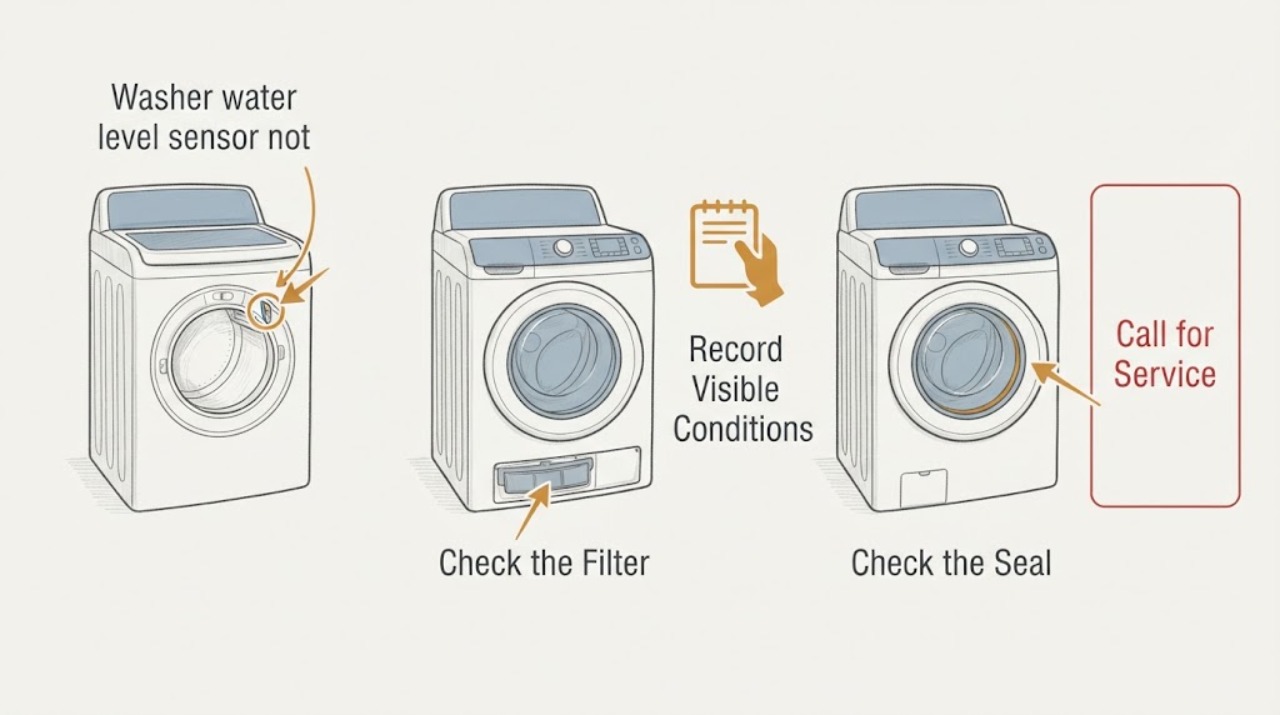
Washer water level sensor not filling with water: What to Check and What to Do Next
A washer described as having a water-level-sensor filling problem may not be receiving water at all, may be losing water down the drain as it fills, or may be receiving water that the pressure sensor cannot detect correctly. Start with the household faucets, inlet hoses and screens, drain-hose routing, lid or door closure, and the exact model's display message.
-
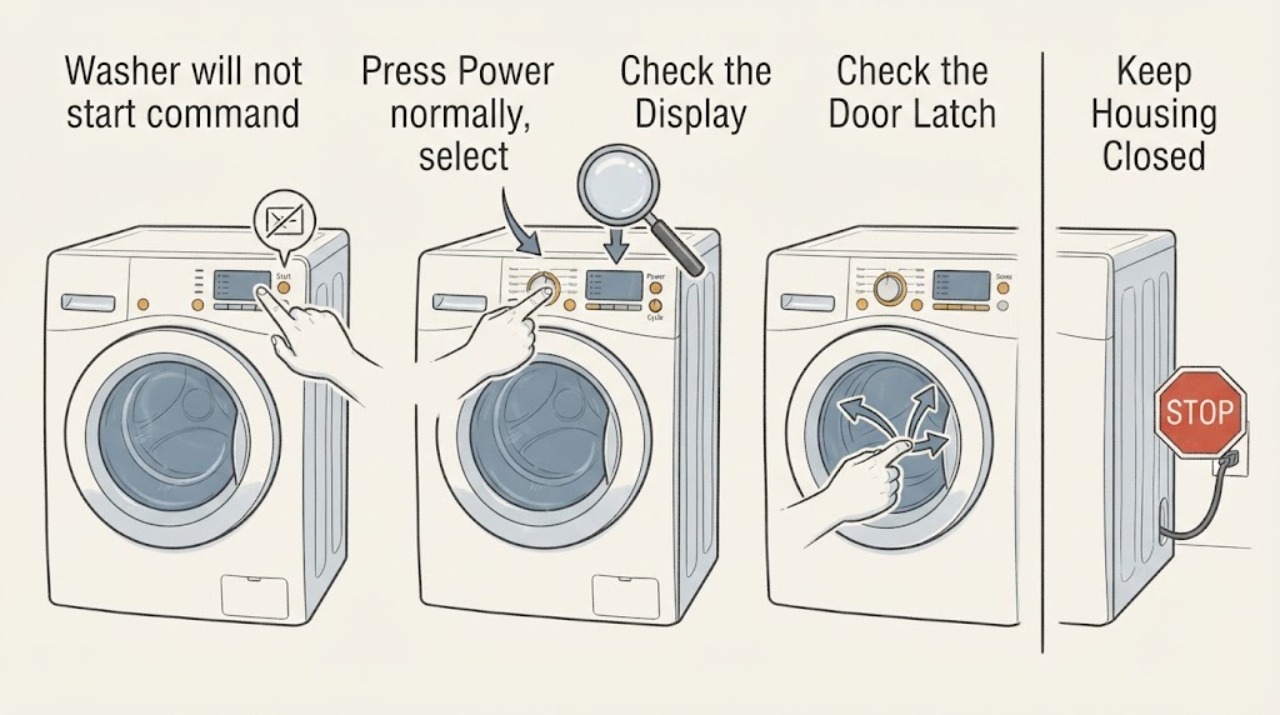
Washer will not start command is ignored: What to Check and What to Do Next
When a washer ignores Start, first distinguish a control-panel issue from a safety condition that is correctly preventing the cycle. Confirm the display is on, select a normal cycle, press Start the way the model requires—some touch panels need a deliberate one-second press—and check for Control Lock or Child Lock, Delay Start, an open door/lid, a previous cycle that has not finished draining, or an error.
-
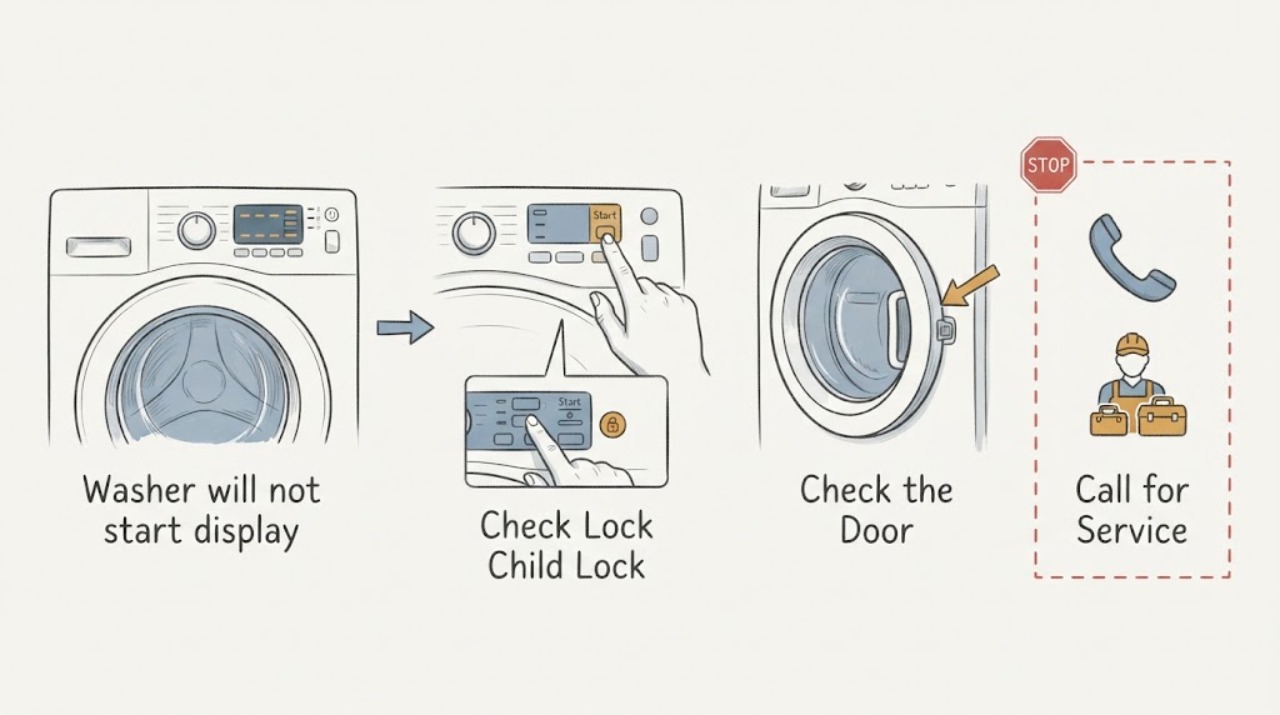
Washer will not start display has power: What to Check and What to Do Next
A washer can have a lit display while a safety or control condition prevents the cycle from starting. First select a valid cycle, close the lid or door completely, press the model's Start or Start/Pause control as directed, and look for Child Lock, delay-start, pause, drain, or door-lock indicators.
-
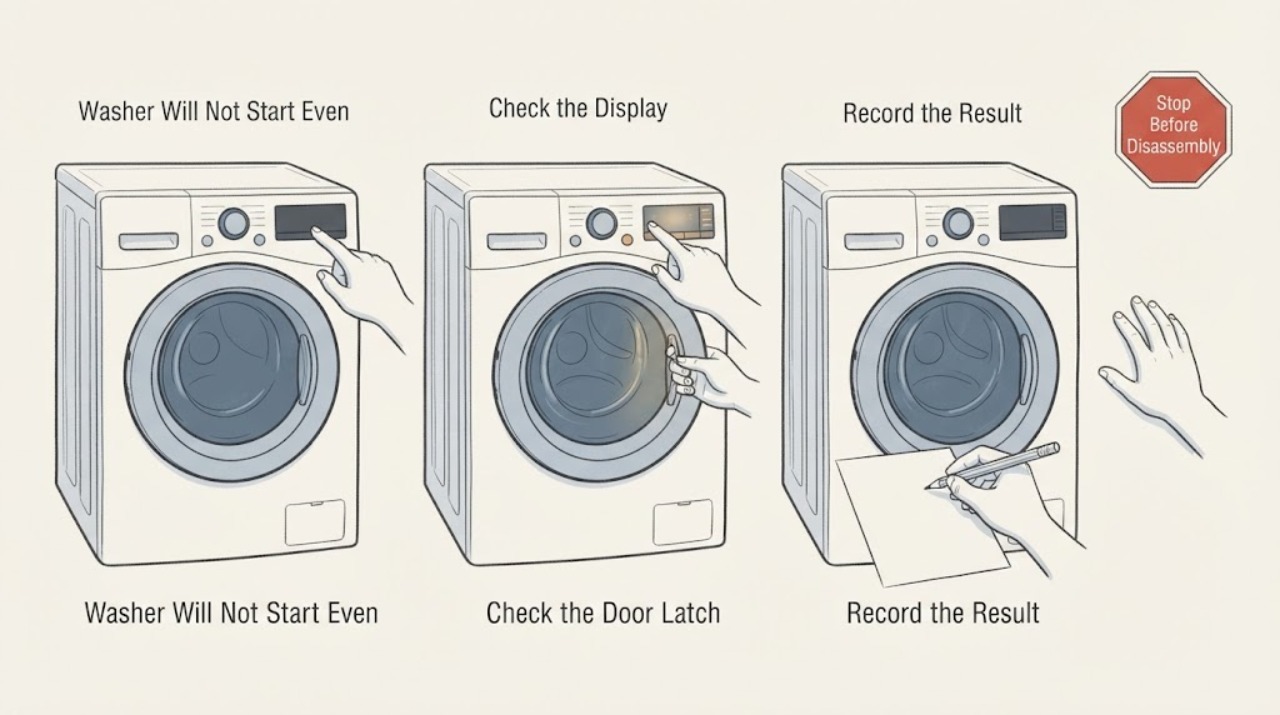
Washer Will Not Start Even Though the Door or Lid Is Closed: What to Check and What to Do Next
A closed door or lid is necessary but does not prove that the washer has locked it or is ready to run. Check the display for a door, lid, control-lock, or other error; make sure no garment or debris is caught at the latch; press Start or Pause once after selecting a valid cycle; and confirm the washer has power from its wall outlet.
-
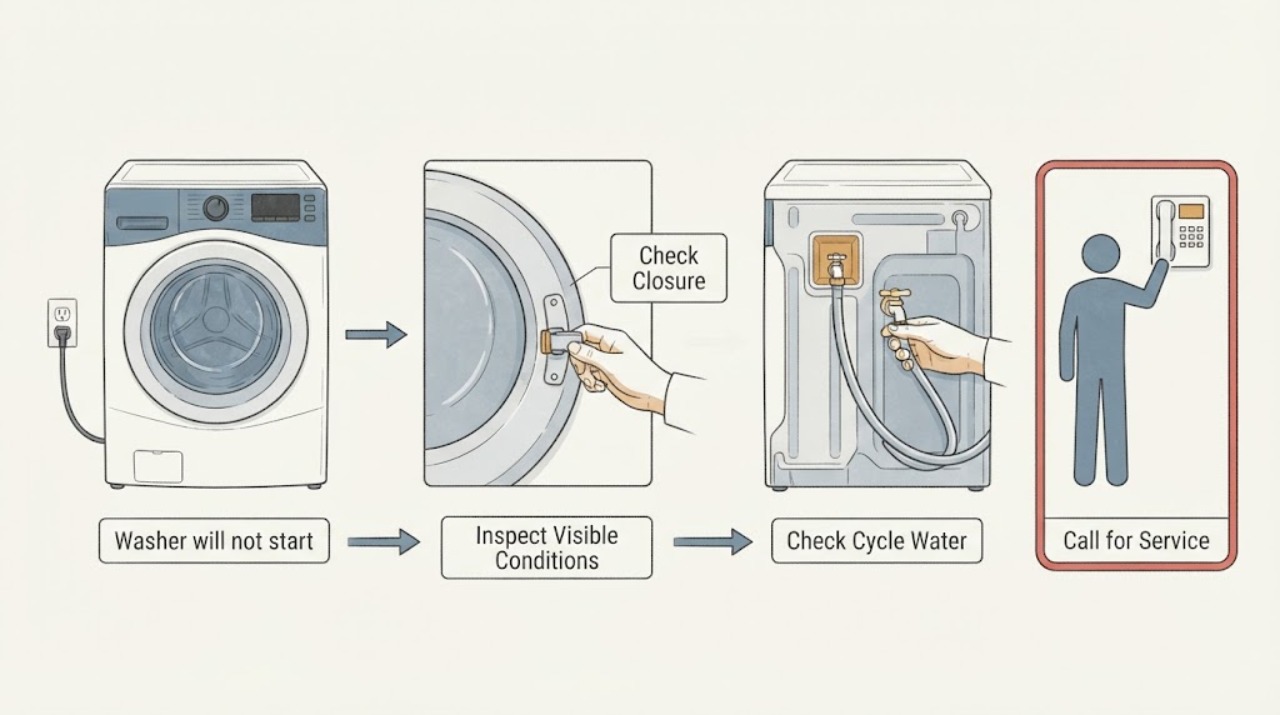
Washer will not start: What to Check and What to Do Next
Confirm the washer has a stable display or indicator, the door or lid is fully closed, the selected cycle is valid, and no water or safety fault is visible. Do only external, owner-level observations: do not open panels, bypass a lock, or work on live wiring. If the control remains unresponsive, a lock will not engage, or water is present, stop and arrange appliance service.