
On this page
Start here
Quick answer
A washer may spin slowly by design on Delicate, Hand Wash, Low Spin, or No Spin settings, and it may pause while pumping out water or rebalancing a load. If the spin cycle is silent or slow, first check the selected spin setting, door or lid closure, load balance, excessive suds, standing water, drain hose, level, and any displayed error. Do not reach into a moving or locked drum, bypass a lid or door switch, or open the cabinet. Stop for smoke, burning odor, sparks, severe shaking, a damaged cord, flooding, or a hot cabinet; arrange qualified appliance service when the washer will not spin after safe external checks.
Before you begin
Safety first
- Owner checks are limited to safe control observation, model-approved cycle selection, load redistribution, visible hose and level inspection, and documenting errors and sounds. A qualified professional must handle cabinet access, motor or drive testing, pump and drain disassembly, interlock bypass concerns, electrical measurements, wiring, and component replacement.
Work through in order
Diagnostic checks
Use only checks that match the exact appliance or system and its official guide.
-
Check 1
From a safe position, look for smoke, burning odor, sparks, crackling, severe shaking, a hot cabinet, a damaged cord, water on the floor, or a drum that may contain hot water. Do not touch pooled water, a moving drum, or energized parts.
Expected result: The washer is stable with no hazard; or smoke, odor, sparks, abnormal heat, flooding, severe movement, or hot residual water is present.
Next step: For smoke, fire, or active sparking, leave and contact emergency help from a safe location. Otherwise stop the washer using its normal control if safe, keep people clear, and arrange qualified appliance or electrical service; do not restart it to reproduce the condition.
Stop if: Stop immediately for smoke, fire, sparks, crackling, burning odor, an unusually hot cabinet, water near electrical parts, severe shaking, or any need to touch hot water or a moving drum.
Why this matters
Why: A settings, load, or drain issue can be checked only when the appliance and room are safe. Fire, electrical, burn, flood, or structural movement requires immediate escalation.
-
Check 2
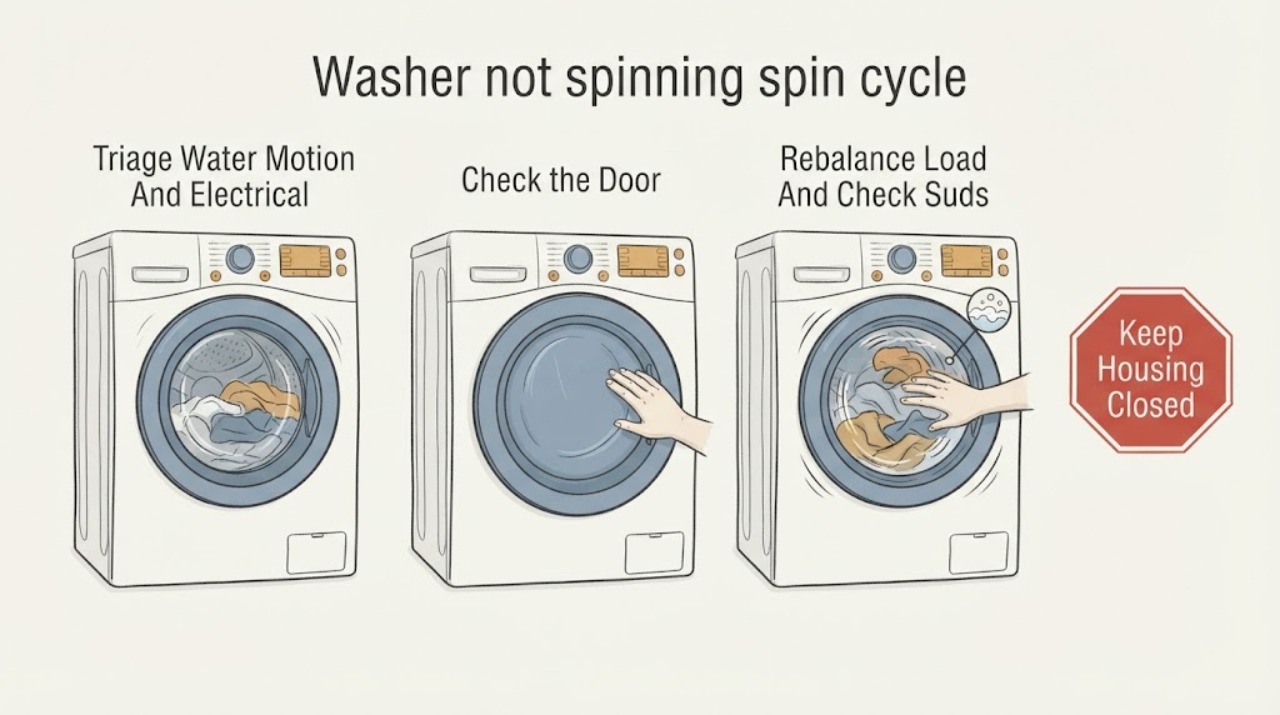
Read the selected cycle and spin option on the control panel, and confirm the door or lid is fully closed according to the manual. Note whether the washer is paused, still pumping out, in a Delicate or Hand Wash cycle, set to Low or No Spin, or showing an error; do not force the lock or manually advance the timer.
Expected result: A low or no-spin option or gentle cycle is selected; the washer is in a normal pause or pump-out; the door or lid is not recognized as closed; an error is displayed; or the intended spin setting is selected with no message.
Next step: Use the exact manual to select an appropriate spin setting and allow a normal pause to complete. If the door or lid is not recognized, the error recurs, or the correct spin remains silent, keep the washer unused and arrange service; never bypass the interlock.
Stop if: Stop if the latch or lid is damaged, the lock will not release with the manual's procedure, a code indicates a safety or motor fault, or clearing the issue would require opening the control or lock.
Why this matters
Why: A slow spin can be an intentional cycle choice, and a pause can precede pump-out or spin. An unrecognized door or lid, error, or correct setting with a silent drum points toward an interlock, drain, control, or mechanical issue rather than normal cycle behavior.
-
Check 3
When the drum is stopped and the door or lid is safely open, observe whether the load is tightly packed, a single bulky item, tangled on one side, or surrounded by excessive suds. Remove or redistribute only what the manual permits; do not reach into a moving drum or add chemicals to force a spin.
Expected result: The load is overloaded, single and absorbent, uneven, tightly packed, or sudsy; or it is a normal, loosely distributed load.
Next step: Follow the manual's load-size and detergent guidance, redistribute or reduce the load, and run one appropriate spin or drain-and-spin cycle if the washer is safe. If a normal balanced load still will not spin, continue to hose and service checks rather than repeatedly restarting it.
Stop if: Stop for severe vibration, a damaged drum or tub, a broken latch, a locked door, overflowing suds, or any need to reach into the drum while it is moving.
Why this matters
Why: An unbalanced or overloaded load can make the washer slow, pause, tumble back and forth, or refuse full spin to limit vibration. Excessive suds can also prevent effective draining and spin. A normal load with the same symptom makes a setup or component fault more likely.
-
Check 4
With the washer off, inspect the visible drain hose for a kink, compression, clog, or installation that differs from the manual, and check whether the washer rocks or is visibly unlevel. Do not pull the appliance out unsafely, disconnect hoses, or open a drain or pump panel with water that cannot be contained.
Expected result: Standing water is present; the hose is kinked, pinched, or incorrectly positioned; the household drain backs up; the washer rocks; or the visible drain and level conditions look correct.
Next step: Correct only an obvious external hose position or level condition according to the manual and have a plumber inspect a backing-up household drain. If standing water remains or the external path is clear, keep the washer off and use the service branch; do not tip or dismantle it.
Stop if: Stop for leaking or cracked hoses, overflowing plumbing, water near electrical parts, an unstable washer, or any need to move the appliance or access a pump or cabinet.
Why this matters
Why: A washer may not spin until water is pumped out, and a restricted drain hose or household drain can interrupt pump-out. An unlevel washer can trigger rebalancing and reduce spin. A clear, stable external path shifts suspicion toward the pump, interlock, motor, drive, control, or wiring.
-
Check 5
From a safe position, note whether the washer lost power, the breaker or outlet is visibly affected, the symptom started after installation or moving, or shipping hardware may still be present according to the model manual. Do not open an outlet, panel, motor, or wiring compartment to test power.
Expected result: A power interruption occurred; the outlet or cord is damaged or warm; the washer was recently installed or moved; shipping hardware or an installation issue is suspected; or no such event is known.
Next step: Follow the exact manual for a safe reset or installation review only when no hazard is present. Have an electrician inspect a warm or damaged outlet or cord, and have appliance service handle motor, drive, sensor, or wiring diagnosis; do not re-energize a damaged washer.
Stop if: Stop for a warm or scorched outlet, damaged cord or plug, repeated breaker trips, a suspected incorrect voltage, exposed wiring, or any need to open a panel or measure live power.
Why this matters
Why: A power interruption can stop a cycle before full spin, while incorrect installation, remaining shipping hardware, or a damaged supply can cause vibration or speed-sensing problems. A normal supply history does not clear the motor, drive, interlock, or control.
-
Check 6
Record the model and serial information, cycle and spin setting, door or lid status, error text, whether the drum ever moves, load and suds condition, drain and water status, level and vibration, recent installation or power event, and any sound such as humming, clicking, or silence.
Expected result: The washer spins after a setting, load, hose, level, or reset correction; it remains slow or silent with a balanced load; it spins only intermittently; or the cause is uncertain.
Next step: Keep the washer off for persistent failure, severe vibration, water, heat, odor, or electrical symptoms and arrange qualified appliance service. Provide the record; do not open the cabinet, bypass a lid or door switch, or replace drive parts by symptom alone.
Stop if: End owner troubleshooting when diagnosis requires cabinet access, motor or drive testing, electrical measurements, interlock bypass, pump disassembly, or a replacement component.
Why this matters
Why: Improvement after an external correction supports a settings, balance, drainage, level, or power-interruption cause. Persistent or intermittent failure with correct conditions may involve the interlock, pump, motor, drive, sensor, control, or wiring and needs model-specific diagnosis.
Use your observations
Decision map
Find the observation that best matches what you see, then follow the next safe action.
-
PATH 01Next step
What you see
A Delicate, Hand Wash, Low Spin, or No Spin setting is selected, or the washer is in a normal pause before pump-out and spin, with no hazard.
Do this next
Use the exact manual's recommended cycle and spin speed for the load and allow the normal pause to finish. If the correct setting still stays silent or slow, continue to the load and drain branches.
Why this path and its safety boundary
Why it matters: The slow or absent spin is more likely an intentional setting or normal cycle timing than a failed drive component.
-
PATH 02Next step
What you see
The load is single and bulky, tightly packed, tangled on one side, visibly sudsy, or the machine rocks and repeatedly slows to rebalance.
Do this next
Redistribute or reduce the load and follow detergent and leveling guidance in the manual. Run one approved spin test only if safe; request service if a balanced normal load still fails.
Why this path and its safety boundary
Why it matters: Load balance, excess suds, or leveling is more likely; the washer may intentionally reduce speed or pause to limit vibration.
-
PATH 03Next step
What you see
Water remains in the drum, the drain hose is kinked or incorrectly positioned, the pump-out is slow, or the household standpipe or sink backs up.
Do this next
Correct only visible hose routing per the manual and have a plumber inspect household backup. Keep the washer off for standing water or an inaccessible filter and arrange appliance service for internal pump or drain-path diagnosis.
Why this path and its safety boundary
Why it matters: A drain restriction can prevent the washer from reaching or completing spin, even when the motor and drum are otherwise capable of turning.
-
PATH 04Next step
What you see
The door or lid is not recognized as closed, an error is shown, a power interruption occurred, or the outlet, cord, or breaker appears damaged or warm.
Do this next
Do not bypass the interlock or open electrical parts. Follow only a model-approved safe reset, have a licensed electrician address outlet or cord concerns, and arrange appliance service for recurring codes or a silent spin.
Why this path and its safety boundary
Why it matters: An interlock, power-supply, or control condition is more likely than an unbalanced load; the washer may intentionally prevent spinning.
-
PATH 05Next step
What you see
The cycle and spin setting are correct, the door or lid is secure, the load is balanced, the drain path is clear, and the drum remains silent, slow, or intermittently stops.
Do this next
Keep the washer off and request qualified appliance service. Provide the model and observed pattern; do not open the cabinet, manually force the drum, bypass a safety switch, or order a motor or drive part without diagnosis.
Why this path and its safety boundary
Why it matters: A motor, drive, belt, pump, speed sensor, interlock, control, wiring, or mechanical fault is more likely and cannot be safely confirmed by owner checks.
-
PATH 06Next step
What you see
Smoke, burning odor, sparking, abnormal heat, flooding, severe shaking, a damaged cord, a loose tub or cabinet, or a locked drum with suspected hot water is present.
Do this next
Stop using the washer and keep clear. Leave for fire or active arcing and contact emergency help; otherwise disconnect only if safe and arrange prompt qualified service without restarting it.
Why this path and its safety boundary
Why it matters: The immediate priority is fire, electrical, burn, flood, or mechanical safety rather than restoring spin.
Helpful context
Understand the symptom
Slow spinning can be normal, but silent spinning needs a pattern check
Delicate and Hand Wash cycles can use a slower spin, and a Low or No Spin choice leaves more water in clothing. Some washers also pause between agitation, pump-out, and spin, or briefly tumble to rebalance a load. The important distinction is whether the selected cycle calls for a spin, whether water is leaving, whether the drum ever moves, and whether the behavior repeats with an ordinary balanced load.
Drainage, load balance, and the lid or door all affect spin
A washer may refuse or reduce spin when water has not drained, the load is too heavy or uneven, suds are excessive, the machine is not level, or a door or lid is not securely closed. These controls protect the washer and the room. Correct only visible, manual-approved conditions; do not force a lock, manually advance a timer, or defeat an interlock.
Stop before cabinet or drive-system work
A silent or slow drum can involve the lid or door interlock, motor, belt or drive, control, wiring, pump, or a mechanical obstruction. Those components require model-specific diagnosis and safe power isolation. Keep owner checks to the controls, load, visible hose, level, and error information; a persistent failure should go to qualified service.
Safety boundary
Stop conditions
- Stop and leave the area for smoke, fire, active sparking, crackling, or a strong burning smell; contact emergency help from a safe location.
- Do not touch a moving drum, force a locked door or lid, bypass an interlock, or reach into a washer that contains hot water or standing water.
- Stop for severe shaking, a loose tub or cabinet, flooding, water near electrical parts, a damaged or warm cord or outlet, or repeated breaker trips.
- Do not open cabinet, motor, pump, control, outlet, or wiring compartments; do not manually force the drum, advance a timer, or replace drive parts as an owner test.
- Call qualified appliance service for a silent or slow spin after correct setting, balanced load, drain, level, and door or lid checks, or whenever diagnosis requires motor, drive, pump, sensor, control, interlock, or electrical work. Call a plumber for household drain backup.
Only after diagnosis
Potential parts
- washer lid or door interlock
Consider this only when a qualified technician confirms the interlock is not recognizing a properly closed door or lid and is preventing the spin command.
Verify exact model, latch design, wiring connector, and safety requirements; never bypass an interlock or select one by appearance. - washer drive belt or motor-drive component
Consider this only after diagnosis confirms a drive or motor fault with correct settings, load balance, drainage, and interlock operation.
Verify exact model, drive design, belt dimensions, motor type, connectors, and manufacturer service information; internal drive work is not an owner check. - washer drain pump or drain filter assembly
Consider this only when a technician confirms that retained water or failed pump-out is caused by a failed pump or damaged filter assembly after external drainage is clear.
Confirm exact model, pump design, filter, seals, connectors, and drain routing; do not replace a pump solely because spin is slow. - washer control board or speed sensor
Consider this only after qualified testing confirms that the control or speed-sensing circuit is not commanding or regulating the spin correctly.
Verify exact model, control revision, sensor type, connector, calibration, and manufacturer guidance; do not install a board or sensor without diagnosis.
When checks do not resolve it
Need a professional?
Call qualified appliance service when the intended spin cycle is silent, repeatedly slow, or intermittently stops after safe checks of the setting, door or lid, load, suds, drain hose, level, and power history. Call a licensed electrician for a warm or damaged outlet, cord, or suspected supply issue, and a plumber when the household drain backs up. Treat smoke, sparks, burning odor, severe shaking, flooding, hot water, and water near electrical parts as urgent hazards.
Safety scope: Owner checks are limited to safe control observation, model-approved cycle selection, load redistribution, visible hose and level inspection, and documenting errors and sounds. A qualified professional must handle cabinet access, motor or drive testing, pump and drain disassembly, interlock bypass concerns, electrical measurements, wiring, and component replacement.
Common questions
FAQ
Why is my washer spin cycle slow?
A gentle or low-spin setting, unbalanced or overloaded load, excess suds, an unlevel washer, slow drainage, or a normal rebalancing pause can reduce speed. If the correct cycle stays slow with a balanced load, arrange service.
Why is the spin cycle completely silent?
Check whether the washer is paused before pump-out, set to No Spin, waiting for a door or lid interlock, or showing an error. If the correct spin setting remains silent after safe external checks, keep the washer off and call qualified service.
Can a delicate cycle spin slowly on purpose?
Yes. Delicate and Hand Wash cycles can use slower speeds to protect fabrics and may leave more water in the load. Use the cycle and spin setting recommended for the fabric in the exact manual.
Can an unbalanced load prevent a washer from spinning?
Yes. A single bulky item, tightly packed load, or clothing gathered on one side can make the washer pause, tumble, or reduce speed. Redistribute or reduce the load only when the drum is stopped and the manual permits it.
Can too much detergent slow the spin cycle?
Excessive suds can interfere with draining and cause a wet load or reduced spin. Use the detergent type and amount specified for the washer; do not add chemicals or repeatedly restart a sudsy cycle to force spin.
Can a drain hose problem stop the spin cycle?
Yes. Standing water or a kinked, clogged, or incorrectly installed hose can interrupt pump-out and prevent full spin. Inspect the visible hose according to the manual and have a plumber address household drain backup.
What if the washer spins after I remove some clothes?
That pattern supports overload or imbalance, but it does not rule out a level, drain, interlock, or mechanical issue. Use the correct load size and monitor a normal load; recurring slow or silent spin needs service.
Should I bypass the lid or door switch to test spin?
No. The interlock is a safety device. Do not bypass it, open the cabinet, or reach into a moving drum. A qualified technician should test a washer that does not recognize a properly closed door or lid.
Could a power interruption make the washer stop before full spin?
Yes. A power outage or tripped circuit can interrupt a cycle before full speed. Follow the exact manual's safe reset guidance only if the cord, outlet, and washer are undamaged; repeated trips or warm parts need electrical service.
When should I call a technician for a washer that will not spin?
Call when the proper setting, closed door or lid, balanced load, clear visible drain path, and level checks do not restore spin, or when the washer is silent, intermittently stops, shows a recurring error, shakes severely, leaks, overheats, or needs internal testing.
Read the exact guide
Official sources
- Front Load Washer - Does Not SpinGE Appliances · Manufacturer troubleshooting example that pauses and pump-out may precede spin and that power, drawer closure, and load size affect operation; exact model controls.
- Error Codes in Front Load Washers - Product HelpWhirlpool Product Help · Manufacturer warning that code lists are not complete for every model and the owner's manual controls interpretation and reset procedure.
- LG Washer - Cycle Time Does Not ChangeLG USA Support · Manufacturer guidance that slow drainage, hose installation, and rebalancing can delay or slow spin; exact hose and cycle requirements are model-specific.
- Not Spinning - Front Load Washer - Product HelpWhirlpool Product Help · Manufacturer troubleshooting for front-load models; exact cycle names, installation limits, and access steps must be confirmed in the model manual.
- LG Washer – Troubleshooting Washing Machine Drum Not SpinningLG USA Support · Manufacturer troubleshooting flow for LG washers and combos; the URL may redirect or model-specific test steps may differ, so use the exact manual.
- 8 Reasons Why Your Washing Machine Is Not SpinningWhirlpool · Manufacturer educational guidance on settings, suds, balance, overload, level, power interruption, drain hose, and door or lid conditions; exact model instructions control.
Community feedback
Share a repair observation
Share a plain-text repair observation. Accepted observations are published automatically; this page may take a moment to update.