
On this page
Start here
Quick answer
Moisture left in a washer door seal can be normal in some front-load designs, but water trapped with lint, detergent residue, or a small object can stagnate and create a musty smell. After the cycle, remove laundry promptly, wipe the gasket folds and door dry, and leave the door and detergent drawer open for ventilation. Use only the exact model's approved gasket, dispenser, pump-filter, and tub-clean instructions; never mix bleach, acids, ammonia, or other cleaners. If the gasket is torn, the smell returns after proper cleaning, water remains in the drum, there is a leak, sewage-like odor, smoke, or electrical damage, stop and arrange qualified appliance service.
Before you begin
Safety first
- Owner checks are limited to safe visual inspection, wiping accessible gasket and door surfaces, ventilation, model-approved dispenser and tub cleaning, and an accessible pump-filter procedure only after power is disconnected and residual water can be contained. A qualified professional must handle gasket removal, cabinet access, pump or hose disassembly, plumbing alteration, electrical testing, and contamination or chemical concerns.
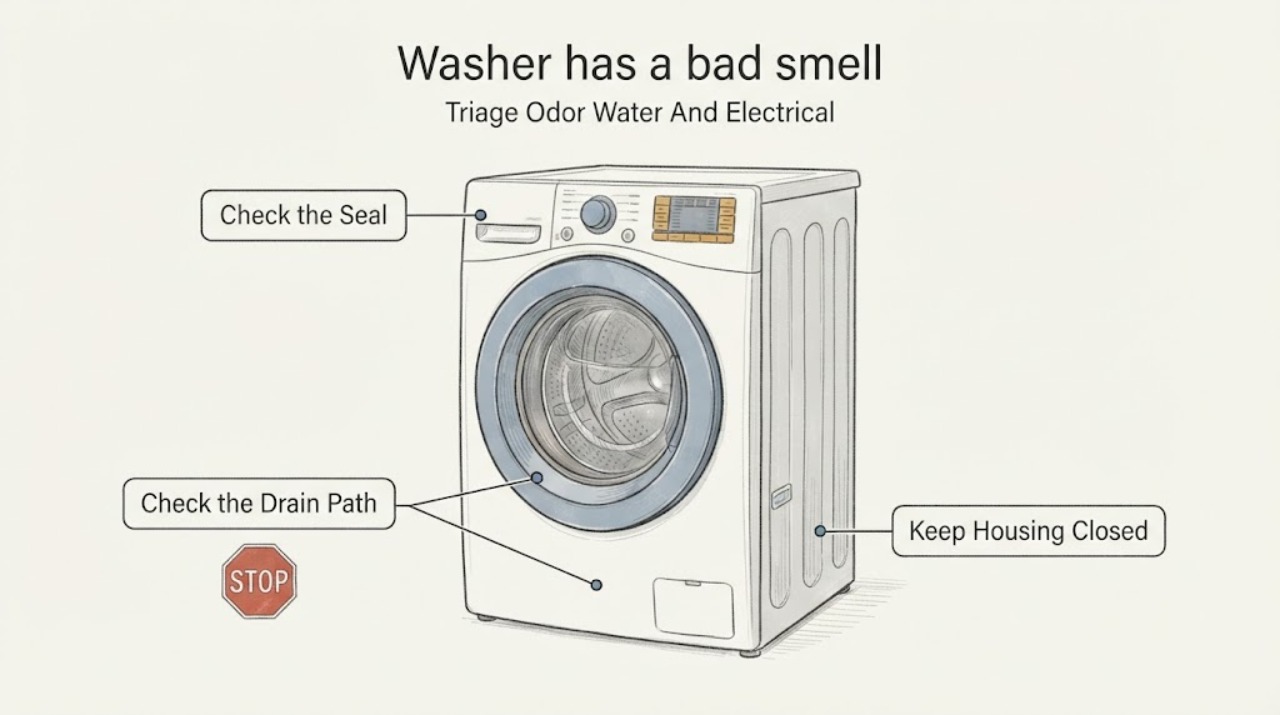
Work through in order
Diagnostic checks
Use only checks that match the exact appliance or system and its official guide.
-
Check 1
From a safe position, identify whether the smell is musty or sour versus sewage-like, chemical, burning, or electrical. Look for pooled water, leaks, smoke, sparking, a hot cabinet, a damaged cord, or visible mold spreading beyond the seal; do not touch unknown liquid or energized parts.
Expected result: The odor is mild and musty with moisture in the gasket; or there is sewage-like odor, chemical or burning smell, smoke, sparks, heat, a leak near electrical parts, or extensive contamination.
Next step: For smoke, fire, active sparking, or strong burning odor, leave the area and contact emergency help from a safe location. Otherwise stop using the washer, keep clear of contaminated or electrical water, and arrange qualified appliance or plumbing service before cleaning.
Stop if: Stop immediately for smoke, fire, sparks, crackling, burning odor, a hot or melting part, water near the plug or outlet, sewage backup, or any need to handle unknown contamination.
Why this matters
Why: A mild musty odor can follow retained moisture and residue. Sewage-like odor can involve a drain connection or household plumbing; chemical, burning, electrical, smoke, heat, or contaminated water requires more than owner cleaning.
-
Check 2
With the washer empty and off, gently fold back only the accessible inner lip of the door gasket and look for standing water, lint, hair, coins, socks, detergent film, slime, cracks, tears, or an object preventing the door from seating. Do not pull the gasket from its channel or use a sharp tool.
Expected result: Water and residue are confined to the folds; a foreign object or lint is present; the gasket is torn, deformed, or loose; or the seal looks clean and intact.
Next step: Remove only loose debris that can be lifted safely, then clean the accessible seal using the exact manual. Do not stretch, glue, puncture, or reseat a damaged gasket; arrange service for a tear, displacement, leak, or persistent standing water.
Stop if: Stop for a tear, detached spring or clamp, sharp object, active leak, mold that cannot be safely contained, or any need to remove the gasket or reach behind it.
Why this matters
Why: Moisture combined with trapped debris is a likely local odor source. A torn or displaced gasket can retain water and also cause leaks; a clean, intact seal shifts suspicion toward the dispenser, drain filter, tub, ventilation, or plumbing.
-
Check 3
Following the model manual, wipe the gasket folds, door glass, and accessible door area with a soft cloth or sponge and the approved mild or washer-safe cleaner. Rinse or wipe away residue as directed, then dry every fold with a clean towel; wear gloves for any approved disinfecting product and never mix cleaners.
Expected result: Residue and odor lift; water remains in a fold; a harsh or unapproved cleaner was used previously; the gasket remains stained or slimy; or the gasket cannot be dried without forcing it.
Next step: Stop using any unapproved chemical, ventilate the area, and follow the manual's safe rinse guidance. If odor or residue persists after a complete approved cleaning, use the recurrence branch and arrange service rather than escalating chemicals.
Stop if: Stop for fumes, skin or eye irritation, a chemical reaction, a damaged gasket, an inability to rinse product away, or any instruction that would mix bleach, acid, ammonia, or other cleaners.
Why this matters
Why: Removable residue and moisture support a seal-maintenance cause. Persistent staining can be embedded mold or damaged rubber, while an unapproved chemical can degrade the seal; neither should be solved by stronger mixtures or scrubbing harder.
-
Check 4
After each safe cycle, remove wet laundry promptly, wipe visible water from the gasket and door, and leave the door and detergent drawer open enough to ventilate as the manual permits. Keep children and pets away from the open tub and do not close the washer around damp items.
Expected result: The door or dispenser is usually kept closed; wet laundry sits in the drum; the gasket dries when left open; the laundry area is humid; or the odor persists despite regular ventilation.
Next step: Adopt the model-approved drying routine and monitor recurrence over several loads. If the odor returns quickly or the dispenser remains wet or slimy, continue to the tub, dispenser, and drain-path checks rather than masking the odor.
Stop if: Stop if the open door creates a child or trip hazard, the door will not stay safely open, or ventilation reveals a leak, damaged seal, or electrical moisture.
Why this matters
Why: A closed, damp washer can retain moisture and detergent residue, allowing odor-causing growth. If good ventilation does not reduce recurrence, another reservoir such as the dispenser, pump filter, tub, drain hose, or damaged seal may be involved.
-
Check 5
Use the exact manual to inspect and clean the detergent dispenser, accessible pump filter, and tub-clean or self-clean cycle. Disconnect power before an accessible filter procedure, contain residual water, let hot water cool, run a tub-clean cycle empty, and use only the cleaner specified for that model.
Expected result: The dispenser or filter has residue or lint; water remains in the drum; the tub-clean cycle is available; the filter cap or dispenser is damaged; or these areas are clear.
Next step: Clean and reseat only accessible parts as directed, then run one empty approved tub-clean cycle. Do not combine products, add laundry to a cleaning cycle, force a filter cap, or open cabinet panels. Arrange service if odor or retained water remains.
Stop if: Stop for hot or uncontrolled water, a stuck filter, damaged threads or seal, an overflowing drain, fumes, a locked full drum, or any need to remove a panel or bypass a safety device.
Why this matters
Why: Detergent buildup, a clogged filter, and retained water can sustain odor beyond the door seal. A damaged cap, failed drain, or inability to complete the prescribed cycle needs service; a clear maintenance path points toward a hidden drain, seal, or plumbing issue.
-
Check 6
Record the washer model and serial information, front- or top-load design, odor description, exact location of moisture, gasket and dispenser condition, filter findings, drain behavior, detergent and softener amounts, ventilation routine, cleaning products used, and how quickly the smell returns.
Expected result: The odor stops after seal cleaning and drying; it returns after a few loads; water remains in the drum or filter area; the gasket leaks or is damaged; or the cause is uncertain.
Next step: Keep the washer off for leaks, contamination, heat, or electrical symptoms and arrange qualified appliance service; ask a plumber to inspect a sewer-like odor or backing-up household drain. Do not conceal recurrence with fragrance or stronger chemicals.
Stop if: End owner troubleshooting when the diagnosis requires cabinet access, drain-hose or pump disassembly, electrical testing, gasket removal, plumbing alteration, or a replacement component.
Why this matters
Why: A lasting improvement after removing residue supports a maintenance cause. Rapid recurrence, standing drum water, a leak, damaged rubber, or a clear seal with persistent odor suggests a drain, dispenser, tub, plumbing, or internal contamination problem needing model-specific diagnosis.
Use your observations
Decision map
Find the observation that best matches what you see, then follow the next safe action.
-
PATH 01Next step
What you see
The smell is mild and musty, water is limited to the gasket folds, lint or detergent residue is visible, and there is no leak or electrical hazard.
Do this next
Clean the accessible gasket with the exact manual's approved method, dry every fold, remove laundry promptly, and ventilate the door and dispenser between loads. Escalate if the odor returns quickly.
Why this path and its safety boundary
Why it matters: Retained moisture and seal residue are more likely than a failed component.
-
PATH 02Next step
What you see
The door or dispenser stays closed, damp laundry sits in the washer, the area is humid, or detergent and softener residue is visible across the dispenser and gasket.
Do this next
Ventilate after cycles, use the model-specified detergent type and amount, clean the dispenser, and run an empty approved tub-clean cycle. Do not mix cleaners or rely on fragrance to cover the smell.
Why this path and its safety boundary
Why it matters: Insufficient drying time, trapped moisture, or excess product residue is more likely to sustain odor.
-
PATH 03Next step
What you see
Water remains in the drum or pump-filter area, the filter contains lint or objects, draining is slow, or odor persists after the gasket is clean and dry.
Do this next
Use only the model-approved residual-water and filter procedure after disconnecting power and accounting for hot water. Have appliance service or a plumber handle a stuck filter, internal restriction, recurring standing water, or household-drain backup.
Why this path and its safety boundary
Why it matters: A drain-pump filter, drain hose, door-seal drain hole, tub, or household drain may be retaining odor-causing water or residue.
-
PATH 04Next step
What you see
The gasket is cracked, torn, displaced, cannot dry normally, or leaves water on the floor or around the door.
Do this next
Stop using the washer if it leaks or the gasket is loose, keep water away from electrical parts, and arrange qualified appliance service. Do not glue, stretch, clamp, or replace the gasket without model-specific fit and safe installation guidance.
Why this path and its safety boundary
Why it matters: A damaged seal can retain contamination and may no longer contain wash water; cleaning alone cannot restore its mechanical function.
-
PATH 05Next step
What you see
The odor is sewage-like, chemical, burning, or electrical, or there is smoke, sparking, abnormal heat, contaminated water, or a leak near the outlet.
Do this next
Stop using the washer and keep clear. Leave for fire, smoke, or active arcing and contact emergency help; otherwise arrange qualified appliance or plumbing service without opening the cabinet or adding cleaner.
Why this path and its safety boundary
Why it matters: This is not a routine gasket-cleaning problem; plumbing, chemical exposure, fire, or electrical hazards must be ruled out first.
-
PATH 06Next step
What you see
The gasket, dispenser, accessible filter, and empty tub-clean cycle were completed as the model manual directs, but the smell returns quickly or moisture remains.
Do this next
Stop adding stronger chemicals and arrange qualified appliance service. Provide the recurrence record and ask a plumber to assess a sewer-like smell or household-drain backup.
Why this path and its safety boundary
Why it matters: A hidden drain, pump, tub, hose, plumbing, ventilation, or material problem is more likely than surface residue alone.
Helpful context
Understand the symptom
Moisture in the seal may be normal, but stagnant residue is not harmless to ignore
The rubber gasket is designed to retain water during washing. Some guidance notes that there is no suction pump inside the gasket to remove every drop, so a little water can remain. The odor develops when moisture sits with lint, hair, detergent, softener, or soil. A torn gasket, blocked drain path, or water left in the drum points beyond a simple wipe-down.
Clean the gasket and the rest of the moisture path
Wiping the visible lip alone may leave buildup inside the folds, door glass, dispenser, pump filter, or tub. Clean only the areas and product types named in the model manual. A tub-clean cycle must be run empty, and a filter procedure must account for residual water that can spill or be hot.
Ventilate after each load and investigate recurrence
Remove wet laundry promptly, dry the gasket folds and door, and leave the door and dispenser open when the washer is not in use, while preventing children from entering the open tub. If odor returns quickly after a complete model-approved cleaning, persistent moisture, a drain restriction, a damaged seal, or internal residue may require service.
Safety boundary
Stop conditions
- Stop and leave the area for smoke, fire, active sparking, crackling, or a strong burning or electrical odor; contact emergency help from a safe location.
- Do not touch pooled water near an outlet, plug, cord, or energized appliance. Keep the washer disconnected and arrange qualified service.
- Do not mix bleach, acids, ammonia, oxygen products, detergents, or other cleaners. Stop for fumes, chemical reactions, skin or eye irritation, or a product not approved by the exact manual.
- Do not pull a gasket from its channel, glue or clamp a tear, force a locked door, open cabinet panels, bypass safety devices, or reach into a pump or drum.
- Call qualified appliance service for a torn or leaking gasket, recurring odor after approved cleaning, standing water, a stuck filter, hot or uncontrolled water, or any diagnosis requiring pump, hose, tub, electrical, or plumbing work.
Only after diagnosis
Potential parts
- washer door gasket or seal
Consider this only when a qualified technician confirms the gasket is torn, displaced, hardened, leaking, or unable to seal after ruling out trapped debris and installation issues.
Verify the exact model, door geometry, clamp or retainer design, and manufacturer fit information; do not glue, stretch, or select a gasket by appearance. - washer drain pump filter or filter seal
Consider this only if a technician confirms the filter, cap, seal, or threads are damaged or cannot retain or drain water after debris is removed.
Confirm exact model, filter style, cap, seal, and residual-drain arrangement; do not omit the filter or substitute a cap to conceal a leak. - washer drain pump or internal drain hose
Consider this only when qualified diagnosis finds a failed pump or obstructed or damaged internal hose after the accessible filter and external plumbing are clear.
Verify exact model, pump design, hose routing, connectors, clamps, seals, and service instructions; internal drain work is not an owner cleaning step. - washer detergent dispenser or dispenser insert
Consider this only if a technician confirms the dispenser or insert is cracked, cannot drain or rinse correctly, or retains residue because of a damaged part.
Confirm exact model, dispenser layout, inserts, siphon parts, and fit information; cleanable residue alone does not justify replacement.
When checks do not resolve it
Need a professional?
Call qualified appliance service when the gasket is torn, displaced, leaking, or remains wet with recurring odor after model-approved cleaning and ventilation; when water remains in the drum or filter area; or when a filter, pump, tub, hose, dispenser, or electrical component needs access. Call a plumber for sewage-like odor or household-drain backup. Treat smoke, sparks, burning or electrical odor, chemical fumes, contaminated water, and water near electrical parts as urgent hazards.
Safety scope: Owner checks are limited to safe visual inspection, wiping accessible gasket and door surfaces, ventilation, model-approved dispenser and tub cleaning, and an accessible pump-filter procedure only after power is disconnected and residual water can be contained. A qualified professional must handle gasket removal, cabinet access, pump or hose disassembly, plumbing alteration, electrical testing, and contamination or chemical concerns.
Common questions
FAQ
Is it normal for water to remain in a washer door seal?
A small amount can remain in some front-load gaskets because the seal is not emptied by a suction pump. Wipe the folds dry after use; water mixed with residue, recurring odor, leaks, or a torn seal needs more investigation.
Why does moisture in the gasket make my washer smell bad?
Moisture can sit with lint, hair, detergent, softener, or soil inside the folds. The mixture can stagnate and support odor-causing growth. Clean and dry the accessible seal using the exact manual, not stronger unapproved chemicals.
How should I dry the washer gasket after a load?
Remove laundry promptly, wipe the gasket folds and door with a clean dry cloth, and leave the door and detergent drawer open for ventilation when safe. Keep children away from the open tub.
Can a closed washer door cause a musty smell?
Yes. A closed, damp drum and gasket can trap moisture and detergent residue. Ventilate after cycles and use the model's cleaning routine; if odor returns quickly, inspect the dispenser and drain path or call service.
Can too much detergent cause gasket odor?
Excess detergent or softener can leave residue that holds moisture and smells. Use the exact washer's recommended product and dose, clean the dispenser, and do not pour extra chemicals into the drum to mask odor.
Should I use bleach to clean a smelly washer gasket?
Only use a product and method explicitly approved by the exact model manual. Some manufacturers specify other cleaners or caution against certain products. Never mix bleach with acids, ammonia, detergents, or other cleaners, and stop for fumes or a reaction.
Could a clogged drain filter cause a bad washer smell?
Yes. A clogged filter can leave water in the drum or drain system, allowing odor to return. Disconnect power and follow the exact model's residual-water procedure only if water can be contained and is not dangerously hot.
What if the washer gasket is moldy or torn?
Clean only what the manual permits, wearing the stated protection. A torn, displaced, hardened, or leaking gasket cannot be restored by cleaning; keep the washer off if it leaks and arrange model-specific service.
Why does the smell return after I clean the gasket?
Odor may be sustained by the dispenser, pump filter, drain hose, tub, household drain, poor ventilation, or residue behind the visible gasket. Record where moisture remains and arrange service if approved cleaning does not stop recurrence.
When should a bad washer smell be treated as urgent?
Stop for smoke, sparks, a burning or electrical odor, unusual heat, chemical fumes, contaminated water, a leak near electrical parts, or sewage backup. Leave for fire or active arcing and contact emergency help; otherwise arrange qualified appliance or plumbing service.
Read the exact guide
Official sources
- [LG Washer] Why Isn't My Washer DrainingLG USA Support · Manufacturer warning that residual water can spill and may be hot before filter access; exact access location and procedure vary by model.
- How to clean your Samsung washerSamsung Canada Support · Manufacturer maintenance guidance for Samsung models, including model-dependent gasket, tub-clean, dispenser, and pump-filter steps; use the exact manual first.
- Cleaning a Front Load Washer Door Seal - Product HelpWhirlpool Product Help · Manufacturer guidance for cleaning seal folds with appliance-approved materials, drying crevices, prompt laundry removal, and ventilation; confirm the exact model's cleaner instructions.
- [LG Washing Machine] Troubleshooting Musty OdorsLG USA Support · Manufacturer guidance linking closed damp washer spaces, retained laundry, detergent residue, and odor; cycle and cleaner details vary by model.
- LG Front Load Washing Machine - Odor GasketLG USA Support · Manufacturer guidance that water can remain in the gasket and should be wiped dry to prevent stagnation and odor; exact maintenance differs by model.
- [LG front load washing machine gasket] There are stains and mold in the door gasket.LG USA Support · Manufacturer guidance for gasket moisture and model-dependent cleaning; follow the exact manual and product safety instructions.
- LG Washer - Troubleshooting Odor / BuildupLG USA Support · Manufacturer guidance that gasket and dispenser residue, pump-filter blockage, and retained water can contribute to odor; use model-specific cleaning and service directions.
Community feedback
Share a repair observation
Share a plain-text repair observation. Accepted observations are published automatically; this page may take a moment to update.