
On this page
Start here
Quick answer
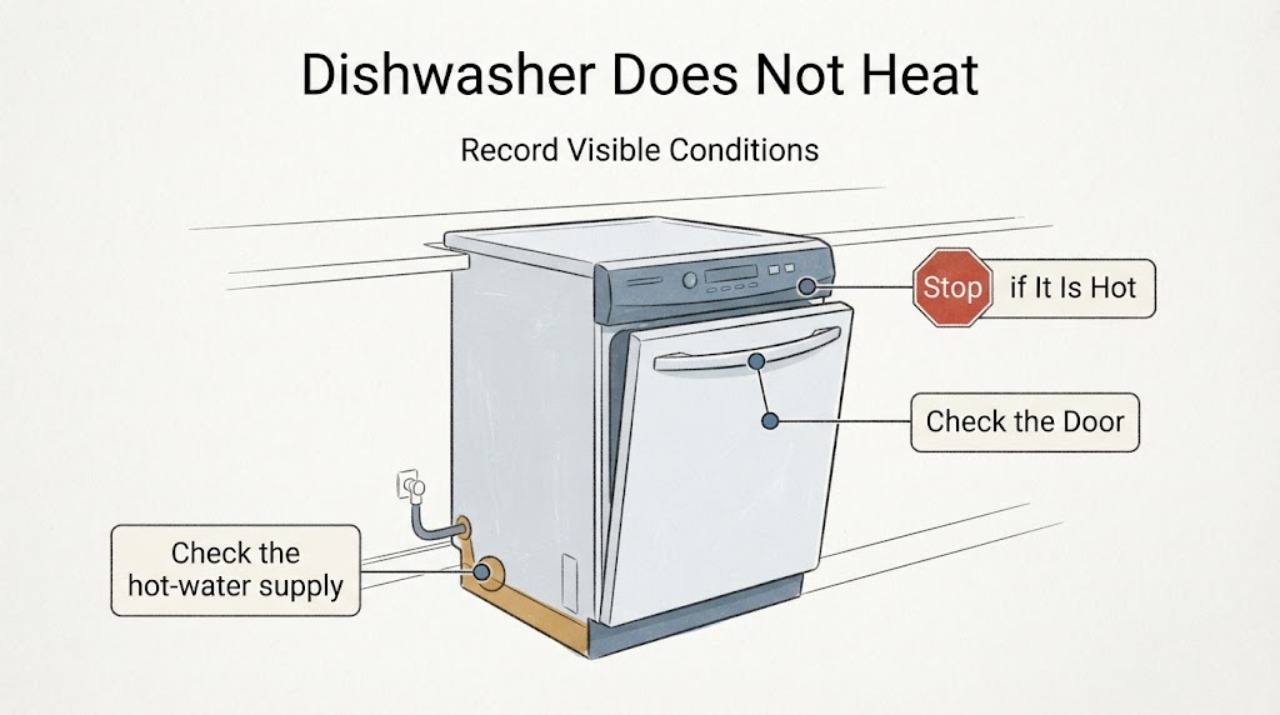
Separate a drying-performance problem from a no-heat problem. Wet plastics, nested bowls, empty rinse-aid dispensers, cool incoming water, or a cycle without Heated Dry can leave dishes wet even when the dishwasher is heating normally. Run only a cycle and heat option supported by the exact model, then check whether the completed tub is warm or steamy. If the tub and water stay cold, the dishwasher trips power, shows a fault, leaks, or still has no heat after the documented user-level checks, stop testing and arrange service; do not remove panels or test energized heating parts.
Work through in order
Diagnostic checks
Use only checks that match the exact appliance or system and its official guide.
-
Check 1
Record what is actually cold or wet at the end of one normal cycle: the incoming water, the tub interior, the glass and ceramic items, and plastic or concave items. Check whether the selected cycle and options include a heat or dry stage in the exact manual.
Expected result: The tub is warm and only plastics, nested items or puddled surfaces are wet, or the tub and all dishes remain cool with no steam.
Next step: For a warm tub, continue with rinse-aid, loading and cycle checks. For a cold tub, do not remove panels or probe the heater; continue only with the safe water-temperature check and then arrange service if the result persists.
Why this matters
Why: Warm tub plus wet plastics or pooled water is primarily a loading or drying-performance issue. A cold tub after a documented heated cycle is evidence for a water-heating or drying-system problem, not proof of a particular failed part.
-
Check 2
Check the hot-water supply at the nearest faucet with a cooking or appliance thermometer. Run the tap until the temperature stabilizes, and confirm the dishwasher is connected to the hot-water line. Do not change the water-heater setting just to force a dishwasher test.
Expected result: The incoming water reaches about 120°F (49°C) or more as the manufacturer guidance recommends, or it is clearly cooler or the connection is uncertain.
Next step: If the supply is cool or the connection is uncertain, correct the plumbing or water-heater issue through the appropriate professional and retest only when safe. If supply temperature is adequate but the completed tub remains cold, arrange dishwasher service.
Why this matters
Why: Cool incoming water can reduce wash and dry performance before any dishwasher component is implicated. A normal tap temperature does not prove that the dishwasher’s internal heating system works, but it removes one external cause.
-
Check 3
Inspect the rinse-aid dispenser and loading from the open door. Fill or adjust rinse aid only as the exact manual allows; separate dishes, angle cups and bowls so they can drain, avoid nesting, and place plastics where the manual permits. Unload the lower rack first.
Expected result: Rinse aid is empty, dishes touch or nest, concave surfaces hold puddles, or the load is mostly plastic; alternatively, the dispenser and loading are appropriate but dishes remain wet.
Next step: Correct one loading or rinse-aid issue and compare a later cycle using the documented dry option. If the tub is still cold or heat is absent, stop setup changes and use the service path.
Why this matters
Why: Whirlpool says rinse aid helps water sheet off, plastics retain droplets, and loading that traps water can mimic poor drying. These findings do not indicate a failed heater.
-
Check 4
Run one user-level test specified by the exact model manual: a Sanitize cycle if the model documents it, or a cycle with Heat Dry/Heated Dry if that is the supported test. Open the door only after the cycle ends and observe whether the interior is warm or contains steam; do not touch a heating element or internal wiring.
Expected result: The tub is warm or steamy, the model’s heat indicator completes normally, or the tub and dishes remain cold and the cycle reports an error or trips power.
Next step: If there is no heat, an error, a leak, or a power trip, stop using the dishwasher and arrange qualified service with the full model number and selected cycle. Do not bypass a thermal protector or keep replacing a fuse.
Why this matters
Why: A warm tub indicates that the heating path operated for that cycle, so focus on rinse aid, loading, drying mode and item material. No heat, a blinking or fault indication, or a tripped breaker needs service and does not identify a safe DIY part replacement.
-
Check 5
Check only accessible external conditions after the cycle: whether the door opened or vented as the model promises, whether steam can escape, whether the dishwasher has a visible leak, and whether the breaker or GFCI has tripped. Turn off power at the breaker before any cleaning or maintenance, and do not remove the toe-kick or cabinet unless the exact manual and a qualified professional support it.
Expected result: The machine has normal external venting and power with no leak, or there is a leak, repeated trip, damaged wiring, burning odor, unusual heat, or a fault code.
Next step: For any leak, burning odor, damaged electrical part, repeated trip or fault code, stop the dishwasher, shut off water and power only when safe, and arrange qualified service. Do not run another hot cycle to see whether the symptom repeats.
Why this matters
Why: Normal venting and power keep the problem in the drying-performance decision. A leak, electrical warning or fault condition exceeds safe owner-level checks and may make continued heating unsafe.
Use your observations
Decision map
Find the observation that best matches what you see, then follow the next safe action.
-
PATH 01Next step
What you see
The tub is warm after a supported heated cycle, but mostly plastic, nested or concave items are wet.
Do this next
Refill or adjust rinse aid as documented, separate and angle the load, and select the exact model’s heated or extended-dry option; compare another cycle before requesting parts.
Why this path and its safety boundary
Why it matters: This pattern is consistent with water pooling and material or loading limits rather than a confirmed heating failure.
-
PATH 02Next step
What you see
The incoming hot water is cool, or the dishwasher is connected to a cold line.
Do this next
Have the hot-water connection or supply corrected safely, then retest with the model-supported cycle; do not raise temperatures beyond the appliance and plumbing documentation.
Why this path and its safety boundary
Why it matters: The water supply can limit wash and dry performance before the dishwasher’s internal heater is evaluated.
-
PATH 03Next step
What you see
The tub remains cold after the documented heated test, or a heating fault, error code or breaker trip appears.
Do this next
Stop using the dishwasher, record the model, cycle, options, water temperature and code or trip behavior, and arrange qualified appliance service.
Why this path and its safety boundary
Why it matters: The result requires service; it does not identify a heater, fuse, thermostat or control-board failure from the outside.
-
PATH 04Next step
What you see
A leak, burning smell, exposed or damaged wiring, unusual heat or repeated power trip is present.
Do this next
Stop the cycle, isolate water and power only when safe, and use qualified service. Do not continue hot-cycle tests or open the cabinet.
Why this path and its safety boundary
Why it matters: This is a water or electrical safety condition, not a drying-performance adjustment.
Helpful context
Understand the symptom
“Does not dry” describes the result, not the failed part. A dishwasher can finish with wet plastic or pooled water while its heating system works, and a cold tub after a heated cycle points to a different decision. Check the cycle, load, rinse aid and incoming water before treating the symptom as a heater failure.
No brand or model was supplied. Button names such as Heated Dry, Heat Dry, Extended Dry, Sanitize, Open Dry or Fan Dry are not universal. Use only the option names and test cycle documented for the dishwasher’s complete model number; do not copy a code meaning or button sequence from another appliance.
Use the final temperature to separate drying setup from no heat
When checks do not resolve it
Need a professional?
Use qualified dishwasher service for confirmed no heat, error codes, repeated power trips, leaks, burning odor, or persistent wet dishes after the documented cycle, temperature, rinse-aid and loading checks.
Have this ready
- Provide the complete model number, cycle and dry options used, incoming tap-water temperature, whether the tub was warm or steamy, load materials and arrangement, rinse-aid status, any code or light pattern, leak details, and breaker behavior.
Common questions
FAQ
Can wet dishes be normal even when the dishwasher heats?
Yes. Whirlpool notes that plastic and complex or concave surfaces can retain droplets, and nested or poorly angled dishes can hold water. Check rinse aid, spacing, angles and the model’s dry option before treating wet dishes as a heater failure.
How can I tell whether the dishwasher heated the water?
Use only the test cycle documented for the exact model. Whirlpool describes a supported Sanitize test or a cycle with Heat Dry when available; after completion, a warm interior or steam supports that heat operated. No heat, a fault, or a breaker trip requires service.
Does the dishwasher need hot water from the house?
Whirlpool’s guidance says its dishwasher heating feature requires a hot-water supply line and recommends incoming water of at least about 120°F (49°C) for wash and dry performance. Verify the exact manual and installation before changing plumbing or water-heater settings.
Should I replace the heating element myself?
No. A cold tub does not identify the failed part, and heating, wiring and thermal protection can present shock or fire risks. Stop at the user-level checks and arrange qualified service, especially for a fault code, leak, burning odor or breaker trip.
Read the exact guide
Official sources
- Not Drying - DishwasherWhirlpool Product Help · Opened Whirlpool dishwasher guidance. It covers rinse aid, loading, plastic and concave-item behavior, hot-water supply, heated/open-dry options, supported heat checks and service escalation. No model was assigned, so option names and test cycles are presented as model-dependent.
- Dishes Not Drying: Quick Fix GuideWhirlpool Product Help · Opened Whirlpool guidance for most Whirlpool dishwasher drying complaints. It supports separating options, rinse aid, load arrangement, incoming water, heat observation and service; the article keeps the exact model manual as the authority for control names and reset behavior.
Community feedback
Share a repair observation
Share a plain-text repair observation. Accepted observations are published automatically; this page may take a moment to update.