
On this page
Start here
Quick answer
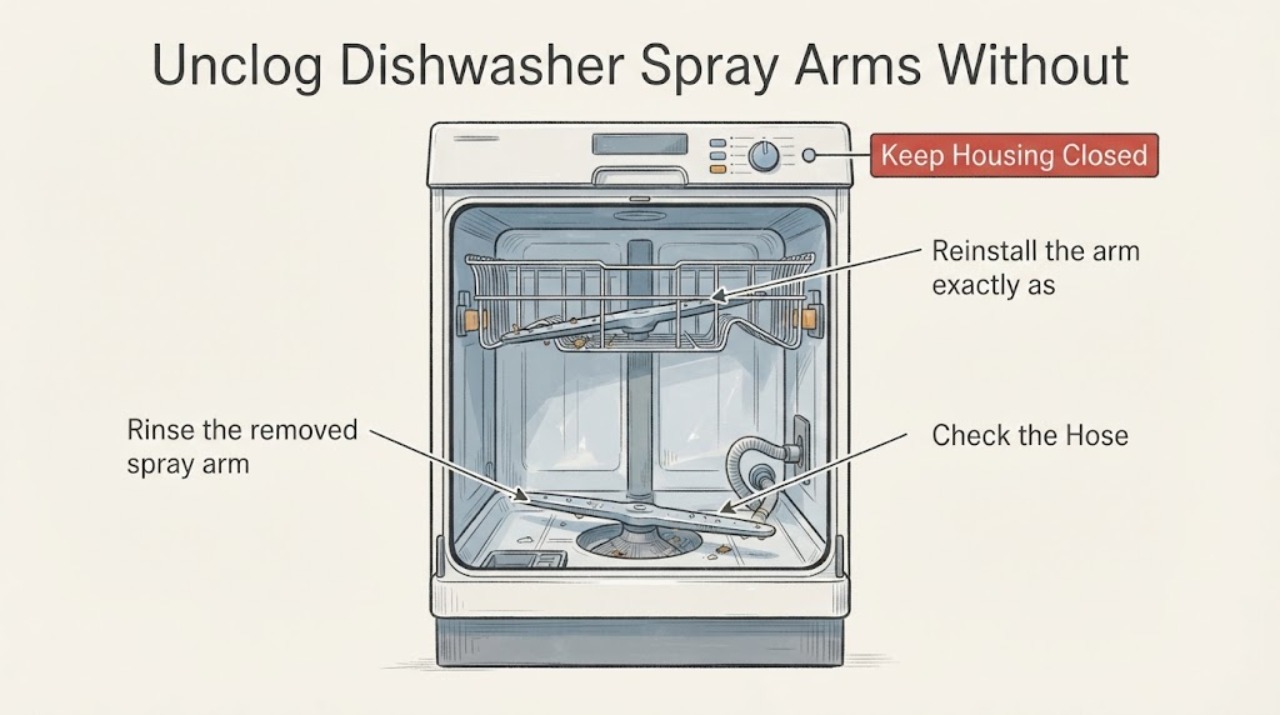
Do not put a vacuum nozzle on a dishwasher spray-arm opening or use suction to clear an internal pump path. The opened Bosch and Whirlpool guidance supports a narrower home check: remove only the spray arm your model manual identifies, rinse it under water, clear visible nozzle debris with a soft approved tool such as a toothpick, reinstall it securely, and confirm that the arm turns freely and is not blocked by dishes. A clogged filter, standing water, a damaged arm, resistance after cleaning, or an unknown removal arrangement calls for the exact manual or qualified service.
Before you begin
Safety first
- The public evidence supports accessible arm/filter checks only. Do not use suction, compressed air, live testing or unverified internal pump disassembly as a generic remedy.
Work through in order
Diagnostic checks
Use only checks that match the exact appliance or system and its official guide.
-
Check 1
Before touching the dishwasher, identify the upper, middle and lower spray arms and read the owner manual for the exact removal/release method. Do not pull, twist or pry an arm whose attachment is not identified.
Expected result: The manual shows a removable arm and its release method, or the attachment is unclear/stuck.
Next step: If the manual shows the release, disconnect power as the manual directs and remove only that arm. If the attachment is unclear or stuck, stop and use model-specific service.
Why this matters
Why: Spray-arm retainers and rack arrangements vary; a generic removal force can damage the arm or its mount.
-
Check 2
Rinse the removed spray arm under warm water and inspect each visible nozzle. Clear only loose buildup at a nozzle with a toothpick or other tool expressly allowed by the exact manual; do not use a vacuum nozzle, compressed air or suction to force debris into the arm or dishwasher plumbing.
Expected result: Debris clears from the arm holes, or a hole remains blocked, the arm is cracked, or water cannot pass through it.
Next step: Re-rinse and reinstall only when the arm is intact and the manual permits it. For a cracked arm, persistent blockage or uncertain tool method, stop and obtain the exact part/service recommendation rather than forcing air or suction.
Why this matters
Why: Bosch identifies blocked outlet holes and recommends warm-water rinsing plus a toothpick for visible buildup; a damaged or persistently blocked arm is not proven repairable by suction.
-
Check 3
Reinstall the arm exactly as the manual shows, return the rack, and turn the arm by hand before any cycle to confirm it spins freely and clears tall dishes, the rack and the tub roof.
Expected result: The arm spins freely and clears the load, or it catches, does not seat, or remains blocked.
Next step: Rearrange the load and reseat the arm if the manual supports it. If it still catches, will not lock or is damaged, do not run the dishwasher; use the manual or service.
Why this matters
Why: Whirlpool links resistance or blocked movement to dish interference, while Bosch requires the cleaned arm and rack to be placed back correctly; free hand movement does not by itself prove pump pressure, but resistance rules out a safe test cycle.
-
Check 4
Check the filter area and tub floor only as far as the owner manual allows, especially if dishes remain dirty or water stands in the sump. Keep any pump-cover or hidden-passage procedure separate from spray-arm cleaning.
Expected result: The filter is visibly dirty, standing water remains, or the filter/visible area is clear but spray performance is still poor.
Next step: Clean the model-approved filter and reassess without using suction in the pump path. If water remains, the pump cover must be opened, or performance is still poor, stop and arrange model-specific service.
Why this matters
Why: Bosch says the filter catches food debris and protects the pump; it treats pump access as a separate procedure. A clear spray arm does not diagnose a circulation pump or hidden blockage.
Use your observations
Decision map
Find the observation that best matches what you see, then follow the next safe action.
-
PATH 01Next step
What you see
The arm is removable according to the exact manual, the visible holes contain loose debris, and the arm is intact.
Do this next
Rinse the arm, clear visible holes with the manual-approved method, reinstall it and confirm free rotation before use.
Why this path and its safety boundary
Why it matters: The problem is within the documented user-level spray-arm cleaning scope.
-
PATH 02Next step
What you see
The arm will not release, does not seat, is cracked, or remains blocked after visible cleaning.
Do this next
Do not pry, drill, glue, force suction or run a cycle with a loose/damaged arm; obtain the exact manual or qualified service.
Why this path and its safety boundary
Why it matters: The attachment or arm condition is model-specific and has not been solved by external cleaning.
-
PATH 03Next step
What you see
The filter is dirty or water stands in the tub/sump after the arm is cleaned.
Do this next
Follow the exact filter procedure. If pump access or hidden debris removal is needed, use the model-specific instructions or service and do not attach a vacuum to the pump path.
Why this path and its safety boundary
Why it matters: This points to a separate filter, drain or pump path question rather than proof that the spray arm is clogged.
-
PATH 04Next step
What you see
The arm spins freely, the filter is clean and the dishwasher still leaves dishes dirty.
Do this next
Check loading and cycle guidance in the exact manual, then contact the manufacturer or qualified servicer if the result persists rather than escalating to suction or internal disassembly.
Why this path and its safety boundary
Why it matters: Spray-arm blockage is not established; loading, cycle selection, water delivery, detergent or another internal fault may be involved.
Helpful context
Understand the symptom
A spray arm is a removable water-distribution part, not a vacuum hose. The opened Bosch guide says to remove the relevant arms, rinse them with warm water and clear nozzle buildup with a toothpick. Whirlpool's support page first asks whether the arm can rotate freely and whether dishes are blocking it. Those instructions support visible arm cleaning; they do not support forcing air or suction into the pump, circulation path or other hidden plumbing.
Clean the removable arm and its visible holes
Follow the exact owner manual for your dishwasher's arm type and release mechanism. Bosch's opened guide removes the bottom rack, removes the middle and bottom spray arms, rinses them with warm water and clears buildup from the holes with a toothpick before replacing them. Because arm retainers vary, do not force an arm that does not release as the manual describes.
Keep spray-arm cleaning separate from pump cleaning
If the dishwasher also has standing water or a dirty filter, that is a separate drain or pump symptom. Bosch says the filter protects the pump from food debris and describes pump access under the filter as a distinct procedure. A household vacuum is not a documented replacement for that model-specific process; stop at the user-accessible filter/arm boundary and use the manual or service path for a pump problem.
When checks do not resolve it
Need a professional?
Request model-specific support for a stuck/damaged arm, persistent nozzle blockage, standing water, required pump-cover access or poor cleaning after the documented external checks.
Safety scope: The public evidence supports accessible arm/filter checks only. Do not use suction, compressed air, live testing or unverified internal pump disassembly as a generic remedy.
Have this ready
- Provide the dishwasher brand/model, arm position, photographs of the attachment and blockage, whether the arm turns freely, filter condition, standing-water status and the cycle/load result.
Common questions
FAQ
Can I unclog a dishwasher spray arm with a vacuum cleaner?
The opened official guidance does not provide a vacuum-cleaner method. It supports removing the arm as the exact manual allows, rinsing it and clearing visible nozzle buildup with a toothpick or other approved tool. Do not attach suction to the arm ports, pump or hidden plumbing.
What if the spray arm does not spin?
First check by hand before a cycle that the arm is seated and not blocked by dishes or the rack. If it still catches or will not seat after the documented cleaning, stop and use the exact manual or service rather than forcing it.
Does a dirty spray arm explain standing water?
Not by itself. Bosch treats the filter and pump as a separate drain path. Clean only the model-approved filter and seek service if standing water persists; do not use a vacuum to reach the pump path.
Read the exact guide
Official sources
- Spray Arm Not Working - DishwasherWhirlpool Product Help · Opened Whirlpool support page; supports a hand-spin check, dish rearrangement for resistance and service escalation. It does not provide a vacuum or pump-suction method.
- How to Clean your Dishwasher Spray ArmsBosch Home Appliances · Opened Bosch official guide; used as a documented brand example for the accessible spray-arm boundary, not as proof that every dishwasher has the same arm attachment.
- How to Properly Clean Your Dishwasher FilterBosch Home Appliances · Opened Bosch support page; supports model-manual review for filter removal, water/soap/soft-brush cleaning and returning the filter/spray arm.
- Bosch Dishwasher Cleaning & MaintenanceBosch Home Appliances · Opened Bosch maintenance page; separates visible spray-arm/filter maintenance from the pump procedure and directs unresolved issues to support/service.
Community feedback
Share a repair observation
Share a plain-text repair observation. Accepted observations are published automatically; this page may take a moment to update.