
On this page
Start here
Quick answer
If water from a dishwasher rises into the sink while you run an empty cycle to prevent odor, stop the cycle and treat the symptom as a drainage-path problem until proven otherwise. First see whether the sink also drains slowly on its own; then, with the dishwasher off, check the accessible drain hose for a kink or incorrect high-loop routing, the dishwasher filter and glass trap, and the garbage-disposal connection if one is fitted. Frigidaire says a drain hose should be kept at least 32 inches above the floor before dropping to the drain, and that debris, hose problems or a missing disposal knockout plug can prevent proper draining. Do not keep running empty cycles into a backed-up sink and do not pour a strong corrosive drain opener into the dishwasher or its connected sink plumbing. If the sink, trap or downstream pipe is blocked, use a qualified plumber; if the dishwasher still cannot drain after the accessible checks, contact appliance service.
Before you begin
Safety first
- Stop the cycle for overflow or leaks. Do not pull a built-in dishwasher, open the base, disconnect a water-filled hose, perform live electrical work, or pour strong corrosive drain opener into the dishwasher-connected plumbing. Use qualified plumbing or appliance service for hidden restrictions.
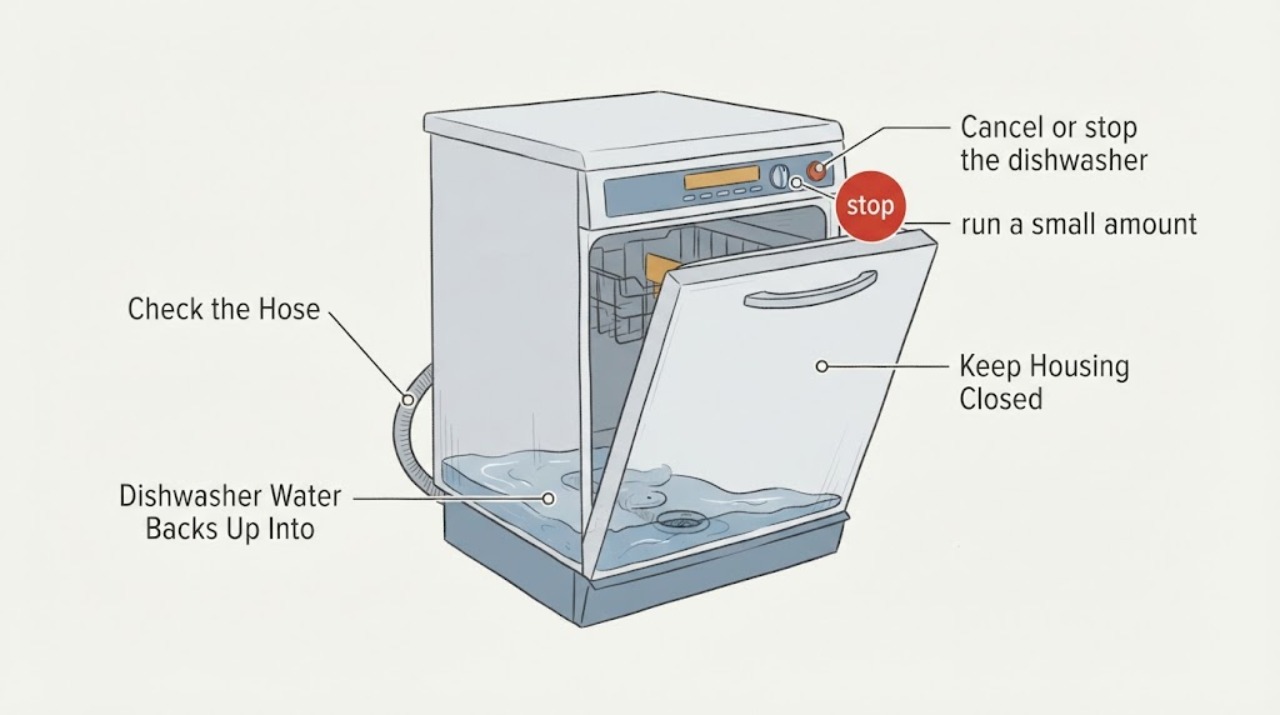
Work through in order
Diagnostic checks
Use only checks that match the exact appliance or system and its official guide.
-
Check 1
Cancel or stop the dishwasher as soon as water rises in the sink. If water is overflowing, leaking into the cabinet or reaching electrical connections, stop using the appliance, close the dishwasher water shutoff if it is safely accessible, and keep the area clear. Do not start another empty cycle and do not add a strong chemical drain opener to the connected plumbing.
Expected result: The water level stops rising after the dishwasher stops, or water continues to spread/there is a leak that cannot be isolated safely.
Next step: For an active leak or unsafe electrical area, isolate water/power only by a safe normal means and call qualified service; otherwise proceed with the sink and accessible drain checks below.
Why this matters
Why: Stopping the discharge limits overflow. Continuing water movement or an unsafe wet electrical area requires plumbing or appliance help rather than repeated cycles.
-
Check 2
With the dishwasher off, run a small amount of water in the sink and watch the sink basin and drain. Do not add drain chemicals. Note whether the sink itself drains quickly, drains slowly, gurgles, or backs up even though the dishwasher is not discharging.
Expected result: The sink backs up or drains slowly on its own, or it drains normally until the dishwasher pumps out.
Next step: If the sink is slow on its own, stop using the sink/dishwasher and arrange plumbing service. If it is normal until dishwasher discharge, inspect the accessible hose, filter and disposer connection before arranging appliance service.
Why this matters
Why: Sink-only backup makes the shared sink, trap or downstream drain the first suspect; backup only during dishwasher discharge points toward the dishwasher connection, hose routing or a shared restriction under load. This observation does not diagnose the dishwasher pump.
-
Check 3
Inspect the accessible drain installation under the sink without pulling the dishwasher out: look for a kinked or displaced dishwasher drain hose, an incorrectly low route, debris at the visible connection, or a garbage-disposal connection whose knockout plug was never removed after a new disposal was installed. Compare the hose route with the exact installation instructions; Frigidaire specifies at least 32 inches of height from the floor before dropping to the drain.
Expected result: The hose is kinked/low, the visible connection is blocked, or the disposal is new and its knockout plug may still be present; alternatively the accessible route appears correct.
Next step: Correct only an obvious accessible routing issue allowed by the manual and have a plumber address the disposal or shared drain. Do not force fittings or disconnect a full hose containing standing water.
Why this matters
Why: Frigidaire identifies hose routing and a missing disposer knockout plug as conditions that can prevent proper drainage. A correct visible route does not rule out a blocked trap, downstream pipe or internal appliance drain fault.
-
Check 4
After water is contained and the dishwasher is safe to access, clean the removable filter and glass trap according to the owner manual, and note whether water remains above the filter after a completed drain attempt. Do not reach into a hidden sump, remove panels or run another cleaning cycle while the sink still backs up.
Expected result: The filter/glass trap is blocked or water remains over the filter, or the accessible filter is clear and the tub drains normally when the sink path is clear.
Next step: If water remains above the filter or the dishwasher still backs up, contact appliance service or a plumber based on whether the sink also backs up. Only after drainage is normal should an owner-manual-approved empty odor-cleaning cycle be considered.
Why this matters
Why: Frigidaire says food/debris can clog the filter or glass trap and that some small amount of water in the bottom is normal, while water covering the filter indicates a drainage condition to investigate. A clear filter does not prove the pump or downstream plumbing is clear.
Use your observations
Decision map
Find the observation that best matches what you see, then follow the next safe action.
-
PATH 01Next step
What you see
The sink drains slowly or backs up even when the dishwasher is off and only a small amount of sink water is used.
Do this next
Stop using the sink and dishwasher until a qualified plumber clears and checks the shared drain. Do not pour strong chemical drain opener into the connected dishwasher plumbing.
Why this path and its safety boundary
Why it matters: The first problem is likely in the sink, trap or downstream shared drain path rather than a proven dishwasher pump failure.
-
PATH 02Next step
What you see
The sink drains normally by itself, but water rises when the dishwasher discharges, and the visible hose is kinked/low or the disposer connection is newly installed.
Do this next
Use the exact installation instructions, correct only an accessible routing issue, verify the disposer knockout-plug condition, and call a plumber or appliance technician if the connection is not clear.
Why this path and its safety boundary
Why it matters: A hose-routing or disposer-connection problem is plausible at the dishwasher drain interface, but the visible symptom does not establish an internal pump failure.
-
PATH 03Next step
What you see
The filter/glass trap is blocked or water covers the filter after a drain attempt, while the sink itself is otherwise clear.
Do this next
Clean only the removable filter/glass trap as the manual allows. If water still covers the filter or the sink backs up, stop cycles and arrange service.
Why this path and its safety boundary
Why it matters: Food debris or an appliance-side drain restriction may be preventing normal discharge. A small residual amount at the bottom can be normal, but water covering the filter is a different finding.
-
PATH 04Next step
What you see
The sink and dishwasher now drain normally, the filter/glass trap is clean, and no leak or standing water remains.
Do this next
Follow the exact manual and Frigidaire cleaning guidance; stop immediately if water backs up again. Do not use a chemical drain opener as an odor treatment.
Why this path and its safety boundary
Why it matters: The odor-prevention goal can be addressed separately from the previous backup. Frigidaire documents periodic cleaning and an owner-manual-dependent empty cycle for odors.
Helpful context
Understand the symptom
Why the sink fills when the dishwasher drains
A dishwasher sends its discharge into the sink-side drain system, commonly at a disposer or drain connection. If that shared path cannot carry the discharge, water can rise in the sink instead of leaving the home. Frigidaire's guidance focuses on a clear drainage system, correct hose routing, filter and glass-trap condition, and the disposer knockout plug. The sink symptom does not by itself prove that the dishwasher pump is bad.
An empty odor cycle should wait until drainage is normal
Frigidaire lists empty cleaning cycles and periodic filter/glass-trap cleaning as odor-maintenance options, but it also says standing water from poor draining can cause odor. Stop the empty cycle when water backs up. Cleaning the tub with more water before clearing the drain can simply repeat the overflow and spread dirty water into the sink.
What you can inspect without opening the appliance
Keep the dishwasher off while checking the sink drain, the visible under-sink drain connection, the accessible portion of the dishwasher drain hose, the filter and glass trap. Frigidaire specifies a minimum 32-inch hose height from the floor before the hose drops to the drain and says a disposer's knockout plug must be removed for proper drainage. Do not pull a built-in dishwasher out or disconnect a water-filled hose unless the exact manual and your plumbing setup make that work safe.
When checks do not resolve it
Need a professional?
Safety scope: Stop the cycle for overflow or leaks. Do not pull a built-in dishwasher, open the base, disconnect a water-filled hose, perform live electrical work, or pour strong corrosive drain opener into the dishwasher-connected plumbing. Use qualified plumbing or appliance service for hidden restrictions.
Have this ready
- Tell the plumber or appliance technician whether the sink backs up by itself, whether the backup occurs only during dishwasher discharge, the drain-hose route, disposal status, filter/glass-trap condition, presence of standing water, and whether the dishwasher has been run empty for odor control.
Common questions
FAQ
Why does dishwasher water come up into the sink?
The dishwasher discharge shares a sink-side drain path. If that path, the drain connection or the hose routing cannot carry the discharge, water can rise in the sink. Start by checking whether the sink also backs up without the dishwasher, then inspect only accessible hose, filter and disposer-connection conditions.
Can I keep running an empty dishwasher to remove odor?
Not while water backs into the sink. Frigidaire does document periodic empty cleaning cycles, but it also says poor draining and standing water can create odors. Resolve the backup and confirm normal drainage before running an odor-cleaning cycle.
What drain-hose routing does Frigidaire specify?
Frigidaire says the dishwasher drain hose should be kept at least 32 inches above the floor before it drops to the drain, and the drain plug must be removed from a disposer when applicable. Exact installation details vary, so use the owner manual for the appliance and plumbing arrangement.
Should I pour drain cleaner into the sink or dishwasher hose?
Do not use a strong corrosive drain opener in plumbing connected to the dishwasher. Stop the cycles, make only manual-approved accessible checks, and use a qualified plumber for a sink, trap or downstream blockage; use appliance service when the sink drains normally but the dishwasher still cannot discharge.
Read the exact guide
Official sources
- Dishwashers - Not DrainingFrigidaire · Opened the official Frigidaire dishwasher not-draining page. It covers drain-hose kinks, filter/glass-trap debris, disposal knockout plugs, mid-cycle drain symptoms and support when trouble continues. It supports external and removable-filter checks, not a hidden pump diagnosis.
- Why is water in the dishwasher after it runs?Frigidaire · Opened the official Frigidaire page. It distinguishes a small amount of water at the bottom from water covering the filter, directs owners to clear the drainage system and disposer, and sends unresolved issues to support.
- Dishwasher - OdorsFrigidaire · Opened the official Frigidaire odor page. It recommends periodic cleaning, an empty cycle or white-vinegar option, filter/glass-trap cleaning, and checking drainage because standing water can create odor. The article delays any empty odor cycle until the backup is resolved.
- Dishwasher - Drain Hose GuideFrigidaire · Opened the official Frigidaire drain-hose guide. It says correct hose installation improves drainage and odor performance, specifies a minimum 32-inch hose height from the floor before dropping to the drain, and says a disposer drain plug must be removed when applicable.
Community feedback
Share a repair observation
Share a plain-text repair observation. Accepted observations are published automatically; this page may take a moment to update.