
On this page
Start here
Quick answer
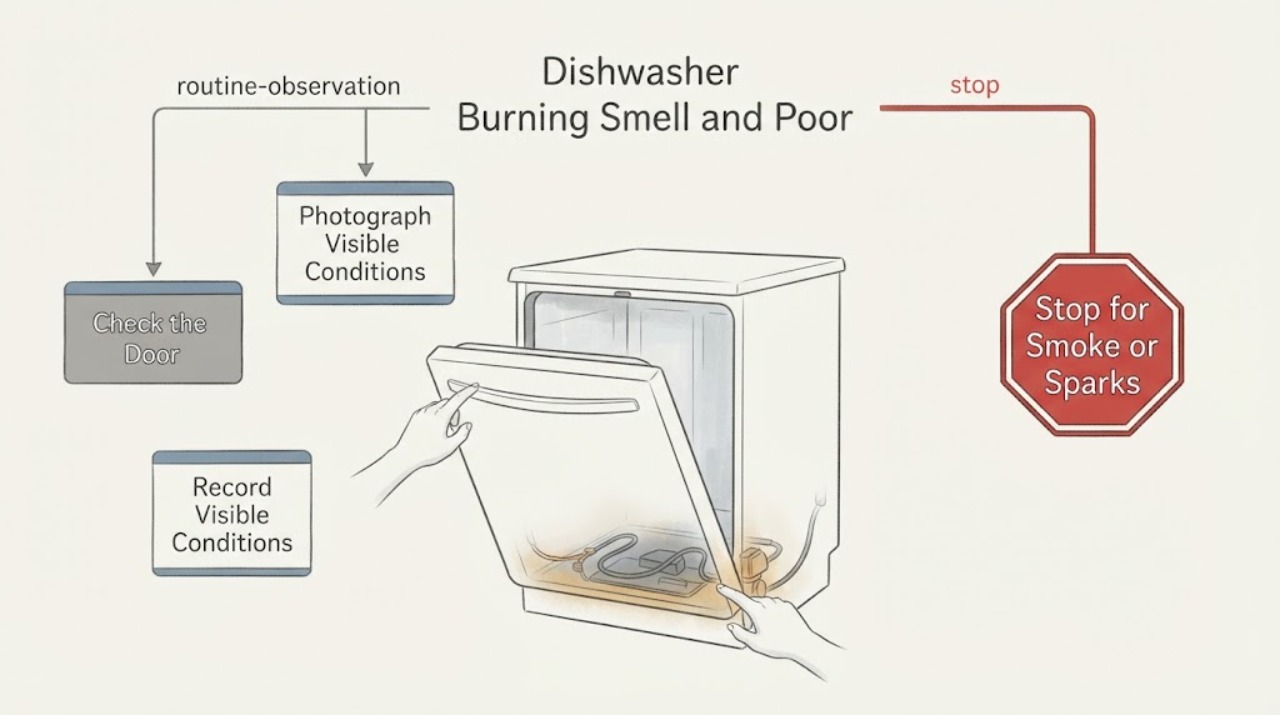
A recurring burning smell takes priority over the recent cleaning decline: stop the dishwasher, disconnect power from a dry and safe location, and do not run another hot or cleaning cycle to see whether the smell returns. After the machine is fully cool, make only an external, visible check for melted plastic, food or residue around the heating element; do not open panels, scrape a hot element, or touch wiring. Whirlpool documents cooled inspection for plastic or food near the element, while Electrolux says to stop using a dishwasher for burning smells or persistent poor performance and arrange professional service. The original report combines both symptoms but does not prove whether the residue, heater, wiring, pump, loading or detergent is responsible.
Work through in order
Diagnostic checks
Use only checks that match the exact appliance or system and its official guide.
-
Check 1
Stop the dishwasher immediately. From a dry, safe location, disconnect its power at the plug or the circuit breaker; do not reach through water, smoke, heat or a damaged connection. Keep the door closed if there is smoke or active heat and move away if there is an immediate fire hazard.
Expected result: Power can be isolated without touching a wet, hot or damaged connection, or isolation itself would be unsafe; smoke, flame, sparking, a strong electrical odor or abnormal heat may also be present.
Next step: If isolation is unsafe or there is smoke/flame/sparking, leave the area and contact emergency help from a safe location. Otherwise keep the dishwasher off and continue only with the cool, visible check.
Stop if: Do not reset the breaker repeatedly, start a rinse or cleaning cycle, use heated dry, or test the dishwasher while the source of the smell is unresolved.
Why this matters
Why: A recurring burning odor is a safety symptom, and the user cannot distinguish melted residue from an electrical or heating fault while the appliance is energized.
-
Check 2
After the dishwasher has been disconnected and is completely cool, look through the open door without removing panels for melted plastic, food, a warped rack, residue or a visibly damaged heating-element area. Photograph the condition and do not touch the element, wiring or any loose material if its temperature or stability is uncertain.
Expected result: A plastic item or food is visibly on or near the element; there is char, discoloration, melted material, exposed wiring or deformation; or no source is visible.
Next step: Leave the dishwasher off and give the photos to a qualified technician. Do not scrape a warm element, use a metal tool, pull the unit out around a damaged cord, or open the lower door/power compartment.
Why this matters
Why: Whirlpool and GE identify food or plastic contacting a heating element as one possible odor source, but a visible deposit does not rule out damage to the heater, wiring, controls or other components. No visible source does not make continued operation safe.
-
Check 3
Record the cleaning change separately: which cycles were affected, whether food remained, whether residue was on dishes or inside the tub, whether the filter was already cleaned, and whether the odor returned after the prior cleaning cycles. Do not run another cycle to reproduce the symptom.
Expected result: The cleaning decline occurs across multiple cycles, only with certain loads, or began at the same time as the burning odor; the smell persists even while the dishwasher is off.
Next step: Give the full timeline to service and keep the dishwasher off. After a technician clears the safety issue, use the exact owner manual for model-specific cleaning and loading checks.
Why this matters
Why: A load, detergent, filter or spray-path issue may affect cleaning, but simultaneous recurrence of a burning smell raises a service boundary. The original report does not prove that poor cleaning caused the odor or that a filter is the failed part.
-
Check 4
Check only from the outside for water under the unit, a hot or discolored cord/connection, smoke staining, or an odor strongest at the door edge or lower access area. Do not remove the toe-kick, junction-box cover or door panel.
Expected result: There is water near electrical parts, a hot/discolored connection, smoke staining, active odor while the machine is off, or no external warning sign.
Next step: Keep power isolated and arrange qualified appliance service. If there is smoke, flame, sparking or rapidly worsening odor, leave the area and contact emergency services; do not investigate inside the appliance.
Stop if: Do not touch wet or hot electrical parts, bypass a breaker, or make a live test.
Why this matters
Why: Water, heat, char or odor near electrical areas increases the risk of shock or fire and cannot be diagnosed by a cleaning routine. The absence of an external mark does not clear hidden wiring or a heater fault.
-
Check 5
Prepare the service request with the dishwasher model and serial label, purchase/house-move timeline, the first and latest odor dates, what the filter and cleaning cycles changed, the affected cycles, photos of residue or the element area, and whether power has been isolated. Ask for inspection of the heating and electrical areas before any cleaning-performance diagnosis.
Expected result: The burning smell recurs, the appliance has a visible char/melt mark, cleaning remains poor after the safety issue is addressed, or diagnosis would require an internal component or wiring inspection.
Next step: Keep the dishwasher out of service until a qualified technician says it is safe. Do not order a component, scrape the heater, or use a cleaner to mask the odor.
Why this matters
Why: Electrolux places burning smells, electrical problems and persistent poor performance in the professional-service boundary. The original source gives no model or verified repair result, so a heater, pump, control or wiring diagnosis cannot be selected from symptoms alone.
Use your observations
Decision map
Find the observation that best matches what you see, then follow the next safe action.
-
PATH 01Next step
What you see
Smoke, flame, sparking, a hot/discolored connection, water near electrical parts or a strong burning odor is present.
Do this next
Leave the area if needed, avoid switches and the appliance, and contact emergency help or qualified service from a safe location. Do not reset power or restart the dishwasher.
Why this path and its safety boundary
Why it matters: This is an immediate electrical/fire stop condition; it cannot be reduced to a filter or detergent problem.
-
PATH 02Next step
What you see
The unit is safely off and fully cool, and visible plastic or food is found on or near the heating element with no smoke, charred wiring or other damage visible.
Do this next
Photograph the area and have a qualified technician confirm the condition before the dishwasher is used. Do not run a hot or cleaning cycle to see whether the odor burns away.
Why this path and its safety boundary
Why it matters: A melted item or food deposit is a plausible odor source, as Whirlpool and GE describe, but the visible check does not prove the element or wiring is undamaged.
-
PATH 03Next step
What you see
No visible debris explains the recurring smell, or the odor and poor cleaning continue after basic maintenance was attempted.
Do this next
Keep the dishwasher off and arrange professional inspection. Provide the cleaning-cycle history and photos rather than opening the appliance or guessing at a part.
Why this path and its safety boundary
Why it matters: The symptom is outside a safe user cleaning fix; a heater, wiring, pump, control or other internal issue remains possible but unconfirmed.
-
PATH 04Next step
What you see
A technician clears the burning-smell safety issue and the dishwasher is explicitly returned to service, but cleaning remains poor.
Do this next
Use the exact model manual for filter, spray-arm, loading, detergent and water-supply checks, or have the same technician evaluate the remaining cleaning issue. Do not combine it with an unverified heater diagnosis.
Why this path and its safety boundary
Why it matters: Only at that point should cleaning performance be treated as a separate maintenance or water/dispensing problem; the original post does not identify which one applies.
Helpful context
Understand the symptom
Treat the burning smell as the primary fault signal
The original report is not just a cleaning complaint: it describes a recurring burnt odor and a possible burnt-looking heating element area, followed by poorer cleaning. Cleaning cycles and a filter replacement did not establish the cause. A filter, detergent or loading problem can affect cleaning, but it cannot safely explain away a recurring burning smell. Keep the dishwasher out of service until the visible condition and electrical/heating safety have been assessed.
What a safe visible check can tell you
After power is safely isolated and the appliance is fully cool, look through the door for a melted plastic item, food or residue near the heating element, a distorted rack or other obvious debris. Whirlpool and GE describe this as a possible source of odor when plastic or food reaches the heater, but a visible residue does not prove that the heater, wiring or controls are safe. Do not reach behind panels or continue operating the appliance to burn the residue away.
Keep the cleaning symptom separate from the safety decision
The change in cleaning performance is useful information for the technician, but it is not a reason to run another hot wash, heated-dry cycle or cleaning product. Once a professional clears the burning-smell condition, the owner manual can guide ordinary filter, spray-arm, loading and detergent checks. Without the model, those steps cannot identify a component or authorize an internal repair.
When checks do not resolve it
Need a professional?
Arrange professional service immediately for a recurring burning smell, smoke, visible char/melt, electrical odor, water near electrical parts, a damaged connection or persistent poor cleaning. Use emergency help for smoke, flame or sparking.
Common questions
FAQ
Could a dirty filter explain the burning smell and poor cleaning?
A dirty filter can affect cleaning, but the original report includes a recurring burnt odor that remained after a filter replacement and cleaning cycles. Keep the dishwasher off and have the heating/electrical areas checked before treating cleaning as a routine maintenance issue.
Can I run an empty cleaning cycle to see if the smell goes away?
No. Do not use another hot, rinse or cleaning cycle as a diagnostic test while a burning smell is unresolved. Isolate power safely, let the machine cool, document any visible residue and arrange service.
What if I can see plastic or food on the heating element?
After power is isolated and the dishwasher is completely cool, photograph the visible condition. Whirlpool and GE describe cooled inspection for food or plastic near the element, but a visible deposit does not prove the heater or wiring is safe; do not continue operation or open the appliance without qualified assessment.
Why are the dishes not cleaning properly anymore?
Loading, detergent, filter, spray path, water supply or an internal fault can affect cleaning, but the post does not establish which applies. Because the change is paired with a recurring burning smell, resolve the safety issue first and use the exact owner manual or service diagnosis afterward.
Read the exact guide
Official sources
- Expert insights: answers to common questions about your Electrolux dishwasherElectrolux UK · Opened official Electrolux dishwasher repair/maintenance guidance. It supports stopping use for burning smells or persistent poor performance and leaving internal pumps, heating systems and electrical repairs to qualified technicians; no Electrolux model identity is inferred for this task.
- Dishwasher - Burning Odor, Removing Plastic from ElementGE Appliances · Opened official GE dishwasher guidance and used only for the general safety boundary: power off before maintenance and allow the element to cool. Its model-specific heat-test instructions are not used or transferred.
- Dishwasher burning smellReddit r/appliancerepair · Opened the exact Reddit post. It supports the recurring burnt odor, prior filter/cleaning attempts, poorer cleaning, residue and possibly burnt-looking coil reported by the poster; comments are not used as technical authority.
- Melted Plastic or Charred Food Odor - DishwasherWhirlpool Product Help · Opened official Whirlpool dishwasher guidance. It supports only the general possibility of melted plastic or food near a heating element and the need to cool the appliance first; it does not diagnose the unspecified dishwasher in this task.
Community feedback
Share a repair observation
Share a plain-text repair observation. Accepted observations are published automatically; this page may take a moment to update.