
On this page
Start here
Quick answer
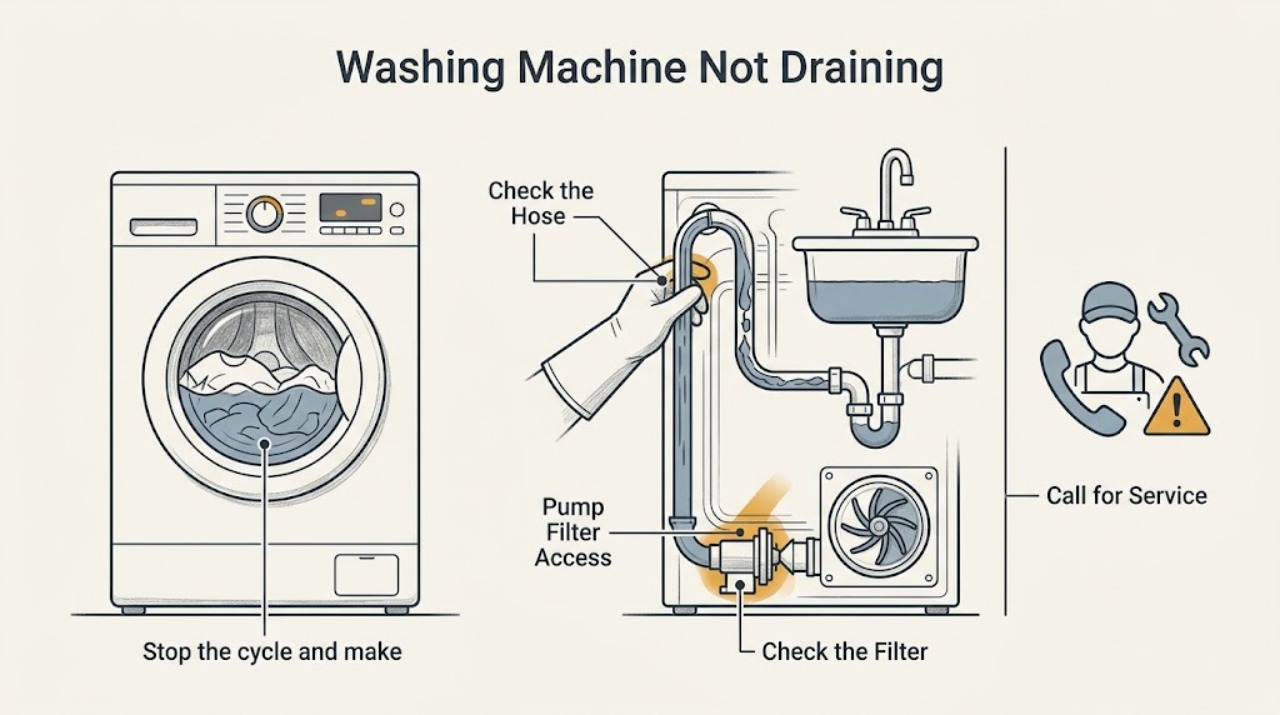
If a Bosch washing machine is not draining, stop the programme and treat the remaining water as potentially hot. Turn the appliance off, unplug it, and turn off the water tap before checking the external drain hose for a kink or the siphon for a blockage. Do not remove a pump filter while water is still in the machine: let the water cool, place a bowl and towels below the service flap, drain residual water through the emergency hose or by slowly loosening the cover, and only then remove and clean the filter as your model manual permits. If the impeller will not turn freely, the pump hums without moving water, the hose leaks, the machine trips power, or it still will not drain after these checks, stop and arrange Bosch service.
Work through in order
Diagnostic checks
Use only checks that match the exact appliance or system and its official guide.
-
Stop the cycle and make residual water safe
Set the programme to Off, unplug the washer from a dry and safe position, and turn off the water tap. Do not open the pump filter yet. Let water from a hot programme cool, keep children and pets away, and check the floor for an active leak without moving a heavy, water-filled machine.
Expected result: The washer contains water, the water is hot, there is an active leak, the plug or outlet is wet, or the appliance is cool and dry with no active leak.
Next step: If the plug or outlet is wet, the leak is active, or the machine is unsafe to isolate, keep clear and arrange qualified service. Otherwise wait until the water is cool and continue with the hose and siphon check; do not remove the filter while water remains inside.
Why this matters
Why: Water remaining in the washer can scald or spill when the filter is loosened. Wet electrical parts or an active leak make even a basic drain check unsafe. A cool, isolated washer can proceed to an external hose check.
-
Inspect the accessible drain hose and siphon
Without opening the cabinet, check that the drain hose is not kinked, crushed, blocked, or pulled out of the siphon. If the model's installation permits it, place the hose end in a suitable bucket only after power is disconnected and residual water can be controlled. Clean an accessible siphon spigot or hose blockage according to the manual, and secure the connection before any test.
Expected result: The hose is kinked or blocked, the siphon spigot is blocked, the hose has slipped or leaks, or the hose and connection are clear and secure.
Next step: Correct only the accessible routing or connection issue, then reconnect the hose securely and check for leaks during a short manual-approved drain test. If the hose leaks, will not stay secured, or the washer still leaves water, stop and continue to the safely drained pump check or request service.
Why this matters
Why: A restricted or poorly secured outlet can prevent drainage or cause water damage even when the pump is healthy. A clear, secure outlet shifts suspicion toward the pump filter, impeller, or internal fault.
-
Drain residual water before touching the pump filter
Only when the washer is off, unplugged, the tap is closed, and the water has cooled, open the service flap. Place a bowl and towels underneath. Use the model's emergency drain tube if fitted; otherwise loosen the pump cover very slowly so water enters the bowl. Do not remove the filter or cover completely while water is still flowing or the bowl is filling.
Expected result: Water drains out, water is still hot or excessive, no emergency drain path is available, or no water comes out even though the drum is full.
Next step: Stop and let the water cool or obtain model-specific instructions if the drain cannot be controlled. If no water flows or the service area is inaccessible, close the flap, keep the washer unplugged, and arrange service rather than forcing the filter.
Why this matters
Why: Controlled draining prevents scalding and flooding. Hot or excessive water needs more cooling and larger collection capacity. No flow with a full drum may indicate a blockage before the filter or a pump fault and should not be forced.
-
Inspect the drained filter and impeller
After residual water has been drained and the filter can be removed without a spill, unscrew it fully as the manual directs. Check the filter, pump housing, and visible impeller for lint, coins, buttons, or another foreign object. Remove only an accessible obstruction that can be taken out safely; do not force the impeller, reach past it, or remove a pump or cabinet panel.
Expected result: Debris is blocking the filter or pump, the impeller turns freely after cleaning, the impeller is jammed, or the filter and housing are clear but the washer still will not drain.
Next step: Refit the filter firmly in the model-approved direction, close the service flap, and check for leaks with the permitted test. If the impeller remains jammed, the cover will not seal, or no-drain persists, leave the washer unplugged and request Bosch service.
Why this matters
Why: Bosch identifies foreign objects and an impeller that cannot turn freely as pump restrictions. A clear filter with persistent no-drain, a jammed impeller, or a damaged cover points to a pump or internal fault.
-
Run one controlled drain test and interpret the result
After the hose, filter, and cover are secure and the service flap is closed, use the exact model manual's Drain or Spin/Drain programme once. Stay nearby and watch the hose connection and floor. Do not repeat the test if water leaks, the pump makes an abnormal sound, the washer trips power, or the drum remains full.
Expected result: Water exits quickly without leaks, the pump hums but no water moves, the washer stops with a code, water leaks from the filter or hose, or the drum remains full.
Next step: If the drain is successful, monitor the next load. For any leak, repeated code, power trip, abnormal pump noise, or continued no-drain, unplug the washer when safe and arrange qualified Bosch service; do not run more cycles to compensate.
Why this matters
Why: A successful, leak-free drain after removing a confirmed obstruction supports a resolved blockage. A hum without flow, code, leak, repeated stop, or full drum indicates a pump, control, seal, installation, or internal blockage that needs diagnosis.
Use your observations
Decision map
Find the observation that best matches what you see, then follow the next safe action.
-
PATH 01Safety boundary
What you see
The water is hot, the filter is still full of water, the floor or outlet is wet, or residual water cannot be controlled safely.
Do this next
Keep the washer off and unplugged, close the water tap, allow hot water to cool, and arrange qualified service if the drain cannot be safely controlled. Do not remove the filter while water is flowing.
Why this path and its safety boundary
Safety stop: True
-
PATH 02Next step
What you see
The drain hose or siphon is kinked, blocked, loose, or leaking.
Do this next
Correct only the accessible hose routing or siphon connection with power disconnected, secure the hose, and perform one supervised manual-approved drain test. Stop and request service if it leaks or remains blocked.
-
PATH 03Next step
What you see
A foreign object is removed from the filter or pump, the impeller turns freely, the filter is refitted firmly, and one drain test completes without a leak.
Do this next
Monitor the next load and keep the filter maintenance interval from the model manual. If the no-drain condition returns, stop using the washer and arrange service.
-
PATH 04Safety boundary
What you see
The impeller remains jammed, the filter or cover will not seal, the pump hums without moving water, or the drum remains full after the accessible checks.
Do this next
Leave the washer unplugged and arrange an authorized Bosch service visit. Do not remove the pump, cabinet panels, or internal hoses.
Why this path and its safety boundary
Safety stop: True
-
PATH 05Safety boundary
What you see
The washer trips power, displays a recurring fault, leaks after the filter or hose is refitted, or makes an abnormal mechanical noise.
Do this next
Stop the cycle, isolate power only if safe, close the water tap, and request qualified service with the model, code, leak location, and drain-test result.
Why this path and its safety boundary
Safety stop: True
Helpful context
Understand the symptom
Do not open a full pump filter while the washer is full of water
A blocked Bosch washer may contain hot, pressurized, or dirty water. Stop the programme, switch the washer off, unplug it, and turn off the water tap. Let a hot load cool. Put a bowl and towels beneath the service flap and follow the model manual's controlled-drain sequence. Never pull the filter out with water still running out, and do not reach into a moving pump.
A drain hose problem and a pump problem look alike
A kinked or blocked hose, a blocked siphon connection, and a foreign object in the pump can all leave water in the drum. First inspect only the accessible hose routing and drain connection. If those are clear, drain the residual water safely before inspecting the pump filter. A pump that cannot move its impeller freely or a washer that still will not drain is a service diagnosis, not a reason to dismantle the cabinet.
Record the evidence before restarting
Note whether the drum is full, whether the pump makes a hum or no sound, any display symbol or code, whether the hose or siphon leaked, and what was found in the filter. Check the complete Bosch model manual for the location of the emergency drain and the permitted drain programme. This record helps a technician distinguish a routing blockage from a pump, control, or installation fault.
Only after diagnosis
Potential parts
- Bosch washing machine drain pump
Consider this only after a qualified technician confirms the pump is defective rather than blocked, incorrectly installed, or unable to receive a safe control signal.
Drain pumps vary by Bosch E-Nr. and revision; confirm the complete model and manufacturer-approved fit before ordering. - Bosch washing machine pump filter or cover seal
Consider this only when the technician finds a damaged filter, thread, or seal that cannot be made watertight after correct refitting.
Confirm the exact Bosch model and filter assembly before replacement; do not run the washer with a leaking cover. - Bosch washing machine drain hose
Consider this only when inspection or service confirms a cracked, obstructed, or model-incompatible drain hose rather than a routing problem.
Verify the complete Bosch E-Nr., connection type, and approved routing before ordering or fitting.
When checks do not resolve it
Need a professional?
A technician is required for a persistent no-drain condition, a jammed or silent pump, recurring fault, electrical trip, damaged hose or filter seal, internal blockage, or any situation in which residual water cannot be controlled safely.
Common questions
FAQ
Can I remove the Bosch washer pump filter while water is in the drum?
No. Turn the washer off, unplug it, close the water tap, and let hot water cool. Use the model's emergency drain path or loosen the cover slowly into a bowl, and do not remove the filter until residual water has been drained and controlled.
What should I check first when my Bosch washer will not drain?
After safely isolating the washer, check the accessible drain hose and siphon for kinks, blockage, loose routing, or leaks. If they are clear, drain residual water safely and inspect the pump filter and visible impeller according to the model manual.
Why does my Bosch washer hum but leave water in the drum?
A blocked filter, foreign object, jammed impeller, blocked hose, or failing pump can leave a hum without moving water. Do not reach into the pump or repeat cycles; isolate the washer, drain residual water safely, and arrange service if the accessible cleaning check does not restore drainage.
When should I stop troubleshooting a Bosch washer drain problem?
Stop for hot or uncontrolled water, water near the outlet, an active leak, a repeated electrical trip, a jammed impeller, a leaking filter cover, a returning code, or a drum that remains full after the hose and filter checks. Keep the washer unplugged and arrange qualified service.
Read the exact guide
Official sources
- Why Won't My Washing Machine Drain?Bosch · Bosch washer not draining, kinked or blocked drain hose, siphon, pump filter, hot residual water, controlled drain, leak check, and service escalation
- How to clean your washer's drain pumpBosch · Bosch washer drain pump access, power isolation, controlled water release, foreign-object inspection, impeller movement, and service escalation
- Bosch Washing Machine Replacement PartsBosch · Bosch washer model identification, drain-pump access point, replacement parts, filters, hoses, pumps, and authorized service
- Filter in drain pump blockedBosch · Bosch washer blocked drain-pump filter, scalding risk, tap shutoff, unplugging, controlled filter release, impeller, refitting, leak test, and drain hose safety
- Why are my Clothes Soaking Wet After Washing? How to ResolveBosch · Bosch washer retained water or soaking-wet laundry, drain hose, pump filter, hot water warning, drain test, load balance, and service
Community feedback
Share a repair observation
Share a plain-text repair observation. Accepted observations are published automatically; this page may take a moment to update.