
On this page
Start here
Quick answer
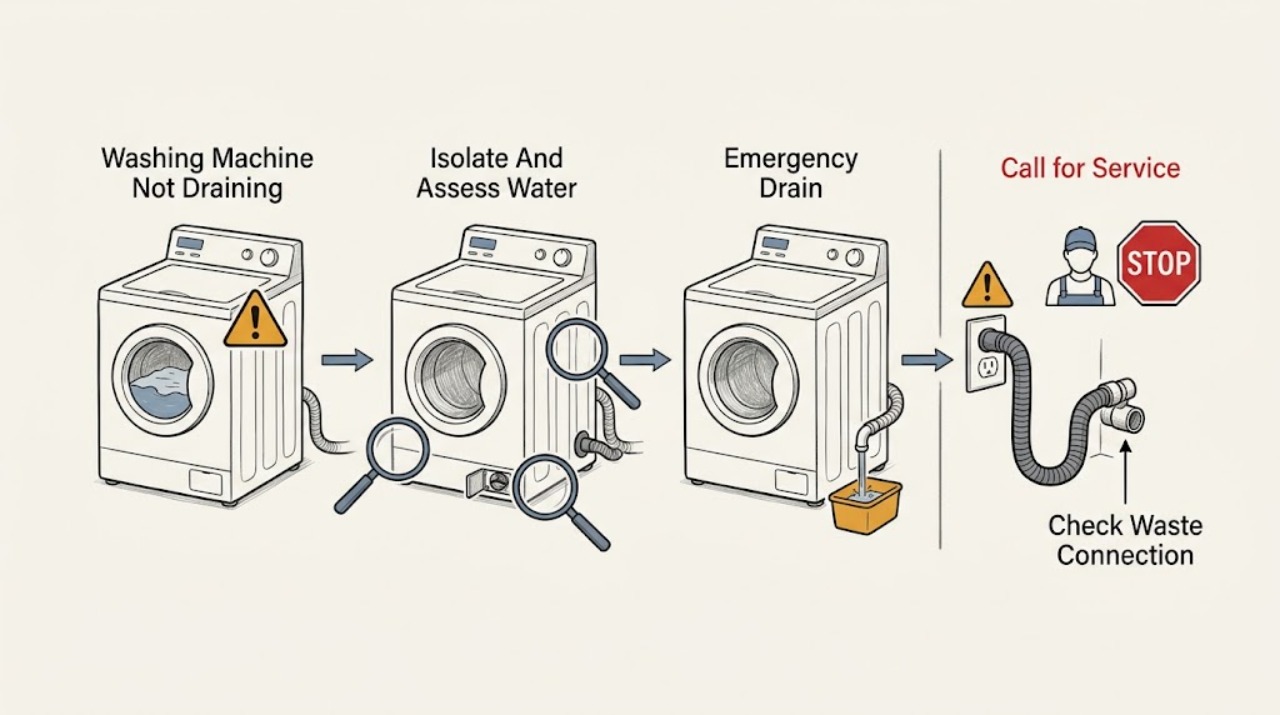
If a Baumatic washing machine is not draining, stop the programme and disconnect the appliance from the mains before examining it. If water remains in the drum, use the model's emergency-drain method or carefully lower the waste hose into a shallow bowl only when that arrangement is identified by the manual; expect water and protect the floor. Check the waste hose and sink connection for kinks or blockages, then, after the drum is empty, clean the accessible pump filter and pump chamber with towels in place. Refit the filter tightly, reconnect the hose, and run a short rinse or drain while checking for leaks. If water still will not leave, the pump is noisy but does not move water, the filter cannot be accessed safely, the machine leaks, or any electrical hazard is present, stop and arrange qualified appliance service.
Work through in order
Diagnostic checks
Use only checks that match the exact appliance or system and its official guide.
-
Check 1
Stop the programme and disconnect the Baumatic washing machine from the mains before examining it. Note whether water is visible in the drum, whether the door remains locked, and whether an error or drain indicator is shown; do not force the door.
Expected result: The drum is full or partly full, the door stays locked, or the drum is empty but the washer reports a drain problem.
Next step: If water remains, follow the model-specific emergency-drain procedure before opening the filter. If the drum is empty, continue to the external hose and waste-connection check.
Stop if: Stop for a damaged cord, water near electrical parts, sparks, smoke, a strong burning odor, or an appliance that cannot be safely disconnected.
Why this matters
Why: Visible water makes uncontrolled spillage the first risk and keeps the door from being safely forced. An empty drum with a drain indication points toward the hose, filter, pump, or control path rather than a door-access problem.
-
Check 2
Only if the model manual or Baumatic's matching guidance identifies an emergency drain, place a shallow bowl and towels at floor level and lower the waste hose into the bowl, or use the provided small drain tube and stopper. Empty the bowl repeatedly rather than allowing it to overflow.
Expected result: Water flows from the hose into the bowl, flows only weakly, or does not flow at all.
Next step: Re-secure the hose once the drum is empty. If water will not drain, stop and arrange service unless the exact manual provides another safe, model-specific access step.
Stop if: Stop if the bowl cannot contain the water, the hose connection is damaged, the appliance must be pulled out or dismantled to reach the drain path, or water approaches electrical components.
Why this matters
Why: A strong flow through the hose suggests the remaining restriction may be at the household waste connection. Weak or absent flow suggests a restriction inside the washer or in the hose, and continuing to loosen parts risks a spill.
-
Check 3
With the appliance unplugged and a dish beneath the connection, inspect the grey waste hose for kinks or crushing and inspect the sink or standpipe connection for grease, food residue, a plug, or another obstruction. Do not pour water into the sink while the appliance hose is disconnected.
Expected result: The hose or household connection is blocked, kinked, or sealed, or the external path is clear.
Next step: Clear only the accessible external restriction, reconnect the hose securely, and continue to the filter check if the washer still will not drain. If the connection requires cutting, plumbing alteration, or moving an integrated appliance, use a qualified professional.
Stop if: Stop if the waste fitting is leaking, the hose is split, the connection is inaccessible without cabinet removal, or water could spill into cabinetry or electrical parts.
Why this matters
Why: A restriction where the Baumatic hose joins the sink or household drain can prevent the washer from emptying even when its pump is sound. A clear external path moves the check to the pump filter and chamber.
-
Check 4
After the drum is empty and the appliance remains unplugged, locate the pump filter behind the model's lower cover or kick plate. Put absorbent towels under it, loosen the filter slowly, remove visible lint, coins, hair grips, or other debris from the filter and accessible pump chamber, then refit the filter clockwise until tight.
Expected result: Debris or limescale is present, the filter and chamber are clear, or water continues to escape after refitting.
Next step: Dry the filter and surrounding area, reconnect the hose, and run a short rinse or drain while watching the front for leaks. If the filter is clear or the washer still will not pump out, use the service branch.
Stop if: Stop if the cover or filter will not release with normal model instructions, the filter seal is damaged, the chamber contains a sharp or inaccessible obstruction, or the machine leaks.
Why this matters
Why: Debris in the filter or pump chamber can block the drain path. A clear filter does not prove the pump is healthy; water escaping after refitting means the seal or filter installation is not safe to test further.
-
Check 5
Once the filter is securely refitted and the waste hose is back in its connection, select a short rinse or drain programme appropriate to the model. Keep hands away from moving or wet parts and watch the hose path and filter area for leaks while the machine attempts to empty.
Expected result: The pump removes the water without a leak, the pump hums but water does not move, the cycle stops with water remaining, or water leaks at the filter/front.
Next step: If the drain succeeds and there is no leak, return to normal use while cleaning the filter at the interval in the model manual. If it fails or leaks, unplug the washer and arrange qualified service.
Stop if: Stop immediately for a leak, unusual grinding, smoke, burning odor, repeated breaker operation, or water near electrical parts.
Why this matters
Why: A successful drain after cleaning supports a cleared restriction. Humming without flow or a repeated stop with water remaining points to a pump, hose, or internal blockage that cannot be identified safely from the outside. A leak after filter work requires immediate shutdown.
-
Check 6
If the external waste path is clear and the filter has been correctly cleaned and refitted but the washer still cannot drain, preserve the symptom and arrange qualified appliance service. Provide the model/product code, whether water was present, the filter findings, pump sound, and any displayed error.
Expected result: The washer remains unable to drain, the pump needs internal access, or the fault returns after one successful drain.
Next step: Leave the machine unplugged until it is assessed. A qualified technician can isolate the pump and internal drain path using the exact model information.
Stop if: Do not bypass a safety device, work on energized wiring, dismantle the cabinet, or repeatedly restart a leaking or electrically unsafe machine.
Why this matters
Why: A persistent fault may involve the drain pump, internal hose, wiring, or control system. The safe checks do not establish which component is compatible or failed, so a part should not be selected from the symptom alone.
Use your observations
Decision map
Find the observation that best matches what you see, then follow the next safe action.
-
PATH 01Next step
What you see
Water remains in the drum or the door is locked.
Do this next
Use only the model-specific emergency-drain method with a bowl and towels; do not force the door. Escalate if the water will not drain safely.
-
PATH 02Next step
What you see
The washer hose or sink/standpipe connection is kinked, blocked, or sealed.
Do this next
Clear the accessible external restriction, reconnect the hose, and retest once. Plumbing alterations or an integrated installation should be handled professionally.
-
PATH 03Next step
What you see
The pump filter or accessible chamber contains debris.
Do this next
With power disconnected and water contained, clean and refit the filter, then perform one controlled rinse/drain while checking for leaks.
-
PATH 04Next step
What you see
The external path and filter are clear, but the pump does not move water or the cycle stops with water remaining.
Do this next
Stop user troubleshooting and arrange qualified service for pump, internal hose, wiring, or control diagnosis.
-
PATH 05Next step
What you see
Water leaks after filter work or there is smoke, burning odor, sparking, damaged wiring, or water near electrical parts.
Do this next
Stop the programme, disconnect power only if safe, keep clear of the appliance, and arrange qualified service. Do not restart it to test.
Helpful context
Understand the symptom
Start with the water and the installation path
A Baumatic washer that leaves water in the drum can be blocked at the waste connection, drain hose, filter, or pump. The exact filter position and emergency-drain arrangement vary by model, so use the model manual for access details. Do not force the door open while the drum may still contain water, and do not pour liquids into a sink while a disconnected appliance hose could discharge into a cupboard.
Treat a successful drain as a diagnostic result
If water drains through the hose but not through the household connection, the restriction is outside the washer. If the hose and connection are clear but the filter contains debris, cleaning may restore pumping. If the filter is clear and a correctly reassembled machine still will not empty, the pump or another internal path needs qualified diagnosis rather than a guessed replacement part.
Safety boundary
Stop conditions
- Always disconnect the appliance from the mains before examining the hose, filter, pump, or water path.
- Do not force a locked door, work on energized wiring, bypass a safety device, or reach into an inaccessible pump path.
- Stop if water cannot be contained, the filter will not refit tightly, the machine leaks, or any electrical or fire hazard is present.
When checks do not resolve it
Need a professional?
Arrange qualified appliance service when the external waste path and accessible pump filter are clear but the Baumatic washer still leaves water in the drum or the pump repeatedly fails., Use professional help when emergency draining, filter access, an integrated installation, or a waste connection cannot be handled without moving, dismantling, or altering plumbing., Stop immediately and seek qualified service for leaks, smoke, burning odor, sparks, damaged cord or wiring, repeated breaker operation, or water near electrical parts.
Common questions
FAQ
What should I check first when my Baumatic washing machine will not drain?
Disconnect power, note whether water remains in the drum, and check the accessible waste hose and sink or standpipe connection for kinks or blockages. If the external path is clear, use the model-specific emergency-drain and pump-filter procedure.
How can I empty a Baumatic washer that has water in it?
Only use the emergency-drain arrangement identified for the model. Baumatic's guidance uses a shallow bowl and towels while the waste hose is lowered carefully, stopping to empty the bowl; never force the door or allow water near electrical parts.
Why is there still water after I cleaned the Baumatic pump filter?
The waste connection or hose may still be blocked, or the pump or internal drain path may have a fault. Refit the filter tightly, reconnect the hose, and perform one supervised rinse/drain; persistent failure needs service rather than a guessed part.
Can a blocked sink connection stop a Baumatic washing machine draining?
Yes. Baumatic identifies the connection where the washer hose joins a sink waste as a possible blockage point and warns to catch spills and not pour liquids into the sink while the hose is disconnected.
When should I stop troubleshooting a Baumatic washer drain fault?
Stop when the filter cannot be accessed or sealed safely, the appliance leaks, the pump still cannot move water after accessible checks, or there is smoke, burning odor, sparking, damaged wiring, repeated breaker operation, or water near electrical parts. Arrange qualified service.
Read the exact guide
Official sources
- Washing Machine Help and Advice from BaumaticBaumatic Advice Centre · Baumatic washing-machine maintenance and drain guidance
- BWMI147D/BWMI148D washing machine instruction manualBaumatic · Baumatic washing-machine filter maintenance and drain troubleshooting for the listed models
- Not draining the water out - Baumatic Advice CentreBaumatic Advice Centre · Baumatic washing-machine drain, filter, pump, and waste-connection guidance
Community feedback
Share a repair observation
Share a plain-text repair observation. Accepted observations are published automatically; this page may take a moment to update.