
On this page
Start here
Quick answer
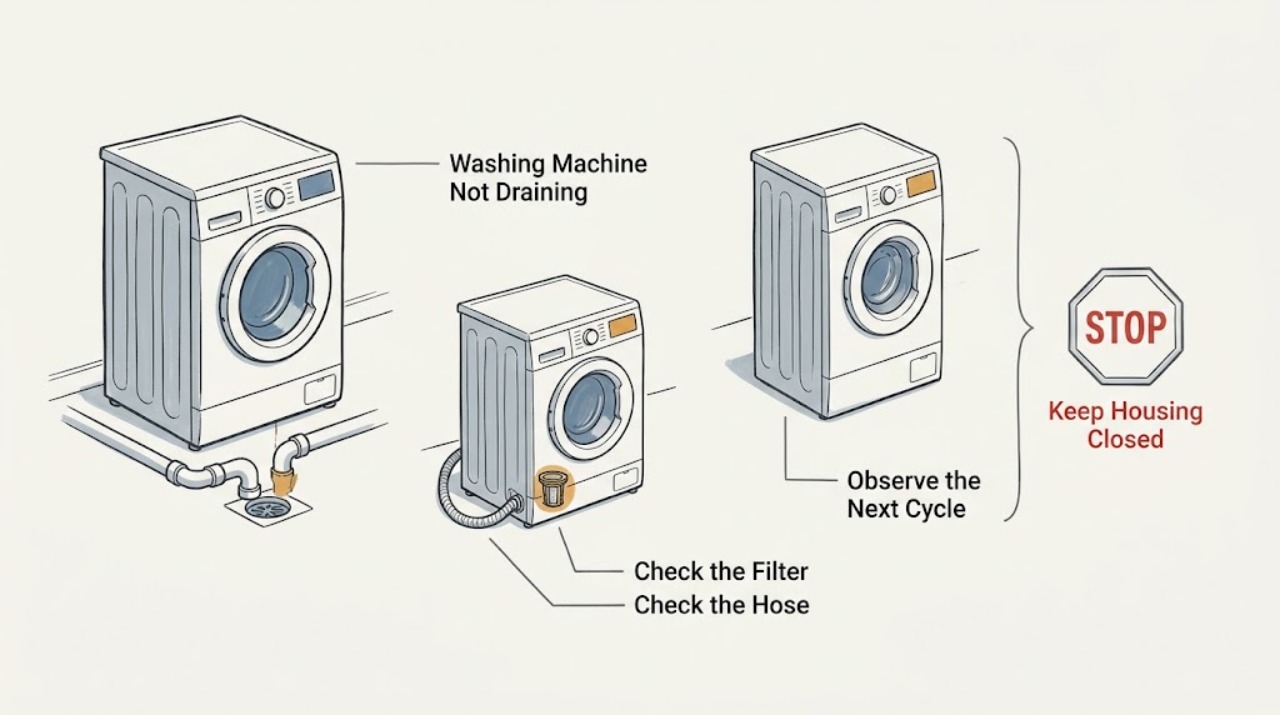
If a Beko washing machine leaves water in the drum, first stop the program, unplug the appliance, and let hot water cool. The most useful user checks are the accessible pump filter, the drain hose for a bend or blockage, and the hose routing so wastewater cannot flow back into the drum. Place a container and towels before opening the filter area because residual water may spill. Clean only the accessible filter and hose, refit them securely, and try one drain or spin program. If the filter and hose are clear but the machine still will not drain, or if it leaks or makes an abnormal pump noise, stop and contact an authorized service agent.
Work through in order
Diagnostic checks
Use only checks that match the exact appliance or system and its official guide.
-
Check 1
Stop the program, switch the machine off, unplug it, and wait until the water in the drum is cool before opening the lower filter area; prepare a large container and towels.
Expected result: The drum contains cool residual water that can be collected, or the water is still hot, the appliance is still powered, or the filter cover cannot be opened safely.
Next step: If the machine is unplugged and the water is cool, continue to the pump-filter check. If the water is hot or the area is unsafe, keep the appliance off and arrange service instead of forcing the filter open.
Why this matters
Why: Beko's drain procedure requires power to be disconnected and warns that water in the machine may be hot enough to scald. The first observation determines whether the user can continue with an accessible check.
-
Check 2
Open the filter cover and use the machine's emergency drain hose if fitted; otherwise loosen the pump filter gradually over the container. Remove lint, hair, coins, buttons, or other debris from the filter and the accessible impeller area, then refit and secure the filter.
Expected result: The filter or impeller area contains debris, water drains as the filter is opened, or the filter area is clear but water will not leave the machine.
Next step: If debris was removed, close the filter cover and continue to inspect the drain hose before testing. If the filter is clear and there is no flow, do not open the pump housing; continue with the hose checks and then service if the restriction remains.
Why this matters
Why: Beko says the pump filter catches solid objects and that a clogged filter can prevent the machine from draining. Foreign material left around the filter or impeller can also damage the product or cause noise.
-
Check 3
Inspect the full drain hose from the machine to the waste outlet for a sharp bend, crushing, visible blockage, or a loose connection; straighten it without pulling hard on the fittings.
Expected result: The hose is kinked or obstructed, the connection is loose, or the hose is open and correctly connected.
Next step: If a bend or accessible obstruction is corrected, secure the hose and continue to the backflow check. If the hose is clear but the machine still cannot drain, do not push tools into the pump; arrange authorized service after one controlled test.
Why this matters
Why: Beko states that a bent or clogged drain hose can keep water from leaving the drum completely, even after the pump filter is clean.
-
Check 4
Check the hose routing at the rear and the waste connection so the hose remains held by its clip and is inserted only as far as the model instructions specify; for the Beko guidance opened here, the waste outlet is 15 to 40 inches above the floor and the hose is inserted about 6 inches.
Expected result: The hose has fallen out of its retaining clip, is positioned too low or too deep, or wastewater returns to the drum; alternatively, the routing matches the guidance and the drum stays empty after draining.
Next step: Correct the routing using the exact model manual, then run one short drain or spin program. If water returns or the machine still stops with water inside, stop and call an authorized service agent.
Why this matters
Why: Beko explains that an incorrectly positioned drain hose can allow wastewater to flow back into the drum even when the pump filter and hose are not blocked.
-
Check 5
After the filter is secure and the hose is correctly routed, run one short drain or spin program while watching the accessible hose connection and listening for the pump.
Expected result: Water leaves the drum and no leak or abnormal noise appears, the pump hums but water remains, or water leaks from the filter or hose connection.
Next step: If draining completes, monitor the next normal cycle. If water remains, the pump only hums, the filter leaks, or the machine shows a recurring drain fault, stop using it and arrange authorized service; do not dismantle the pump or electrical controls.
Why this matters
Why: A successful controlled test indicates that the external restriction or routing problem was corrected. Persistent no-flow, a leak, or abnormal pump noise points beyond routine cleaning and hose adjustment.
Use your observations
Decision map
Find the observation that best matches what you see, then follow the next safe action.
-
PATH 01Safety boundary
What you see
The drum water is hot, the machine is still powered, water cannot be controlled, or the filter cover is damaged.
Do this next
Keep the machine off, wait for a safe condition only if the user can do so without forcing the cover, and call authorized service when access remains unsafe.
Why this path and its safety boundary
Safety stop: Continue with the unplugged pump-filter check using a container and towels.
-
PATH 02Safety boundary
What you see
Lint, hair, coins, buttons, or other foreign material is found in the filter or accessible impeller area.
Do this next
Remove only the accessible debris, refit the filter securely, inspect the hose, and perform one controlled drain or spin test.
Why this path and its safety boundary
Safety stop: Continue to the drain-hose and backflow checks rather than assuming the pump has failed.
-
PATH 03Safety boundary
What you see
The drain hose is bent, clogged, loose from its clip, routed incorrectly, or allowing water to return to the drum.
Do this next
Correct the accessible hose position or blockage according to the model manual, then test once.
Why this path and its safety boundary
Safety stop: If the hose is clear and correctly routed, continue to the persistent-fault branch.
-
PATH 04Safety boundary
What you see
The filter and hose are clear and correctly fitted, but water remains, the pump only hums, a leak appears, or a drain fault returns.
Do this next
Stop using the machine and contact an authorized service agent. Do not open the pump housing, motor, or control area as an ordinary-user check.
Why this path and its safety boundary
Safety stop: If the single test drains normally without a leak or abnormal noise, monitor the next cycle and keep the filter maintained according to the model manual.
Helpful context
Understand the symptom
Make the drain check safe
Do not remove or dismantle the pump filter while the machine is running. Disconnect power first, wait for the water to cool, and use a large container and towels. Beko warns that water inside the machine can be very hot, so stop if the water is hot, the filter cover is damaged, or you cannot control the flow.
Read the result before trying another cycle
Debris in the filter, a kinked hose, and drain-water backflow are different faults with different corrections. A single short drain or spin test after an external correction is enough to confirm improvement; repeated failed cycles can leave water in the machine and do not prove that a pump or control part should be replaced.
When checks do not resolve it
Need a professional?
Use an authorized Beko service agent when the accessible drain path is clear but the washer still cannot drain, or when there is a persistent leak, abnormal pump noise, damaged filter housing, or any need for internal access.
Common questions
FAQ
Why is my Beko washing machine not draining?
The accessible pump filter may be clogged, the drain hose may be bent or blocked, or the hose may be routed so wastewater returns to the drum. Unplug the washer, let the water cool, and check those external points before arranging service.
Can I open the Beko pump filter with water still in the drum?
Only after switching off and unplugging the machine, allowing hot water to cool, and preparing a large container and towels. Use the emergency drain hose if the model has one, and stop if the flow or access is unsafe.
What if the filter is clean but the Beko washer still will not drain?
Check the full drain hose for a bend or blockage and verify its clip and routing so water cannot flow back into the drum. If the path is clear and one controlled drain or spin test still leaves water, contact an authorized service agent.
Should I replace the drain pump when the washer will not drain?
Not from the symptom alone. A clogged filter, hose restriction, or backflow can look like a failed pump. If those accessible checks do not restore draining, have the machine diagnosed rather than ordering a part based only on the symptom.
Read the exact guide
Official sources
- How to fix a washing machine that won’t drainBeko · General Beko washer troubleshooting; use the exact model manual where hose routing or access differs.
- Draining Remaining Water and Cleaning the Pump FilterBeko · Beko washing-machine filter procedure for the documented interface; filter access and emergency-hose availability can vary by model.
- Maintenance and Cleaning SafetyBeko · General Beko washer safety guidance for maintenance and filter access.
Community feedback
Share a repair observation
Share a plain-text repair observation. Accepted observations are published automatically; this page may take a moment to update.