
On this page
Start here
Quick answer
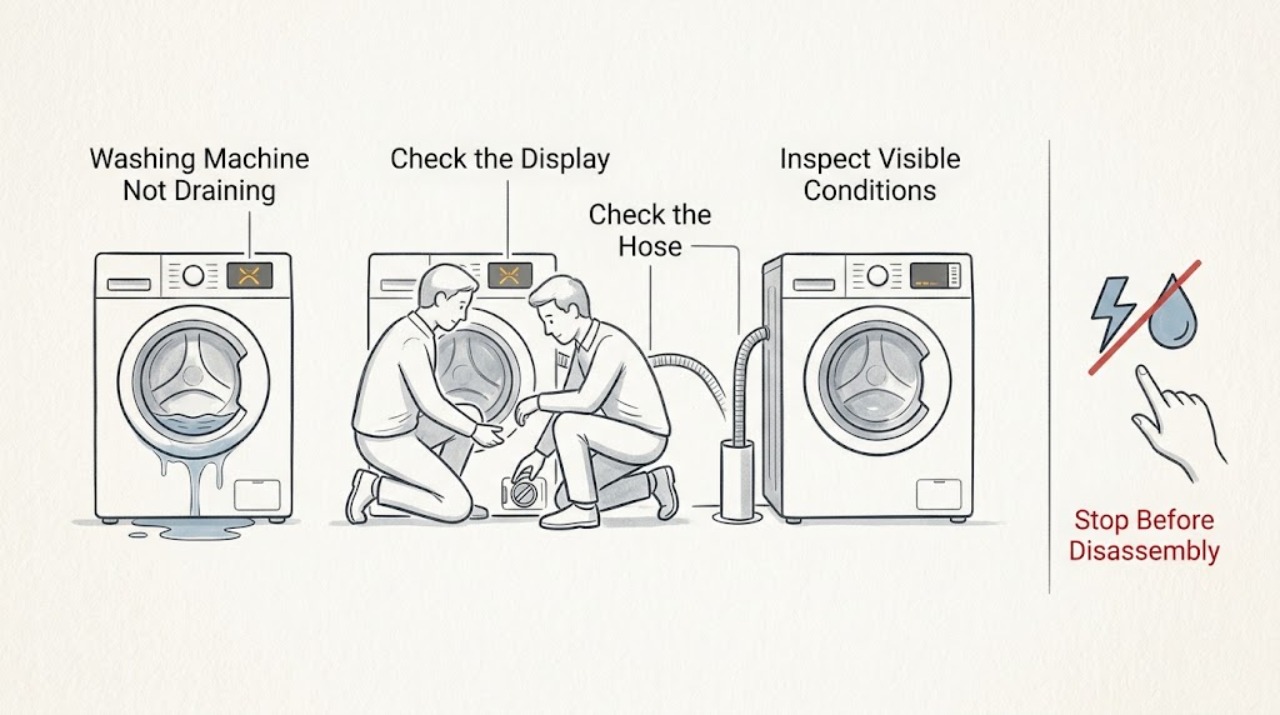
If a Bauknecht washing machine leaves water in the drum, stop the programme and keep hands away from standing water and electrical connections. From a dry, safe position, check the visible drain hose for a kink or blocked outlet, then use the exact model manual before opening any user-accessible pump filter. Bauknecht guidance identifies a foreign object at the pump, blocked pump blades, a restricted drain hose, or a dirty filter as possible causes. If one safe external and manual-directed filter check does not restore drainage, or there is a leak, burning smell, damaged cord, water near electricity, or a repeated fault, stop using the machine and arrange qualified appliance or plumbing service. Do not open panels or perform live electrical work.
Work through in order
Diagnostic checks
Use only checks that match the exact appliance or system and its official guide.
-
Check 1
Leave the door closed, stop the programme, and note how much water remains, whether there is an active leak, whether the machine made a pump sound, and any displayed error or drain symbol. Keep the controls off if water is near an electrical connection.
Expected result: The drum is full with no drain sound, the pump hums but water does not leave, the machine leaks, or a drain-related error returns.
Next step: If there is a leak near electricity, a burning smell, a damaged cord, or unsafe standing water, stop and follow the safety-service branch. Otherwise continue with the visible hose inspection.
Why this matters
Why: A full drum with no flow suggests a blocked path or pump problem; a hum with little flow makes a restriction or blocked pump area plausible. A leak or water near electricity changes the job into a safety stop rather than a routine filter check.
-
Check 2
Without moving the washer or disconnecting a water-filled hose, inspect the visible drain hose from the machine to its wall drain, sink, or standpipe. Look for a sharp kink, crushing, a slipped end, or a connection that is visibly blocked or leaking.
Expected result: The hose is kinked, crushed, slipped, visibly clogged, or leaking, or it is open and routed as shown by the exact model instructions.
Next step: Correct only an obvious external routing issue according to the model manual, secure the hose end, and make one drain attempt. Do not pull off a hose, dismantle a trap, or move the washer while water remains.
Why this matters
Why: Bauknecht identifies a kinked or clogged drain hose as a possible reason water cannot leave. A restriction outside the machine can imitate a failed pump, while a clear hose shifts attention to the filter, receiving drain, or internal fault.
-
Check 3
Check the receiving drain without opening the washer: look for visible backup at the sink, tub, standpipe, or wall-drain opening, and confirm that the hose end is not pressed into a blocked opening. Do not disassemble plumbing as a first check.
Expected result: The household drain accepts water normally, or it backs up and cannot accept discharge from the washer.
Next step: If the household drain backs up, stop using the washer and arrange plumbing service. If it is clear, continue only to the exact manual's user-accessible filter procedure.
Why this matters
Why: A blocked household drain can leave water in the drum even when the washer's pump and hose are working. If the external drain is clear, the fault is more likely within the washer's filter, pump path, or controls.
-
Check 4
Only if the exact Bauknecht manual identifies a user-accessible foreign-object or lint filter, stop and disconnect the machine as that manual directs before opening it. Place a suitable collection vessel under the opening, then inspect the removed filter and the accessible pump opening for lint, coins, fabric, or other debris.
Expected result: The filter or accessible pump opening contains debris, the pump-blade area is visibly blocked, or the filter and opening are clear. Residual water may still be present.
Next step: If and only if access, water containment, and the exact manual all make this an owner-maintenance step, clear visible debris, rinse and reseat the filter with its seal correctly placed, then try one documented drain programme. Stop if the cover, filter, or water path differs from the manual.
Why this matters
Why: Bauknecht's cleaning guidance says debris can collect in the filter and pump opening, and its no-drain FAQ says a foreign object or blocked pump blades can stop discharge. A clear filter does not prove that the pump, internal hose, wiring, or control is healthy.
-
Check 5
After the safe hose, household-drain, and manual-directed filter checks, select the model's documented Drain, Spin, or equivalent pump-out programme and observe one attempt from a dry position. Watch for leaks, unusual pump noise, an unchanged water level, or a returning error.
Expected result: Water leaves and the programme completes, water leaves slowly with abnormal noise, or the drum remains full and the error returns.
Next step: Turn the machine off after this single attempt. If it remains full, leaks, sounds abnormal, or repeats the fault, stop using it and use the professional-service branch rather than repeating cycles.
Why this matters
Why: Normal discharge after clearing a restriction supports an external hose, drain, or filter obstruction. Slow or absent discharge after a clear path indicates a remaining pump, internal hose, sensor, control, or protection fault that an owner check cannot isolate.
-
Check 6
Record the model and serial information, displayed error, water level, hose and filter findings, pump sound, and result of the single drain attempt. Use the appliance identification label and the model-specific manual when arranging service.
Expected result: The machine drains once but the symptom returns, or it never drains after the visible path and permitted filter check are clear.
Next step: Stop using the washer and request qualified appliance service. If the receiving drain is the restriction, use a qualified plumber; do not remove panels or perform live electrical work to distinguish internal causes.
Why this matters
Why: Recurrence or no improvement shifts the likely issue from a simple visible obstruction toward an internal pump, hose, sensor, control, or water-protection fault. A part should not be selected from the symptom alone.
Use your observations
Decision map
Find the observation that best matches what you see, then follow the next safe action.
-
PATH 01Next step
What you see
Water is near an outlet or cord, there is an active leak, burning smell, smoke, damaged insulation, or the user cannot safely contain the remaining water.
Do this next
Stop the washer. Isolate power only from a safely reachable dry control if it can be done without touching water or damage; otherwise leave it alone and contact a qualified appliance or electrical professional. Do not open the cabinet.
Why this path and its safety boundary
Why it matters: The situation is no longer a routine drain-path or filter check.
-
PATH 02Next step
What you see
The visible drain hose is kinked, crushed, slipped, clogged at its connection, or the household drain backs up.
Do this next
Correct the visible hose routing without moving a water-filled washer, or arrange plumbing service for a blocked household drain. Then make one documented pump-out attempt.
Why this path and its safety boundary
Why it matters: An external drain restriction can explain the standing water without a failed pump.
-
PATH 03Next step
What you see
The exact manual identifies a user-accessible filter, the washer is safely stopped and disconnected as directed, and debris is found in the filter or accessible pump opening.
Do this next
Clear and reseat the filter only as the exact manual directs, contain residual water, and perform one drain programme. If the drum remains full or the error returns, stop and request service.
Why this path and its safety boundary
Why it matters: The debris is a plausible flow restriction, but clearing it does not certify the pump or internal plumbing.
-
PATH 04Next step
What you see
The hose, receiving drain, and permitted filter area are clear, but the washer remains full, drains slowly, makes abnormal pump noise, repeats an error, or needs internal access.
Do this next
Stop using the washer and arrange qualified appliance service. Provide the model, serial information, error, and recorded observations; do not remove panels or perform live electrical work.
Why this path and its safety boundary
Why it matters: An internal pump, hose, sensor, wiring, control, or water-protection fault remains possible and cannot be safely isolated by external checks.
Helpful context
Understand the symptom
What a no-drain symptom means
Water left in the drum means the machine did not move water out at the expected drain stage. The useful split is an external restriction, such as a kinked hose or blocked household outlet, versus debris at a model-specific filter or pump. Bauknecht's own no-drain guidance mentions a foreign object in the pump, blocked pump blades, and a kinked or clogged drain hose. A persistent fault after those checks can still involve the pump, internal hose, sensor, control, or water-protection system.
Stop before a wet or electrical hazard
Do not reach into standing water, move a water-filled machine, remove cabinet panels, or work near an energized connection. If water is close to an outlet or cord, isolate power only from a safely reachable dry control if that can be done without contact with the hazard; otherwise leave it alone. Stop for a leak, burning smell, damaged cord, smoke, or repeated electrical interruption and use qualified service.
Only after diagnosis
Potential parts
- drain pump
Consider this category only if the hose, household drain, and permitted filter area are clear and a qualified technician confirms that the pump fails to discharge.
Confirm the complete model and approved fitment with the manufacturer or technician before ordering; no universal compatibility is assumed. - drain hose or pump-filter assembly
Consider this category only when inspection or technician diagnosis finds a damaged hose, failed seal, or a filter component that cannot be restored by cleaning.
Verify the exact model and sealing arrangement before replacement; a generic hose or filter is not assumed to fit.
When checks do not resolve it
Need a professional?
Use qualified appliance service when the visible hose, household drain, and exact-manual filter checks do not restore drainage; when water remains after one documented pump-out attempt; when the pump is unusually loud; or when diagnosis would require panel removal, internal wiring access, or energized work. Use plumbing service when the household drain backs up. Stop immediately for a leak, burning smell, smoke, damaged cord, water near electricity, or unsafe access.
Common questions
FAQ
Why is my Bauknecht washing machine leaving water in the drum?
Start with the safe external drain path: inspect the visible hose for a kink or blockage, check the receiving drain for backup, and consult the exact manual before opening a user-accessible filter. Bauknecht also identifies pump debris or blocked pump blades as possible causes; persistent no-drain behavior needs qualified service.
Can I clean the Bauknecht washing-machine drain filter myself?
Only when the exact model manual identifies the filter as user-accessible and gives a safe shutdown and water-containment procedure. Bauknecht's cleaning guide calls for a collection vessel and directs the reader to the appliance manual for access. Stop if the water cannot be contained or the access does not match.
Could a blocked household drain cause a Bauknecht washer not to drain?
Yes. A sink, standpipe, or wall-drain backup can prevent the washer from discharging even when its hose is intact. If the household drain backs up, stop using the machine and arrange plumbing service rather than dismantling a water-filled connection.
When does a Bauknecht no-drain problem need service?
Use qualified appliance service when one safe hose check, a clear receiving drain, and one model-directed filter and pump-out attempt do not restore drainage, or when the pump is unusually loud or an error returns. Stop immediately for a leak, burning smell, smoke, cord damage, water near electricity, or unsafe access.
Read the exact guide
Official sources
- Waschmaschine reinigen – Schritt für SchrittBauknecht · Bauknecht washing-machine cleaning and maintenance guide
- Die Waschmaschine startet nicht: So finden Sie den FehlerBauknecht · Bauknecht washing-machine troubleshooting and service guidance
- Warum pumpt die Waschmaschine das Wasser nicht ab?Bauknecht · Bauknecht washing-machine no-drain FAQ
Community feedback
Share a repair observation
Share a plain-text repair observation. Accepted observations are published automatically; this page may take a moment to update.