
On this page
Start here
Quick answer
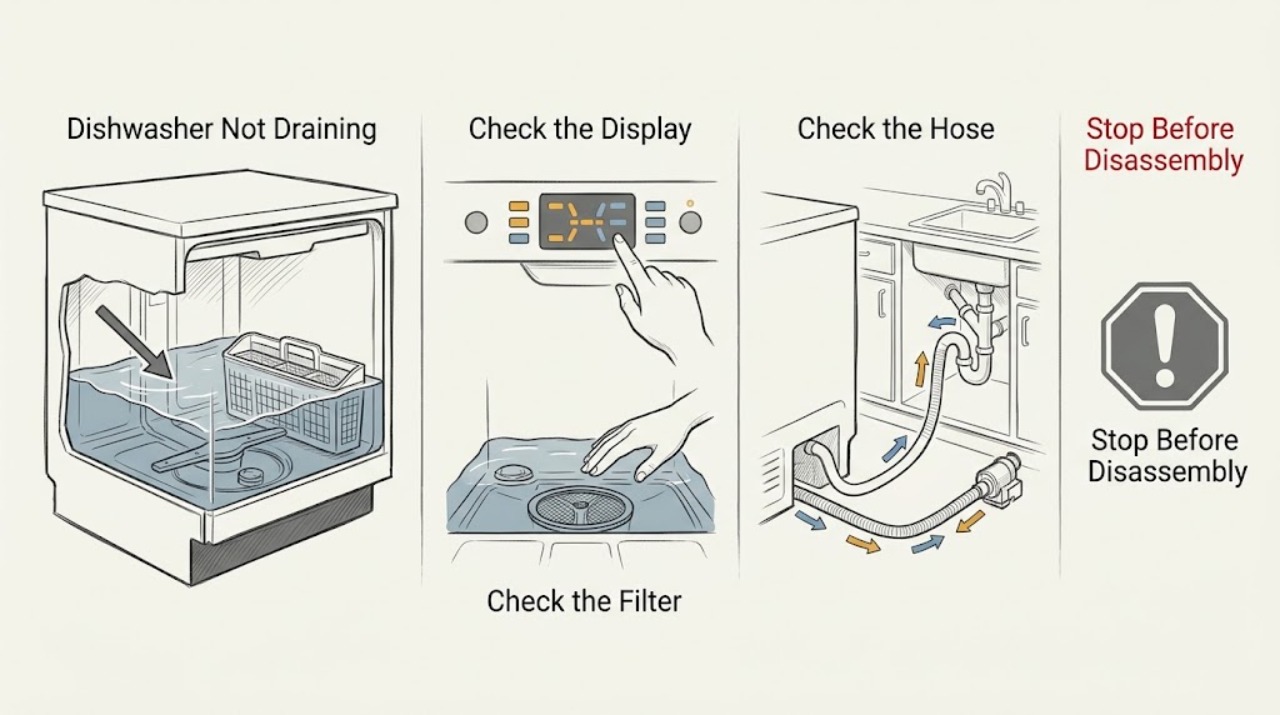
If an ASKO dishwasher is not draining, first make sure the wash cycle has actually ended and use the model's manual-drain or cancel control. Then switch the appliance off and clean the accessible filters, check the visible drain line for a kink or blockage, and confirm the drain installation still follows the model's instructions. ASKO's U.S. cleaning guide specifically recommends cleaning filters, checking the drain line, and holding Start/Stop for three seconds to initiate a manual drain; it says a continuously running drain pump is a reason to turn power and water off and contact Customer Care. Do not remove pump covers, dismantle plumbing, or keep restarting a dishwasher that leaks, leaves water after the documented checks, or runs its pump continuously.
Work through in order
Diagnostic checks
Use only checks that match the exact appliance or system and its official guide.
-
Check 1
Check whether the wash program has ended, is paused, or was interrupted. With the door closed and hands out of the tub, use the exact model's cancel or manual-drain control; the opened ASKO U.S. guide describes holding Start/Stop for three seconds for a manual drain.
Expected result: The pump runs and the tub empties; the cycle was still active or paused; the pump is silent with water remaining; or the pump runs continuously.
Next step: If the cycle drains, monitor one normal cycle. If water remains or the pump runs continuously, stop repeated commands and continue only with the safe filter and drain-path checks.
Why this matters
Why: A cycle state can explain temporary standing water, while a successful manual drain shows that the control can command the pump. A silent or continuously running pump after the correct command needs a different path.
-
Check 2
Turn the dishwasher off and remove the lower rack. Following the exact ASKO manual, remove and clean the accessible filter components, inspect them for food debris, and reinstall them securely. Do not run the dishwasher with a filter missing or loose.
Expected result: The filter is blocked, loose, damaged, or clean and secure; water above the filters clears after cleaning; or the same water level remains.
Next step: Run the model's permitted drain or rinse verification once. If water remains or the filter cannot seat correctly, stop before reaching into the pump area and arrange service.
Why this matters
Why: ASKO identifies dirty filters as a direct check for a unit that does not drain and warns that the dishwasher should not be used without filters or with a loose filter. Clearing a filter does not prove the pump or drain hose is clear.
-
Check 3
Inspect the visible drain hose and under-sink connection without pulling the dishwasher from the cabinet or opening plumbing. Look for a kink, pinch, or obvious blockage, and compare the routing with the exact installation instructions; the opened ASKO DOD651PHXXLS instructions show a required high-loop arrangement for that model.
Expected result: The visible hose is kinked or pinched; the drain connection is obstructed; the routing differs from the model instructions; or the visible drain path is clear.
Next step: Correct only an accessible hose-routing obstruction allowed by the manual. Do not disconnect a water or drain connection with water present; if the path is inaccessible or clear but draining still fails, arrange service.
Why this matters
Why: A restricted or incorrectly routed drain path can prevent water from leaving. The high-loop detail is model-specific, so a different ASKO dishwasher may have a different documented arrangement.
-
Check 4
If the dishwasher stopped during a cycle, note whether there was a power interruption, whether the unit is properly plugged in, and whether the filter and drain are free of debris. Do not keep restarting a cycle while water remains or a leak is visible.
Expected result: The cycle was interrupted and resumes after the model command; the unit is powered but leaves water; the drain path is clean; or a leak appears.
Next step: Resume only the model-approved cycle after an interruption is resolved. If water remains, a leak appears, or the stop repeats, turn off the appliance's water and power safely and arrange service.
Why this matters
Why: ASKO's guide lists a proper plug, clean filters, and a clean drain as checks when a unit stops during a cycle. A leak or persistent water after those checks is not safely assigned to one internal component.
-
Check 5
If the drain pump runs continuously, or if the dishwasher still will not drain after one correct manual-drain attempt, a correctly seated filter, and a clear visible hose, stop the appliance. Record the model, water level, pump behavior, and any displayed error before contacting service.
Expected result: The pump runs continuously; the pump is silent; the same drain problem returns; or the dishwasher drains normally after the documented checks.
Next step: Turn power and water off as ASKO directs for a continuously running pump and arrange authorised service. Do not open the pump housing, enter service mode, or order a drain part from the symptom alone.
Why this matters
Why: ASKO specifically treats a continuously running drain pump as an escalation condition. A persistent failure after external checks can involve the pump, control, or concealed plumbing, but the symptom does not establish a compatible part.
Use your observations
Decision map
Find the observation that best matches what you see, then follow the next safe action.
-
PATH 01Next step
What you see
The cycle was paused or interrupted, and the model's manual-drain or resume command empties the tub without a returning fault.
Do this next
Monitor one normal cycle and keep the exact manual available. Escalate if water remains or the stop repeats.
Why this path and its safety boundary
Why it matters: The standing water was more likely a cycle-state issue than a confirmed drain-component failure.
-
PATH 02Next step
What you see
The filter contains debris or was loose, and the dishwasher drains after the filter is cleaned and correctly reinstalled.
Do this next
Keep the filter seated and clean it at the interval in the model manual. Arrange service if the problem returns.
Why this path and its safety boundary
Why it matters: The documented filter condition was a plausible contributor, but successful drainage does not prove the pump and drain hose are free of future restrictions.
-
PATH 03Next step
What you see
The visible drain hose is kinked, pinched, blocked, or routed differently from the model's installation instructions, and drainage improves after a safe accessible correction.
Do this next
Follow the exact model installation instructions and monitor a complete cycle. If the hose is inaccessible or drainage remains poor, arrange service.
Why this path and its safety boundary
Why it matters: A drain-path or installation condition is more likely than an unconfirmed pump failure; the high-loop requirement cited here is specific to the opened DOD651PHXXLS instructions.
-
PATH 04Next step
What you see
The pump runs continuously, water remains after clean filters and a clear visible drain route, a leak is present, or the problem returns after the documented drain command.
Do this next
Turn power and water off as appropriate and arrange authorised ASKO service. Provide the exact model and the full symptom record.
Why this path and its safety boundary
Why it matters: The user-level evidence does not identify one pump, control, hose, or concealed blockage safely.
Helpful context
Understand the symptom
First confirm that the machine is supposed to be draining
A cycle that is still running, paused, or waiting for a control command can leave water in the tub temporarily. ASKO's guide says to check filters and the drain line, and to use its manual-drain command for the covered control layout. Record whether the cycle ended, whether the pump is silent or running, and whether water rises again after a drain attempt.
Filters and the visible drain route are the homeowner checks
ASKO's cleaning guidance puts filters and the drain line before service. Its installation instructions show that drain-hose routing is part of correct drainage, but the opened installation document is for a particular model. Clean and reseat only accessible components and follow the exact model manual for any hose or filter arrangement.
A continuously running pump is a stop signal
ASKO's U.S. guide says to turn power and water off and contact Customer Care when the drain pump runs continuously. That symptom is not safely resolved by repeated drain commands or by guessing that a pump, control, or hose part fits the appliance.
When checks do not resolve it
Need a professional?
The same standing water returns after the model-specific drain command and filter check., The drain pump runs continuously, the appliance leaks, or the visible hose is clear but drainage still fails., The next check requires pulling out the dishwasher, opening the pump area, disconnecting plumbing, or using service documentation.
Have this ready
- The complete ASKO model or product code.
- Whether the cycle ended, the pump is silent or continuous, and how much water remains.
- Filter condition, visible hose-routing findings, manual-drain result, and any displayed error.
Common questions
FAQ
What should I check first when my ASKO dishwasher is not draining?
Confirm the cycle has ended, then check and clean the accessible filters and inspect the visible drain line for a blockage. ASKO's U.S. cleaning guide also describes holding Start/Stop for three seconds to initiate a manual drain, but the exact control should come from your model manual.
Can a clogged filter cause an ASKO dishwasher to leave water?
Yes. ASKO lists filter cleaning as a first check for a unit that does not drain and says not to use the dishwasher without filters or with a loose filter. Reinstall the cleaned filter correctly and arrange service if water remains.
Should I disconnect the drain hose to clear my ASKO dishwasher?
Not as a first homeowner step. Inspect the visible hose for a kink or blockage and compare its routing with the exact installation instructions. Disconnecting plumbing with water present can create a leak; use authorised service when the connection is inaccessible or the visible route is clear.
What does it mean if the ASKO drain pump runs continuously?
ASKO's U.S. cleaning guide says to turn power and water off to the unit and contact Customer Care when the drain pump runs continuously. Do not keep restarting the pump or assume that a replacement pump is the correct part without model-specific diagnosis.
Is the high-loop drain arrangement the same on every ASKO dishwasher?
Do not assume that. The opened high-loop instruction is for the ASKO DOD651PHXXLS installation document, while ASKO's manuals search requires a product code or model name. Follow the installation instructions for your exact dishwasher.
Read the exact guide
Official sources
- Installation instructionsASKO · Model-specific drain hose high loop, hose routing, kink prevention, and qualified installation safety
- Dishwasher CleaningASKO · Filters, drain line, manual drain, interrupted-cycle checks, and continuous drain-pump escalation
- User manualsASKO · Exact model/product-code manual selection and local-market documentation
Community feedback
Share a repair observation
Share a plain-text repair observation. Accepted observations are published automatically; this page may take a moment to update.