
On this page
Start here
Quick answer
An Electrolux washer-dryer that is not draining may have a kinked, blocked, damaged, loose, or incorrectly positioned drain hose, a blocked household standpipe or siphon, a clogged pump or filter, or an internal pump, pressure-sensing, or control fault. Stop the cycle and note whether water remains in the drum, whether the pump can be heard, and whether the hose moves or leaks at the drain. With the appliance stopped, cool, and safely isolated, inspect only the visible drain-hose routing, its connection and household drain, using the exact Electrolux manual for height and access. Do not pull a built-in unit across a wet floor, open a pump filter with uncontrolled water, reach into moving parts, or keep restarting a blocked cycle. Turn off water and isolate power from a dry, safe location for a leak near electrical parts, smoke, burning odor, sparks, a hot or damaged cord, or repeated breaker trips. If a clear, secure drain hose and household drain do not restore draining, leave the washer-dryer off and arrange qualified Electrolux service.
Before you begin
Safety first
- Do not open the cabinet, probe energized wiring, open a pump filter with uncontrolled water, dismantle a stacked unit, or continue operating with a full drum, active leak, or electrical hazard.
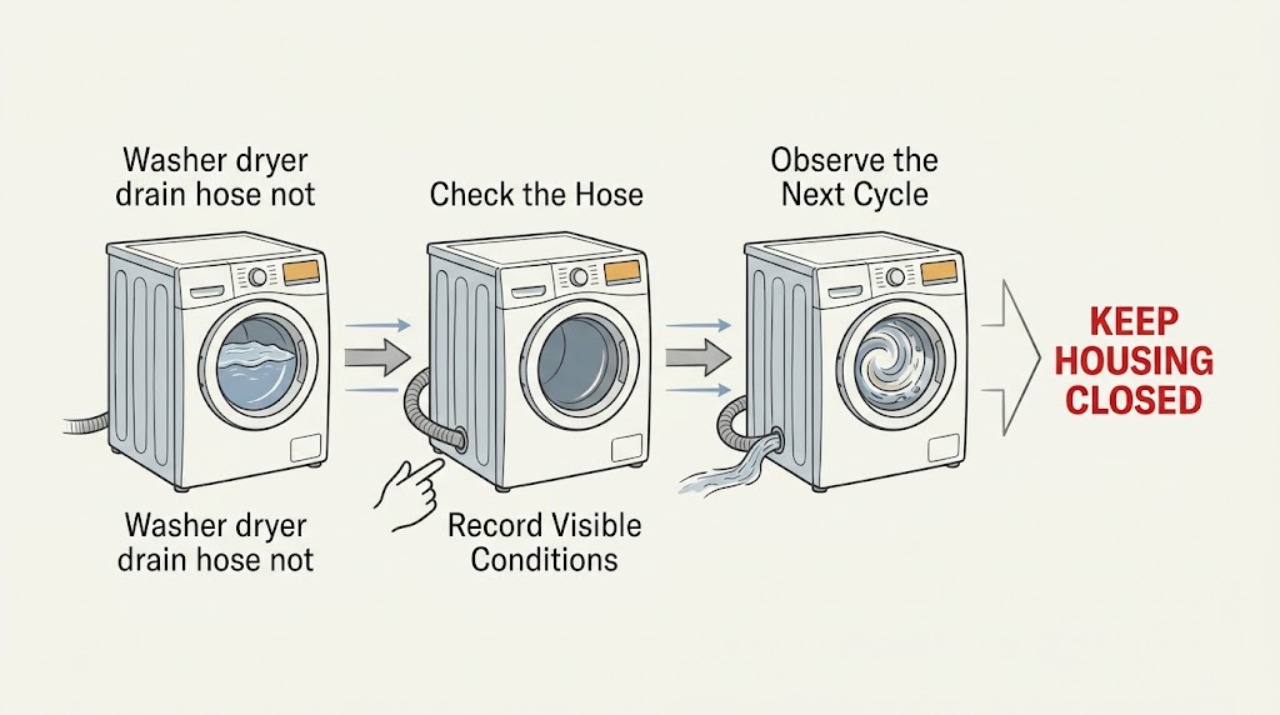
Work through in order
Diagnostic checks
Use only checks that match the exact appliance or system and its official guide.
-
Check 1
Pause or cancel the washer-dryer as the exact model permits and wait until the drum stops. Record the cycle stage, whether water remains, whether the drain pump hums or gurgles, any E21 or other display, and whether water is appearing at the hose or beneath the unit.
Expected result: The drum is empty but the cycle is slow, water remains with pump noise, water remains with no pump noise, E21 appears, or a leak or electrical symptom is present.
Next step: Keep clear and isolate power or water only from a dry safe location for an active leak near electrics, smoke, burning odor, sparks, a hot connection, repeated breaker trips, or a drum that will not stop. Otherwise continue only after the appliance is still and cool enough for a visible inspection.
Why this matters
Why: A pump sound with trapped water narrows the issue to a restricted hose, filter, pump, or downstream drain; silence can indicate a pump or control path. E21 indicates slow or incomplete pump-out. A hazard is a safety stop, not an ordinary drain check.
-
Check 2
From a dry, safe position, inspect the visible drain hose from the washer to the standpipe, sink, or drain connection. Look for kinks, flattening, sharp bends, cracks, a loose bracket, or an end that has slipped out. Do not pull a built-in washer-dryer forward across a wet floor or disconnect a full hose without the model procedure.
Expected result: The hose is kinked or crushed, damaged, loose at the drain, visibly leaking, or clear and securely supported.
Next step: Correct only a visible routing or support issue without stressing the hose and watch for leaks on one supervised drain attempt if the floor is dry. Replace or service a damaged hose; stop if water returns or the hose cannot be safely accessed.
Why this matters
Why: Electrolux identifies hose restriction as a common cause of slow pump-out and says an unsecured hose can let water miss the drain. A clear secure hose makes a household drain, filter, pump, or internal fault more likely.
-
Check 3
Inspect the household standpipe, sink connection, or siphon that receives the drain hose. Look for a blocked opening, water backing up, a hose sealed too tightly, or a missing support arrangement. Do not pour water into a concealed or overflowing drain and do not seal the hose airtight unless the exact manual requires a specific fitting.
Expected result: The home drain backs up, the hose is loose from the drain, the connection is blocked or sealed incorrectly, or the household drain appears open and accepts water.
Next step: Stop using the appliance and arrange plumbing service for a blocked standpipe, sink, or siphon. Secure only a visible loose hose as the installation guide directs; do not run repeated cycles into a backing-up drain.
Why this matters
Why: A restriction or poor drain connection can make a working pump appear unable to drain. A clear household path with water still trapped shifts attention to the washer's filter, pump, pressure-sensing, or control system.
-
Check 4
Read the exact Electrolux model manual before accessing a drain filter or emergency drain. If the manual identifies a user-accessible procedure, isolate power, let hot water cool, place a suitable container and towels, and follow only that procedure; do not open a filter with a full drum or uncontrolled water.
Expected result: The manual provides an accessible filter or emergency-drain procedure, the filter area is blocked or damaged, the water cannot be contained safely, or no user-accessible procedure is provided.
Next step: Use the exact manual only when water and power are safely isolated and the water can be contained. Stop for sharp debris, a damaged cover, hot water, flooding, or no safe procedure; arrange qualified service instead of opening the cabinet.
Why this matters
Why: Electrolux technical guidance shows that emergency draining and pump access vary by model and that foreign objects or a blocked pump can prevent complete pump-out. Unsafe water release or inaccessible parts require service.
-
Check 5
After the visible hose and drain path are corrected, note whether the washer-dryer drains once, drains slowly, or leaves water again. Record whether the pump runs, whether E21 returns, and whether the problem affects wash, dry, or both portions of the program. Do not repeat a blocked cycle to collect more evidence.
Expected result: A single supervised drain completes, the hose remains restricted, the pump runs without moving water, E21 returns, or the drum remains full.
Next step: Leave the appliance off and arrange qualified Electrolux service for recurring no-drain, a pump that runs without flow, a full drum, or a code that returns. Provide the model, phase, hose routing, water level, and observations.
Why this matters
Why: A resolved hose or household restriction supports an external drain-path cause. A returning code or trapped water with a clear path suggests pump, filter, pressure-sensing, wiring, or control diagnosis.
-
Check 6
If the washer-dryer was recently installed, moved, or stacked, compare the hose support and appliance position with the exact Electrolux installation instructions. Check only visible stacking or bracket stability and that the drain hose is not being pulled, rubbed, or sharply bent; do not dismantle a stacked unit.
Expected result: The drain hose is pulled or unsecured, the unit or stack has shifted, the installation differs from the manual, or the installation appears stable and correctly routed.
Next step: Have a recent installation corrected by the installer or a qualified technician. Stop if the stack can move, the hose is damaged, or a built-in unit cannot be safely accessed; do not improvise a hose route.
Why this matters
Why: Electrolux notes that recent installation and hose positioning can produce drainage trouble. A stable, correctly installed path with repeated failure makes an internal pump or control issue more likely.
Use your observations
Decision map
Find the observation that best matches what you see, then follow the next safe action.
-
PATH 01Next step
What you see
Do this next
Correct only the visible routing or support after the appliance is stopped, then make one supervised drain attempt; stop for a damaged hose or returning leak.
-
PATH 02Next step
What you see
Do this next
Leave the washer-dryer off and arrange plumbing service; do not continue draining into a backing-up connection.
-
PATH 03Next step
What you see
Do this next
Use an exact-model filter or emergency-drain procedure only if it safely controls water; otherwise leave the unit off and arrange service.
-
PATH 04Next step
What you see
Do this next
Keep the washer-dryer off and arrange qualified Electrolux service; do not probe energized wiring or open the cabinet.
-
PATH 05Next step
What you see
Do this next
Stop repeated cycles and schedule qualified service with the model, code, water level, pump sound, and hose findings.
-
PATH 06Next step
What you see
Do this next
Have the installation corrected using the exact Electrolux manual; stop if the stack or built-in appliance cannot be safely stabilized.
-
PATH 07Next step
What you see
Do this next
Keep clear, isolate water and power only from a dry safe location, and obtain qualified appliance, electrical, or plumbing service. Do not restart the appliance.
Helpful context
Understand the symptom
First determine whether water is trapped or only draining slowly
Record the cycle stage, whether water remains in the drum, and whether the drain pump hums, gurgles, or is silent. Electrolux describes gurgling and low humming as possible draining sounds, but an E21 condition means water is taking too long to empty. Do not use sound alone to decide that the drain hose is clear.
The drain hose is a path, not just a tube
A kink, crush, loose connection, damaged section, blocked standpipe, or incorrect hose position can stop water from leaving. A hose that is too tight in the drain or has no secure support can spill water rather than drain it. Compare the routing with the exact Electrolux manual for this washer-dryer; models and access points vary.
Separate an external hose problem from a pump problem
Visible hose and household-drain checks are the low-risk starting point. If they are clear but water remains, a pump filter, pump, pressure-sensing path, wiring, or control may be involved. Emergency-drain and pump-filter access is model-specific and can release hot or contaminated water. Do not open a filter or cabinet unless the manual gives a safe procedure for that exact model.
Water and electricity require a hard stop
Stop for a leak near the outlet, cord, or controls; smoke; burning odor; sparks; a hot connection; repeated breaker trips; or water spreading under a built-in unit. Isolate water and power only from a dry, safe location. Never reach into a moving drum or continue cycles that leave water trapped.
Safety boundary
Stop conditions
- Stop immediately for water near the outlet, cord, plug, controls, or wiring; smoke, burning odor, sparks, a hot or damaged connection, repeated breaker trips, flooding, or a drum that will not stop. Isolate water and power only from a dry, safe location and arrange qualified service.
- Do not reach into a moving drum, force a locked door, pull a built-in washer-dryer across a wet floor, or restart a cycle repeatedly with water trapped.
- Do not open a drain filter or emergency hose with hot or uncontrolled water. Let water cool and use only the exact model's safe procedure with suitable containment.
- Do not open the cabinet, probe energized wiring, dismantle a stacked unit, or replace a pump based only on the symptom. Use the exact Electrolux manual and qualified service.
- If the drain hose and household path are clear, secure, and correctly routed but draining remains slow or absent, stop using the washer-dryer and arrange service.
Only after diagnosis
Potential parts
- washer-dryer drain hose
Consider only if the exact model's drain hose is cracked, crushed, leaking, or cannot be safely supported after the visible routing check.
Confirm the full Electrolux model, hose length, connection type, and installation requirements before ordering. - drain pump or pump filter component
Consider only after the hose and household drain are clear and qualified diagnosis identifies a blocked, damaged, or failed model-specific pump path.
Confirm the full model and the exact service or parts information; do not infer pump compatibility from appearance or a code alone. - drain hose support or connection hardware
Consider only if the exact installation instructions identify a missing or damaged support or connection part that allows the drain hose to move or miss the drain.
Confirm the washer-dryer model and installation configuration before ordering; do not use an improvised sealed or unsupported connection.
When checks do not resolve it
Need a professional?
Arrange qualified Electrolux appliance service when a clear and correctly routed drain hose does not restore draining, E21 returns, the pump runs without moving water, the drum remains full, the filter or pump is inaccessible or damaged, or the washer-dryer is built-in or stacked and cannot be safely accessed. Use urgent service for flooding, water near electrics, smoke, sparks, overheating, repeated breaker trips, or uncontrolled motion.
Safety scope: Do not open the cabinet, probe energized wiring, open a pump filter with uncontrolled water, dismantle a stacked unit, or continue operating with a full drum, active leak, or electrical hazard.
Common questions
FAQ
What is the first thing to check when an Electrolux washer-dryer will not drain?
Stop the cycle and inspect the visible drain hose for a kink, crush, damage, loose support, or a hose that has slipped out of the household drain. Electrolux identifies hose restriction as a common cause of slow pump-out; use the exact model manual for routing.
What does E21 mean on an Electrolux washer?
Electrolux says E21 indicates that water is not pumping out fast enough or is taking too long to empty. Check the drain hose for restrictions and verify installation; if E21 returns, arrange service.
Why does my Electrolux washer-dryer hum but keep water in the drum?
Electrolux describes low humming as a drain pump in use, but a pump can run against a blocked hose, filter, pump, or household drain. Check only the visible path and use the exact model procedure for any filter or emergency drain access.
Can a household drain blockage look like a washer-dryer problem?
Yes. Electrolux says a clogged home drain or standpipe can prevent water from draining, and an unsecured hose can allow water to miss the drain. Stop using the appliance and arrange plumbing service for a backing-up drain.
Can I open the drain filter on an Electrolux washer-dryer with water inside?
Only if the exact model manual provides a safe emergency-drain and filter procedure, the appliance is isolated, water has cooled, and the water can be contained. Otherwise leave it closed and arrange service; uncontrolled water can create a flood or electrical hazard.
When should I stop using an Electrolux washer-dryer that will not drain?
Stop for a full drum that remains after the visible checks, a recurring E21, an active leak, water near electrics, smoke, burning odor, sparks, a hot connection, repeated breaker trips, or an inaccessible blocked pump path. Leave it off and arrange qualified service.
Read the exact guide
Official sources
- first_GSP2.p65Electrolux · Technical guidance for specific older Electrolux platforms; use the exact model manual for access and emergency draining.
- Laundry Washers Noises GuideElectrolux · General laundry guidance; sound and cycle behavior vary by washer-dryer model.
- Laundry front loading washer displaying Error Code E21 long pump out time.Electrolux · Front-loading guidance; exact washer-dryer configuration and hose installation vary by model.
- Laundry front loading washer is leaking water.Electrolux · Front-loading guidance used for visible drain-hose connection and household-drain decisions; exact configuration varies by model.
Community feedback
Share a repair observation
Share a plain-text repair observation. Accepted observations are published automatically; this page may take a moment to update.