
On this page
Start here
Quick answer
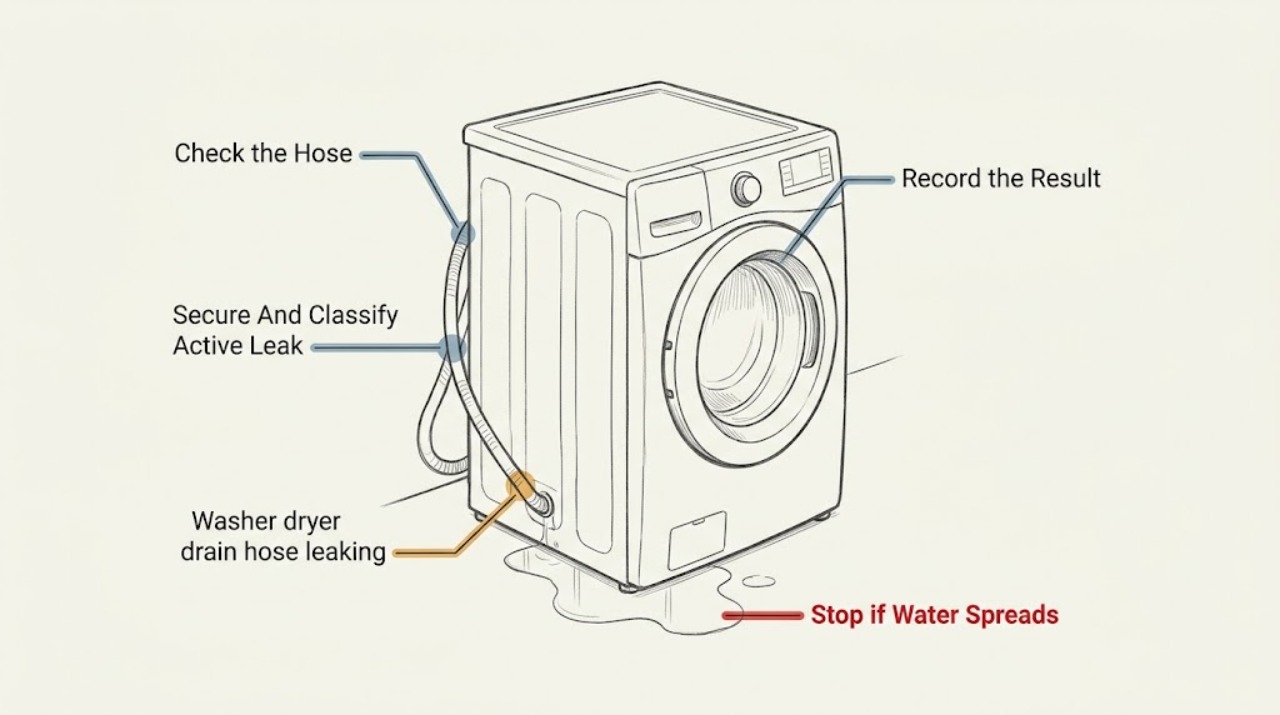
If an Electrolux washer dryer is leaking from the drain hose, stop the cycle and keep the appliance off until you can identify the first wet point from a safe, dry position. Turn off the water supply and isolate power only from a safe dry location; never touch a wet plug or stand in water. Check the visible hose for a split, crushed section, loose support, or a leaking end connection, and check whether the standpipe or sink backs up when the machine drains. A damaged hose, leak from inside the cabinet, a repeated leak after a visible routing correction, or water near electrical connections needs qualified service. Electrolux drainage guidance also says the hose position, insertion depth, and drain height must follow the exact model installation instructions, so do not force the hose deeper into the outlet or open the cabinet based on a generic diagram.
Work through in order
Diagnostic checks
Use only checks that match the exact appliance or system and its official guide.
-
Check 1
Stop the washer dryer at the controls and wait for the drum and pump to become still. From a dry position, record whether water is actively running, the cycle stage, whether the water appears during drain or spin, and whether it is near the cord, outlet, or cabinet base.
Expected result: The leak is active or flooding, water is near electrics, the leak appears during drain or spin, or the floor is already wet before draining.
Next step: For water near electrical connections, smoke, burning odor, a hot or damaged cord, or active flooding, keep clear and isolate power only from a safe dry location; close the water supply when safe and arrange qualified or emergency help. Otherwise continue with the appliance off and the area dry enough to inspect.
Why this matters
Why: Water during pump-out makes the drain hose, outlet connection, or household drain more likely; water before drain points toward another water path. Water near electrics or uncontrolled flooding is a stop-use hazard, not a routing adjustment.
-
Check 2
Without opening the cabinet, inspect the entire visible drain hose from the washer dryer to the standpipe, sink trap, or other outlet. Look for a split, pinhole, rubbed or crushed area, a sharp kink, a loose clamp or fitting, water tracking from above, or a hose end that has slipped out of its support.
Expected result: A crack or wet spot is on the hose, water starts at an external connection, the hose is pinched or rubbing, or the visible hose is dry and intact.
Next step: Do not tape, glue, clamp over, or repeatedly operate a damaged hose. Keep the appliance off and arrange service for a split, pinhole, hose-end leak, or any connection that cannot be safely corrected by the model instructions. For a visible kink with no damage, continue to the routing check only when no hazard is present.
Why this matters
Why: A wet split or damaged connection can directly explain a drain-stage leak. A kink or crushing can increase back pressure and make a marginal connection spill. A dry, intact visible hose shifts suspicion to the standpipe, pump-side connection, or another appliance path.
-
Check 3
Compare the visible hose support and outlet position with the exact Electrolux installation instructions. Check that the hose is secured so it cannot jump out, is not tightly sealed or pushed too far into the standpipe, and is not kinked behind the appliance. Do not pull out a stacked or tightly fitted unit without help.
Expected result: The hose has slipped, is unsecured, is inserted too far, is sharply bent, or its routing matches the model instructions.
Next step: If the problem is only visible support or routing and there is no active leak or electrical hazard, correct it only as the exact installation instructions show, then make one supervised rinse or drain check. Stop immediately if water escapes again; do not force the hose, seal the standpipe airtight, or make repeated test cycles.
Why this matters
Why: A slipped or restricted hose can let wastewater miss the outlet or build up at a connection. Electrolux washer-dryer drainage guidance uses no more than 10 cm insertion and a 60–100 cm drain height for the covered installation pattern, but the exact model manual controls if it differs. Correct routing is less likely to be the cause when the hose remains supported and within the manual's limits.
-
Check 4
Inspect the standpipe, sink, or floor-drain outlet without putting hands into wastewater. Look for a backed-up outlet, a loose hose end, water spilling only where the hose enters the drain, or water tracking from the washer dryer side of the connection.
Expected result: The household outlet backs up, the outlet accepts water but the hose connection spills, or the outlet and connection stay clear while water appears from the appliance.
Next step: Stop any drain attempt for an outlet backup and arrange plumbing help; do not add chemical drain cleaner to the washer dryer. For a washer-side leak or internal water path, keep the appliance off and arrange qualified appliance service rather than opening the cabinet.
Why this matters
Why: Backup at the household drain makes a plumbing restriction or outlet setup more likely than a failed washer dryer hose. Spillage at the connection points to hose support or fitment. Water from the appliance with a clear outlet makes a pump-side hose, internal leak, or another component more likely.
-
Check 5
If the visible drain hose is dry, identify whether the first wet point is instead at the inlet hose during filling, the door boot during washing, the detergent drawer, the pump-filter area, or the underside of the cabinet. Use only a dry, external view; do not remove panels or reach beneath a powered appliance.
Expected result: Water begins at an inlet connection, door boot, drawer, filter area, or inside the cabinet rather than at the drain hose.
Next step: Keep the washer dryer off and use the exact model guidance or qualified service for the identified path. Do not replace the drain hose merely because water is found under the appliance; cabinet leaks, pump faults, and door-boot damage require model-specific diagnosis.
Why this matters
Why: A different first wet point makes the drain hose a poor primary explanation. Electrolux treats damaged door seals, detergent-drawer or filter leaks, inlet connections, and internal hoses or pumps as separate repair paths.
-
Check 6
Record the complete Electrolux model and product number, cycle stage, first wet point, hose condition, outlet behavior, any display code, and whether a single safe routing correction changed the leak. Do not repeat a cycle if water remains, the hose is damaged, or the leak returns.
Expected result: The leak stops after a model-approved visible routing correction, returns at the same drain stage, cannot be located safely, or requires hose removal, pump access, or cabinet access.
Next step: Keep the appliance out of service for a repeat leak, damaged hose, cabinet leak, or any condition requiring panels or internal hose work. Give the technician the recorded cycle and wet-point pattern and confirm the replacement hose against the exact model before any part is ordered.
Why this matters
Why: A one-time leak caused by a slipped or kinked external hose may be resolved by correct support. A returning leak, damaged hose, retained water, or inaccessible connection needs diagnosis rather than more testing; a drain-hose replacement may involve retained water and internal clips.
Use your observations
Decision map
Find the observation that best matches what you see, then follow the next safe action.
-
PATH 01Next step
What you see
Do this next
Stop the drain attempt and arrange plumbing help. Do not push the hose farther into the outlet or pour chemical drain cleaner into the washer dryer.
-
PATH 02Next step
What you see
Do this next
Keep the washer dryer off, shut the water supply when safe, and arrange qualified service for a damaged hose or connection. Do not patch the hose or substitute a part without exact model fitment.
-
PATH 03Next step
What you see
Do this next
Use the exact Electrolux installation instructions to restore support and routing, then make one supervised rinse or drain check. If the leak returns, stop and arrange appliance service.
-
PATH 04Next step
What you see
Do this next
Keep the washer dryer off and follow the exact model guidance or arrange qualified diagnosis for that first wet point. Do not order a drain hose based only on water under the machine.
-
PATH 05Next step
What you see
Do this next
Keep clear, do not touch a wet plug or stand in water, isolate power only from a safe dry location, close the water supply when safe, and obtain qualified or emergency help as appropriate.
Helpful context
Understand the symptom
First identify where the drain leak begins
A leak at the standpipe or sink connection is a different problem from a split in the hose or water appearing beneath the washer dryer cabinet. Note whether it starts during pump-out or spin, whether the hose end moves, and whether the floor is wet before the drain stage. Electrolux separates drain-hose and standpipe checks from door, inlet, dispenser, filter, and internal-component faults, so the first wet point matters more than the size of the puddle.
Keep a leaking washer dryer electrically safe
Do not run repeated cycles to locate a leak. If water has reached the cord, outlet, or another electrical connection, stay clear and isolate power only from a safe dry location; do not handle a wet plug. Close the water supply when it can be reached safely, contain only water that is already safe to reach, and arrange qualified help for flooding or a leak inside the cabinet.
The drain hose replacement procedure is not a generic DIY step
Electrolux's replacement instructions involve draining retained water, removing panels, hose clips, and internal connections, and they warn about shock, sharp edges, lifting, residual water, and nonprofessional repair. Without the exact model manual and the required know-how, limit the inspection to visible routing and connections. Do not pull the appliance out alone, open panels, or substitute a hose without confirming model fitment.
Only after diagnosis
Potential parts
- washer dryer drain hose
Consider this only when the first wet point is a split, puncture, damaged end, or otherwise confirmed hose fault after the household outlet has been separated from the appliance problem.
Drain-hose length, clips, retainers, and connection geometry vary by model. Confirm the complete Electrolux model and official fit information before ordering. - washer dryer door boot seal
Consider this only if tracing shows water beginning at a torn or damaged door boot rather than at the external drain hose.
Door-boot design varies by model and may require specialist installation. Confirm the complete Electrolux model before ordering. - washer dryer inlet hose
Consider this only if the first wet point occurs at the water-supply connection during filling and the drain hose is dry.
Inlet fittings and safety features vary by model. Confirm the complete Electrolux model and the official installation information before ordering.
When checks do not resolve it
Need a professional?
Arrange qualified service for a split or leaking drain hose, a washer-side connection leak, a repeated leak after a visible routing correction, an internal or cabinet leak, retained water, or any condition requiring hose removal or panel access. Arrange plumbing help when the standpipe or sink backs up. For water near electrical connections or active flooding, isolate power only from a safe dry location and seek emergency help when appropriate.
Common questions
FAQ
Why is my Electrolux washer dryer leaking from the drain hose?
The visible hose may be split, kinked, crushed, unsecured, or leaking at an end connection; the standpipe or sink may also be backing up. Trace the first wet point during the drain stage without opening the cabinet.
Can I keep using an Electrolux washer dryer with a small drain-hose leak?
No. Stop using it for a damaged or recurring drain-hose leak. Water damage can spread, and water near an outlet or cord creates an electrical hazard. Arrange qualified service after shutting off water when safe.
How can I tell whether the standpipe is clogged or the drain hose is leaking?
If wastewater backs up at the standpipe or sink while the hose itself is intact, a household drain restriction is more likely. If water starts at a split or hose-end connection with the outlet clear, the appliance-side hose path is more likely.
Should the Electrolux washer dryer drain hose be pushed far into the standpipe?
No. Follow the exact model installation instructions. Electrolux's washer-dryer drainage guidance uses no more than 10 cm insertion and a 60–100 cm drain height for the covered installation pattern; do not force the hose or seal the outlet airtight.
Can I tape or glue a leaking washer dryer drain hose?
Do not patch a damaged hose as a running repair. Keep the washer dryer off and arrange service or an exact model-approved replacement. Electrolux's replacement procedure involves retained water and internal clips, not just an external wrap.
What if the drain hose is dry but water is still under the Electrolux washer dryer?
Trace the first wet point at the inlet connection, door boot, detergent drawer, filter area, or cabinet underside. A dry external drain hose makes another water path more likely, so do not order a drain hose based only on a puddle under the appliance.
Can I replace the Electrolux washer dryer drain hose myself?
Only use a model-specific procedure if you have the exact manual, safe access, and the required repair knowledge. Electrolux warns about shock, sharp edges, lifting, residual water, and internal clips; otherwise leave the appliance off and use qualified service.
When should I call for Electrolux washer dryer leak service?
Arrange service for a split or leaking hose, a repeat leak after routing checks, a washer-side or cabinet leak, retained water, or any repair requiring panels or internal hose access. Treat flooding, water near electrical connections, smoke, burning odor, or a hot cord as immediate stop-use conditions.
Read the exact guide
Official sources
- Washing Machine Installation GuideElectrolux · Electrolux washer and washer-dryer drain-hose installation and post-installation leak check
- Laundry front loading washer is leaking water.Electrolux · Electrolux washer leak-source separation, drain-hose security, standpipe checks, and service guidance
- Washing machine - How to replace the drain hose (2)Electrolux · Electrolux drain-hose repair safety, residual-water handling, internal hose access, and compatibility cautions
- Washer dryer displays error message E20 or C2, emits 2 beeps or 2 flashesElectrolux · Electrolux washer-dryer drain-hose routing, outlet position, drain height, and blockage checks
Community feedback
Share a repair observation
Share a plain-text repair observation. Accepted observations are published automatically; this page may take a moment to update.