
On this page
Start here
Quick answer
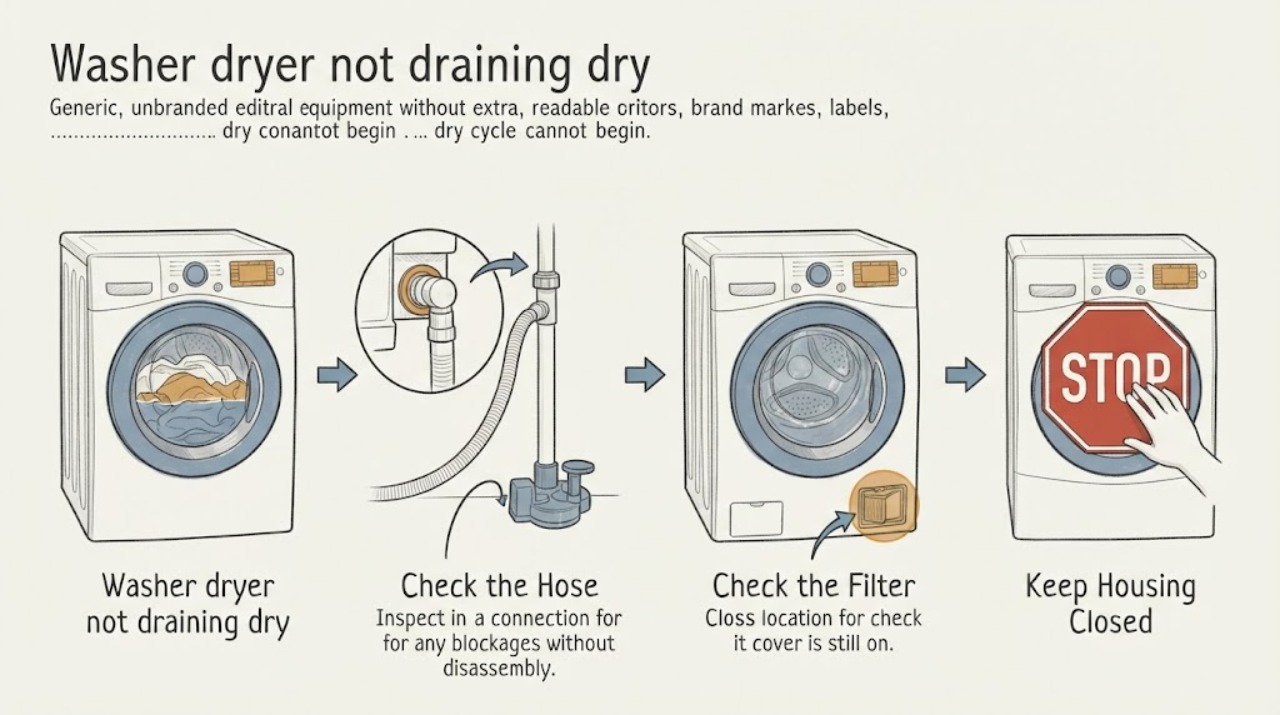
When a washer dryer will not drain and the dry cycle cannot begin, treat the failed drain as the primary fault rather than repeatedly selecting Dry. First record the exact display message and whether water remains in the drum. Keep the door closed if the drum is hot or water is high, stop the cycle using the model controls, and wait for motion and heat to stop. From safe access, check that the drain hose is not kinked, compressed, frozen, or installed into a blocked drain. If the exact manual provides an accessible drain filter or residual-water hose, clean or drain it only when water is cool enough to handle and can be contained. Then use the model's documented drain or spin cycle before attempting Dry; a combo may need water and a clear drainage path during drying. If the pump hums without moving water, the hose or filter remains clear but draining fails, the code returns, water is hot or leaking, or the appliance shows smoke, burning odor, sparking, or exposed wiring, stop and arrange qualified appliance service.
Before you begin
Safety first
- This article supports code recording, safe pause and cooling, visible hose inspection, model-approved accessible filter handling, and documented drain or spin controls only. Do not force the door, open panels, work on live parts, or bypass interlocks.
Work through in order
Diagnostic checks
Use only checks that match the exact appliance or system and its official guide.
-
Check 1
Photograph or write down the exact display code or message, selected cycle, whether the drum contains visible water, whether the door or drum is hot, and whether the drum has stopped; do not open a hot or moving machine.
Expected result: The message is a drain or outlet error, the display is generic or unknown, water is visible, the drum is empty but the dry cycle will not start, or the machine is hot or still moving.
Next step: Look up the exact code in the model manual or manufacturer support page, pause or cancel the cycle as directed, and wait until the drum stops and cools before inspecting the drain path.
Stop if: Stop for smoke, burning odor, sparking, exposed wiring, a leak near electrical parts, uncontrolled water, or abnormal drum motion.
Why this matters
Why: The exact code and water state separate a drain restriction from a dry-cycle selection issue, temperature or motion lock, or another model-specific fault. Water or heat can keep the door locked and make opening unsafe.
-
Check 2
With the machine stopped and cool enough to approach, inspect the visible drain hose from the back or side for a kink, compression between the appliance and wall, a low spot that holds water, freezing, or a blocked household drain connection; do not pull hard on the hose.
Expected result: The hose is visibly pinched, sharply bent, frozen, filled with standing water, incorrectly positioned, or appears open and free while the appliance still will not drain.
Next step: Correct only a loose, visible hose position as the model manual permits and verify that the household drain is open. If the hose is frozen, leaking, damaged, or still does not drain after a safe position check, arrange service.
Stop if: Do not disconnect a hose with water under pressure, force a frozen hose, reach into a drain opening, or move the appliance if doing so could strain connections or expose wiring.
Why this matters
Why: An external restriction can prevent the pump from moving water and can keep the dry cycle from being authorized. A free visible hose shifts suspicion toward the filter, pump, drain system, sensor, or control.
-
Check 3
Only if the exact manual identifies an accessible drain-pump filter or residual-water hose, confirm the machine is stopped and cool, place a suitable container and absorbent material, and inspect or clean the filter using that documented procedure.
Expected result: The filter or hose contains lint, coins, or other debris, water drains freely after the filter is opened, the filter is clear but water does not drain, or water is hot, excessive, leaking, or unsafe to contain.
Next step: Reassemble only the parts specified by the manual and check for a secure seal. If the filter is clear, damaged, inaccessible, or the appliance still will not drain, leave it off and request qualified service.
Stop if: Do not open the filter with hot water, force the cap, use tools inside the pump, or continue if water may reach electrical parts or the floor cannot be protected.
Why this matters
Why: Debris can restrict the pump and leave water in the drum. A clear filter with continued failure makes a pump, hose, sensor, control, or household drain issue more likely. Hot or uncontrolled water changes this from a routine check to a service boundary.
-
Check 4
After the visible hose and any model-approved filter check, use the exact model's drain-only or spin-only cycle with the door closed and no added detergent; stay nearby without opening the machine while it operates.
Expected result: Water drains completely, the pump runs but water does not move, no pump sound occurs, the error returns, or the cycle stops with water still inside.
Next step: If the drum is empty and the code clears, follow the manual's dry-cycle preparation. For any incomplete drain, repeated code, unusual pump noise, or no-pump response, stop use and arrange service.
Stop if: Do not repeat a failed drain cycle, reach into the drum, or continue operation with standing water, leaking water, smoke, burning odor, or sparking.
Why this matters
Why: A complete drain supports a resolved restriction and allows the dry stage to be considered. Pump operation without flow suggests a remaining blockage or pump fault; no sound or a returning code can involve the pump, wiring, sensor, or control.
-
Check 5
Only after the drum is empty and no drain error remains, verify the dry-cycle selection, load size, water supply or tap state required by the model, and drain-hose position; start one brief documented dry test without overloading the drum.
Expected result: Dry begins normally, the dry cycle still will not begin, the unit takes in water but cannot expel it, the drain hose knocks or holds water, or the error returns.
Next step: Stop the appliance and request qualified service for any persistent or abnormal result. Provide the exact code, drain observations, filter condition, cycle, load, and whether water entered or left during the test.
Stop if: Do not keep restarting Dry with a drain error, bypass a door or water-level interlock, or continue if the appliance leaks, overheats, smokes, or smells burned.
Why this matters
Why: A normal start supports a resolved drain restriction or an incorrect cycle setup. A persistent failure, water accumulation in the hose, or returning error indicates a drainage, water-management, sensor, pump, or control fault beyond the initial check.
Use your observations
Decision map
Find the observation that best matches what you see, then follow the next safe action.
-
PATH 01Safety boundary
What you see
The drum contains water, the door or drum is hot, or the drum is still moving when the drain error appears.
Do this next
Stop or pause using the model controls, wait for motion and heat to subside, and use only the model's documented drain procedure when safe.
Why this path and its safety boundary
Why it matters: The lock and cycle interruption may be protecting against a spill, burn, or moving-drum injury; the dry stage cannot be assessed yet.
Safety stop: Do not force the door, handle hot water or steam, or reach into a moving drum.
-
PATH 02Safety boundary
What you see
The drain hose is kinked, compressed, frozen, low or incorrectly routed, or the household drain accepts no water during the model-approved check.
Do this next
Correct only the visible hose position or use the manual's safe thawing guidance, confirm the household drain is open, then run one documented drain or spin cycle.
Why this path and its safety boundary
Why it matters: The external drainage path can explain standing water and the blocked dry cycle without proving that the pump has failed.
Safety stop: Do not force connections, disconnect a hose with unsafe water, or open a blocked drain when overflow could reach electrical equipment.
-
PATH 03Safety boundary
What you see
An accessible pump filter or residual-water path contains lint, coins, or other debris and water begins draining after the model-approved cleaning.
Do this next
Secure the filter and caps as the manual specifies, check for leaks, and run one drain or spin cycle before selecting Dry.
Why this path and its safety boundary
Why it matters: A localized filter restriction is plausible, but the pump and drain path still need a controlled confirmation that the error clears.
Safety stop: Stop for a damaged seal, leaking cap, hot water, uncontrolled spill, persistent error, or a filter that cannot be removed without force.
-
PATH 04Safety boundary
What you see
The visible hose is free, the accessible filter is clear or unavailable, but the pump does not move water, the error returns, or the drum remains full.
Do this next
Leave the washer-dryer off with the door closed as appropriate and request qualified appliance service; provide the code, water level, pump sound, hose position, and filter result.
Why this path and its safety boundary
Why it matters: A pump, internal hose, sensor, wiring, household drain, or control fault is more likely than a simple setup issue.
Safety stop: Do not remove panels, test live pump wiring, or repeatedly run a drain cycle with standing water.
-
PATH 05Safety boundary
What you see
The drum drains completely and the error clears, but the dry cycle still will not begin or the unit accumulates water in the drain path during drying.
Do this next
Check the manual's dry selection, load limit, water-supply requirement, and drain-hose arrangement once; stop and request service if the dry stage still will not start or the error recurs.
Why this path and its safety boundary
Why it matters: The original drain restriction may be resolved, but dry-cycle prerequisites, water supply, load, hose routing, condensation path, sensor, or control may still be preventing a start.
Safety stop: Do not overload the combo, keep restarting a blocked dry cycle, or alter the hose routing beyond the model instructions.
-
PATH 06Safety boundary
What you see
There is smoke, a burning odor, sparking, exposed wiring, a leak near electrical parts, unexpected drum motion, or a damaged door or cabinet.
Do this next
Stop the cycle, keep people away, leave the appliance out of service, and arrange qualified service. For smoke or fire risk, leave the area when safe and follow local emergency guidance.
Why this path and its safety boundary
Why it matters: The appliance may have an active electrical, heat, mechanical, or water hazard; drain and dry troubleshooting should stop.
Safety stop: Do not restart the appliance, touch damaged wiring, open panels, or continue testing an active hazard.
Helpful context
Understand the symptom
Why a failed drain can block drying
A washer-dryer combo cannot be treated exactly like a stand-alone dryer. The wash stage must remove water, and many combo designs also use water and a drain path during drying or expel humid air through the drain hose. A full drum, drain restriction, or unresolved error can therefore prevent the dry stage from starting. The exact code and model manual still control the button sequence.
Separate an external hose problem from a pump or filter problem
A drain hose pressed against the wall, kinked, frozen, submerged incorrectly, or connected to a blocked standpipe can stop water even when the appliance itself is sound. If the visible hose is free but water remains, the pump filter, pump, sensor, or internal drain path may need attention. An accessible filter can sometimes be checked using the model instructions, but residual water may be hot and can spill quickly.
Do not use Dry as a workaround for standing water
Do not keep starting a dry cycle while the washer-dryer reports a drain problem or holds water. Once the drain issue is resolved, use the documented drain or spin cycle and confirm the drum is empty before selecting Dry. Also confirm that the load, water supply, and dry-cycle selection match the combo's manual; drying capacity and water or air management differ by model.
Safety boundary
Stop conditions
- Do not force a locked door, reach into a moving drum, or handle hot water or steam.
- Do not open a filter or hose with hot, uncontrolled, or excessive water, or when water could reach electrical parts or damage the floor.
- Do not remove panels, test live wiring, bypass a door or water-level interlock, or improvise a drain or dry-cycle sequence.
- Stop for smoke, burning odor, sparking, exposed wiring, a leak near electrical parts, unexpected drum motion, a damaged door or cabinet, or a repeated breaker trip.
- Leave persistent drain errors, a pump that cannot move water, or a dry cycle that remains blocked after model-approved checks to qualified appliance service.
Only after diagnosis
Potential parts
- washer-dryer drain pump filter or filter cap
Consider this part class only when the exact model has an accessible filter or cap and diagnosis finds damage or sealing failure after safe cleaning does not restore drainage.
Confirm the exact model, filter configuration, cap, seal, and manufacturer fit information; do not force or substitute a cap that does not seal. - washer-dryer drain pump
Consider this part class only when the hose and accessible filter are clear but qualified diagnosis confirms that the pump does not move water or is electrically or mechanically failed.
Confirm the exact model, pump configuration, connector, and manufacturer fit information; pump replacement involves water and electrical access and may require qualified service. - washer-dryer drain hose
Consider this part class only when the exact hose is kinked beyond recovery, cracked, frozen-damaged, or otherwise confirmed to restrict or leak after safe routing checks.
Confirm the exact model, length, connection, routing requirements, and manufacturer fit information; do not extend or route a replacement in a way that defeats drainage. - washer-dryer water-level or drain sensor
Consider this part class only when the drain path and pump are verified but the machine still reports a water-level or drain state incorrectly and qualified diagnosis identifies the sensor.
Confirm the exact model, sensor type, wiring, and manufacturer fit information; sensor diagnosis and replacement should not involve live-user testing.
When checks do not resolve it
Need a professional?
Arrange qualified washer-dryer service when the drain hose and any model-approved accessible filter check do not restore draining; when the pump does not move water, the code returns, the door remains locked with no safe reason, or the dry cycle still cannot begin after the drum empties and its documented prerequisites are met. Stop immediately for hot or uncontrolled water, smoke, burning odor, sparking, exposed wiring, leaks near electrical parts, abnormal drum motion, or a damaged door or cabinet, and follow local emergency guidance for an immediate hazard.
Safety scope: This article supports code recording, safe pause and cooling, visible hose inspection, model-approved accessible filter handling, and documented drain or spin controls only. Do not force the door, open panels, work on live parts, or bypass interlocks.
Common questions
FAQ
Why will a washer-dryer not start Dry when it has not drained?
Standing water or a drain error can prevent the combo from authorizing the dry stage. A blocked hose, pump filter, household drain, pump, sensor, or control may be involved, and some combos also need water and drainage during drying. Resolve the drain condition first using the model manual.
Can I run Dry again to remove the water?
No. Do not repeatedly start Dry while water remains or a drain error is displayed. Use the exact model's drain-only or spin-only procedure after the machine has stopped and cooled, and stop for hot or uncontrolled water, leaks, or a recurring error.
Is it safe to clean the drain filter when the door is locked?
Only when the exact manual provides an accessible filter or residual-water procedure, the machine is stopped and cool enough to handle, and the water can be contained safely. Residual water may be hot and can spill quickly. Do not force the door or open the filter if water could reach electrical parts.
What if the washer-dryer drains but Dry still will not begin?
After confirming the drum is empty and the error is cleared, check the model's dry selection, load limit, water-supply requirement, and drain-hose arrangement once. If Dry still will not begin, the error returns, or water accumulates during drying, leave the appliance out of service and arrange qualified service.
Read the exact guide
Official sources
- Why won't my LG front-load washer door open?LG USA Support · Official LG support guidance used for safe handling of a locked combo door during a drain fault; the assigned washer-dryer has no brand or model, so its exact manual controls.
- Long Dry Time - Washer / Dryer Combo UnitLG USA Support · Official LG combo guidance used for the relationship between drainage and drying; the assigned washer-dryer has no brand or model, so its own manual controls.
- [LG Washing Machine] Water Not Draining (OE Error)LG USA Support · Official LG washer and combo guidance used for drain-path diagnosis; the assigned washer-dryer has no brand or model, so its exact manual controls.
- Samsung Bespoke AI Combo is not drying clothesSamsung Support · Official Samsung combo guidance used as a cross-manufacturer reference for drainage and dry prerequisites; the assigned washer-dryer is unbranded, so its exact manual controls.
Community feedback
Share a repair observation
Share a plain-text repair observation. Accepted observations are published automatically; this page may take a moment to update.