
Brand-independent appliance guidance
General Washer Dryer Repair Guides
Brand-independent troubleshooting and repair guidance for common washer dryer problems and maintenance questions.
General washer dryer guides
Use these guides when the problem is not limited to a specific manufacturer.
-
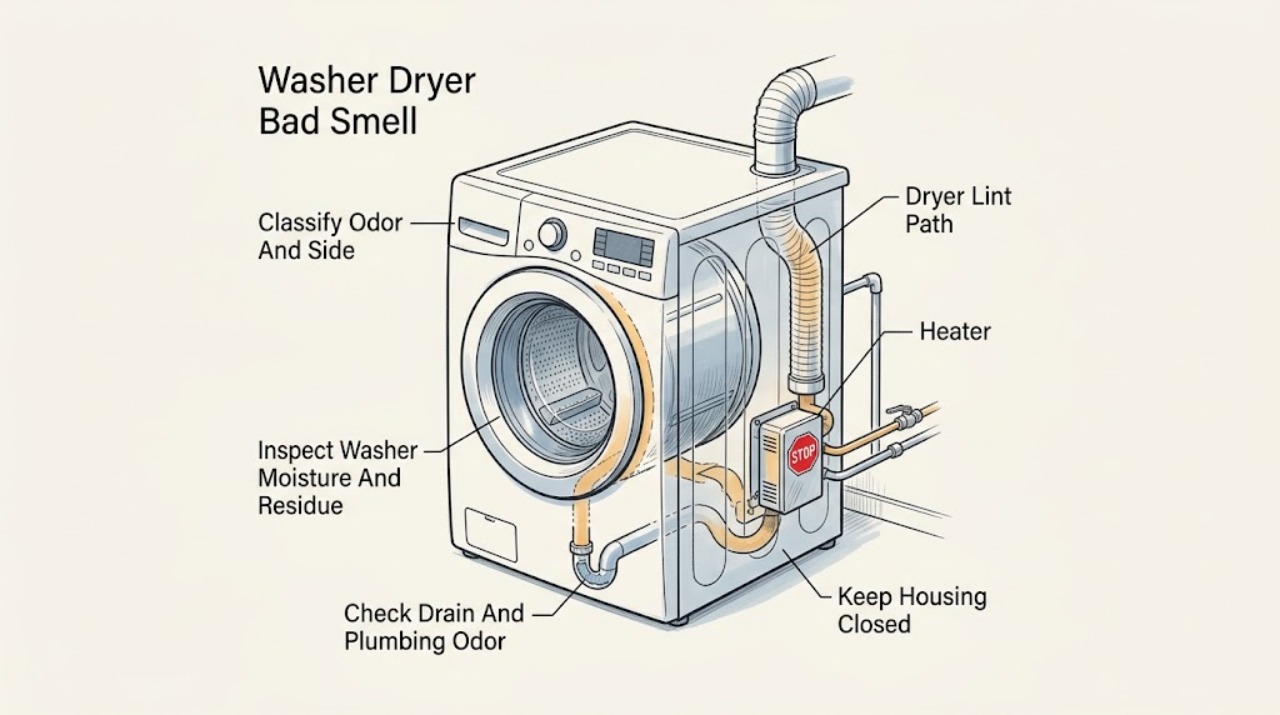
Washer Dryer Bad Smell: Separate Musty Odors from Fire and Gas Warnings
Identify which side of the combination appliance produces the odor and whether it appears during washing, draining, drying, or while the unit is idle. A musty or sour smell usually points to damp laundry, moisture in the washer seal or drum, detergent residue, a dispenser, drain, or plumbing path; a smell that begins with heat may be coming from the dryer, the load, or room air.
-
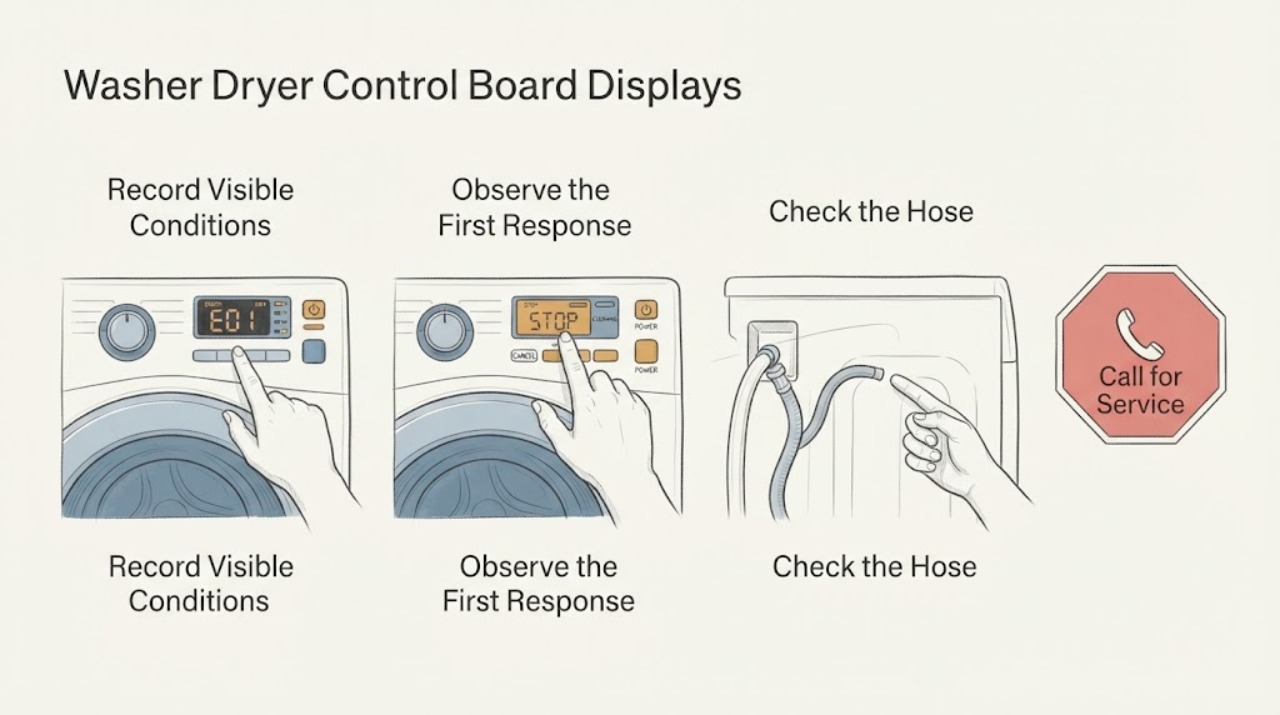
Washer Dryer Control Board Displays an Error: What to Check and What to Do Next
An error on a washer-dryer display does not by itself prove that the control board has failed. Write down the exact code or message, identify it in the manual for the appliance's model, and follow the matching low-risk check for the door, water supply, drain path, or lockout.
-
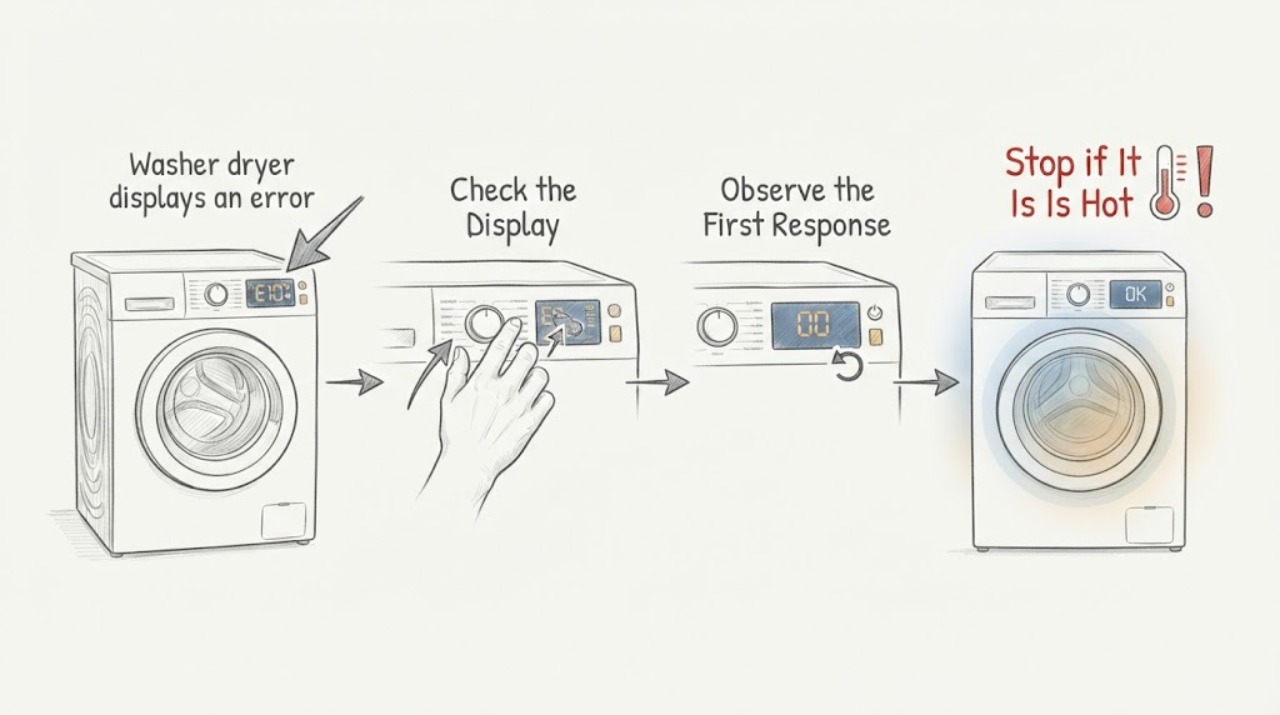
Washer dryer displays an error and a reset may clear the code temporarily: What to Check and What to Do Next
A reset that clears a washer-dryer error only temporarily has not proved the machine is repaired; it may have cleared the display or a transient control state while the underlying condition remains. Before resetting, photograph the exact code or flashing pattern, record whether it appeared during filling, draining, spinning, heating, or the door/lid operation, and note any water, leak, odor, noise, or physical damage.
-
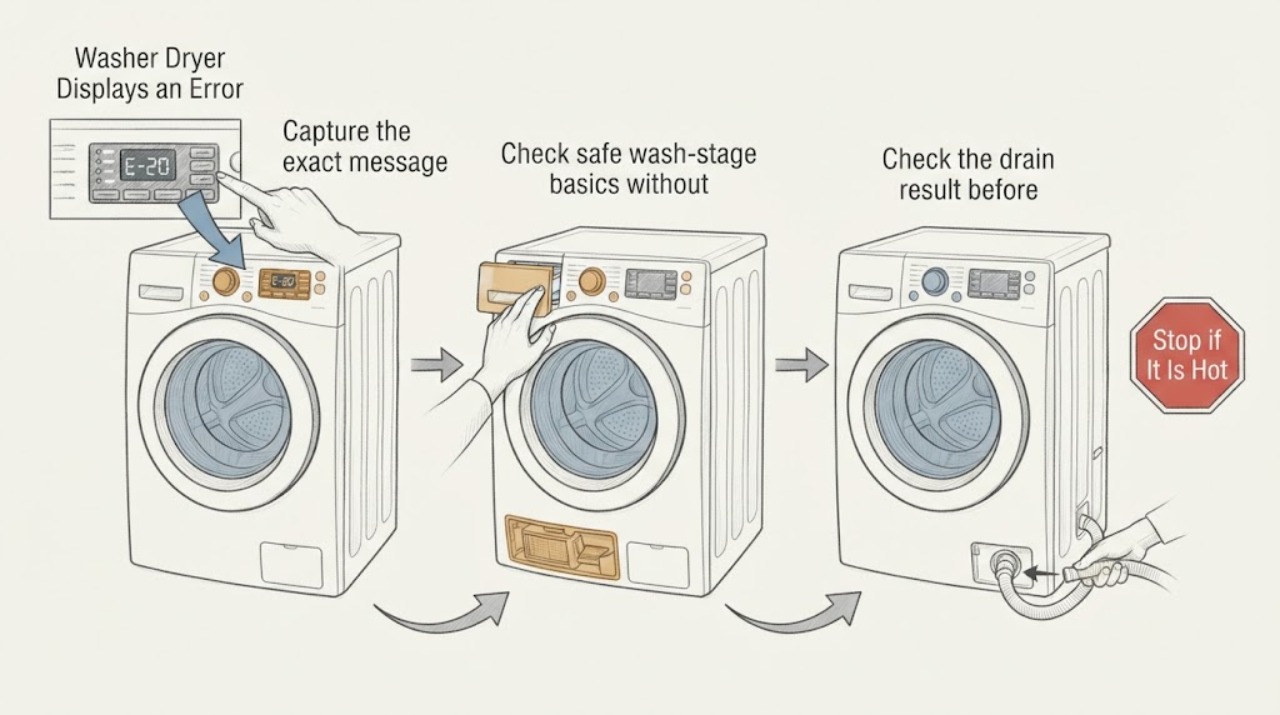
Washer Dryer Displays an Error Code During Wash or Dry: What to Check and What to Do Next
Do not guess what a washer-dryer error code means from the letters alone: codes vary by brand and model, and some displayed messages are reminders or normal cool-down states rather than failures. Record the exact code, when it appears, whether the drum is full of water, whether the door is locked, and whether it appears during washing, draining, spinning, or drying.
-
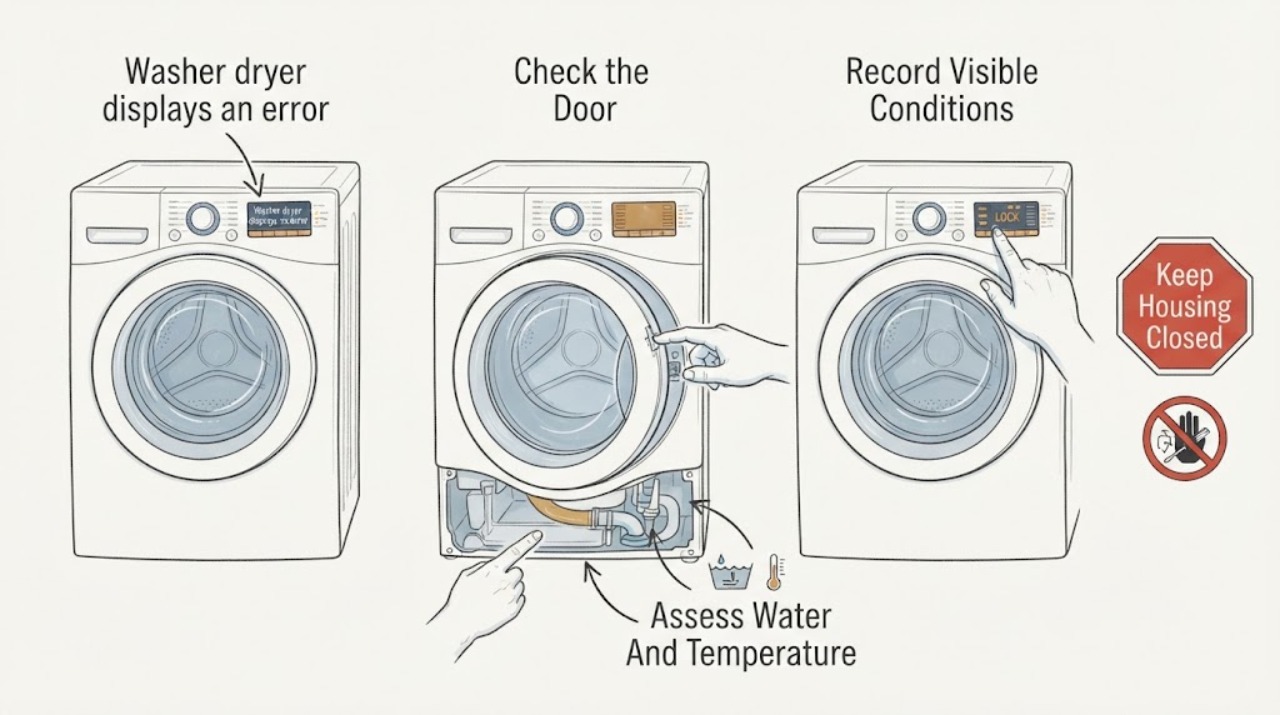
Washer dryer displays an error door may lock: What to Check and What to Do Next
A washer dryer can display an error while keeping the door locked because the drum may still contain water, be hot, or be moving; some errors instead indicate that the door is not closed or the lock cannot engage. Do not force the door.
-
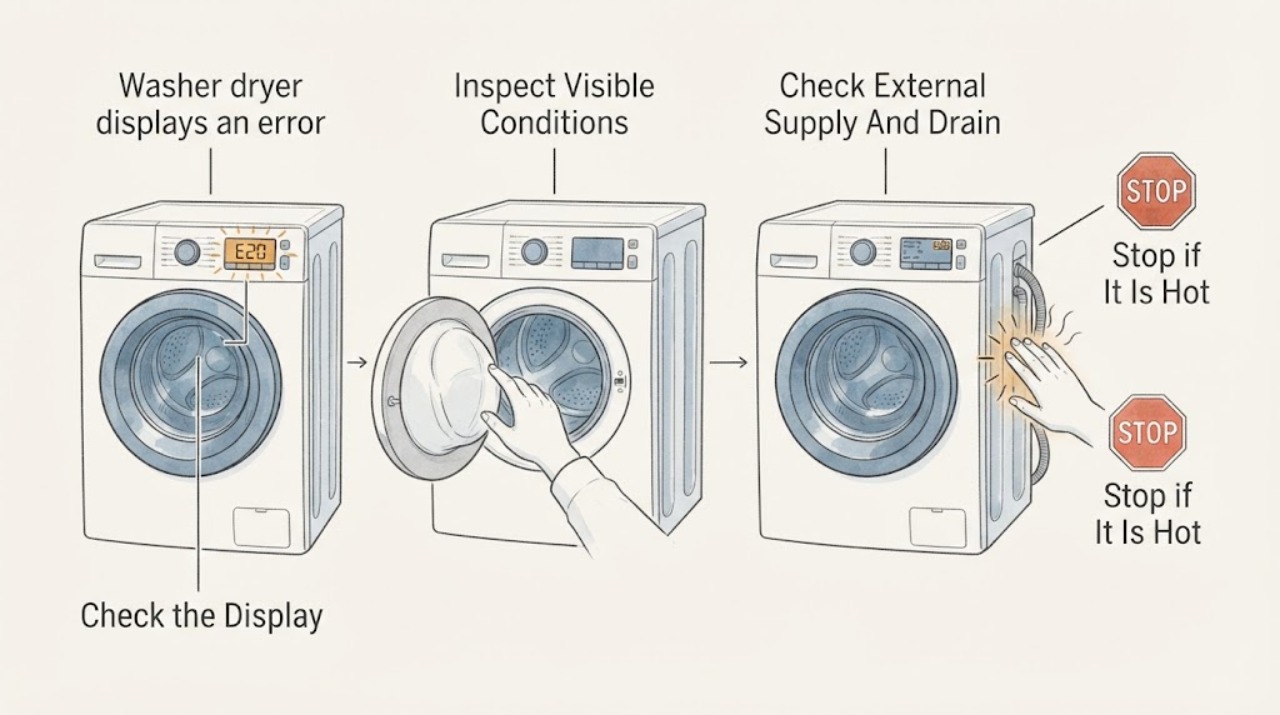
Washer dryer displays an error: What to Check and What to Do Next
Do not guess what a washer-dryer combo display means from a generic code list. Record the complete code or message exactly as shown, the wash or dry stage, the door state, water level, drain behavior, load, and unusual sounds.
-
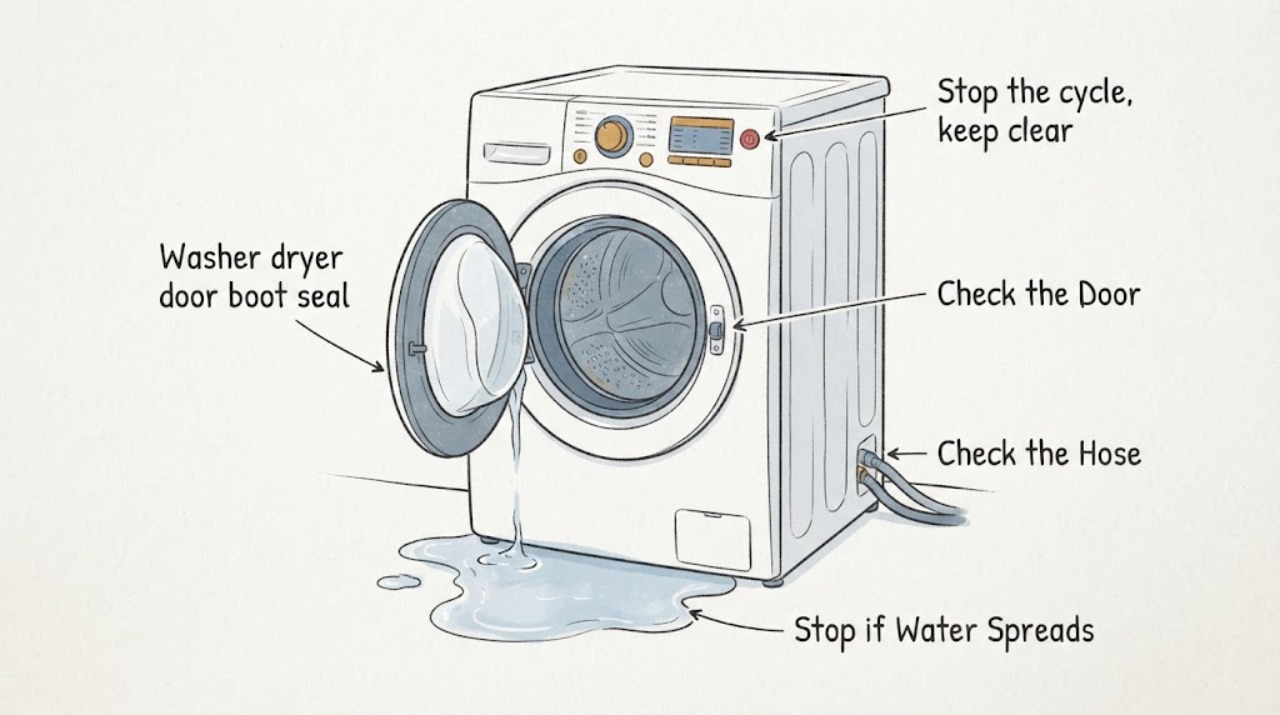
Washer dryer door boot seal leaking: What to Check and What to Do Next
A leaking front-load washer or washer-dryer door boot seal is often caused by hair, lint, fabric, or detergent residue caught between the rubber seal and door glass. It can also result from a torn or displaced boot, a door or hinge that no longer aligns, excess suds, or a leak elsewhere that is running toward the door.
-
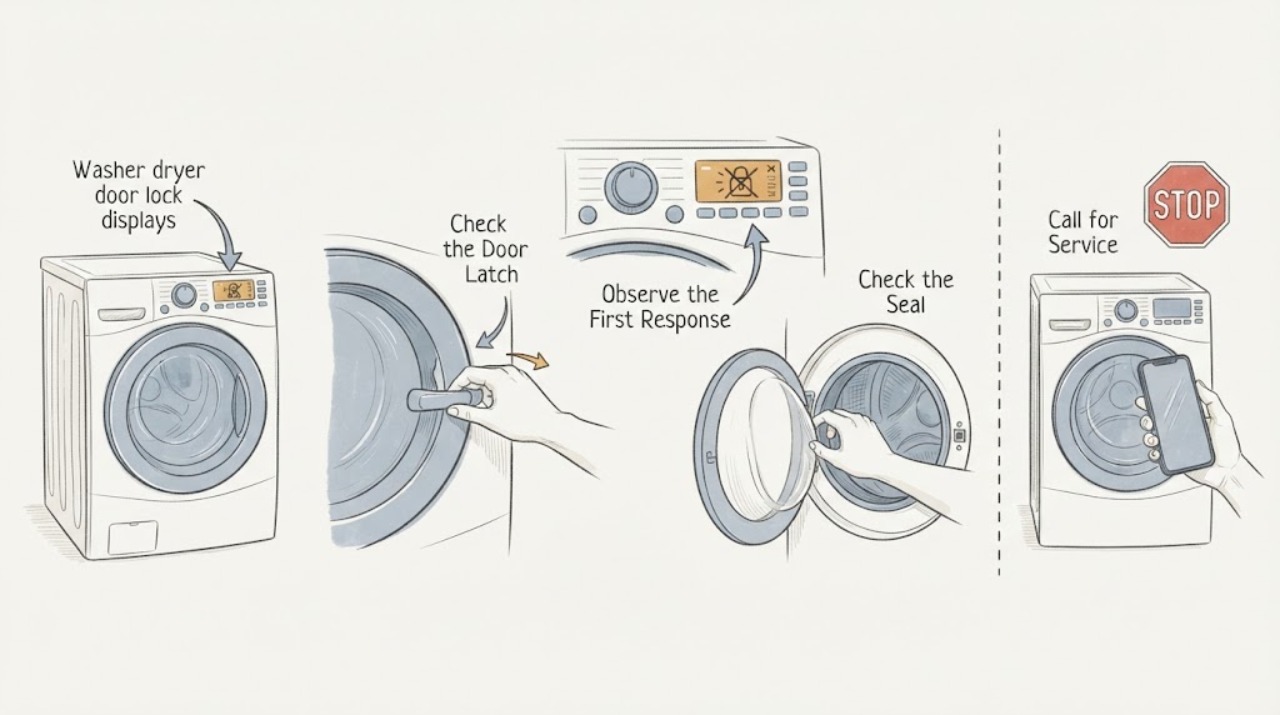
Washer dryer door lock displays an error: What to Check and What to Do Next
A door-lock error on a washer or washer-dryer usually means the door is not fully closed, laundry or residue is caught in the gasket or latch, the lock cannot sense the closed position, or the control needs a model-specific reset. Stop the cycle, keep hands clear of the latch, inspect the door and gasket, remove only visible obstructions, close the door firmly, and use the owner manual's reset procedure.
-
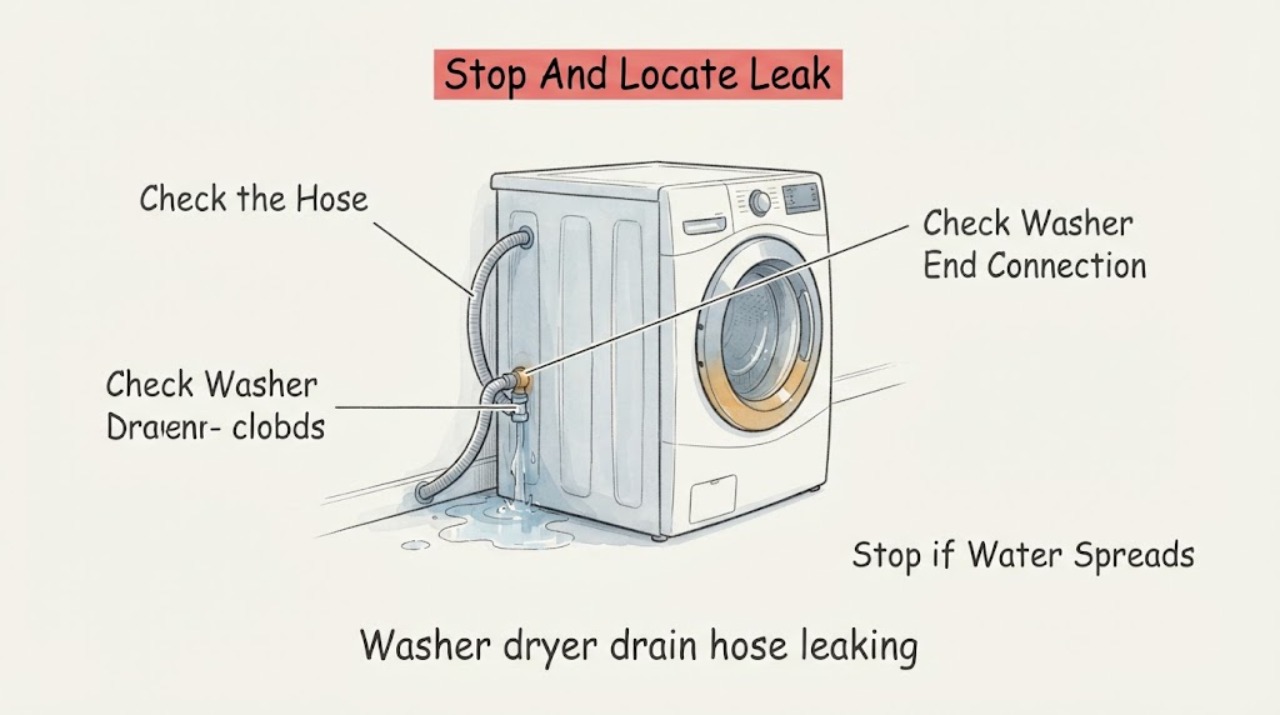
Washer dryer drain hose leaking: What to Check and What to Do Next
If a washer-dryer leaks from the drain-hose area, stop the washer portion of the cycle and first identify whether water is coming from the hose wall, the washer-side connection, the standpipe or tub, or a drain that is backing up. With the appliance stopped and the area safe, inspect the accessible hose for a split, kink, displaced clamp, or loose routing, and check that its drain-end guide is secured without an airtight seal.
-
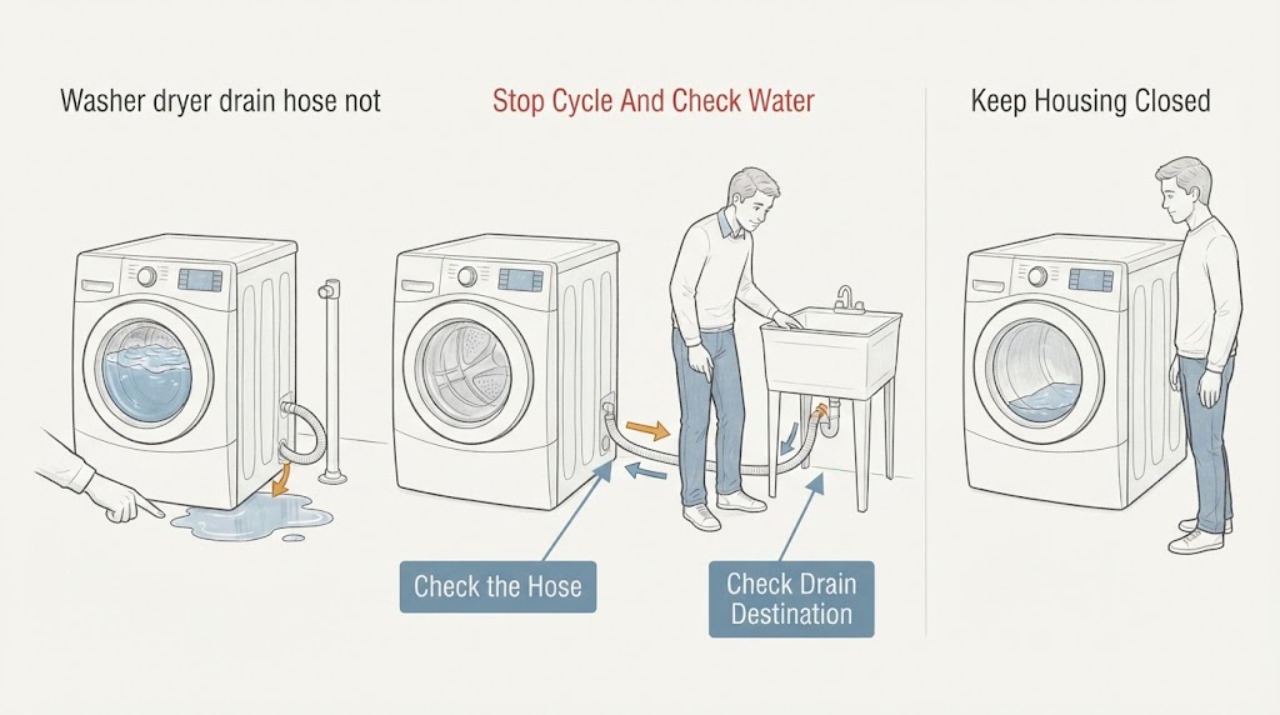
Washer dryer drain hose not draining: What to Check and What to Do Next
When a washer-dryer combo will not drain, start with the drain hose and its destination, not a guessed pump replacement. Stop the cycle, keep hands out of standing water, and follow the model manual before moving or disconnecting anything.
-
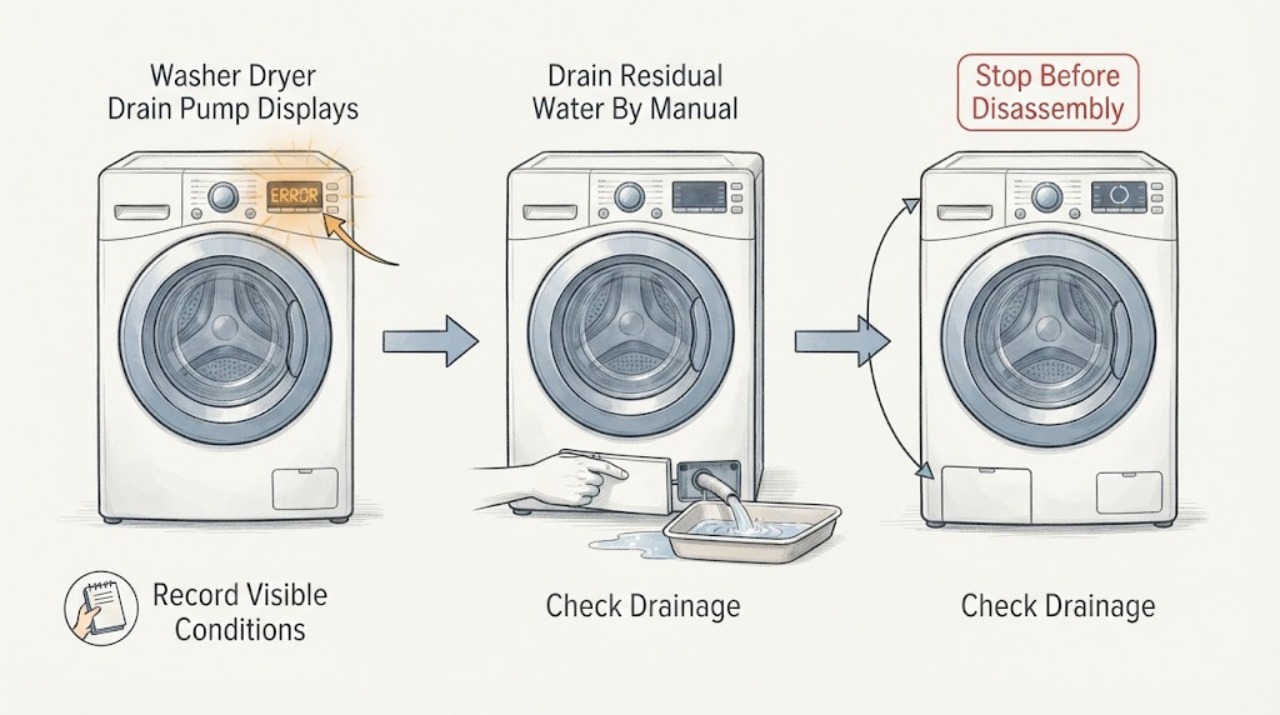
Washer Dryer Drain Pump Displays an Error: What to Check and What to Do Next
A washer dryer that displays a drain-pump error is usually reporting that water took too long to leave the drum, but the code alone does not identify a failed pump. Stop the programme and disconnect power before opening any pump-filter access; residual water can be hot, and opening the door while water is visible can spill it.
-
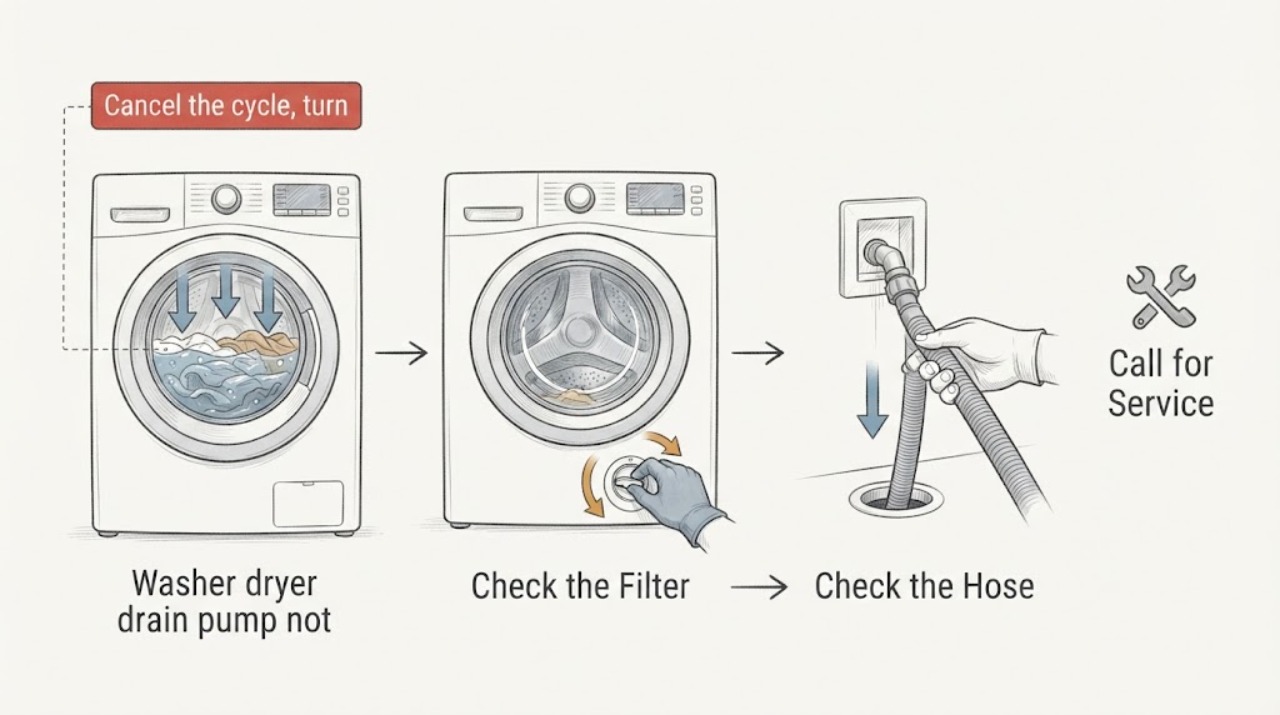
Washer dryer drain pump not draining: What to Check and What to Do Next
A washer or washer-dryer that will not drain may have a blocked pump filter, an object in the pump or hose, a kinked or frozen drain hose, a blocked household drain, excess suds, or a pump that is not receiving power or cannot move water. Stop the cycle and disconnect power before opening an access cover.
-
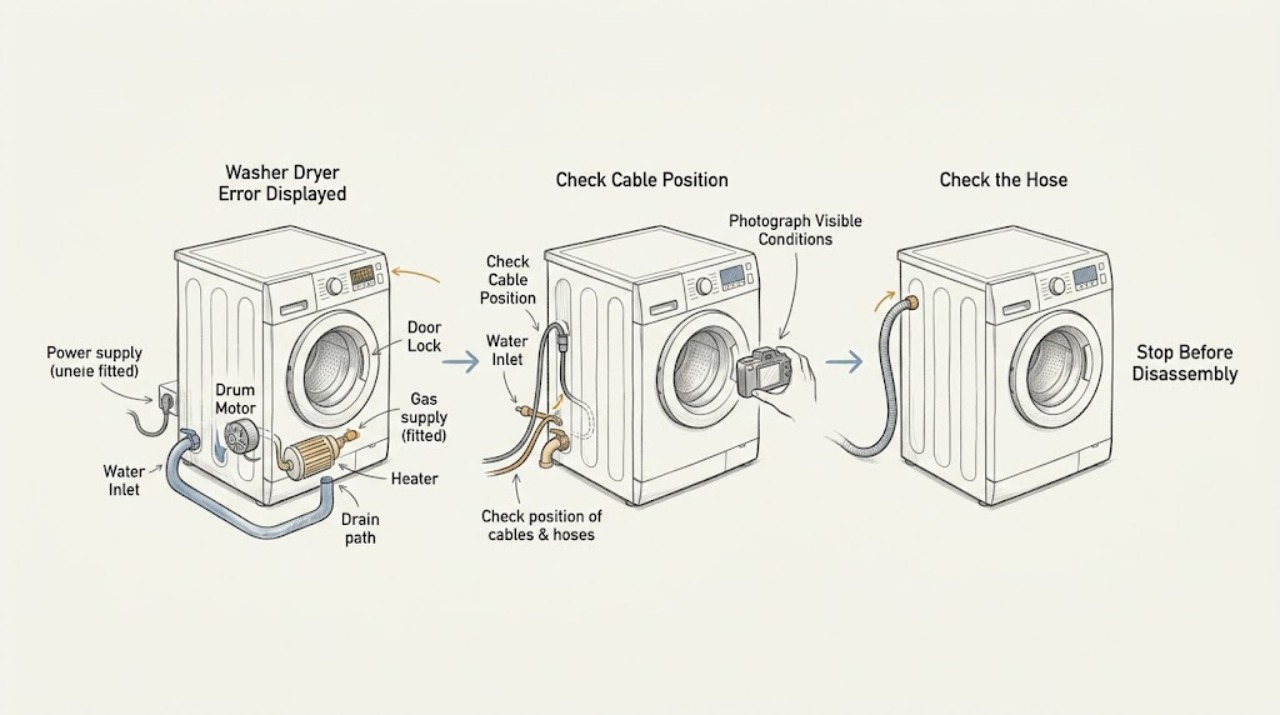
Washer Dryer Error Displayed: Identify the Code Before You Reset Anything
A washer-dryer error display is a clue, not a universal diagnosis. Photograph the complete code exactly as shown, record the appliance model and whether the wash or dry side was running, and note what stopped: filling, draining, locking, spinning, heating, tumbling, or drying.
-
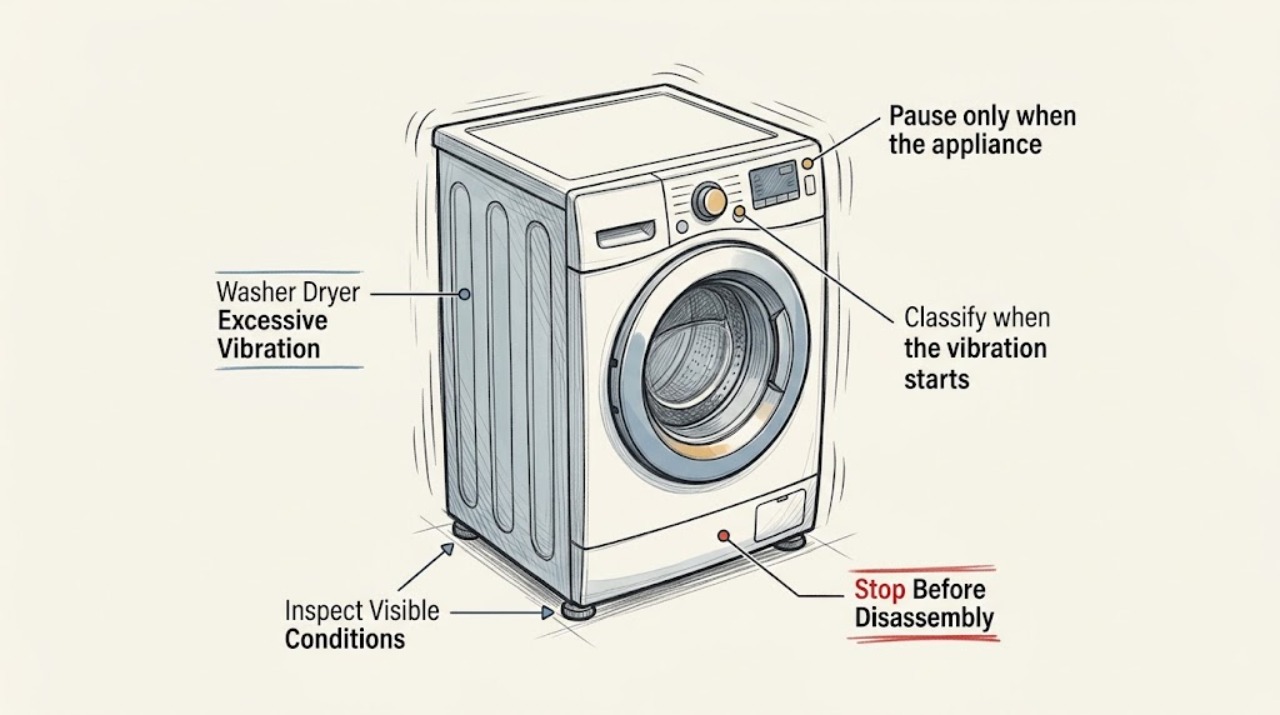
Washer Dryer Excessive Vibration: Balance the Load and Stabilize the Unit
Stop the cycle if the washer-dryer is walking, leaking, scraping, smoking, sparking, or producing a burning or electrical odor. When the area is safe, identify whether the vibration is load-related or present with an empty drum, then check load balance, shipping hardware after installation or moving, the floor and leveling feet, wall clearance, and any stacking kit.
-
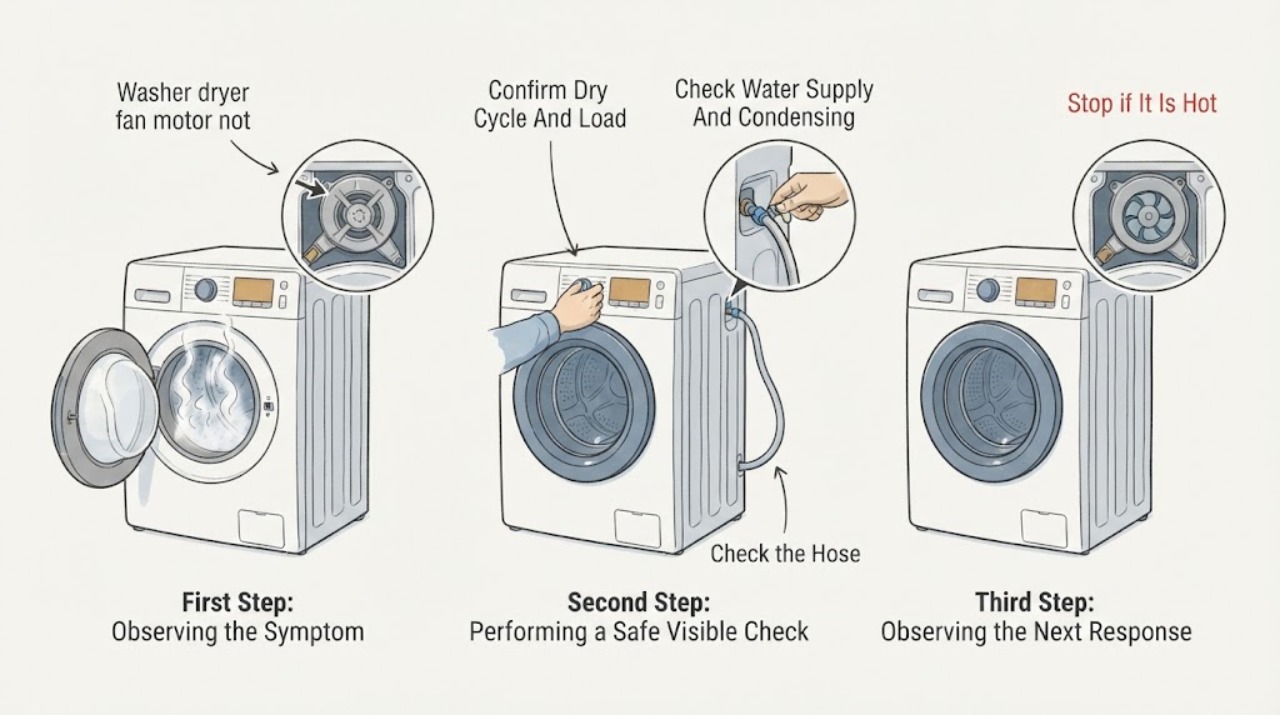
Washer dryer fan motor not drying: What to Check and What to Do Next
Damp clothes do not prove that the washer-dryer fan motor has failed. In a combo appliance, drying depends on heat circulation, the drain path, and—on many condensing designs—water or air movement through the drying system.
-
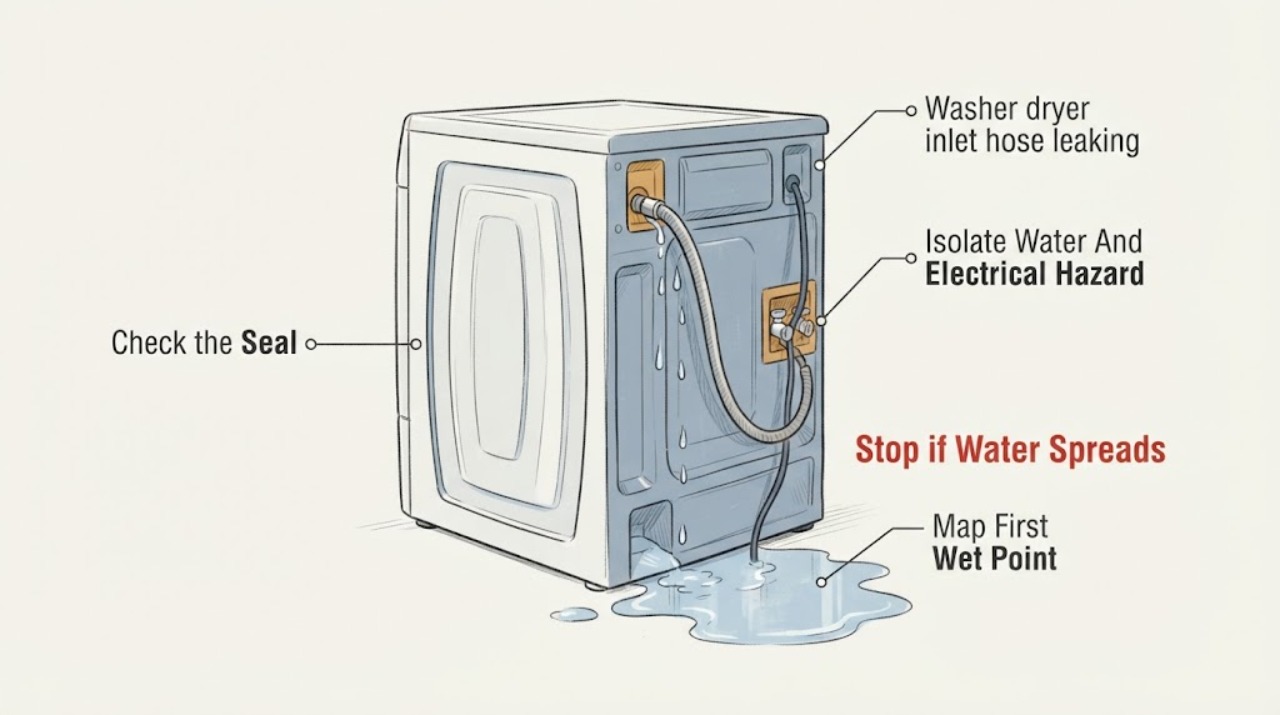
Washer dryer inlet hose leaking: What to Check and What to Do Next
Close the hot and cold laundry water valves, and the dryer steam water valve if your combo or steam dryer has one, before tracing a leak. Dry the area from a safe position and identify whether water starts along the hose, at the wall faucet, at the washer inlet valve, or at a steam-dryer Y-connector or inlet.
-
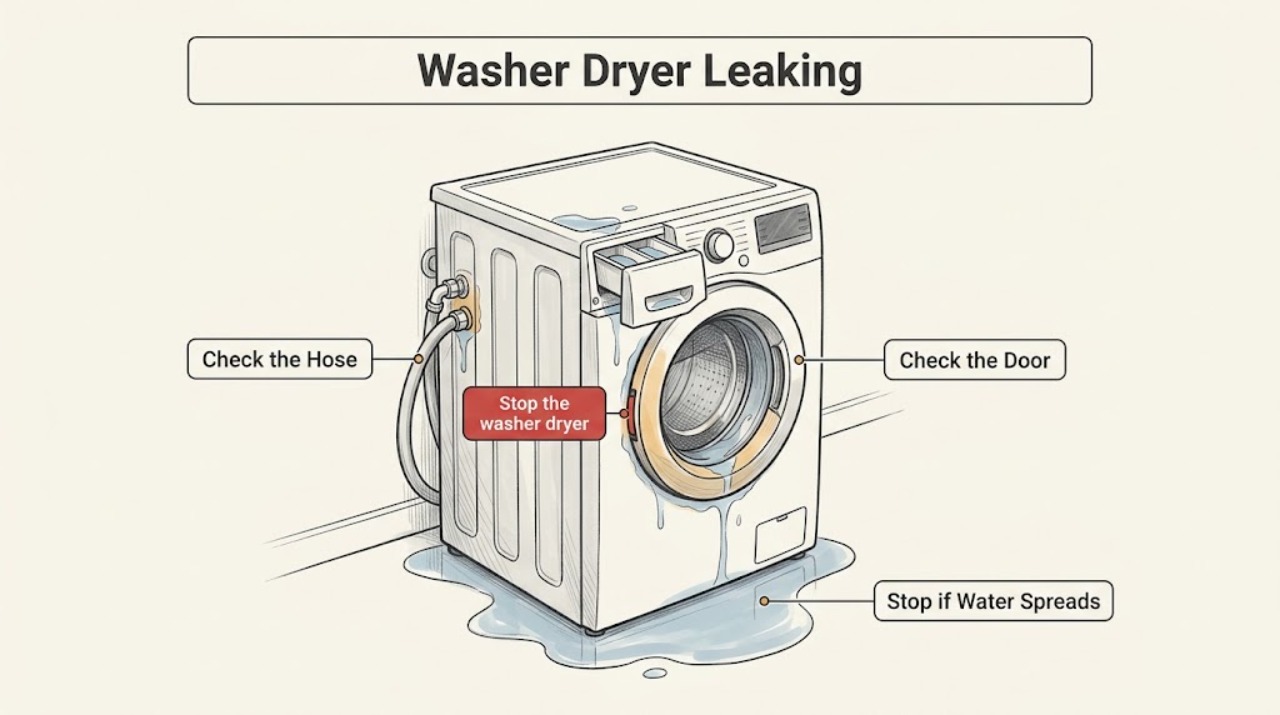
Washer Dryer Leaking
Stop the cycle as soon as a washer dryer leaks. If water is still entering, use the controls or circuit breaker from a dry position and then close the household water valves; never unplug while standing in water.
-
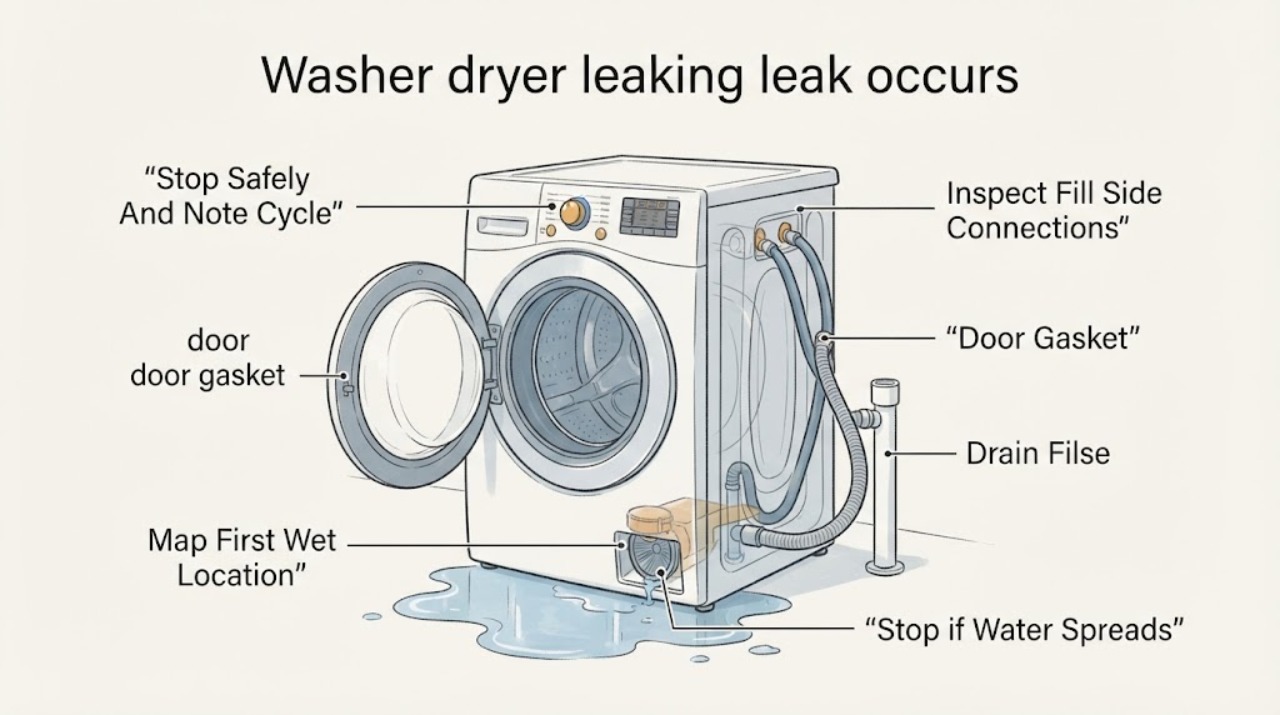
Washer dryer leaking leak occurs during fill or drain: What to Check and What to Do Next
When a washer dryer leaks during filling or draining, first identify which part of the cycle starts the water and where the water first appears. A fill-time leak is more often associated with an inlet hose connection, hose damage, dispenser overflow, or door and gasket area; a drain-time leak is more often associated with a loose, cracked, or kinked drain hose, a drainpipe that backs up, a pump-filter area, or an internal drain path.
-
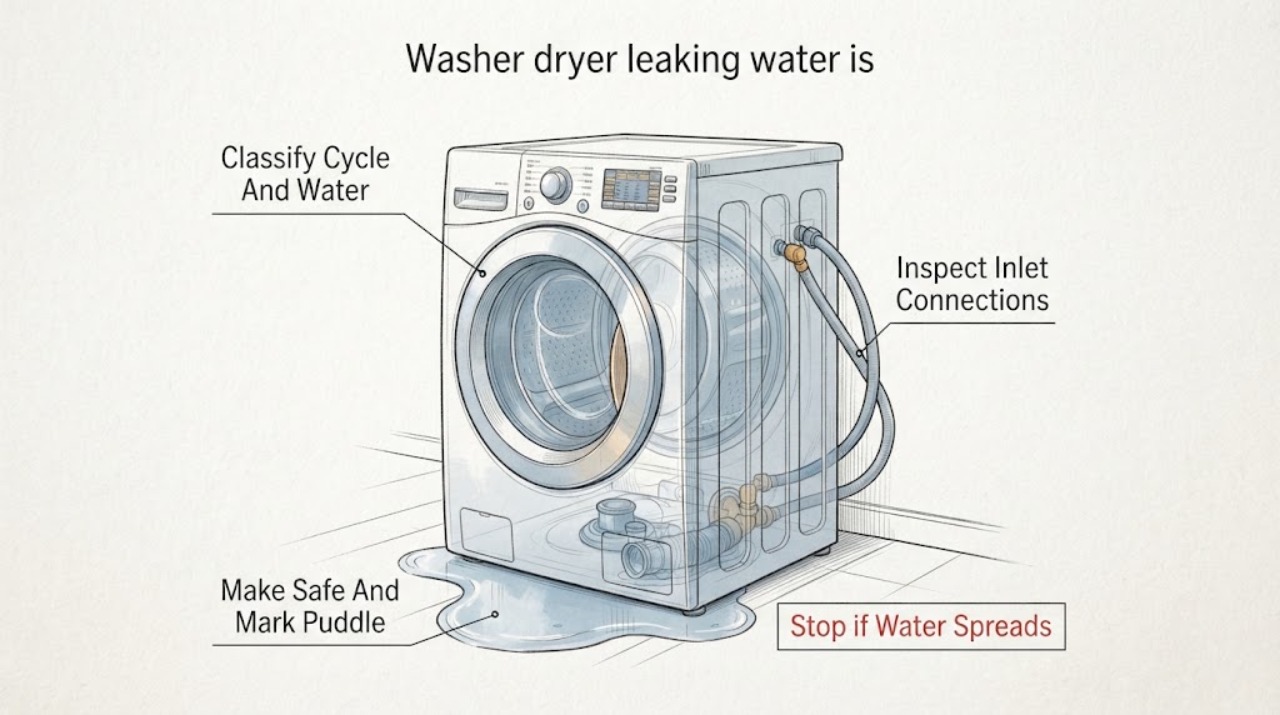
Washer dryer leaking water is under unit: What to Check and What to Do Next
Water under a washer-dryer usually comes from an inlet connection, drain hose or household drain, door seal, dispenser or oversudsing, pump filter, or an internal tub or hose. Stop the cycle, disconnect power if the floor or plug is wet, and close both water valves before moving the unit or inspecting connections.
-
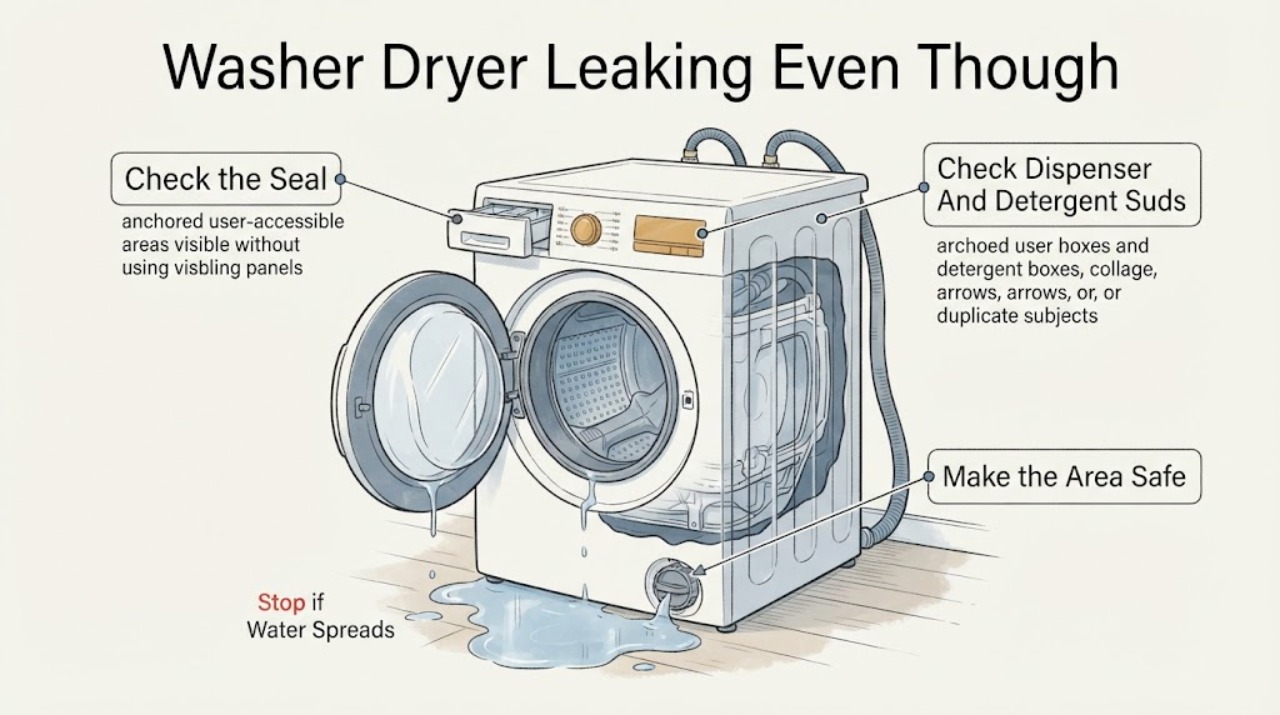
Washer Dryer Leaking Even Though the Door Closes: What to Check Next
A washer-dryer can leak even when its door closes and latches. First stop the cycle, keep hands and feet away from pooled water, and turn the appliance off; if water is near electrical connections, do not touch the plug or breaker and get qualified help.
-
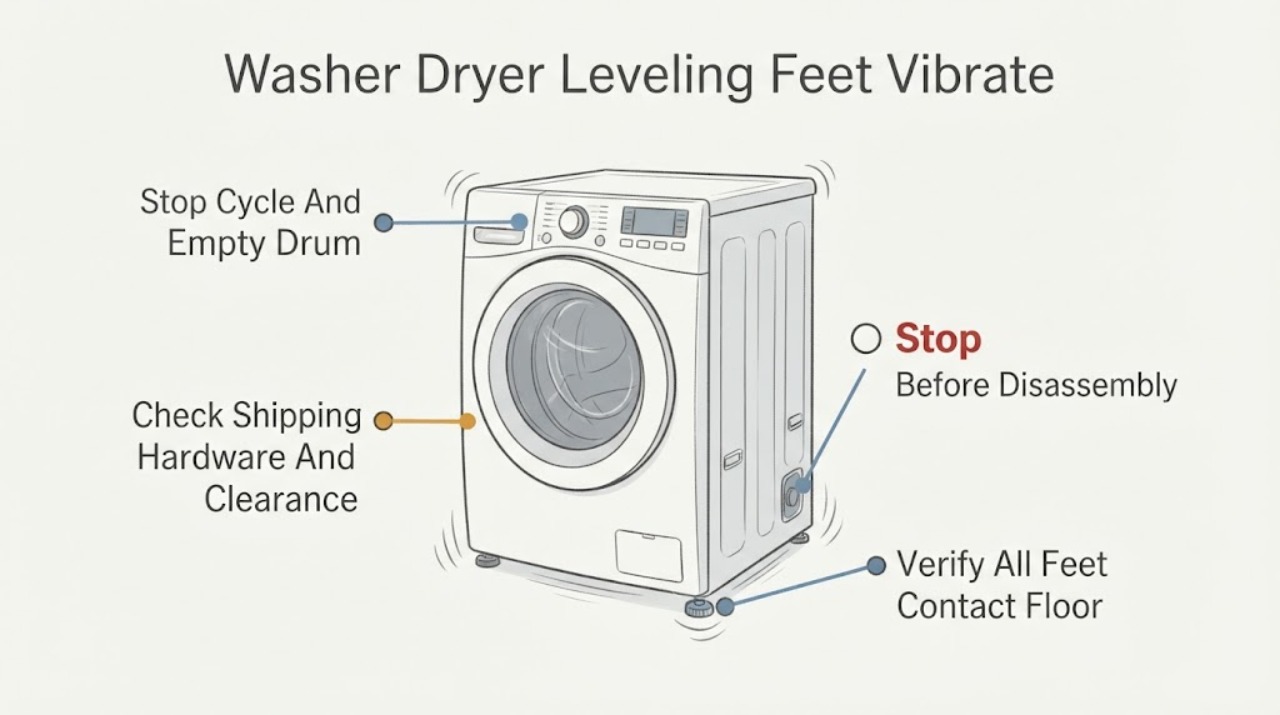
Washer Dryer Leveling Feet Vibrate: What to Check and What to Do Next
If a washer dryer vibrates because its leveling feet are not stable, stop the cycle and make sure the machine is on a firm, clean, level floor with every foot making firm contact. Check the leveling feet and lock nuts while the drum is empty, use a level across the top, and adjust only as the model's installation instructions allow; do not lift or tilt a heavy appliance alone.
-
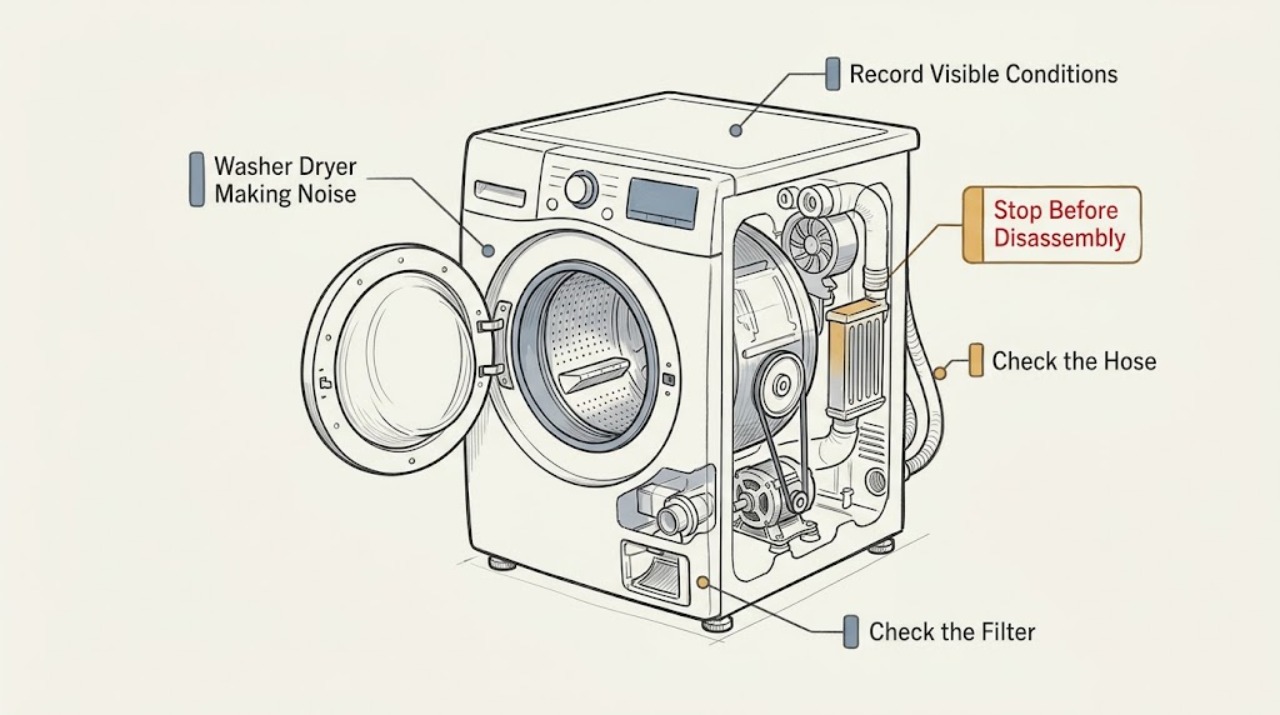
Washer Dryer Making Noise: Find Which Cycle Creates It
First note whether the sound occurs while filling, washing, draining, spinning, or drying. A brief click from clothing hardware, a low pump or compressor sound, or a short start-up thump can be normal on some models, but continuous metal scraping, violent banging, smoke, a burning smell, a hot cabinet, gas odor, sparks, a repeated breaker trip, or a water leak requires stopping the appliance.
-
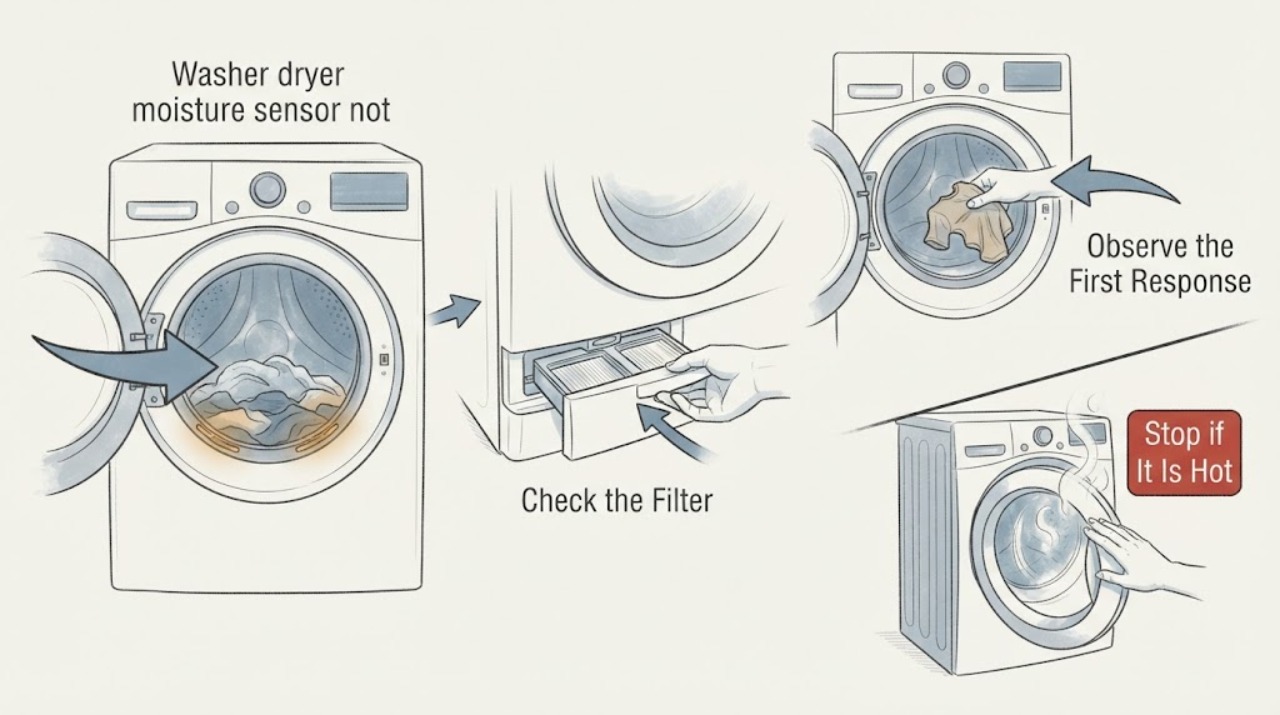
Washer dryer moisture sensor not drying: What to Check and What to Do Next
If a washer-dryer sensor cycle ends with damp clothes or seems not to dry, first separate a sensing decision from a heat or airflow problem. Clean and fully dry the lint filter and accessible moisture-sensor bars, use a load that can contact the sensors, select a cycle and dryness level suited to the fabric, and avoid mixing thin and bulky items.
-
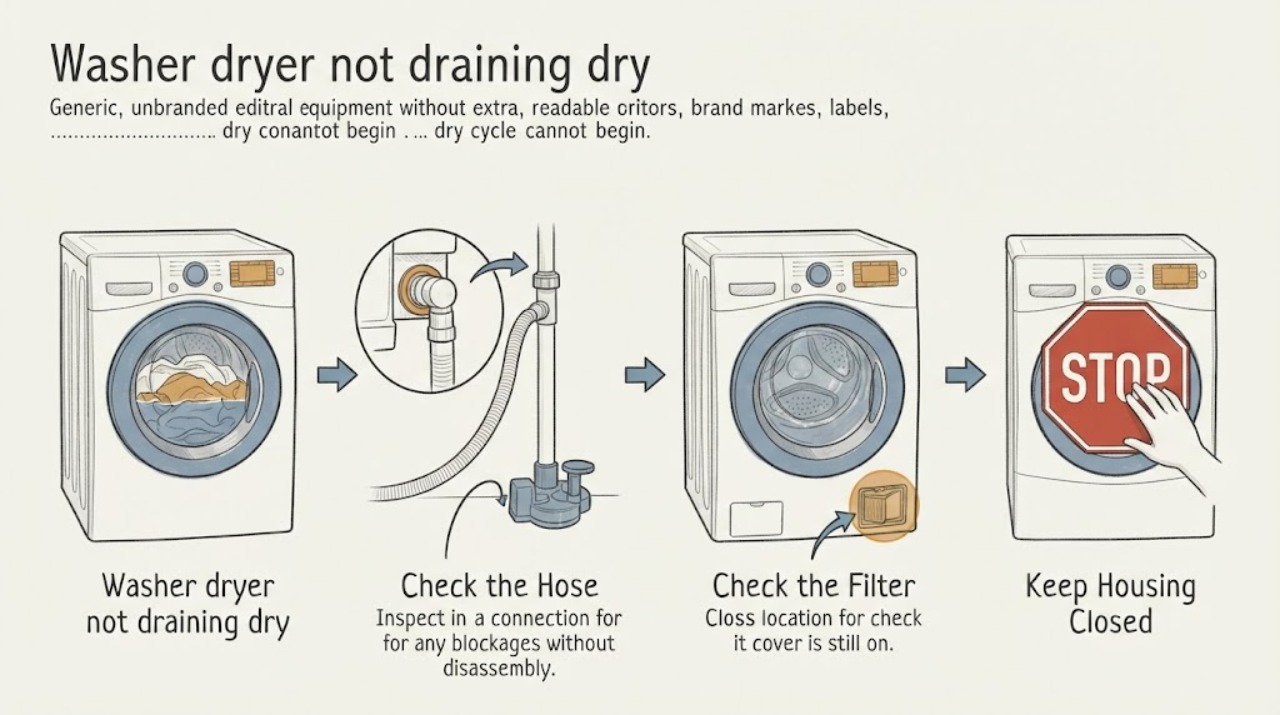
Washer dryer not draining dry cycle cannot begin: What to Check and What to Do Next
When a washer dryer will not drain and the dry cycle cannot begin, treat the failed drain as the primary fault rather than repeatedly selecting Dry. First record the exact display message and whether water remains in the drum.
-
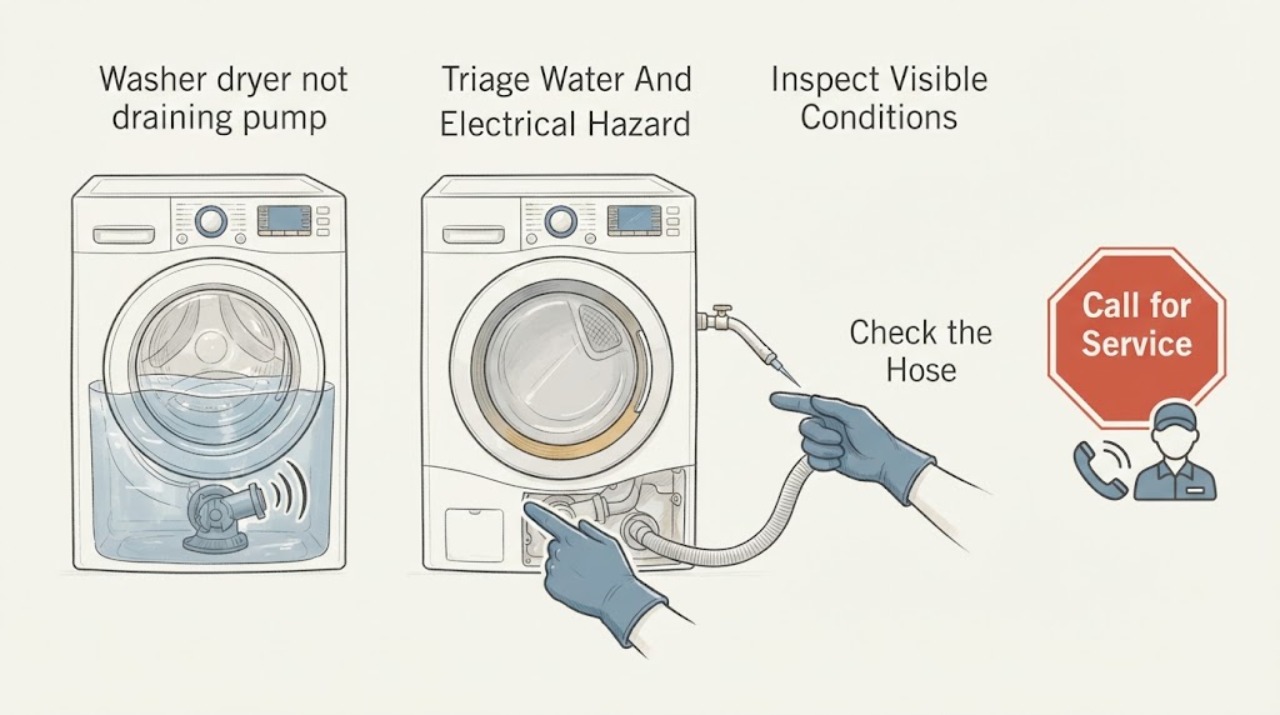
Washer dryer not draining pump hums or is silent: What to Check and What to Do Next
A washer dryer that will not drain can make a low hum while the pump is moving water, but a hum with no flow often points to a blocked filter, hose, or pump path; a silent pump can mean the drain step was not enabled, an interlock or control condition is holding the cycle, or the pump or wiring needs service. Stop for flooding, water near electrical connections, burning odor, smoke, or a drum that may contain hot water.
-
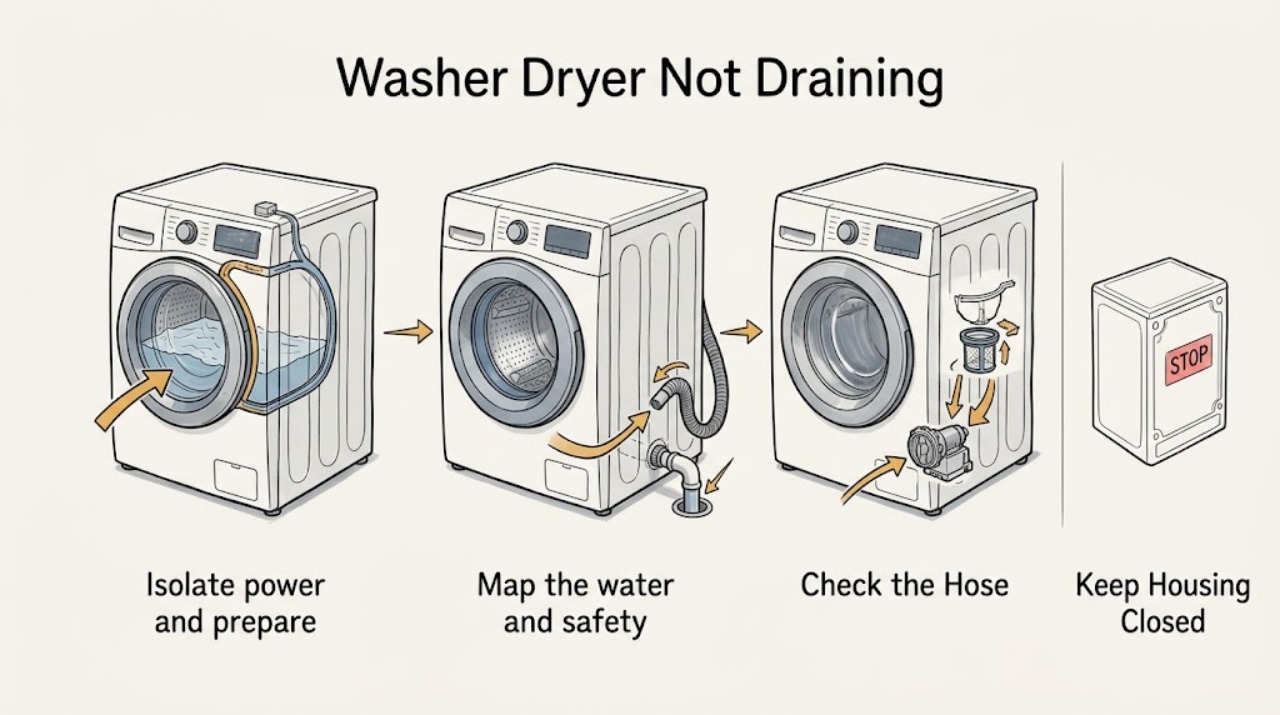
Washer Dryer Not Draining: Find the Blocked Path Safely
First determine whether water is still in the drum, whether the appliance drains slowly, or whether it drains but leaves clothes too wet. Keep the appliance off, allow hot water to cool, and disconnect it from mains power before opening a service cover or handling a pump filter.
-
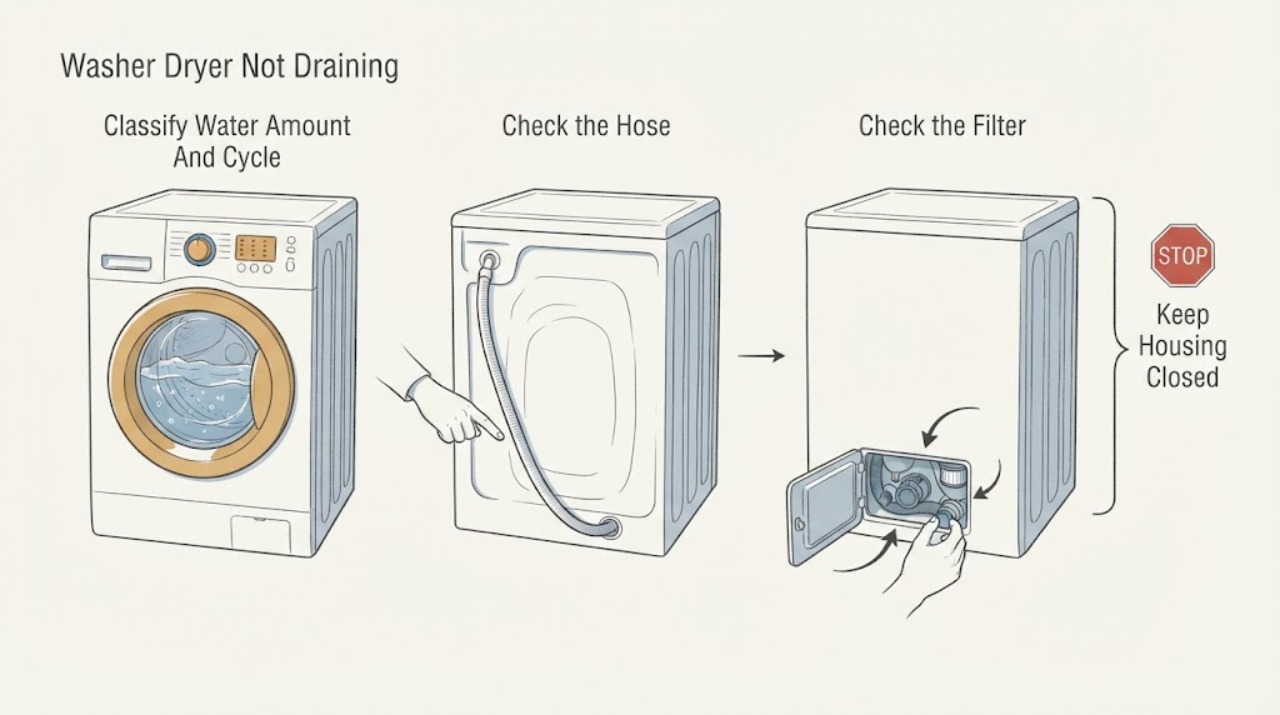
Washer Dryer Not Draining: Water Remains After the Wash
If substantial water remains in a washer-dryer after the wash, stop the appliance and keep it away from standing water until the cause is known. A small amount of moisture or condensation can be normal on some all-in-one models, but a full drum, slow drain, wet laundry, or water present before the next cycle points to a drainage problem.
-
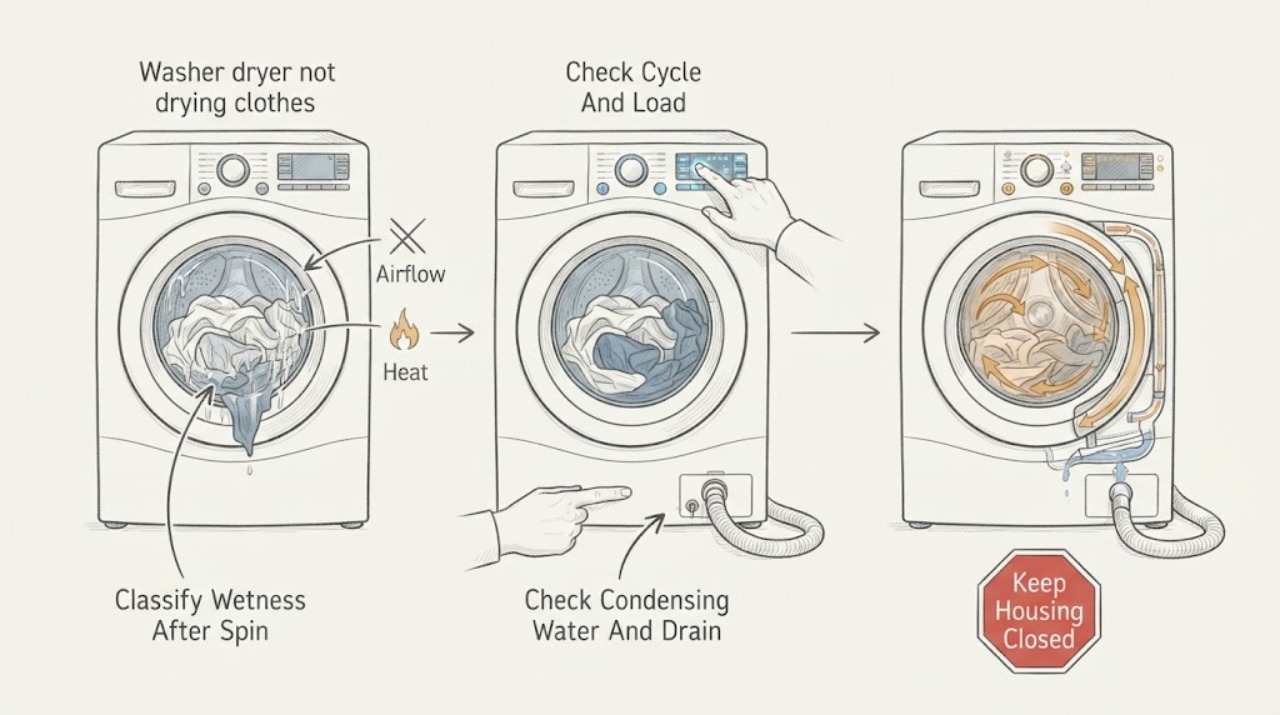
Washer dryer not drying clothes remain wet: What to Check and What to Do Next
Clothes that remain wet in a washer-dryer may have entered the drying phase with too much water, exceeded the smaller drying capacity, used an unsuitable cycle, or encountered a blocked filter, heat exchanger, drain hose, water supply, airflow path, heater, or sensor. First check whether the load spun out, whether the dry cycle actually ran, and whether the load is within the model's drying limit and sorted by fabric thickness.
-
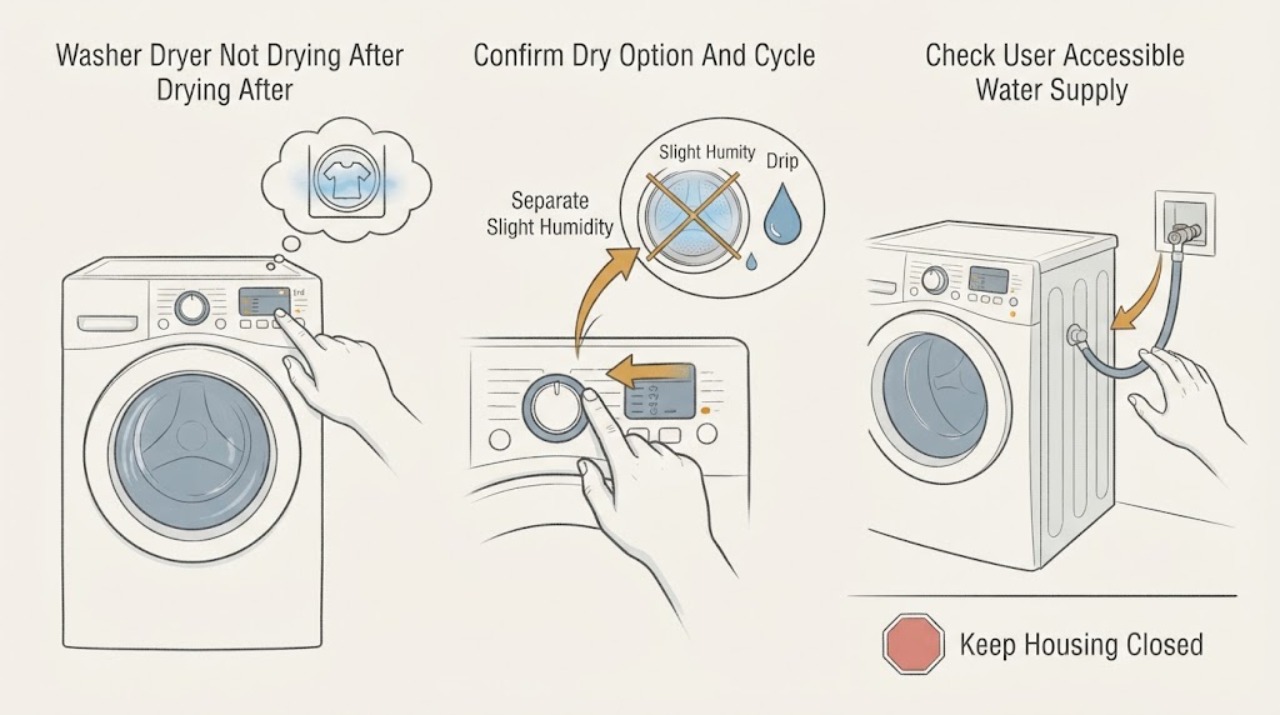
Washer Dryer Not Drying After the Wash Cycle Completes: What to Check and What to Do Next
A completed wash cycle does not prove that the drying portion ran or that the load reached its intended dryness. Washer-dryer combos may use a low-heat, sealed, or water-assisted drying process, and the dryer capacity is usually lower than the wash capacity.
-
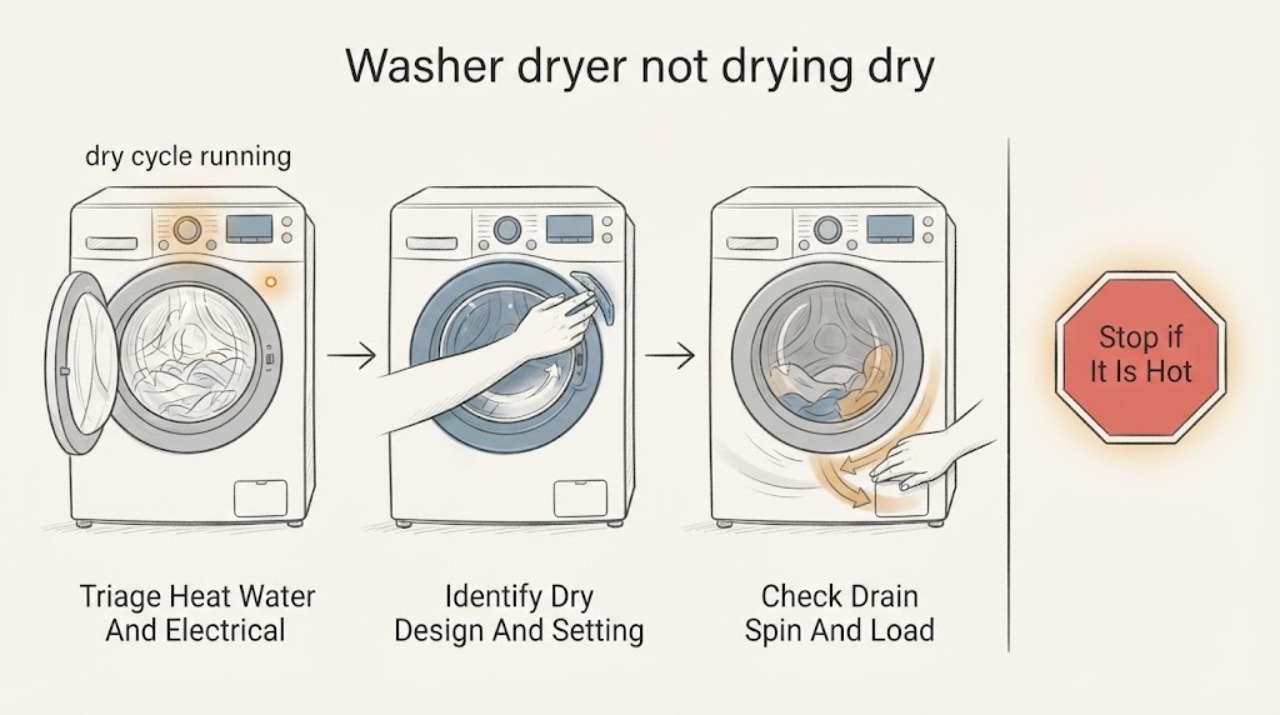
Washer dryer not drying dry cycle runs: What to Check and What to Do Next
If a washer dryer completes or runs its dry cycle but clothes stay wet, first confirm that the load is draining and spinning, the dry setting and load size match the exact manual, and the appliance has the water supply or airflow that its combo design requires. Some washer-dryer combos use water during drying to condense moisture, so a closed water tap or poor drain path can affect drying.
-
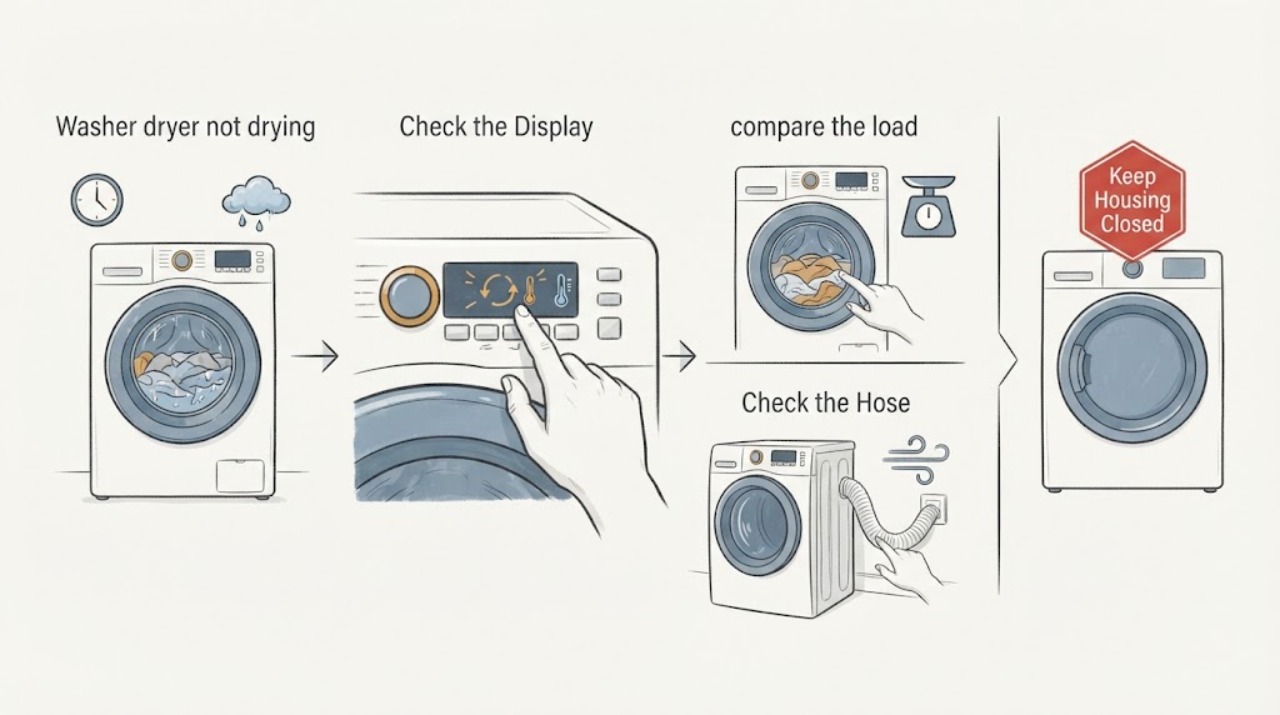
Washer dryer not drying: What to Check and What to Do Next
Washer-dryer combos often dry differently from vented dryers: they may use condensation or a water-assisted process, take longer, and have a smaller drying capacity than washing capacity. First check that a real dry mode is selected, the load is below the model's drying limit, the required water supply is on, and the drain hose is not kinked or holding water.
-
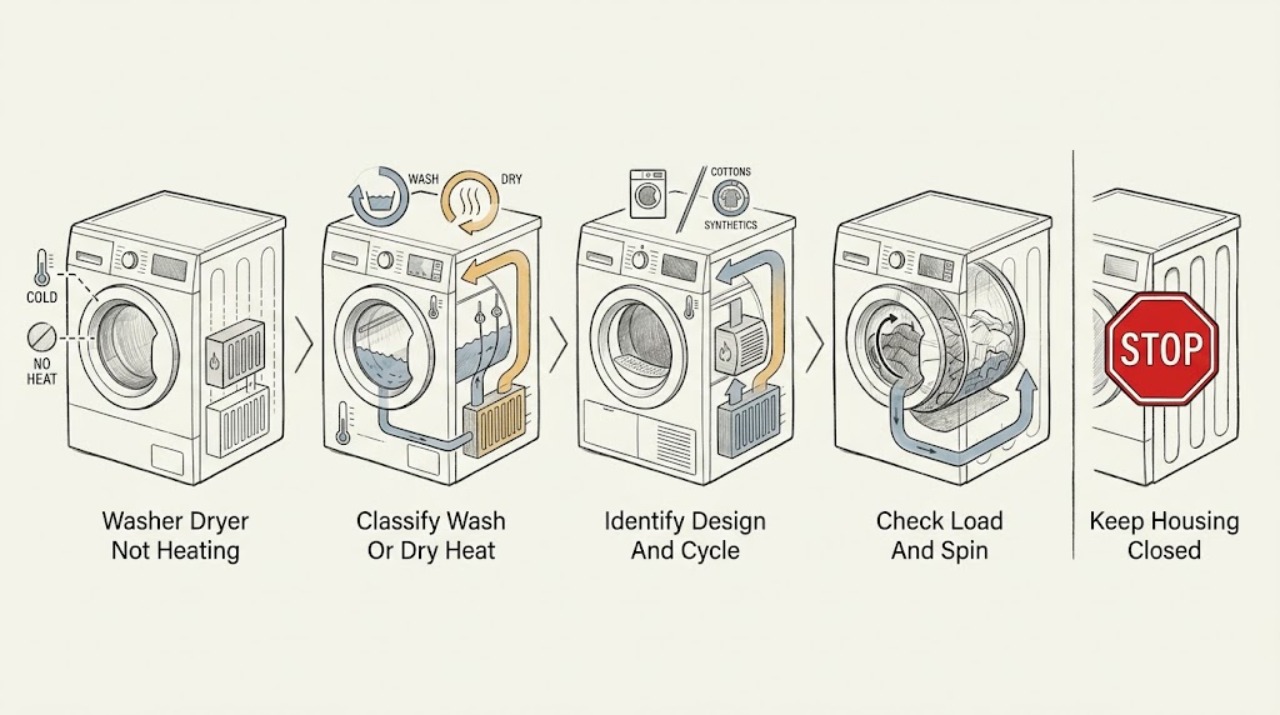
Washer Dryer Not Heating
A washer dryer that is not heating needs two separate checks: is the wash water not getting warm, or is the drying air not warming the load? First identify the appliance design from its rating label and manual: a vented dryer needs an open exhaust path, while a condenser or heat-pump combo may use water, a drain path, a heat exchanger, and a lower-temperature drying process.
-
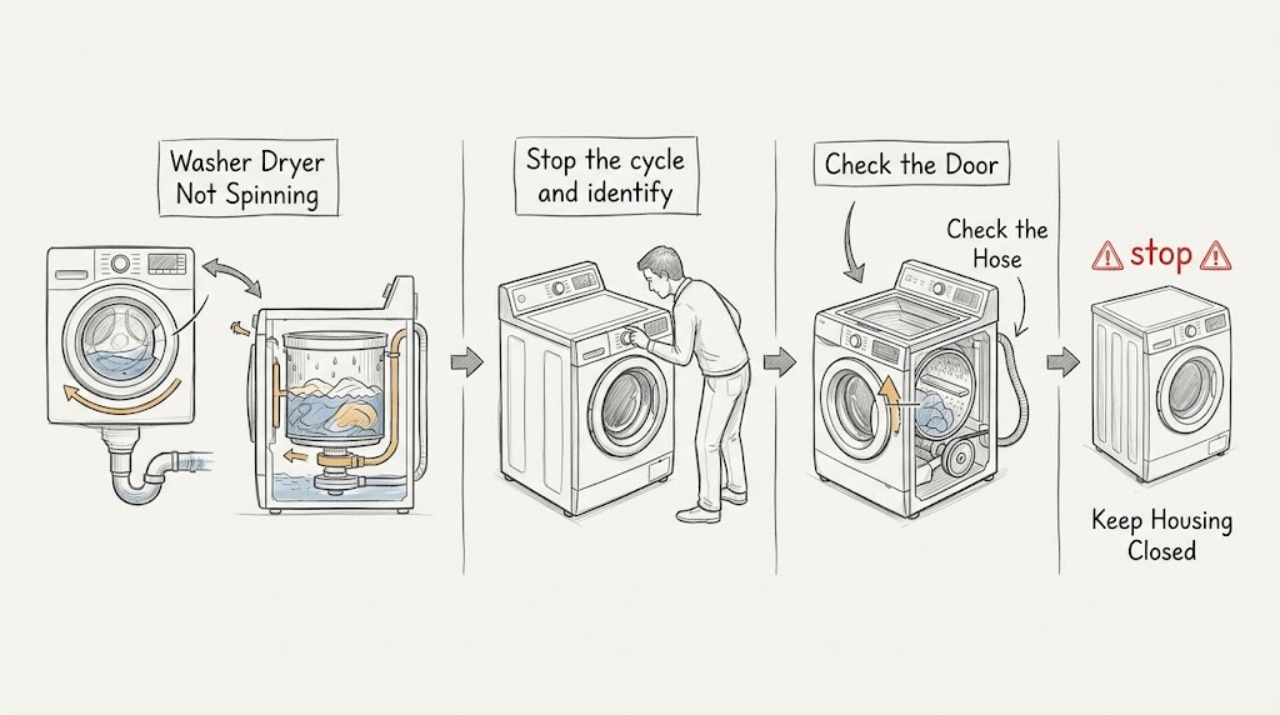
Washer Dryer Not Spinning: Check Drainage, Balance, Settings, and Safety
A washer-dryer that will not spin may be waiting for water to drain, protecting itself from an unbalanced load, using a low- or no-spin setting, blocked by a door or lid lock, slowed by excessive suds, or affected by a power interruption. Stop first for a leak, violent movement, metal-on-metal scraping, burning or electrical smell, sparks, overheating, or a breaker that trips again.
-
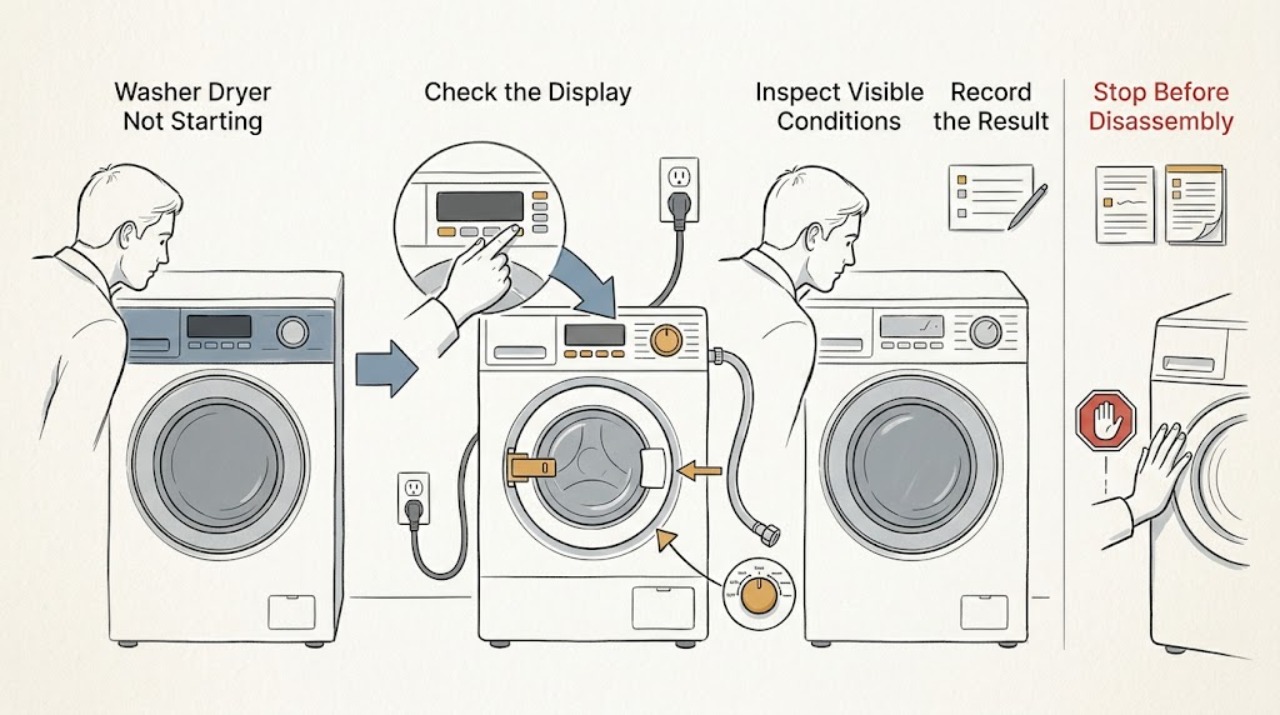
Washer Dryer Not Starting: Safe Checks for Power, Controls, Door, and Cycle Selection
First decide whether the washer-dryer has no power, has power but will not accept a start command, or starts one side of the appliance but not the other. If there is a burning smell, smoke, sparking, melted plastic, water near an electrical connection, repeated breaker tripping, or abnormal heat, stop immediately, keep clear of the hazard, and isolate power only when it is safe to do so; do not keep resetting or testing it.
-
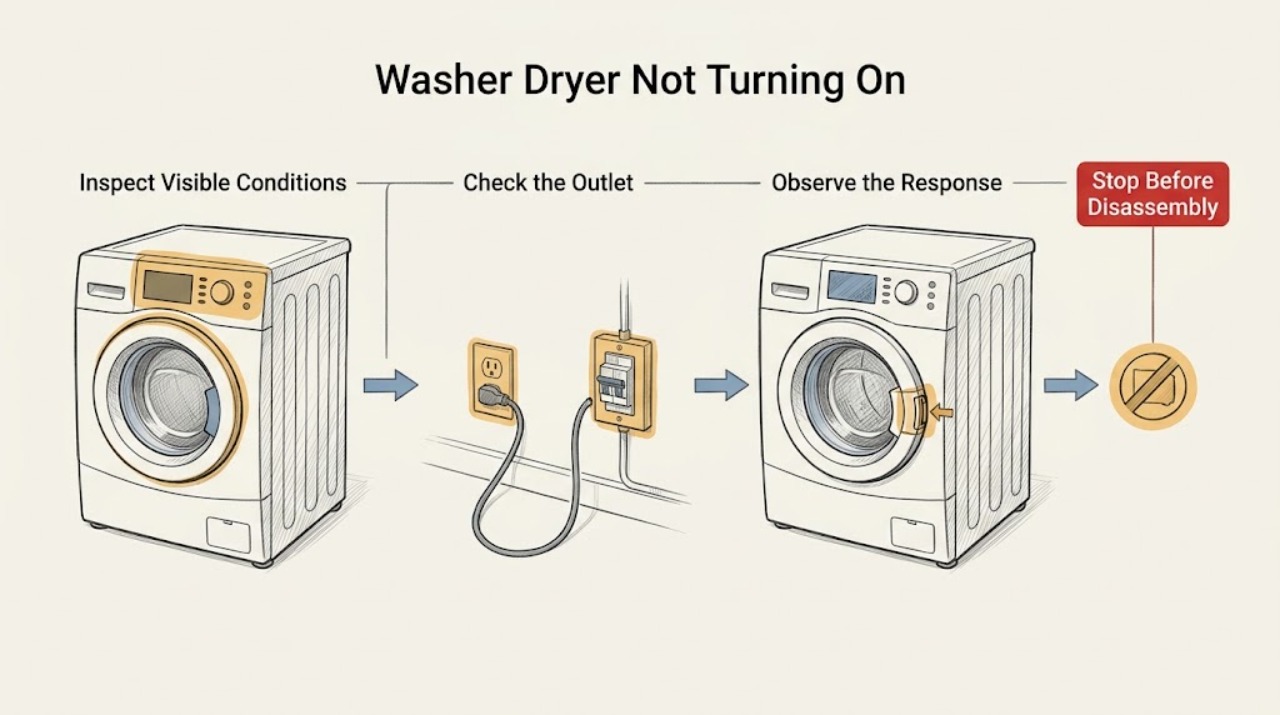
Washer Dryer Not Turning On
If a washer dryer will not turn on, first decide whether the entire appliance is dark, the panel lights up but will not start, or only the washer or dryer side is affected. Then check the external plug, outlet and breaker from a dry, undamaged position, the control or child lock, the correct power and Start controls, and the door latch.
-
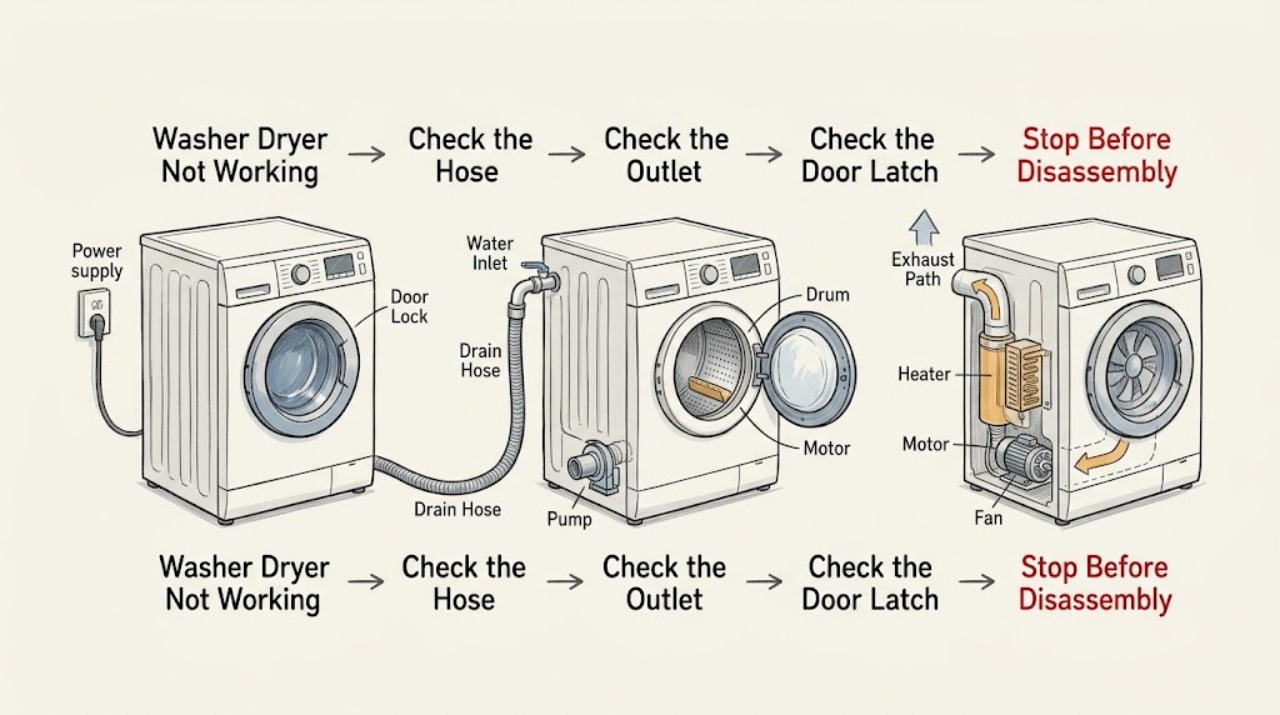
Washer Dryer Not Working: Split the Power, Wash, and Drying Faults
First decide whether the whole washer dryer is dead, the display works but a cycle will not start, the wash side stops with water, the drum will not drain or spin, or the dry side tumbles without heat or airflow. Check only the accessible plug, wall outlet, breaker or protective outlet, door closure, water taps, hoses, drain path, load, and lint screen as the model manual permits.
-
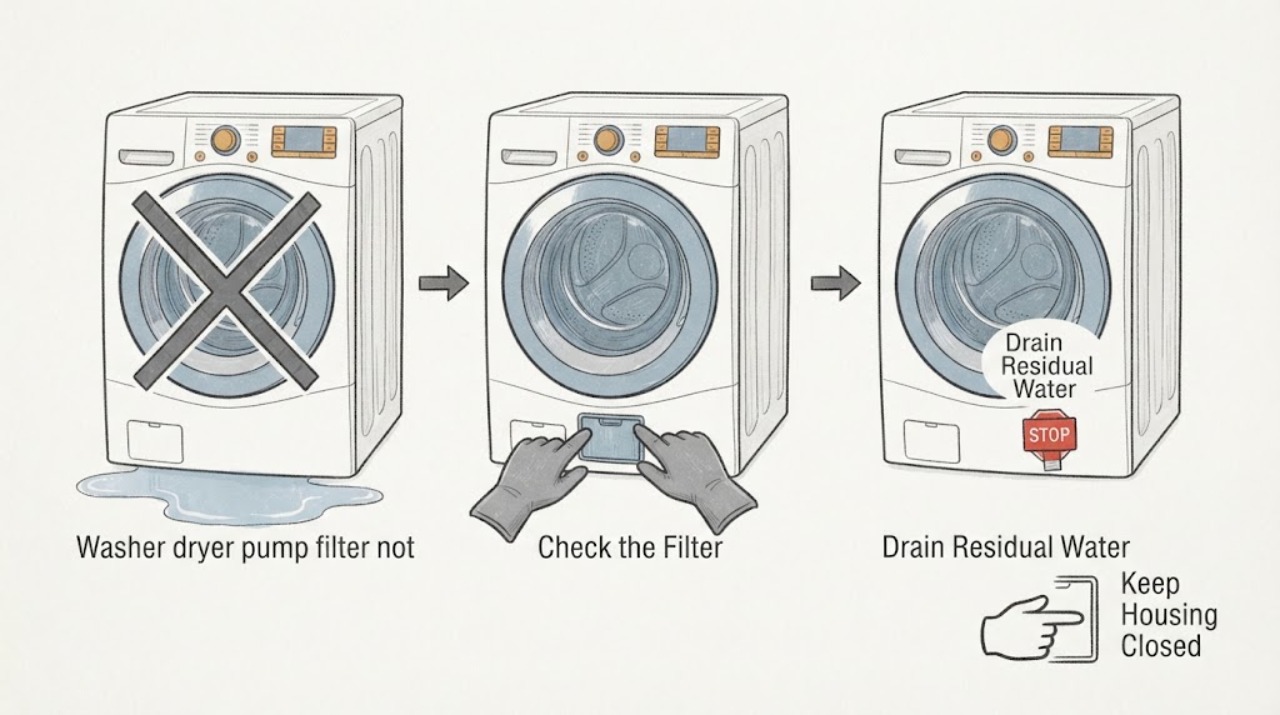
Washer dryer pump filter not draining: What to Check and What to Do Next
Do not keep opening a pump filter while the drum may contain hot water. Turn the washer-dryer off, disconnect power, consult the exact model manual for the filter and residual-water hose location, and place a broad shallow container and towels below the access point.
-
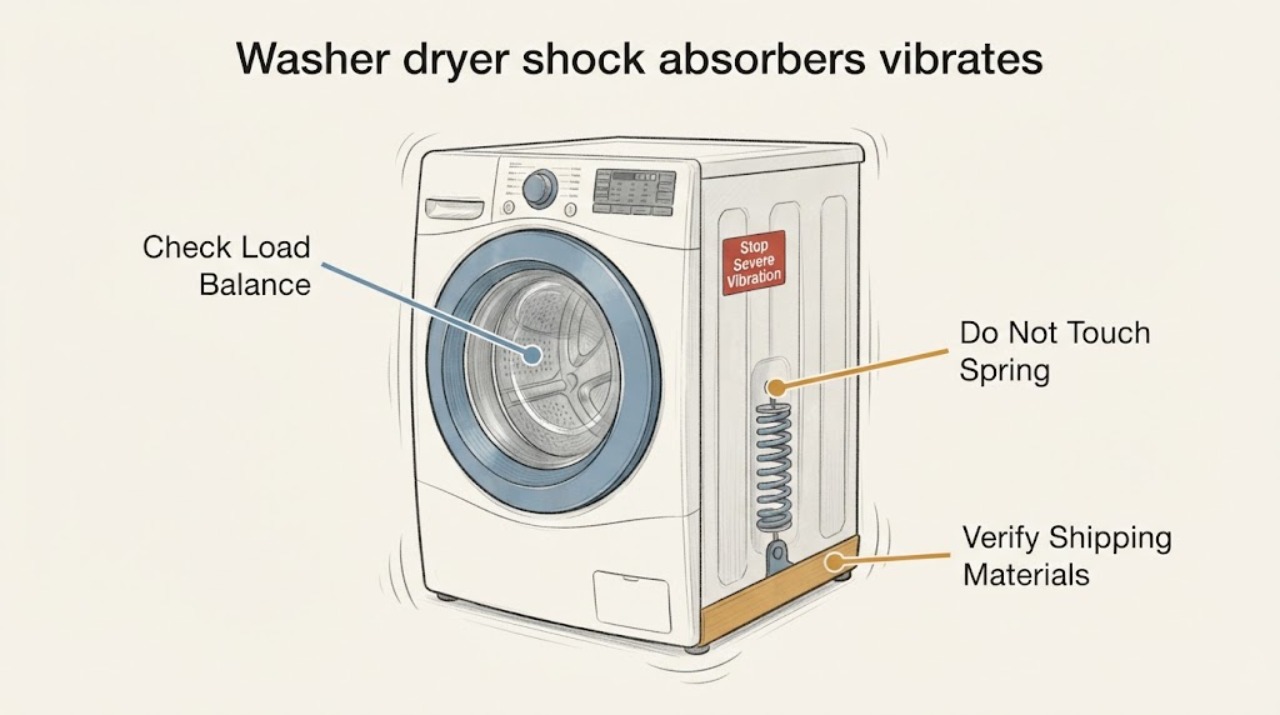
Washer dryer shock absorbers vibrates: What to Check and What to Do Next
If a washer-dryer vibrates and you suspect its shock absorbers, first stop a violent or walking cycle and determine whether the movement follows one unbalanced load, a recent installation or move, an uneven floor, or every load. Redistribute the laundry, confirm the washer is on a firm level surface with all feet stable, and check the model instructions for shipping bolts before blaming an internal damper.
-
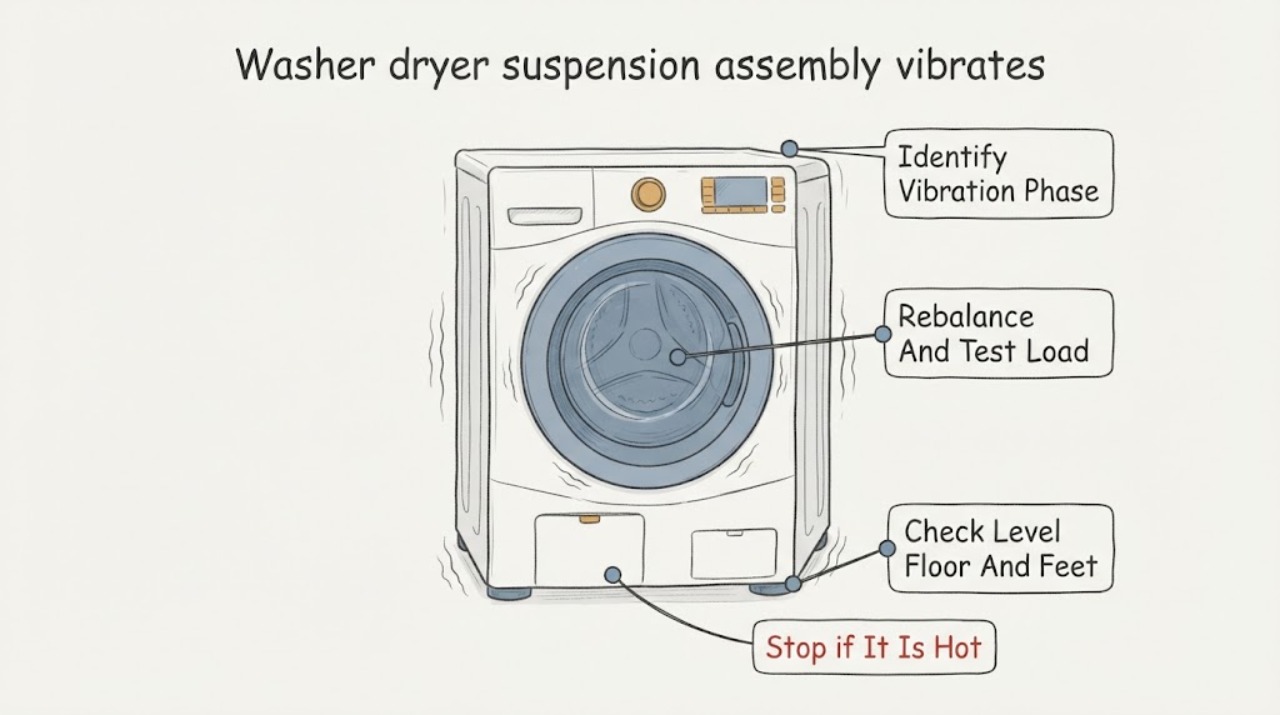
Washer dryer suspension assembly vibrates: What to Check and What to Do Next
A washer-dryer suspension assembly is meant to let the wash tub move while limiting shock; the assembly itself may be reacting to an unbalanced load, an unlevel or weak floor, shipping restraints, or a worn spring, rod, damper, or mount. First identify whether movement happens only during washer spin, with particular loads, or even when the drum is empty.
-
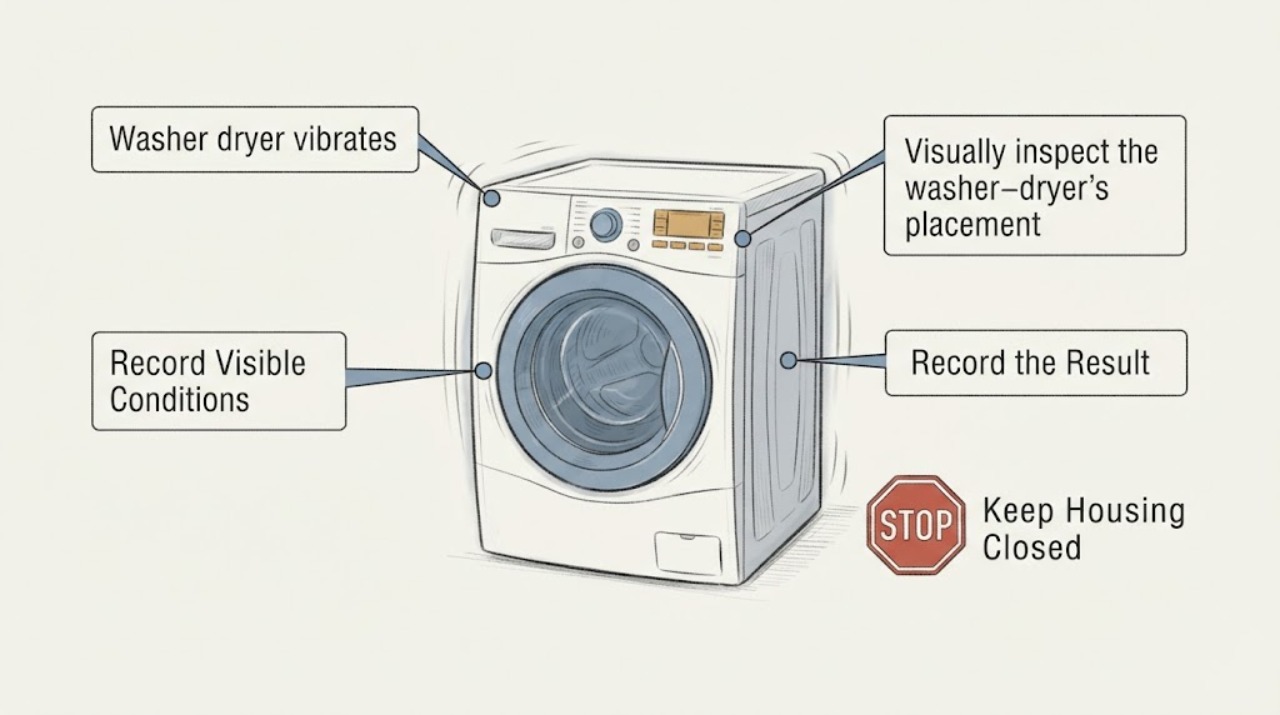
Washer dryer vibrates: What to Check and What to Do Next
Start by deciding whether the washer-dryer vibrates only during high-speed spin or drying, or whether it rocks, walks, bangs, or moves the hoses and power connection. From a safe standing position, document the load pattern, floor and cabinet movement, level-looking placement, visible foot contact, shipping or relocation history, and hose or wall contact without moving the appliance, reaching behind it, opening panels, or adjusting suspension parts.