
On this page
Start here
Quick answer
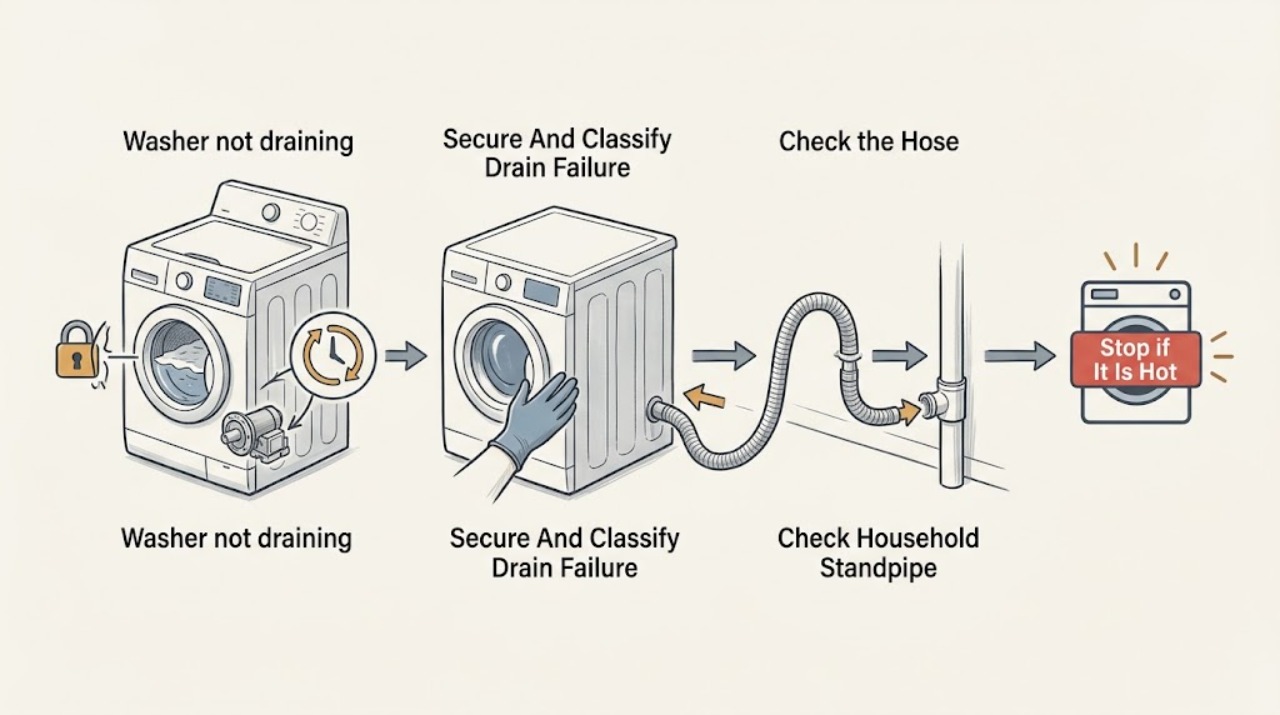
If an Electrolux washer is not draining, first note whether the cycle is paused, leaves water in the drum, drains slowly, or shows E21. Stop the washer and keep hands away from the tub until all motion ends. Inspect the visible drain hose for a kink, crushing, poor support, or a loose connection, and check the household standpipe for backup; do not push the hose tightly into the drain or pour drain cleaner into the washer. On a front-load model, use the exact model manual before accessing a pump filter, and disconnect power before any approved access; do not open the filter with retained water unless the model procedure makes draining safe. A persistent E21, standing water, grinding pump sound, damaged hose, leak, or fault after the visible checks needs qualified service. Stop immediately for water near electrical connections, smoke, burning odor, or a hot or damaged cord.
Work through in order
Diagnostic checks
Use only checks that match the exact appliance or system and its official guide.
-
Check 1
Pause or turn off the washer at the controls and wait until the tub is completely still. Record whether water remains, whether the washer is in drain or spin, the exact display or E21 message, and whether there is a leak, smoke, burning odor, hot cord, or water near the outlet.
Expected result: The tub is full or partly full, the cycle is only paused, E21 is displayed, the washer is draining slowly, or a water or electrical hazard is present.
Next step: For water near electrics, smoke, burning odor, a hot cord, or uncontrolled leaking, keep clear, isolate power only from a safe dry location, close the water supply when safe, and arrange qualified or emergency help. Otherwise continue with visible drain checks.
Why this matters
Why: A paused cycle may not be a drain fault. Retained water or E21 points to the pump-out path; a leak or wet electrical area changes the task to a stop-use event.
-
Check 2
From a dry position, inspect the visible drain hose from the washer to the standpipe or sink for kinks, crushing, pinching, damage, an unsecured end, or a hose pushed tightly into the drain. Do not loosen a connection with water under pressure or use chemical drain cleaner.
Expected result: The hose is kinked or pinched, its end is loose or poorly supported, the connection leaks, the hose is tightly sealed into the standpipe, or the visible routing is correct.
Next step: Correct only a visible routing or support issue using the exact Electrolux installation instructions, then make one supervised drain attempt if the area is dry and there is no hazard. Arrange service for a damaged hose, recurring failure, or any connection that cannot be safely corrected.
Why this matters
Why: A restriction, unsecured hose, or incorrect insertion can prevent water from leaving or let it miss the drain. A correct visible hose shifts suspicion to the standpipe, pump filter, pump, or control path.
-
Check 3
Watch the household standpipe, sink, or floor-drain outlet during a model-permitted drain attempt from a safe position. Note whether wastewater backs up, the outlet is clogged, or water exits the washer connection while the household drain remains clear.
Expected result: The standpipe or sink backs up, water spills at the outlet, the household drain accepts water normally, or the washer-side connection leaks.
Next step: Stop the cycle for backup or an active leak. Do not pour drain cleaner into the washer or force a hose connection; arrange plumbing service for a household blockage and qualified appliance service for an appliance-side leak or drain failure.
Why this matters
Why: Backup at the household outlet points toward a plumbing restriction rather than a washer control problem. A washer-side leak with a clear household drain points toward the hose, pump, or appliance connection.
-
Check 4
If the washer is a front-load model and the visible hose and household drain are clear, consult the exact Electrolux manual for whether it has a pump filter and how to make access safe. Disconnect power before model-authorized access; do not open a filter with retained water unless the manual provides a safe way to contain and drain it.
Expected result: The model has a documented filter procedure and the area can be kept dry, the filter is inaccessible or water cannot be contained, or the model has no applicable filter access.
Next step: Follow only the matching manual procedure when power is disconnected and water can be safely contained. Otherwise leave the washer off and arrange service; never force the filter, reach into the pump, or open the cabinet.
Why this matters
Why: A filter or pump obstruction can slow drainage, but filter access is model-specific and retained water creates a spill and electrical risk. An inaccessible or unclear procedure needs professional handling.
-
Check 5
From outside the washer, compare the drain sound with the model guidance: gurgling or bubbling, a low hum, silence, or a new grinding or rattling sound. Record whether E21 returns, water remains after an allowed filter or hose check, or the washer completes drainage normally.
Expected result: The sound is a normal drain gurgle or low hum, the pump is silent while water remains, E21 returns, or grinding or rattling repeats each drain.
Next step: Stop for grinding, metal contact, burning odor, or a worsening sound. For retained water, recurring E21, or a silent or abnormal pump path after visible checks, keep the washer off and arrange qualified service.
Why this matters
Why: Gurgling and a low pump hum can accompany draining. Silence with retained water, a recurring E21, or repeated grinding suggests a pump, obstruction, hose, or control fault that cannot be confirmed by sound alone.
-
Check 6
Record the complete Electrolux model, washer style, exact code, water level, drain stage, hose and standpipe observations, filter-access result, and whether a safe model-permitted drain test changed the symptom. Do not repeat cycles if water remains or the leak or hazard returns.
Expected result: The washer drains after a permitted visible correction, fails again at the same stage, cannot be safely accessed, or needs cabinet or electrical diagnosis.
Next step: Keep the washer out of service for repeat failure, standing water, a leak, or any inaccessible fault and provide the recorded pattern to a qualified technician. Do not order a pump, hose, or filter based only on an E21 or noise.
Why this matters
Why: A corrected kink or household blockage can explain a one-time failure. A repeat failure, inaccessible pump path, or electrical or control symptom requires model-specific service diagnosis.
Use your observations
Decision map
Find the observation that best matches what you see, then follow the next safe action.
-
PATH 01Next step
What you see
Do this next
Allow the documented pause to finish and use the exact model controls. If water remains, E21 appears, or the washer repeatedly stops at drain, move to the hose and outlet checks.
-
PATH 02Next step
What you see
Do this next
Correct only the visible routing under the model installation instructions and run one supervised drain attempt if safe. Stop and arrange service for a damaged hose or recurring E21.
-
PATH 03Next step
What you see
Do this next
Stop the drain attempt and arrange plumbing service. Do not add chemical drain cleaner to the washer or force the drain hose deeper into the outlet.
-
PATH 04Next step
What you see
Do this next
Use only the exact model's pump-filter procedure with power disconnected and water safely contained. If access is unclear, water remains, or the symptom continues, leave the washer off and arrange qualified service.
-
PATH 05Next step
What you see
Do this next
Keep clear, do not touch a wet plug or reach into the washer, and isolate power only from a safe dry location. Close water valves when safe and obtain qualified or emergency help as appropriate.
Helpful context
Understand the symptom
“Not draining” has several different patterns
A washer that is paused between stages is different from one that leaves a full tub, drains slowly, or pumps but backs up at the standpipe. Record the display, water level, cycle stage, and whether the drain pump hums. Electrolux uses E21 for a long or slow pump-out condition, but the same symptom can come from visible hose routing, a household drain, a pump filter, or an appliance fault.
Keep water and electricity separated
Do not reach into a moving drum. If water is near the cord, outlet, or other electrical connection, do not touch a wet plug or stand in water to unplug the machine. Use the controls only from a dry location, isolate power from a safe dry location, and close the water valves when safe. A leak or standing water that cannot be safely managed is a service call.
Use the exact Electrolux model procedure for pump access
Pump-filter location and draining steps vary by washer design. Front-load guidance may provide a filter procedure, while some models do not have the same access. Disconnect power before any model-authorized access, prepare for retained water only as the manual specifies, and stop if the filter is inaccessible, water cannot be contained, or the procedure is unclear.
Only after diagnosis
Potential parts
- washer drain pump
Consider this only after qualified diagnosis confirms a pump fault following visible hose, standpipe, and model-approved filter checks, especially when E21 or abnormal pump noise persists.
Pump design and access vary by model. Confirm the complete Electrolux model and service diagnosis before ordering. - washer drain hose
Consider this only when the first fault point is a damaged, kinked, or leaking washer drain hose and household plumbing has been separated from the appliance issue.
Routing, retainers, and connection details vary by model. Confirm the complete Electrolux model and installation information before ordering. - washer pump filter
Consider this only when the exact model uses a replaceable pump filter and qualified diagnosis confirms damage or an unserviceable filter after safe drainage checks; a no-drain symptom alone is not enough.
Filter presence, access, and design vary by model. Confirm the complete Electrolux model and safe service procedure before ordering.
When checks do not resolve it
Need a professional?
Arrange qualified service for a persistent no-drain condition, repeat E21, standing water, an abnormal pump sound, an inaccessible pump filter, a damaged hose, a washer-side leak, or any issue requiring cabinet access. For flooding or water near electrical connections, isolate power only from a safe dry location and seek emergency help when appropriate.
Common questions
FAQ
What does E21 mean on an Electrolux washer?
Electrolux uses E21 when water is not pumping out fast enough or takes too long to empty. Check only the visible drain hose and installation first; arrange service if the code returns.
Why is my Electrolux washer not draining?
Common diagnostic paths include a kinked or poorly positioned drain hose, a backed-up household standpipe, a pump-filter or pump issue, or an installation or control problem. Start with the exact code and visible hose, then use the model procedure or service for pump access.
Should I push the drain hose deeper into the standpipe?
No. Use the exact Electrolux installation instructions. An unsecured or incorrectly positioned hose can miss the drain or restrict drainage, and a standpipe that backs up needs plumbing service.
Can I open the pump filter when the washer is full of water?
Not unless the exact model manual gives a safe way to disconnect power, contain, and drain the retained water. If water cannot be safely contained or the procedure is unclear, leave the washer off and arrange service.
Why does my Electrolux washer hum but not drain?
A low hum can be the drain pump operating, but retained water, repeat E21, grinding, or a silent pump path needs service diagnosis after visible hose and household-drain checks. Do not open the cabinet or force the pump filter.
Why does the standpipe overflow when my washer drains?
Backup at the standpipe points toward a household plumbing restriction or drain-hose installation issue rather than proving the washer pump has failed. Stop the cycle and arrange plumbing service; do not pour chemical drain cleaner into the washer.
Can I run another cycle to see if the washer starts draining?
Only one supervised, model-permitted attempt after a visible hose correction and only when there is no standing water hazard, leak, abnormal sound, or wet electrical area. Repeated cycles can worsen a leak or mechanical fault.
When should an Electrolux washer that will not drain be serviced?
Arrange service for repeat E21, standing water, an abnormal pump sound, a damaged hose, an inaccessible filter, a washer-side leak, or any issue requiring cabinet access. Stop immediately for flooding, water near electrics, smoke, burning odor, a hot cord, or metal contact.
Read the exact guide
Official sources
- Laundry front loading washer displaying Error Code E21 long pump out time.Electrolux · Electrolux front-load washer slow or incomplete pump-out and E21 troubleshooting
- Laundry front loading washer is leaking water.Electrolux · Electrolux front-load washer drain-hose, standpipe, water, and safe service checks
- Laundry Water Supply GuideElectrolux · Electrolux washer installation and hose connection reference when a recent move or installation affects drainage checks
- Laundry Washers Noises GuideElectrolux · Electrolux washer drain-stage sound descriptions and drain-hose contact guidance
Community feedback
Share a repair observation
Share a plain-text repair observation. Accepted observations are published automatically; this page may take a moment to update.