
On this page
Start here
Quick answer
If a Blomberg washing machine leaves water in the drum, switch it off and unplug it, then check the drain hose for kinks, crushing, twists, blockage, or incorrect routing. If the hose is clear, drain the remaining water safely and clean the pump filter, allowing hot water to cool first and using a container for the release. Refit the filter securely and run a short drain programme. If water still remains, the pump, pressure sensing, controls, or household drain may need professional attention; do not reach into a powered pump or open the appliance.
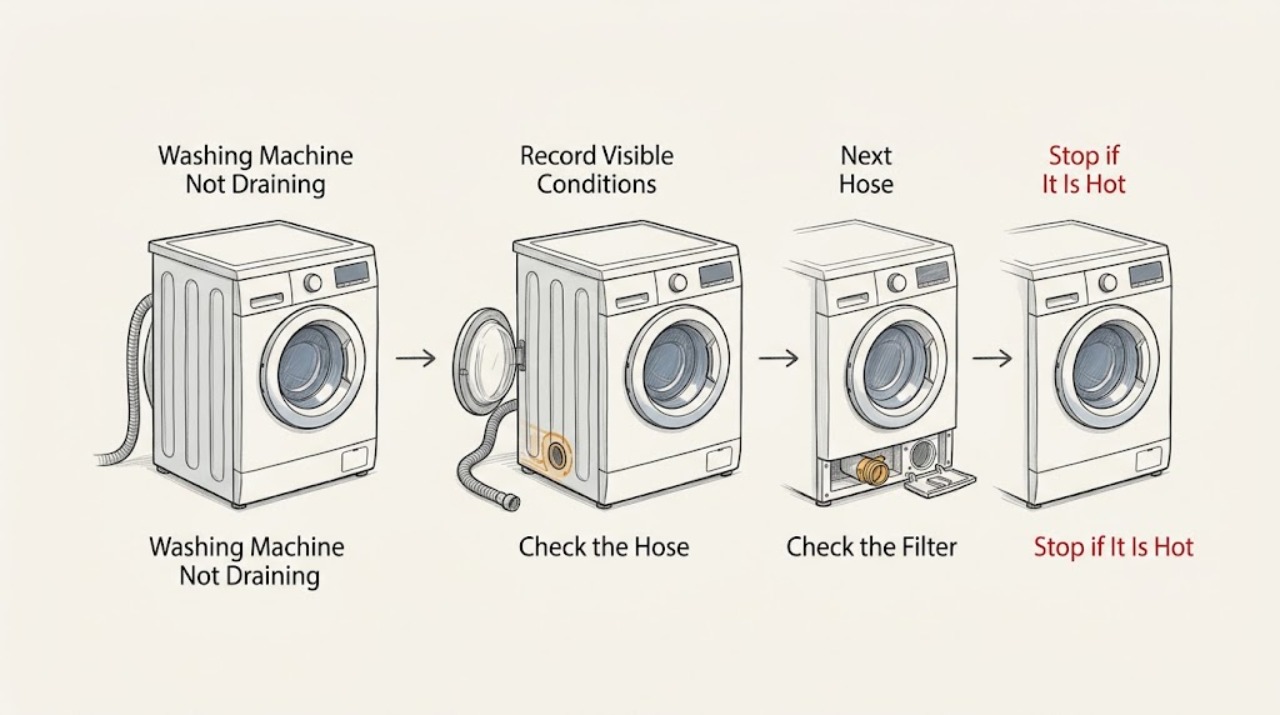
Work through in order
Diagnostic checks
Use only checks that match the exact appliance or system and its official guide.
-
Check 1
Turn the washer off, unplug it, and record whether the drum is full, partly drained, or draining very slowly; note any pump noise, rattling, or error display.
Expected result: A full drum with silence suggests a power, control, or pump path issue; humming or rattling suggests the pump is being asked to run but may be obstructed; slow drainage points toward a restriction rather than a completely open path.
Next step: Keep the appliance disconnected and continue with the hose and drain-route check. If there is smoke, a hot electrical smell, a damaged cord, or water around electrical connections, stop and arrange service.
Why this matters
Why: The symptom determines whether to inspect the external hose first or move cautiously to controlled water removal and the pump filter.
-
Check 2
Inspect the visible drain hose from the washer to the standpipe or sink without pulling the appliance farther than is safe. Straighten any kink, crushing, or twist, and check that the end is not blocked or pushed too deeply into the waste pipe.
Expected result: A flattened or twisted hose can restrict flow. A hose inserted too far or routed incorrectly can create siphoning or prevent reliable discharge; a clear hose and correctly arranged outlet move suspicion toward the filter or machine.
Next step: Correct only the visible routing described in the installation or model manual, then proceed to the filter if the drum still holds water. If the household standpipe backs up or remains blocked, use a plumber rather than forcing the washer to pump into it.
Why this matters
Why: The external drain path is the least invasive check and can explain both a washer that will not empty and one that drains intermittently.
-
Check 3
Prepare a shallow container and towels, locate the pump-filter cover at the lower front of the washer, and open the housing slowly. If the model has an emergency drain tube, use it to release water in small amounts; otherwise loosen the filter gradually while keeping the container in place.
Expected result: A strong flow confirms that water remains in the machine and that the opening must be managed slowly. Little or no flow does not prove the pump is good; the blockage may be upstream or the filter may be dry.
Next step: Wait until the water is cool and the flow has stopped before removing the filter. Stop if the water is scalding, the cover will not move without force, or the appliance cannot be kept stable.
Why this matters
Why: Controlled draining prevents a sudden spill and keeps the filter area safe to inspect.
-
Check 4
With power disconnected and the remaining water managed, remove the pump filter according to the model manual. Rinse it, remove visible coins, buttons, hairpins, fibres, and other residue, and check the impeller area only for loose debris that can be removed safely without dismantling the pump.
Expected result: A packed filter or foreign object explains restricted drainage. A clean filter with an impeller that cannot move normally, or a filter area that immediately refills with debris, indicates that cleaning alone may not restore pumping.
Next step: Do not probe deeply or remove internal hoses. Reinstall the filter and close the cover securely; if the filter is damaged or the impeller appears seized, leave the washer unplugged for service.
Why this matters
Why: The filter is designed to keep solid items away from the pump impeller, but it cannot correct a failed pump, pressure sensor, wiring, or control board.
-
Check 5
Check the household drainpipe or standpipe for an obvious blockage and confirm that the drain hose is connected as specified for the model. Do not lift a heavy washer alone; if access requires moving it, get assistance.
Expected result: A standpipe that backs up or cannot accept water points to a household plumbing restriction. A clear household drain with a secure hose leaves the washer's pump and sensing system as the more likely causes.
Next step: Clear only an accessible household obstruction within your normal plumbing limits. If the pipe is inaccessible, leaks, or backs up again, call a plumber; if the household drain is clear, continue to the controlled drain test.
Why this matters
Why: A washer can be mechanically healthy yet fail to empty when the building drain is blocked or the hose arrangement causes siphoning.
-
Check 6
After the filter and cover are secure, reconnect power and run the model's drain or drain-and-spin programme with the drum empty, observing the outlet, pump sound, and final water level.
Expected result: A steady discharge and empty drum show that the restriction was likely corrected. Continued humming without discharge, repeated stopping, an error display, leakage around the filter, or water left in the drum means the problem persists.
Next step: Stop the test if the machine leaks, smells hot, trips electrical protection, or behaves abnormally. For persistent no-drain symptoms, keep it unplugged and arrange qualified Blomberg service.
Why this matters
Why: A short controlled cycle confirms the repair without adding a full load or masking a leak with laundry.
Use your observations
Decision map
Find the observation that best matches what you see, then follow the next safe action.
-
PATH 01Next step
What you see
The hose is kinked, crushed, twisted, or visibly blocked.
Do this next
Unplug the washer, correct the visible routing according to the model instructions, and retest once. If it still will not drain, inspect the filter.
-
PATH 02Next step
What you see
Water spills suddenly, is very hot, or the filter cover will not open safely.
Do this next
Close or control the opening if possible, keep clear of the water, wait for cooling, and use qualified service if safe draining cannot be completed.
-
PATH 03Next step
What you see
The pump filter contains coins, buttons, fibres, or other debris.
Do this next
Clean the filter and impeller area only with power disconnected, reinstall it securely, and run one short drain test.
-
PATH 04Next step
What you see
The household standpipe backs up or the drainpipe is blocked.
Do this next
Stop using the washer and arrange plumbing help for the household drain; do not repeatedly run cycles into a backing-up pipe.
-
PATH 05Next step
What you see
The hose and filter are clear but the washer still hums without discharging, shows a persistent error, leaks, or trips protection.
Do this next
Keep the washer unplugged and contact qualified Blomberg service for pump, pressure-sensing, wiring, or control diagnosis.
Helpful context
Understand the symptom
Start with the water and the symptom
A full drum at the end of a cycle usually means the machine could not move water through its drain path. Before moving the appliance, note whether it is completely full, drains slowly, makes a humming or rattling sound, or finishes with no pump sound at all. Do not open a locked door by force; the lock can remain active while water is present.
Safety before opening the filter area
Turn the washer off and unplug it before checking a hose, filter, or pump area. Water in the drum may be hot, so wait until it has cooled. Put towels and a shallow container at the filter opening, and move a heavy washer only with adequate help. Keep hands out of the pump while the appliance is connected to power.
The likely causes
The drain hose can be kinked, crushed, twisted, blocked, inserted too far, or routed at an unsuitable height. A pump filter can collect coins, buttons, hairpins, and fibres. If both the hose and filter are clear but the washer still cannot empty, the remaining possibilities include a blocked household standpipe, a pump that cannot move water, a pressure-sensing fault, or an electrical/control problem. Those latter faults require service rather than a guess at a replacement part.
When checks do not resolve it
Need a professional?
Use qualified Blomberg service when user-level hose, filter, drainpipe, and controlled-cycle checks do not restore drainage, or when any electrical, leak, heat, or mechanical safety warning appears.
Common questions
FAQ
What should I check first when my Blomberg washer will not drain?
Switch off and unplug the washer, then inspect the drain hose for kinks, crushing, twists, blockage, or incorrect routing. Next drain the remaining water safely and clean the pump filter.
Where is the Blomberg pump filter?
Blomberg's support guidance places it at the lower front, commonly behind the bottom-right filter cover. Use the exact model manual if the panel layout differs.
Why should I wait before opening the filter?
Water remaining in the washer can be hot and can release quickly. Disconnect power, allow the water to cool, and use a shallow container and towels while opening the housing slowly.
What if cleaning the hose and filter does not fix the problem?
Check the household drain for a blockage and run one short drain test after the filter is secure. If the washer still will not empty, the pump, pressure sensing, wiring, or controls need qualified service.
Read the exact guide
Official sources
- Washing Machine / User’s ManualBlomberg · Blomberg LWF411452A washing machine manual; use the corresponding manual for another model
- Why is my washing machine not draining properly? | BlombergBlomberg · Blomberg washing machines; verify dimensions and routing against the exact model manual
Community feedback
Share a repair observation
Share a plain-text repair observation. Accepted observations are published automatically; this page may take a moment to update.