
On this page
Start here
Quick answer
If a Blomberg washer-dryer is not draining, stop the programme and first check whether the drain hose is kinked, twisted, crushed, or blocked. If water remains in the drum, do not force the door or remove the pump filter while the water may be hot; use the model instructions to cool or safely drain the water first, with a container ready. With the appliance disconnected from mains electricity, clean an accessible pump filter and look only for visible debris, then check the drain pipe or standpipe. Refit the filter securely and run one drain cycle only if the machine is safe and the manual permits it. If water still remains, the pump makes unusual noise, a hose or filter leaks, or the blockage is inaccessible, stop and arrange qualified appliance service.
Before you begin
Safety first
- Keep the appliance out of use when water remains, the filter or hose leaks, the pump is abnormal, or water may be hot. Do not force the door, remove panels, test the pump electrically, or remove obstructions while connected to mains power.
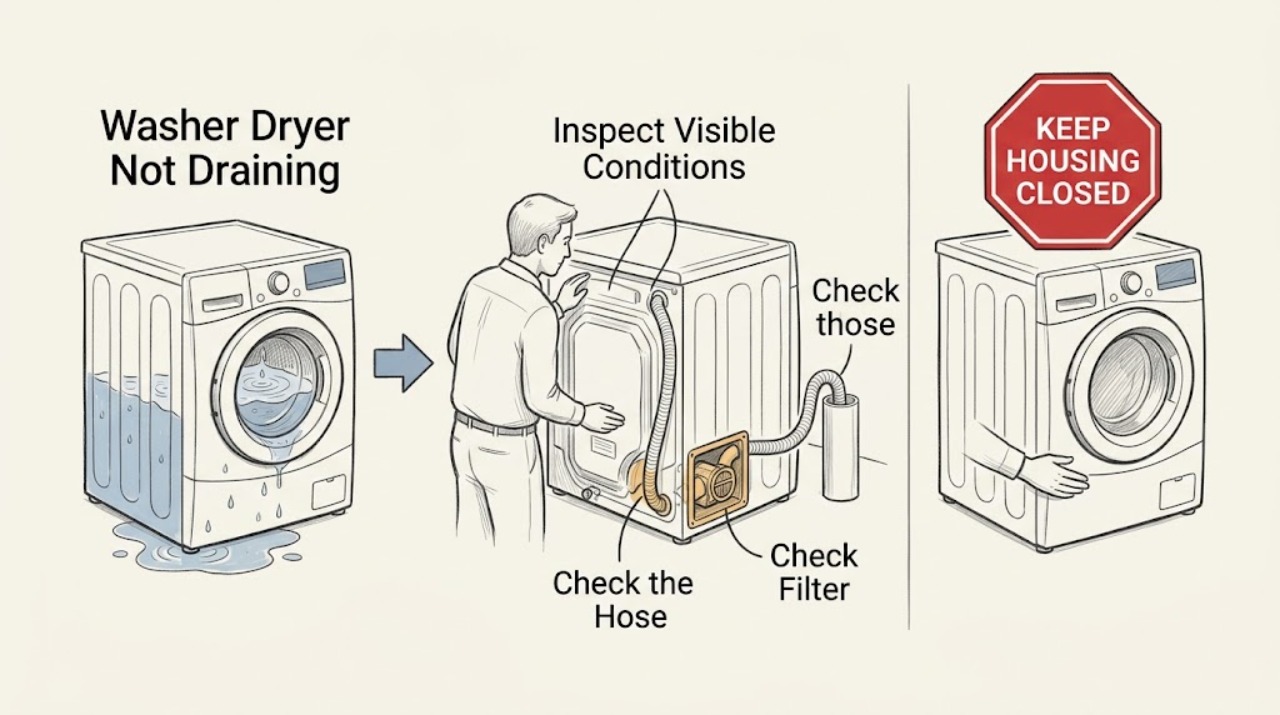
Work through in order
Diagnostic checks
Use only checks that match the exact appliance or system and its official guide.
-
Check 1
Stop the programme using the normal control and observe the washer-dryer without forcing the door. Note whether water remains in the drum, whether the loading-door lock stays active, whether the display shows a drain or pump warning, and whether the appliance is warm, leaking, or making a drain sound.
Expected result: The drum may be full or partly full, the door may be locked, water may be cool or hot, the machine may hum during draining, or there may be no pump sound at all. Water may also be escaping from the bottom or filter cover.
Next step: If water may be hot, wait and follow the model manual's cooling instructions. If there is a leak or electrical hazard, disconnect power only if safe and stop. Otherwise continue to the external hose check without forcing the door.
Stop if: Do not force the loading door or remove the filter while water remains or may be hot.
Why this matters
Why: Remaining water changes the safe sequence because opening the door or filter can cause flooding or hot-water injury. A hum, silence, leak, or fault indication narrows the later check but does not identify a failed pump by itself.
-
Check 2
Inspect the drain hose from the rear or accessible side without pulling the machine farther than is safe. Check for a kink, twist, crush point, sag, or visible blockage, and confirm the hose is connected as the model instructions specify. Inspect the standpipe or drain connection for an obvious blockage without removing hidden plumbing.
Expected result: The hose may be pinched behind the appliance, blocked at the connection, or clear. The standpipe may back up or overflow when the washer-dryer tries to drain, or it may accept water normally.
Next step: Correct only an obvious kink or crushed placement without straining the hose, then proceed to the permitted filter check. If the pipe is inaccessible, backs up, or the machine is integrated and cannot be moved safely, arrange service.
Stop if: Do not pull hard on the appliance, dismantle the drain installation, or push tools into a hidden pipe.
Why this matters
Why: A restricted hose or standpipe can prevent the pump from emptying the drum even when the pump itself is working. A clear external drain path keeps the pump filter and pump in the diagnostic branch.
-
Check 3
If the drum water is safely cool and the model instructions permit access, disconnect the washer-dryer from mains electricity before opening the pump-filter area. Place a suitable container and towels first, drain remaining water by the model's emergency method if provided, then open the filter slowly and inspect for lint, coins, or other visible debris.
Expected result: The filter may be blocked, the emergency drain may release substantial water, the filter may be clear, or the filter cover may be damaged, seized, or unable to reseal. The pump area may show a visible obstruction.
Next step: Remove only loose visible debris as the manual permits, rinse the filter, and refit it securely. If water cannot be controlled, the filter will not close, or the obstruction is beyond the accessible area, keep the appliance disconnected and call service.
Stop if: Never remove a filter with hot water in the drum, and never remove a pump obstruction while the appliance is connected to mains electricity.
Why this matters
Why: A blocked filter or visible pump obstruction can stop draining. A clear filter, a damaged seal, a seized cover, or continued water flow after cleaning points to a pump, hose, or installation problem rather than a reason to dismantle the appliance further.
-
Check 4
With the filter refitted and the floor dry, inspect the filter cover, emergency drain plug, hose connections, and standpipe for seepage. Listen from outside during a permitted drain cycle for a normal pump sound, unusual rattling, repeated clicking, or silence. Do not reach into the pump or run the machine with the cover open.
Expected result: The cycle may drain normally, drain slowly, hum without moving water, rattle, remain silent, or leak from the filter cover or hose. Water may return to the drum or the programme may stop again.
Next step: Stop the test if water leaks, the pump is unusually loud, or the drum does not empty. Keep the appliance disconnected if safe and provide the symptom to qualified service; do not repeat drain cycles to force a blockage through.
Stop if: Do not operate with a loose filter cover, open pump housing, uncontrolled leak, or abnormal pump noise.
Why this matters
Why: Normal emptying after a permitted filter clean supports a temporary blockage. Unusual pump noise, silence with water present, slow flow, repeat stopping, or a leak keeps a pump, hidden blockage, hose, or seal fault open.
-
Check 5
Prepare a technician handoff if the drain problem remains. Record the programme and point where it stopped, water level and temperature, filter and hose findings, pump sound, visible error message, leak location, whether the pump-filter cover resealed, and whether the appliance is freestanding or integrated. Do not guess a pump or control part from the symptom.
Expected result: The evidence may show an external hose restriction, a blocked filter, a pump that hums or rattles, a leak at the filter seal, a blocked standpipe, or no obvious cause after the safe checks.
Next step: Give the exact model and serial details plus the observations to Blomberg support or a qualified appliance technician. Keep the appliance out of use if water remains, the cover leaks, or the cause is not resolved.
Stop if: Do not bypass the door lock, remove internal panels, test the pump electrically, or continue operating with standing water or a leak.
Why this matters
Why: The pattern helps a technician choose between drain-path, pump, seal, control, or installation diagnosis. It does not prove a particular component or compatibility, and further access may expose water or electrical hazards.
Use your observations
Decision map
Find the observation that best matches what you see, then follow the next safe action.
-
PATH 01Next step
What you see
The drain hose is visibly kinked, crushed, or blocked, and draining returns after a safe external correction.
Do this next
Keep the hose routed without kinks and monitor the next programme; arrange service if the restriction returns or water remains.
Why this path and its safety boundary
Why it matters: An external hose restriction likely prevented the pump from emptying the drum.
-
PATH 02Next step
What you see
The pump filter contains visible debris, and the appliance drains normally after safe cleaning and secure refitting.
Do this next
Monitor one full programme and maintain the filter as the model manual directs; stop for any leak or repeat fault.
Why this path and its safety boundary
Why it matters: A filter or pump-area obstruction likely caused the no-drain symptom.
-
PATH 03Next step
What you see
The drain pipe or standpipe backs up even though the washer-dryer hose is clear.
Do this next
Stop using the washer-dryer and arrange plumbing or appliance service for the inaccessible drain path.
Why this path and its safety boundary
Why it matters: A household drain-path blockage may be stopping discharge downstream of the appliance.
-
PATH 04Next step
What you see
The filter is clear but the pump is silent, unusually noisy, or moves little water, or the programme stops with water remaining.
Do this next
Keep the appliance disconnected if safe and arrange qualified appliance service; do not dismantle the pump.
Why this path and its safety boundary
Why it matters: A pump fault, hidden obstruction, hose problem, or control issue remains possible.
-
PATH 05Next step
What you see
The filter cover, emergency drain plug, or hose connection leaks after the check.
Do this next
Stop the appliance, isolate power if safe, keep water managed, and arrange service to inspect the seal or connection.
Why this path and its safety boundary
Why it matters: The drain system is not sealed and continued operation could cause water damage.
-
PATH 06Next step
What you see
Water may be hot, the filter is inaccessible or seized, or the cause requires an internal panel or electrical test.
Do this next
Do not force access; keep the door and appliance safe and arrange qualified appliance service.
Why this path and its safety boundary
Why it matters: The remaining diagnosis is outside a safe user-level drain check.
Helpful context
Understand the symptom
Drain symptom first, filter second
A washer-dryer that stops with water in the drum can have a kinked or blocked hose, a pump filter obstruction, a blocked standpipe, or a pump that is not moving water. A low hum or unusual noise during drain is a different clue from silence, a leak at the filter cover, or a door that remains locked because water is still present. Identify the symptom before opening anything.
Control water and electrical risk
Do not force the loading door and do not remove the filter while the drum may contain hot water. Follow the exact model instructions for cooling and draining. When an obstruction must be removed from the pump area, disconnect mains power first, protect the floor with a container and towels, and stop if water is uncontrolled, the filter is seized, or the appliance shows electrical damage.
Safety boundary
Stop conditions
- Stop for hot or uncontrolled water, a leak that reaches flooring or electrical equipment, a damaged cord, smoke, or a burning smell.
- Do not force the loading door or remove the filter while water remains in the drum or may be hot.
- Disconnect mains power before removing any pump obstruction, and do not run the appliance with the pump cover open or filter loose.
- Stop after the hose and one permitted filter check if the drum still does not empty, the pump is abnormal, or the blockage is inaccessible; arrange professional service.
Only after diagnosis
Potential parts
- pump filter and filter seal
Consider only if the filter or its seal is damaged and a technician confirms it is the source of the leak or blockage after safe cleaning.
Confirm the complete model and filter design; a similar-looking filter or seal may not fit or seal correctly. - drain pump assembly
Consider only if professional testing confirms pump failure after the hose, standpipe, filter, and visible obstruction checks.
Verify the complete model and electrical and hydraulic specification; no-drain symptoms alone do not prove pump failure. - drain hose
Consider only if the hose is split, crushed, permanently kinked, or confirmed to be the source of a leak or restriction.
Confirm connection ends, routing, and model fit before selection; do not extend or reroute beyond the manual's limits.
When checks do not resolve it
Need a professional?
Water remains after the hose and permitted filter checks, or the programme repeatedly stops before draining., The drain pump is silent, unusually noisy, rattling, or leaking, or water drains only slowly., The filter cover, emergency drain, hose, or standpipe cannot be safely accessed or resealed., The diagnosis would require removing panels, testing electrical components, or dismantling the pump or concealed drain plumbing.
Safety scope: Keep the appliance out of use when water remains, the filter or hose leaks, the pump is abnormal, or water may be hot. Do not force the door, remove panels, test the pump electrically, or remove obstructions while connected to mains power.
Common questions
FAQ
Why is my Blomberg washer-dryer not draining?
Common user-check possibilities are a kinked or blocked drain hose, a blocked pump filter, or a blocked drain pipe or standpipe. Check these in that order, while managing remaining water safely. A clear path with persistent no-drain or unusual pump noise needs service.
Can I open the pump filter when water is in the drum?
Do not remove the filter while water may be hot or without a safe way to manage the water. Follow the exact model instructions to cool and drain the drum first, disconnect mains power before removing an obstruction, and stop if water is uncontrolled or the filter cannot be resealed.
What does an unusual noise from the drain pump mean?
It can accompany debris or a blockage in the pump area, but the sound alone does not prove the pump has failed. With the appliance disconnected and water safely managed, perform only the permitted filter check; persistent noise, poor draining, or a leak needs qualified service.
Why is the washer-dryer door still locked after the cycle?
A door can remain locked while water is present or while the machine is still cooling. Do not force it. Follow the model manual's safe cooling and draining procedure, and arrange service if the drum will not empty or the lock remains active after the documented conditions are met.
Read the exact guide
Official sources
- Water from my Blomberg washer dryer is not emptying, what should I do?Blomberg · Blomberg washer-dryers with water remaining, drain-hose or standpipe blockage, pump-filter obstruction, or unusual drain-pump noise
- User’s ManualBlomberg · Blomberg washer-dryer manual safety and troubleshooting guidance for remaining water, the pump filter, drain hoses, and programme faults
Community feedback
Share a repair observation
Share a plain-text repair observation. Accepted observations are published automatically; this page may take a moment to update.