
On this page
Start here
Quick answer
If an Electrolux washer leaves water in the drum, stop the cycle and first check the drain hose for a kink, blockage, or incorrect installation. If the model provides an accessible pump filter or emergency drain, use the exact owner manual and drain the water into a suitable container before checking that area. A U-shaped or restricted hose, blocked filter, blocked standpipe, or pump problem can all slow draining; E21 on applicable front-load models means the water is taking too long to empty. Keep the washer powered off while handling standing water. Stop and arrange service if the pump area cannot be accessed safely, the impeller will not move, the hose or drain connection leaks, the code returns after the path is clear, or the washer still will not drain.
Before you begin
Safety first
- Keep the washer stopped and power disconnected while handling standing water or an accessible filter. Do not open the cabinet or work on pump wiring.
Work through in order
Diagnostic checks
Use only checks that match the exact appliance or system and its official guide.
-
Check 1
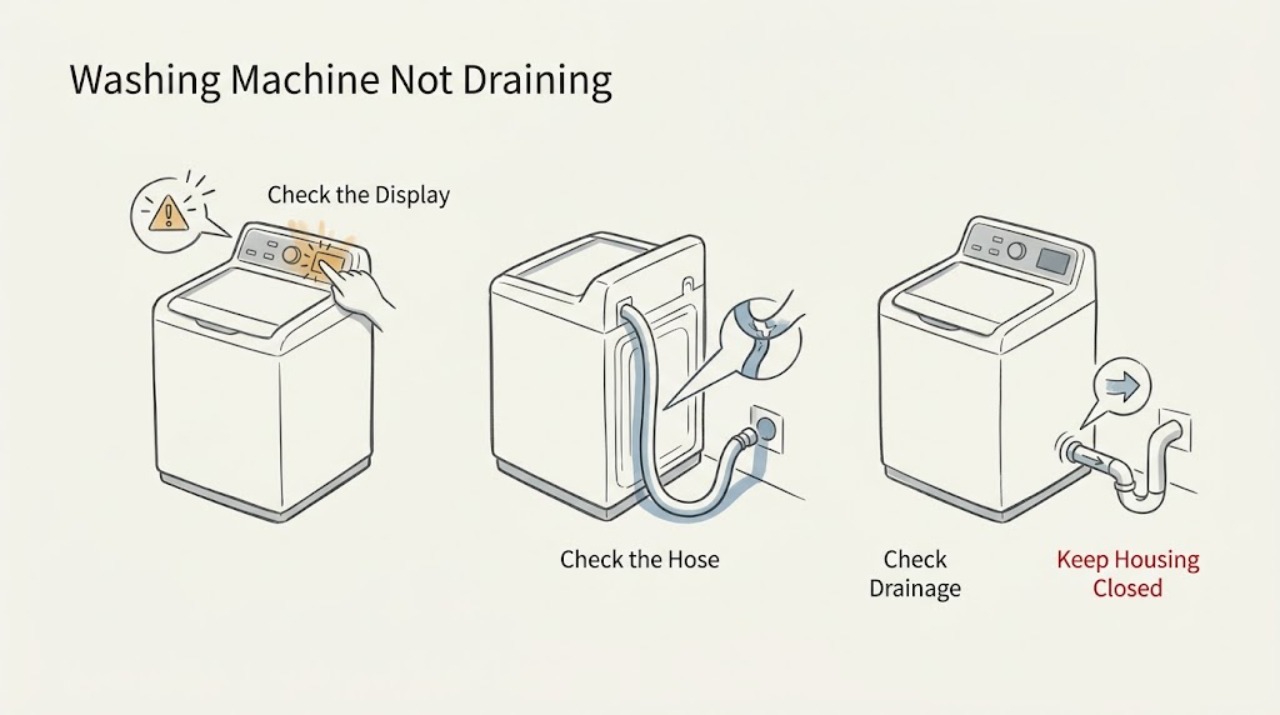
Leave the washer stopped and note whether water is visible in the drum, whether the cycle is paused, and whether the display shows E21 or another code. Do not pull forcefully on the door or reach into moving water or a running drum.
Expected result: The drum is full or partly full, the washer only drains slowly, or an E21 indication is present.
Next step: Keep the washer stopped and continue with the external hose inspection. If water is leaking onto the floor, turn off the water supply and contain the spill before proceeding.
Why this matters
Why: E21 on applicable Electrolux front-load models means the water is not pumping out fast enough or is taking too long to empty. A full drum also means the door may remain locked for safety, so the first practical path is the drain route rather than a restart loop.
-
Check 2
Inspect the visible drain hose from the washer to the standpipe or sink. Straighten any sharp kink, crushing, or pinch, and check that the hose has not slipped out, been sealed airtight into the standpipe, or been routed in a way that the model manual forbids.
Expected result: The hose was kinked, pinched, loose, or incorrectly positioned; the hose looks clear and correctly supported; or the standpipe backs up when water is poured into it.
Next step: Correct only the visible routing or support issue, then run the model’s drain or spin-drain program while supervised. If the standpipe backs up, stop and have the household drain cleared; if the hose is damaged or leaking, arrange service.
Why this matters
Why: Electrolux identifies a kinked hose as a common reason for a long pump-out time. A loose drain connection can spill water, while a blocked standpipe can make a clear washer hose appear to be the fault.
-
Check 3
If the washer has an accessible emergency drain or pump-filter flap, switch the appliance off and follow the exact owner manual for that model. Place a low container and towels under the drain point, release water gradually, and close the drain before moving to the filter.
Expected result: Water drains through the emergency hose, little or no water comes out, or the model has no user-accessible emergency drain.
Next step: If the manual does not describe an accessible drain, stop this step and arrange service. If water drains normally, continue with the manual’s filter procedure and keep the removed water contained.
Why this matters
Why: An emergency drain can safely lower the water level before a filter check, but the access design is model-specific. Little flow can indicate a blocked hose, filter, or pump; no accessible drain means the user should not improvise by removing hoses or tipping the washer.
-
Check 4
With the water lowered and power off, clean the accessible drain filter only as the model manual instructs. Remove visible lint or a small foreign object without forcing the filter; check the filter seal and refit it fully before testing.
Expected result: The filter contains debris, the filter is clear, the filter will not turn or seal, or the pump impeller cannot move when the manual says it may be checked.
Next step: If debris was removed and the filter reseats correctly, reconnect only as the manual directs and run a supervised drain test. If the filter or impeller is jammed, damaged, or inaccessible, stop and request qualified service rather than applying force.
Why this matters
Why: Electrolux service information lists a dirty or blocked drain filter and a faulty drain pump among causes of difficult draining. A filter that will not release, seal, or move as documented can create a leak or points to a service condition.
-
Check 5
Run the washer’s documented drain or spin-drain program with the drum empty and watch the outlet and floor. Listen for the pump starting, check whether water exits steadily, and note whether E21 or another drain code returns.
Expected result: Water exits steadily and the code clears, the pump hums but little water exits, the pump is silent, or water leaks from the drain connection.
Next step: Stop the test for a leak, unusual noise, smoke, or a returning code. Do not open the cabinet or work on pump wiring; provide the observed flow and sound to a qualified technician.
Why this matters
Why: A clear hose and filter that restore steady flow point to a restriction. Humming with little flow suggests the path is still restricted or the pump is struggling; silence or a returning code can indicate a pump, wiring, pressure-sensing, or control fault. A leak changes the priority to containment and repair.
-
Check 6
Check the final drain setup after the test: the hose should remain secured, the standpipe or sink connection should not back up, and there should be no water under the washer. Record the model, code, water level, and which checks changed the symptom.
Expected result: The washer drains normally without leakage, the household drain backs up, or the washer still leaves water after the hose and accessible filter path are clear.
Next step: Use the washer only if it completes a supervised drain without leaks or recurring codes. Otherwise leave it stopped and arrange qualified appliance service; use a plumber when the household standpipe itself backs up.
Why this matters
Why: A normal washer drain with a backing-up standpipe indicates a household plumbing restriction. Persistent water in the drum after the external path is clear makes an internal pump, sensing, wiring, or control diagnosis more likely.
Use your observations
Decision map
Find the observation that best matches what you see, then follow the next safe action.
-
PATH 01Next step
What you see
The drain hose is kinked or the standpipe backs up
Do this next
Correct the visible hose routing or have the household drain cleared, then perform one supervised drain test.
-
PATH 02Next step
What you see
The model has an accessible emergency drain and filter, and the manual describes using them
Do this next
Lower the water into a container, clean only the accessible filter as documented, refit its seal, and retest.
-
PATH 03Next step
What you see
The filter or pump area is jammed, cannot be accessed, or leaks after refitting
Do this next
Stop and arrange qualified appliance service; do not force the filter or open the cabinet.
-
PATH 04Next step
What you see
The pump hums with little flow or E21 returns after the drain path is clear
Do this next
Record the sound and code and request diagnosis of the pump, pressure sensing, wiring, and control path.
-
PATH 05Next step
What you see
The washer drains normally after the hose and filter check
Do this next
Complete one supervised empty drain cycle and watch for leaks before returning to normal laundry.
Helpful context
Understand the symptom
Start with the water level and the displayed symptom
A washer that stops with a full drum needs a different check from one that drains slowly or leaves only a small amount of water. Do not force a locked door or tip a water-filled appliance. If an error code is shown, record it before resetting so a technician can match the symptom to the model manual.
Model differences matter at the pump filter
Electrolux machines do not all have the same access flap, emergency drain hose, or filter arrangement. Use the manual for the exact model. The checks below keep the user-facing work to the hose, external drain path, and an explicitly accessible filter area; pump wiring and internal disassembly belong to a qualified technician.
Safety boundary
Stop conditions
- Stop for a leak that cannot be contained, exposed wiring, smoke, burning odor, unusual electrical noise, or a breaker that trips.
- Do not force a locked door, tip a water-filled washer, open the cabinet, or work on pump wiring as an ordinary-user check.
- If the pump impeller will not move when the model manual says it may be checked, or the filter will not release or reseal, stop and arrange service.
- If E21 or another drain code returns after the hose and accessible filter path are clear, request qualified diagnosis rather than repeatedly restarting the cycle.
Only after diagnosis
Potential parts
- drain pump
Only consider this part class after a technician confirms that the hose and accessible filter are clear but the pump does not move water or is electrically faulty.
Confirm the exact Electrolux model and pump configuration with the manufacturer documentation before ordering. - drain filter and seal
Only consider this class if the model has an owner-accessible filter and the filter or its seal is damaged after the obstruction has been removed.
Confirm the exact model and filter design; do not substitute a seal based only on appearance. - drain hose
Only consider this part class if the hose is split, crushed, persistently kinked by its installation, or leaking after correct routing.
Confirm the exact model, hose length, and connection arrangement before ordering or reinstalling.
When checks do not resolve it
Need a professional?
Call a qualified appliance technician when the drain path is clear but the washer still leaves water, the pump is silent or only hums, a drain code returns, the filter or pump cannot be accessed safely, or any connection leaks. Call a plumber when the household standpipe or sink drain backs up independently of the washer.
Safety scope: Keep the washer stopped and power disconnected while handling standing water or an accessible filter. Do not open the cabinet or work on pump wiring.
Have this ready
- Electrolux model number
- front-load or top-load configuration
- whether water remains in the drum
- the exact displayed code, if any
- whether the pump is silent or humming
- whether the drain hose or household standpipe backs up
- whether the filter was accessible and what was found
Common questions
FAQ
Why is my Electrolux washer leaving water in the drum?
Check the drain hose for kinks or incorrect positioning, then use the exact model manual to see whether an emergency drain and pump filter are accessible. If the hose and filter path are clear but water remains, the pump or another internal drain circuit needs service.
What does E21 mean on an Electrolux washer?
On applicable Electrolux front-load washers, E21 means the water is not pumping out fast enough or is taking too long to empty. Check for a kinked or restricted drain hose and its installation first; a returning code needs service diagnosis.
Can I clean the Electrolux washer pump filter myself?
Only if your exact model has an owner-accessible filter and the manual describes the procedure. Power the washer off, contain the water, drain it gradually, and stop if the filter will not release, reseal, or move as documented.
How do I tell whether the washer drain or the house drain is blocked?
A hose that is kinked, loose, or leaking points to the washer installation. If the household standpipe or sink backs up when the washer discharges, the household drain needs attention; if the house drain accepts water but the washer still leaves water, arrange appliance service.
Read the exact guide
Official sources
- Laundry front loading washer displaying Error Code E21 long pump out time.Electrolux · Electrolux front-loading laundry washers; exact installation depends on the model manual.
- Laundry front loading washer is leaking water.Electrolux · Electrolux front-loading laundry washers; plumbing and hose arrangements vary by installation.
- first_aid_elux.pdfElectrolux · Electrolux first-aid guide examples; access and procedures vary by model and owner manual.
- SERVICE MANUALElectrolux · Electrolux service manual for specific washer families; used only to frame technician diagnosis, not to prescribe internal repair.
Community feedback
Share a repair observation
Share a plain-text repair observation. Accepted observations are published automatically; this page may take a moment to update.