
Repair problem
Not Draining Troubleshooting Guides – Page 2
Published FixGraph guidance for diagnosing and responding to not draining.
Matching published guides
Choose a guide that matches the service, equipment, and conditions you are seeing.
-
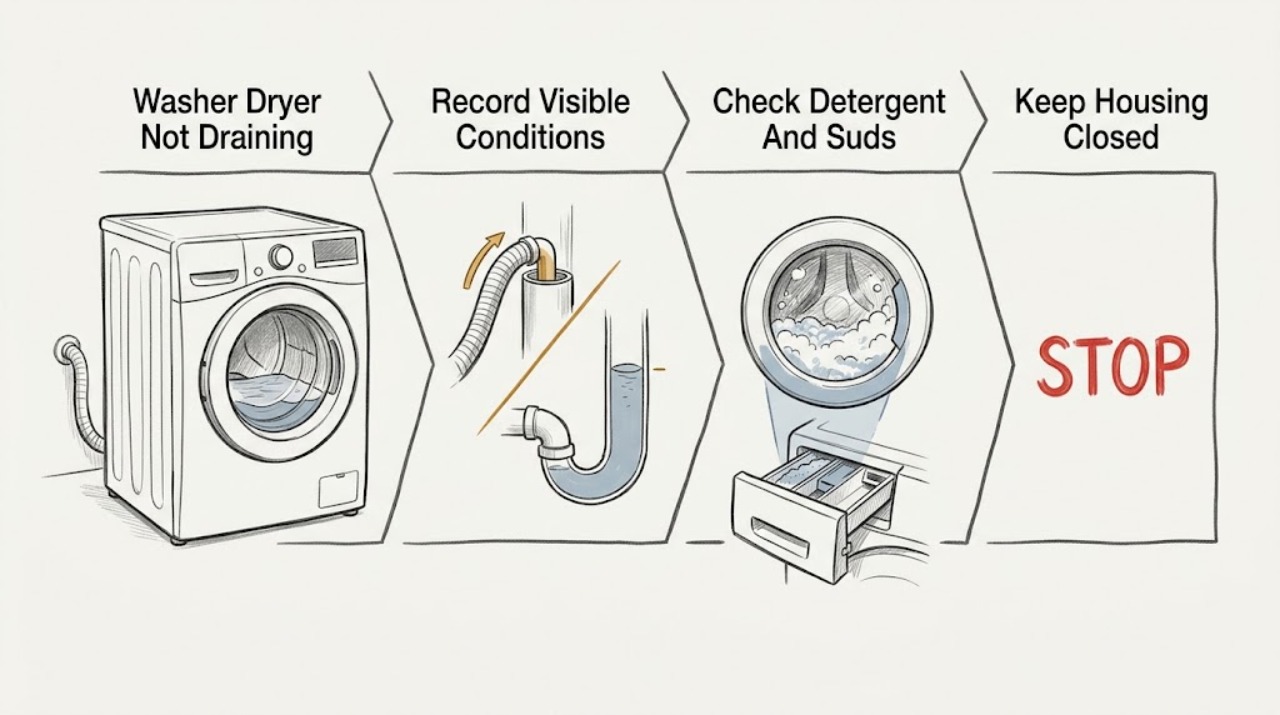
Frigidaire Washer Dryer Not Draining: Check the hose, standpipe, detergent, and pump path
When a Frigidaire washer-dryer leaves water in the tub, first stop the cycle safely and determine whether the machine is pumping, siphoning, or blocked. Frigidaire's laundry guidance says to inspect the drain hose for kinks, confirm the drain and standpipe are clear and installed as the model requires, avoid sealing the hose airtight into the standpipe, and check whether too much detergent is contributing to poor draining.
-
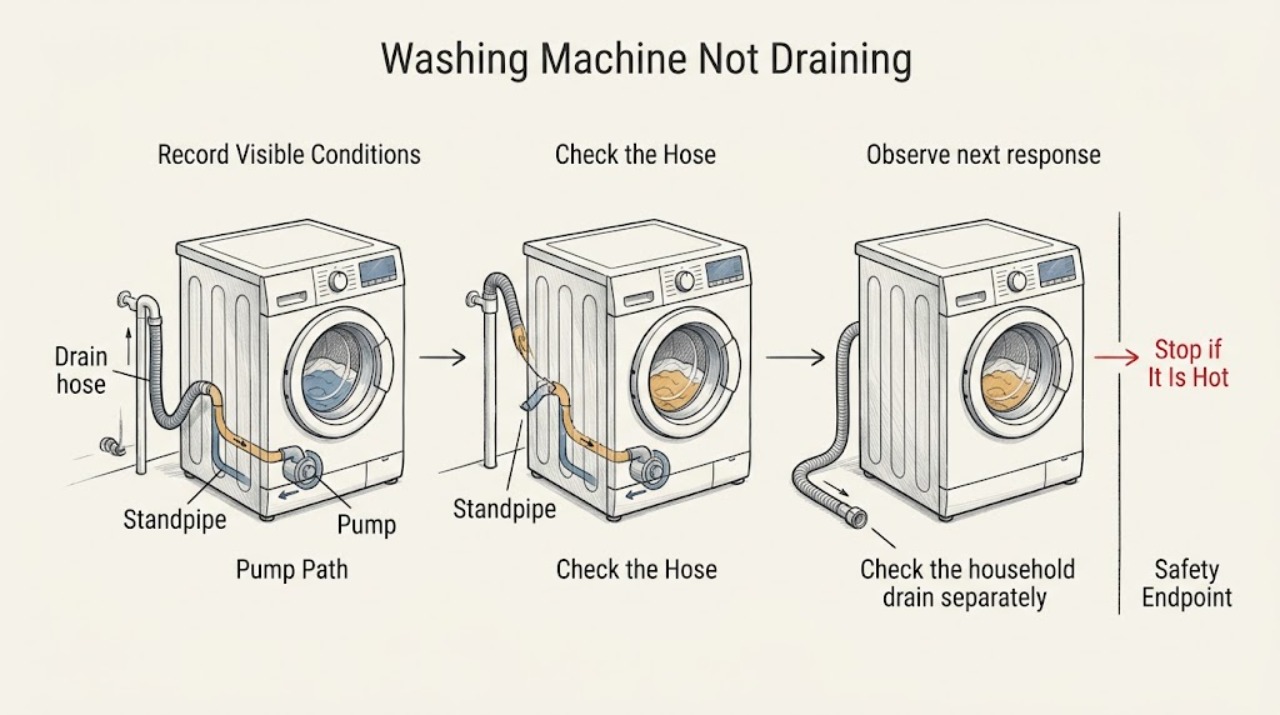
Frigidaire Washing Machine Not Draining: Check the Hose, Standpipe, and Cycle
If a Frigidaire washing machine leaves water in the tub, first stop the cycle and identify whether it is a top-load washer, front-load washer, or laundry center. On a Frigidaire top-load model, inspect the visible drain hose for a kink, a clogged hose or household drain, a hose pushed too tightly into the standpipe, or a sealed standpipe connection that cannot admit air.
-
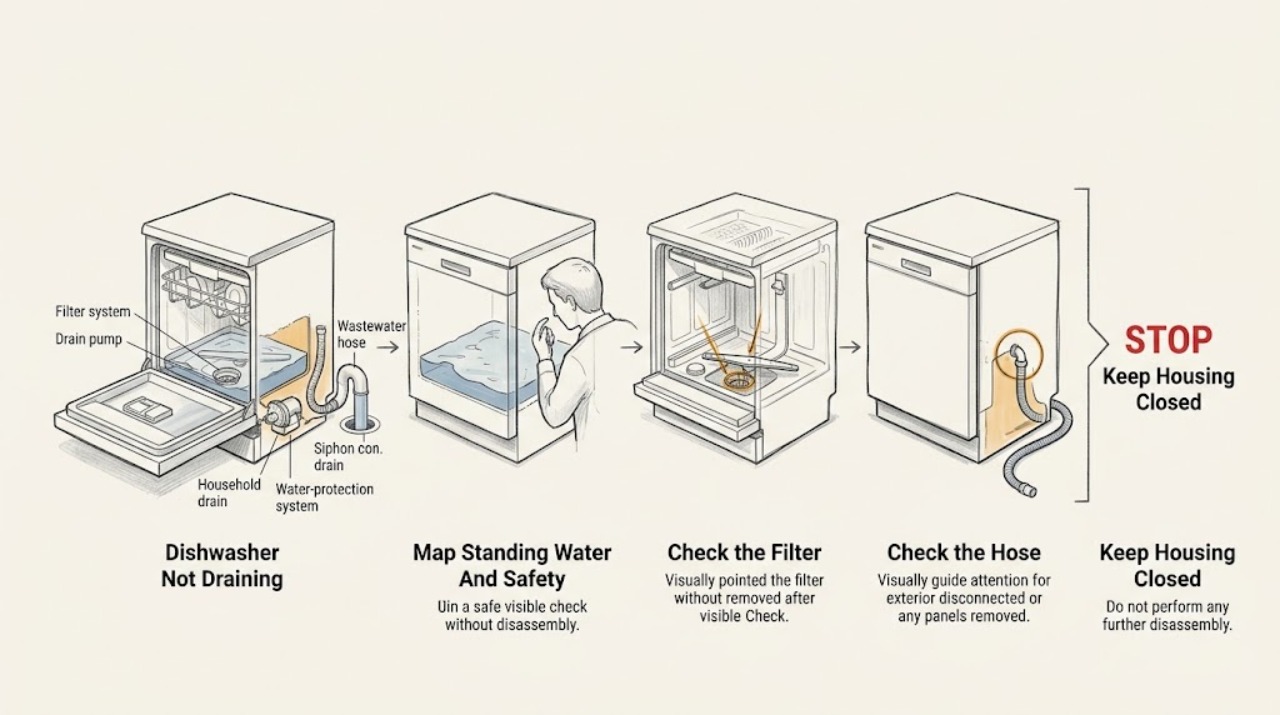
Gaggenau Dishwasher Not Draining: Filter, Hose, and Pump Checks
A Gaggenau dishwasher that leaves water in the tub should be separated into an accessible drain-path problem and an internal pump or water-protection problem. First stop the cycle, keep hands out of the water until sharp debris is considered, and identify the exact E-Nr because Gaggenau says the correct manual is model-specific.
-
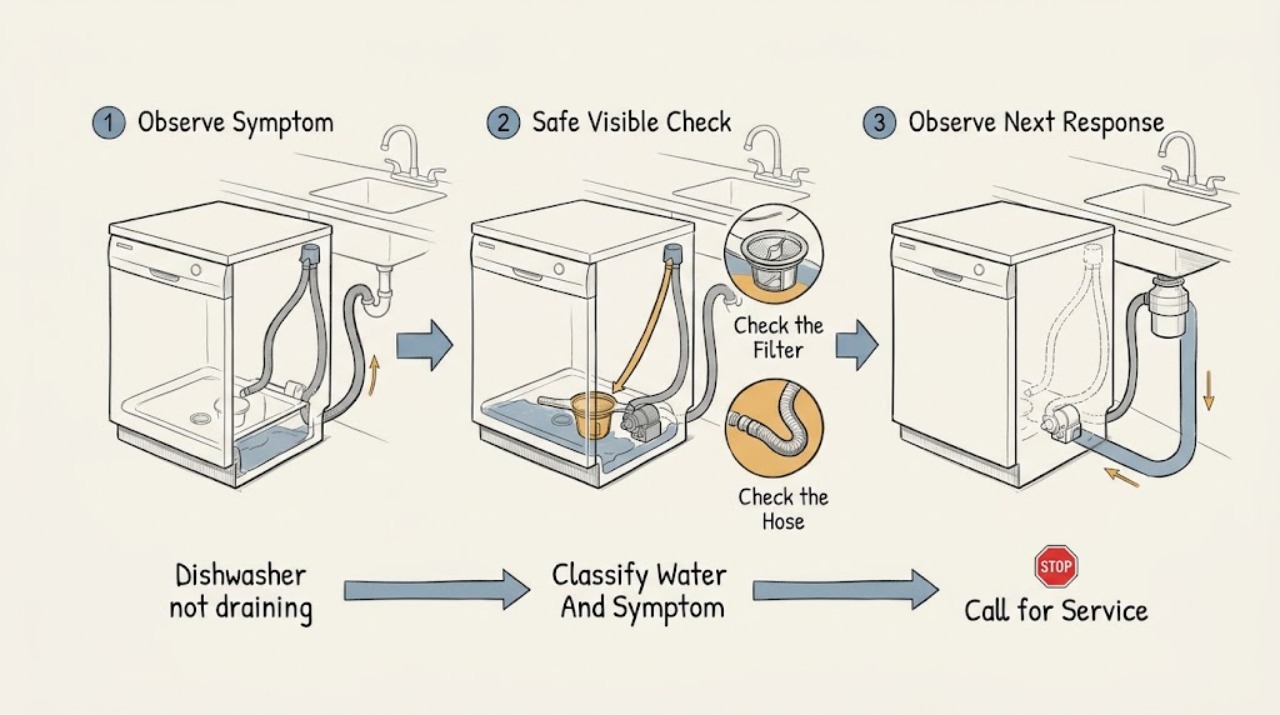
Ge dishwasher not draining: What to Check and What to Do Next
A GE dishwasher that leaves more than its model's normal small amount of water usually has a restriction in the filter or sump, drain hose, air gap, sink or disposer connection, or pump path. First keep hands out of the disposer and any pump opening, note whether the water is clean or dirty, and check the exact model guidance for the filter style.
-
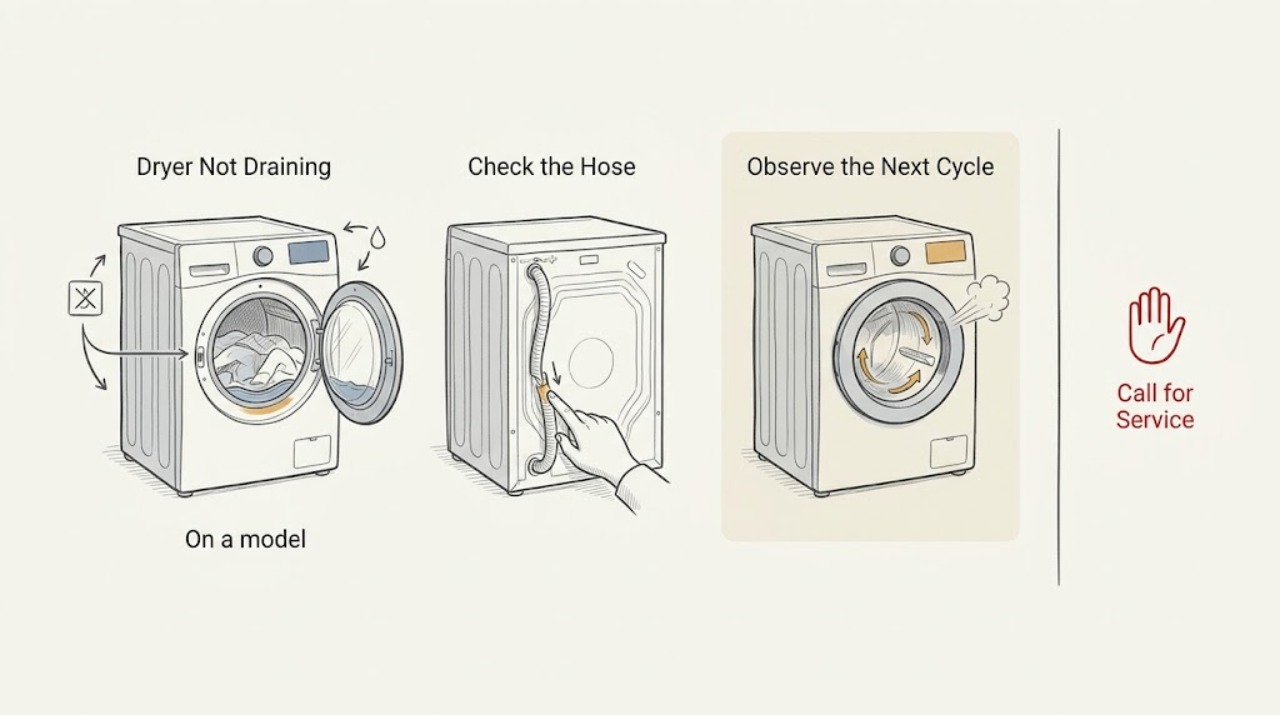
GE Dryer Not Draining: Identify the Water Path First
A GE dryer may be a vented model that exhausts moist air or a ventless condenser model that sends condensed water to a removable tank or a direct drain. Do not apply the tank procedure to a vented dryer.
-
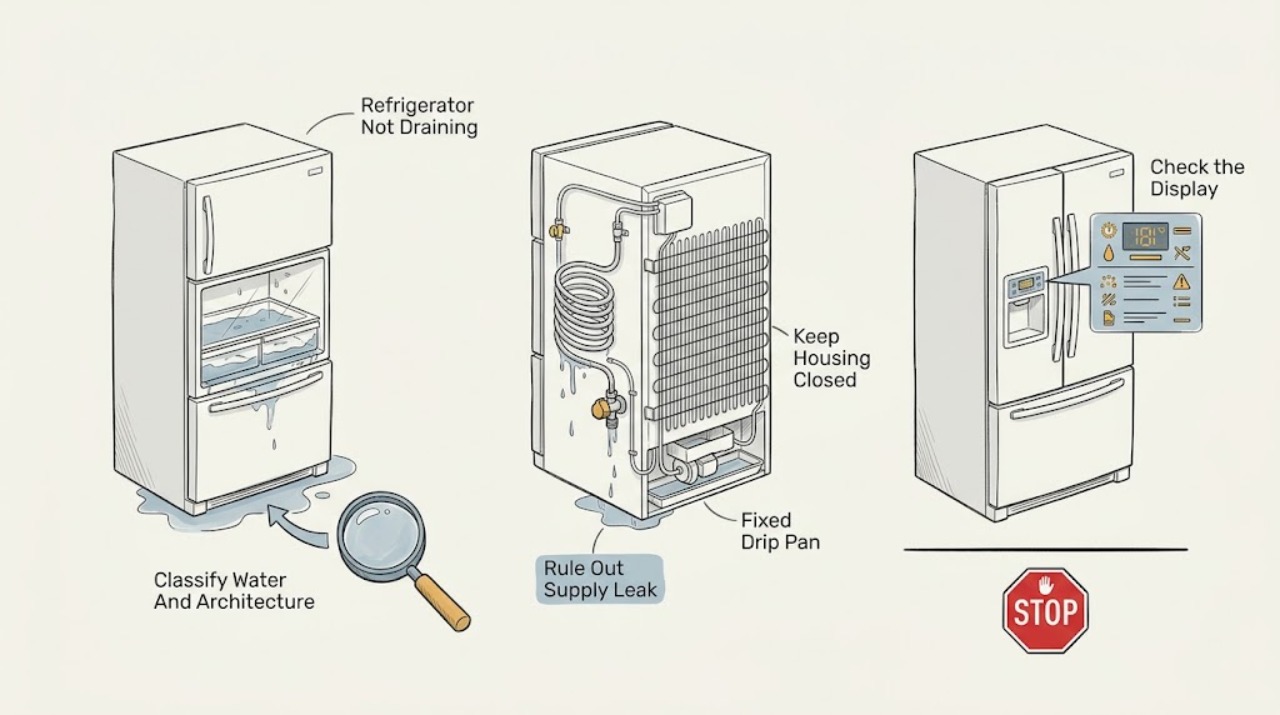
GE Refrigerator Not Draining: Identify the Defrost Drain Before Cleaning
First confirm that “not draining” means defrost water is pooling or freezing, rather than a supply-line, water-valve, icemaker fill-line, or dispenser leak. GE says a full-size self-defrost refrigerator sends melted frost through a drain tube to a fixed drip pan; ice on the freezer floor, water under fresh-food drawers, or a recurring puddle can indicate a clogged defrost drain.
-
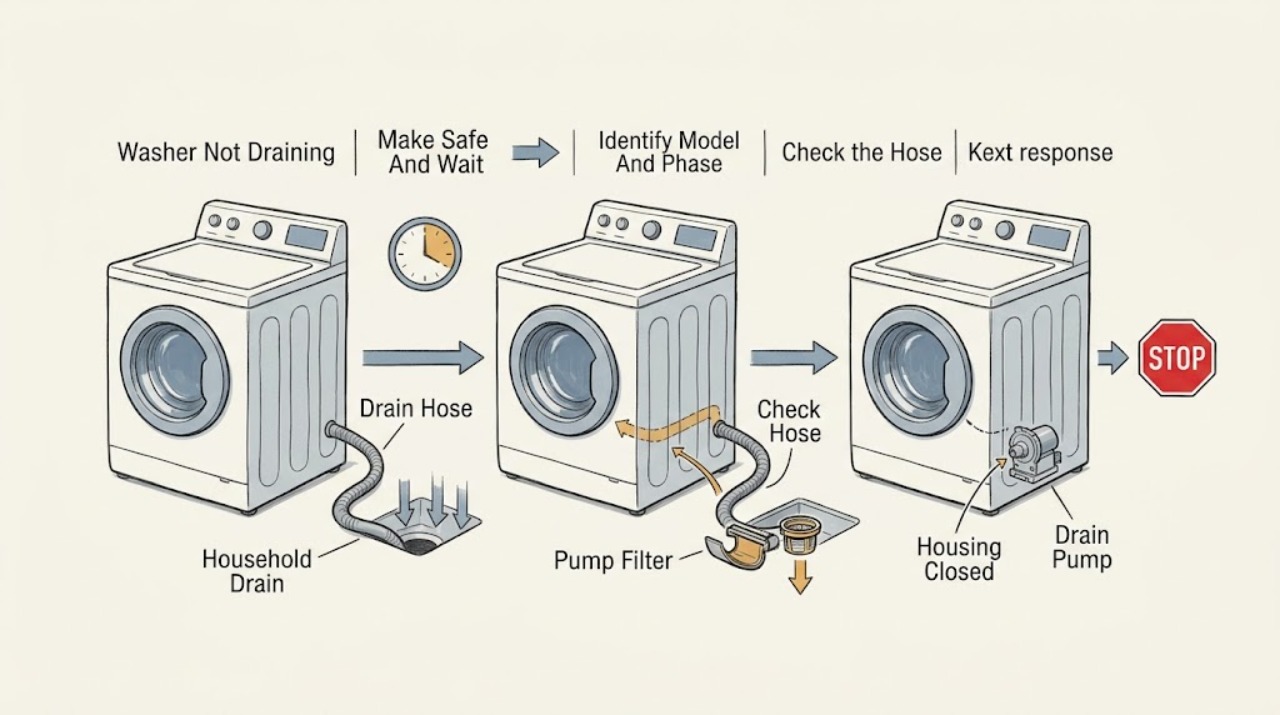
GE Washer Not Draining: Find the Blockage Safely and Choose the Next Step
A GE washer that is not draining may be paused between cycle stages, blocked at the drain hose or household standpipe, siphoning because of incorrect hose installation, restricted by a pump filter on models that have one, or unable to run the pump. Wait through the model's normal pause before changing a dial, then check the visible drain hose and household drain without moving a wet machine.
-
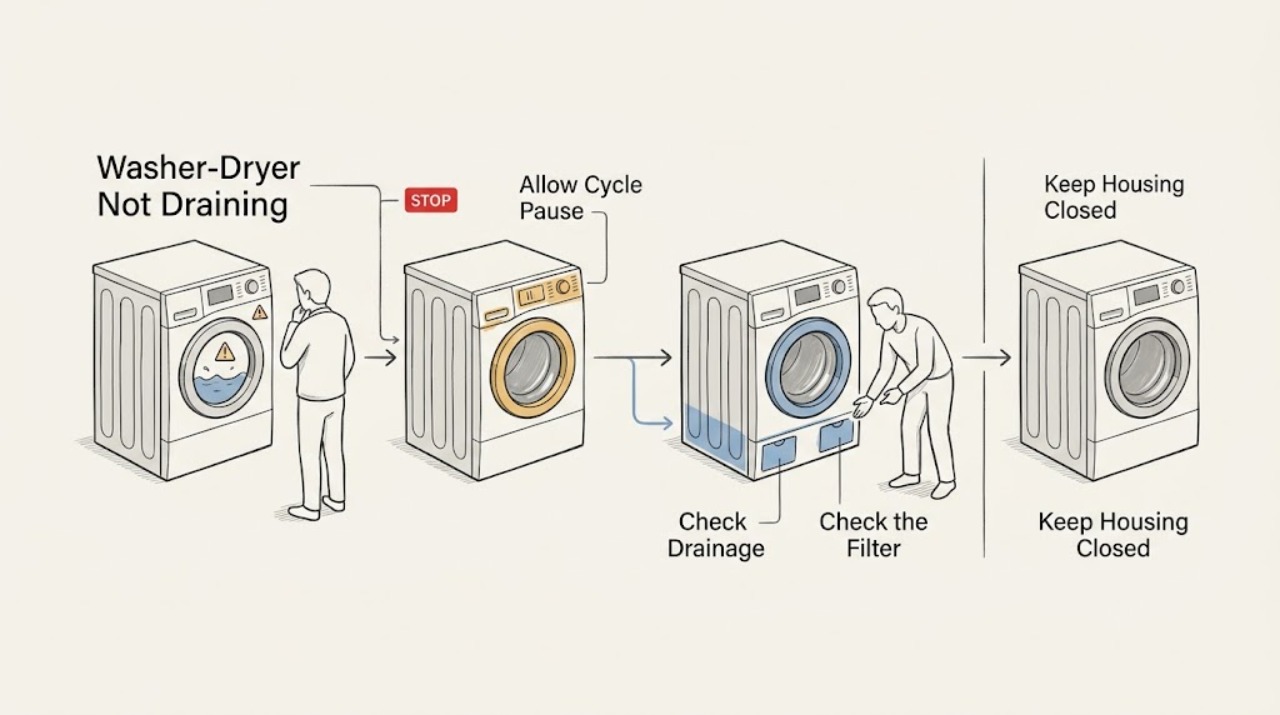
GE Washer-Dryer Not Draining: Safe Checks for a Combo Unit
If a GE washer-dryer combo is not draining, first allow a normal short pause, then check the drain hose for kinks or a blockage and confirm the household standpipe or drain can accept water. Use the owner's manual to determine whether your model has an accessible pump filter; do not assume every combo has the same access.
-
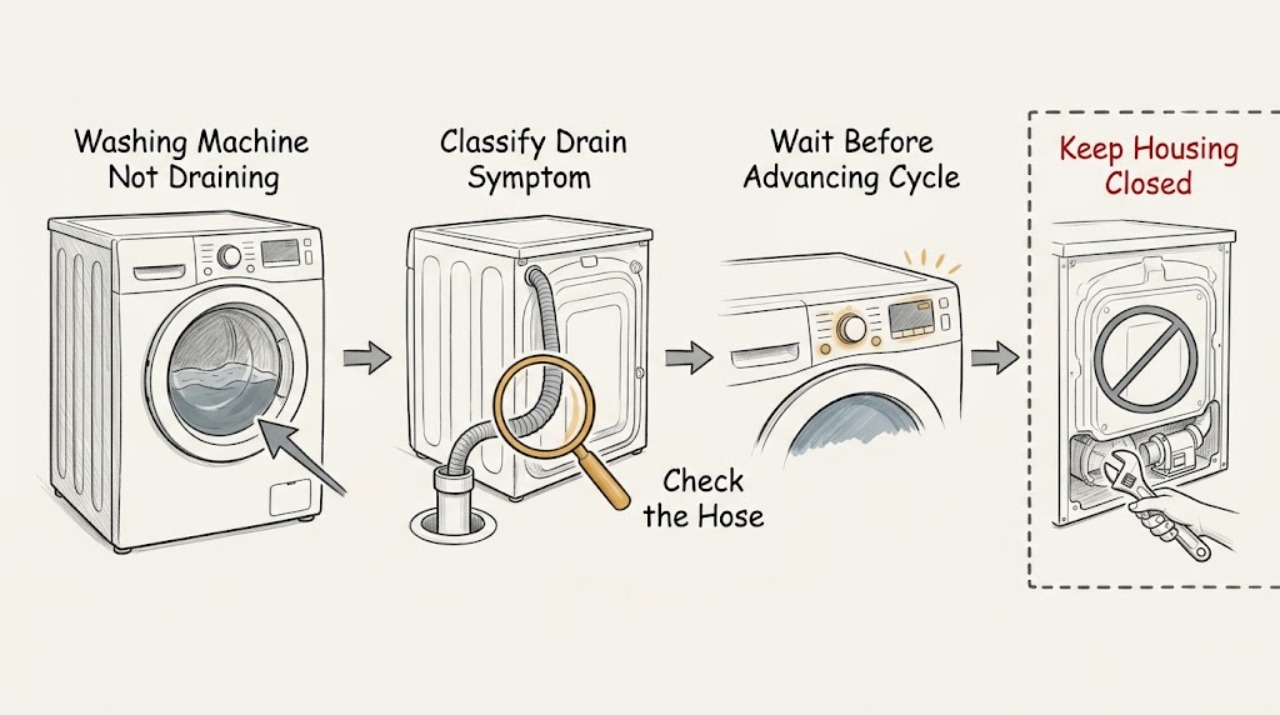
GE Washing Machine Not Draining
Wait through the model's normal pause before changing a timer or control. Then identify the washer style and check the visible drain hose for kinks, crushing, clogging, excessive height, or incorrect standpipe routing.
-
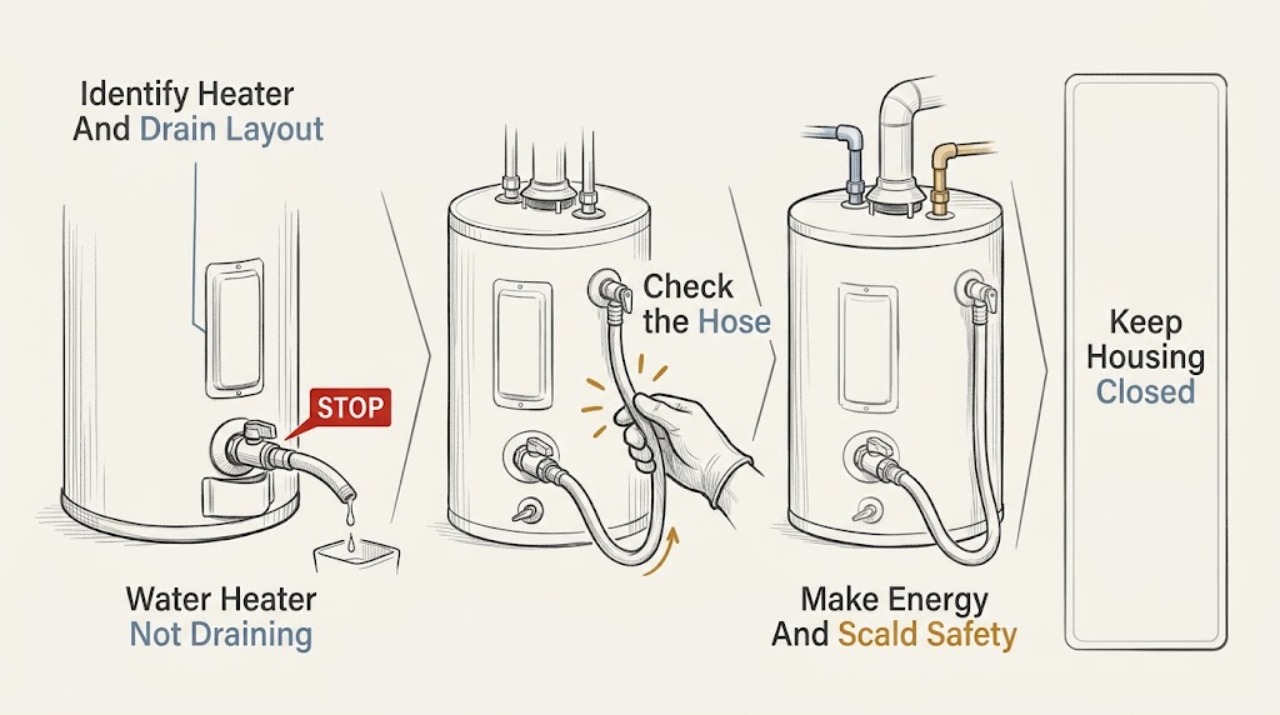
GE Water Heater Not Draining: Make the Tank Safe Before Clearing the Path
Do not begin by forcing the drain valve. Identify the exact GE model and whether it is a traditional electric/gas tank or GeoSpring hybrid, then read its installation and use instructions.
-
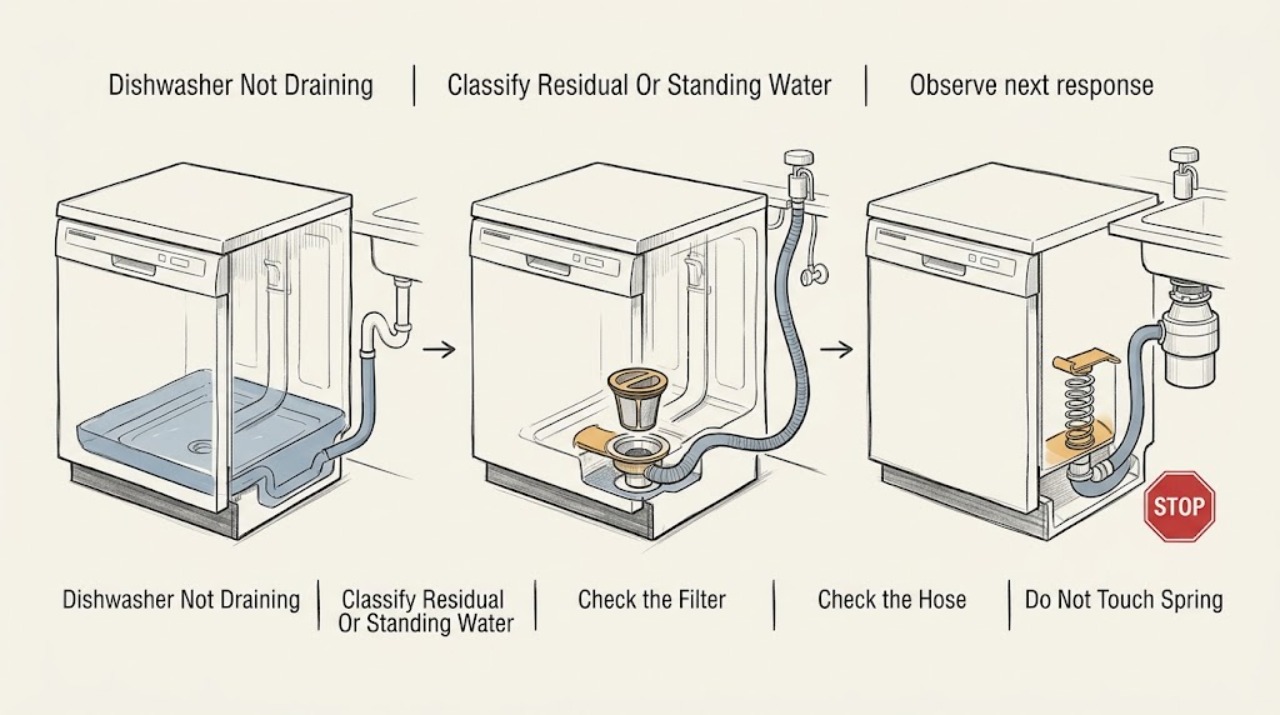
Haier Dishwasher Not Draining: Check the Drain Path Before the Pump
First distinguish a small amount of water around the filter from a tub full of standing water. Haier says a small amount around the filter after a wash can be normal because it lubricates pump seals, while a full bottom calls for checking the drain path.
-
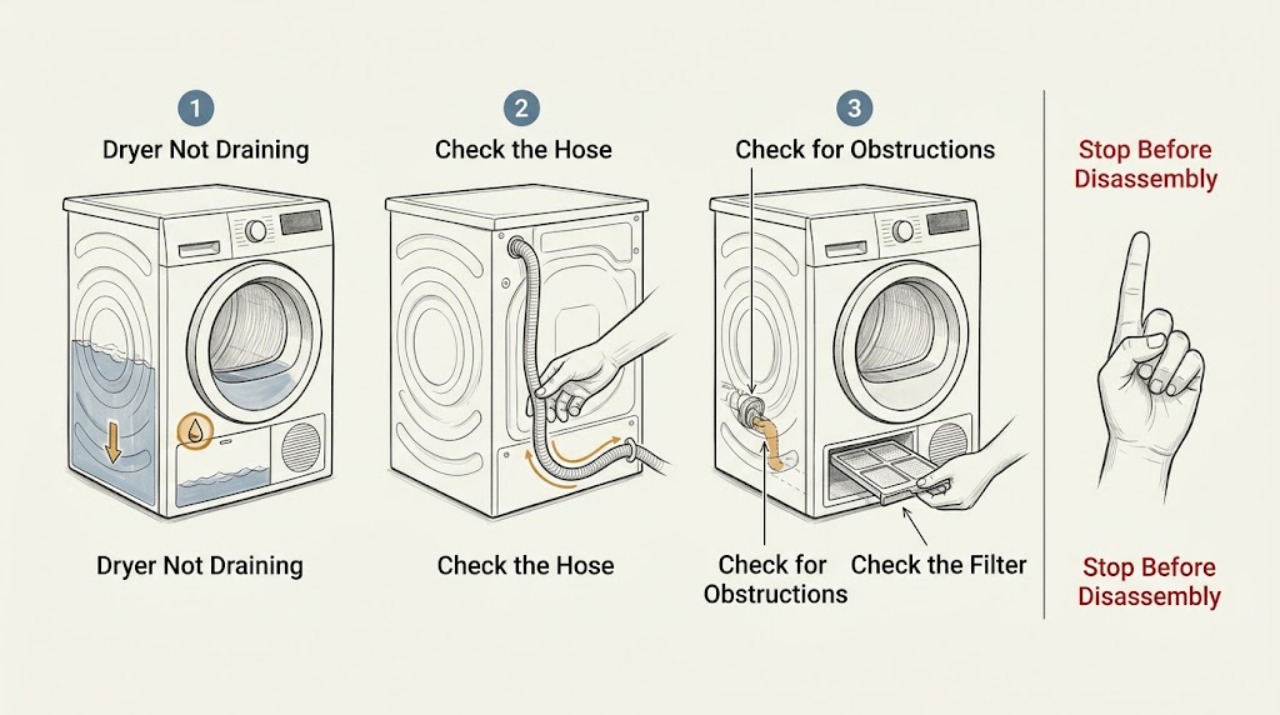
Haier Dryer Not Draining: Check the Correct Water Path
Start by identifying the Haier dryer architecture. A heat-pump or condenser dryer collects moisture in a water tank and may use an external drain hose; empty and reseat the tank, then check the applicable hose for a kink, clog, or incorrect connection.
-
Haier Washer Dryer Not Draining
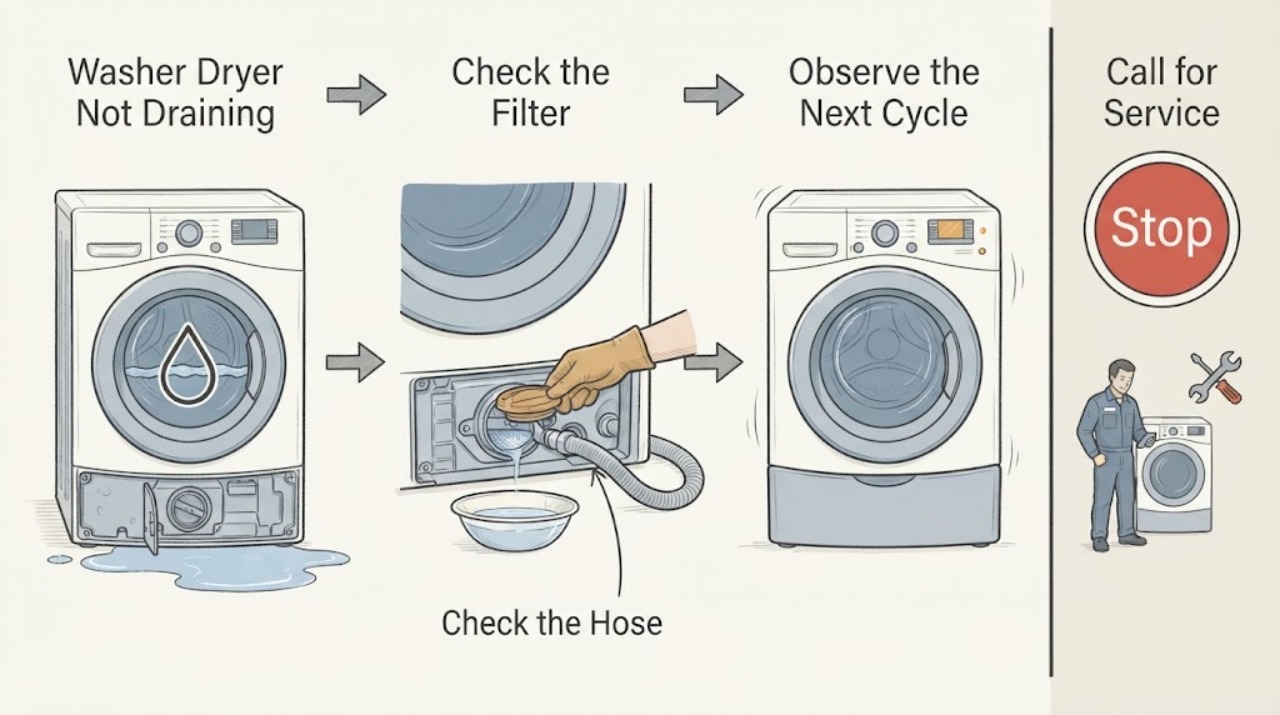
If a Haier washer dryer leaves water in the drum, first stop the cycle, unplug the appliance, and keep the water contained. The most useful external checks are the accessible drain or pump filter, the drain hose for a kink or blockage, and the hose routing and outlet for a height, extension, or backflow problem.
-
Haier Washing Machine Not Draining: Clear the Safe, Visible Causes
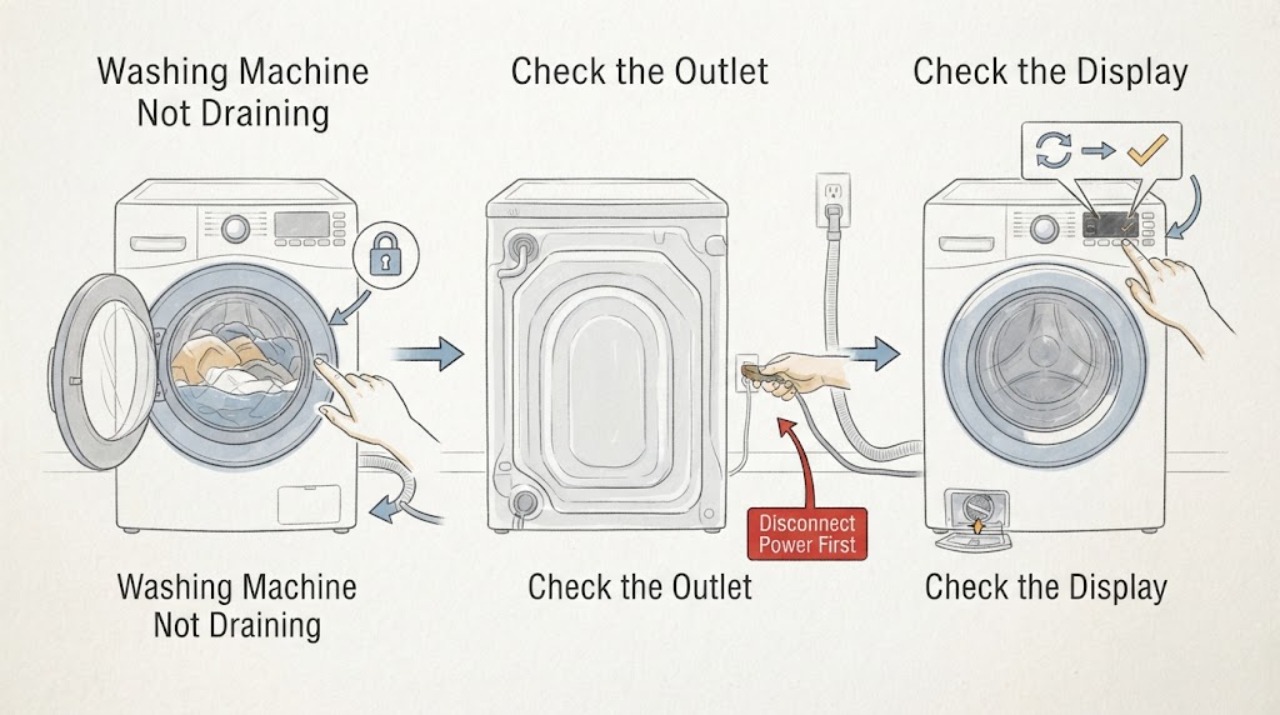
If a Haier washer leaves water in the drum, pause the cycle and keep people away from any water near electricity. Read the display and identify whether the wash or dry side is affected, then check the drain hose for kinks, crushing, blockage, excessive insertion, or incorrect height.
-
Hisense Dishwasher Not Draining: Clear the Drain Path Safely
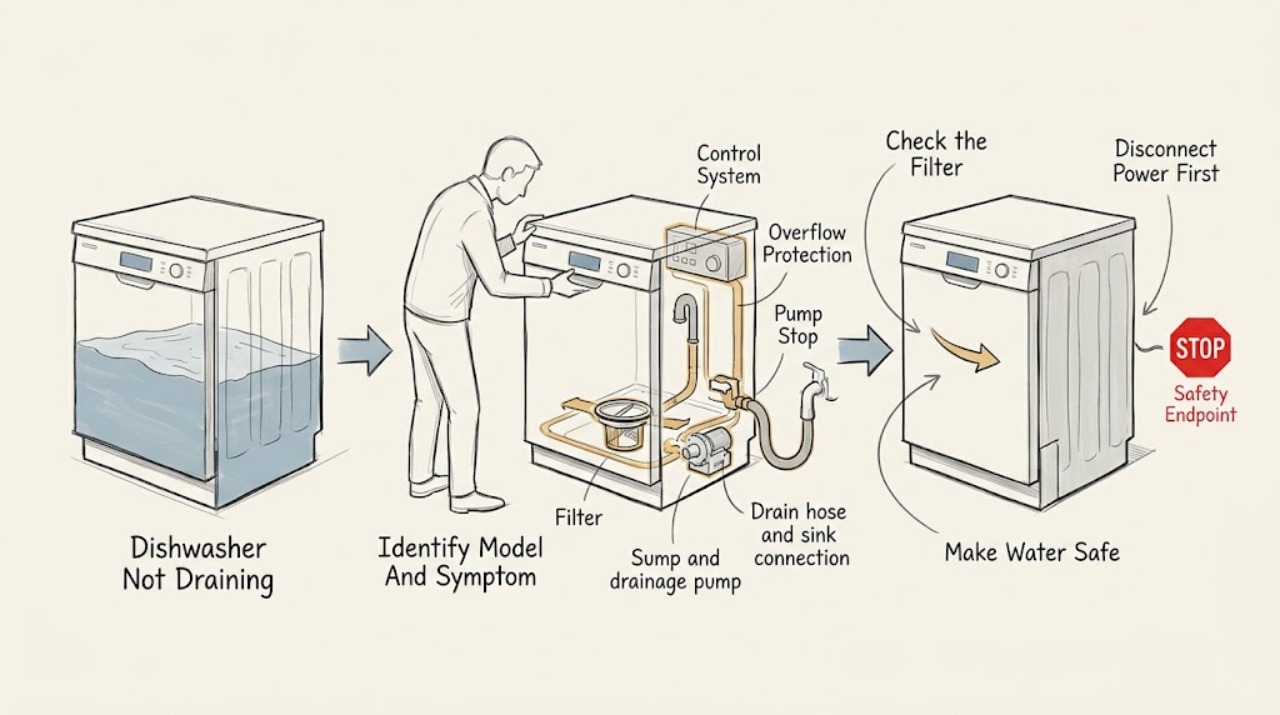
Stop the program and first distinguish a normal small amount of water in a filter sump from water covering the tub floor. If the dishwasher is still filling, overflowing, or shows a water-level fault, close the water tap before disconnecting power; otherwise turn it off and unplug it before opening the door, removing the filter, or scooping water.
-
Hisense Washing Machine Not Draining: Safe Checks for the Hose and Pump Filter
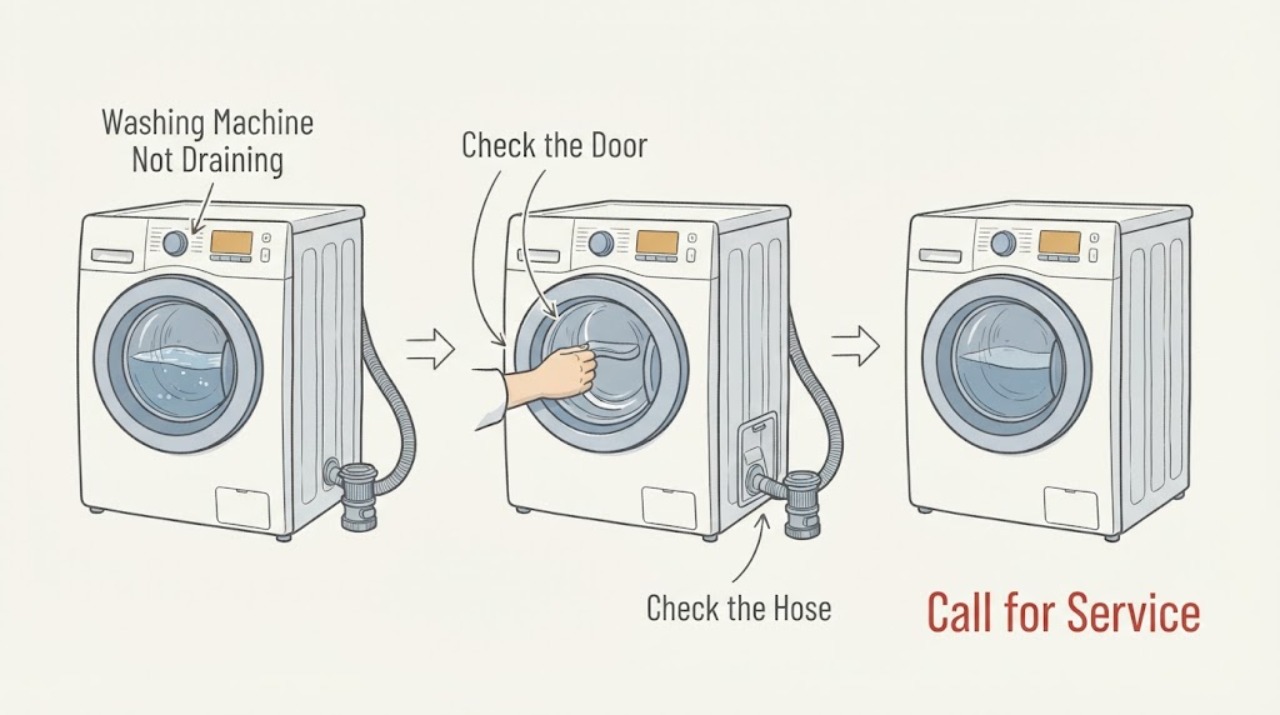
If a Hisense washing machine will not drain, stop the cycle and keep hands and electrical connections out of standing water. From a dry position, note whether the door or lid is locked and whether a drainage fault is displayed.
-
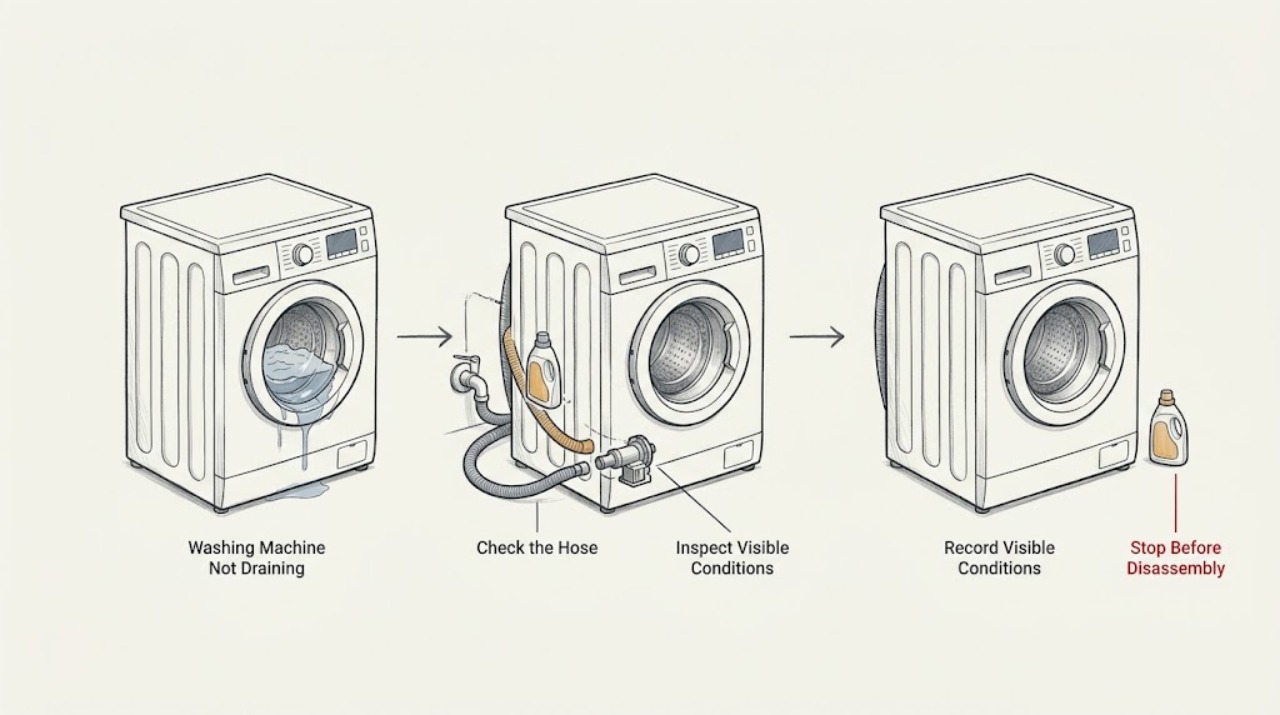
Hoover Washing Machine Not Draining
If a Hoover washing machine leaves water in the drum, stop the programme and disconnect mains power before inspecting anything. Keep the floor and plug area dry, and do not reach into standing water.
-
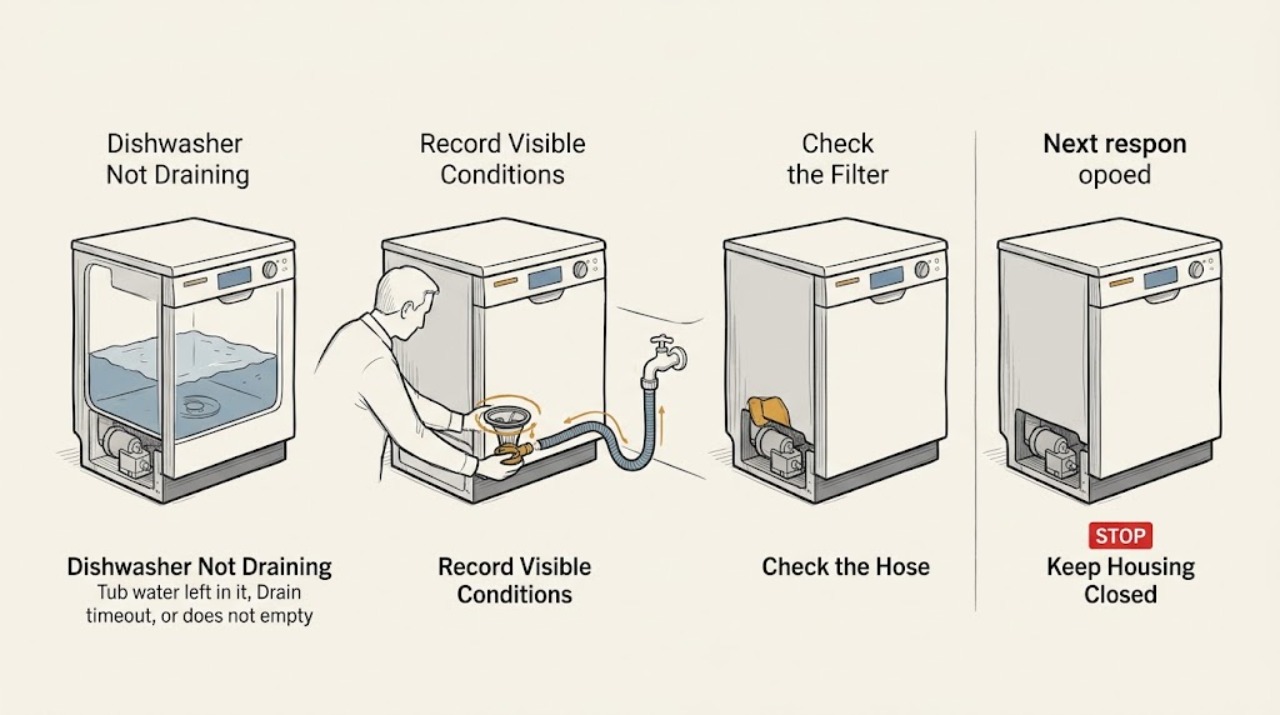
Hotpoint Dishwasher Not Draining: Check the Base Filter, Waste Hose, and Sink Connection Safely
If a Hotpoint dishwasher is not draining, first note whether water remains in the tub and record the full model/product code and any LED or display code. With the appliance switched off and unplugged before examination, check the model-approved filter in the base for food or glass debris, inspect the visible waste hose for a trap or kink, and inspect the dishwasher connection under the sink.
-
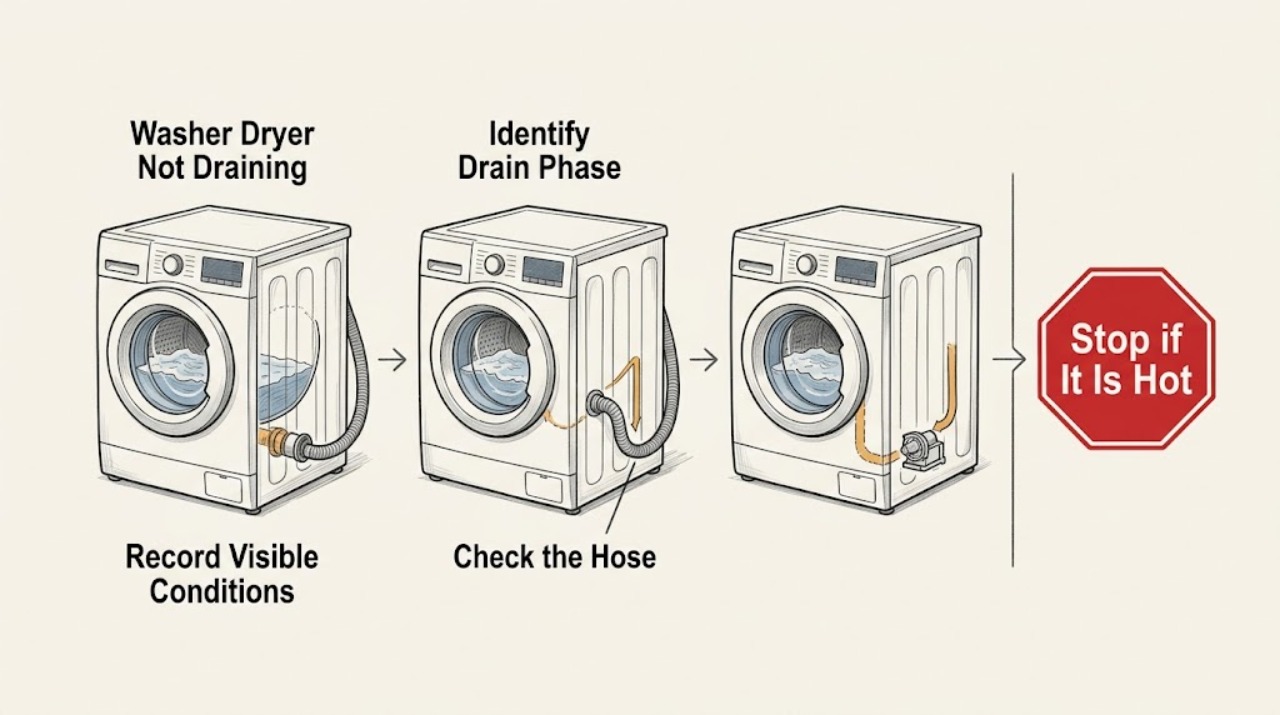
Hotpoint Washer Dryer Not Draining: Check the Safe External Causes
If your Hotpoint washer dryer will not drain, stop the programme and do not keep restarting it. Keep children and pets away, close the water-supply tap, and disconnect power only when your hands, the plug, floor, and route are dry and safe; if water is near electrical equipment, do not touch the plug or water and isolate power from a dry location or call a qualified professional.
-
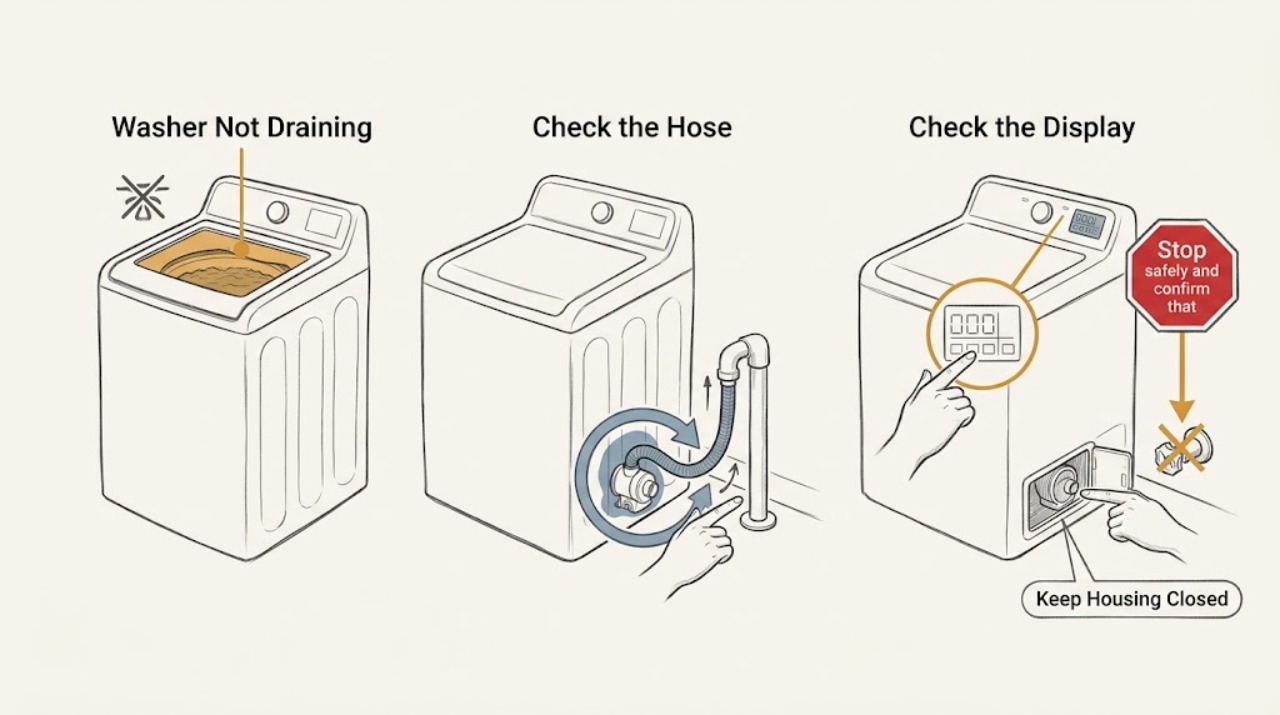
Hotpoint Washer Not Draining: What to Check and What to Do Next
First note whether the washer is paused normally, leaves water in the basket, hums without moving water, or drains slowly and then stops. Keep the lid or door closed until the basket is still, and keep the washer off if water is near the cord, outlet, controls, or other electrical equipment.
-
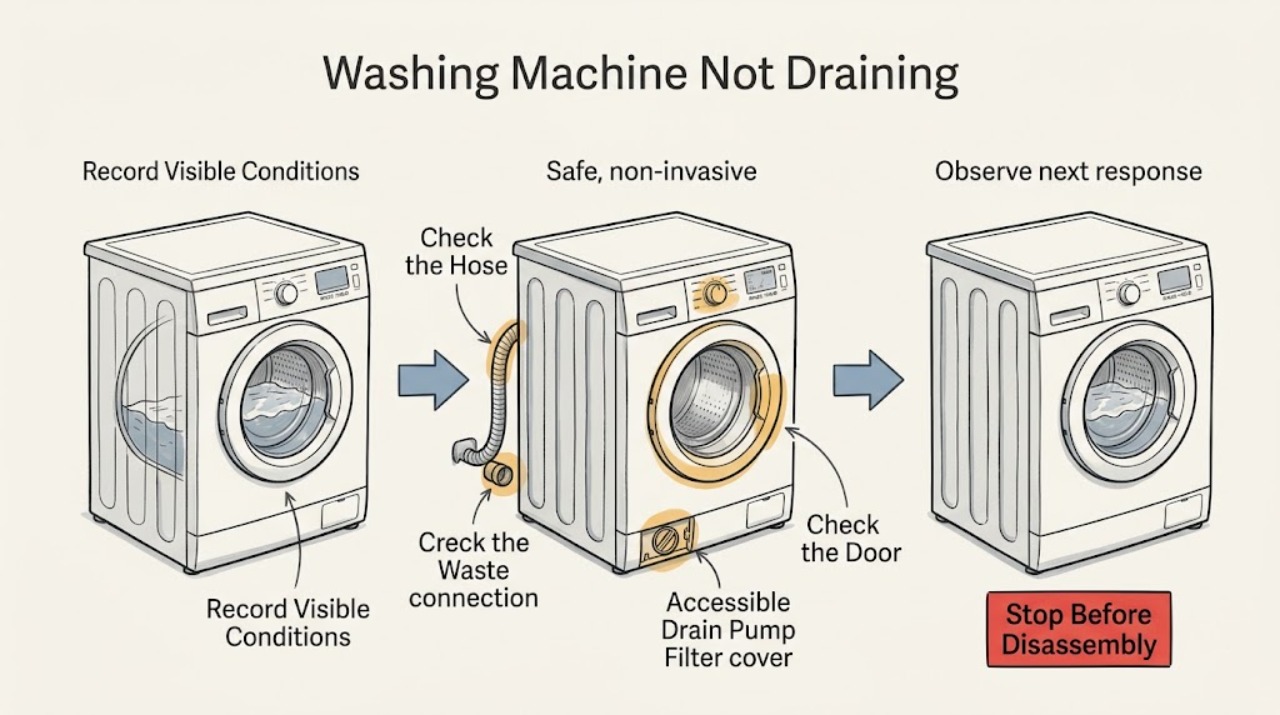
Hotpoint Washing Machine Not Draining: Check the Hose, Filter, and Pump Path
If a Hotpoint washing machine is not draining, stop the cycle and keep clear of the water until it is safe to work around. Note whether water remains in the drum, whether the pump hums, and any displayed code or flashing lights.
-
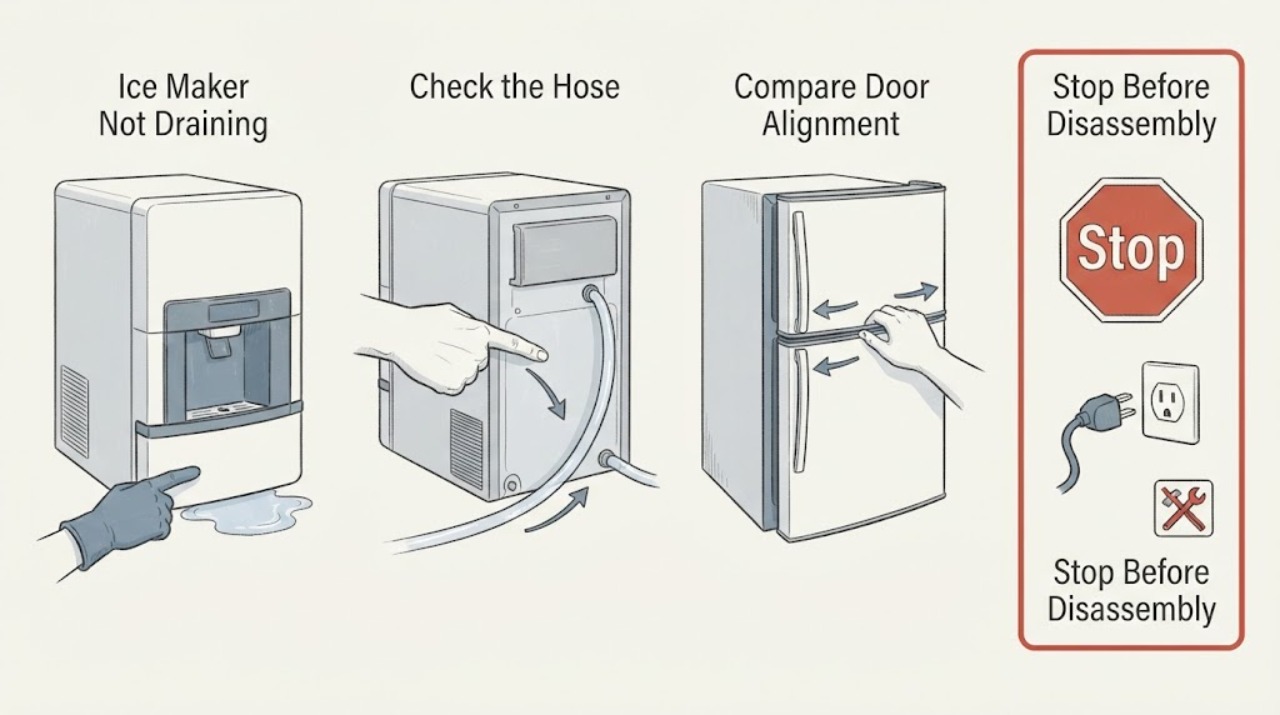
Ice Maker Not Draining
An ice maker that is not draining is usually a drain-path problem until proven otherwise. Identify whether it uses gravity or a pump, then inspect the accessible hose for alignment, twists, blockage and incorrect routing. Whirlpool routes external plumbing problems to a qualified plumber and persistent appliance faults to service.
-
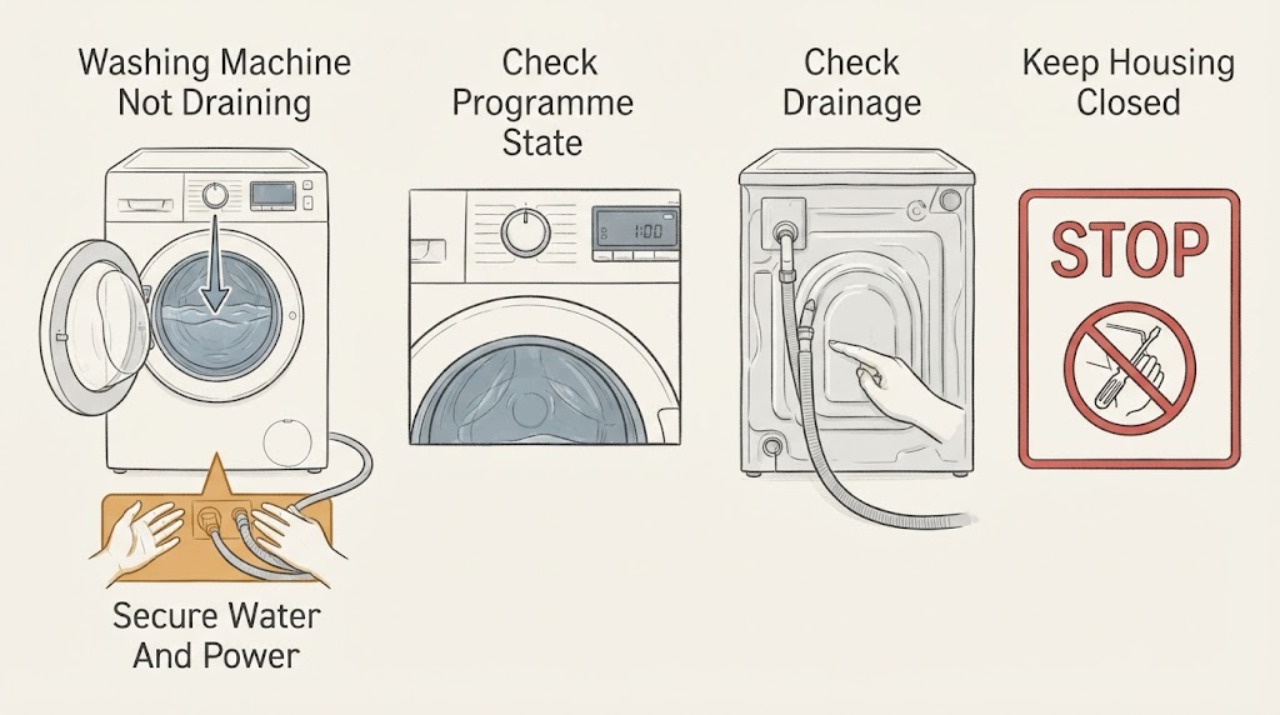
Indesit Washing Machine Not Draining
If an Indesit washing machine has finished with water inside, stop the programme and keep clear if the water is hot, leaking, or near an electrical connection. When the area is dry and safe, switch the appliance off and follow the exact model manual before checking anything.
-
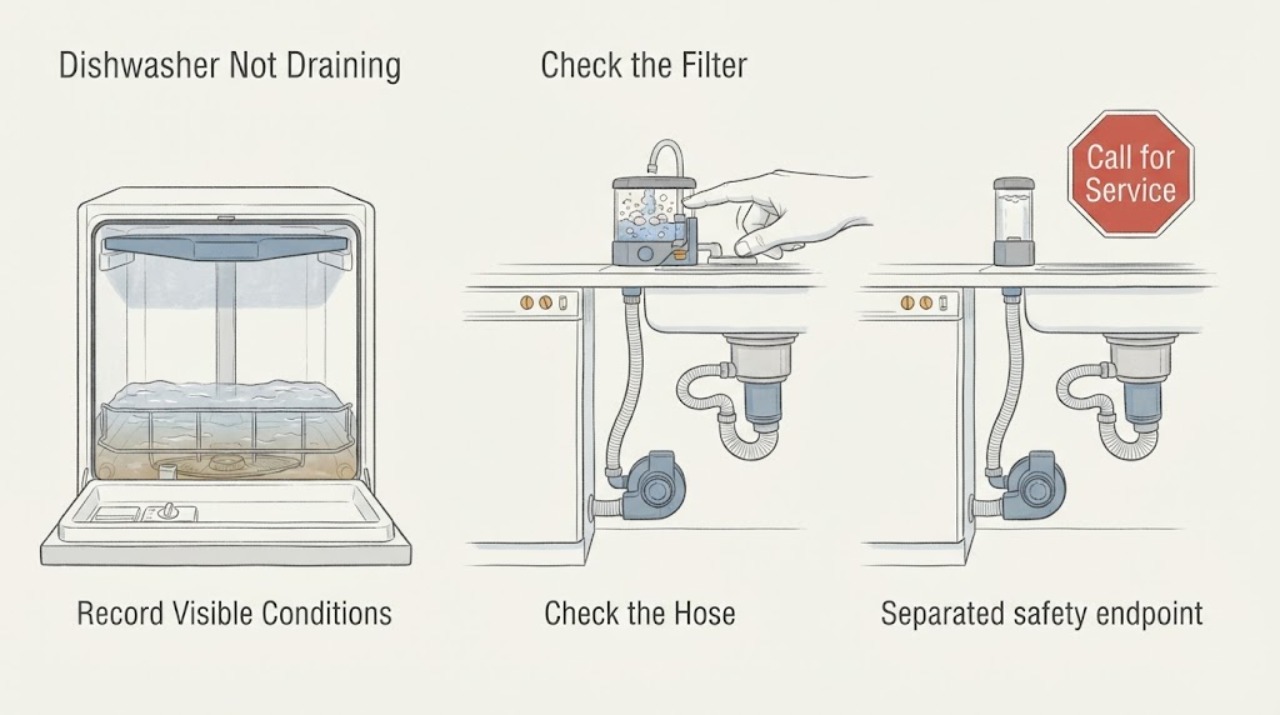
JennAir Dishwasher Not Draining: Check the Filter, Hose, and Sink Connection
A small amount of water in the filter area can be normal on JennAir models, but water covering the tub floor or returning after drain-out calls for a safe check. First stop the cycle, keep clear of standing water near electrical parts, and disconnect power from a dry safe position according to the model instructions.
-
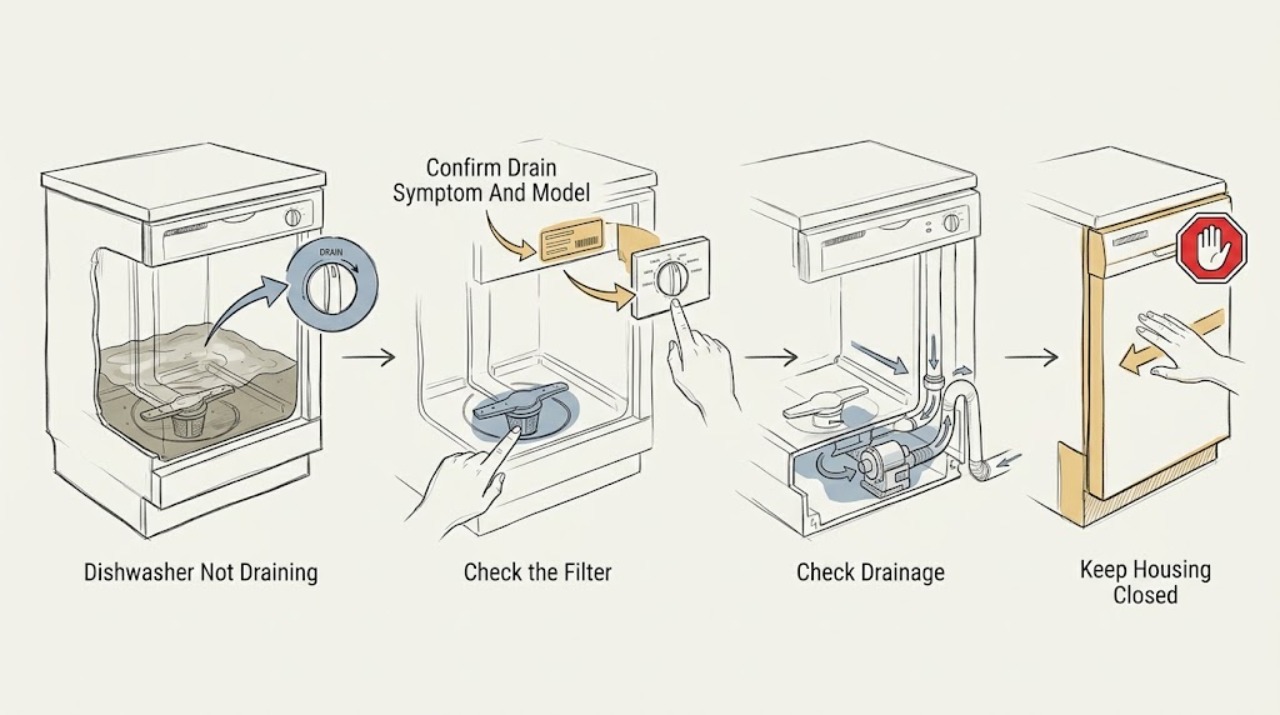
Kenmore Dishwasher Not Draining: Check the Filter, Cycle State, and Drain Path
First confirm that the Kenmore dishwasher actually finished its cycle and note how much water remains; the exact model manual controls what residual water is expected and how Cancel or Drain operates. If the tub has standing water, switch off the appliance and disconnect power before reaching into the bottom.
-
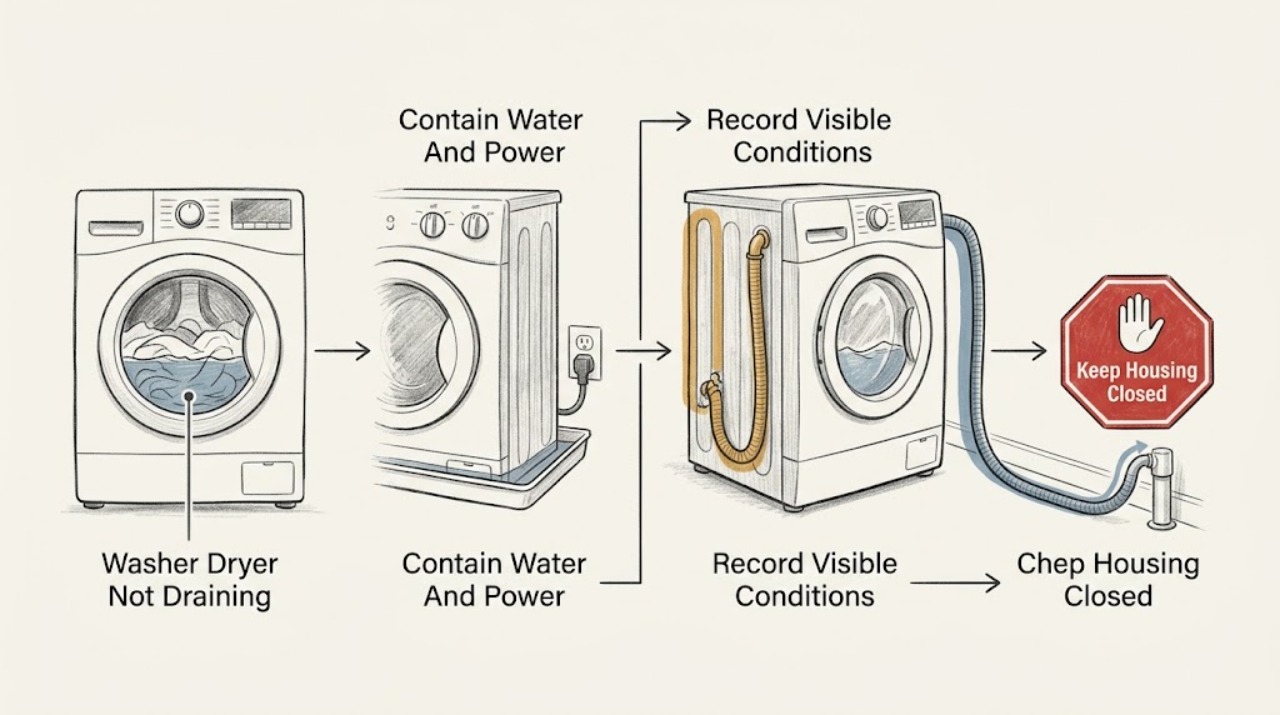
Kenmore Washer Dryer Not Draining
A Kenmore washer-dryer that leaves water in the tub may have a kinked or displaced drain hose, a user-serviceable filter blocked with debris, an overfilled or badly loaded cycle, or a pump, sensor, lock, or control fault. First stop the cycle and protect against flooding and electrical contact.
-
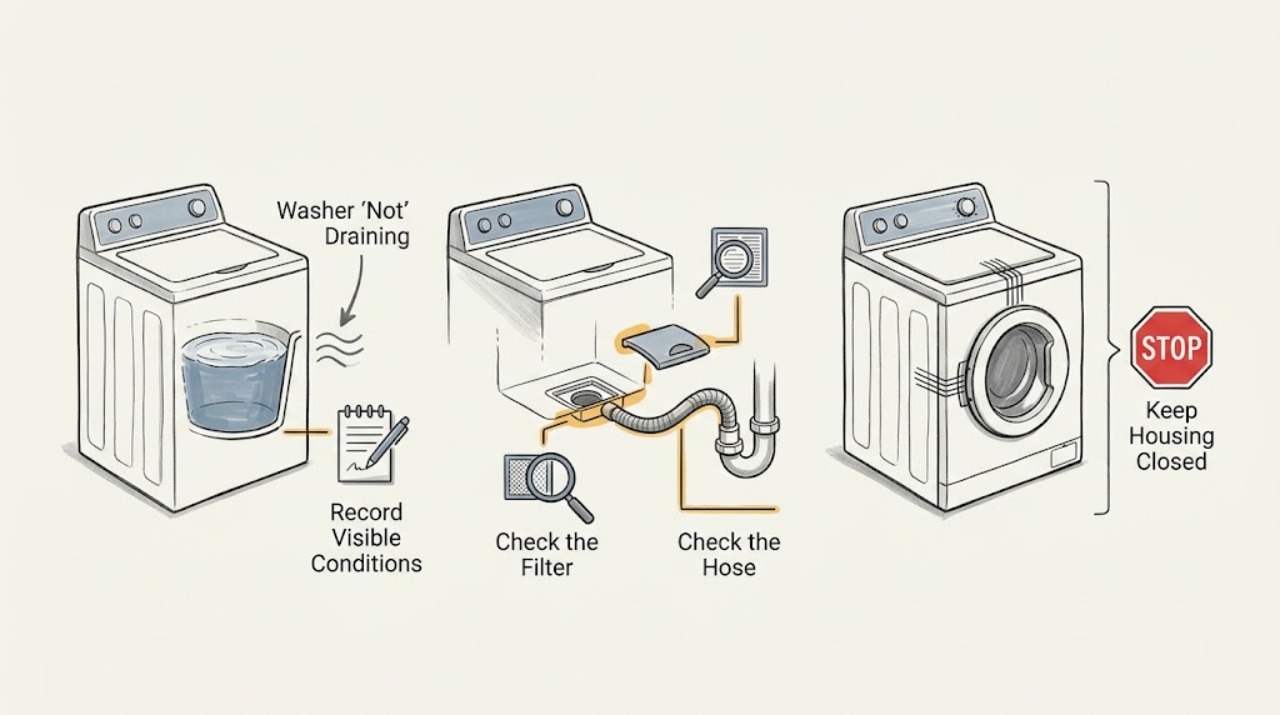
Kenmore Washer Not Draining: What to Check and What to Do Next
If a Kenmore washer leaves water in the tub, first record whether it stopped before draining, drains slowly, or drains but will not spin. Then stop the cycle and keep clear of water near electrical parts.
-
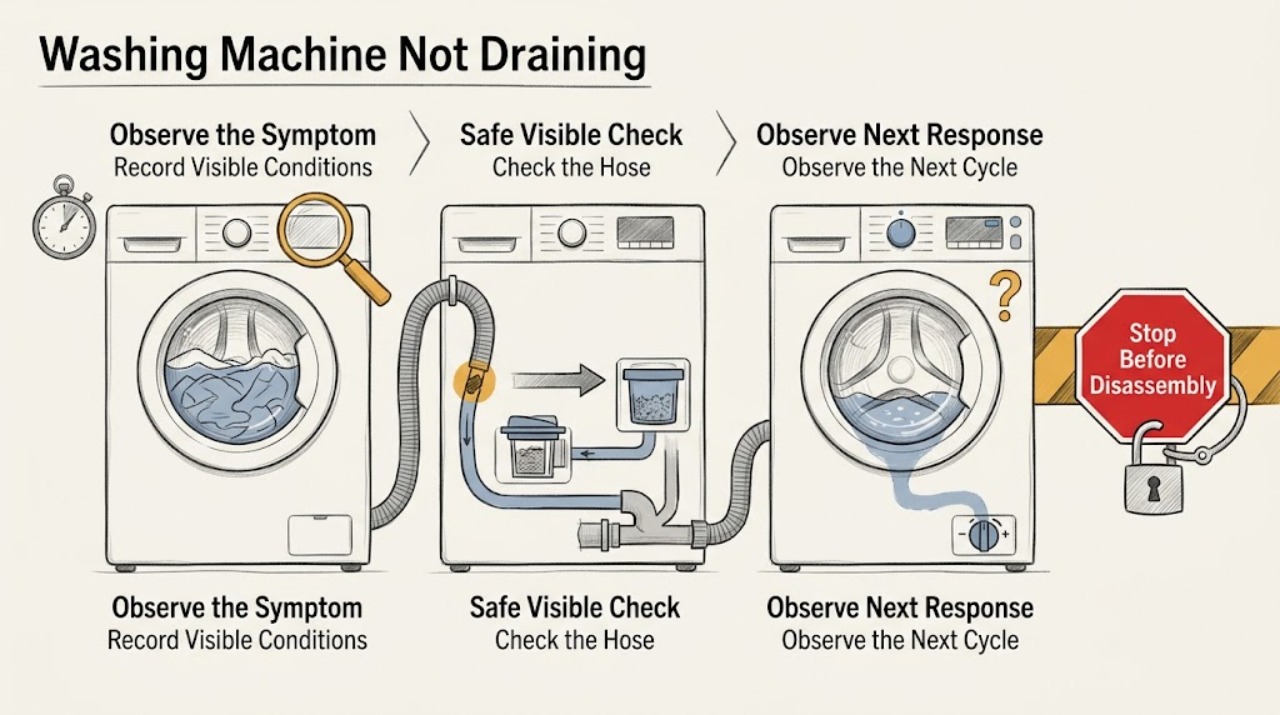
Kenmore Washing Machine Not Draining: Safe Checks for Residual Water
If a Kenmore washer leaves water behind, first note whether it stopped during wash, drain or spin and whether the water is hot. Stop the machine if water is near the outlet, a hose is leaking, the pump makes a harsh abnormal sound, or there is smoke, a burning smell, a shock or a repeated breaker trip.
-
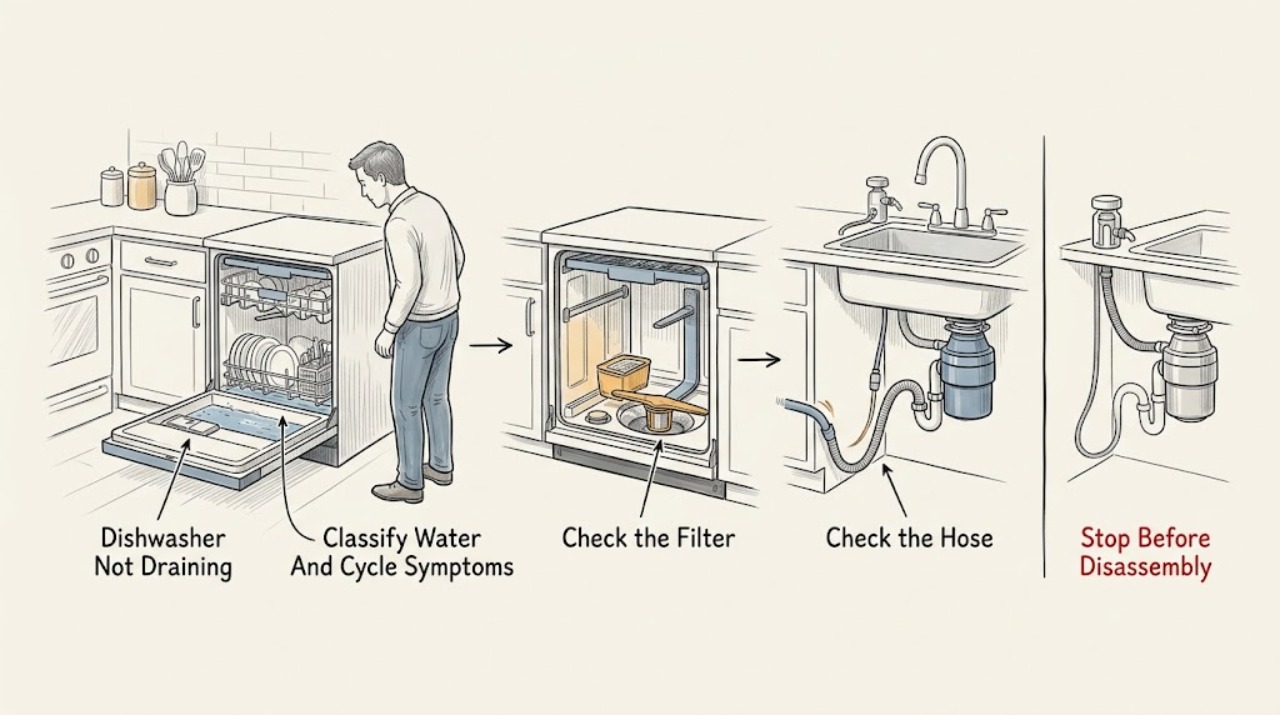
KitchenAid Dishwasher Not Draining: What to Check and What to Do Next
A KitchenAid dishwasher that leaves water behind most often has a restricted filter or sump, a blocked sink or garbage-disposer connection, an obstructed air gap, a kinked or poorly routed drain hose, excess suds from the wrong soap, or a drain-pump problem. First distinguish the small amount of water that KitchenAid says can remain in the filter area from water spread across the tub or returning from the sink.
-
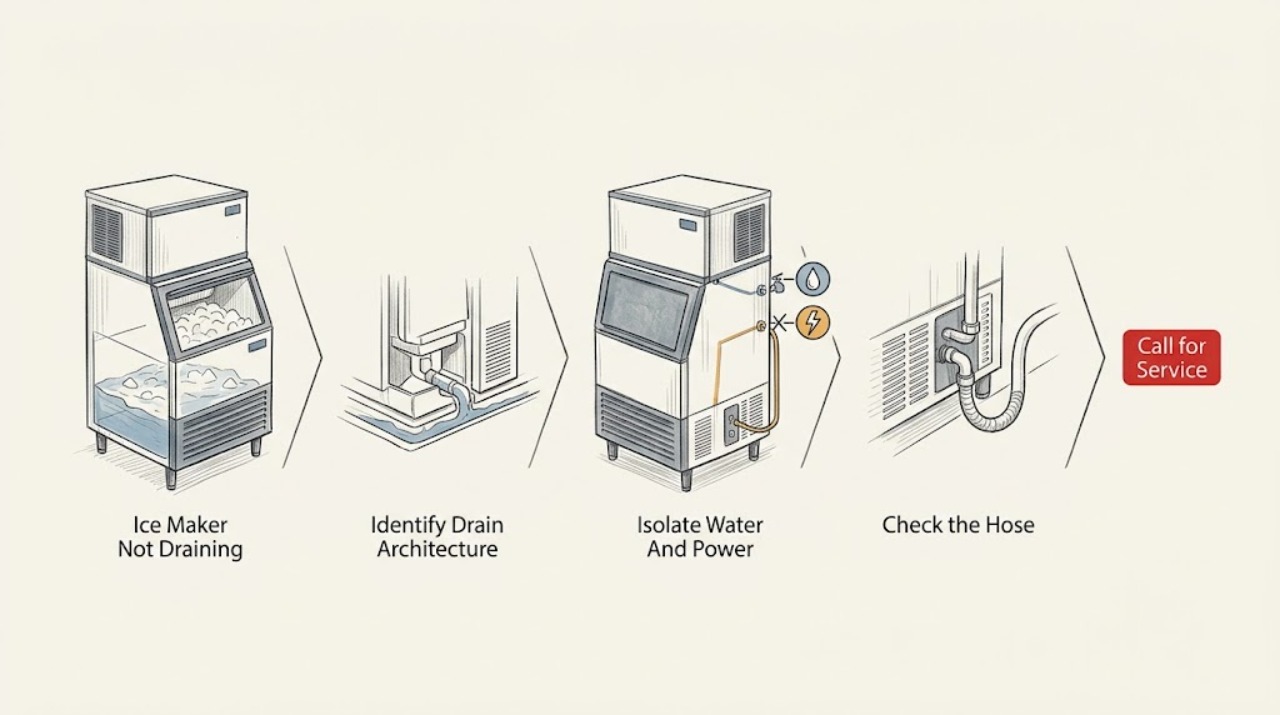
KitchenAid Ice Maker Not Draining: Check the Drain Type, Hose, and Pump Boundary
This guidance is for a KitchenAid freestanding or undercounter ice maker with a separate drain connection, not a refrigerator's internal ice-maker tray. First identify whether the unit uses a nearby floor drain by gravity or a drain pump.
-
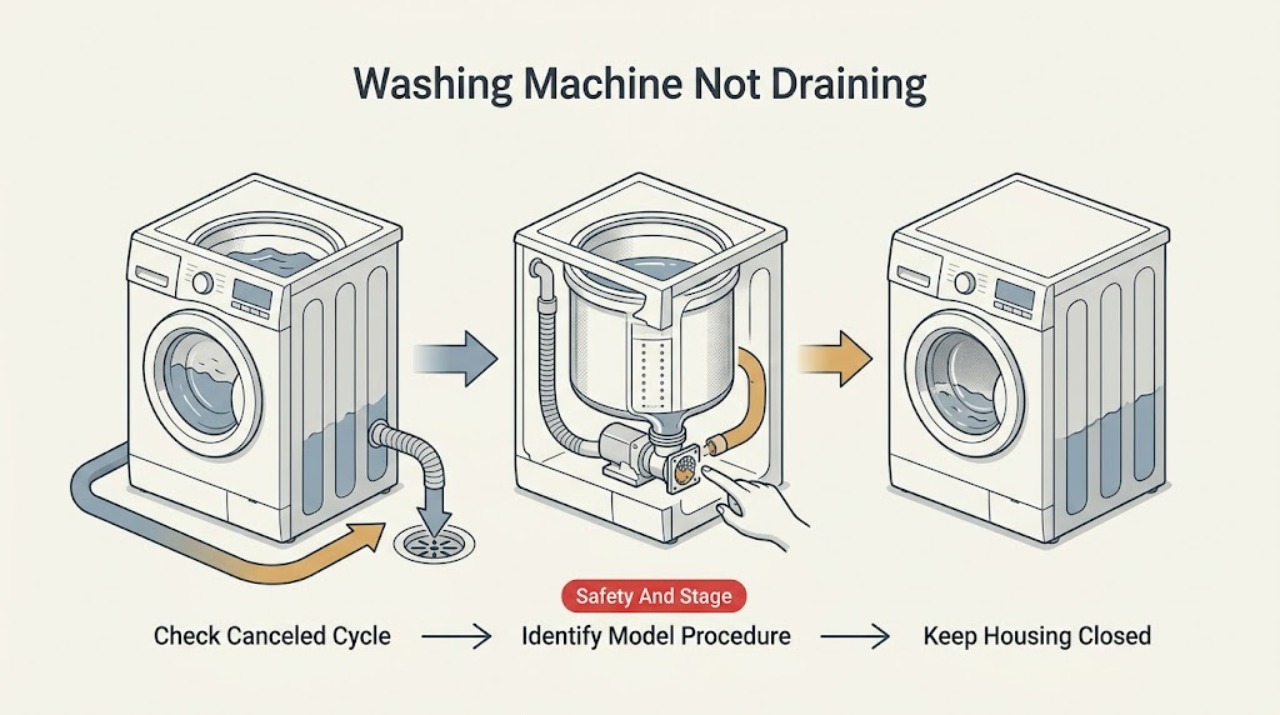
KitchenAid Washing Machine Not Draining: Find the Blocked Path Safely
If a KitchenAid washer leaves water behind, first note when the water remains: after canceling, at the end of a wash, after a failed spin, or immediately after the pump starts. Stop and isolate power and water before handling residual water, and wait for recently heated water to cool.
-
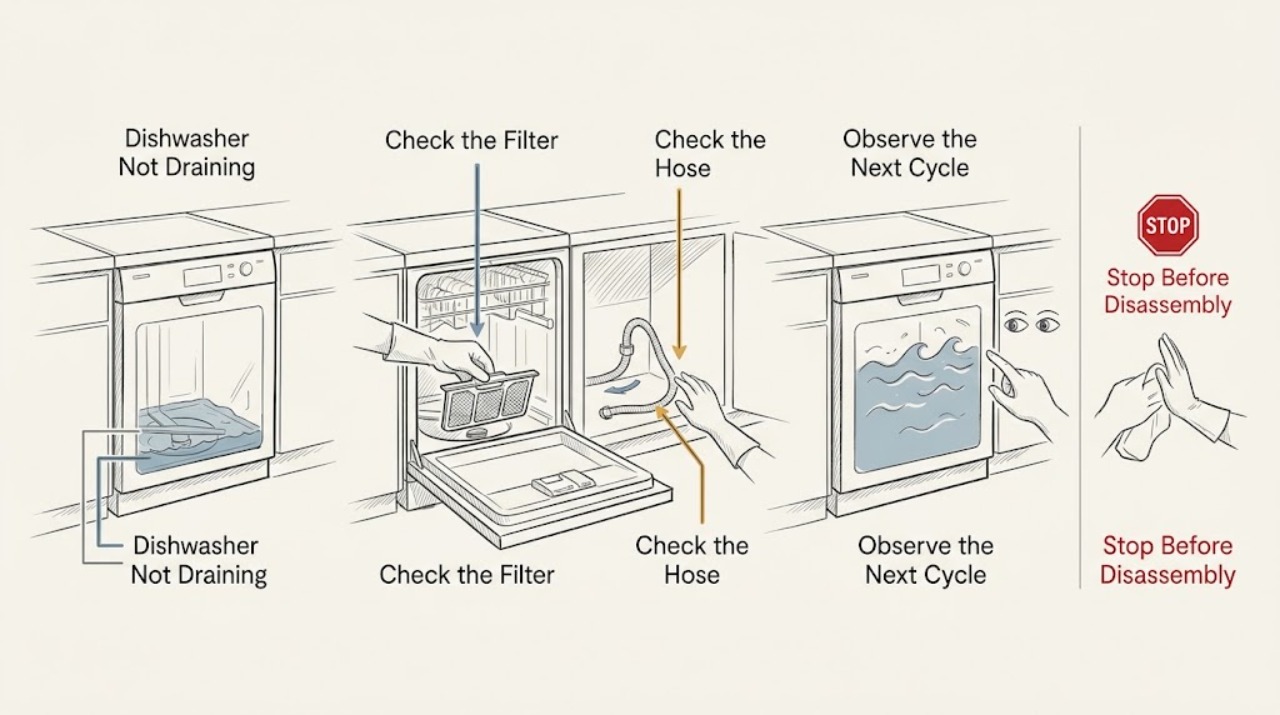
LG Dishwasher Not Draining
Turn the dishwasher off, clean the filter, inspect the drain hose for a kink, and check the sink air gap or disposal connection. If standing water or an OE code remains after these accessible checks, keep the unit off and request service.
-
LG Dryer Not Draining: Check the Water Path Before Service
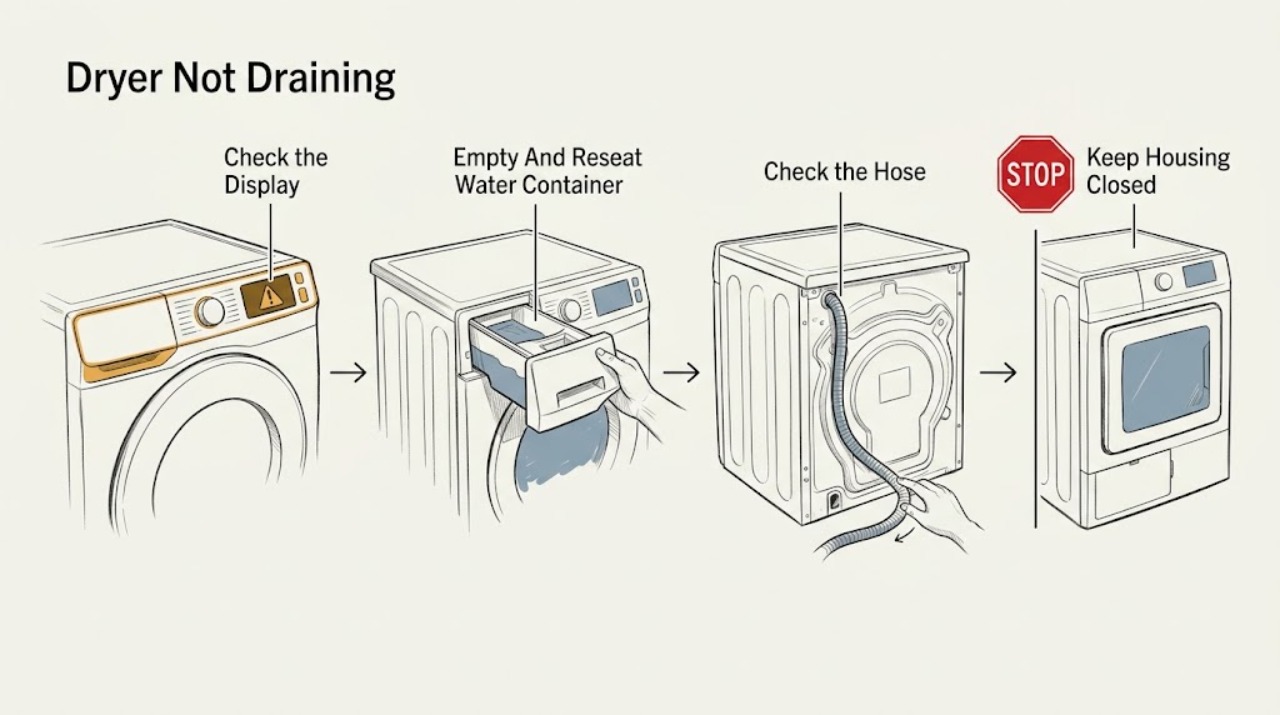
On an LG condenser, hybrid condensing, or heat-pump-style dryer, not draining usually means the water container is full or not seated, the drain hose is kinked, crushed, blocked, submerged, or routed too high, or the pump cannot move condensed water. LG maps d r n/OE to a full container, restricted hose, or an air-filled drain pump, and reserves E13 for Hybrid Condensing Dryers where the hose or sump water may be frozen.
-
LG Washer Dryer Not Draining
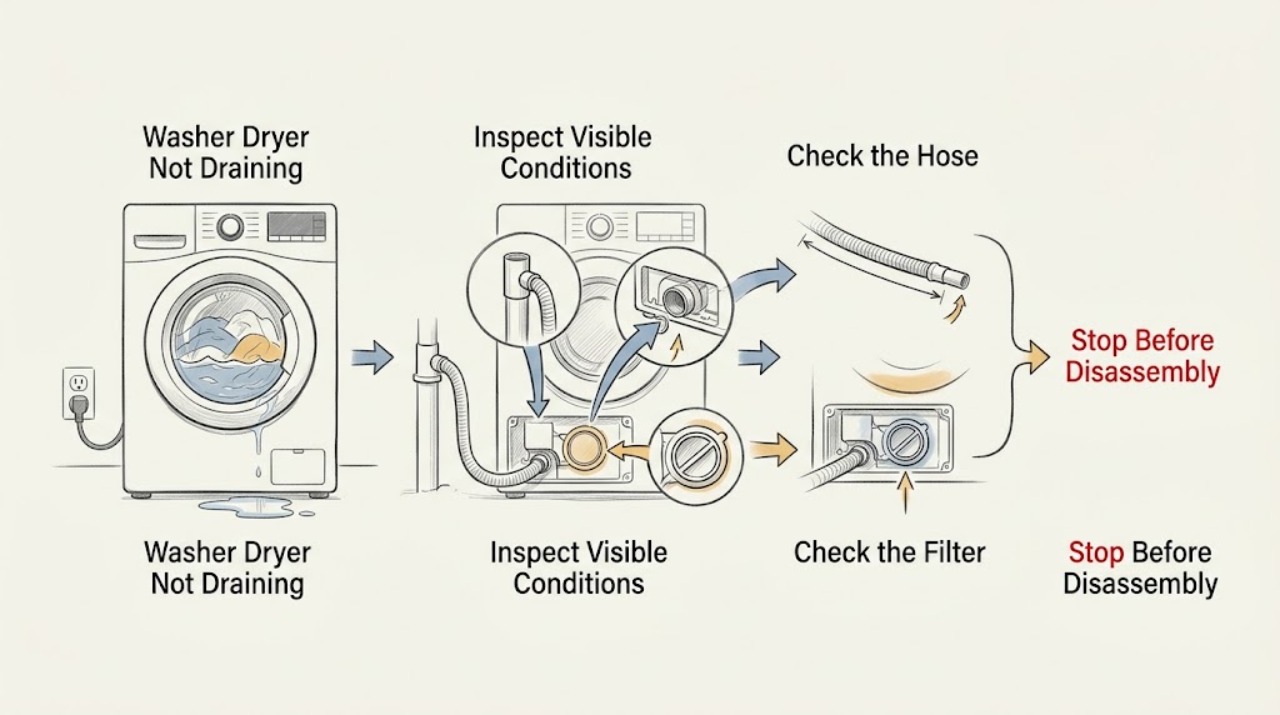
If an LG washer dryer is not draining, first stop the cycle and determine whether the tub still contains water. Check the drain hose for kinks, compression, freezing, or an installation that prevents free flow, then use the exact model instructions for the lower service cover and drain pump filter.
-
LG Washer Not Draining: What to Check and What to Do Next
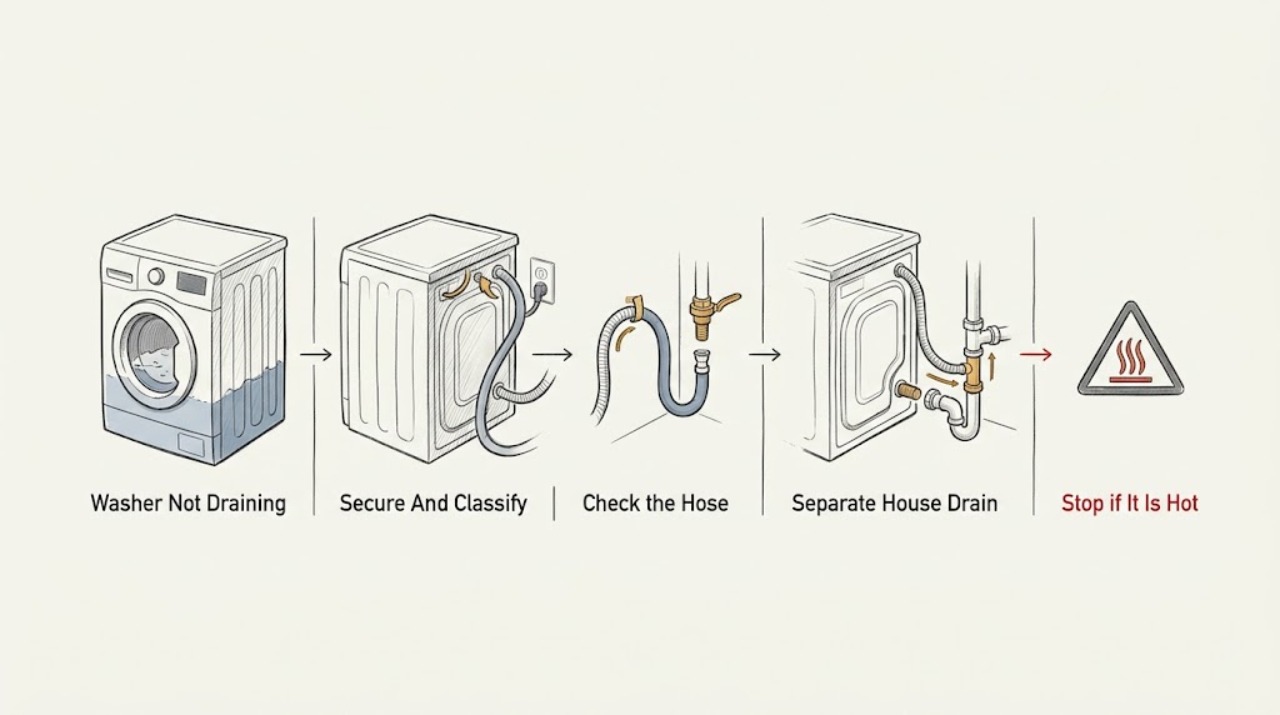
If an LG washer is not draining, stop the cycle and first note whether water is still in the tub, whether the tub water may be hot, and whether an OE code is shown. From safe access, check the external drain hose for a kink, crush point, high loop, submersion, blockage, or freezing.
-
LG Washing Machine Not Draining: Find the Blockage Safely
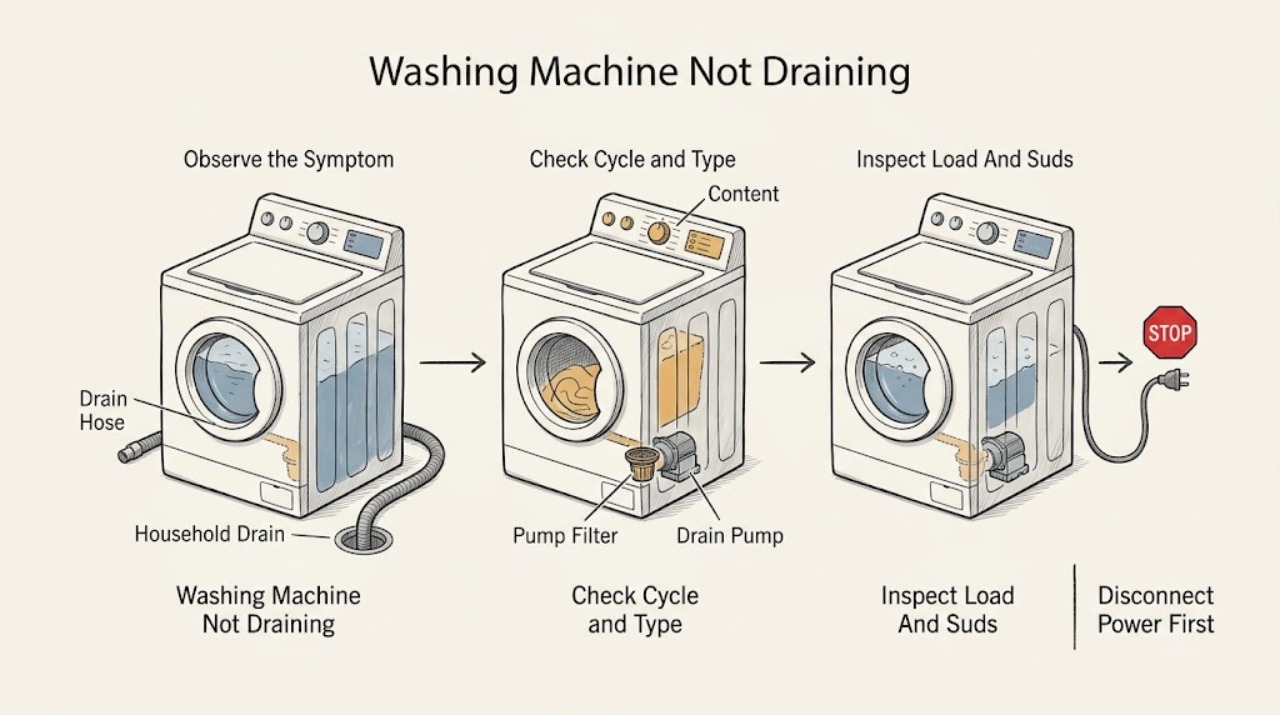
If an LG washing machine leaves water in the tub, first note whether it is paused, soaking, showing an error, or actually failing to drain. Stop if the water is hot, leaking toward the plug or outlet, or accompanied by smoke, a burning smell, sparks, severe vibration, or a breaker trip.
-
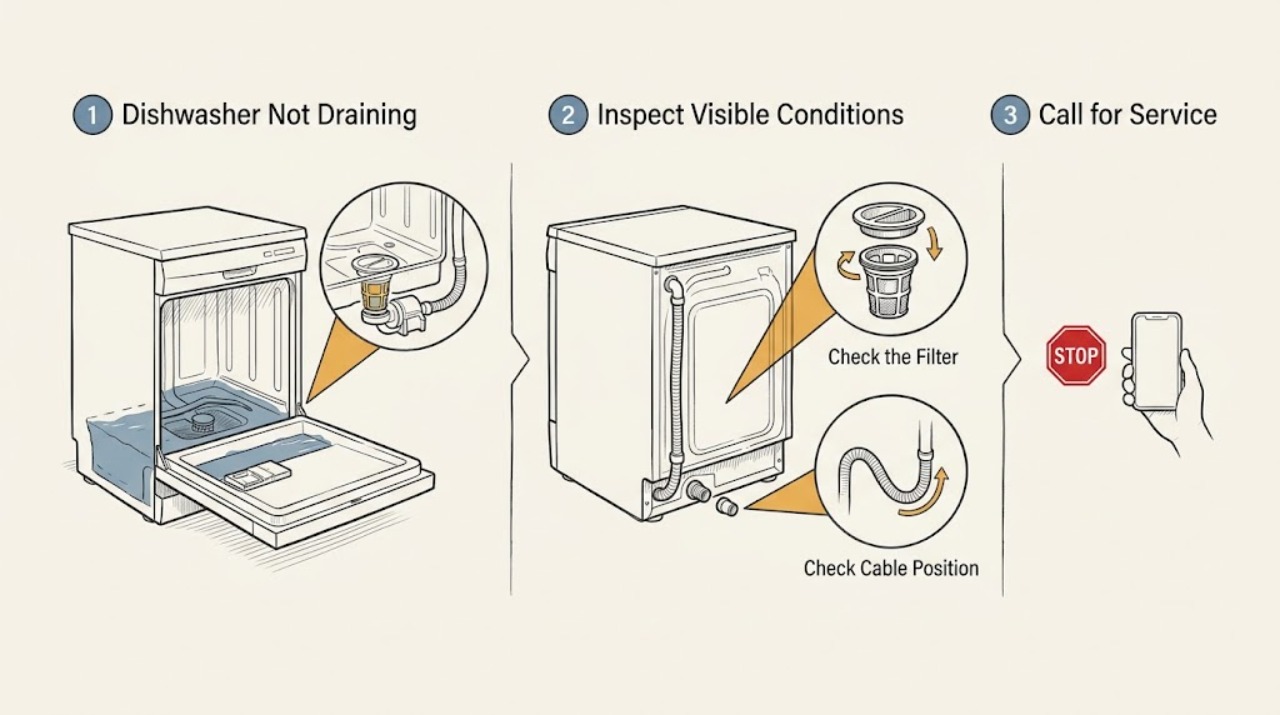
Magic Chef Dishwasher Not Draining
After the dishwasher stops, first distinguish a small normal wet area from water covering the tub floor. Check the accessible filter and visible drain-hose path using the exact model manual, then use one model-approved cancel or drain step; standing water that remains or returns needs service rather than repeated cycles.
-
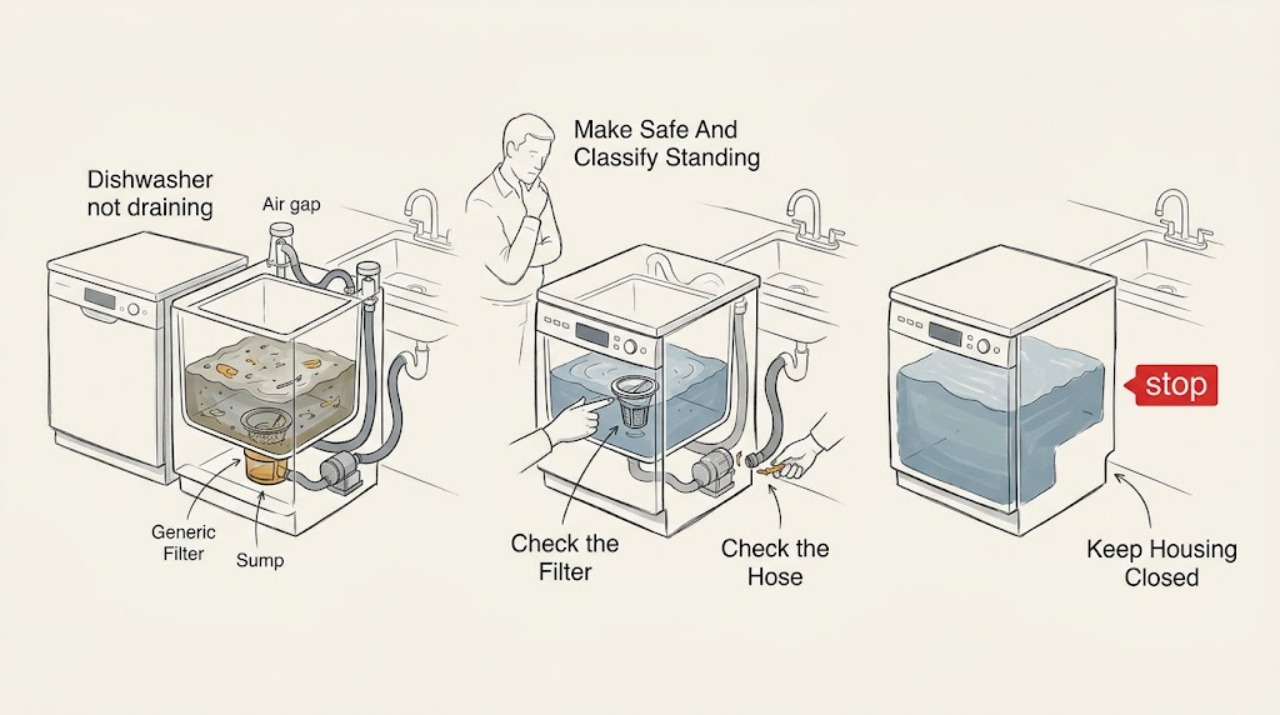
Maytag dishwasher not draining: What to Check and What to Do Next
If a Maytag dishwasher leaves more than a small amount of water in the filter area after a completed cycle, stop repeated cycles and first note whether the cycle was interrupted, the water is dirty, or the water returns from the sink or air gap. From a dry, safe location, turn off power and close the under-sink water valve before handling standing water; do not touch wet electrical parts.
-
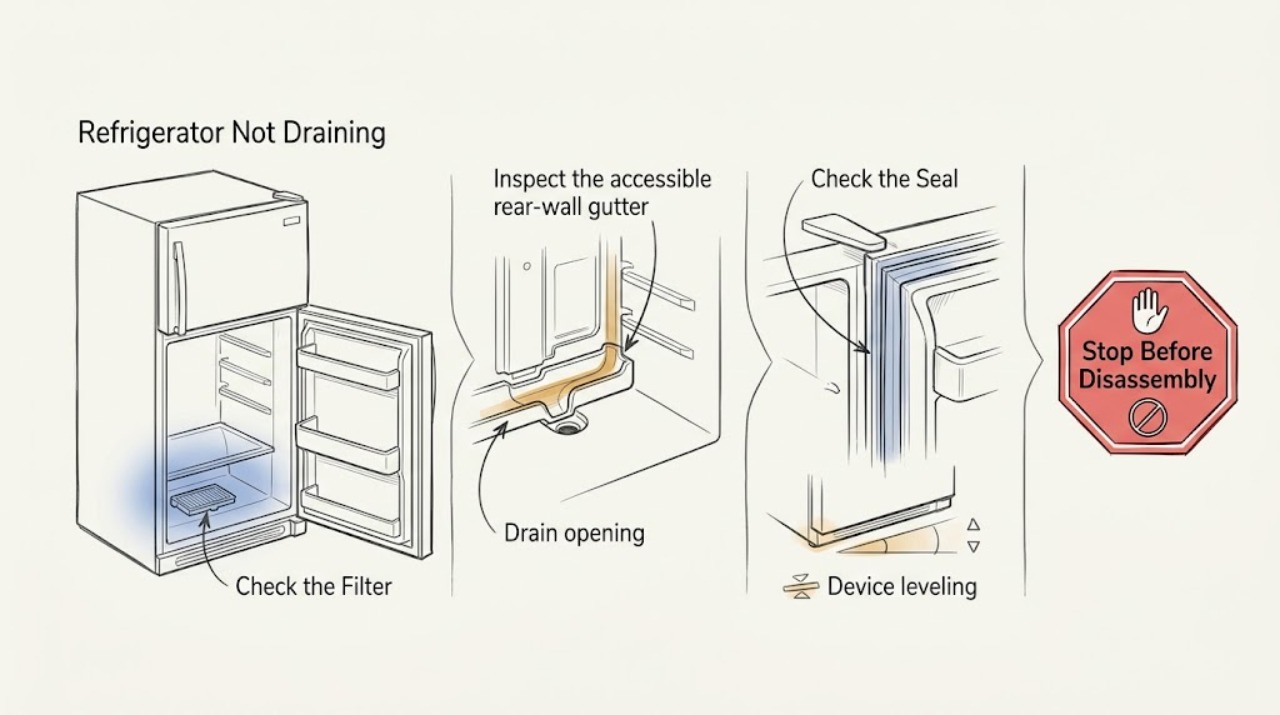
Maytag Refrigerator Not Draining: Check the Defrost Water Path Safely
If a Maytag refrigerator is not draining, identify whether water is pooling inside, appearing on the floor, or freezing around the drain path. Check the door seal, visible food or ice around the accessible gutter, and whether the cabinet is level. Clear only an accessible opening as directed by the model manual; do not puncture tubing or remove panels. Recurring water or ice after these checks needs service.
-
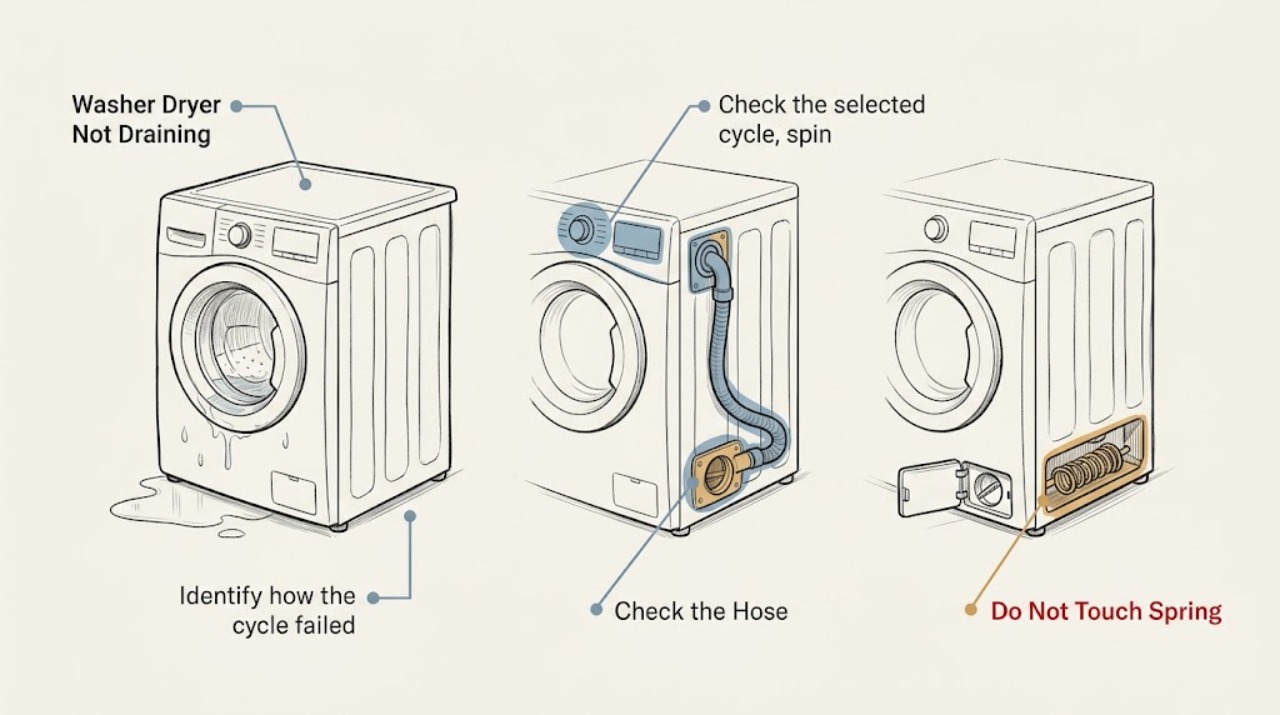
Maytag Washer Dryer Not Draining
If the washer side of your Maytag washer-dryer leaves water in the tub, first identify whether the cycle stopped before draining or completed with a wet load. Check the door or lid, load balance, selected spin setting, and detergent amount, then inspect the external drain hose for kinks, blockage, incorrect routing, or a sealed connection.
-
Maytag washer not draining: What to Check and What to Do Next
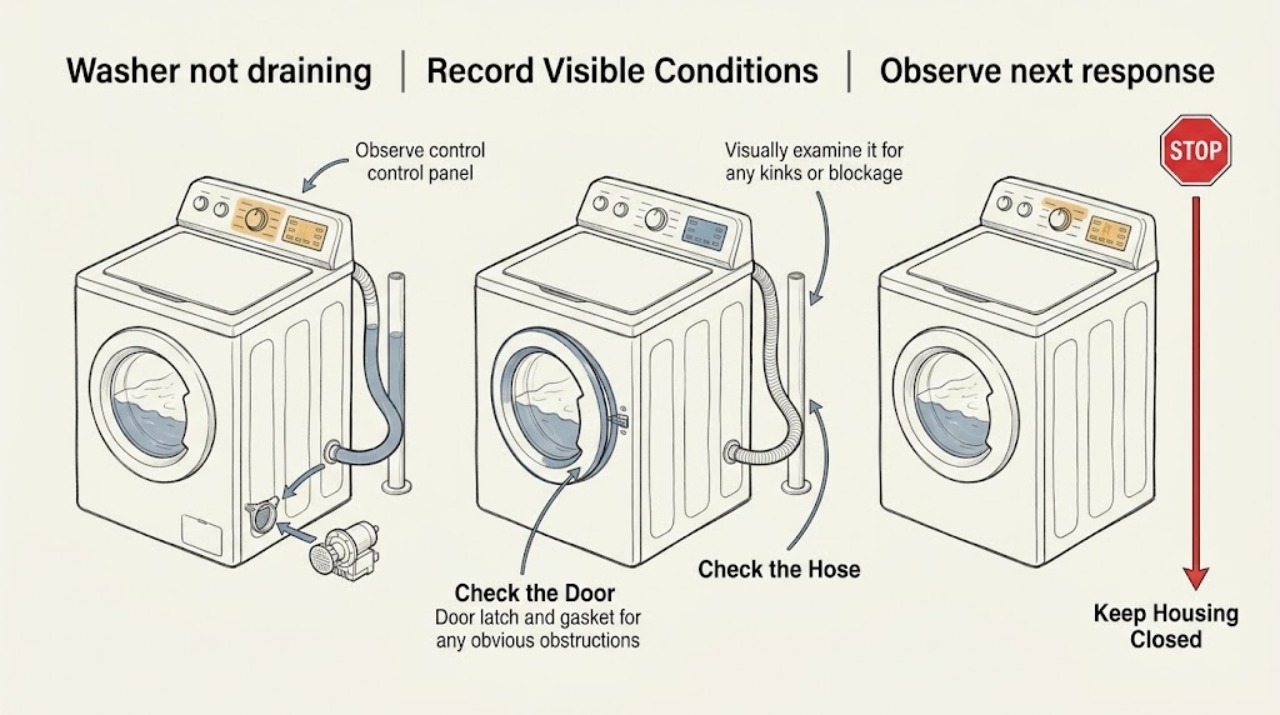
Record the exact Maytag model, any displayed code, whether water remains in the tub, and whether the problem occurred during drain or spin. Start with the visible drain hose and standpipe: look for a kink, clog, loose routing, a hose pushed too far down, or a sealed drain connection.
-
Maytag Washing Machine Not Draining: Safe Checks Before Service
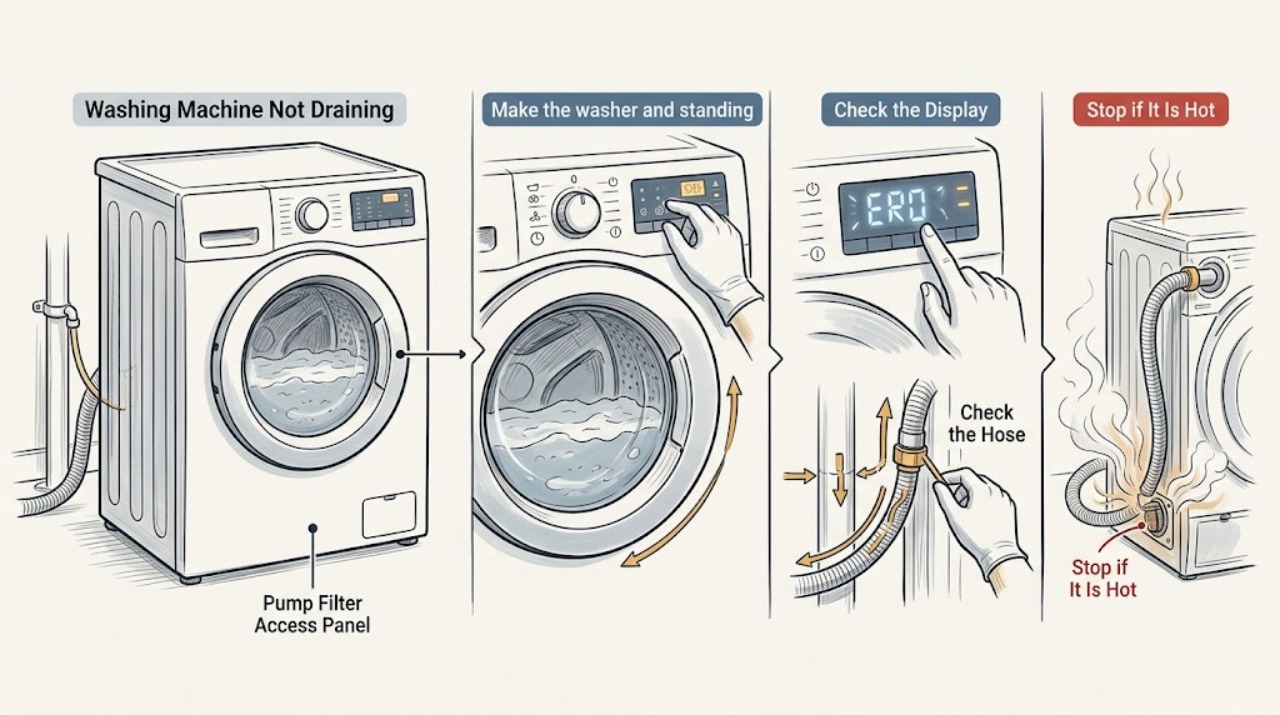
If a Maytag washer leaves water behind, stop the cycle and keep hands, plugs, and controls away from water or a wet floor. Check the selected cycle and whether the lid or door is securely closed, then inspect the accessible drain hose and household drain for kinks, clogs, a sealed connection, siphoning, or incorrect installation.
-
Miele Dishwasher Not Draining: Check the Filter, Pump Cover, and Hose
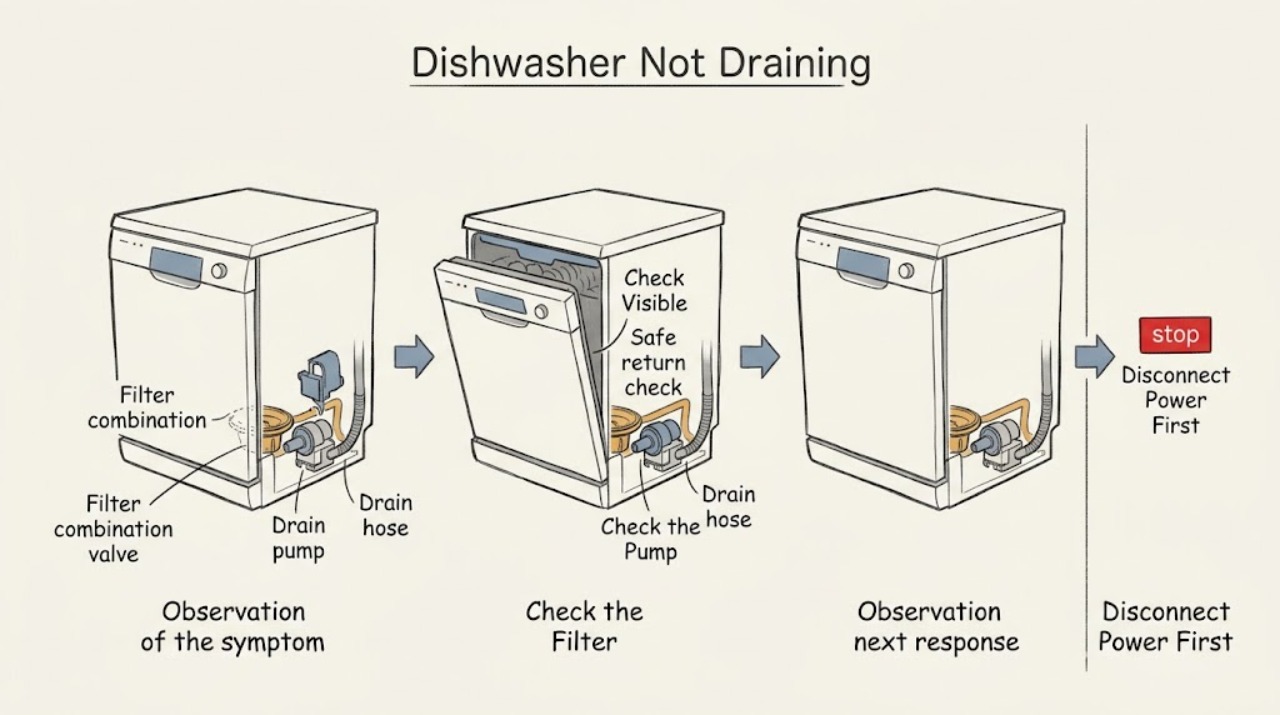
If water remains in a Miele dishwasher, switch it off before reaching into the wash cabinet. Check the filter combination, correctly seated non-return valve or pump cover, accessible drain-pump area, and visible hose for a kink, following the exact model instructions. Do not handle hidden glass or continue running the appliance if the hose is damaged, a leak appears, or the water still will not leave after one safe cleaning.
-
Miele Washing Machine Not Draining: Check the Hose and Pump Path Safely
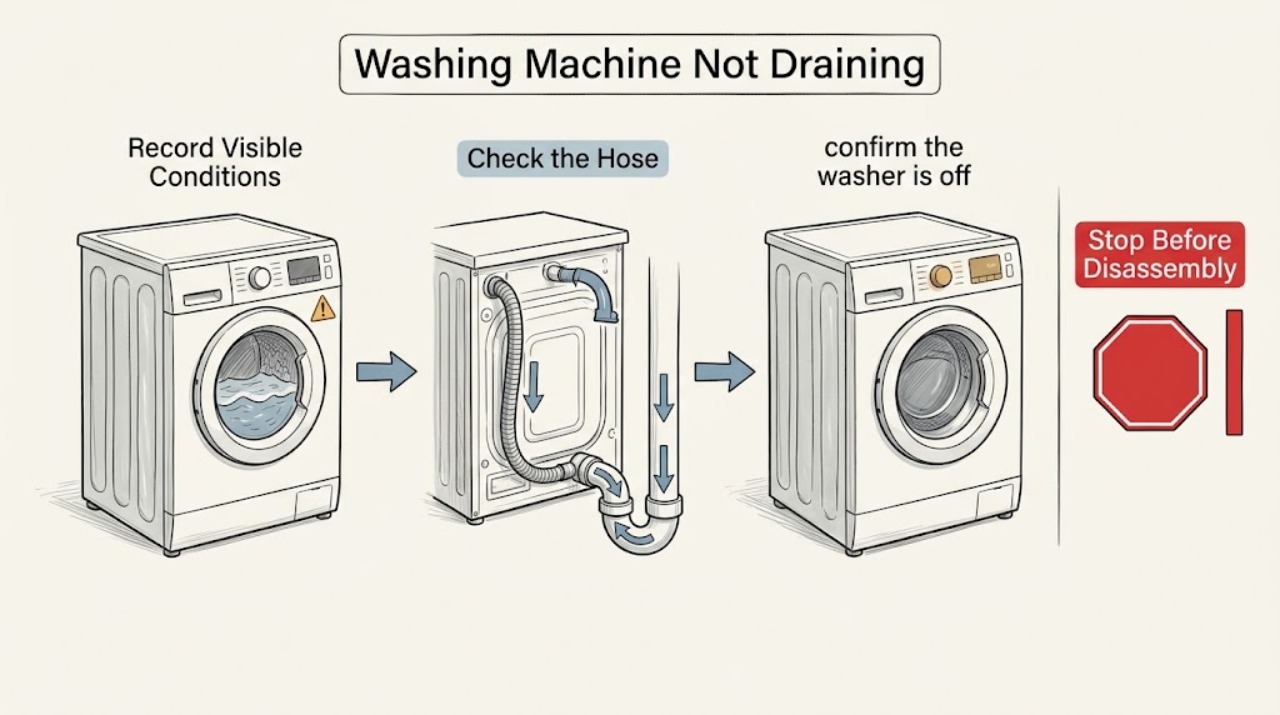
If a Miele washing machine is not draining, first note the program stage and whether the water is hot, then check the visible drain hose for kinks, loops, an excessive rise, or a household drain that is backing up. A Drain fault can also come from a blocked drain filter or pump, but retained water may be hot and the filter can release a large volume, so use the exact model instructions and do not tilt the machine.
-
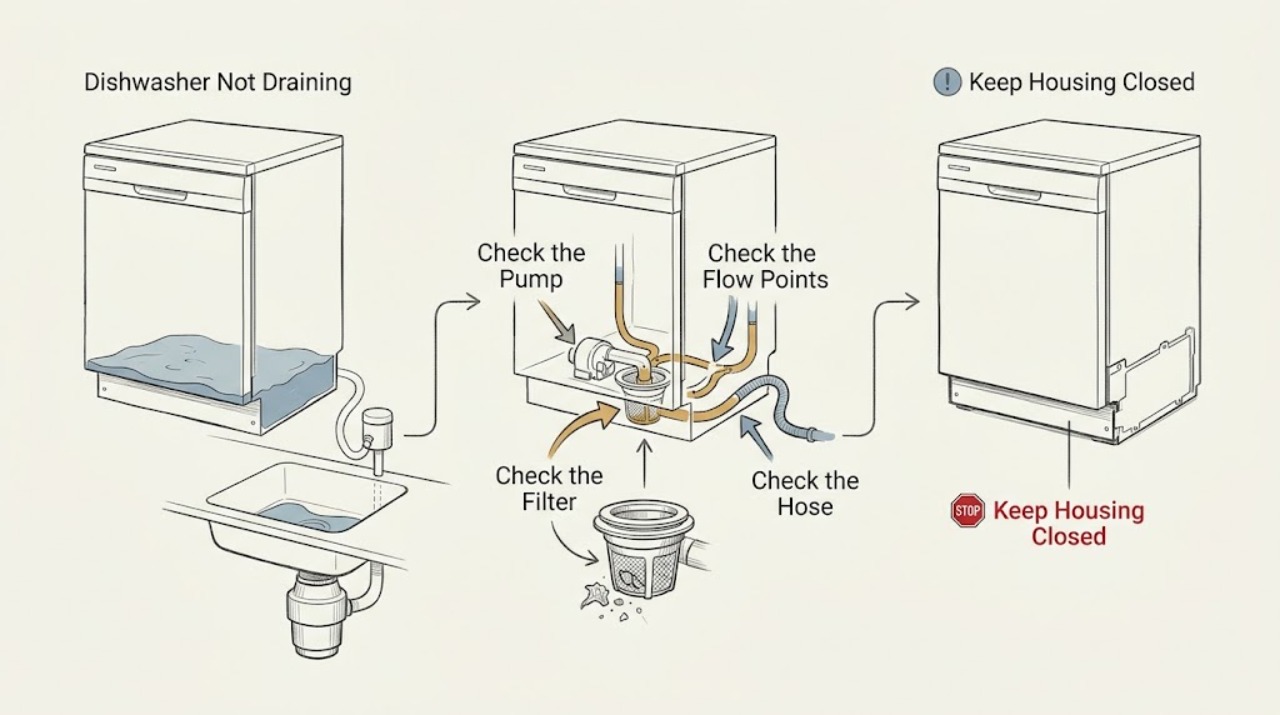
Monogram Dishwasher Not Draining: Check the Filter, Hose, and Sink Connection
Standing water in the tub usually means the dishwasher's drain path needs inspection. Turn the dishwasher off, check the accessible filter/sump, drain hose, sink drain, disposer connection, and air gap for blockage or kinks, and never put your hand into a disposer. A small amount of water in the sump can be normal on some models; recurring excess water needs Monogram service.
-
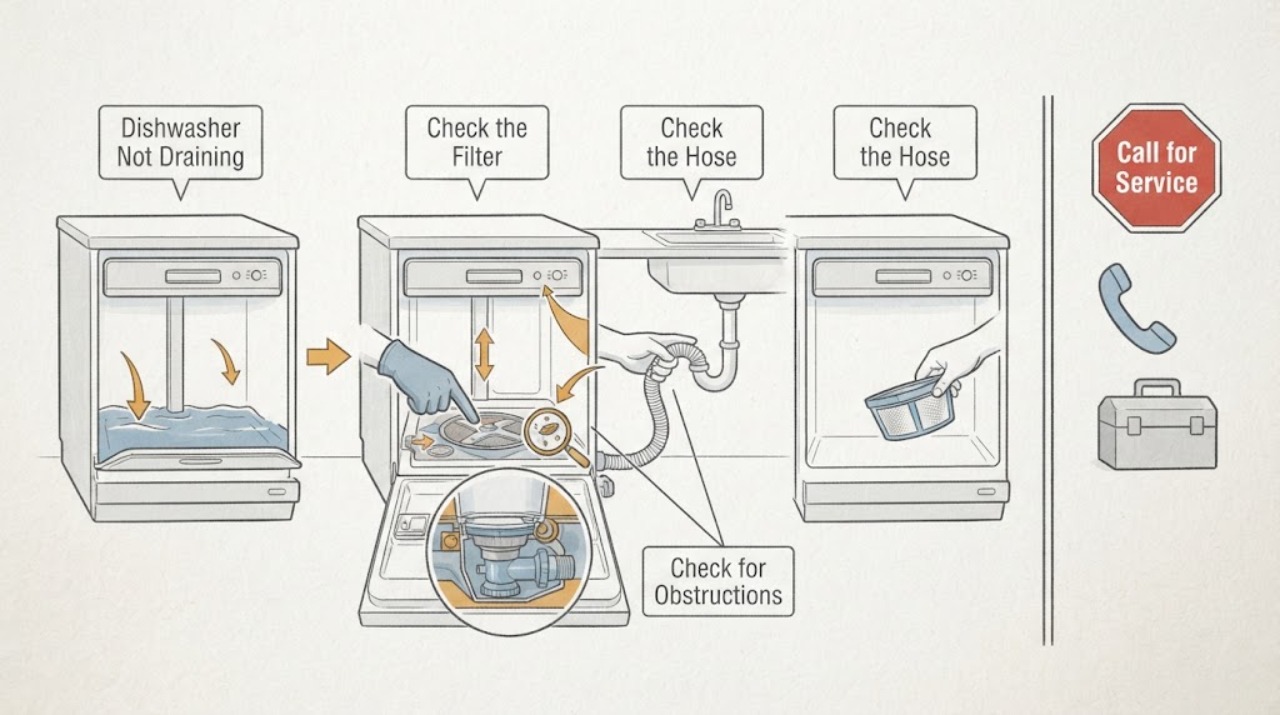
Neff Dishwasher Not Draining: Clean the Filter and Check the Hose
Standing water in a Neff dishwasher is most often approached through the filter and pump area, then the drain hose. Switch the appliance off and disconnect power before filter or pump access; protect your hands from possible glass. Clear only what the model manual permits. If the hose is clear and water still remains, arrange Neff service.
-
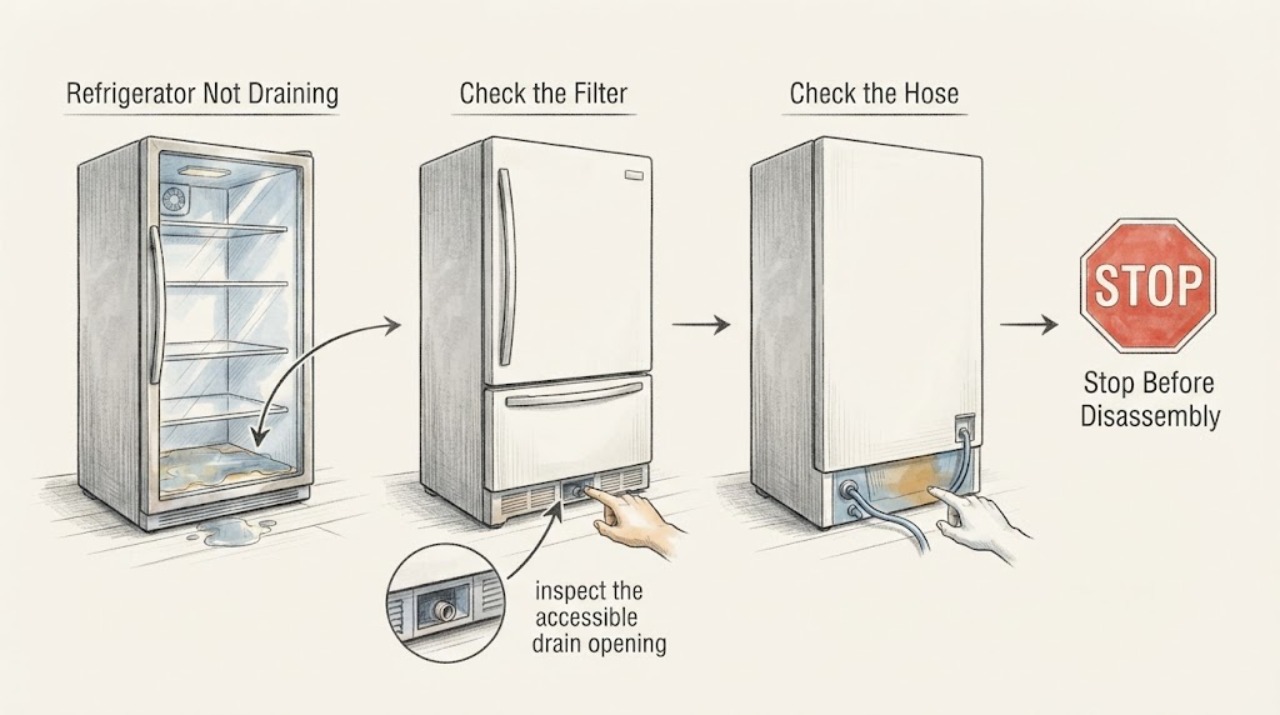
Refrigerator Not Draining
A refrigerator that is not draining usually shows water under drawers or on the floor because defrost water is blocked by ice or debris, or because a drain pan or hose is damaged. Dry the visible spill, check the drain area and pan only as the model manual permits, and do not chip ice with a sharp tool or open sealed panels. Persistent water, a cracked pan, or a frozen drain needs service.
-
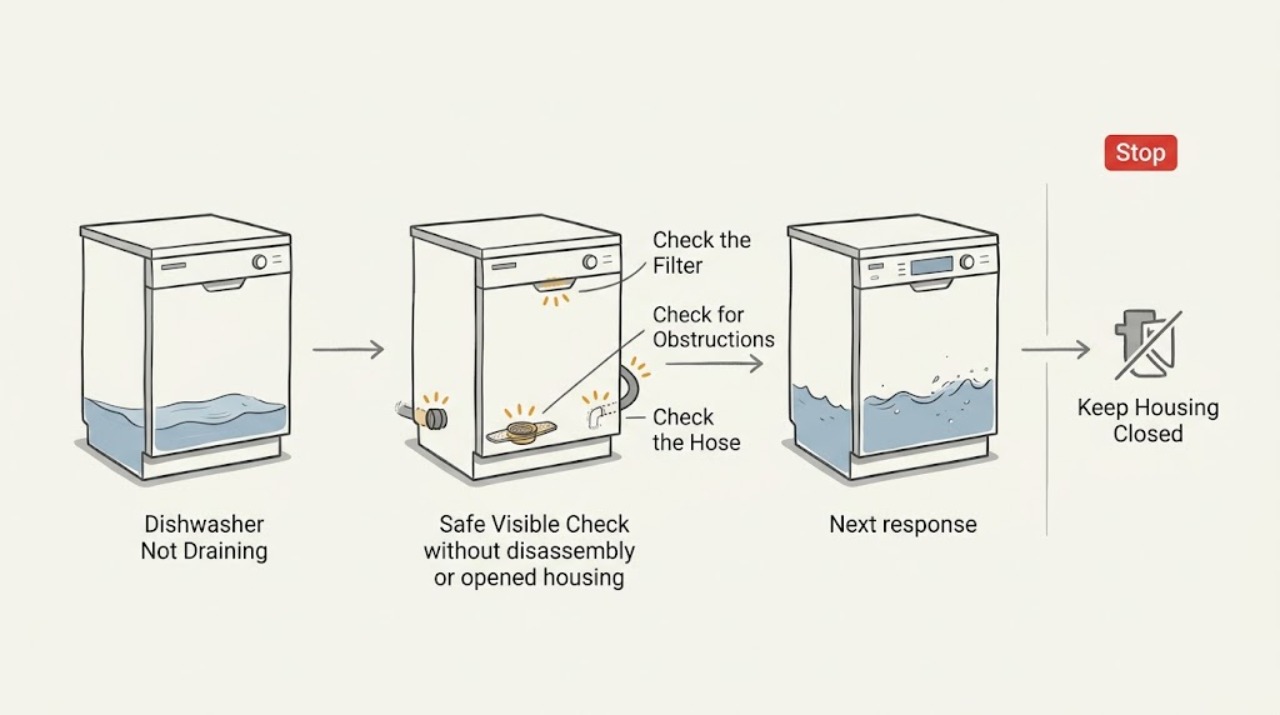
Roper Dishwasher Not Draining
Turn off power before removing standing water, then clean the accessible filter and sump, inspect the drain hose, air gap or disposal connection, and run a short rinse. Water left above the filter suggests a restriction; a hum without flow can point to an obstructed pump. Do not use drain chemicals. Arrange service for electrical faults, leaks, an error code, or a pump that still will not drain.