
On this page
Start here
Quick answer
If water remains in a Miele dishwasher, switch it off before reaching into the wash cabinet. Check the filter combination, correctly seated non-return valve or pump cover, accessible drain-pump area, and visible hose for a kink, following the exact model instructions. Do not handle hidden glass or continue running the appliance if the hose is damaged, a leak appears, or the water still will not leave after one safe cleaning.
Before you begin
Safety first
- Switch off and unplug before accessible pump cleaning; do not reach into powered water, chip glass, or remove electrical panels.
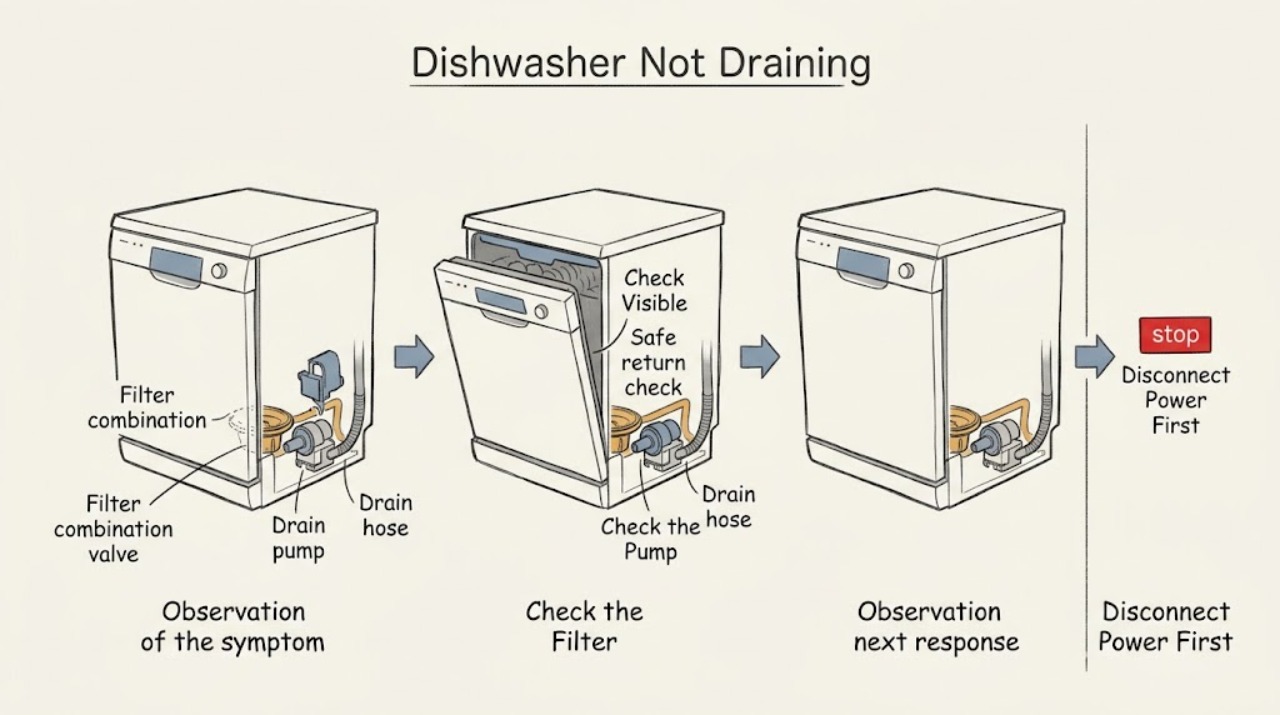
Work through in order
Diagnostic checks
Use only checks that match the exact appliance or system and its official guide.
-
Check 1
Turn the dishwasher off and note how much water remains, whether a Drainage message or alarm appears, and whether the problem happens after every program or only one.
Expected result: Water remains with a Drainage indication, or the cabinet is empty but draining sounds abnormal.
Next step: Use the safe filter and pump checks only with power off and keep the message for service.
Why this matters
Why: Water plus a drainage indication supports the drain path; an empty cabinet with a new sound may need a pump or control diagnosis.
-
Check 2
Remove and rinse the filter combination according to the model instructions, ensuring it lies flat and locks after reinstallation.
Expected result: The filter is dirty or incorrectly seated, or it was already clean and locked.
Next step: Correct the filter position and continue only if the accessible drain area remains safe.
Why this matters
Why: Miele warns that coarse particles and an improperly installed filter can restrict the circulation or drain path.
-
Check 3
With power disconnected, inspect the non-return valve or drain-pump cover for foreign objects and confirm its catch engages; use care because glass splinters may be hidden.
Expected result: Debris or a loose cover is found, the impeller will not move with slight resistance, or the area is clear.
Next step: Remove only accessible debris, reseat the documented part, and do one test. Do not probe or dismantle the pump.
Why this matters
Why: A blocked pump or improperly engaged cover can stop drainage; a clear area after correct seating makes a hose or internal fault more likely.
-
Check 4
Inspect the visible drain hose and sink connection for kinks, loops, or a blocked accessible siphon; do not disconnect a pressurized or leaking connection.
Expected result: A kink or household drain restriction is visible, or the external path appears clear.
Next step: Remove a safe visible kink or have a qualified plumber address the household drain; request Miele service if the path is clear.
Why this matters
Why: Miele identifies kinks, deposits, and an on-site drain blockage as causes of water remaining in the cabinet.
Use your observations
Decision map
Find the observation that best matches what you see, then follow the next safe action.
-
PATH 01Next step
What you see
The filter or pump cover is dirty or not locked and drainage improves after correction
Do this next
Keep the filter locked and monitor the next cycle for recurrence.
-
PATH 02Next step
What you see
The filter and pump area are clear but the hose or household drain is kinked or blocked
Do this next
Correct only a safe visible condition or use a qualified plumber for the drain connection.
-
PATH 03Next step
What you see
Water remains after the checks, a hose is damaged, or a leak or glass hazard is present
Do this next
Leave the dishwasher off and book Miele service with the water level, message, and checks completed.
Helpful context
Understand the symptom
Drainage is a sequence, not a guessed part
A dirty filter, loose cover, blocked pump, incorrectly seated valve, kinked hose, and blocked household drain can look similar. Work from the accessible wash-cabinet checks toward the external drain connection.
When checks do not resolve it
Need a professional?
Use service for persistent no-drain symptoms or any internal pump, valve, seal, or electrical work.
Safety scope: Switch off and unplug before accessible pump cleaning; do not reach into powered water, chip glass, or remove electrical panels.
Have this ready
- Provide the model, water level, display message, filter/cover condition, hose observation, and whether one test changed the result.
Common questions
FAQ
Why is water left in my Miele dishwasher?
Miele lists a dirty filter, incorrectly seated valve or pump cover, a blocked pump, a kinked hose, or a blocked drain connection as possible causes. Check them in that order only with power off where required.
Can I use a tool to clear a Miele dishwasher drain pump?
Do not probe the pump or handle unseen glass. Disconnect power and remove only accessible debris following the model instructions; stop for damage or a persistent fault.
Read the exact guide
Official sources
- Water not pumped away (G 1xxx–G 6xxx)Miele USA Support · Miele G 1xxx–G 6xxx dishwashers; follow the exact model manual
- DrainageMiele USA Support · Miele dishwashers showing a drainage fault
Community feedback
Share a repair observation
Share a plain-text repair observation. Accepted observations are published automatically; this page may take a moment to update.