
On this page
Start here
Quick answer
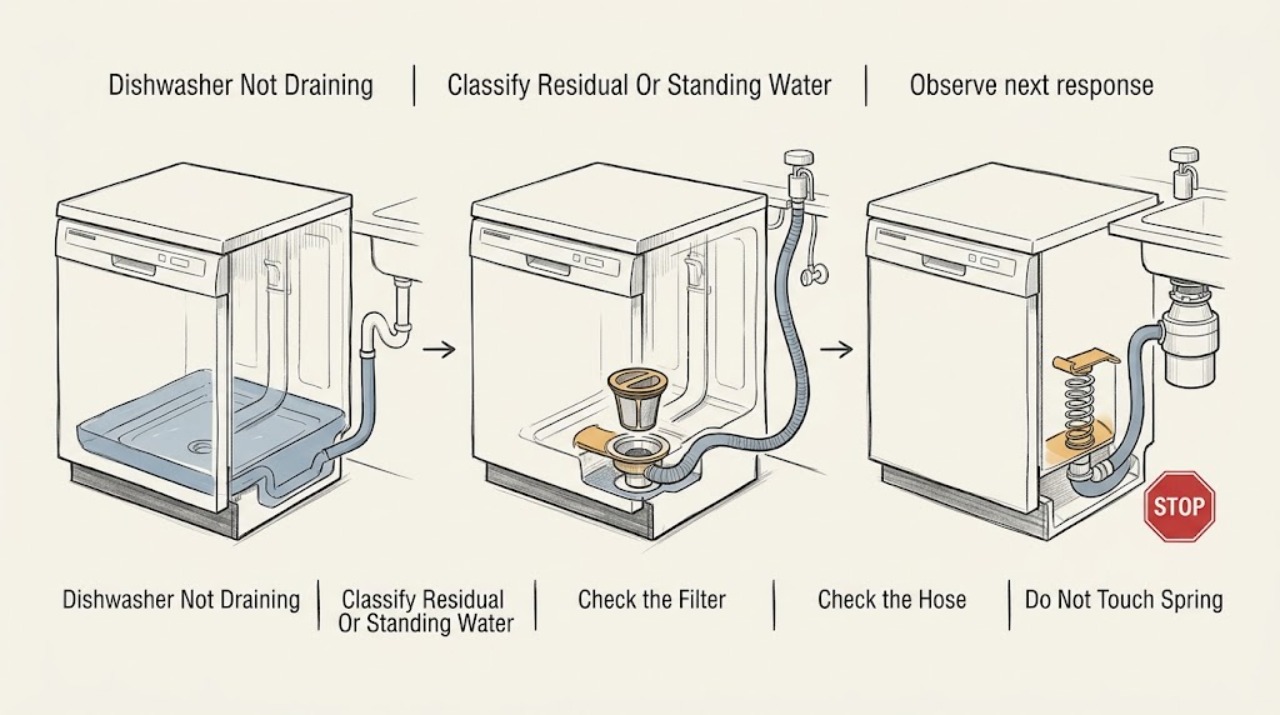
First distinguish a small amount of water around the filter from a tub full of standing water. Haier says a small amount around the filter after a wash can be normal because it lubricates pump seals, while a full bottom calls for checking the drain path. Stop the dishwasher and inspect only the visible filter/sump area for loose food or objects, then check the drain hose for a kink. On built-in models, inspect the sink air gap and garbage-disposal connection for blockage; a portable model may use a different hose connection. If the dishwasher shows a flood-protection alert, water is leaking underneath, the drain pump runs without clearing the water, or the hose and external plumbing are clear but water remains, stop and arrange qualified service. Do not reach into a pump, remove the toe-kick or base pan, disconnect plumbing with water present, bypass a flood sensor, or perform live electrical tests. A new, unused dishwasher may contain factory-test water, but repeated standing water after completed cycles is not explained by that normal condition.
Before you begin
Safety first
- The owner may stop the cycle, read the display, inspect accessible filter and drain areas, check an external hose, and inspect an applicable sink air gap or disposal connection. Qualified personnel must access the pump, base, overflow pan, internal hoses, sensors, controls, wiring, water valves, and electrical components.
Work through in order
Diagnostic checks
Use only checks that match the exact appliance or system and its official guide.
-
Check 1
Record the full Haier model and installation type, then let the cycle finish or stop it using the exact manual's normal control. Without reaching into the pump, observe whether water is only around the filter, covers the tub bottom, returns immediately after a drain attempt, or is accompanied by an alert, odor, or water underneath.
Expected result: There is a small amount around the filter; the bottom is full; the dishwasher is new and unused; the display shows a flood or drain alert; or water is outside the tub.
Next step: If only the normal small amount is present, monitor the next completed cycle. If the bottom is full or any leak/alert is present, stop using the dishwasher and continue only with the safe external checks below.
Stop if: Stop for water near electrical parts, smoke, burning odor, sparks, abnormal heat, a hot or damaged cord or outlet, or a repeated breaker trip.
Why this matters
Why: Haier says small filter-area water can be normal and factory-test water can remain in a new unused unit. A full bottom, returning water, alert, or external leak is a drain or safety symptom that needs a different branch.
-
Check 2
After stopping the dishwasher and safely isolating power as the model manual directs, inspect the visible filter, filter plate, and bottom drain area. Remove only loose food particles or objects that are plainly accessible without tools, and reinstall the filter exactly as the manual shows. Do not disassemble the pump or reach through an opening.
Expected result: Loose food or an object is visible around the drain; the filter is displaced or visibly blocked; the area is clear; or the filter/pump area cannot be reached without removing a cover.
Next step: Clean and reseat only the accessible filter components, then run the model's documented drain or short-cycle test once. If water remains or the filter cannot be safely serviced, arrange qualified dishwasher service.
Stop if: Do not put hands into a pump, use a sharp tool to fish debris out, remove the toe-kick or base pan, or bypass a sensor or float.
Why this matters
Why: Haier advises inspecting around the drain for loose items or large food particles. A clear visible area does not rule out a blocked internal pump or hose; an inaccessible area is a service boundary, not an invitation to remove panels.
-
Check 3
From outside the appliance, trace the visible drain hose as far as it can be seen without pulling the dishwasher or disconnecting a wet connection. Look for a sharp kink, crushing, sagging, or a hose end that has shifted from its intended connection. Do not move a built-in dishwasher unless the installation manual and a dry, safe workspace make that appropriate.
Expected result: The hose is kinked, crushed, visibly disconnected, or routed differently from the installation instructions; or it appears open and undamaged.
Next step: Correct only an obvious, safely accessible routing problem according to the manual, then test once. If the connection is wet, hidden, damaged, or the problem returns, keep the dishwasher out of service and arrange service.
Stop if: Do not pull the appliance by its door, disconnect plumbing under standing water, cut or extend the hose, or open a cabinet to access wiring.
Why this matters
Why: Haier explicitly lists a kinked drain hose as a cause of a full dishwasher bottom. A clear external hose makes the blockage less likely but cannot clear an obstruction inside the hose, sump, or pump.
-
Check 4
For a built-in Haier dishwasher only, inspect the sink air gap if one is installed and the dishwasher connection at the garbage disposal or sink drain. Clear only a plainly accessible air-gap or disposal blockage using the plumbing fixture's instructions; do not open the dishwasher or disconnect the drain hose.
Expected result: The sink air gap or disposal inlet is blocked, the dishwasher hose connection is visibly obstructed, the model is portable or has no air gap/disposal connection, or the household drain path is clear.
Next step: Restore the external plumbing path only where safely accessible, then run one documented drain test. If the path is clear and water remains, stop external troubleshooting and arrange qualified service.
Stop if: Do not dismantle a wet plumbing connection, pour drain chemicals into the dishwasher, use chemical drain opener, or reach into the appliance drain port.
Why this matters
Why: Haier identifies a blocked disposal or sink air gap as a cause of standing dishwasher water. An air gap is not part of the dishwasher, and its presence depends on the installation; a portable unit may use another drain arrangement.
-
Check 5
If the model has Active Flood Protect or displays a water-level/flood alert, photograph the exact message and note whether the drain pump runs, the cycle cancels, LEDs blink, or water is visible under the machine. Do not remove the rear overflow pan or attempt to reset a sensor by tipping the dishwasher.
Expected result: A documented flood alert appears; the pump runs but water remains; the cycle cancels after an alert; moisture is visible under the unit; or there is no alert and only standing water.
Next step: Leave the dishwasher stopped and arrange qualified service for an alert, pump-without-clearance, or any water under the unit. If there is no alert, continue only with the external drain-path checks and exact manual.
Stop if: Do not remove the fastened rear pan, bypass or dry the sensor, open the base, restore power to reproduce an overflow, or continue using the dishwasher with a leak.
Why this matters
Why: Haier says Active Flood Protect can detect high tub water or pan moisture, de-energize the fill valve, activate the drain pump, cancel the cycle, and display an alert. Water under the unit may trip the pan sensor even without a visible tub overflow.
-
Check 6
After the visible drain area, hose, and applicable external plumbing are clear, use the exact Owner's Manual's normal cancel/drain or short-cycle procedure once. Record whether the drain sound is present, whether water leaves the tub, whether the issue returns at the end of the cycle, and any error message. Do not repeat a failed test or run an empty machine with a known leak.
Expected result: The tub empties and stays clear; the pump is silent; the pump runs but water does not move; the problem returns after one cycle; or a fault/flood message appears.
Next step: If the failure persists, keep the dishwasher isolated from use and provide the technician the model, water level, hose/air-gap findings, alert text, and drain-test timing. Do not replace a pump based only on sound or standing water.
Stop if: Stop for water outside the tub, electrical odor, smoke, sparks, abnormal heat, a hot/damaged cord or outlet, or a repeated breaker trip.
Why this matters
Why: Successful draining after a clear path supports a temporary external blockage. A silent pump, pump with no movement, recurring standing water, or fault message points to an internal pump, control, sensor, installation, or plumbing issue that the symptom alone cannot identify.
Use your observations
Decision map
Find the observation that best matches what you see, then follow the next safe action.
-
PATH 01Next step
What you see
Only a small amount of water remains around the filter after a completed cycle, the tub is not full, and there is no alert or external leak.
Do this next
Do not disassemble the drain system; monitor the next completed cycle and use the exact manual for normal water-level information. Escalate if the amount increases or covers the tub bottom.
Why this path and its safety boundary
Why it matters: Haier describes this as potentially normal because the water keeps pump seals lubricated. A new unused unit may also contain factory-test water.
-
PATH 02Next step
What you see
The bottom is full, and a visible hose kink or a built-in sink air-gap/disposal blockage is found, with no water under the appliance.
Do this next
Correct only the safely accessible external obstruction according to the installation instructions, then run one documented drain test. If water remains, arrange service.
Why this path and its safety boundary
Why it matters: The obstruction is outside the pump and matches Haier's listed drain-path causes. Clearing the household connection may restore normal drainage without identifying an internal part.
-
PATH 03Next step
What you see
Loose food or a plainly accessible object is found around the filter or bottom drain, and the filter can be cleaned and reseated without removing a cover.
Do this next
Remove only the accessible debris, reinstall the filter correctly, and test once. Persistent water requires qualified diagnosis.
Why this path and its safety boundary
Why it matters: The debris can restrict the drain inlet, but clearing the visible area does not prove the pump or internal hose is clear.
-
PATH 04Next step
What you see
A flood-protection message, blinking alert, pump-without-clearance, or water under the dishwasher is present.
Do this next
Keep the appliance stopped and arrange qualified service. Do not remove the rear pan or defeat the sensor.
Why this path and its safety boundary
Why it matters: On equipped Haier models, a level or pan sensor is responding to high water or moisture and may cancel the cycle. The alert does not identify whether the cause is a leak, fill issue, drain restriction, sensor, or installation problem.
-
PATH 05Next step
What you see
The visible drain area, hose, and applicable air gap/disposal are clear, but the tub remains full, the pump is silent or ineffective, or the failure returns after one documented drain test.
Do this next
Stop user troubleshooting and arrange qualified Haier dishwasher service with the model, water level, test timing, sounds, messages, and external-path results.
Why this path and its safety boundary
Why it matters: An internal pump, control, sensor, hidden hose, or installation problem is possible, but standing water does not identify a replaceable part.
Helpful context
Understand the symptom
Not every drop at the bottom means a failed drain
Haier distinguishes residual water around the filter from a tub that is full after a cycle. A small amount around the filter can be intentional pump-seal lubrication, and a brand-new unused dishwasher may contain water left from factory testing. The useful symptom is standing water across the bottom after the cycle completes, especially when it returns after a visible drain-path check.
Start at the household drain connection
For a built-in Haier dishwasher, the dishwasher hose typically joins the sink plumbing or garbage-disposal area, and the sink air gap is a separate plumbing device that can block drainage. Haier's generic guidance specifically points to those locations and to a kinked hose. A portable or differently installed model may not have an air gap or disposal connection, so use the exact installation instructions rather than assuming every path looks the same.
An alert may be protection, not proof of a clogged pump
Haier models with Active Flood Protect use water-level and pan sensors. The control can stop filling and run the drain pump, then cancel the cycle and show an alert when the sensor detects high water or moisture. That response can protect the floor while still leaving an underlying leak, fill-valve, installation, or internal problem. Treat a flood alert or water under the machine as a service branch rather than opening the base.
Keep water and electrical parts separated
Use only dry, accessible checks: the display, completed-cycle state, visible filter and sump area, external hose, sink air gap, and disposal connection where present. Stop the cycle and isolate power from a dry, safe position before any model-approved cleaning. Do not reach into the pump, remove panels or the rear overflow pan, disconnect a wet hose, bypass a flood sensor, or make live electrical tests. Stop immediately for leaking water near electrical parts, smoke, burning odor, sparks, a hot or damaged cord or outlet, or a repeated breaker trip.
Safety boundary
Stop conditions
- Stop using the dishwasher for water under the unit, a flood-protection alert, leaking near electrical parts, smoke, burning or electrical odor, sparks, abnormal heat, a hot or damaged cord or outlet, or a repeated breaker trip.
- Do not reach into the drain pump, remove the toe-kick, base, or rear overflow pan, bypass a float or water-level sensor, or perform live electrical tests.
- Do not disconnect a wet plumbing connection, pour chemical drain opener into the dishwasher, cut or modify the drain hose, or repeatedly run a failed drain test.
- Use the exact Haier Owner's Manual for filter access, portable versus built-in routing, cancel/drain controls, error messages, and any model-specific reset.
Only after diagnosis
Potential parts
- drain pump
Consider only after qualified diagnosis confirms the external drain path and accessible drain area are clear and the pump is silent, jammed, or unable to move water.
Drain pumps vary by Haier model and dishwasher architecture; confirm the complete model and fitment before ordering. - drain hose
Consider only if the exact model's hose is kinked beyond correction, split, blocked internally, or improperly fitted after qualified inspection.
Hose length, connectors, routing, and high-loop requirements vary by model and built-in versus portable installation. - water-level or flood-protection sensor
Consider only after qualified diagnosis confirms a sensor or related control fault rather than an actual leak, overfill, blockage, or installation problem.
Active Flood Protect and sensor assemblies are not present or identical on every Haier model; verify the model before ordering.
When checks do not resolve it
Need a professional?
Arrange qualified Haier dishwasher service when the drain hose and applicable sink air gap or disposal path are clear but water remains, when the pump is silent or runs without moving water, when a flood-protection alert or water under the unit appears, or when internal pump, control, sensor, wiring, or plumbing diagnosis is needed. Keep the dishwasher stopped when water is near electrical parts; do not restore power to reproduce a leak.
Safety scope: The owner may stop the cycle, read the display, inspect accessible filter and drain areas, check an external hose, and inspect an applicable sink air gap or disposal connection. Qualified personnel must access the pump, base, overflow pan, internal hoses, sensors, controls, wiring, water valves, and electrical components.
Common questions
FAQ
Is a little water at the bottom of a Haier dishwasher normal?
A small amount around the filter after a wash can be normal, according to Haier, because it keeps pump seals lubricated. A tub full of water after a completed cycle is different and calls for drain-path checks.
What should I check first when my Haier dishwasher will not drain?
Check the visible bottom drain area for loose food or objects, the external drain hose for a kink, and—on a built-in installation—the sink air gap and garbage-disposal connection. Keep the exact model manual nearby because portable routing and filter access can differ.
Can a clogged garbage disposal stop a Haier dishwasher from draining?
Yes, for a built-in dishwasher whose drain hose connects through the sink or disposal area. Haier specifically lists a blocked garbage disposal or sink air gap as a check. A portable dishwasher may use a different connection.
What does a Haier dishwasher flood-protection alert mean?
On models with Active Flood Protect, Haier says a water-level or overflow-pan sensor can activate the drain pump, cancel the cycle, and show a message or blinking alert when high water or moisture is detected. Do not remove the rear pan or bypass the sensor; keep the machine stopped and arrange service.
Should I remove the Haier dishwasher drain pump to clear a clog?
No. The generic Haier guidance supports inspecting the accessible drain area, hose, and applicable sink plumbing, then contacting service if the problem continues. Pump, base, sensor, wiring, and internal-hose access should be handled by qualified personnel.
When should I stop troubleshooting a Haier dishwasher that will not drain?
Stop when the hose and external plumbing are clear but water remains, the pump runs without moving water, a flood alert appears, or there is water under the unit. Stop immediately for water near electrical parts, smoke, burning odor, sparks, abnormal heat, a hot or damaged cord or outlet, or a repeated breaker trip.
Read the exact guide
Official sources
- 2020.09.18 Haier HLV0845FSSS et QDP225SSPSS PM01.pmdHaier · Specific Haier dishwasher models and installation types named in the guide; do not transfer its air-gap or filter steps to another model without manual confirmation.
- Haier - Dishwasher Will Not DrainHaier Appliances · General Haier dishwasher drain guidance; exact installation and model manual control filter and drain procedures.
- Haier Dishwashers - Active Flood ProtectHaier Appliances · Only Haier dishwasher models equipped with Active Flood Protect; exact model determines feature availability and messages.
- Haier - Dishwasher MaintenanceHaier Appliances · General Haier dishwasher maintenance guidance; exact model controls removable filter and component access.
Community feedback
Share a repair observation
Share a plain-text repair observation. Accepted observations are published automatically; this page may take a moment to update.