
On this page
Start here
Quick answer
When a Frigidaire washer-dryer leaves water in the tub, first stop the cycle safely and determine whether the machine is pumping, siphoning, or blocked. Frigidaire's laundry guidance says to inspect the drain hose for kinks, confirm the drain and standpipe are clear and installed as the model requires, avoid sealing the hose airtight into the standpipe, and check whether too much detergent is contributing to poor draining. A low hum or gurgle can be the drain pump or normal draining; silence with retained water, a harsh pump sound, a repeated drain error, or water leaking onto the floor needs service after the visible checks. Do not open a filter or hose with hot water or a powered machine, and do not force a locked door. If the machine will not drain, the drain path is clear, the pump is only humming, the water returns, or the appliance leaks, leave it off and arrange qualified service.
Before you begin
Safety first
- Do not open panels, probe live wiring, force the door, dismantle the pump, bypass a lock, or add drain chemicals. Isolate water and power only from a dry, safe position and keep the appliance off when drainage or leakage is unresolved.
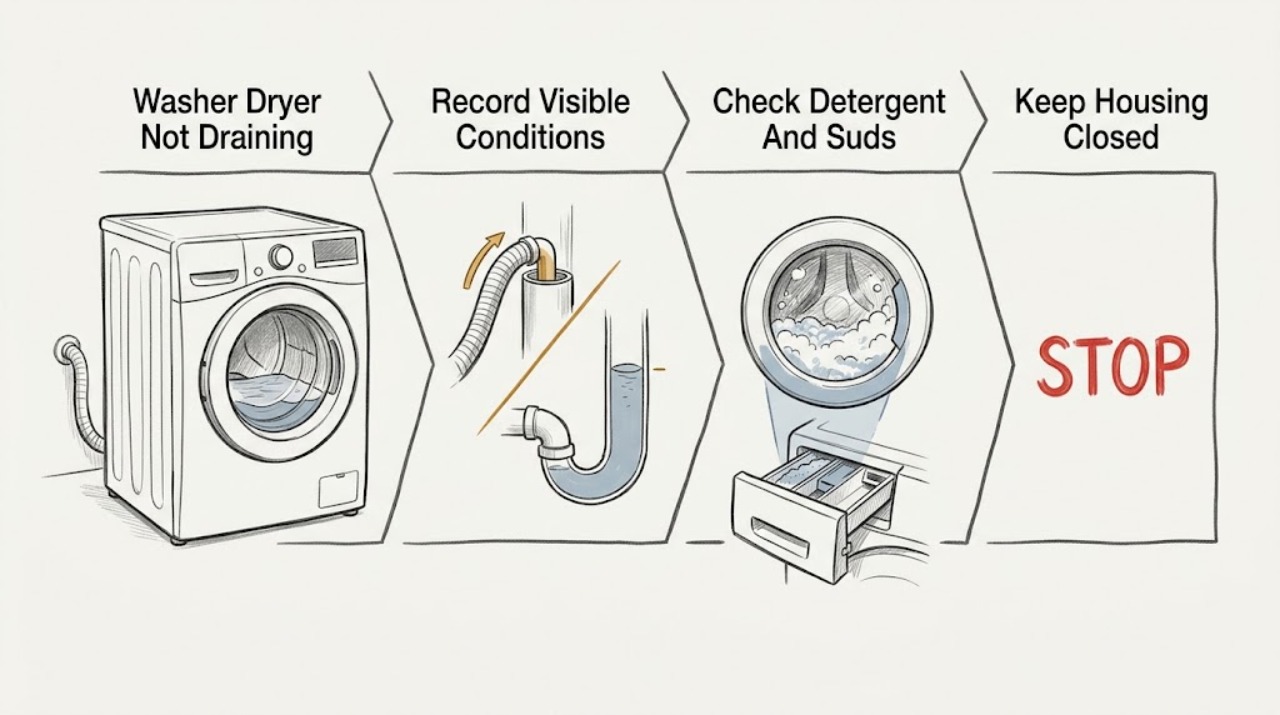
Work through in order
Diagnostic checks
Use only checks that match the exact appliance or system and its official guide.
-
Check 1
Stop or pause the cycle, keep the machine away from standing water and moving parts, and disconnect power only from a dry, safe position when the model instructions permit it; do not force the door or lid.
Expected result: Record whether water is visible in the tub, whether the drain pump is silent, humming, or making a harsh sound, whether water is on the floor, and whether a code or flashing indicator appears.
Next step: Keep the washer off while checking the visible drain path; close any accessible water supply if water is still entering, and arrange service immediately for a leak, harsh electrical or pump sound, or a repeated code.
Stop if: Do not reach into the tub, bypass a door or lid lock, work near wet electrical connections, or continue a cycle that is leaking.
Why this matters
Why: Retained water with no pump sound can indicate that the cycle is not reaching drain or that the pump is not operating. A hum or gurgle means a drain attempt may be occurring, but no outgoing water keeps a blockage or pump fault open. Floor water changes the priority to leak containment.
-
Check 2
From outside the appliance, trace the drain hose from the washer to the standpipe or drain connection; look for a kink, crushing, a hose pushed too tightly into the pipe, an airtight seal, a recent move, or a household drain that is visibly blocked.
Expected result: Classify the route as open and correctly supported, kinked or pinched, tightly sealed into the standpipe, displaced after installation or movement, or blocked at the hose, standpipe, or drain pipe.
Next step: With the machine off, correct only an obvious external kink or loose hose placement according to the model installation instructions; clear only an accessible household obstruction without chemicals, then perform one attended drain test if the appliance is dry and safe.
Stop if: Do not pull on concealed plumbing, open a pressurized connection, seal the standpipe airtight, or keep testing when water backs up or leaks.
Why this matters
Why: Frigidaire says a kink can restrict flow, the standpipe needs an air path rather than a completely tight seal, and hose or pipe blockage can prevent draining. A recently moved appliance can have an installation issue even if the washer itself was previously working.
-
Check 3
Inspect the tub and dispenser for unusually thick suds or detergent residue, and note the detergent type and amount used; do not add more detergent, drain cleaner, or an improvised chemical product.
Expected result: Record clear retained water, heavy foam, residue at the dispenser, or no visible detergent-related symptom.
Next step: Use only the detergent and dose specified for the exact model and load; follow the manual's rinse or drain procedure once the path is safe, and arrange service if suds recur, water remains, or the dispenser leaks.
Stop if: Do not mix cleaners, pour chemicals into standing water, or continue full cycles while foam or water is escaping from the door, drawer, or cabinet.
Why this matters
Why: Frigidaire notes that too much detergent can prevent proper draining. Thick foam can make the washer appear overfilled and can leave water or suds at the end of a cycle, while clear water with no residue keeps a drain-path or appliance fault more likely.
-
Check 4
Only if the exact washer-dryer manual identifies a user-accessible pump filter or emergency drain, secure power and water first, place a shallow container and towels, account for hot residual water, and inspect that access point without forcing the cap or removing panels.
Expected result: Note whether the model has no user-accessible filter, whether the filter or drain path contains lint, coins, clothing fragments, or other debris, whether water drains into the container, and whether the restored access point remains dry.
Next step: Reinstall the filter or cap exactly as the model instructions specify, check for leakage, and perform one attended drain test only if permitted; stop and arrange service if drainage does not return.
Stop if: Do not open a filter with hot water under pressure, use tools to force it, disassemble the pump, or probe wiring.
Why this matters
Why: An accessible obstruction can restrict the pump path and explain retained water. A clean filter, no safe access, a cap that will not move, or a pump that remains silent or harsh after clearing does not identify a user-repairable fault.
-
Check 5
After an obvious external hose or detergent issue has been corrected and the area is dry, run only the model-approved drain or rinse-and-drain function while staying with the washer; do not run an unattended full load.
Expected result: Record whether water exits continuously and the tub empties, exits slowly, backs up into the standpipe, the pump hums without flow, or the machine stops with a code or water remaining.
Next step: Stop testing and arrange qualified service for no flow, recurring retained water, harsh pump noise, a code, or any leak; keep the appliance off until assessed.
Stop if: Do not repeat the test if water reaches the floor, the pump overheats or smells burnt, the door remains locked unexpectedly, or a protective device trips.
Why this matters
Why: A complete drain after an external correction supports a hose, standpipe, or detergent cause. Slow or absent flow with a clear visible route keeps an appliance-side pump, hidden obstruction, or control fault open; backup points to the household drain or installation.
-
Check 6
If the washer-dryer still does not drain, stop using it and document the model, programme, water level, sound, code, hose and standpipe arrangement, detergent amount, filter result if accessible, and exact location of any leak.
Expected result: Provide the timeline and the results of each visible check to qualified appliance service without opening the cabinet or replacing a pump, valve, sensor, or control by guesswork.
Next step: Leave the washer-dryer off and arrange qualified service; follow the exact model manual for safe removal of remaining water only if it gives a user procedure.
Stop if: Do not dismantle the appliance, bypass a lock, test live wiring, or use a wet vacuum or chemical drain product as a substitute for diagnosis.
Why this matters
Why: A clear sequence distinguishes a drain-path restriction from an appliance-side fault and prevents repeated cycles from adding water to a stalled machine. The remaining internal diagnosis requires model-specific testing.
Use your observations
Decision map
Find the observation that best matches what you see, then follow the next safe action.
-
PATH 01Next step
What you see
The drain hose is kinked, crushed, pushed too tightly into the standpipe, airtight-sealed, displaced after moving, or the visible drain path is blocked.
Do this next
Correct only the obvious external installation issue according to the exact manual, restore an air path, clear an accessible household obstruction without chemicals, and run one attended drain test; service the washer if the symptom remains.
-
PATH 02Next step
What you see
Water exits slowly or backs up at the standpipe or household drain while the washer hose is visibly open and correctly placed.
Do this next
Stop the washer and arrange qualified plumbing or appliance service for the drain installation; do not keep adding water to a backing-up drain.
-
PATH 03Next step
What you see
The tub or dispenser contains heavy suds or detergent residue and there is no clear hose or drain backup.
Do this next
Stop adding detergent, follow the exact model's approved rinse or drain response, correct dosing for future loads, and arrange service for recurring foam, leaks, or retained water.
-
PATH 04Next step
What you see
The exact model provides a safe user-accessible drain filter or emergency drain and visible debris is present.
Do this next
With power and water safely secured, remove residual water and debris only as the manual directs, restore the filter without leaks, and test once under supervision.
-
PATH 05Next step
What you see
The pump hums or gurgles but no water exits, the visible route is clear, or the machine stops with water still inside.
Do this next
Stop using the washer-dryer and arrange qualified appliance service for a possible hidden obstruction, pump, level-sensing, wiring, or control fault; do not open the cabinet.
-
PATH 06Next step
What you see
Water reaches the floor, a hose or cabinet is damaged, the pump smells burnt or makes a harsh sound, a lock cannot be safely handled, or a protective device trips.
Do this next
Stop the cycle, isolate water and power only from a dry safe position, keep the appliance off, and arrange qualified service; use emergency help for an immediate flooding or electrical hazard.
Helpful context
Understand the symptom
Start with the drain route, not the pump
Water left in a Frigidaire washer-dryer can be caused by a kink or blockage in the hose, a blocked household drain, an installation that restricts the standpipe's air path, excess detergent, or an appliance-side pump or control fault. Frigidaire's published drain guidance is for laundry washers and laundry centers, so the exact model manual controls whether your washer-dryer has a user-accessible filter, a separate emergency drain, or another arrangement. Keep the machine stopped and protect the floor while you classify the symptom.
Use the sound as a clue, not a part diagnosis
A gurgle or bubbling sound during draining and a low hum while the drain pump runs can be normal operating sounds, according to Frigidaire's washer noise guide. The useful distinction is what the water does: if it exits and the tub empties, the sound is likely part of a working drain phase; if the pump hums with no flow, the water returns, or the machine stops with water inside, inspect the visible hose and household drain once, then escalate if the path is clear. A loud grinding, burning smell, repeated clicking, or a leak is a stop-use condition.
Do not confuse a drain fault with a door or detergent problem
A washer-dryer may retain water because a door or lid remains locked while water is present, because a load produced excessive suds, or because the washer stopped before the drain phase. Do not force the door or add chemicals to the tub. Note the programme stage, any displayed code, detergent type and amount, and whether the drain pump runs. If the accessible checks do not restore drainage, the remaining possibilities include the pump, a concealed obstruction, level sensing, wiring, or control logic and need qualified service.
Safety boundary
Stop conditions
- Stop use for water on the floor, a damaged hose or cabinet, a harsh or burning pump sound, a tripped protective device, or wet electrical connections.
- Do not force a locked door or lid, reach into moving water, or open a filter or hose with hot water or pressure behind it.
- Do not open panels, probe live wiring, disassemble the pump, bypass a lock, or replace a part from the symptom alone.
- Do not pour drain cleaner or mixed chemicals into the washer or household drain to solve retained water.
- Arrange qualified service when the visible hose, standpipe, detergent, and model-approved filter checks do not restore a complete drain or when the problem recurs.
When checks do not resolve it
Need a professional?
Arrange qualified appliance service when the Frigidaire washer-dryer has no drain flow with a clear visible route, the pump hums without moving water, water returns or leaks, a drain code recurs, the accessible filter cannot be safely opened, or the machine needs internal pump, sensor, wiring, control, or lock work. Keep the appliance off and avoid forcing the door.
Safety scope: Do not open panels, probe live wiring, force the door, dismantle the pump, bypass a lock, or add drain chemicals. Isolate water and power only from a dry, safe position and keep the appliance off when drainage or leakage is unresolved.
Common questions
FAQ
What should I do first when my Frigidaire washer-dryer will not drain?
Stop the cycle safely, do not force the door, and record whether water remains, the pump is silent or humming, a code appears, or water is on the floor. Then inspect only the visible hose and standpipe route with the appliance off.
Is a humming drain pump normal?
Frigidaire describes a low hum as the drain pump in use and gurgling or bubbling as draining. The sound is useful only with the water result: if no water exits or the pump becomes harsh, stop and arrange service.
Can a kinked or sealed drain hose stop draining?
Yes. Frigidaire says a kink can restrict flow, the hose should not be fitted too tightly into the standpipe, and a completely airtight seal can remove the air path needed for draining. Follow the exact installation instructions before changing hose placement.
Can too much detergent cause water to remain?
Frigidaire notes that excess detergent can prevent proper draining. Stop adding detergent, note the dose and foam, and use only the model-approved product and amount; recurring suds, leaks, or retained water need service.
Should I open the drain filter myself?
Only if the exact model manual identifies a safe user-accessible filter or emergency drain. Secure power and water, prepare for residual or hot water, and do not force the cap or remove panels; service is needed when access or drainage is unsafe.
When does a Frigidaire washer-dryer need a technician?
Arrange service for no flow with a clear hose and drain, a pump that hums without moving water, recurring codes, water on the floor, harsh or burning sounds, a locked door that cannot be safely handled, or any need to open the cabinet or test internal components.
Read the exact guide
Official sources
- Laundry top loading washer is not draining.Frigidaire · Frigidaire support guidance for top-loading laundry washers; use the exact washer-dryer model manual for configuration-specific access and dimensions.
- Laundry Water Supply GuideFrigidaire · Frigidaire support guidance for front- and top-loading laundry washers; use the exact washer-dryer installation instructions for the installed configuration.
- Laundry Washers Noises GuideFrigidaire · Frigidaire support guide applying to all laundry washers; sound behavior varies by model and a noise does not prove a specific part failure.
- Troubleshooting Your Laundry Center Washer Not DrainingFrigidaire · Frigidaire support page for laundry centers; it points to model-specific documentation and related troubleshooting, so it does not establish a universal filter or pump-access procedure.
Community feedback
Share a repair observation
Share a plain-text repair observation. Accepted observations are published automatically; this page may take a moment to update.