
Repair problem
Not Draining Troubleshooting Guides – Page 3
Published FixGraph guidance for diagnosing and responding to not draining.
Matching published guides
Choose a guide that matches the service, equipment, and conditions you are seeing.
-
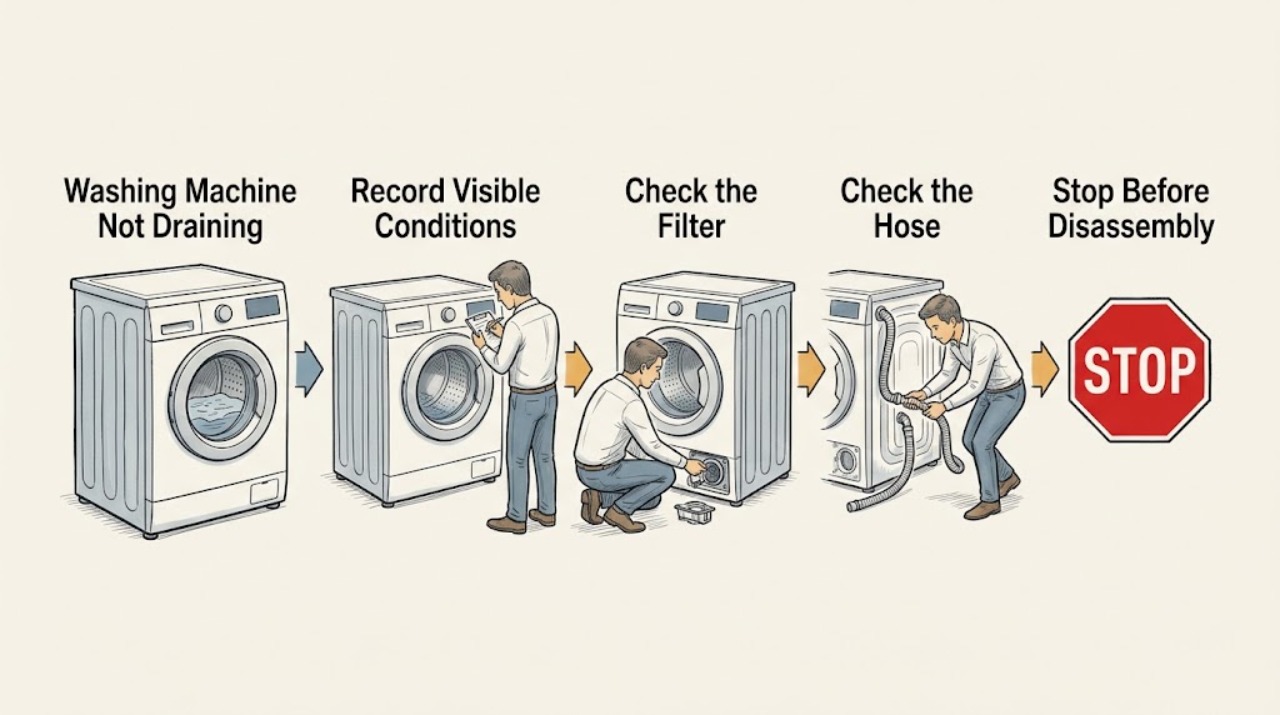
Roper Washing Machine Not Draining: Find the Blockage Safely
If a Roper washing machine is not draining, first note whether water remains in the basket, where the cycle stopped, and whether the machine hums, clicks, or is silent. Identify the exact model and whether it is a top-load or front-load design before opening any filter or drain access.
-
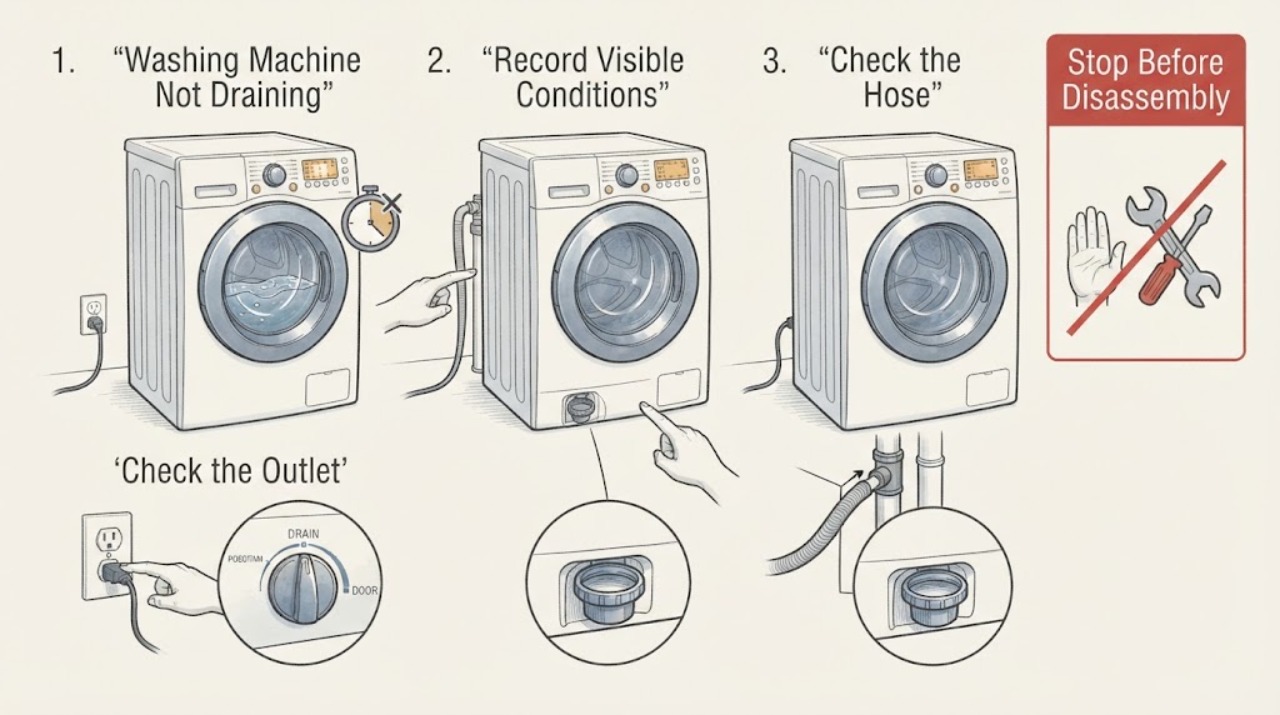
Russell Hobbs Washing Machine Not Draining: Check the Stage, Hose, Filter, and Door Lock
Start by recording the complete Russell Hobbs model and the exact stage at which water remains: after washing, during rinse, before spin, or after a drain attempt. Russell Hobbs directs owners to use the model-number manual finder because controls and user-serviceable parts vary.
-
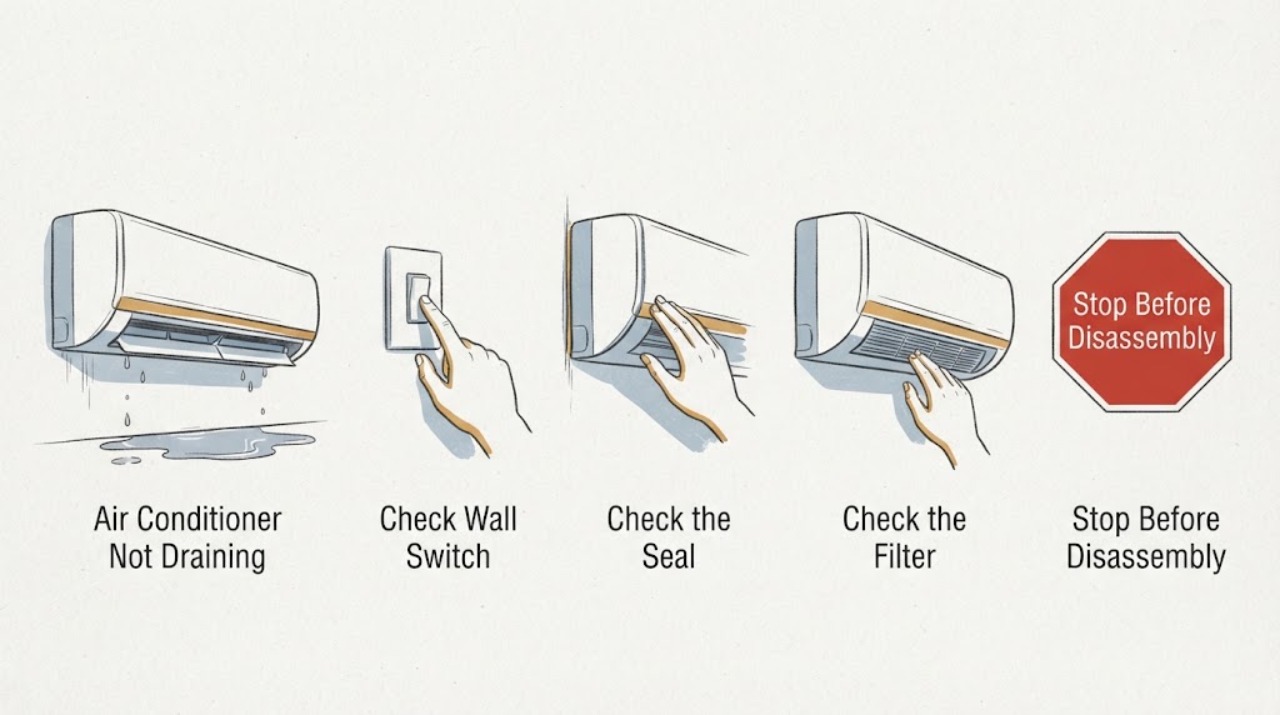
Samsung Air Conditioner Not Draining: Check the Condensate Route
When a Samsung air conditioner is not draining, treat the symptom as condensate that is not leaving the indoor unit, not as a generic power failure. Turn the unit off, keep water away from electricity, and check the visible drain hose for an upward section, kink, submerged end, loose connection, or blockage. Clean the accessible filter only as the model guide allows. If the path is intact but water still backs up, stop and arrange professional inspection.
-
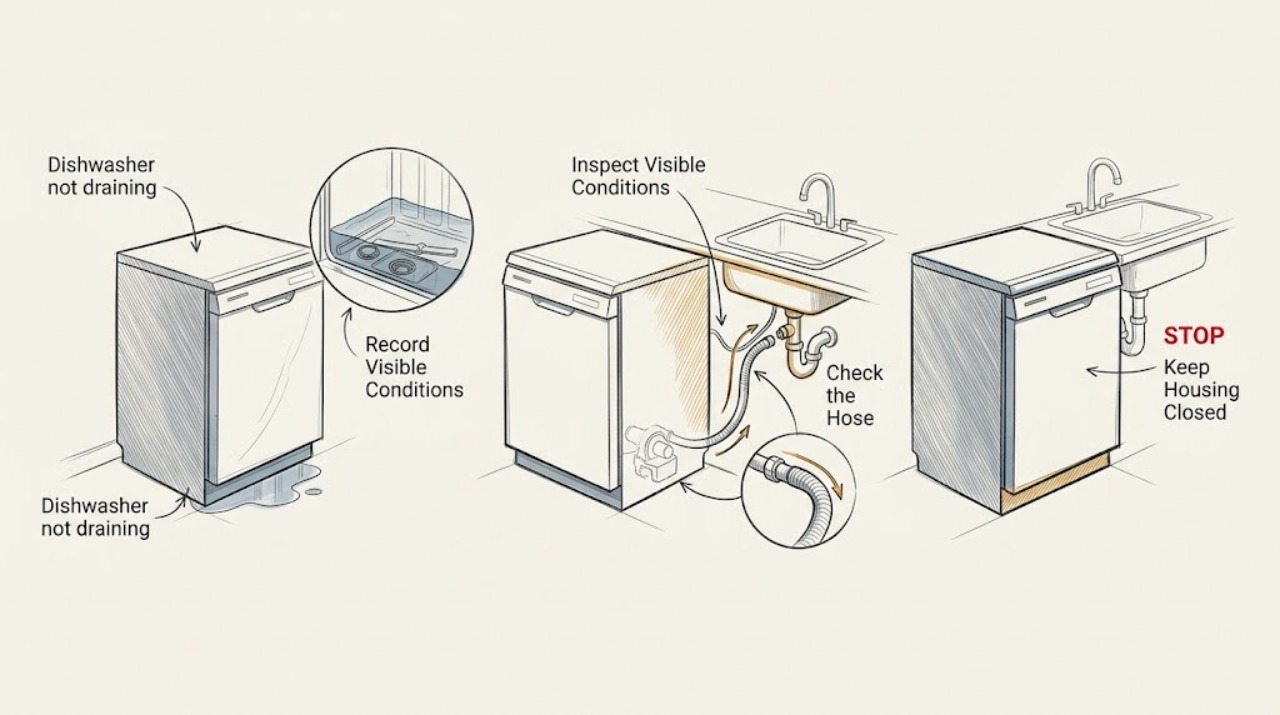
Samsung dishwasher not draining: What to Check and What to Do Next
A Samsung dishwasher that will not drain most often has a blocked sink or garbage-disposal connection, a kinked or poorly routed drain hose, food debris in the filter or drain area, or a pump problem. First note how much water remains, whether the sink drains, whether the hose was recently moved or installed, and whether 5C, 5E, OC, OE, or another code appears.
-
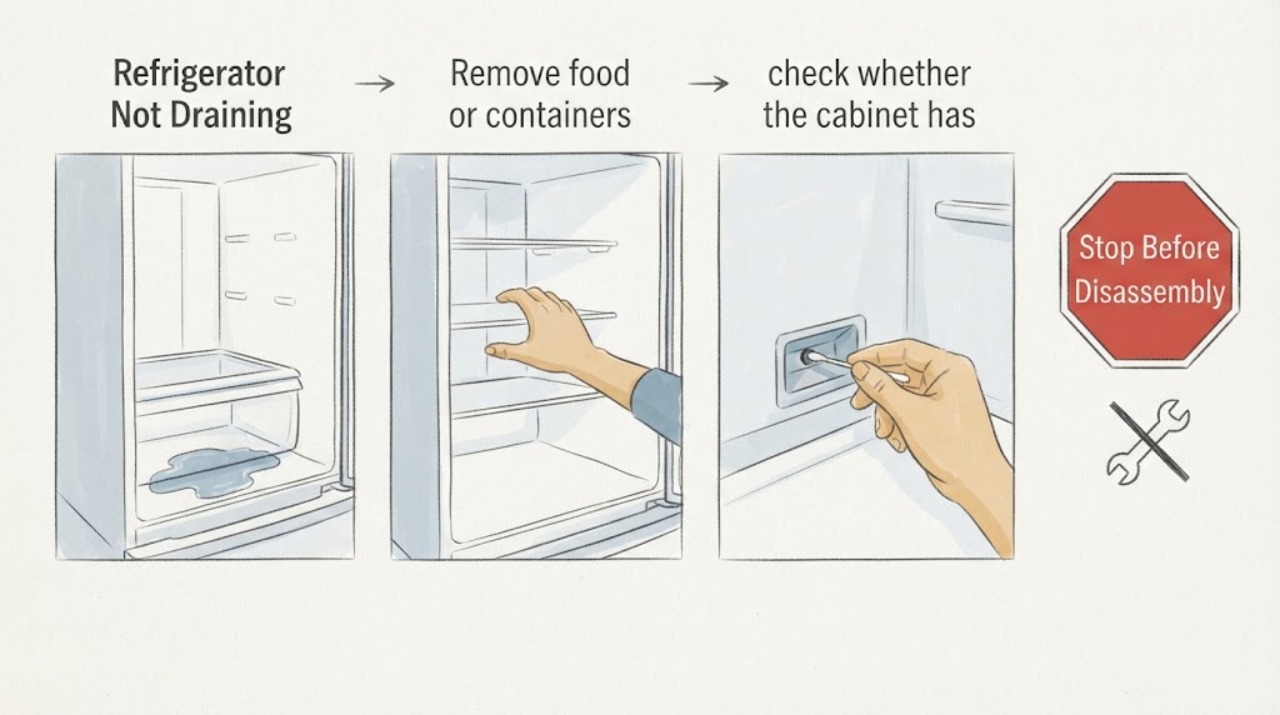
Samsung Refrigerator Not Draining: Trace the Water and Check the Drain Tray
A Samsung refrigerator that is not draining usually shows water under the drawers, inside the cabinet, or on the floor. Dry the water and identify its first location, check that the refrigerator is tilted slightly back as Samsung recommends for draining, and inspect only an accessible drain tray for standing water or damage.
-
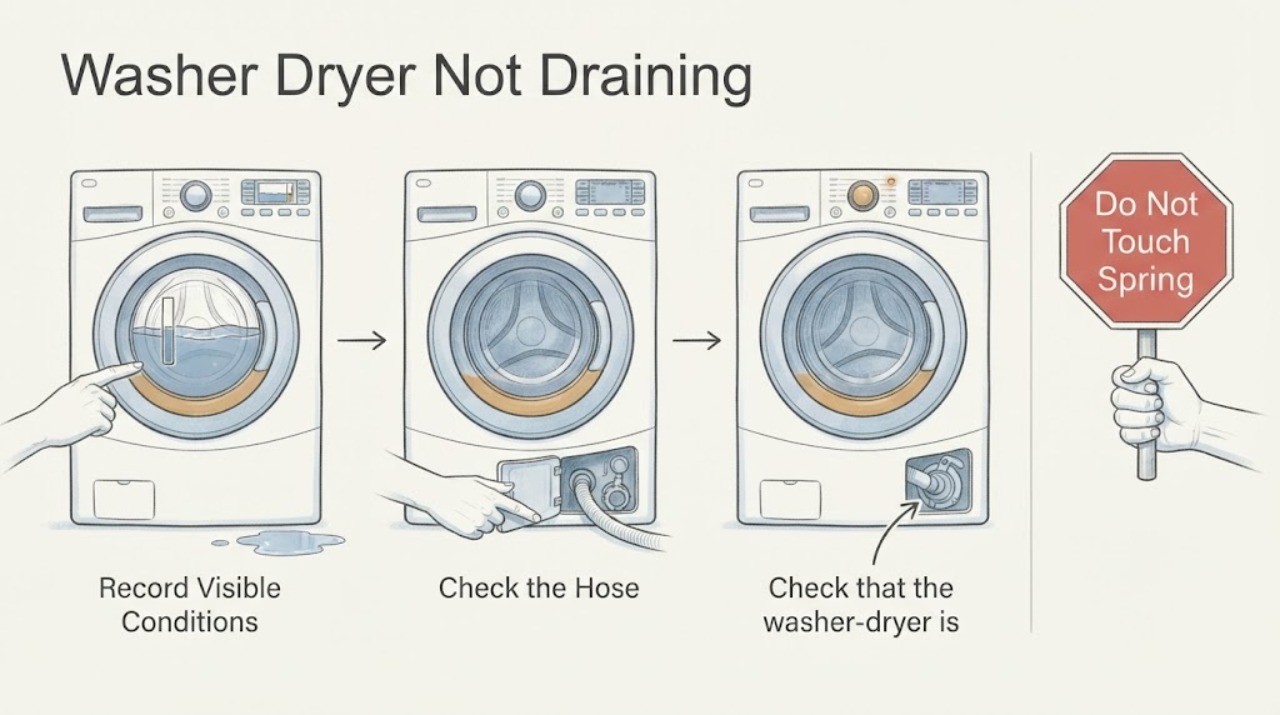
Samsung Washer Dryer Not Draining
If a Samsung washer-dryer leaves water in the drum or shows a no-drain or overflow error, first turn it off and let water from a recent hot cycle cool. Check that the appliance is level and that the drain hose is not kinked, damaged, too deep, too low, or sealed airtight in the standpipe.
-
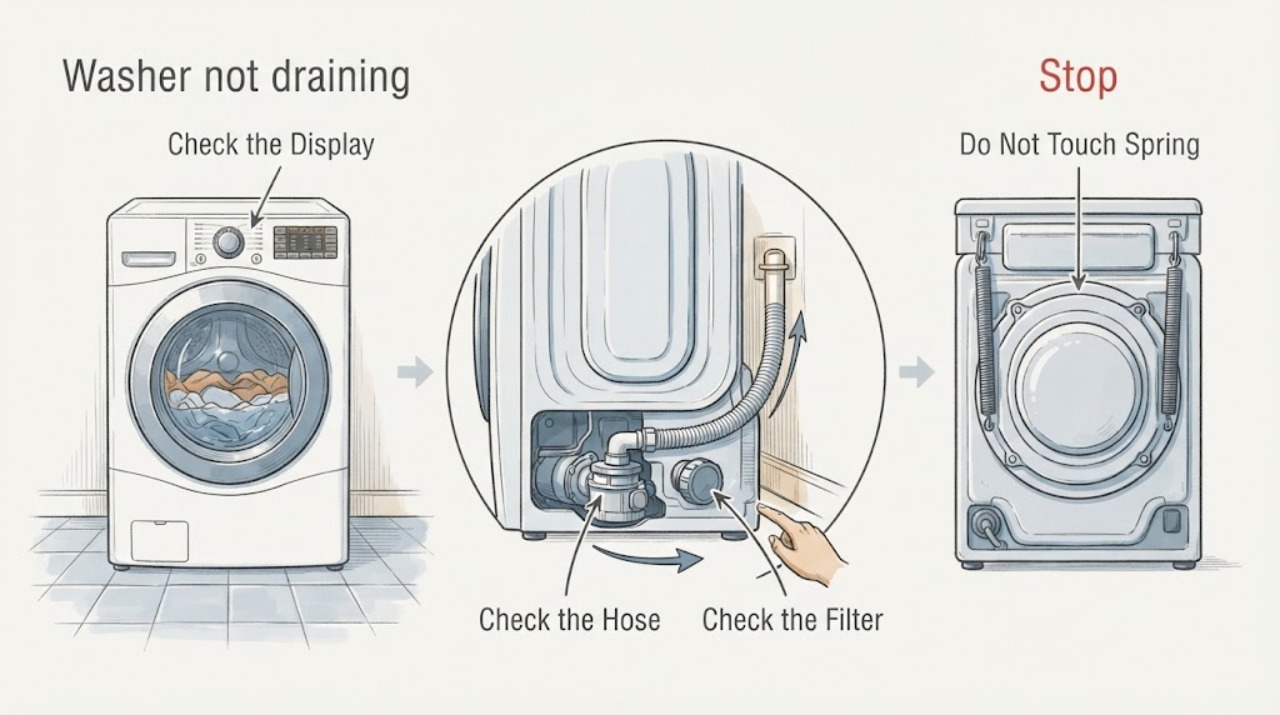
Samsung washer not draining: What to Check and What to Do Next
If a Samsung washer leaves water in the tub, first stop the cycle and identify the exact model, front-load or top-load type, displayed code, and whether the water is hot. Let water from a recent hot, Pure Cycle, or Sanitize cycle cool before opening any drain access.
-
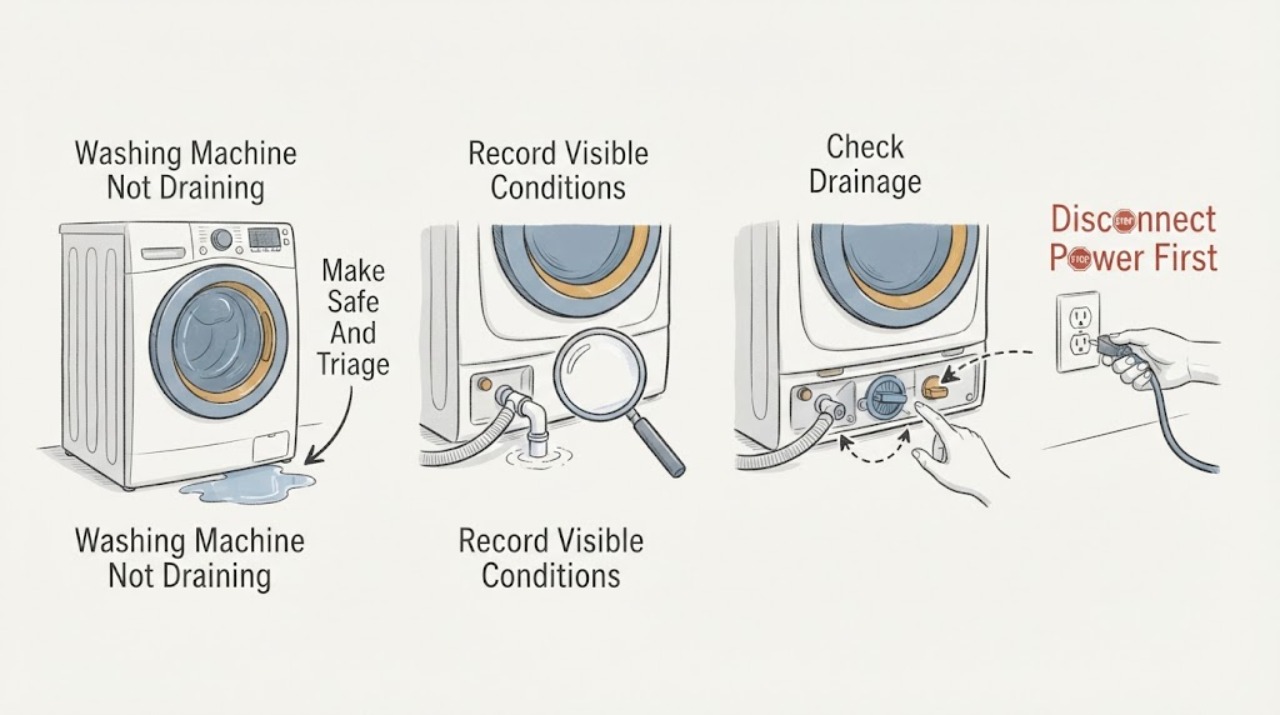
Samsung Washing Machine Not Draining: Find the Blocked Path Safely
A Samsung washer that leaves water in the tub may be paused in a rinse-hold or soak stage, blocked by a kinked or badly positioned drain hose, slowed by excess suds, or reporting a model-specific no-drain code such as 5C, 5E, or nd. First note the washer type, cycle stage, exact code, and whether the door or lid is locked; do not keep restarting a machine that is leaking, hot, or electrically unsafe.
-
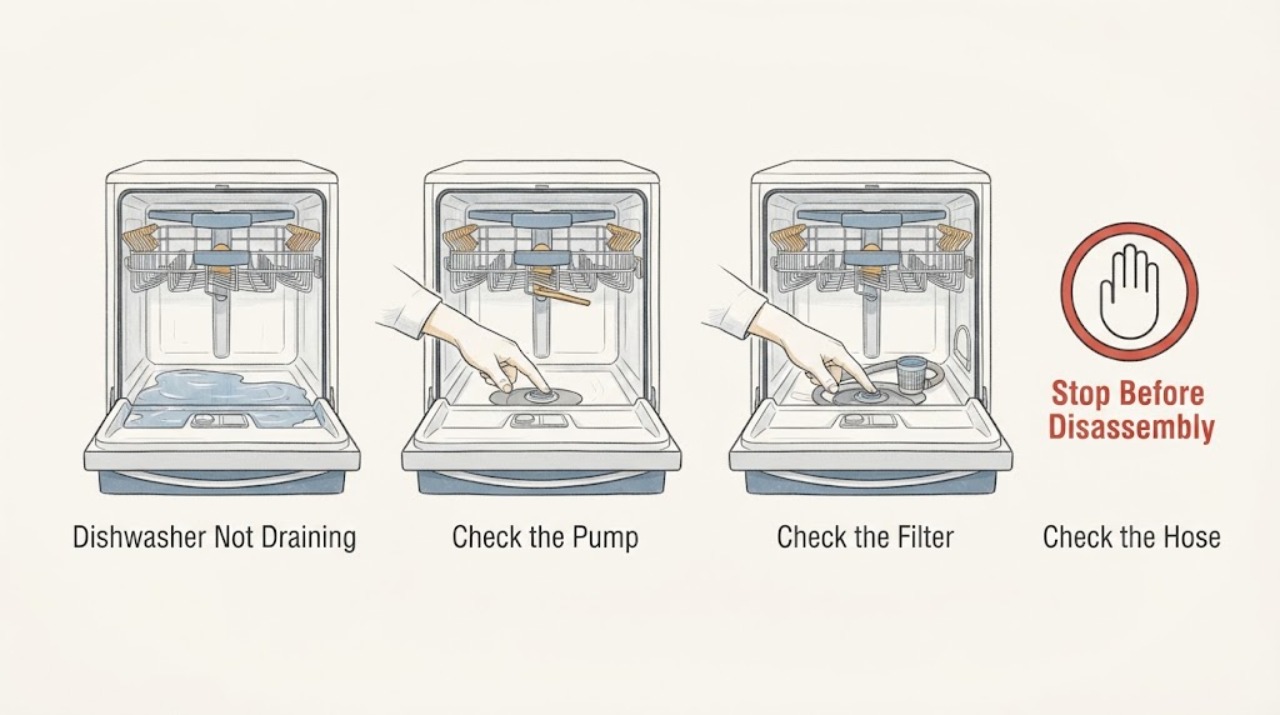
Sharp Dishwasher Not Draining
A Sharp dishwasher that is not draining should be stopped after the cycle and checked for standing water, an accessible filter obstruction, and a visibly kinked drain path. Do not open the pump housing; persistent no-drain needs service.
-
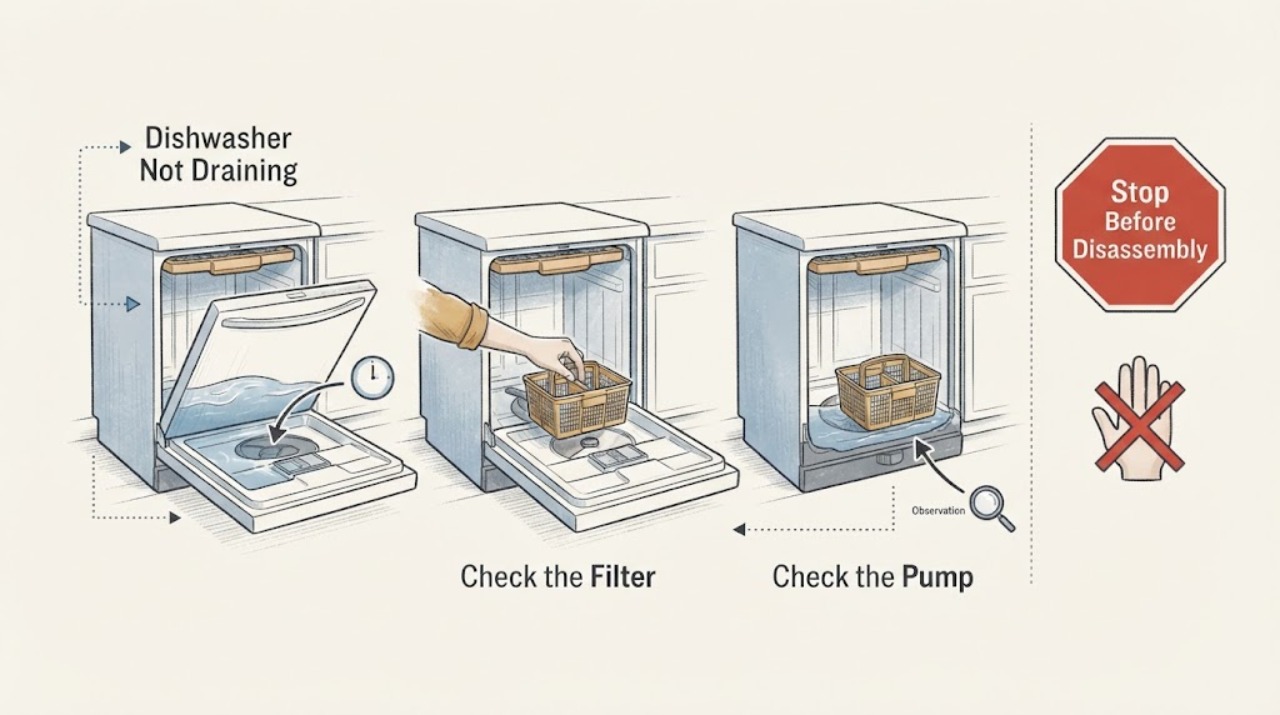
Siemens Dishwasher Not Draining
For a Siemens dishwasher that is not draining, begin with the symptom’s observable path: filter and pump for draining or odour, water supply for filling, detergent and spray arms for dispensing or wash results, and the model manual for display messages. Switch off and isolate water or power when the official guidance calls for it. If the issue persists, leaks, or the dishwasher will not heat, arrange Siemens service.
-
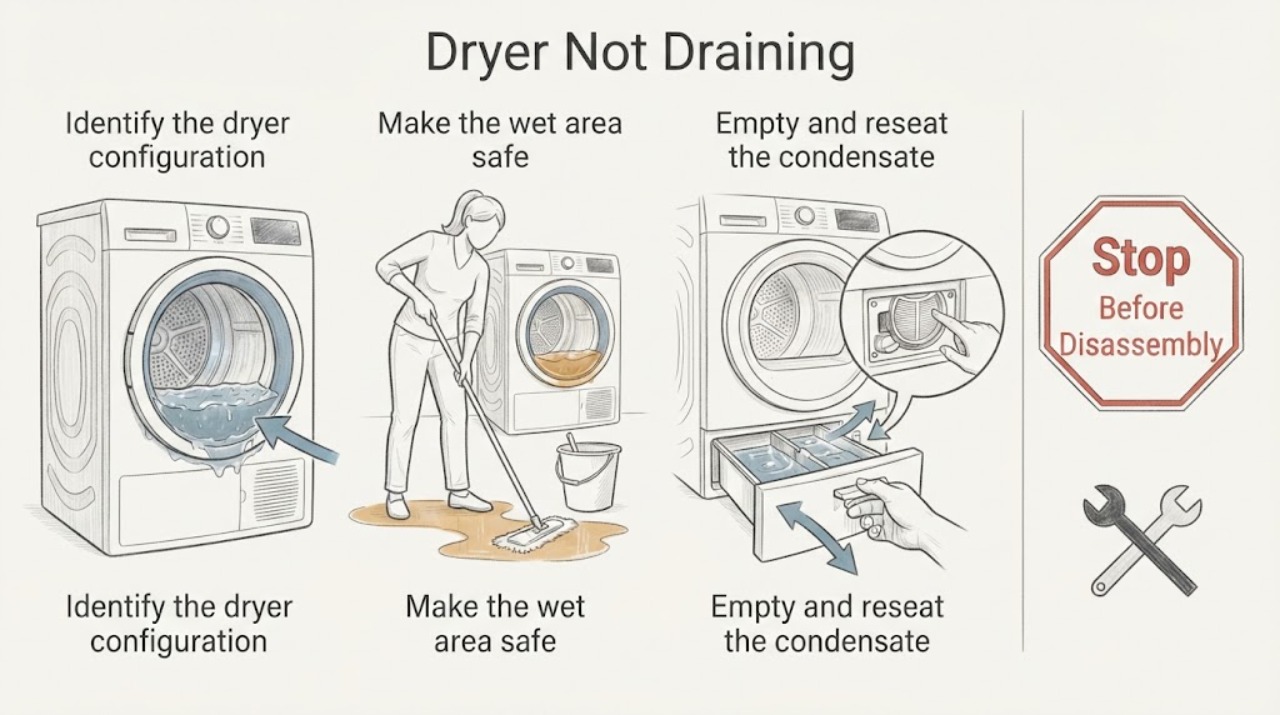
Siemens Dryer Not Draining: Check the Condensate Path
First confirm what your Siemens dryer uses for condensate: a container or a connected drain hose. Siemens explains that, when no drain hose is connected, condensation runs into the condensate container; the container should be emptied after each drying cycle and whenever it becomes full during a cycle.
-
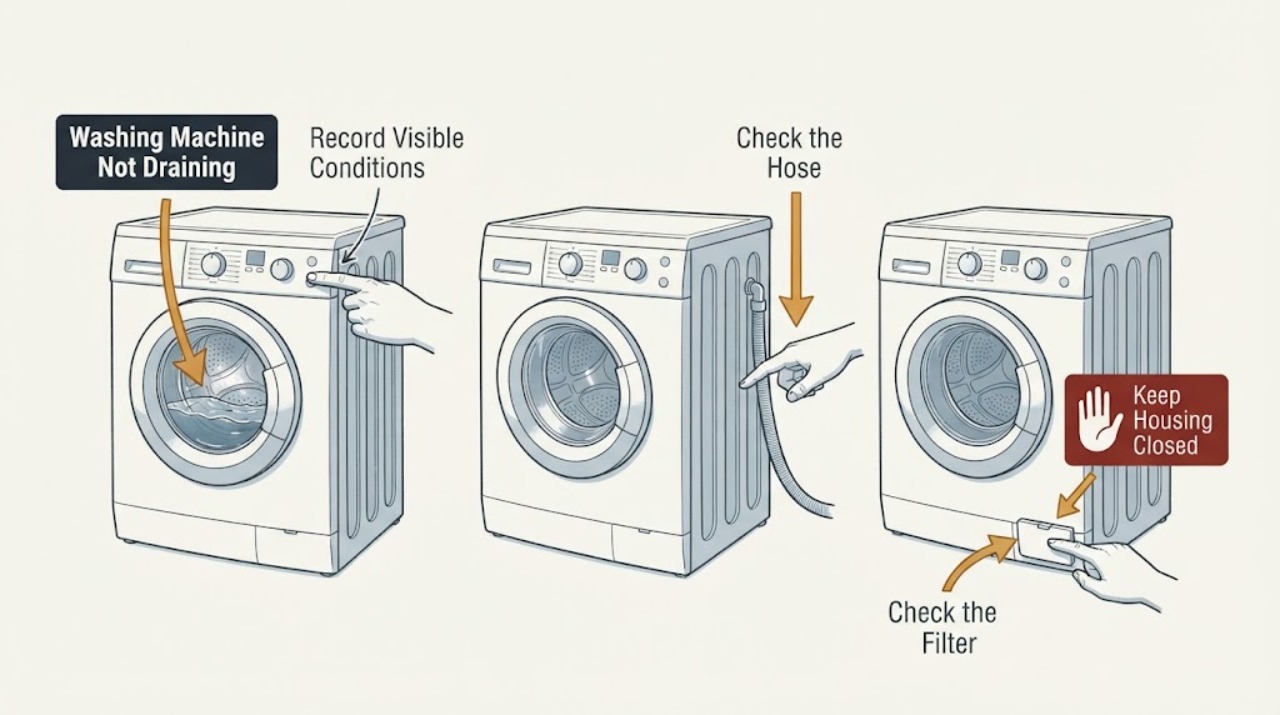
Siemens Washing Machine Not Draining
If a Siemens washing machine will not drain, first note the programme stage, whether water remains in the drum, and the exact code. Siemens associates E18/F18 with a blocked filter or kinked or blocked cold drainage hose, while E23 indicates a leak or water in the base and requires the supply tap to be turned off immediately.
-
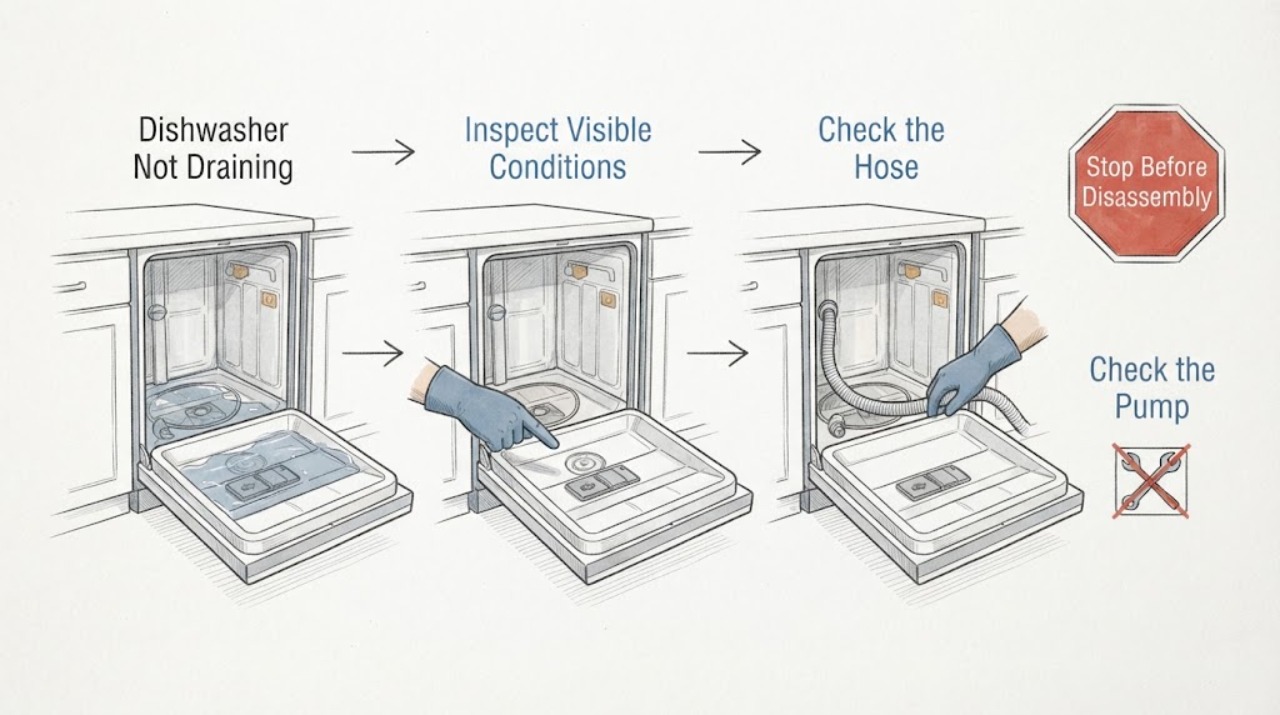
Smeg Dishwasher Not Draining
Standing water in a Smeg dishwasher is first checked at the filter, sump, drain hose, and sink connection using owner instructions. Do not reach into a running pump or dismantle the appliance.
-
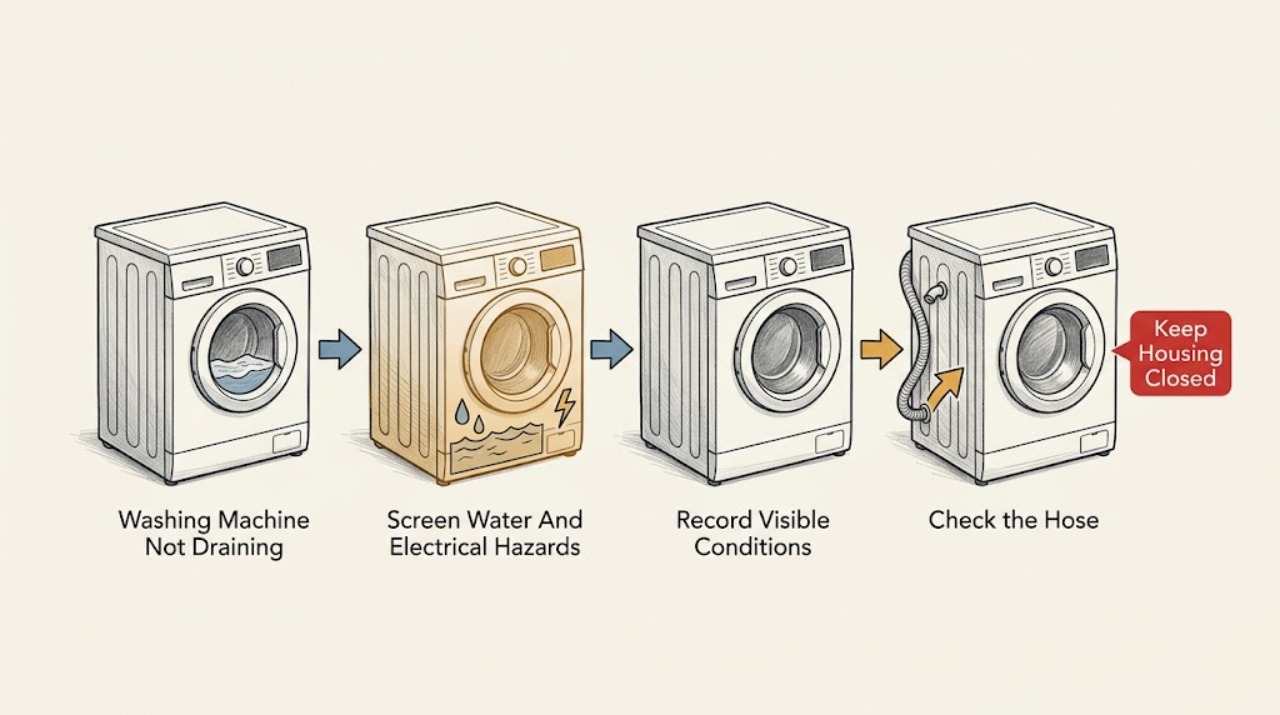
Smeg Washing Machine Not Draining: Find the Blocked Path Safely
When a Smeg washing machine will not drain, first note whether it stopped during wash, rinse, or spin and whether water remains in the drum. Smeg identifies a blocked filter or blocked drainage pump as possible causes of wet laundry, while its washing-machine range includes model-dependent drain programmes and an easy-access filter on some models.
-
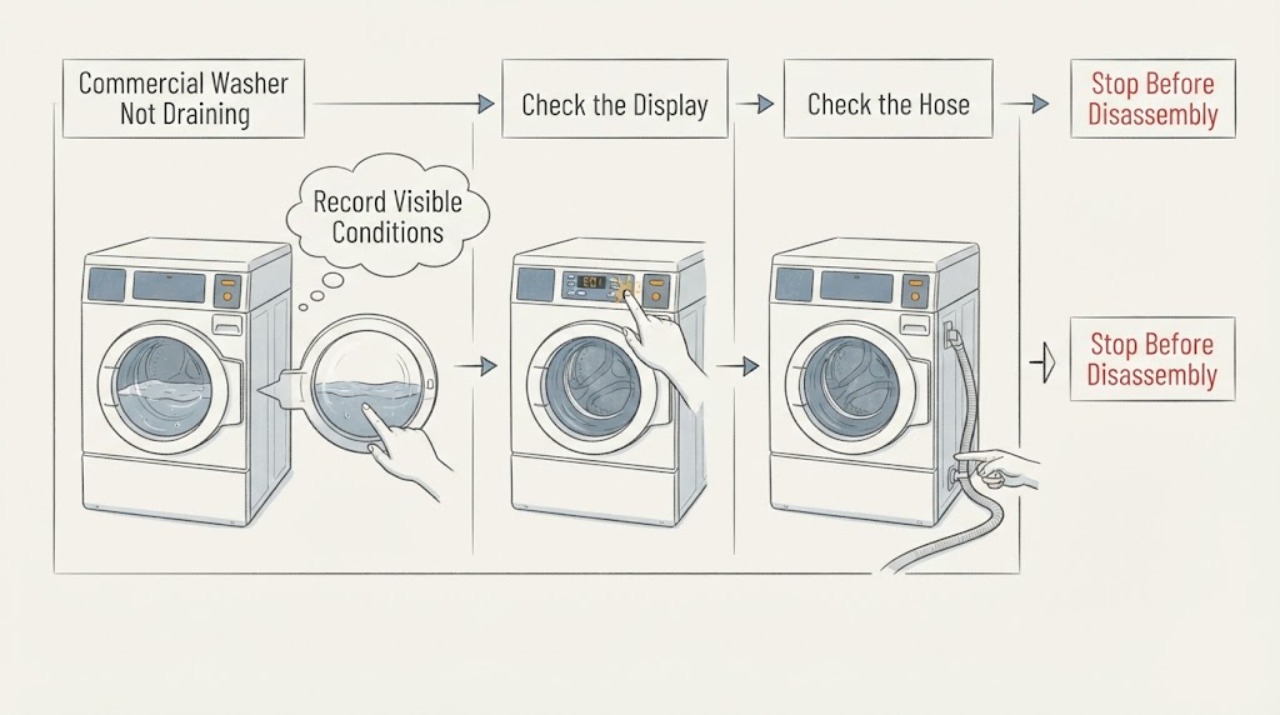
Speed Queen Commercial Washer Not Draining: Check Hose, Receptacle, and Pump Path
For a Speed Queen commercial washer that is not draining, check whether the drain hose or receptacle is kinked or blocked, whether water remains, and whether excess suds or an unbalanced load preceded the stop. The Speed Queen guide also identifies a pump foreign-object trap and directs service when the visible checks do not resolve the fault.
-
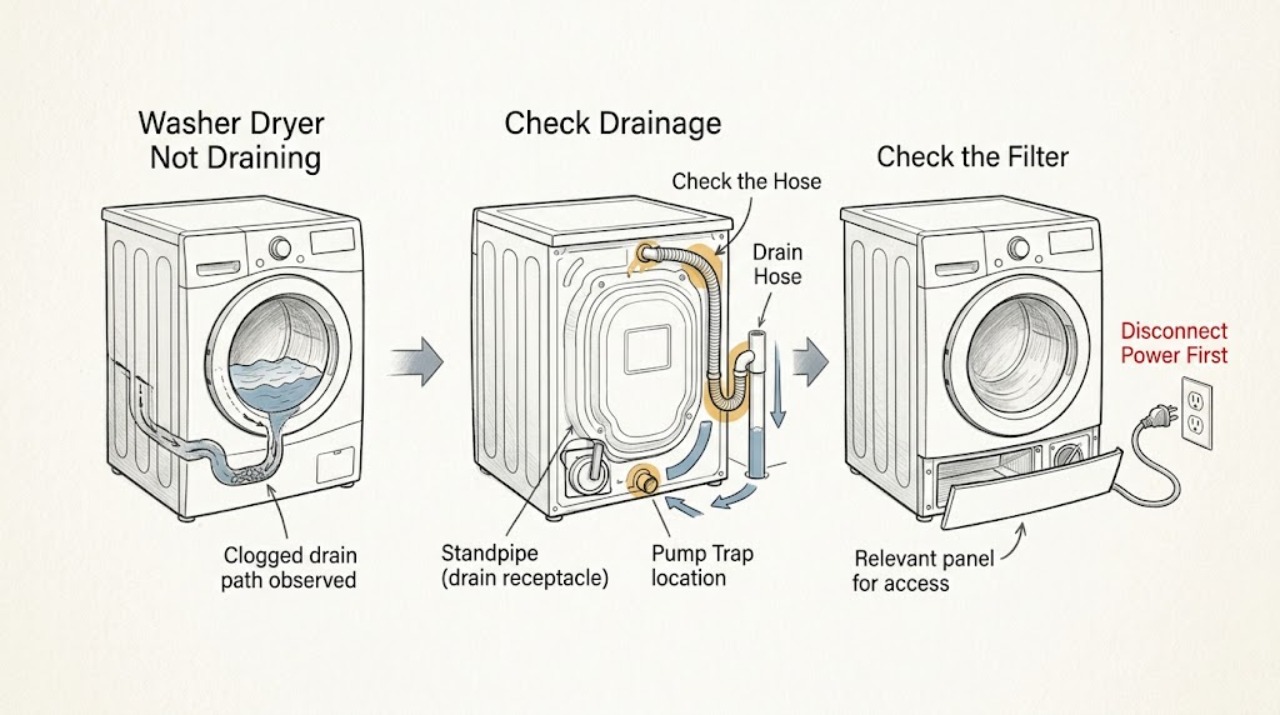
Speed Queen Washer Dryer Not Draining: Safe Checks
Stop the cycle and keep the washer portion of the Speed Queen unit from running while water remains. Check the accessible drain hose for a kink or clog, confirm the drain receptacle is not backing up, and use the exact model's maintenance instructions to inspect the pump's foreign-object trap if that access is provided.
-
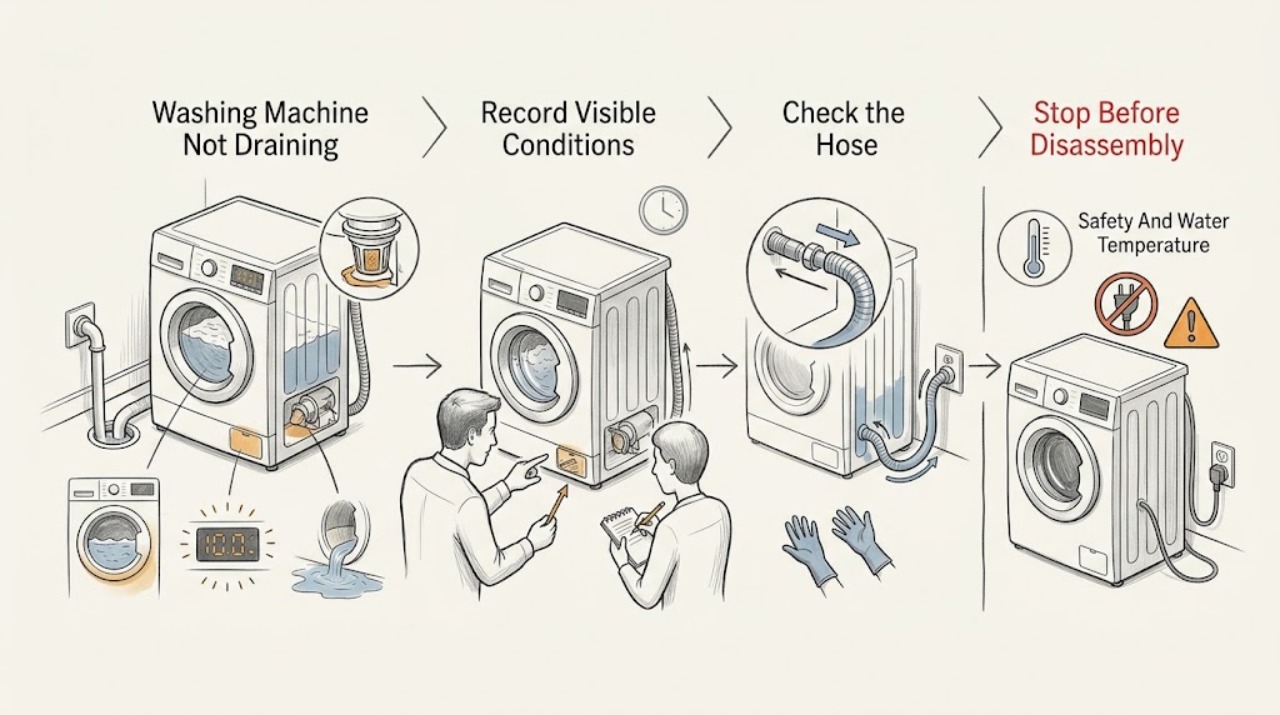
Speed Queen Washing Machine Not Draining
First record the programme stage and whether the washer has standing water, a humming pump, an overflow, or a locked door or lid. Stop for hot water, a wet electrical connection, a leak, smoke, burning odor, sparks, severe movement, or a repeated protection trip; close the water supply and isolate power only from a dry safe position.
-
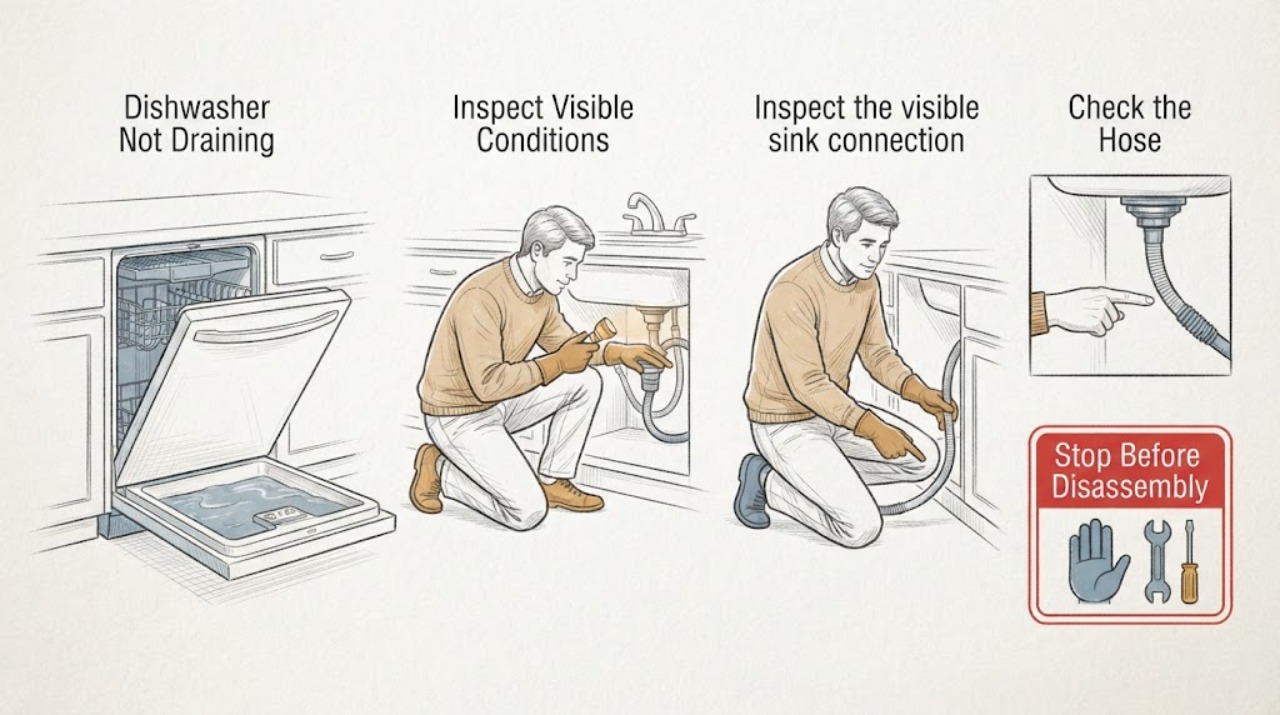
Thermador Dishwasher Not Draining: Clear the Drain Path Safely
A Thermador dishwasher that leaves water behind should be checked from the outside in: finish or cancel the cycle, inspect the sink-side drain path and air gap, then clean the filter and use the owner's manual for any pump-cover access. A blocked drain hose, disposal connection, filter, or pump can look similar. If water remains after the documented checks, or there is a leak or electrical hazard, stop and arrange service.
-
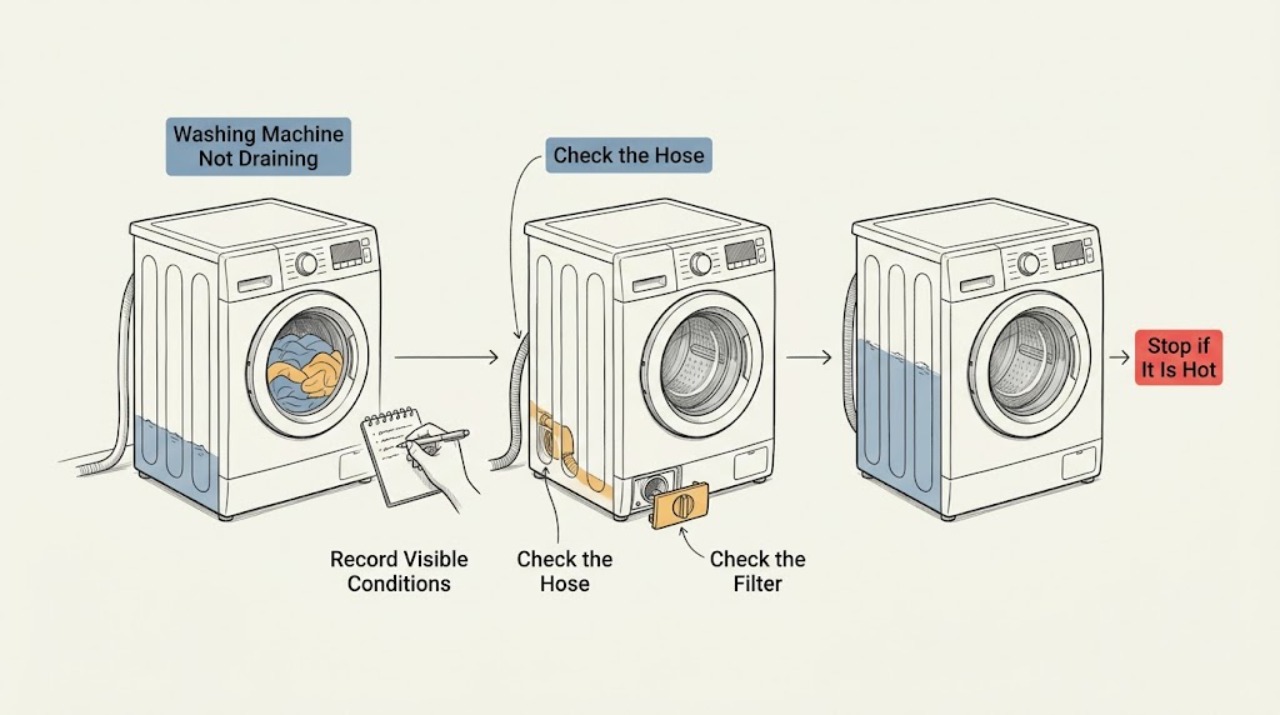
Toshiba Washing Machine Not Draining: Trace the Hose, Filter, and Safety Interlocks
A Toshiba washer that will not drain is usually being held by a restricted drain hose, blocked outlet, pump filter or pump path, an unsuitable cycle state, excess suds, or a water-level or control condition. First record the exact model, cycle stage, display message, and water level.
-
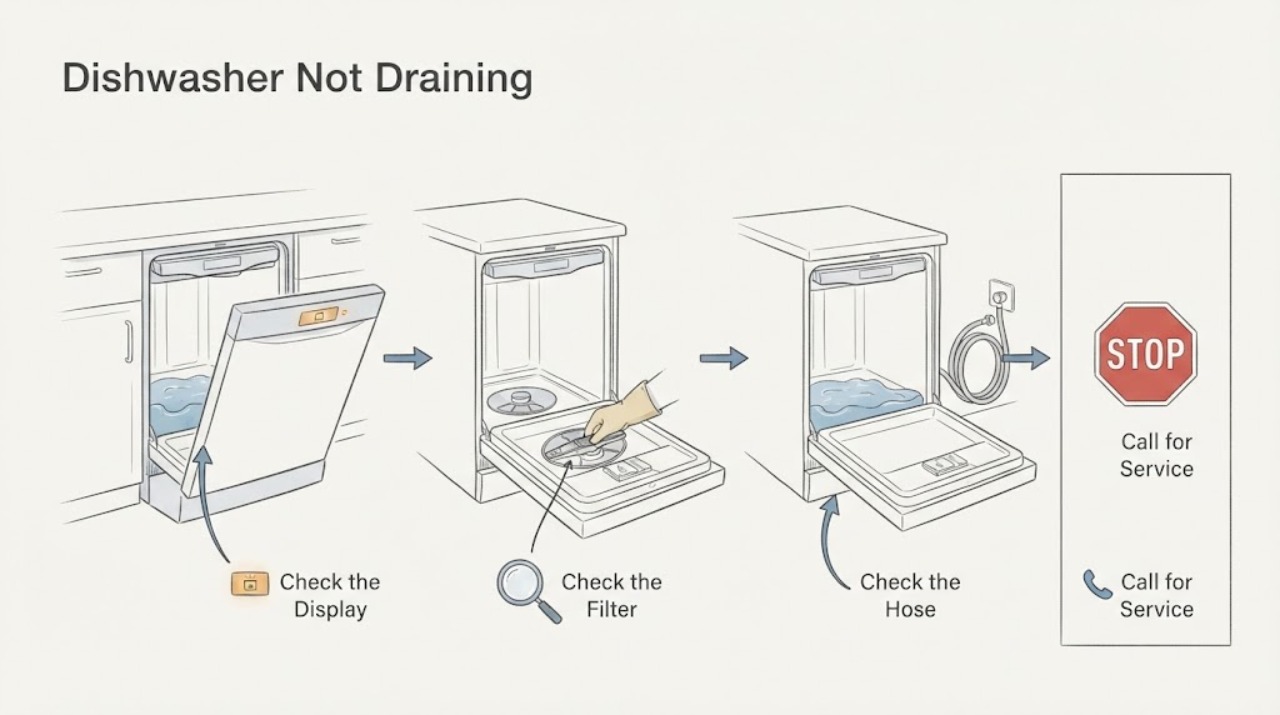
Viking Dishwasher Not Draining
A Viking dishwasher that is not draining should be separated into a clogged filter or sink connection, a restricted or incorrectly routed drain hose, or a drain-pump or control fault. Turn off the dishwasher before opening the tub, check only the accessible filter and external drain path, then use the exact model manual for its reset or fault indication. Stop for a leak, overflow, burning odor, damaged wiring, or a drain error that returns after one documented reset.
-
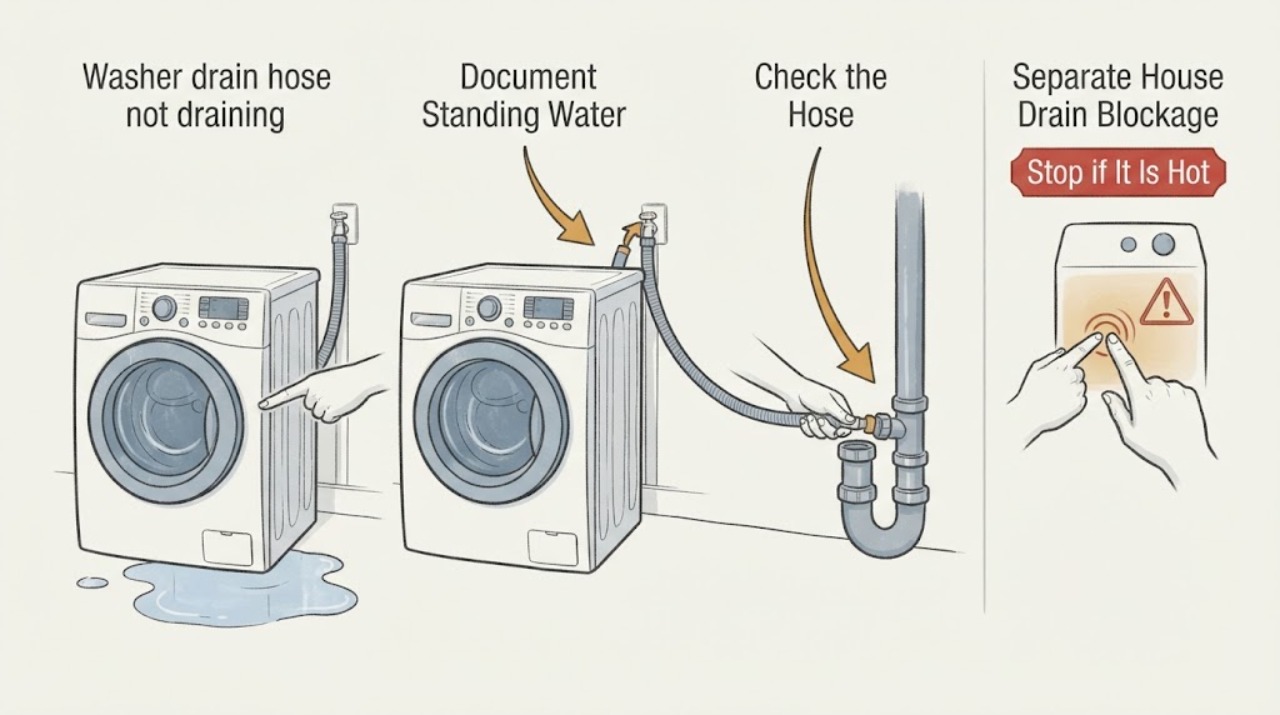
Washer drain hose not draining: What to Check and What to Do Next
A washer drain hose that will not drain is most often kinked, crushed, routed incorrectly, clogged, frozen, or connected to a blocked household drain; a clogged pump filter or pump can create the same symptom. First switch the washer off, note whether water remains in the tub, and inspect the visible hose without moving the machine.
-
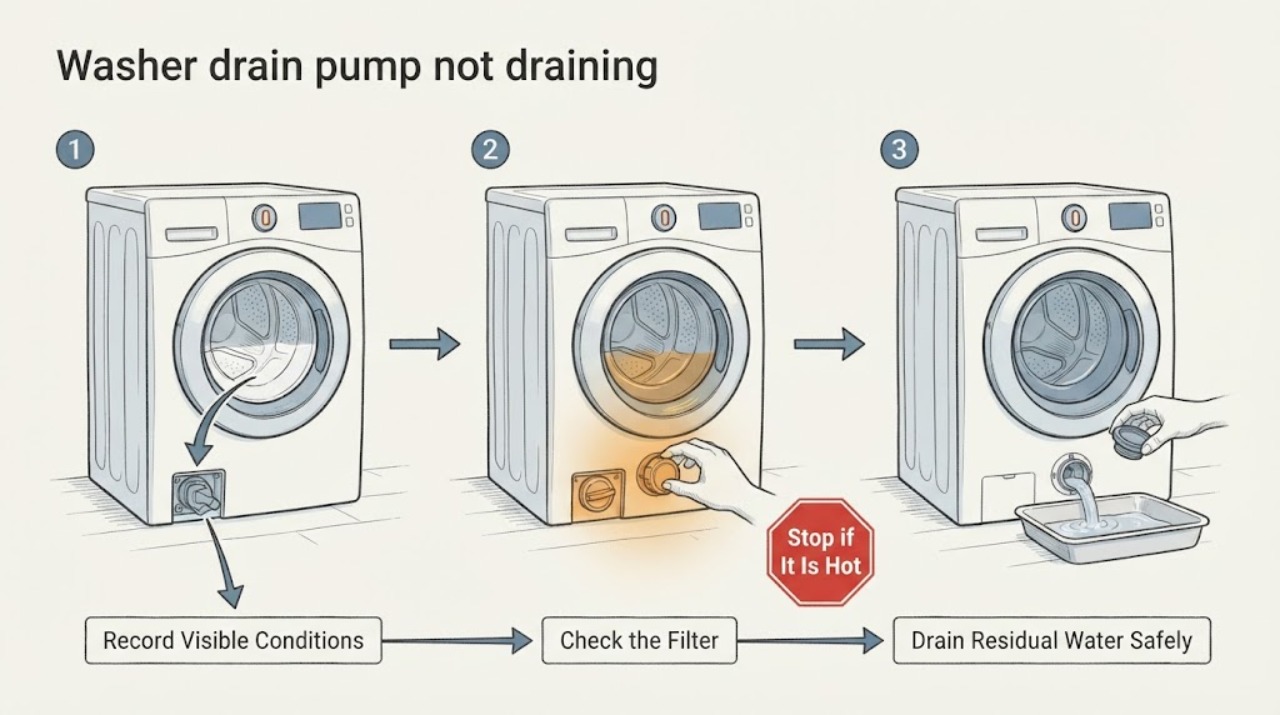
Washer drain pump not draining: What to Check and What to Do Next
A washer that will not drain can have a blocked filter or pump, a kinked or compressed drain hose, a blocked standpipe, a drain-hose installation problem, or a pump/control fault. First stop the cycle and check the owner's manual for the exact filter location: not every washer has a user-accessible pump filter, and front-load and top-load designs differ.
-
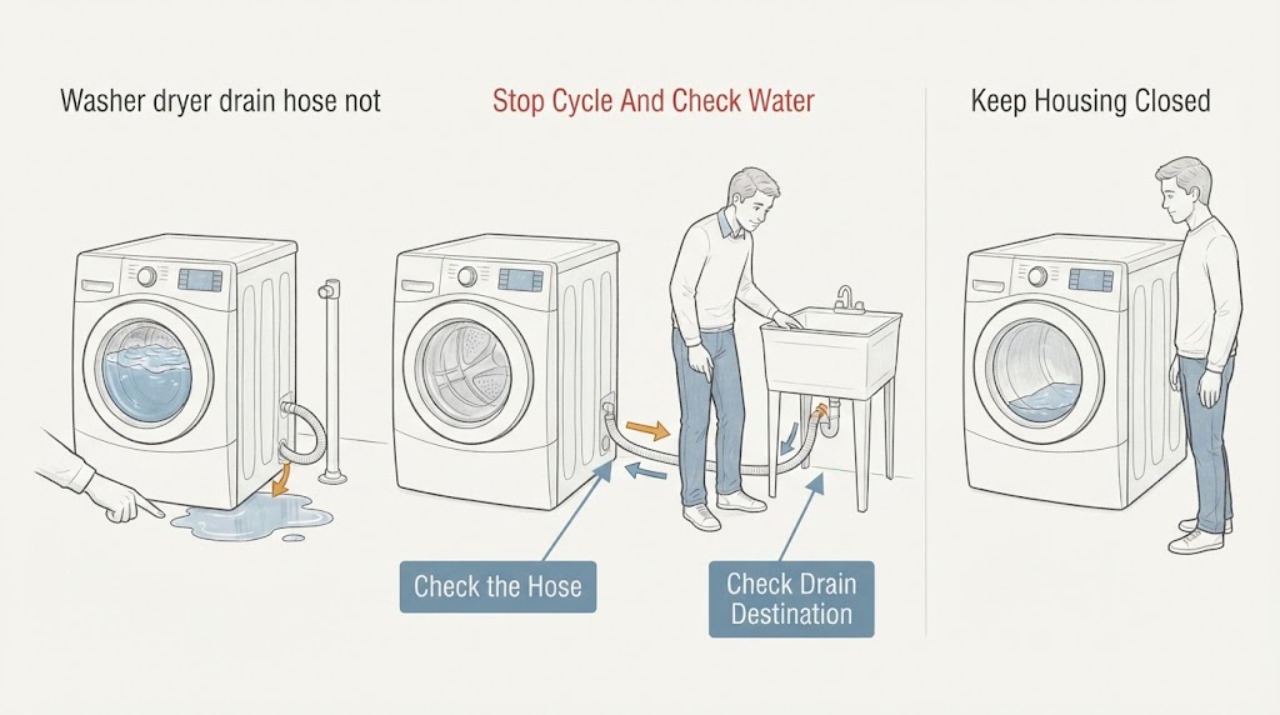
Washer dryer drain hose not draining: What to Check and What to Do Next
When a washer-dryer combo will not drain, start with the drain hose and its destination, not a guessed pump replacement. Stop the cycle, keep hands out of standing water, and follow the model manual before moving or disconnecting anything.
-
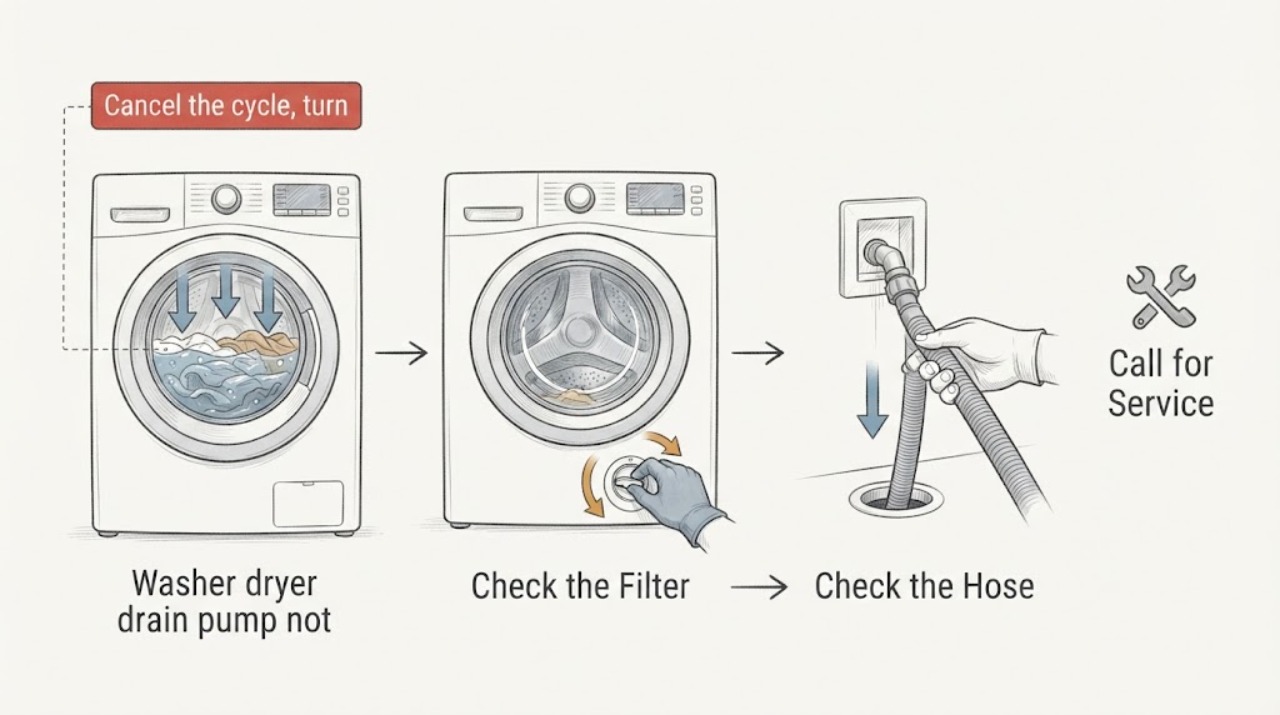
Washer dryer drain pump not draining: What to Check and What to Do Next
A washer or washer-dryer that will not drain may have a blocked pump filter, an object in the pump or hose, a kinked or frozen drain hose, a blocked household drain, excess suds, or a pump that is not receiving power or cannot move water. Stop the cycle and disconnect power before opening an access cover.
-
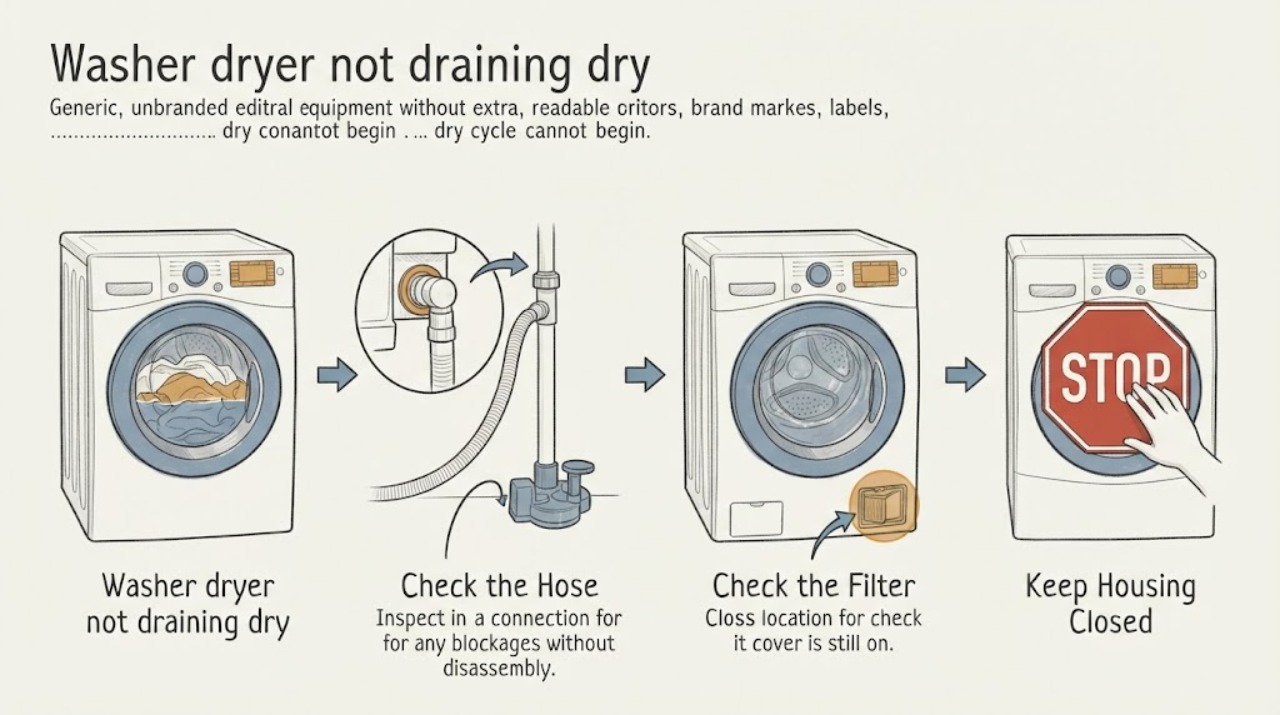
Washer dryer not draining dry cycle cannot begin: What to Check and What to Do Next
When a washer dryer will not drain and the dry cycle cannot begin, treat the failed drain as the primary fault rather than repeatedly selecting Dry. First record the exact display message and whether water remains in the drum.
-
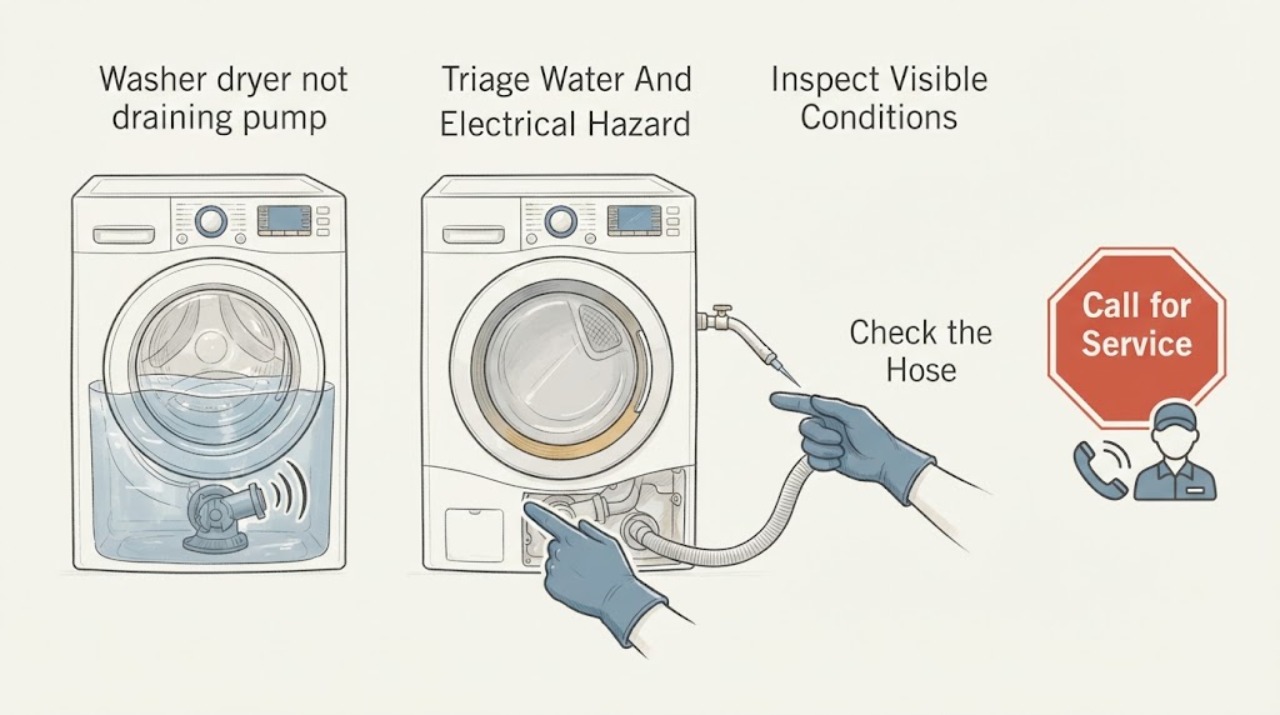
Washer dryer not draining pump hums or is silent: What to Check and What to Do Next
A washer dryer that will not drain can make a low hum while the pump is moving water, but a hum with no flow often points to a blocked filter, hose, or pump path; a silent pump can mean the drain step was not enabled, an interlock or control condition is holding the cycle, or the pump or wiring needs service. Stop for flooding, water near electrical connections, burning odor, smoke, or a drum that may contain hot water.
-
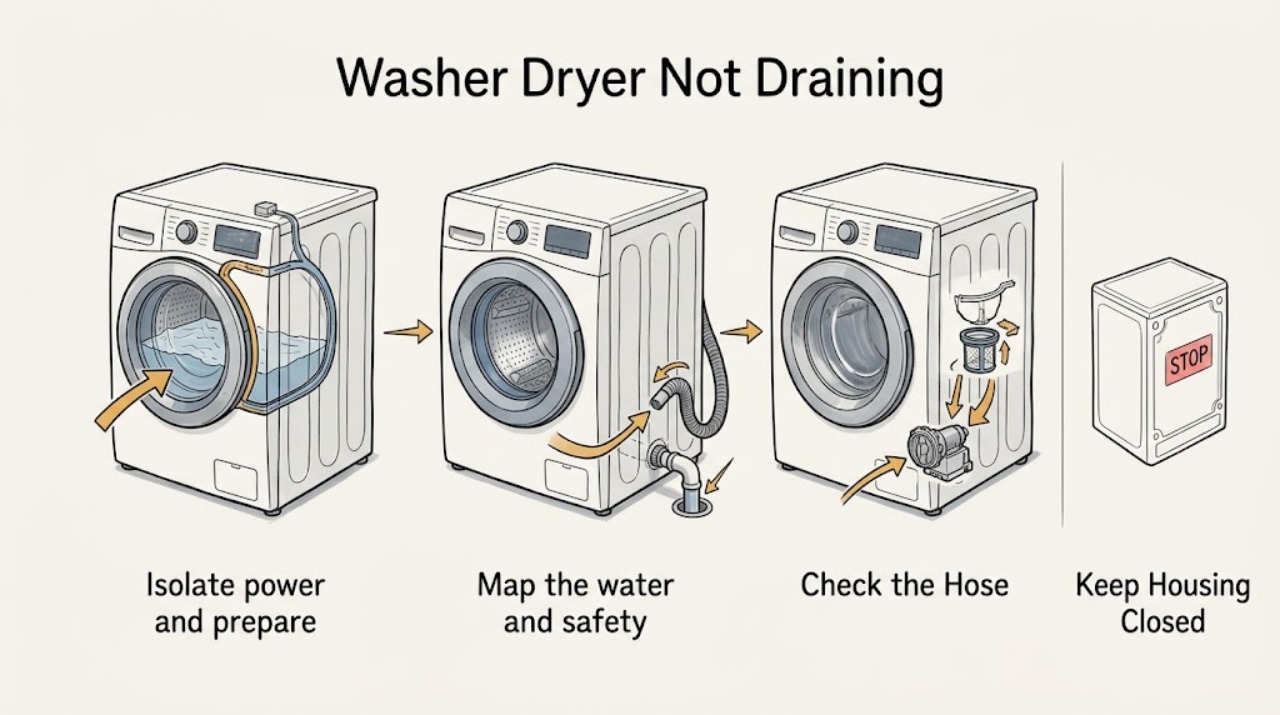
Washer Dryer Not Draining: Find the Blocked Path Safely
First determine whether water is still in the drum, whether the appliance drains slowly, or whether it drains but leaves clothes too wet. Keep the appliance off, allow hot water to cool, and disconnect it from mains power before opening a service cover or handling a pump filter.
-
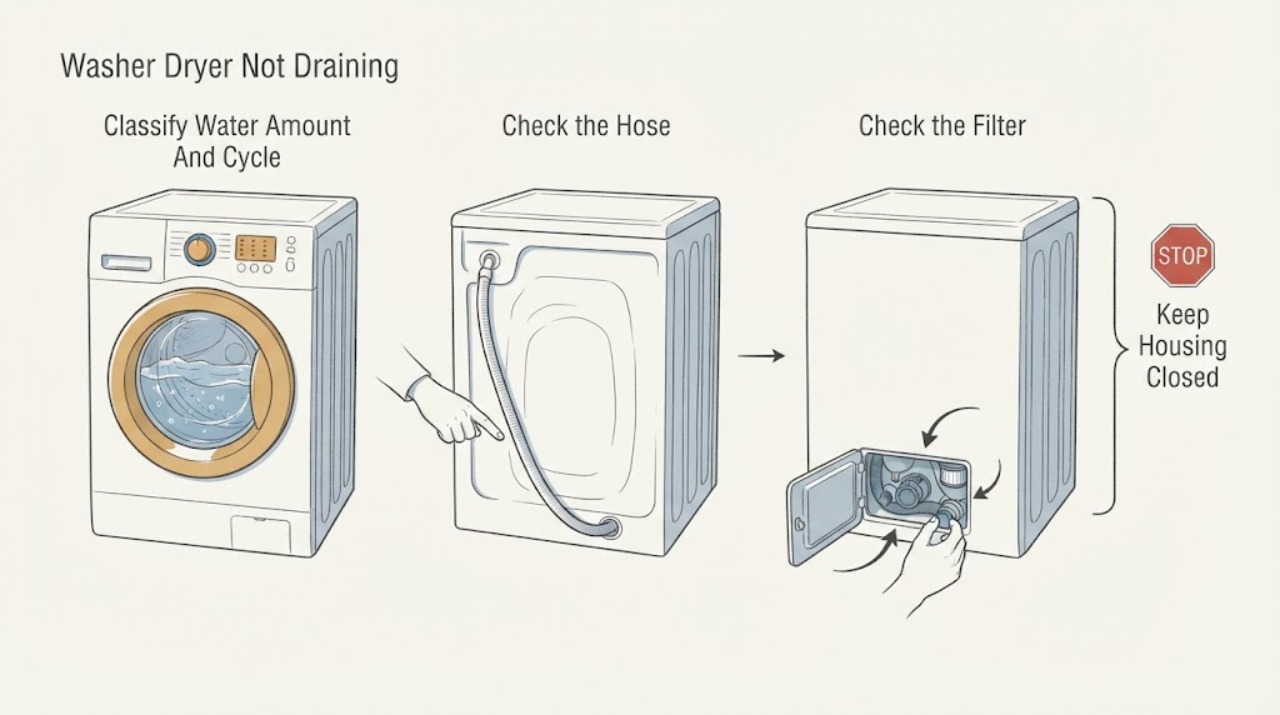
Washer Dryer Not Draining: Water Remains After the Wash
If substantial water remains in a washer-dryer after the wash, stop the appliance and keep it away from standing water until the cause is known. A small amount of moisture or condensation can be normal on some all-in-one models, but a full drum, slow drain, wet laundry, or water present before the next cycle points to a drainage problem.
-
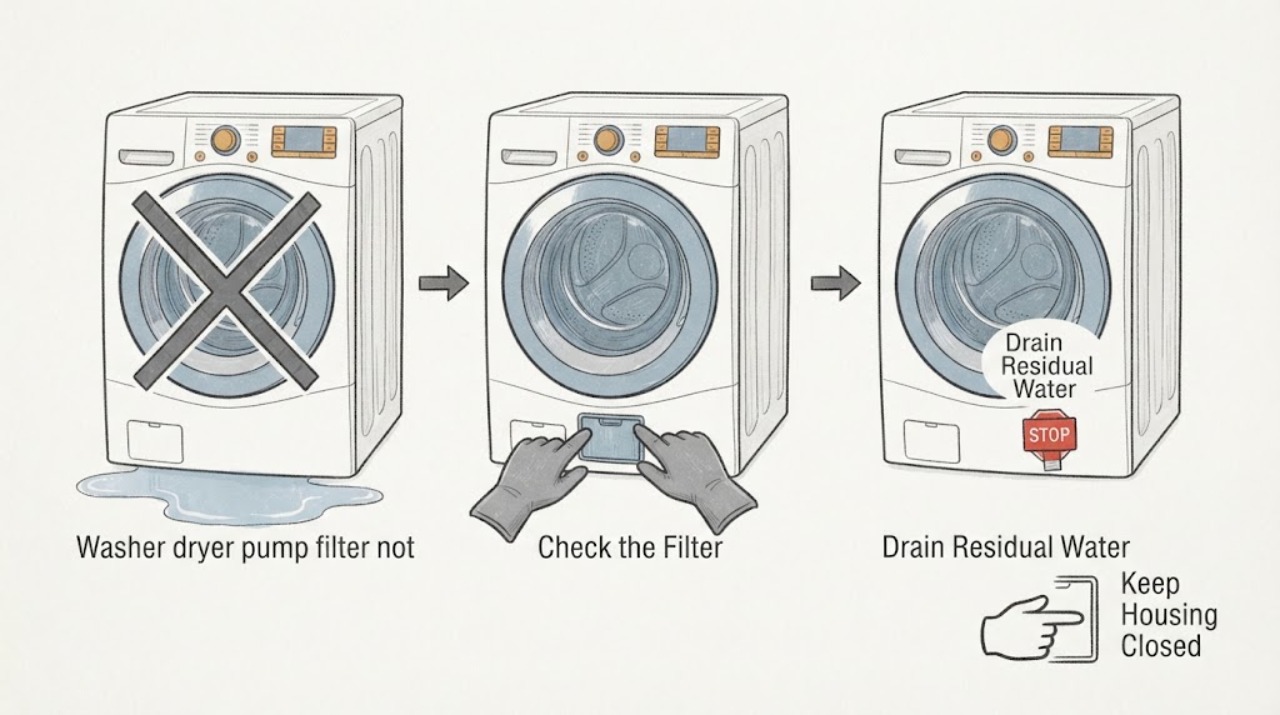
Washer dryer pump filter not draining: What to Check and What to Do Next
Do not keep opening a pump filter while the drum may contain hot water. Turn the washer-dryer off, disconnect power, consult the exact model manual for the filter and residual-water hose location, and place a broad shallow container and towels below the access point.
-
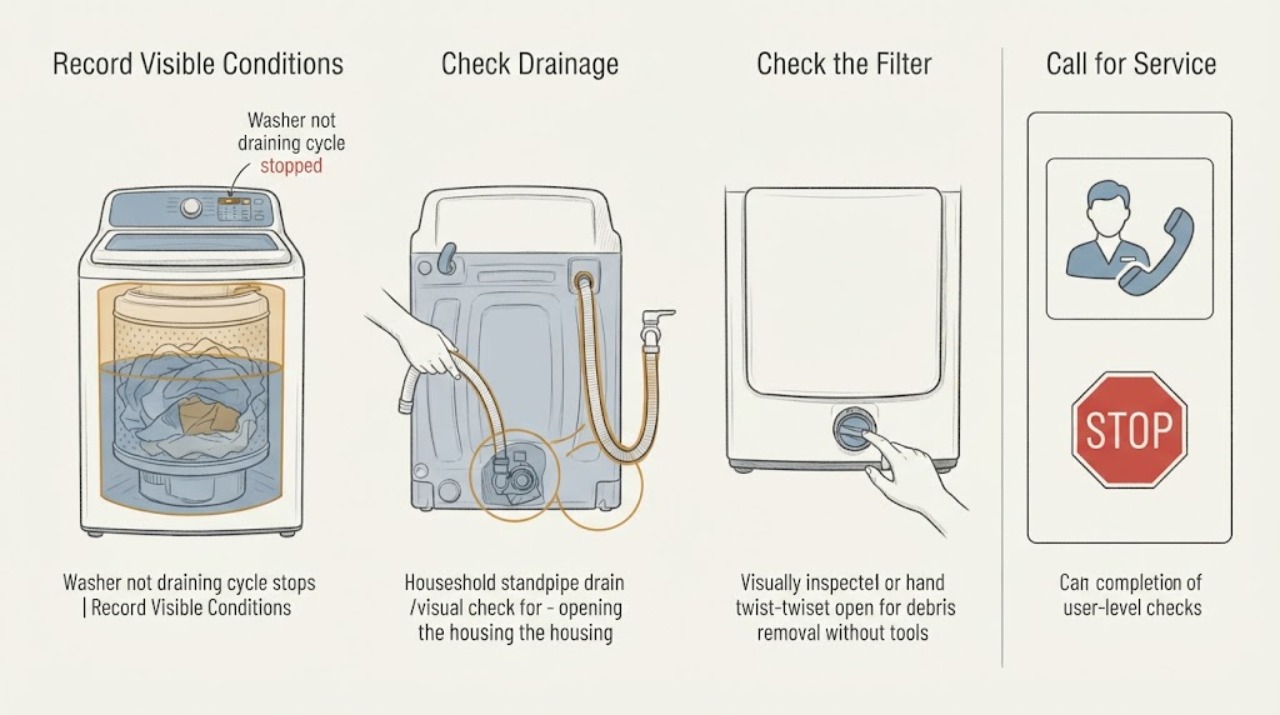
Washer not draining cycle stops at drain: What to Check and What to Do Next
When a washer stops at the drain portion of a cycle, first keep it off long enough for any hot water to cool, note whether water remains and whether an error code appears, and check the visible drain hose and household drain for a restriction or incorrect routing.
-
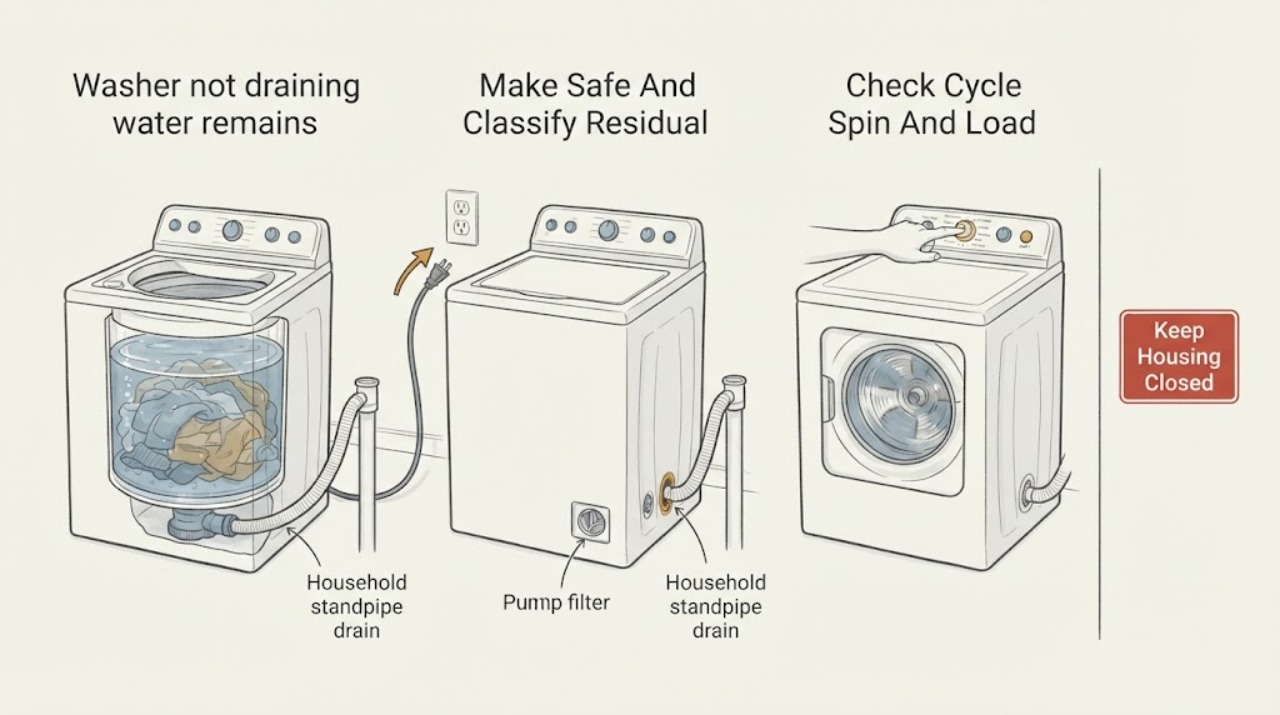
Washer not draining water remains in tub: What to Check and What to Do Next
If water remains in a washer tub, first decide whether the machine truly failed to drain or whether a low-spin setting, an unbalanced load, or a paused cycle left wet clothes behind. Keep hands out of standing water, stop the appliance, and disconnect power only from a dry, safe point when water is near electrical parts.
-
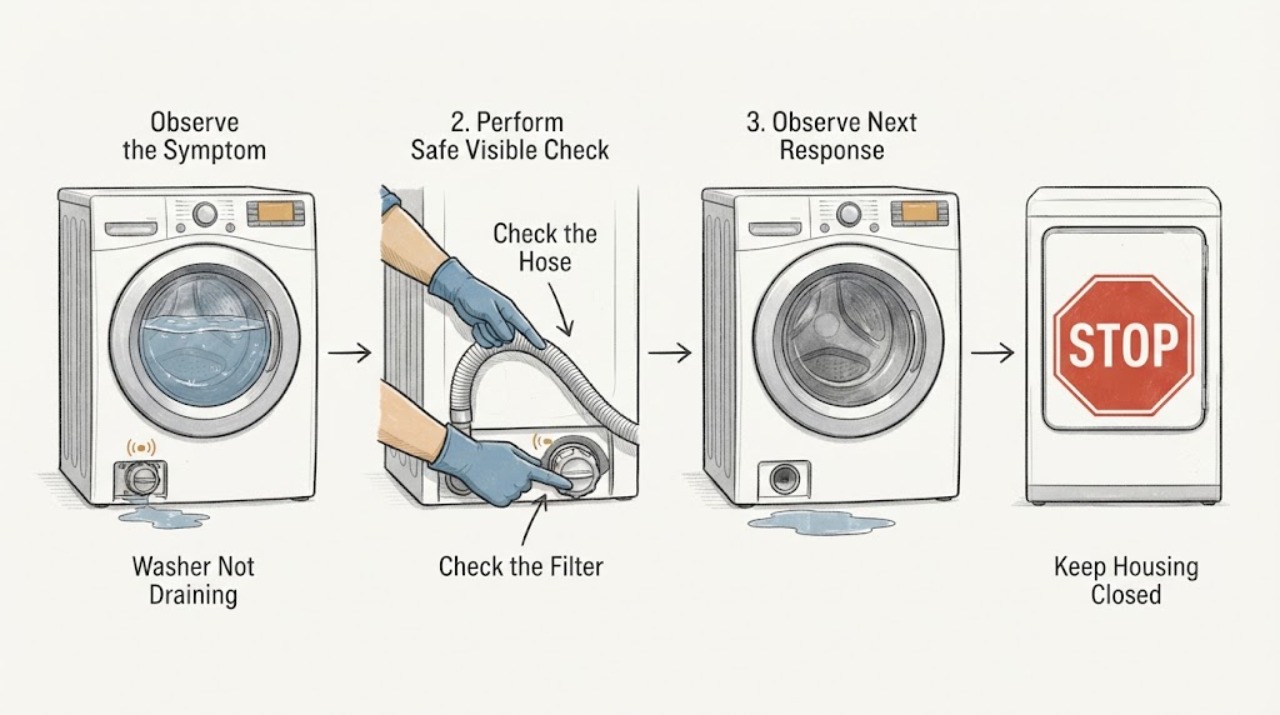
Washer Not Draining and the Pump May Hum: What to Check and What to Do Next
If a washer will not drain but you hear a hum, the drain-pump motor may be receiving power while water is blocked by the pump filter, pump inlet, drain hose, or household drain. A hum is not proof that water is moving.
-
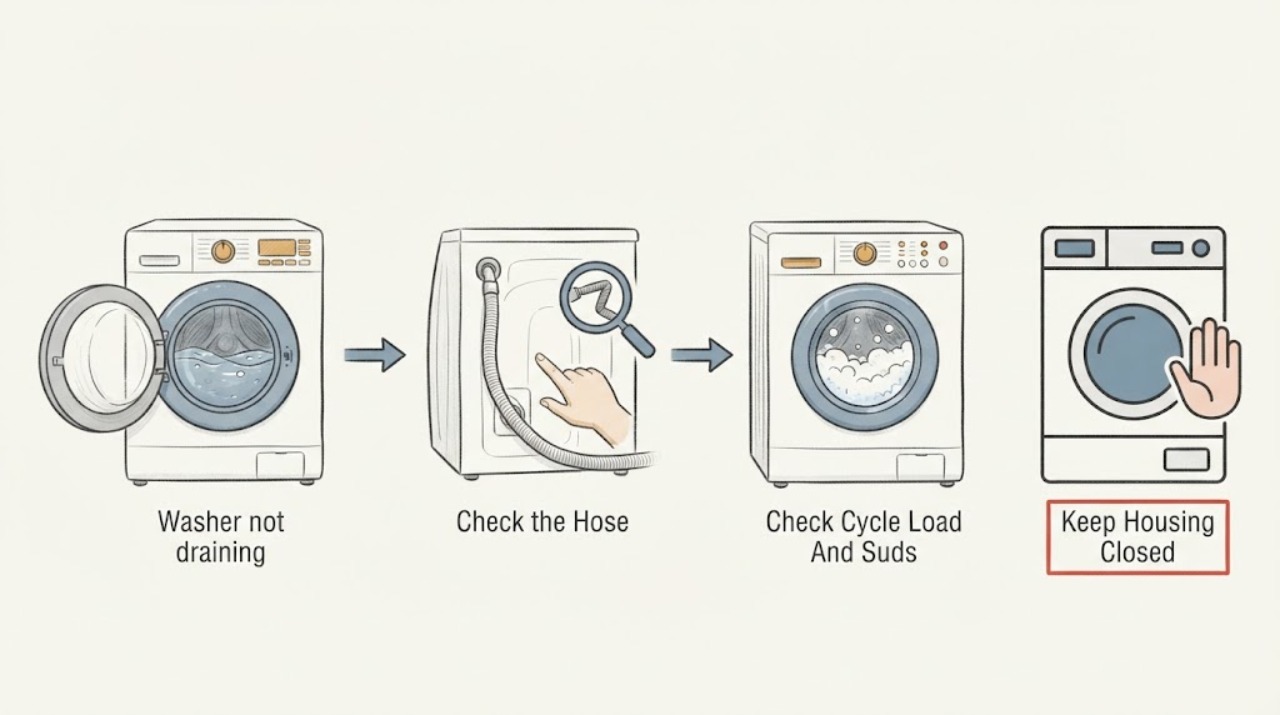
Washer not draining: What to Check and What to Do Next
If a washer leaves water in the tub, stop the cycle and unplug it before any access. First record whether the problem is standing water or merely wet clothes, the selected cycle, load balance, any display code, and any leak or unusual sound.
-
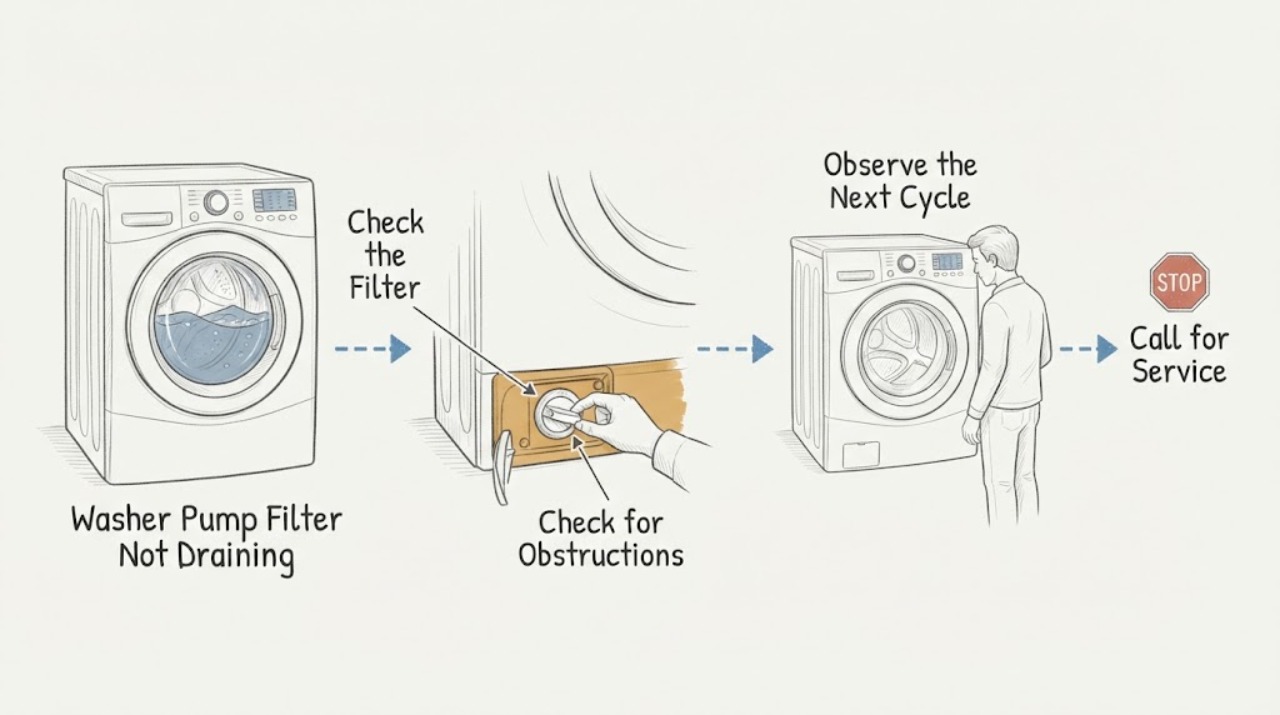
Washer Pump Filter Not Draining: What to Check and What to Do Next
If a washer pump filter is not draining, first confirm that the washer actually has an owner-accessible filter; many top-load models do not, and some front-load models require service. Unplug the washer, treat remaining water as potentially hot, and use the model's residual-water procedure with a shallow container and towels before opening an accessible filter.
-
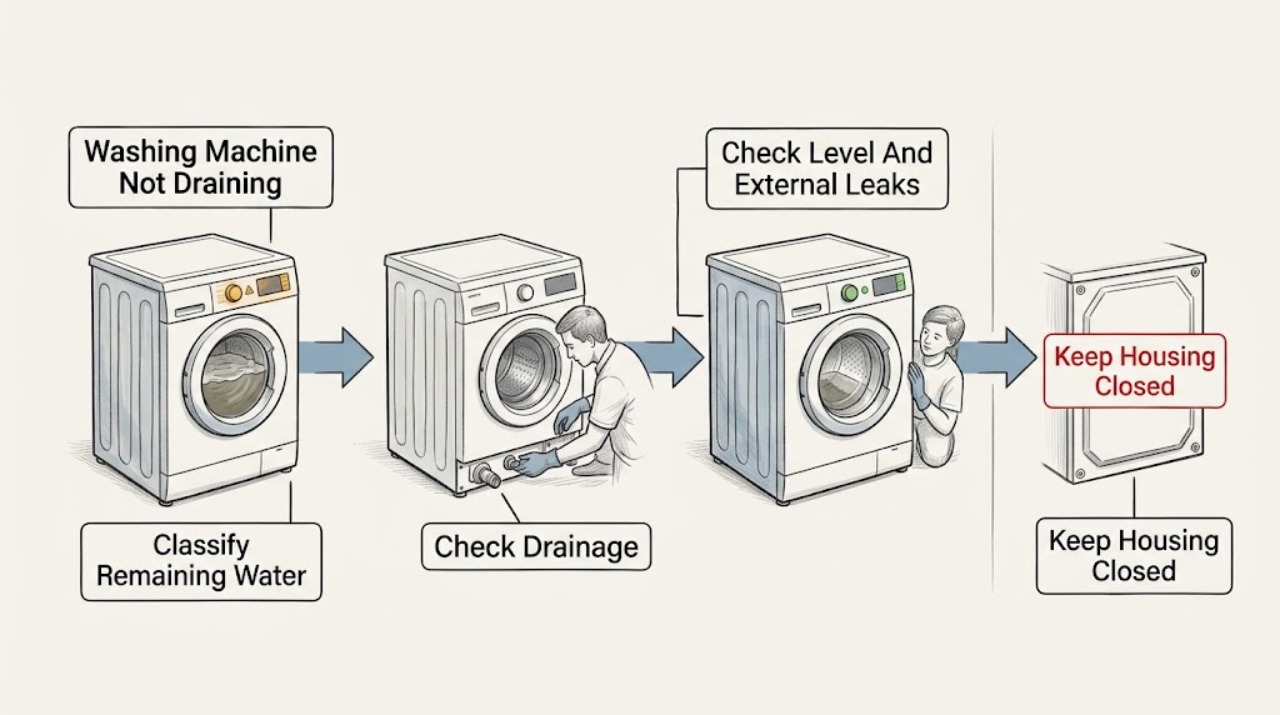
Washing Machine Not Draining: Find the Blockage Without Flooding or Forcing the Door
Stop the cycle and identify whether water remains in the tub, when the cycle stopped, and whether the pump is silent, humming, or moving water. If a hot cycle just ran, let the water cool.
-
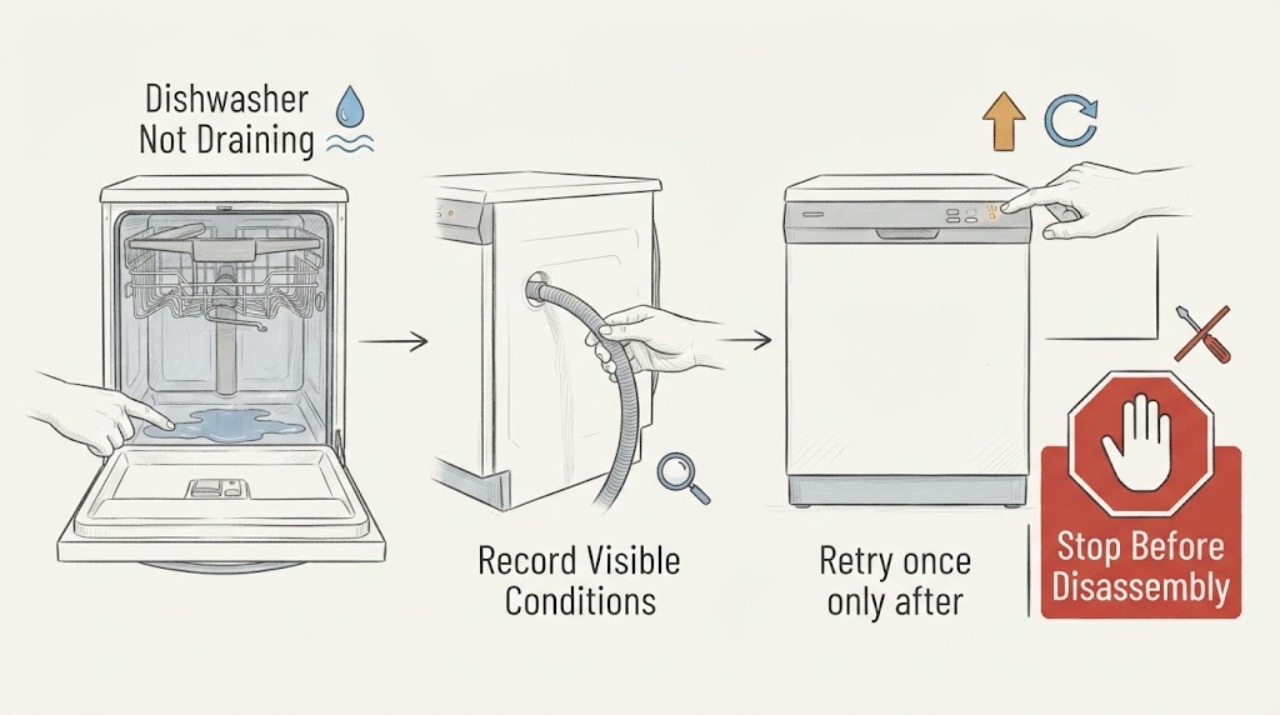
Westinghouse Dishwasher Not Draining
Standing water in a Westinghouse dishwasher is first checked at the filter, drain hose, and sink connection using the model manual. Do not dismantle a running pump.
-
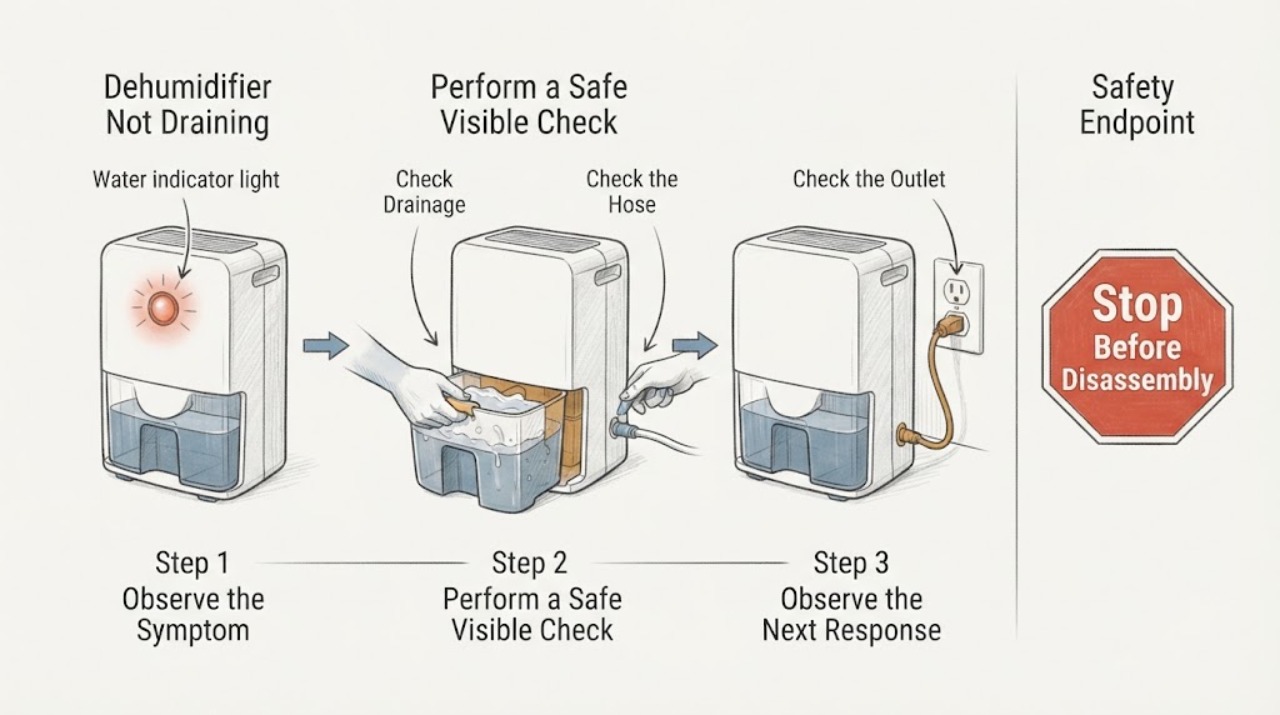
Whirlpool Dehumidifier Not Draining
A Whirlpool dehumidifier that is not draining may be stopping on a full or misaligned bucket, or a continuous-drain hose may be kinked, too high, blocked, or poorly sealed. Whirlpool directs owners to the exact model manual, so confirm whether the unit uses bucket collection, gravity drainage, or a pump before changing the setup.
-
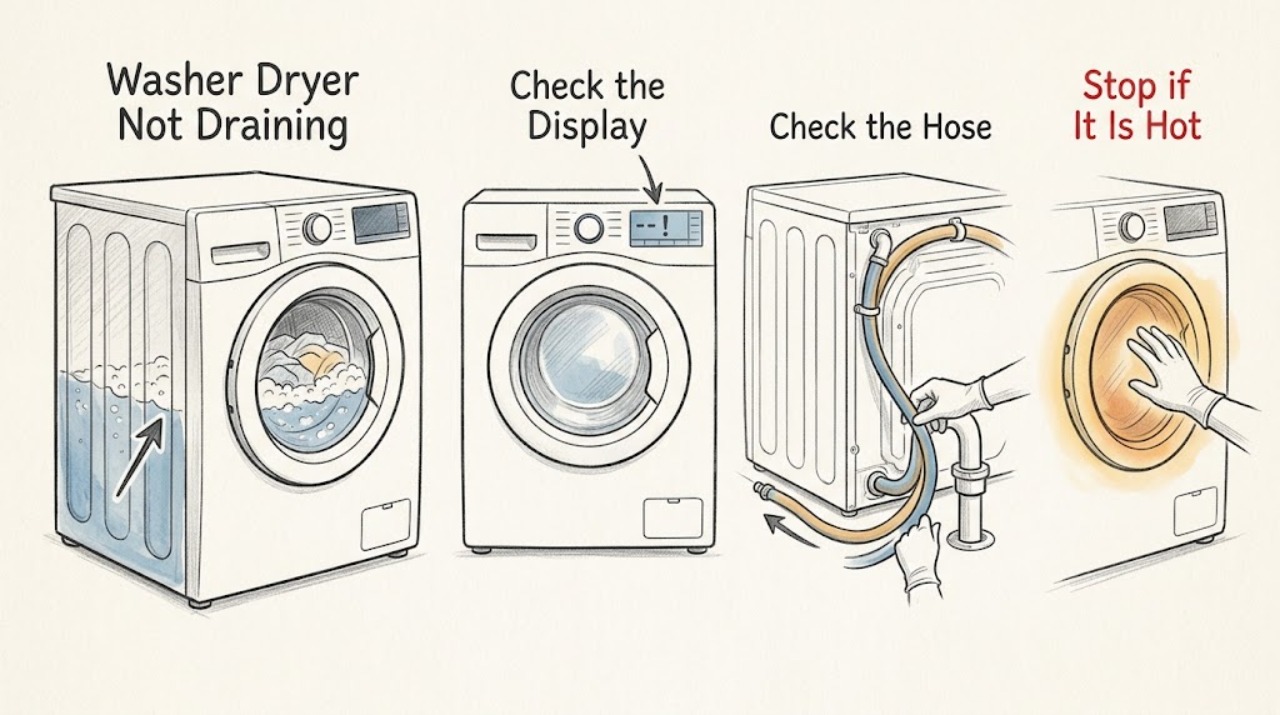
Whirlpool Washer Dryer Not Draining: Check the Hose, Siphon, Suds, and Pump Filter
For a Whirlpool washer dryer that is not draining, stop the wash side and protect the floor first. If safe and supported by the exact manual, use Cancel or Drain, then check the visible drain hose for kinks, excessive insertion, tape that seals the standpipe, or a blocked sink.
-
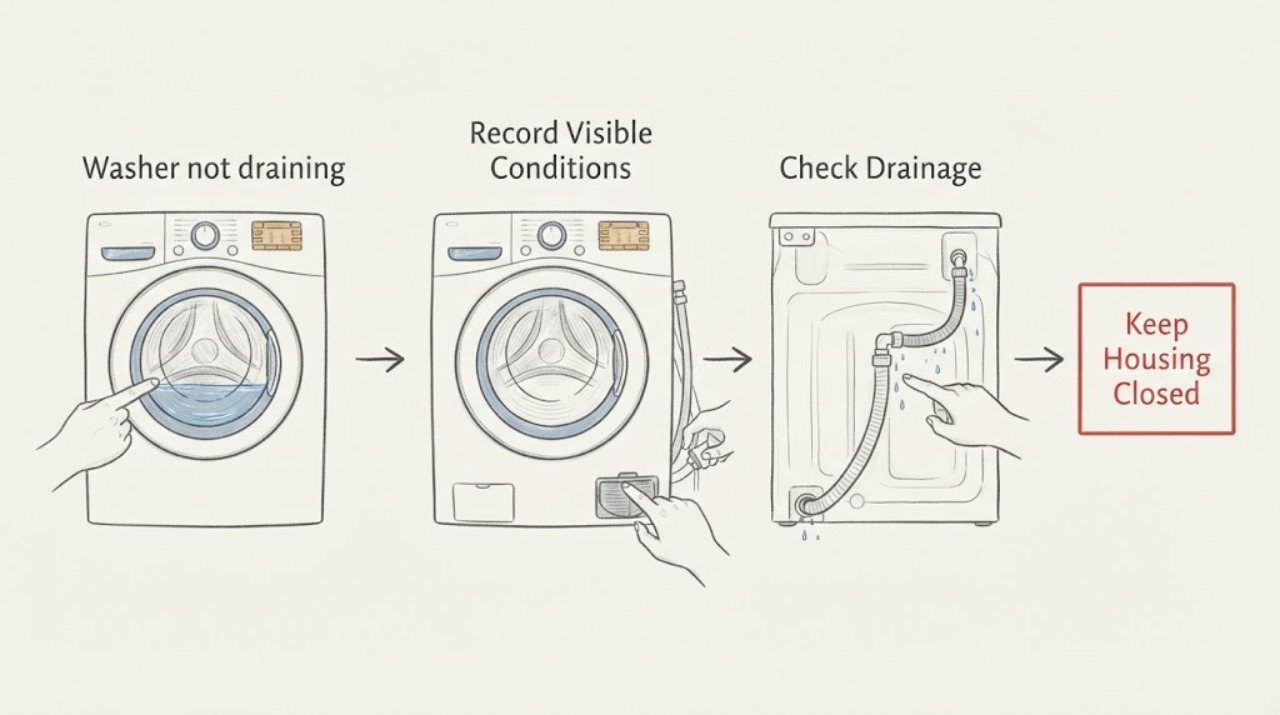
Whirlpool washer not draining: What to Check and What to Do Next
If a Whirlpool washer leaves water behind, first note whether it stops during drain, spin, or another phase and record any code. Keep hands out of the basket, do not force a locked door, and disconnect power only from a dry, safe location before model-approved maintenance.
-
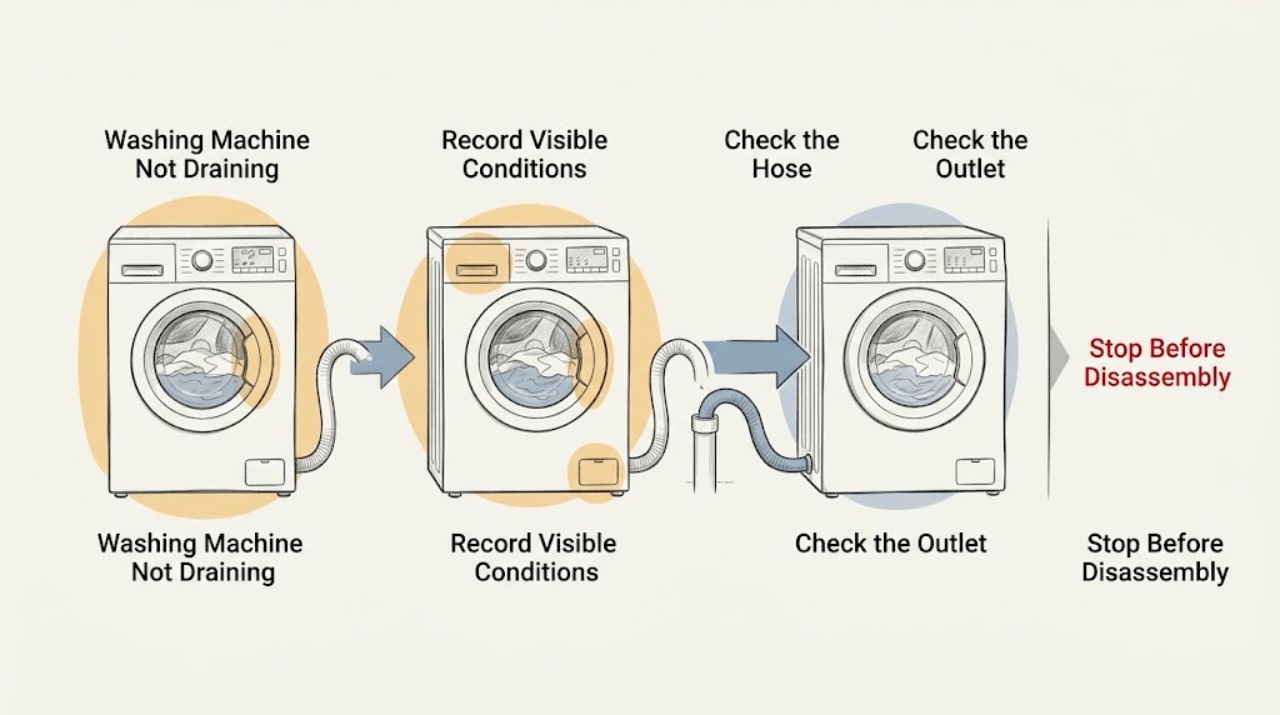
Whirlpool Washing Machine Not Draining: Check the Path Before the Pump
Record the program stage and whether the machine is pumping, spinning, or holding water. Whirlpool's official guidance points first to a kinked or incorrectly routed drain hose, a blocked household drain, excess suds, a tightly packed or unbalanced load, a selected hold option, or a model-specific pump filter.
-
Whirlpool Water Heater Not Draining
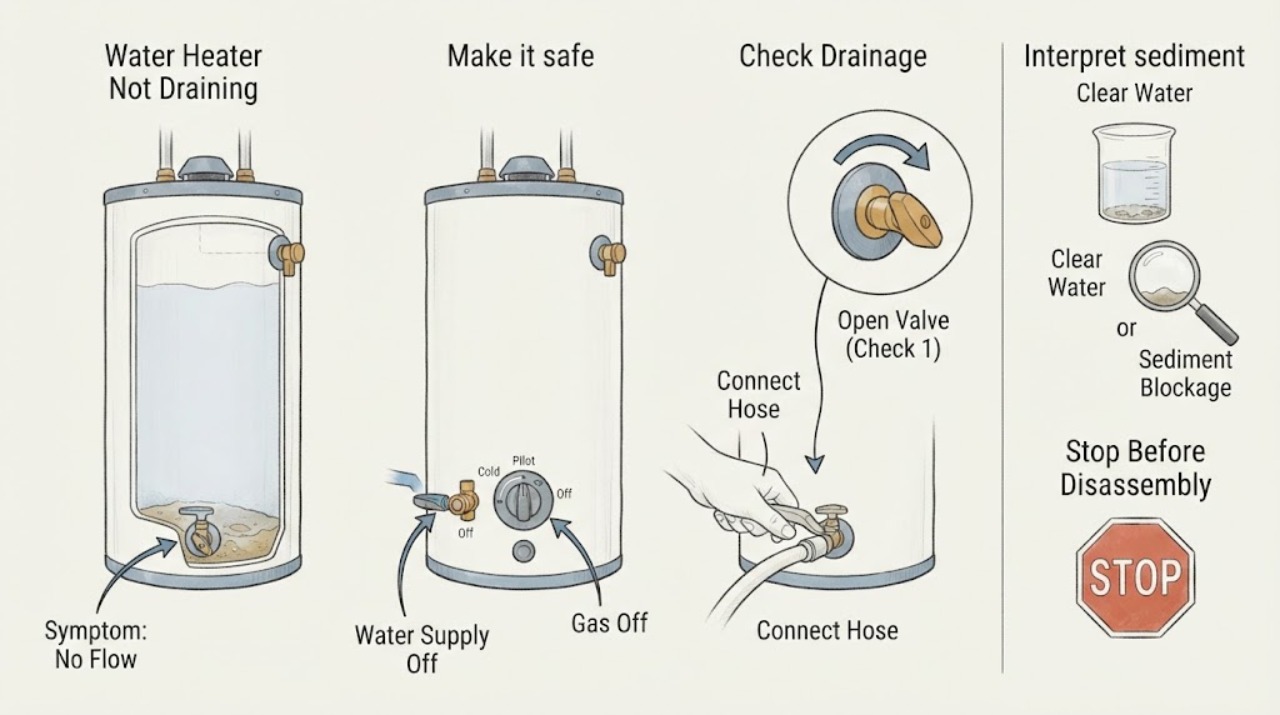
A Whirlpool water heater that will not drain is often restricted by sediment at the drain valve or lacks a safe air path. Turn off the correct heat source, cool the water, close the cold supply, connect a secured hose and open a hot faucet as the official procedure directs. If flow remains blocked, stop rather than forcing the valve and call a qualified person.
-
Why Is My Fisher & Paykel Washing Machine Not Draining?
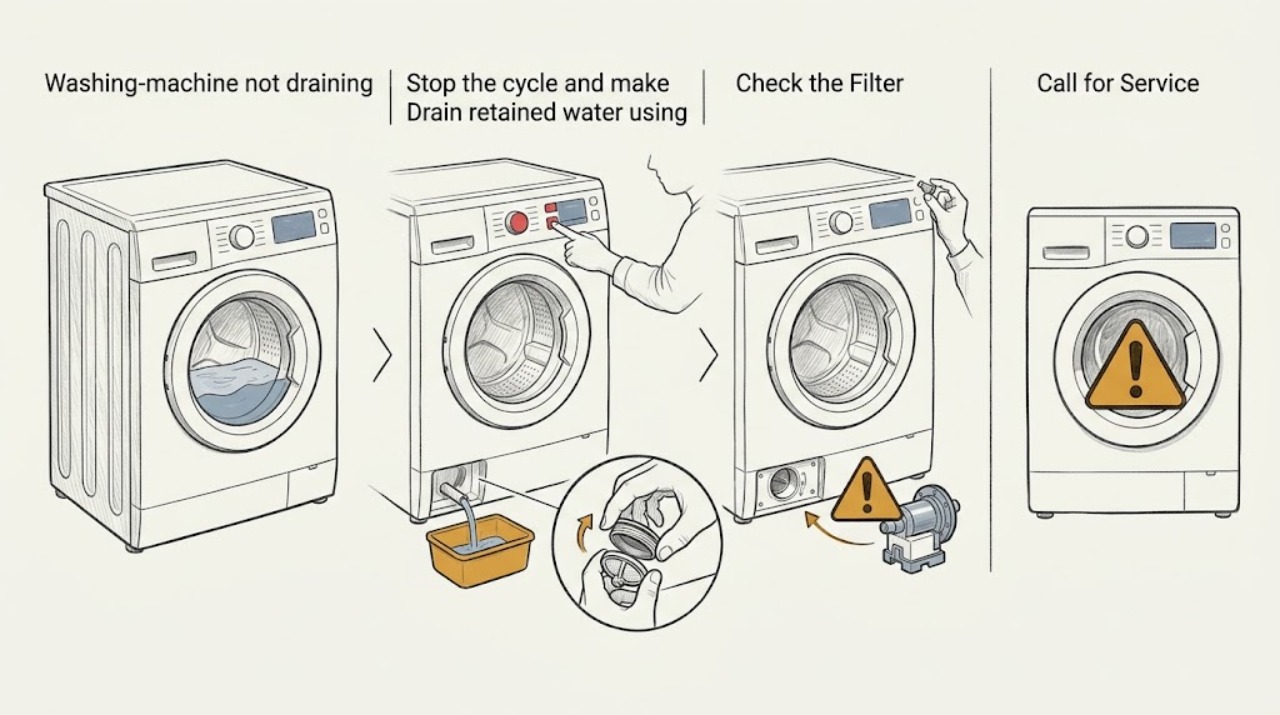
A Fisher & Paykel washing machine that will not drain most often has a blocked pump filter, a kinked or blocked drain hose, or a blocked household drain. Stop the washer and disconnect it from power before removing any part.
-
Why Is My Miele Washer Dryer Not Draining?
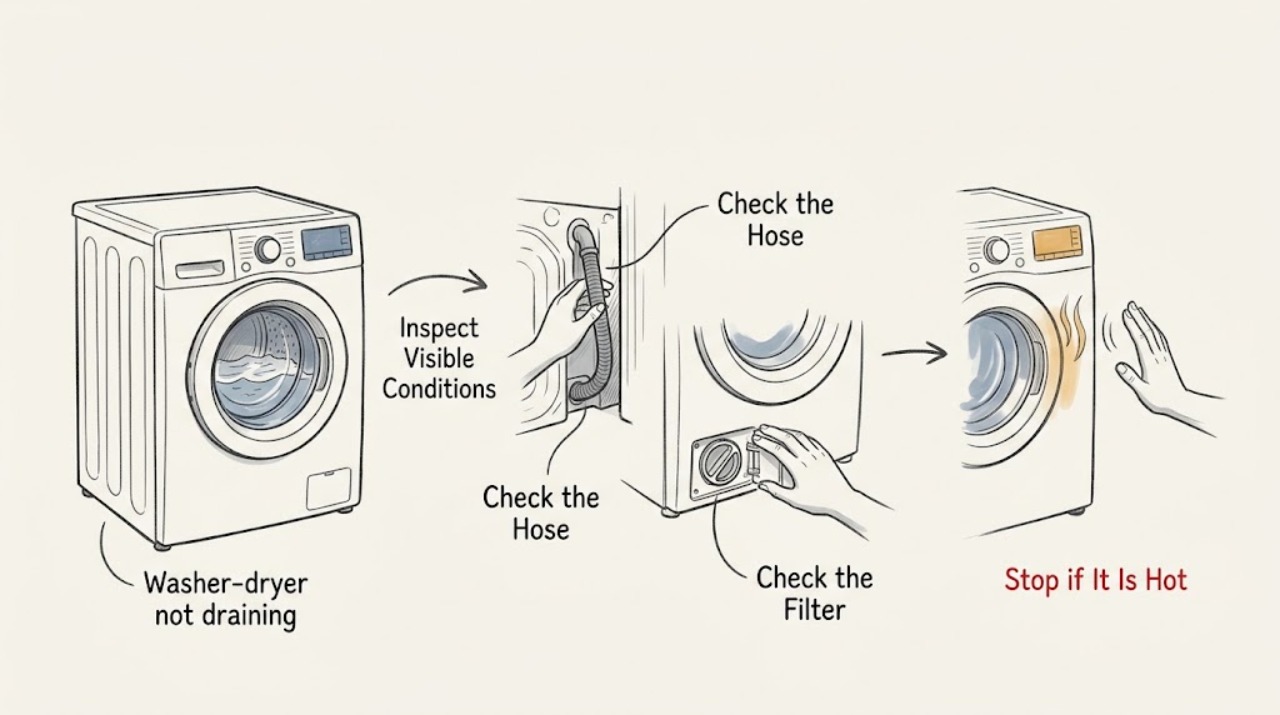
A Miele washer dryer that leaves water in the drum usually has a kinked or badly routed drain hose, a blocked drain filter or pump, or a blocked household drain. First stop the program and treat the water as potentially hot, especially after a hot wash.
-
Wine Cooler Not Draining
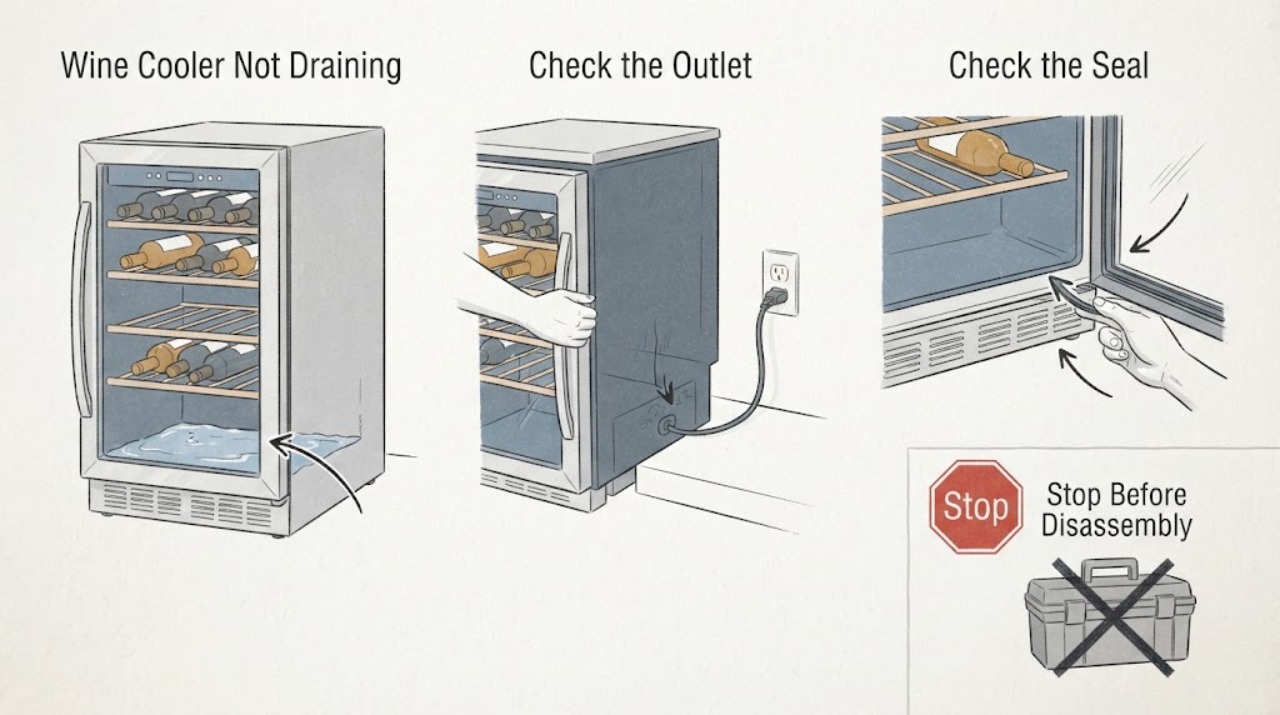
A wine cooler that is not draining usually has water from normal defrost that cannot reach or evaporate from the drain pan because the door stayed open, frost is excessive, the unit is not level, or the drain path is obstructed. Check the door seal and closure, keep bottles from touching the back wall, reduce repeated openings, and wipe accessible water. Do not chip ice or remove panels; persistent pooling or water near electrics needs service.
-
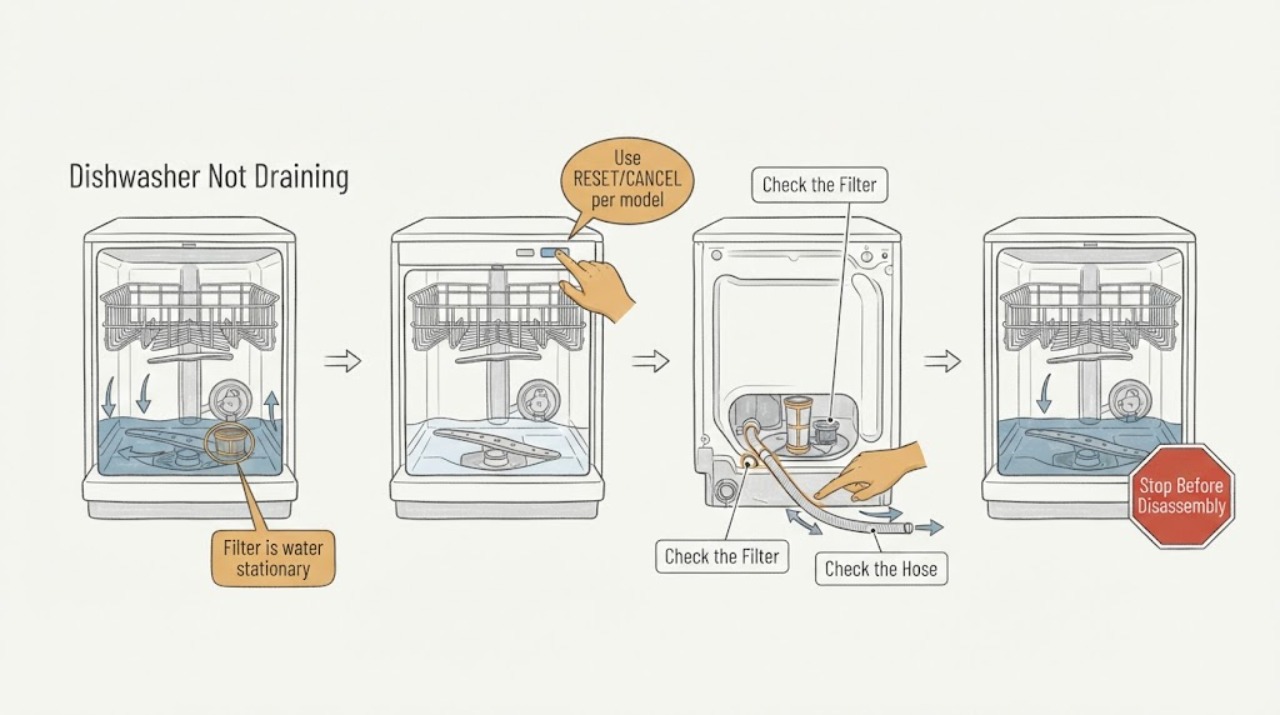
Zanussi Dishwasher Not Draining
Check a Zanussi dishwasher by canceling the cycle, cleaning and locking filters, then inspecting the hose and sink connection. A clear path with a full sump or humming pump needs authorized service.
-
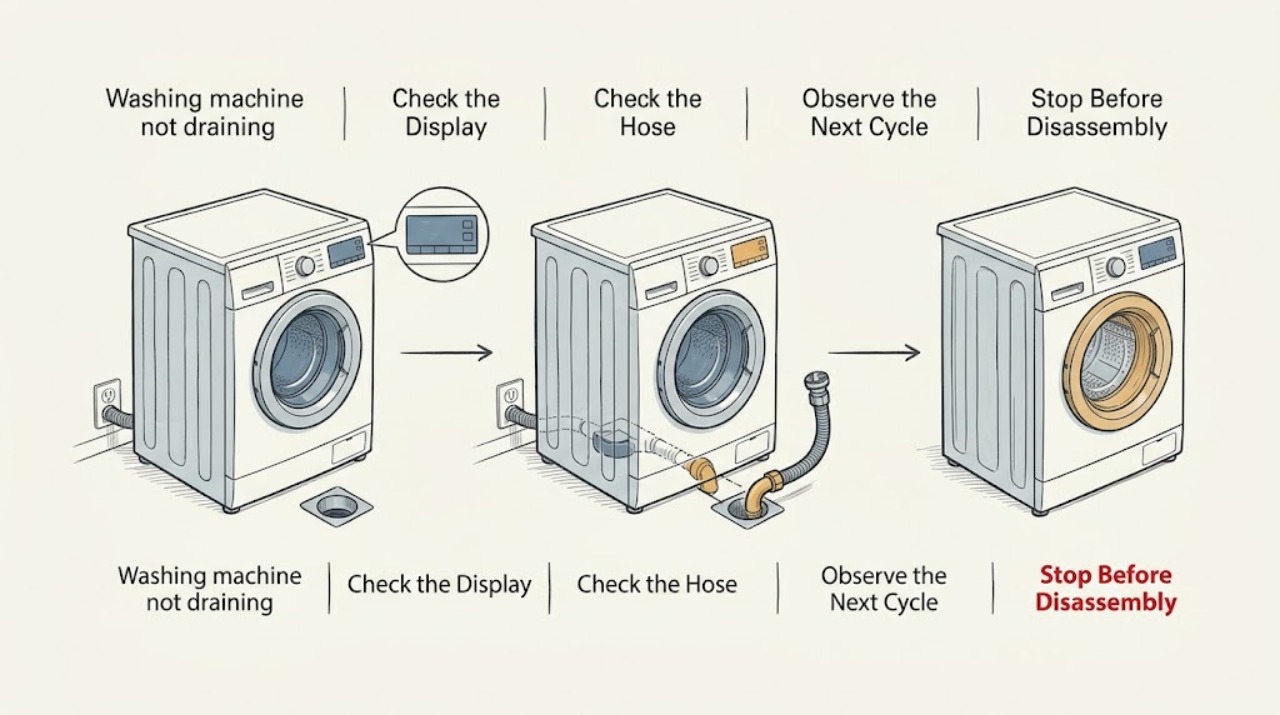
Zanussi washing machine not draining: safe checks before service
If a Zanussi washing machine leaves water in the drum, first note whether it stops during drain or spin and record any exact code. From a dry, safe position, check the visible drain hose and household waste connection, then use the model-specific cool-water drain and pump-filter instructions only after safe power isolation.