
On this page
Start here
Quick answer
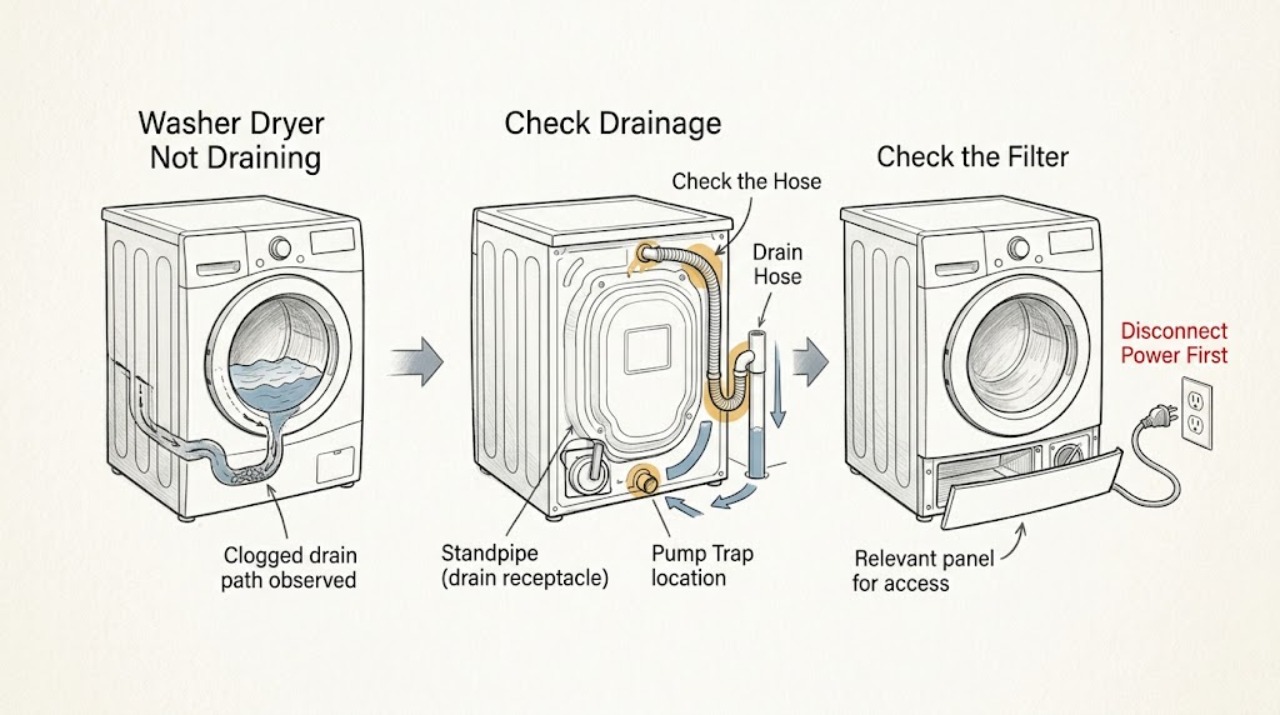
Stop the cycle and keep the washer portion of the Speed Queen unit from running while water remains. Check the accessible drain hose for a kink or clog, confirm the drain receptacle is not backing up, and use the exact model's maintenance instructions to inspect the pump's foreign-object trap if that access is provided. Speed Queen also notes that items lodged in the pump or excessive suds can delay or prevent draining. Do not tip or open a stacked or hard-to-access unit, and do not continue test cycles if water is on the floor, the drain backs up, the pump is unusually loud, or the machine needs internal access. If the hose, receptacle, and permitted trap check do not restore drainage, arrange qualified appliance or plumbing service.
Work through in order
Diagnostic checks
Use only checks that match the exact appliance or system and its official guide.
-
Check 1
Stop the washer and check for immediate water or electrical danger before touching the drain path.
Expected result: Note water on the floor, water near the outlet or controls, an active leak, a burning odor, smoke, a hot or damaged cord, or a cabinet that has shifted. Note whether the door or lid is locked with water still inside.
Next step: Stop the cycle. If safe and accessible without touching wet electrical parts, close the water supply and keep clear. Arrange qualified appliance service or plumbing help for a leak, wet electrical area, or locked unit that cannot be safely emptied.
Stop if: Do not reach into standing water, force the door or lid, tip the unit, or unplug a wet connection.
Why this matters
Why: These are safety or containment conditions, not a simple clog check. Continuing to run a leaking or wet appliance can increase electrical, floor, and water damage risks.
-
Check 2
Identify the stage of the failure and observe the accessible drain hose and drain receptacle without moving the washer or dryer stack.
Expected result: Check whether the hose is kinked, crushed, disconnected, or visibly clogged, and whether the receptacle or standpipe is backing up. Note whether water drains slowly, the pump hums, or there is no pump sound.
Next step: If the area is dry and the hose is safely accessible, follow the exact installation guide for routing and clearance. Do not pull a stacked or hard-wired unit to reach the rear. If the receptacle backs up or the hose is damaged, stop and request service or a plumber.
Stop if: Stop if water spills, the hose connection is wet, access requires moving the unit, or the pump makes a harsh grinding or burning sound.
Why this matters
Why: A kink or blockage in the hose can stop flow; a backed-up receptacle points toward household plumbing; a hum without flow can indicate a blocked pump path; silence can require a control or pump diagnosis.
-
Check 3
Use the exact model manual to determine whether a user-accessible pump foreign-object trap or filter can be checked, and isolate power only as that manual directs.
Expected result: If the manual provides safe trap access, look for lint, coins, small garments, or other objects that could restrict the pump. Note whether the trap is full of water or damaged. If the manual does not provide that access, do not remove panels or improvise an opening.
Next step: Follow the model's procedure to contain any residual water, clean only the permitted trap, refit it correctly, and keep the unit dry. If the trap is clear or the machine still will not drain, stop testing and arrange appliance service.
Stop if: Do not open a cabinet, disconnect a pump, reach into an energized unit, or continue if the manual does not clearly authorize the access.
Why this matters
Why: Speed Queen lists a clogged pump trap as a possible cause of a washer that will not drain, but the location and procedure vary by model. A damaged trap, pump seal, or internal obstruction needs service.
-
Check 4
Check for excessive suds or an overloaded wash condition after the water is contained and the appliance is safe.
Expected result: Look for a tub full of persistent suds, a load packed tightly, repeated slow drain behavior after detergent changes, or a normal amount of water with no suds but continued failure.
Next step: Follow the exact model and detergent label guidance and do not add more detergent to a stalled cycle. If the problem returns or there are no suds, keep the machine out of service and provide the details to a technician.
Stop if: Do not run repeated rinse or drain cycles when the tub is not clearing, water is escaping, or the pump is overheating or making an abnormal noise.
Why this matters
Why: Speed Queen says too much detergent and excessive suds can prevent timely draining. If drainage fails with an appropriate load and detergent or without suds, a hose, pump, trap, control, or internal obstruction remains possible.
-
Check 5
Record the drain result and exact model information before handing off a persistent fault.
Expected result: Record whether the failure is slow drain or no drain, the water level, pump sound, hose and receptacle condition, trap result if permitted, suds, error display, load, and whether the unit is stacked or recently moved.
Next step: Use the exact model number to retrieve the applicable owner and installation manuals, then provide the record and safe photos to qualified service. Keep the washer portion out of service until the drain path is repaired.
Stop if: Stop all troubleshooting when the next step requires moving the stack, removing panels, bypassing a door lock, or testing energized wiring.
Why this matters
Why: This pattern helps distinguish a household drain backup, external hose issue, pump restriction, oversudsing, control fault, and an internal appliance problem.
Use your observations
Decision map
Find the observation that best matches what you see, then follow the next safe action.
-
PATH 01Next step
What you see
Water is on the floor, near electrical parts, actively leaking, or the door or lid cannot be safely opened with water inside.
Do this next
Stop the machine, keep clear of wet electrical areas, close accessible water valves only if safe, and arrange qualified appliance service or plumbing help.
-
PATH 02Next step
What you see
The drain hose is kinked or clogged, but the hose and floor are safely accessible.
Do this next
Correct the routing or clear only the accessible hose as the exact installation guide permits. If the hose is damaged or the problem returns, request service.
-
PATH 03Next step
What you see
The receptacle or standpipe backs up while the appliance's hose is not visibly blocked.
Do this next
Stop using the washer and arrange plumbing service; do not keep pumping water into a backed-up drain.
-
PATH 04Next step
What you see
The hose and receptacle are clear, the permitted pump-trap check is clear or unavailable, and the washer still will not drain.
Do this next
Keep the washer out of service and arrange qualified appliance repair for the pump, control, or internal drain path. Provide the model and failure record.
-
PATH 05Next step
What you see
The tub contains persistent suds and drainage improves only after the load and detergent conditions change.
Do this next
Follow the exact model's detergent and load guidance. If slow or failed draining returns, stop using the unit and request service rather than assuming suds are the only cause.
Helpful context
Understand the symptom
Start with the washer, not the dryer
In a combined washer-dryer or stacked unit, the washer's drain path is the part that removes wash water. A dryer that is not drying is a different diagnosis. Confirm that the water is in the washer tub or drum and note whether the pump hums, drains slowly, or stays silent before choosing a check.
Water on the floor changes the priority
Stop the cycle if water is escaping, keep people away from wet electrical areas, and close accessible water supply valves only when doing so is safe. Do not repeatedly start the machine to force water through a blocked path. A backed-up standpipe or damaged hose may need plumbing help, while a pump or internal obstruction needs appliance service.
The model determines trap access
Speed Queen washer designs differ. Some manuals describe a pump foreign-object trap, while other units have different access arrangements. Use the product model number to retrieve the applicable manual and follow only its maintenance procedure; never tilt or dismantle a stacked unit to find a filter.
Only after diagnosis
Potential parts
- washer drain hose
Consider this category only when the hose is confirmed damaged, kinked beyond correction, or leaking and the exact installation guidance identifies it as the failed path.
Confirm the exact Speed Queen model and hose routing requirements before ordering or moving a stacked unit. - pump foreign-object trap or drain pump
Consider this category only after the hose and receptacle are clear and the exact manual or a qualified diagnosis confirms a blocked or failed pump path.
Match the exact model and use the manufacturer's maintenance procedure; internal pump work requires qualified service. - drain control or pump wiring component
Consider this category only when a qualified technician confirms that the drain path is clear but the control is not operating the pump correctly.
Confirm the exact model and diagnosis before ordering; do not perform live electrical testing.
When checks do not resolve it
Need a professional?
Stop and seek qualified service for water on the floor, wet electrical areas, a backed-up receptacle, a damaged hose, abnormal pump noise, persistent suds with failed drainage, a locked tub with standing water, repeated no-drain symptoms, or any need to move a stack, open panels, bypass a lock, or test energized wiring.
Common questions
FAQ
What is the first thing to check when a Speed Queen washer will not drain?
After stopping safely, check the accessible drain hose for a kink or clog and confirm that the drain receptacle is not blocked or backing up. Use the exact model manual for any pump-trap access.
Could too much detergent cause a Speed Queen washer to drain slowly?
Yes. Speed Queen notes that excessive suds can prevent timely draining. Follow the exact model and detergent label guidance, but treat repeated no-drain behavior with no suds as a separate service issue.
Can I tilt a stacked Speed Queen unit to reach the pump?
No. Do not tilt, drag, or dismantle a stacked unit to reach a hose or pump. Use the exact manual's permitted access or arrange qualified service.
What if the drain hose is clear but water remains?
If the receptacle is also clear and a permitted pump-trap check does not restore drainage, keep the unit out of service. A pump, control, or internal obstruction needs qualified diagnosis.
Read the exact guide
Official sources
- Speed Queen | Tricks your washer or dryer might be playing on you (and how to solve them!)Speed Queen · Speed Queen washer drainage tips, hose obstruction, pump obstruction, and excess-suds context
- Speed Queen | Manuals & DownloadsSpeed Queen · Speed Queen model-number lookup for washer, dryer, stacked-unit owner and installation manuals
- User's GuideSpeed Queen · Speed Queen stacked washer-dryer washer drainage troubleshooting, pump trap, drain hose, receptacle, installation, suds, and service boundaries
Community feedback
Share a repair observation
Share a plain-text repair observation. Accepted observations are published automatically; this page may take a moment to update.