
On this page
Start here
Quick answer
A Miele washer dryer that leaves water in the drum usually has a kinked or badly routed drain hose, a blocked drain filter or pump, or a blocked household drain. First stop the program and treat the water as potentially hot, especially after a hot wash. Check the visible hose routing and delivery height, then switch the machine off and clean its drain filters and pump only after preparing a container and following the exact model instructions. Refit every filter tightly, check for leaks, and try one appropriate drain or spin program. If the drain indicator returns, the pump is silent, the hose and filters are clear, or the door remains locked with hot water inside, stop using the appliance and arrange qualified Miele service. [Sources: miele-drain-support, miele-wwh860-manual, miele-drain-leak-support]
Before you begin
Safety first
- Do not force a hot locked door, access internal wiring, dismantle the pump, bypass the door lock, or operate the machine with a leak or water near electrical parts.
Work through in order
Diagnostic checks
Use only checks that match the exact appliance or system and its official guide.
-
Check 1
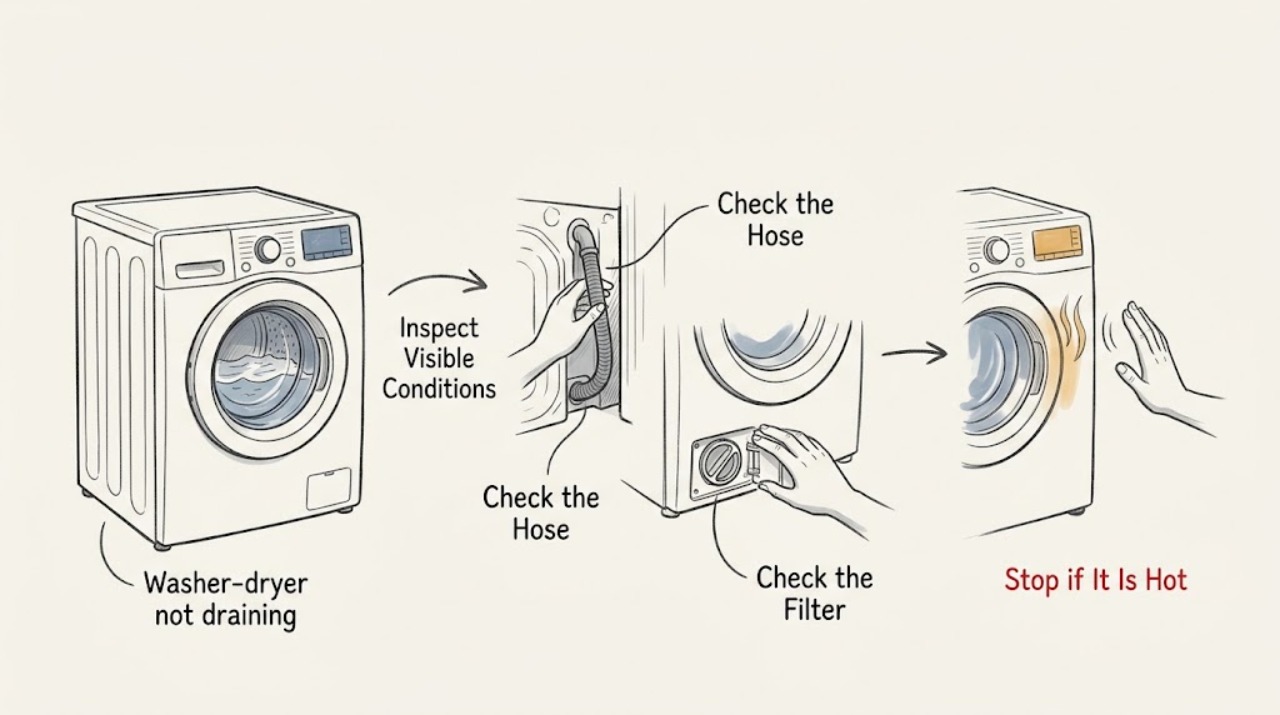
Press the normal pause or cancel control and observe the machine without forcing the door. Note the water level, whether the water or laundry is hot, whether the drum is still moving, whether the drain indicator or another code is showing, and whether water is leaking beneath the machine. If the contents are hot, leave the door closed and allow them to cool.
Expected result: The door is locked with hot water inside, the drum is moving, there is a large amount of standing water, or water is leaking near the appliance.
Next step: Stop the diagnosis. Do not force the door or reach into the drum. If safe from a dry position, switch the machine off and isolate its external power; arrange qualified service for persistent standing water, a leak, or a locked hot door.
Why this matters
Why: The machine is not safe for immediate filter or door work. Miele warns of scalding from hot laundry and water damage from leaks or incorrectly secured drain components.
-
Check 2
With the machine off, inspect the accessible drain hose from the appliance to the standpipe or sink connection. Look for kinks, loops, crushing, a loose connection, or an end positioned above the maximum delivery height specified in the model manual. Do not pull a built-in washer dryer out if doing so could strain the hoses or stacking installation.
Expected result: The hose is kinked, damaged, loose, routed too high, or the household drain connection is visibly blocked.
Next step: Correct only an accessible hose loop or connection in accordance with the exact model instructions. If the hose is damaged, the drain pipe is blocked, or the connection still leaks, stop using the machine and contact a qualified plumber or Miele service.
Why this matters
Why: Miele lists a kinked hose and excessive delivery height as causes of restricted drainage; a blocked or leaking on-site drain needs plumbing attention rather than repeated appliance cycles.
-
Check 3
Only after the water is cool, the drum is stationary, and the machine is switched off, place a suitable shallow container under the drain-pump access. Follow the model manual: open the access flap, loosen the drain filter slowly so water can be controlled, and tighten it again if the container needs emptying. Once flow stops, remove and clean the filter and remove accessible foreign objects from the pump area without reaching into a moving pump.
Expected result: Lint, buttons, coins, or another object is found; the impeller area is clear; or the filter cannot be removed, cleaned, or reseated safely.
Next step: Replace the filter on the correct side and tighten it securely, then close the access flap and wipe the area dry. If the filter is inaccessible, damaged, or will not reseat, leave the machine off and arrange service rather than forcing it.
Why this matters
Why: A blocked filter or pump can leave a large amount of water in the drum. A clear or damaged filter shifts the diagnosis toward the hose, pump, water-level sensing, or controls; a filter that is not reseated can leak.
-
Check 4
After the filter is correctly refitted and the hose connection is secure, check the floor and access flap for leaks before running anything. If the machine is fully cool and dry, select the model's drain or spin program once and observe whether the pump runs, water exits, the program reaches spin, and the drain indicator clears.
Expected result: The machine drains and completes normally; the pump hums but little water exits; the pump is silent; or water leaks as soon as the pump runs.
Next step: Use the washer dryer only if it completes without a leak or repeated warning. For any failed result, switch it off and arrange service; do not reach into the pump, bypass the door lock, or repeat cycles with standing water.
Why this matters
Why: Successful drainage after clearing the filter supports a temporary restriction. A running pump with no flow, a silent pump, or a new leak indicates a remaining blockage, pump fault, or incorrectly seated drain component.
-
Check 5
Record the exact model and serial information, drain indicator or display code, program stage, water temperature, pump sound, hose condition, filter contents, and whether the problem began after installation or a plumbing change. Compare any code with the exact model manual; do not enter a technician diagnostic mode or make internal electrical tests.
Expected result: A drain warning returns after the hose and filter are clear, the pump remains silent, the machine cannot progress to spin, or the household drain is confirmed clear.
Next step: Keep the appliance out of service and provide the recorded observations to Miele service. Do not bypass the door lock, access internal wiring, or keep resetting the drain warning.
Why this matters
Why: The remaining possibilities include a blocked or failing pump, water-level sensing or control fault, or an installation issue that requires model-specific diagnosis. Miele directs users to service if the drain fault persists.
Use your observations
Decision map
Find the observation that best matches what you see, then follow the next safe action.
-
PATH 01Next step
What you see
The drain hose is kinked, too high, loose, or visibly damaged
Do this next
Correct only the accessible routing or connection described by the exact model manual. Replace a damaged hose or call a plumber/service provider if the drain connection remains faulty.
Why this path and its safety boundary
Why it matters: The external drain path can restrict flow or create a leak.
-
PATH 02Next step
What you see
The water is cool and the drain filter contains lint or foreign objects
Do this next
Clean the filter and accessible pump area, reinstall each filter on the correct side, tighten it securely, check for leaks, and run one supervised drain check.
Why this path and its safety boundary
Why it matters: The filter or pump restriction is a supported cause of the drain warning and retained water.
-
PATH 03Next step
What you see
The filter and hose are clear but the pump hums without moving water
Do this next
Switch the machine off and arrange qualified Miele service rather than reaching into the pump or repeating cycles.
Why this path and its safety boundary
Why it matters: A deeper blockage or a failing pump remains possible; the pump should not be dismantled by the user.
-
PATH 04Next step
What you see
The pump is silent, the drain warning returns, or the washer dryer still will not enter spin
Do this next
Keep the machine out of service and provide the model, code, and observations to Miele service.
Why this path and its safety boundary
Why it matters: A pump, water-level sensing, control, or wiring fault needs model-specific diagnosis.
-
PATH 05Next step
What you see
Hot water is trapped, the door is locked, a filter leaks after refitting, or water is near electrical parts
Do this next
Wait for the contents to cool, do not force the door, isolate power only from a safe dry position, and obtain qualified professional help. Do not run another cycle.
Why this path and its safety boundary
Why it matters: This is a safety stop, not routine drain maintenance.
Helpful context
Understand the symptom
Not draining can mean the machine has stopped before spin, the drain indicator is flashing, or water remains behind a locked door. The useful split is whether the hose is restricted, whether the filters and pump contain an object, whether the household drain is blocked, or whether the pump and water-level controls need service.
A washer dryer can retain a large quantity of water after a blocked drain, and Miele warns that laundry washed at a high temperature can make that water scalding. Do not force the door or fully remove a drain filter until the contents are cool and a suitable container is ready.
Only after diagnosis
Potential parts
- drain pump
Consider this only when the hose and drain filters are clear and a qualified technician confirms that the pump does not move water or has an internal fault.
Pump housings, connectors, and mounting vary by Miele model; confirm the exact model and manufacturer fit information before ordering. - drain hose or drain filter assembly
Consider this only when the hose or filter is damaged, cannot seal, or cannot be restored by the model-approved cleaning procedure.
Confirm hose routing, filter side, seals, and exact model fit before replacement; incorrect refitting can cause leaks. - water-level sensor or electronic control component
Consider this only if a recurring drain fault remains with a clear drain path and a technician identifies incorrect water-level feedback or a control fault.
Sensors and controls are model-specific and require qualified diagnosis and installation using the appliance documentation.
When checks do not resolve it
Need a professional?
Call qualified Miele service when the drain indicator returns after the hose and filters are clear, the pump is silent or hums without flow, the machine will not progress to spin, the filter cannot be reseated securely, or the household drain is clear but water remains. Stop immediately for hot trapped water, a locked door that will not safely release, a leak near electrical parts, or a damaged hose or cord. Do not force the door, remove covers, reach into a moving pump, bypass the door lock, or perform internal electrical tests.
Safety scope: Do not force a hot locked door, access internal wiring, dismantle the pump, bypass the door lock, or operate the machine with a leak or water near electrical parts.
Common questions
FAQ
What should I check first when my Miele washer dryer will not drain?
Check the visible drain hose for kinks, loops, damage, or excessive height. Then, only after the water cools and the machine is switched off, follow the model instructions to inspect the drain filters and pump.
Can I open the drain filter if there is still water in the drum?
Only when the machine is switched off, the water has cooled, and a suitable container is ready. Loosen the filter slowly and do not remove it completely while water is flowing; Miele warns that water from a hot wash can scald.
Why is the door locked when my Miele washer dryer will not drain?
Water remaining in the drum can keep the door locked, and Miele also prevents opening while the contents are too hot. Do not force the door; cool the water and follow the exact model procedure or arrange service.
Why does my Miele washer dryer still not drain after cleaning the filter?
The hose may still be restricted, the household drain may be blocked, or the pump, water-level sensing, or controls may need diagnosis. Check for a secure, leak-free filter and correct hose routing once, then call Miele service if the drain warning or standing water returns.
Read the exact guide
Official sources
- Miele Washer | The Drain indicator light flashes on the washing machine/washer-dryer. The drain is restricted.Miele USA · Miele washing-machine and washer-dryer restricted-drain troubleshooting
- Troubleshooting for All problem with Miele Washer | Miele USAMiele USA · Miele washer and washer-dryer support index, including drain and door-related troubleshooting topics
- WWH 860-US-enMiele USA · Miele WWH 860 washer operating and installation instructions, blocked drain, door, and hot-water safety
- Miele Washer | Water is leaking out under the washing machine/washer-dryer.Miele USA · Miele washing-machine and washer-dryer drain-hose connection, household drain, and leak guidance
Community feedback
Share a repair observation
Share a plain-text repair observation. Accepted observations are published automatically; this page may take a moment to update.