
On this page
Start here
Quick answer
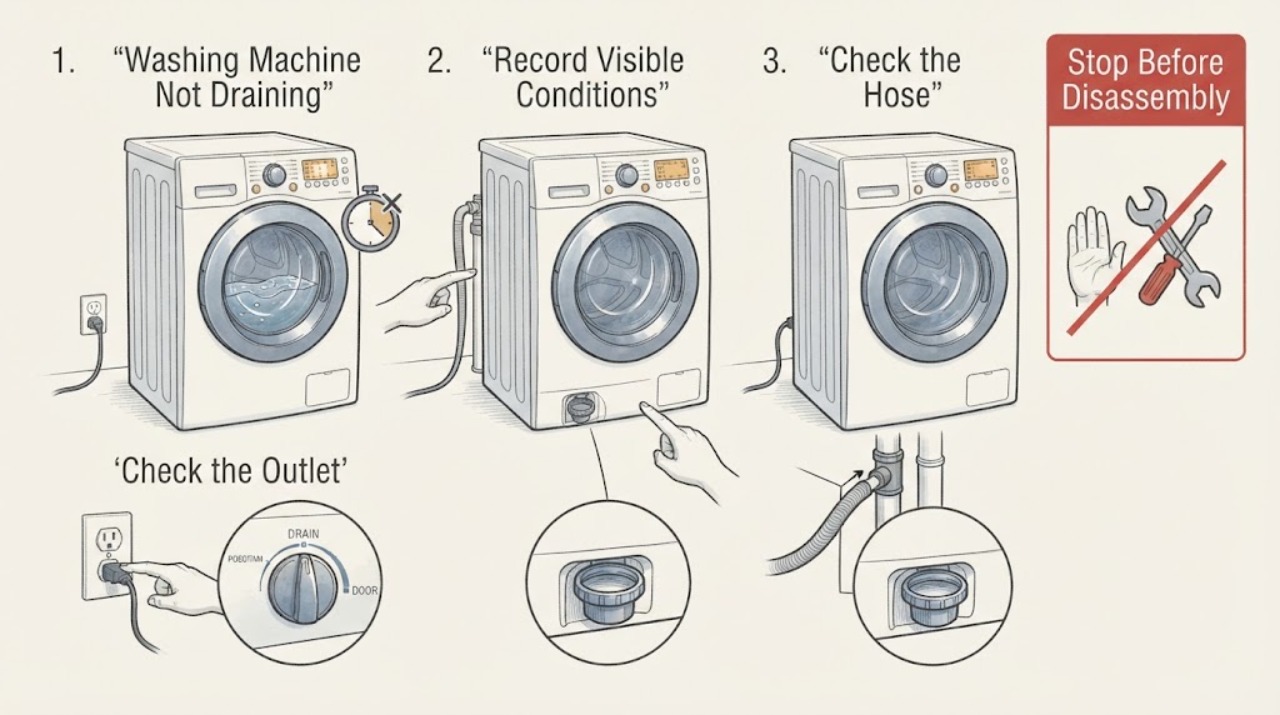
Start by recording the complete Russell Hobbs model and the exact stage at which water remains: after washing, during rinse, before spin, or after a drain attempt. Russell Hobbs directs owners to use the model-number manual finder because controls and user-serviceable parts vary. With the machine stopped, cool, and safely disconnected, check the visible outlet hose for a kink, confirm the hose is not blocked at its accessible end, and check the household waste connection. If the exact manual identifies a user-accessible pump filter, drain the residual water cautiously into a shallow container, clean only that filter, and refit it fully; not every model has the same filter access. A door may stay locked while water remains. Do not open a hot or pressurized filter, tip a full machine, probe the pump, or keep running cycles if there is leaking water near electrics, smoke, burning odor, sparking, repeated breaker trips, or severe noise. If the machine still will not drain after the model-approved checks, arrange qualified service.
Work through in order
Diagnostic checks
Use only checks that match the exact appliance or system and its official guide.
-
Check 1
Stop the machine and check for standing water around the base, a wet outlet or plug, smoke, a burning or electrical smell, sparks, a hot cord, repeated breaker trips, severe grinding, or water that appears hot enough to scald. Note the program stage and display message without restarting the cycle.
Expected result: There is no hazard and water is contained in the drum, or there is water near electrical parts, smoke, burning odor, sparking, repeated tripping, severe mechanical noise, or a hot-water risk.
Next step: If safe, continue only after the machine is stopped and cool enough to handle. For any hazard, keep it out of service, avoid touching wet electrics, and obtain qualified appliance, electrical, or emergency help from a safe location.
Stop if: Stop immediately for smoke, flames, burning smell, sparks, exposed conductors, water at an energized outlet, repeated breaker trips, or severe metal-on-metal noise.
Why this matters
Why: A contained drain symptom can proceed to model-specific external checks. Wet electrics, fire risk, scalding water, or mechanical damage ends user troubleshooting.
-
Check 2
Read the rating label and record the complete model number, exact code or indicator, selected program, and the point where the machine stopped. Use the Russell Hobbs model-number manual finder and locate the sections for draining, pump filter, door lock, and troubleshooting before removing anything.
Expected result: The manual identifies an accessible pump filter or drain tube, a model-specific error path, or no user-accessible filter and no matching procedure.
Next step: Follow only the procedure for the identified model. If the model cannot be matched, limit work to the visible hose and household waste checks and request model-specific support.
Why this matters
Why: Russell Hobbs models do not share one universal access layout or code table. A drain flap, filter, or emergency release that exists on one model may not exist on another.
-
Check 3
With the machine stopped and unplugged, inspect the visible drain hose behind the machine for a sharp kink, crushing, or an end pushed too far into the standpipe or sink connection. Check the accessible household waste connection for a blockage or backup without disconnecting a pressurized or full machine.
Expected result: The hose is kinked or crushed, the waste connection backs up, the hose end is mispositioned, or the visible route is clear and the household drain accepts water normally.
Next step: Correct only an obvious hose position or accessible waste obstruction, secure the connection as the manual shows, and try one short drain or spin-and-drain program. If water backs up again or the machine leaks, stop and call service or a qualified plumber as appropriate.
Stop if: Do not pull hard on the hose, dismantle plumbing with a full drum, pour chemical drain cleaner into the washer, or run repeated cycles against a blocked waste path.
Why this matters
Why: A restricted appliance hose or household waste path can prevent draining even when the pump is working. A clear route shifts attention to the model-specific filter, pump, control, or door-lock path.
-
Check 4
Only when the exact manual identifies a user-accessible pump filter or emergency drain tube, keep the appliance unplugged, place towels and a shallow container below the access point, and release residual water slowly. Remove visible lint, coins, buttons, or other debris from the filter without forcing it, then refit the cover fully.
Expected result: Water drains through the documented tube or filter, debris is present, the filter is clear but no water exits, or the cover will not reseat without force.
Next step: After correct refitting, wipe the area dry and run one model-approved drain check while supervised. If no water exits, the filter will not move, or leakage returns, stop and arrange qualified service.
Stop if: Do not open a hot filter, reach into a running pump, insert tools into the pump, tip the machine to access hidden parts, or use a filter procedure not listed for the model.
Why this matters
Why: A blocked user filter can restrict the pump, but no flow with a clear filter can indicate a blocked internal hose, pump failure, or control condition. An incorrectly seated cover can leak during the next cycle.
-
Check 5
If the machine drained partly but will not spin or the door remains locked, wait for the drum to stop and cool, then check the display and door state. Do not force the door; use only the manual's documented cancellation, drain, or safe unlock route after confirming there is no unsafe water level.
Expected result: The door opens after the documented drain or cool-down, the machine reports a door or water-level condition, or the door remains locked despite an apparently empty drum.
Next step: Follow the exact manual's user-level cancellation or drain step once. If the lock remains, the display returns a door or water-level error, or the drum cannot be confirmed empty, leave the washer off and request service.
Stop if: Never pry the door, bypass the interlock, pull an emergency release blindly, or reach into a drum with standing water or moving parts.
Why this matters
Why: Many washers retain a safety lock while water or heat is present. A continuing lock with an empty, cool drum may involve the lock, pressure sensing, pump, or control system rather than a simple hose blockage.
-
Check 6
Record whether the problem occurs with a small load, heavy or absorbent load, excess detergent, a quick cycle, or every program. After the safe hose and filter checks, use the exact manual to see whether the selected program has a drain or spin prerequisite; do not add more detergent or chemical cleaner to force a drain.
Expected result: The issue occurs only after heavy suds or one program, occurs only with a particular load, or occurs consistently even on a permitted empty drain program.
Next step: Correct only the documented detergent or load condition and run one supervised drain check. If the machine still leaves water or stops with an error, stop testing and arrange service.
Stop if: Do not mix cleaners, use chemical drain opener in the washer, repeatedly cancel and restart a full drum, or continue if foam or water escapes.
Why this matters
Why: Foam, load distribution, or program logic can delay or inhibit spin, but consistent failure on a valid drain program makes a pump, pressure-sensing, control, or internal hose fault more likely.
-
Check 7
If the machine is cool, dry, unplugged during inspection, and free of hazard signs, perform only the single reset or cancellation sequence stated in the exact manual. Then run one short, supervised drain check; record pump sound, remaining water, code, and whether the door unlocks.
Expected result: The machine drains and unlocks normally, the code or symptom returns, the pump is silent or only hums, the breaker trips, or water leaks after the filter or hose is refitted.
Next step: Leave the appliance out of service and arrange qualified repair. Provide the model, program stage, code, drain-path findings, filter result if applicable, and reset outcome.
Stop if: Do not repeatedly reset the machine, test with covers removed, probe live terminals, bypass the pump or door lock, or operate with a leak.
Why this matters
Why: A single reset can clear a transient control state, but a returning fault, silent or abnormal pump, leak, or electrical trip indicates a fault beyond safe external checks.
Use your observations
Decision map
Find the observation that best matches what you see, then follow the next safe action.
-
PATH 01Next step
What you see
Water remains after washing or before spin, but the machine is cool, dry outside, and shows no hazard.
Do this next
Record the program stage and follow the exact Russell Hobbs manual's drain or pump-filter access instructions before touching a service flap.
-
PATH 02Next step
What you see
The visible outlet hose is kinked, crushed, incorrectly positioned, or connected to a household waste that backs up.
Do this next
Correct only the accessible hose position or waste obstruction, then run one supervised model-approved drain check; recurring backup needs qualified plumbing or appliance help.
-
PATH 03Next step
What you see
The exact manual identifies a user-accessible pump filter and water can be released safely.
Do this next
Unplug, contain residual water, clean visible debris, refit the filter fully, and test once. Persistent no-flow or leakage is a service boundary.
-
PATH 04Next step
What you see
There is no documented user-accessible filter, or the model manual cannot be found.
Do this next
Do not guess an access point. Limit checks to the visible hose and household waste connection, then obtain the exact manual or Russell Hobbs support guidance.
-
PATH 05Next step
What you see
The door remains locked while water or heat may remain in the drum.
Do this next
Wait for safe cool-down and use only the manual's documented drain or cancellation path; never pry or bypass the door interlock.
-
PATH 06Next step
What you see
Drainage fails only after heavy suds, a particular load, or a particular program.
Do this next
Record the detergent, load, and program, correct only the model-documented condition, and run one supervised approved drain check; repeated failure needs service.
-
PATH 07Next step
What you see
The pump filter is clear, the hose and waste route are clear, but water remains or a drain code returns.
Do this next
Leave the washing machine off and arrange qualified appliance service for the internal hose, drain pump, pressure sensing, control, or door-lock diagnosis.
-
PATH 08Next step
What you see
Water reaches electrical parts, smoke, burning odor, sparks, repeated breaker trips, severe grinding, uncontrolled leakage, or scalding water is present.
Do this next
Stop immediately, do not touch wet electrical equipment or restart the washer, and use the appropriate local emergency, electrical, plumbing, or qualified appliance response from a safe location.
Helpful context
Understand the symptom
The point where the water stops is the first clue
A machine that never reaches drain, leaves water before spin, drains slowly, or drains but keeps the door locked may have different causes. Record the program, display message, load condition, and whether you hear a pump sound. Do not assume a filter door, emergency drain tube, or error-code meaning from another Russell Hobbs model. Use the exact model manual before opening any service flap.
Residual water can be hot and the door can remain locked
Stop the program and allow a hot wash to cool. Disconnect power before touching a user-removable filter or hose, protect the floor with towels and a shallow container, and open a filter only if the exact manual identifies it as user serviceable. Never force the door or use an emergency release unless the manual explains its safe use and the drum is empty and safe.
Only after diagnosis
Potential parts
- drain pump or pump filter assembly
Only consider this category after the exact manual-approved hose and filter checks show persistent no-flow, abnormal pump sound, or a returning drain fault.
Drain layouts and pump assemblies vary by model; confirm the complete model and qualified diagnosis before ordering or fitting. - drain hose or internal pump hose
Only consider this category when a qualified inspection confirms a split, collapsed, or obstructed hose rather than a household waste blockage.
Do not dismantle a full or connected machine to check hidden hoses; confirm model fit and safe installation. - door interlock or water-level sensor
Only consider this category when the machine is empty or safely drained but a door-lock or water-level condition still prevents drain or spin.
These components affect safety interlocks and should be diagnosed and replaced using model-specific qualified service.
Common questions
FAQ
Why is my Russell Hobbs washing machine leaving water in the drum?
Record the stage and code first. With the machine cool and unplugged, check the visible drain hose and household waste connection. If the exact model manual identifies a pump filter or emergency drain, contain the residual water and clean only that user-accessible part. A clear path with persistent no-flow needs qualified diagnosis.
Can I open the drain filter while water is still in the machine?
Only if the exact manual identifies that filter as user-accessible and the machine is stopped, unplugged, and cool enough to handle. Use towels and a shallow container and release water slowly. Do not open a hot filter, reach into a running pump, or force a cover that will not move.
Why is the washing-machine door locked when it will not drain?
A safety interlock may keep the door closed while water or heat remains. Wait for safe cool-down and use only the exact model manual's drain or cancellation route. Never pry the door or bypass its lock; a persistent lock with an empty, cool drum is a service condition.
Should I pour drain cleaner into a Russell Hobbs washing machine?
No. Do not pour chemical drain opener into the washer or mix cleaners. Check the accessible hose and household waste route, then use only the maintenance products and procedures named for the exact model. A blockage that remains needs qualified appliance or plumbing help.
What information should I give Russell Hobbs support?
Provide the complete model number, exact code or indicator, program and stage, amount and temperature of remaining water, visible hose and waste observations, filter result if the manual identifies one, door-lock behavior, pump sound, and any leak, odor, smoke, spark, noise, or breaker event. Russell Hobbs uses model-number manuals and product-support routes for model-specific help.
Read the exact guide
Official sources
- Russell HobbsRussell Hobbs Help Centre · Russell Hobbs product questions, user manual support, and customer-help direction
- Users ManualsRussell Hobbs Australia · Russell Hobbs model-name or model-number manual lookup and regional appliance support
- User ManualsRussell Hobbs UK · Russell Hobbs model-number manual lookup and model-specific product information
Community feedback
Share a repair observation
Share a plain-text repair observation. Accepted observations are published automatically; this page may take a moment to update.