
On this page
Start here
Quick answer
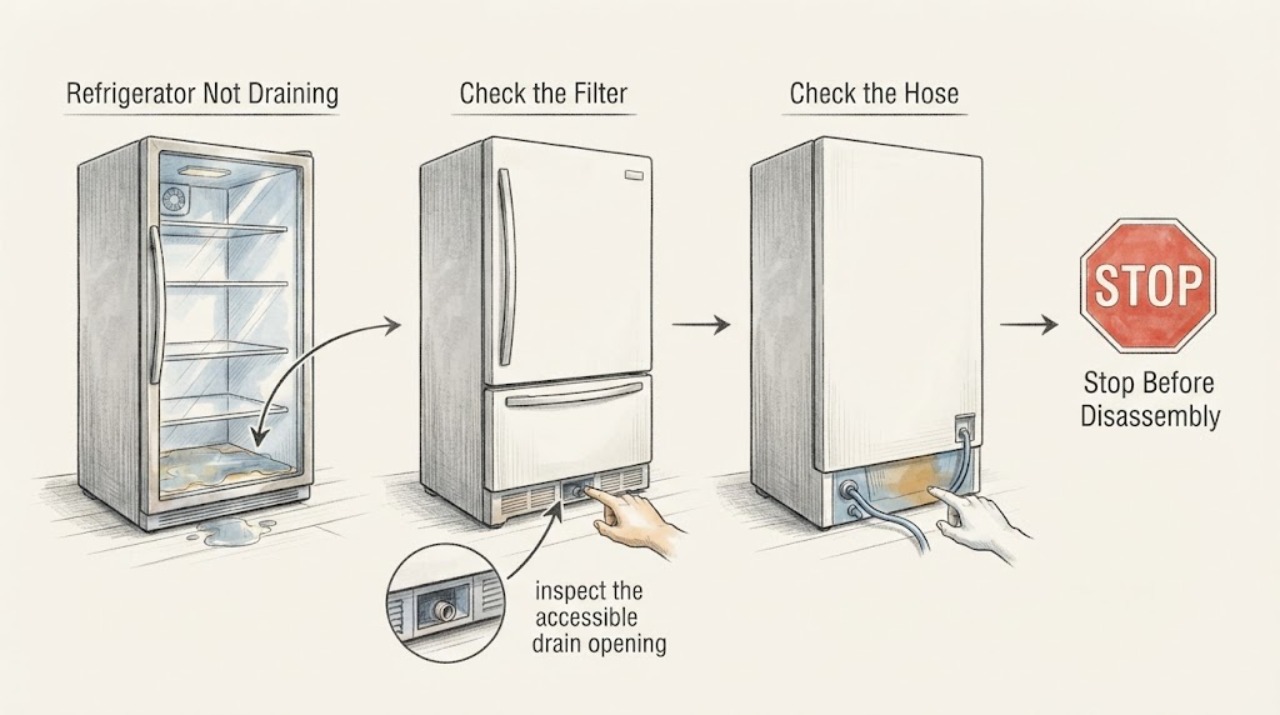
A refrigerator that is not draining usually shows water under drawers or on the floor because defrost water is blocked by ice or debris, or because a drain pan or hose is damaged. Dry the visible spill, check the drain area and pan only as the model manual permits, and do not chip ice with a sharp tool or open sealed panels. Persistent water, a cracked pan, or a frozen drain needs service.
Work through in order
Diagnostic checks
Use only checks that match the exact appliance or system and its official guide.
-
Check 1
Identify where water first appears: below the crisper drawers, at the rear interior, under the refrigerator, or near a dispenser or filter. Dry the area and note whether water returns after a defrost cycle.
Expected result: Water starts inside the cabinet, underneath, or at a water-dispenser connection.
Next step: Follow the matching section of the model manual and avoid assuming every leak is a drain blockage.
Why this matters
Why: Interior water makes a blocked defrost drain more likely; underneath water can involve the drain pan or hose; dispenser or filter water follows a different path.
-
Check 2
With the refrigerator stable and food protected, inspect the accessible drain opening and pan for visible debris, ice, cracks, or an overflowing tray. Do not use a knife, drill, heat gun, or sharp object to clear ice.
Expected result: The opening is visibly blocked, the tray is full or cracked, or the accessible area is clear.
Next step: Clean only accessible surfaces by the manual’s method and request service for ice behind panels, a crack, or a recurring overflow.
Why this matters
Why: Debris or ice can stop defrost water; a cracked or overflowing pan can leak even when the drain is open. A clear area points toward an internal hose or defrost fault.
-
Check 3
Check the refrigerator’s level and the visible drain hose or pan area for a kink, displacement, or water returning to the cabinet. Do not pull the appliance out if the water line or power cord would be strained.
Expected result: The appliance is visibly out of level, the hose or pan is displaced, or the visible path is normal.
Next step: Use the manual for leveling or pan placement; arrange qualified service when the hidden path is implicated.
Why this matters
Why: Poor leveling or a displaced pan can keep water from reaching the evaporation area. A normal visible path with recurring water suggests a hidden blockage or defrost problem.
Use your observations
Decision map
Find the observation that best matches what you see, then follow the next safe action.
-
PATH 01Next step
What you see
Water begins under the drawers and the visible drain opening is iced or blocked
Do this next
Use only the model’s documented thaw and drain procedure, or arrange service when access requires panel removal.
Why this path and its safety boundary
Why it matters: A defrost drain restriction is the leading explanation.
-
PATH 02Next step
What you see
Water is under the appliance and the pan is cracked, displaced, or overflowing
Do this next
Stop use if water can reach electrical parts and arrange appliance service.
Why this path and its safety boundary
Why it matters: The drain pan or outlet path may be leaking rather than the cabinet drain alone.
-
PATH 03Next step
What you see
The accessible drain and pan are clear but water returns
Do this next
Do not chip ice or dismantle panels; arrange qualified service.
Why this path and its safety boundary
Why it matters: A hidden hose, defrost component, or cabinet-level issue needs diagnosis.
Helpful context
Understand the symptom
The symptom is about defrost water leaving the cabinet, not the sealed refrigeration circuit. Location matters: water under drawers suggests an internal drain path, while water underneath can involve the pan or drain hose.
Models differ in drain access. Keep food safe, protect flooring, and use only the manual’s approved thawing or cleaning method.
When checks do not resolve it
Need a professional?
If the safe external checks do not restore normal operation, arrange qualified appliance service using the complete model information.
Common questions
FAQ
Can I pour boiling water into the refrigerator drain?
Do not improvise a thawing method. Use the model manual’s approved procedure; sharp tools and uncontrolled heat can damage the liner, wiring, or drain path.
Why does water collect only under the crisper drawers?
That location is consistent with defrost water failing to leave through the internal drain. Confirm the drain opening and ice pattern, then use model-specific service if it returns.
Read the exact guide
Official sources
- Why does my Samsung refrigerator drain tray leak?Samsung · refrigerator drain and defrost-water troubleshooting
Community feedback
Share a repair observation
Share a plain-text repair observation. Accepted observations are published automatically; this page may take a moment to update.