
Brand-independent appliance guidance
General Refrigerator Repair Guides
Brand-independent troubleshooting and repair guidance for common refrigerator problems and maintenance questions.
General refrigerator guides
Use these guides when the problem is not limited to a specific manufacturer.
-
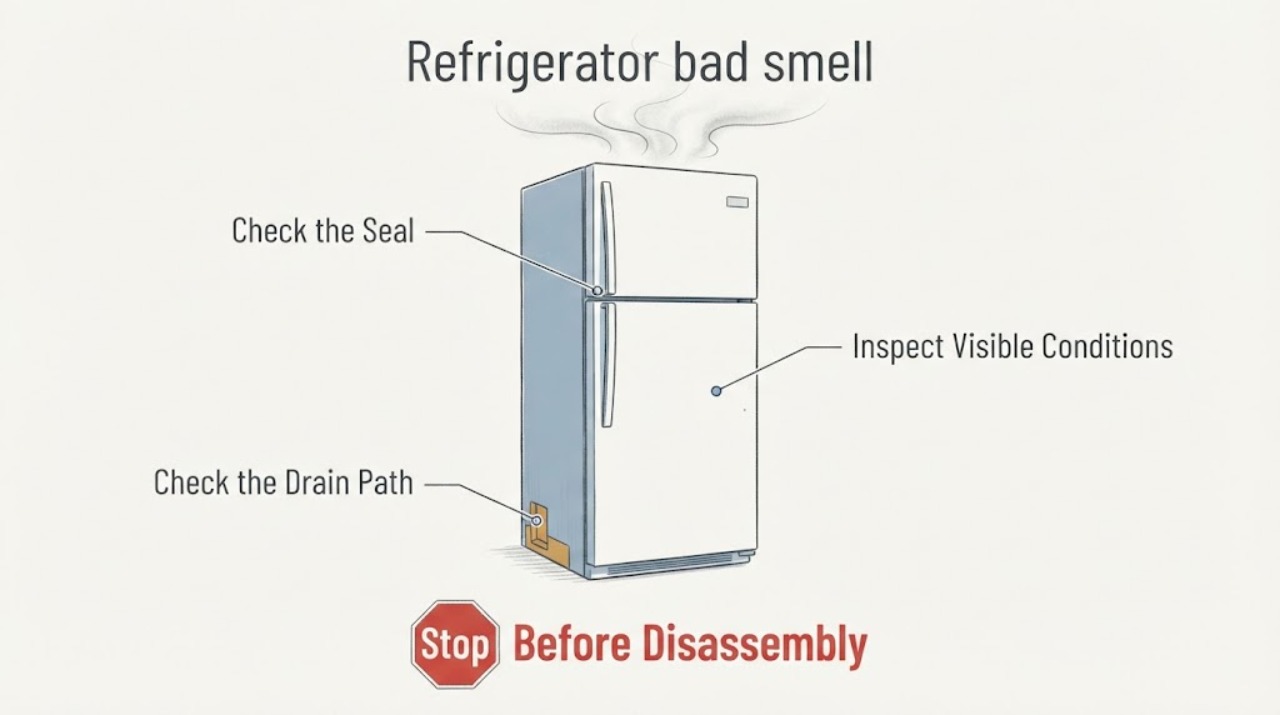
Refrigerator bad smell
A bad smell from a refrigerator usually comes from uncovered food, spills, the drip area, or damp residue rather than a mechanical part. Remove spoiled food, clean shelves and interior surfaces with the model-approved method, check the door seal and standing water, and use an odor absorber if appropriate. A burning/electrical odor, smoke, or a smell from wiring needs immediate stop-use and service.
-
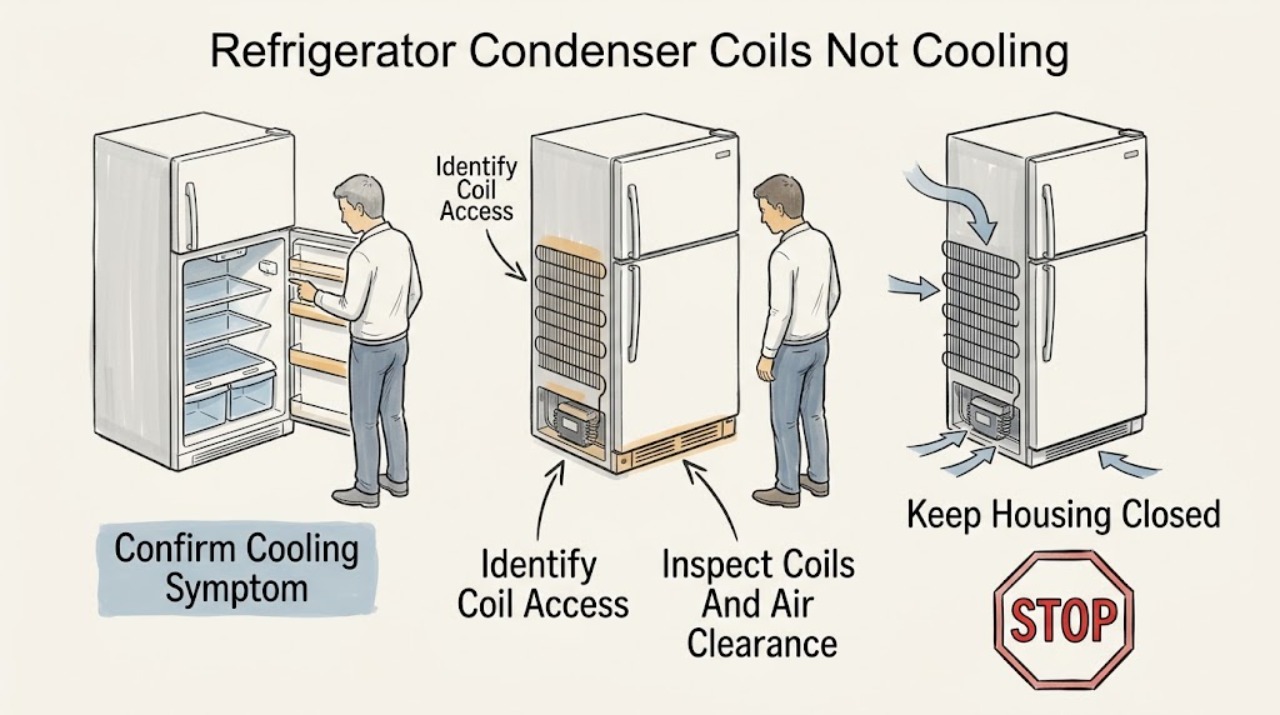
Refrigerator Condenser Coils Not Cooling: What to Check and What to Do Next
The condenser coils do not make the inside of a refrigerator cold; they release heat removed from the cabinet. If the refrigerator is not cooling and the condenser area looks dusty, first identify the coil location and confirm that your model permits owner cleaning.
-
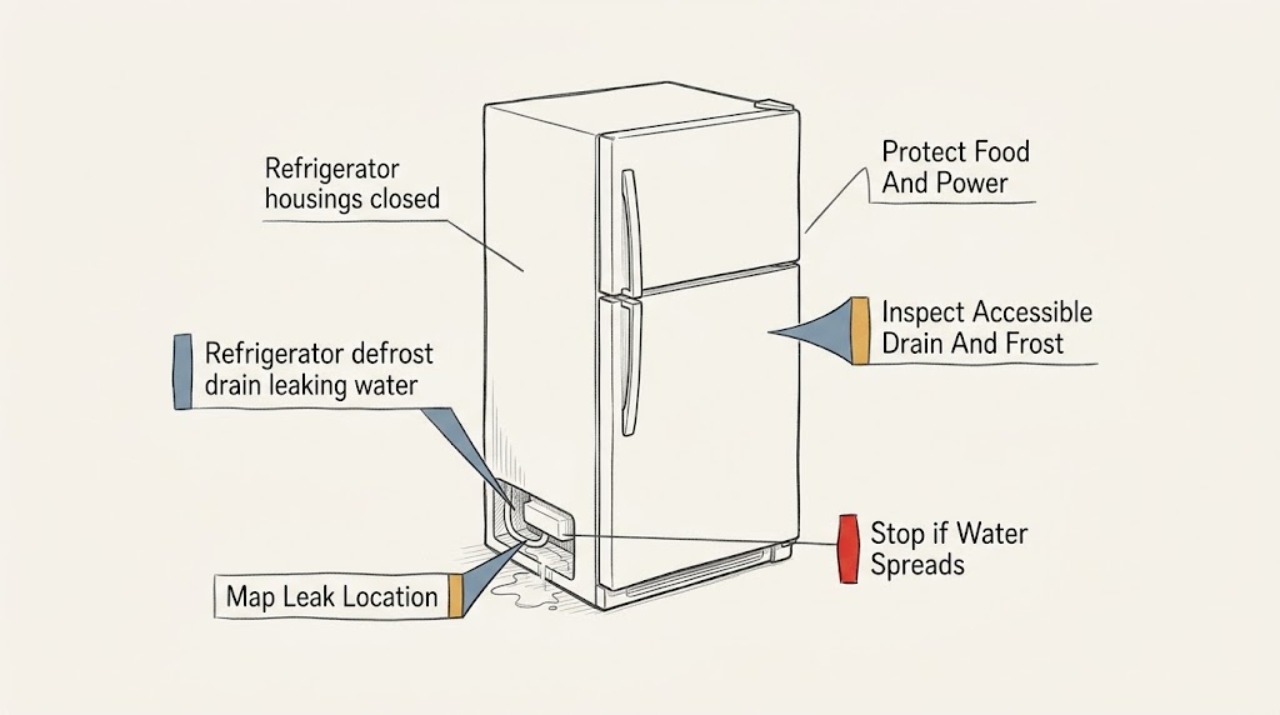
Refrigerator defrost drain leaking water: What to Check and What to Do Next
Water associated with a refrigerator defrost drain usually means melted frost is not reaching the drain pan normally. Ice, frost, or debris can block the drain and make water overflow into the freezer or fresh-food compartment, but a leak from the rear supply line, a door-seal condensation problem, a full or cracked drain pan, or a spill can look similar.
-
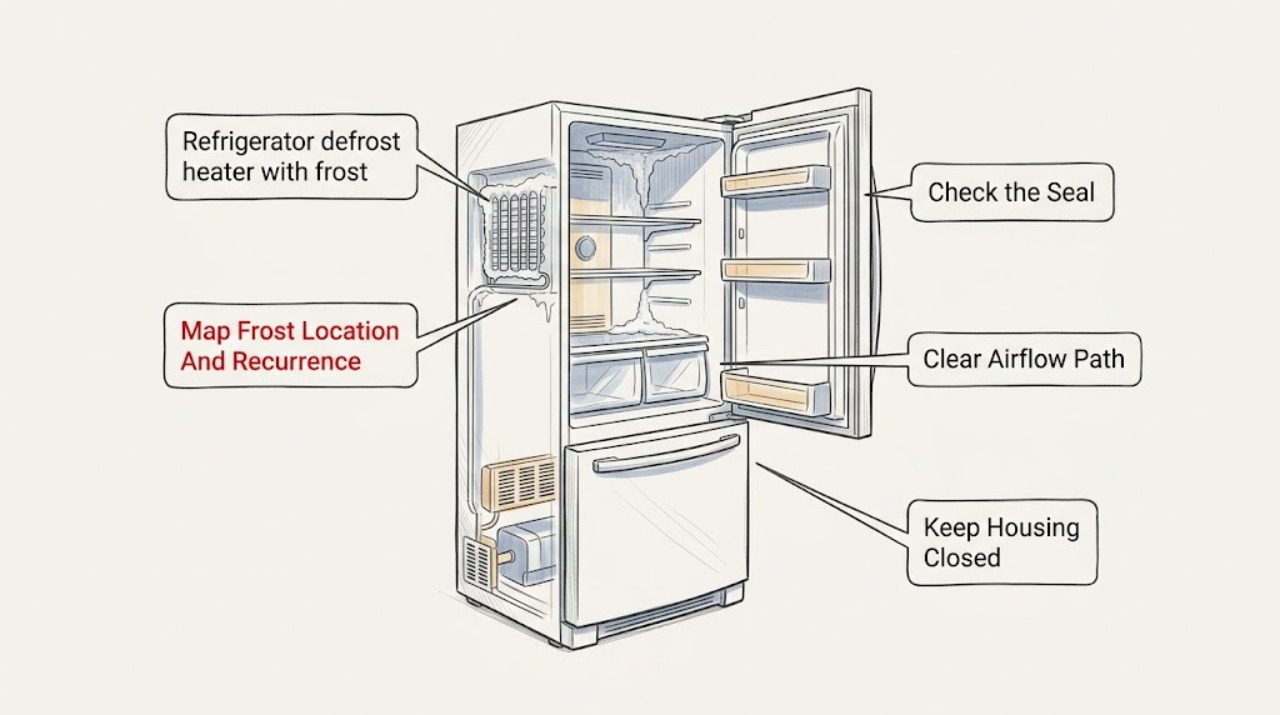
Refrigerator defrost heater with frost buildup: What to Check and What to Do Next
Frost around a refrigerator's evaporator or defrost-heater area does not by itself prove that the heater has failed. In an automatic-defrost refrigerator, the heater periodically melts frost from the evaporator; heavy or recurring frost usually means the defrost cycle, door seal, airflow, moisture entry, or drain needs attention.
-
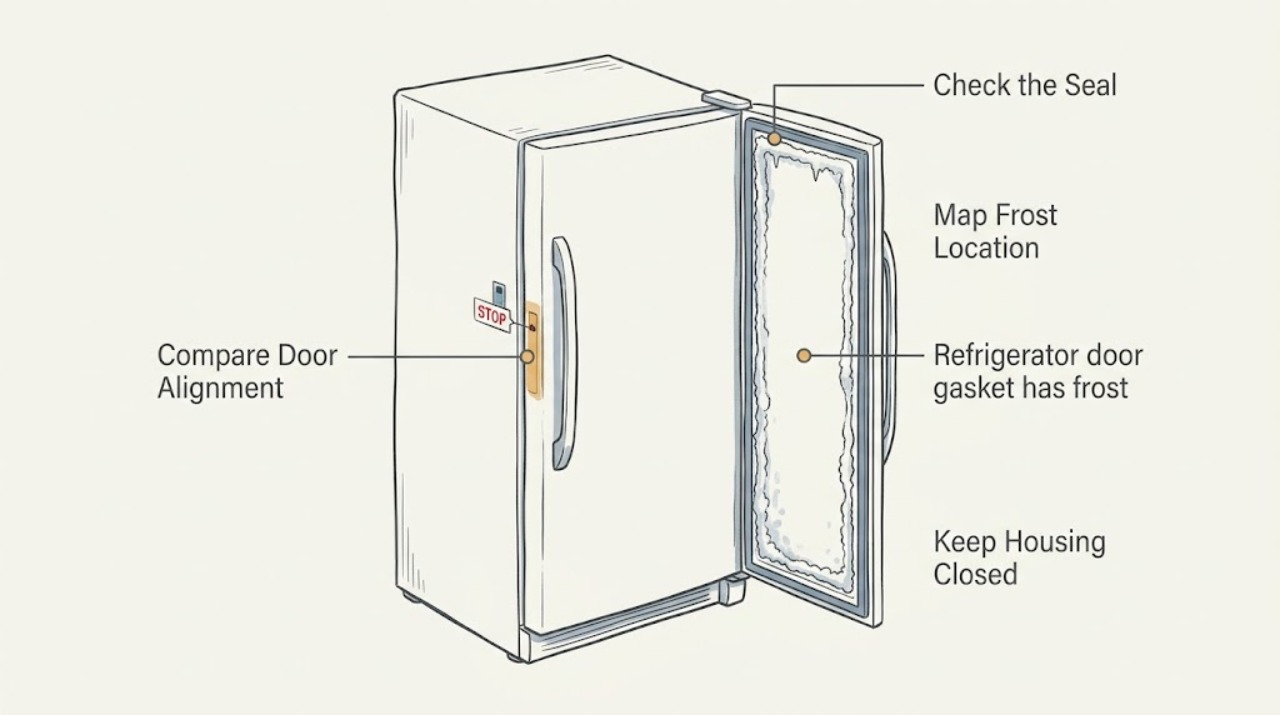
Refrigerator door gasket has frost buildup: What to Check and What to Do Next
Frost on or beside a refrigerator door gasket usually means warm, humid air is entering through a gap, but the gasket may not be the only cause. With the door closed, note whether the frost is only around the seal or also on the rear wall, shelves, or vents.
-
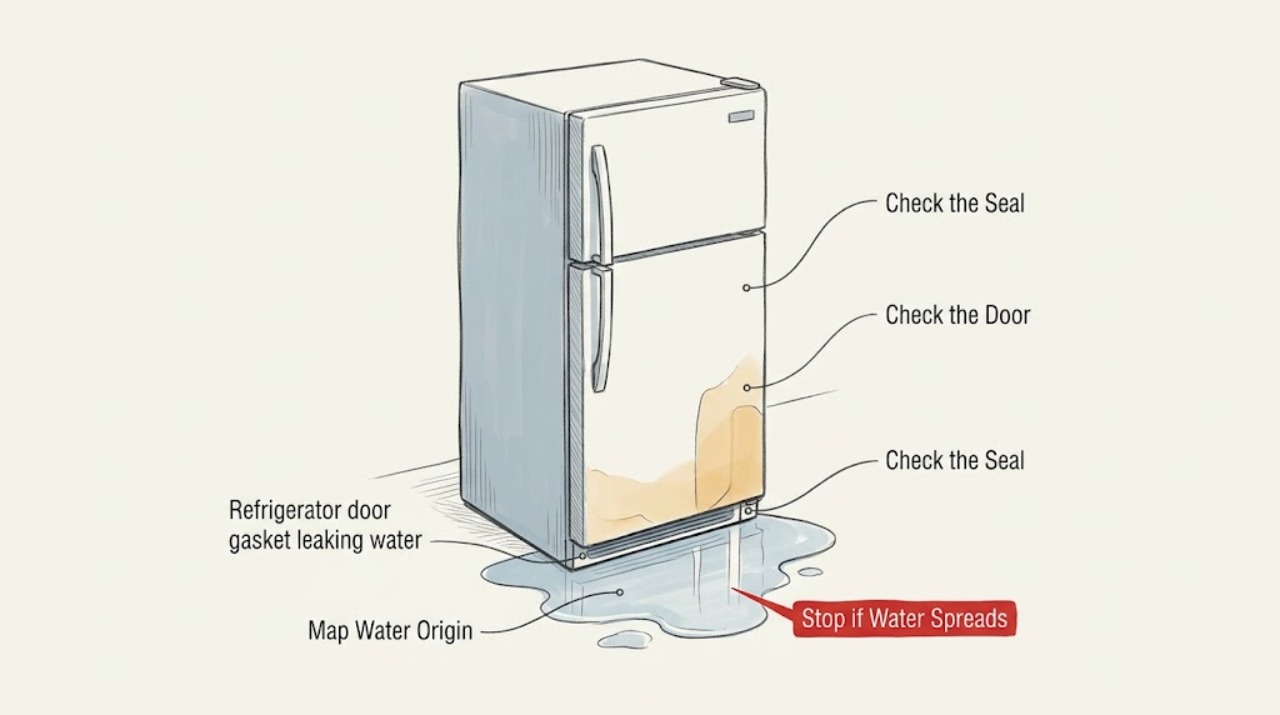
Refrigerator door gasket leaking water: What to Check and What to Do Next
Water around a refrigerator door gasket is often condensation caused by warm humid air entering through a dirty, loose, damaged, or obstructed seal, but a clogged freezer drain, a defrost leak, or a nearby water line can look similar. First locate whether the moisture is on the gasket, inside the compartment, at the front edge, or behind the refrigerator.
-
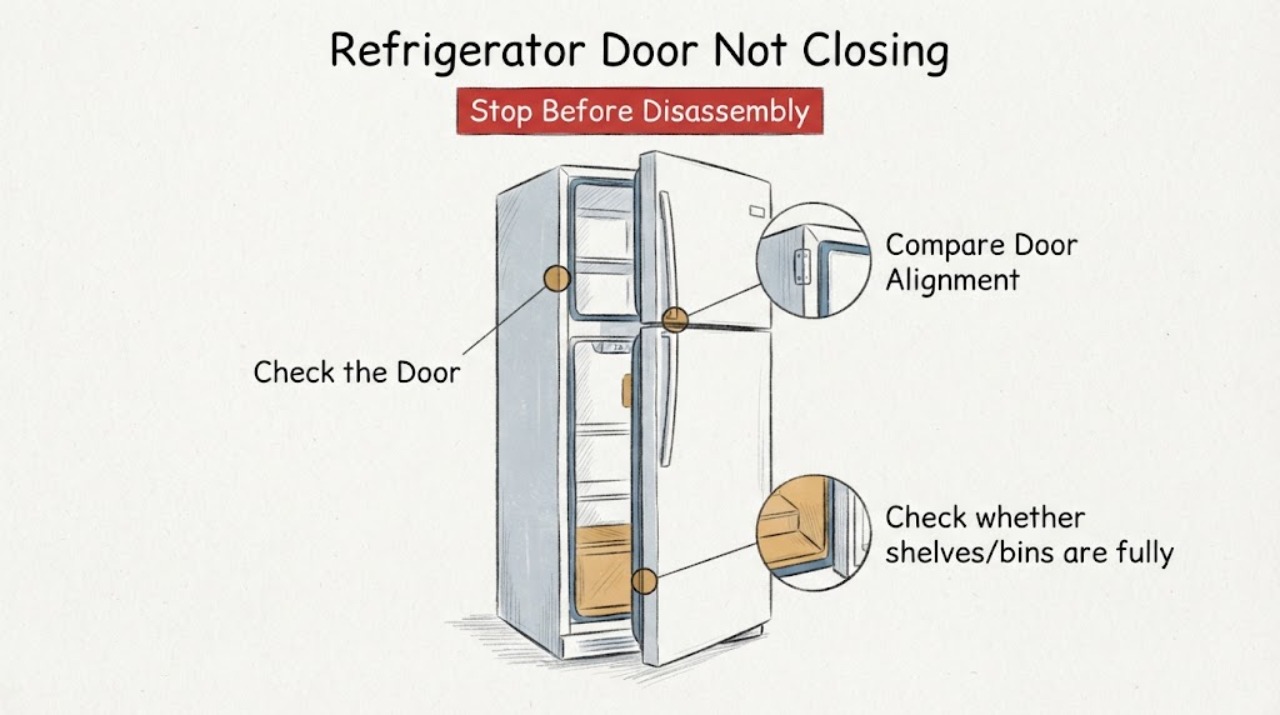
Refrigerator Door Not Closing
Remove food packages, bins, or shelves that project into the door path, then inspect and clean the gasket and any French-door hinged seal. Confirm the refrigerator is level and the door is aligned; model-specific hinge adjustment may be needed. A door that still will not close or seal can warm the cabinet and overwork the compressor, so arrange service for a torn gasket, bent hinge, damaged stop, or unresolved alignment.
-
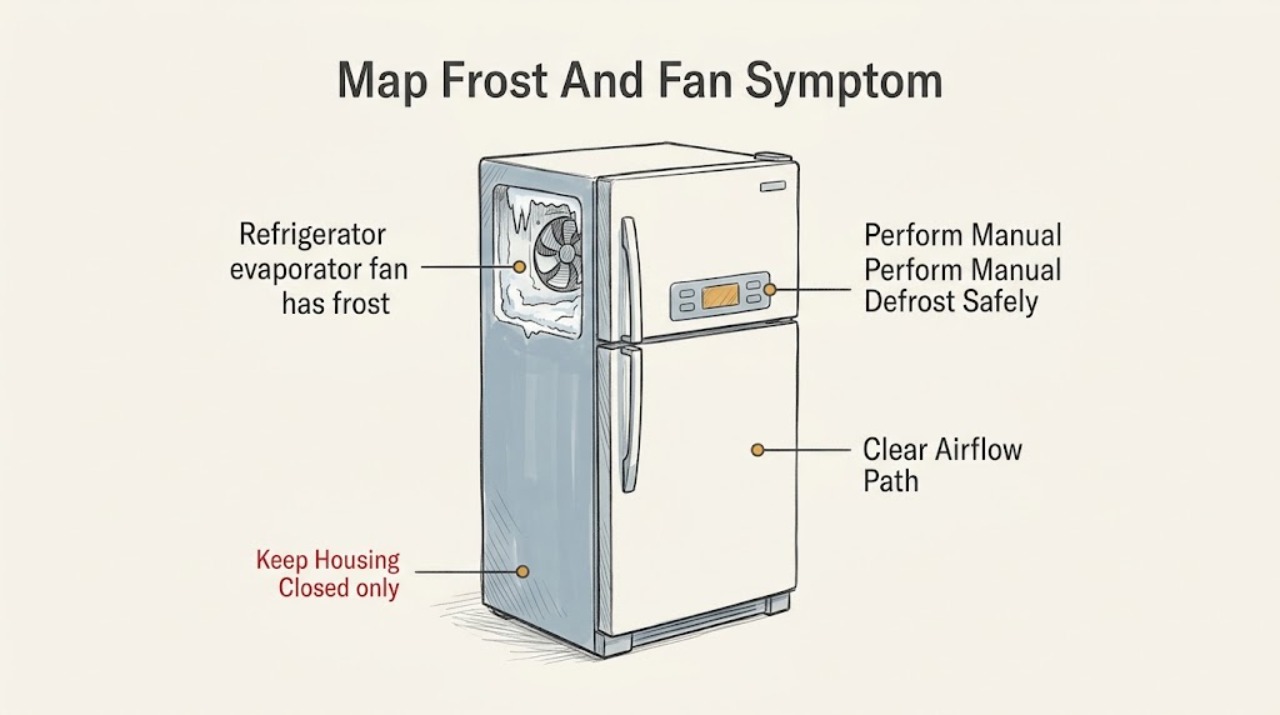
Refrigerator evaporator fan has frost buildup: What to Check and What to Do Next
Frost around a refrigerator evaporator fan can block airflow and make the fan rub, stop, or become noisy. Warm moist air from a door that does not seal, blocked vents, or a heavy load can create frost, while frost that returns after a complete defrost can indicate an unresolved door-seal, defrost, sensor, fan, wiring, or control-board problem.
-
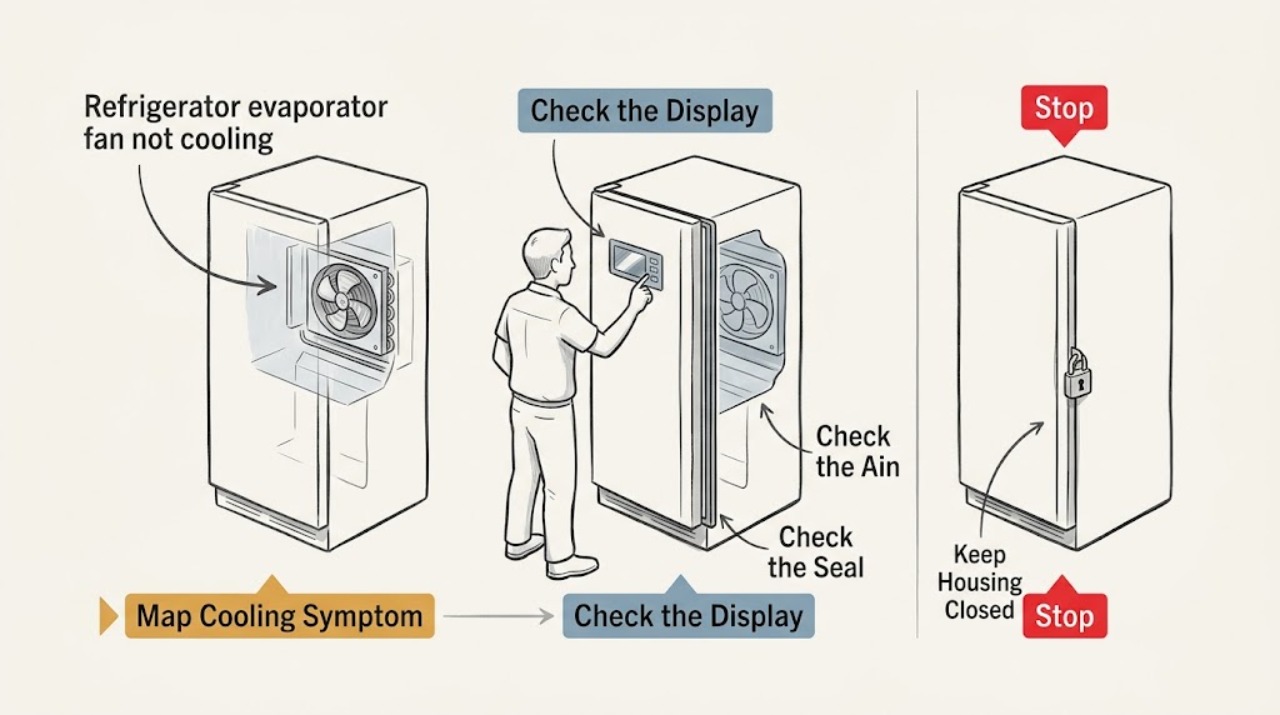
Refrigerator evaporator fan not cooling: What to Check and What to Do Next
A refrigerator that is not cooling may have an evaporator-fan problem, but the same symptom can come from loss of power, demo or cooling-off mode, blocked vents, a door-seal leak, heavy frost, a defrost fault, a sensor problem, or another internal failure. First separate whether the freezer, fresh-food compartment, or both are warm.
-
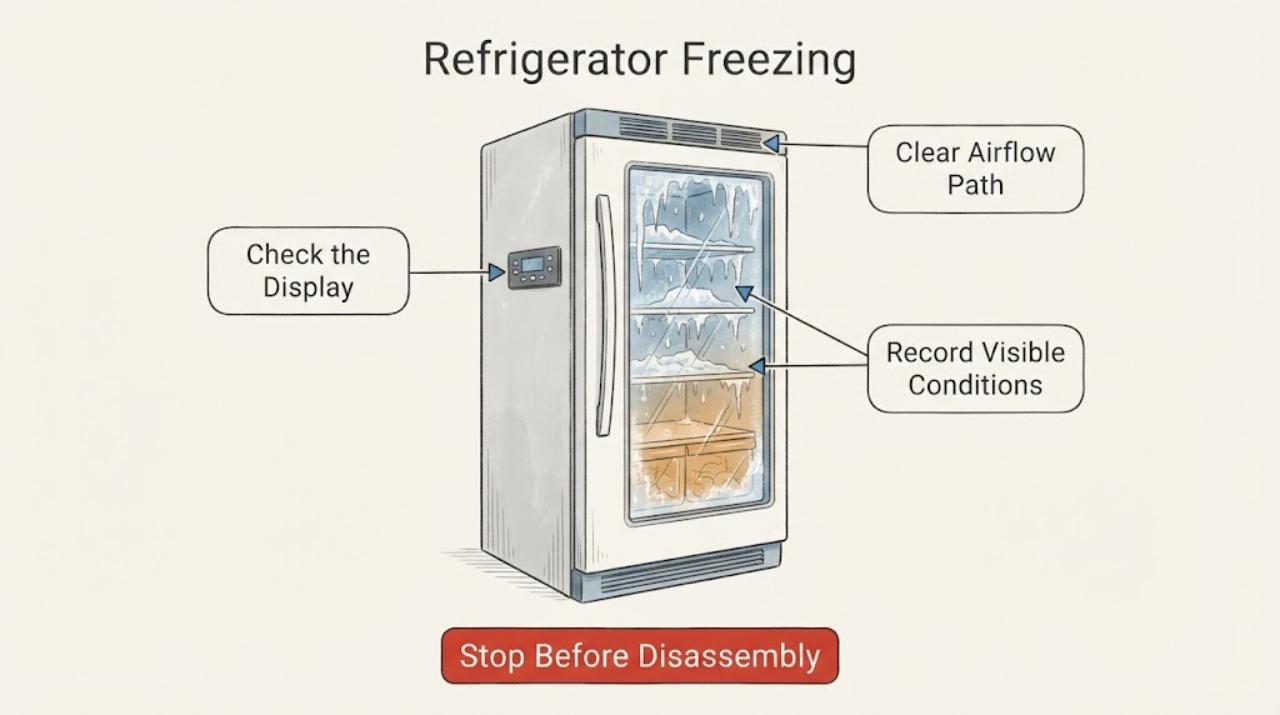
Refrigerator Freezing
If food freezes in a refrigerator’s fresh-food section, check temperature settings and food placement before assuming a sealed-system fault. GE says cold air enters from the freezer, vent/damper areas can be coldest, and food load affects freezing. Move sensitive food away from vents and adjust only as the manual allows; persistent widespread freezing needs service.
-
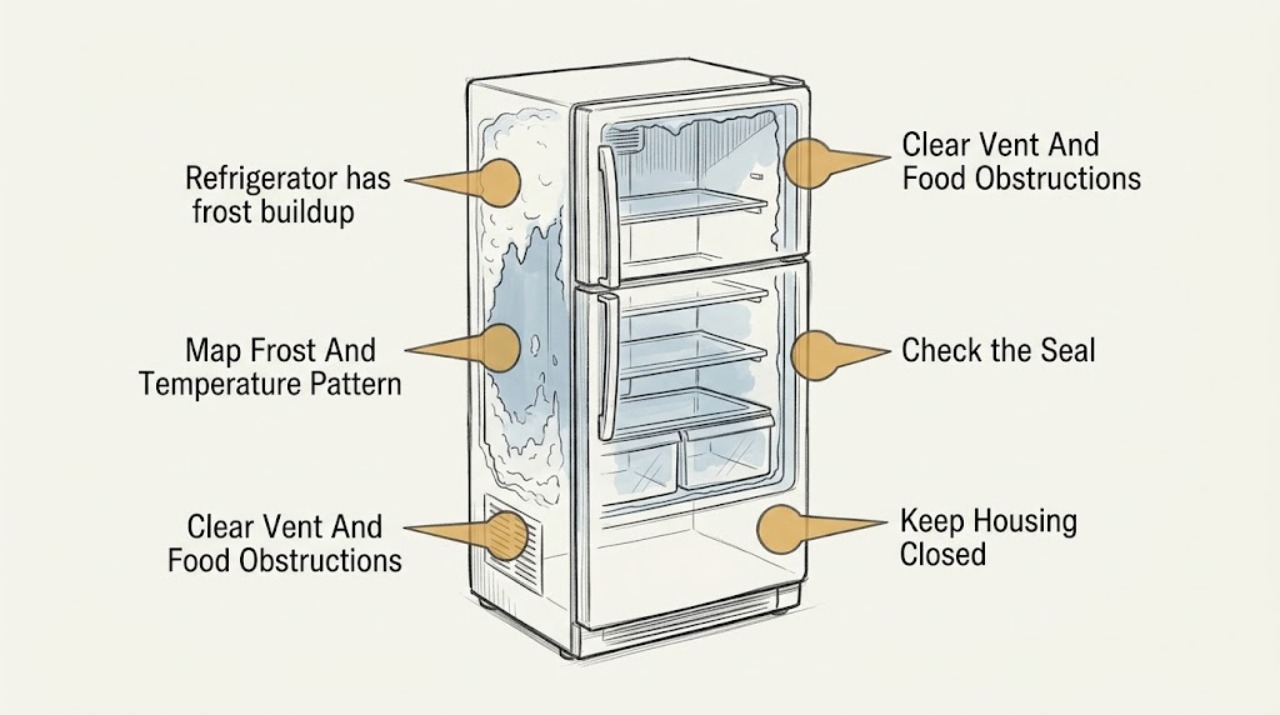
Refrigerator has frost buildup and reduced airflow: What to Check and What to Do Next
Frost that covers a refrigerator vent or the freezer's rear panel can reduce the cold-air path and create warm or frozen spots. First protect the food, record where the frost is, and check from inside for packages against the rear wall or in front of vents and for a door or gasket that is not closing.
-
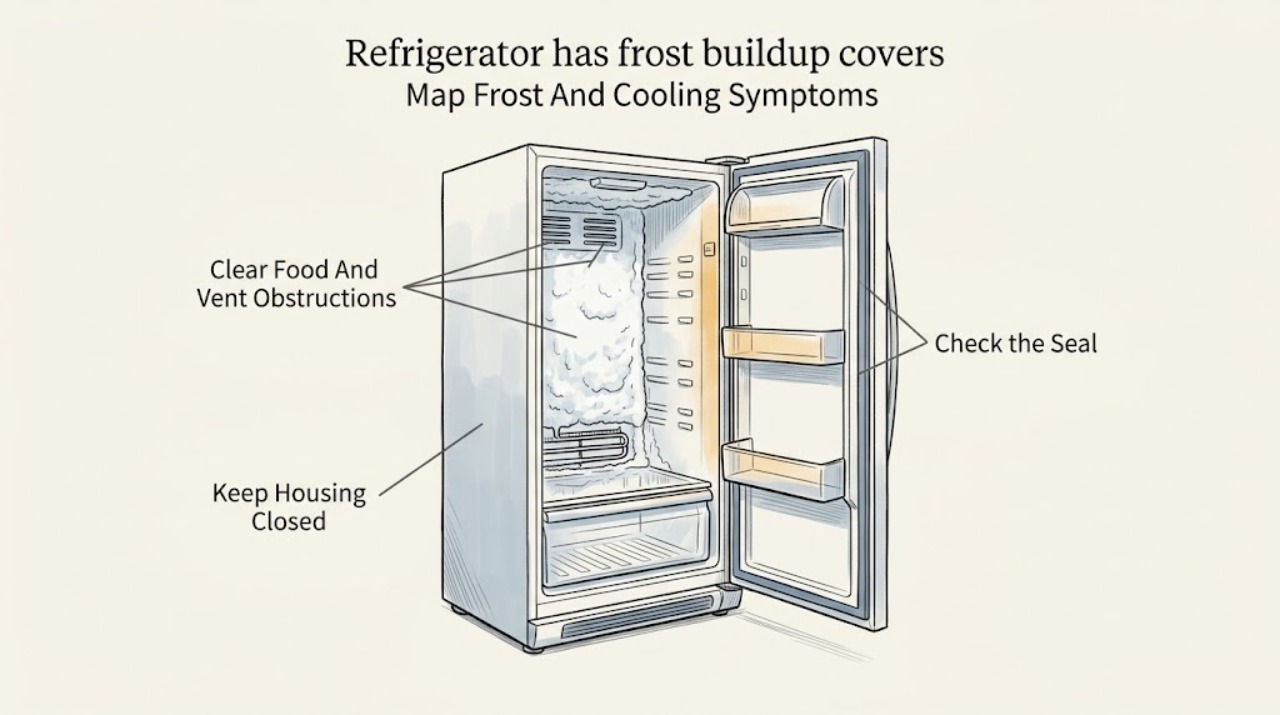
Refrigerator has frost buildup covers rear wall: What to Check and What to Do Next
A thin film of frost or condensation on a refrigerator's cold rear wall can occur during normal cooling or after a defrost cycle, but frost that covers the wall, returns quickly, blocks vents, or accompanies warm food needs attention. Check that food is not touching the rear wall, vents are clear, doors close fully, and the gasket is clean and intact.
-
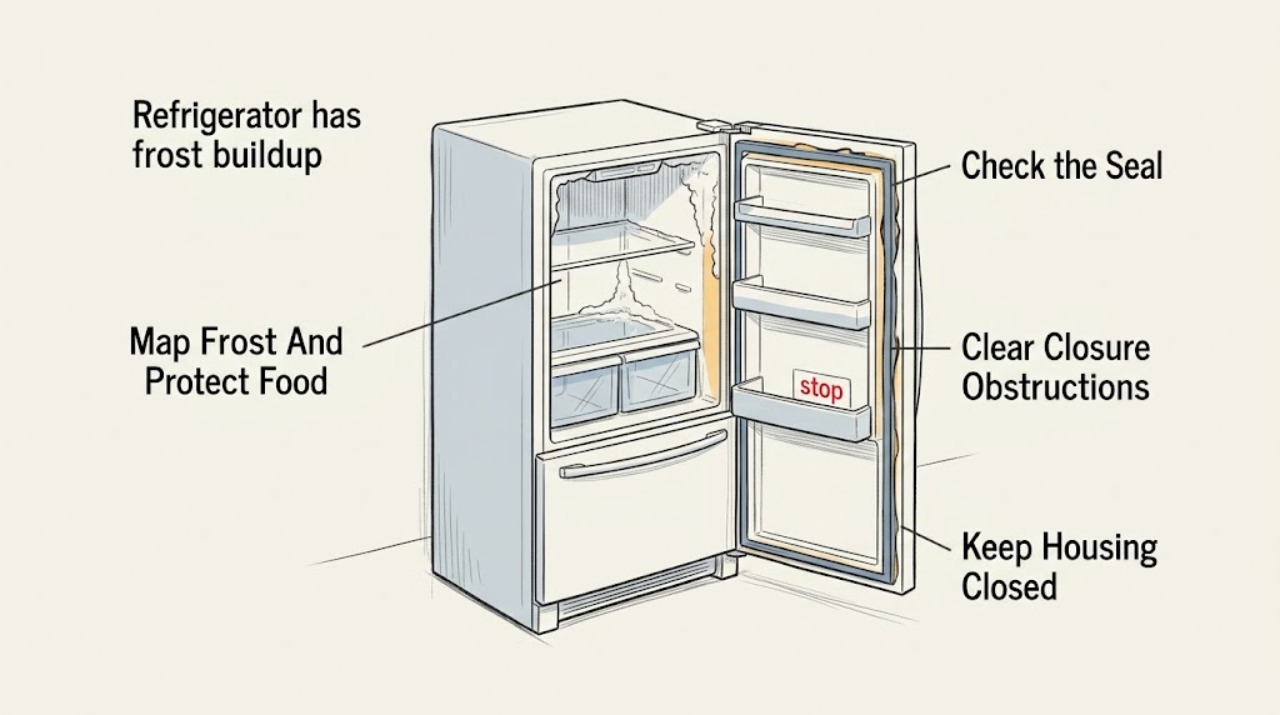
Refrigerator has frost buildup with door seal gaps: What to Check and What to Do Next
Frost buildup with a visible door-seal gap usually means warm, humid room air is entering where the refrigerator or freezer door should close tightly, but the gap may be caused by residue, a displaced gasket, an item or drawer blocking closure, a door that is out of alignment, or an unlevel installation.
-
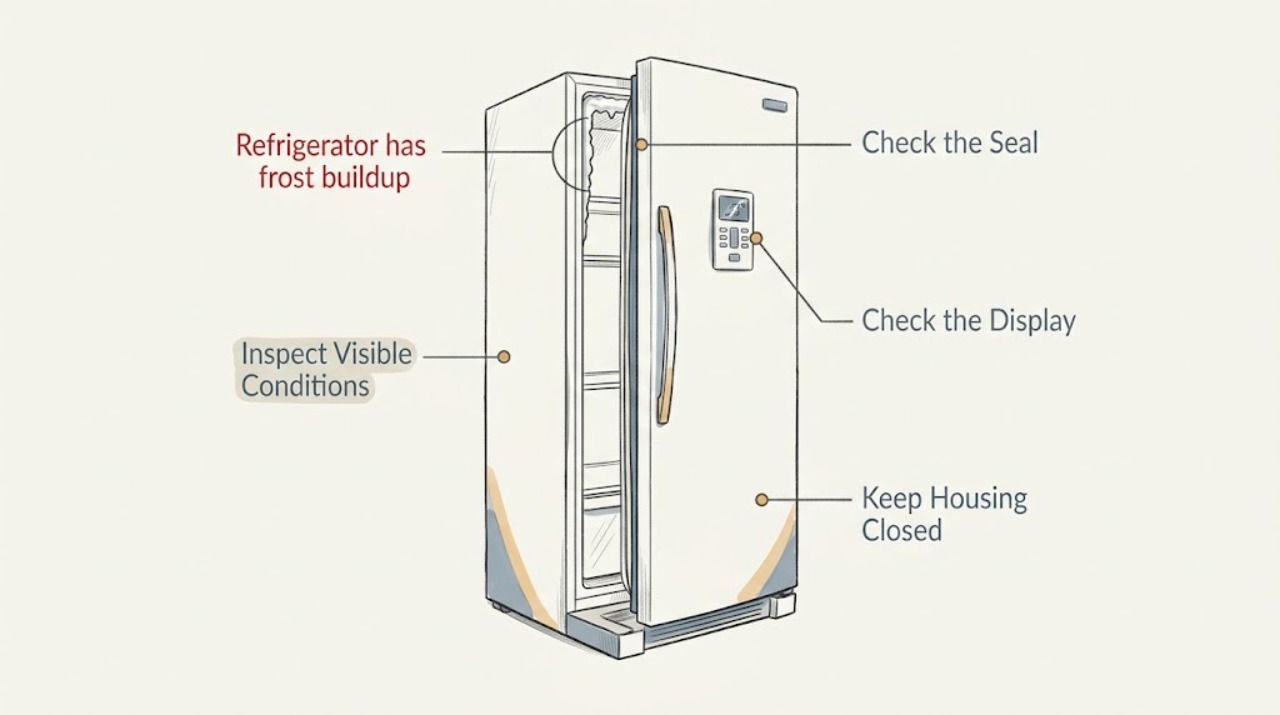
Refrigerator has frost buildup: What to Check and What to Do Next
Frost buildup commonly follows warm humid air entering through a door that is blocked or not sealing, blocked air vents, a setting or recent power event, or a defrost-system problem that cannot be confirmed from outside. First map where the frost is and whether the door closes fully.
-
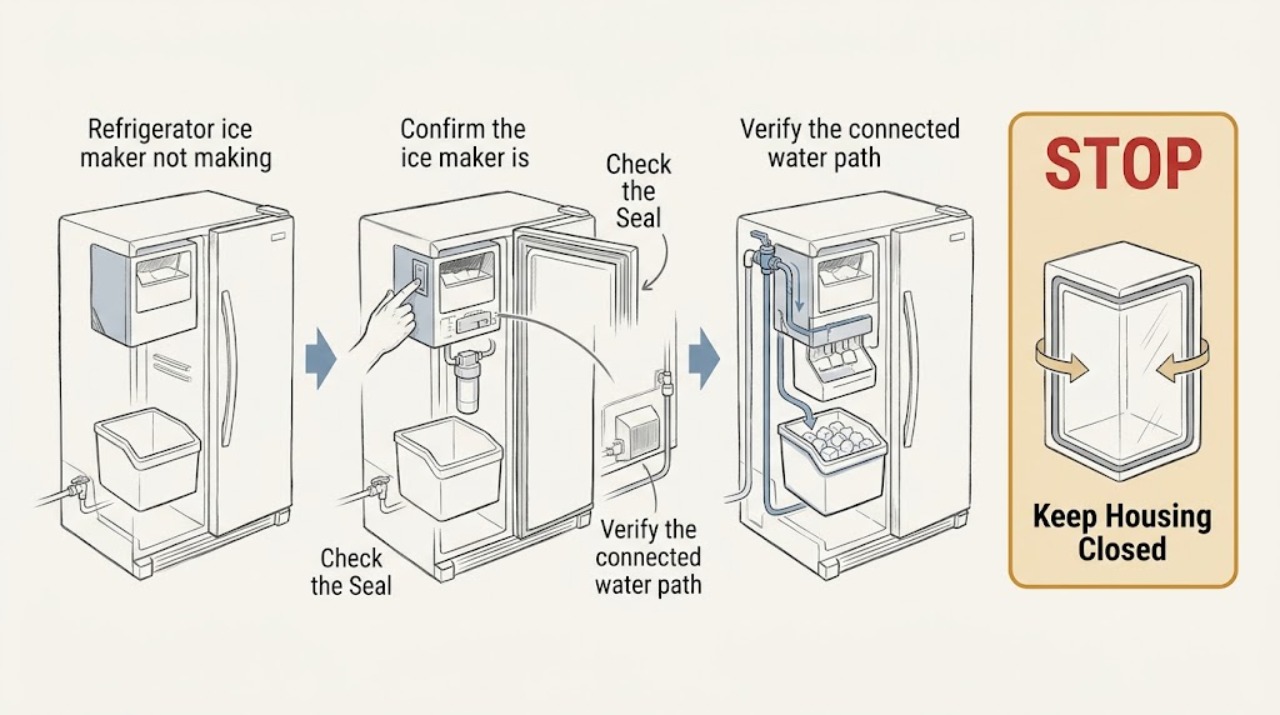
Refrigerator ice maker not making ice when water supply is connected: What to Check and What to Do Next
A connected water line does not prove that the ice maker is receiving usable water or reaching an ice-making temperature. First confirm the ice maker is On, the freezer or ice-maker compartment is cold enough according to the owner's manual, the ice bucket is seated and not full or jammed, the line is not kinked, and the water filter is not restricting flow.
-
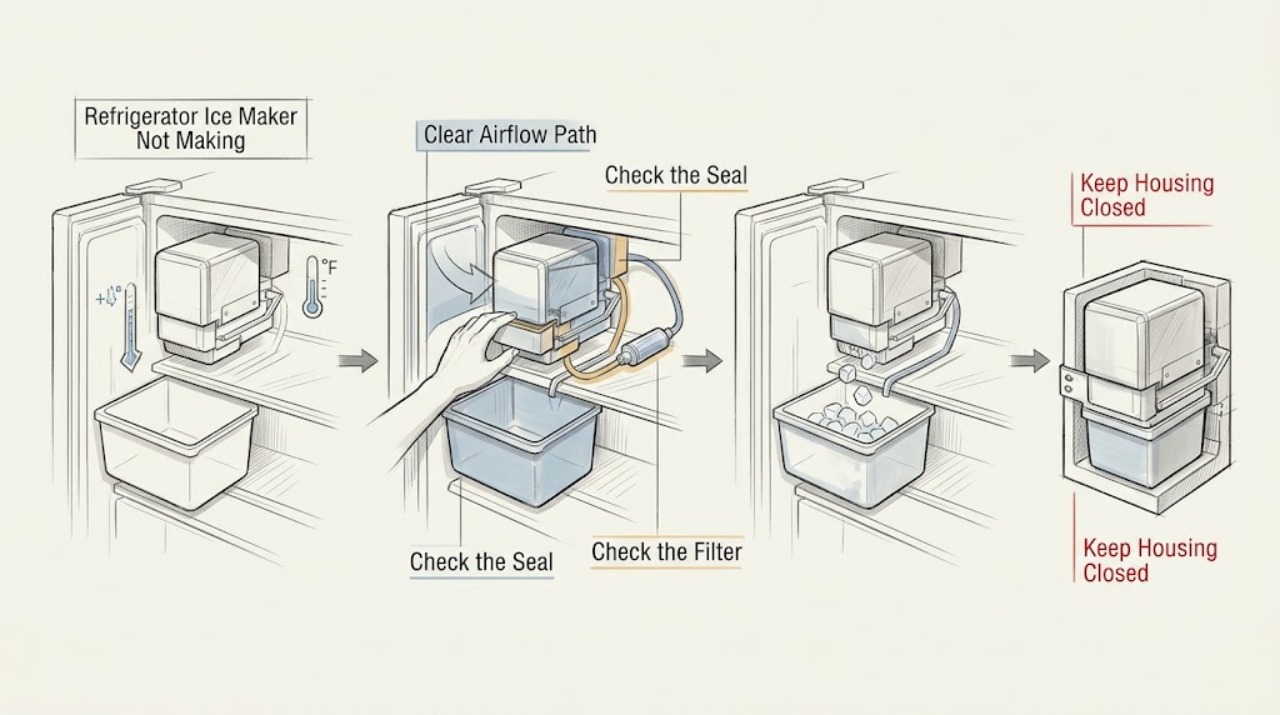
Refrigerator Ice Maker Not Making Ice, Freezer Is Cold: What to Check and What to Do Next
If the freezer is cold but the refrigerator ice maker is not making ice, verify the ice maker is turned on, the bin or feeler arm is not signaling full, and the freezer door and ice-maker bucket are seated and sealing correctly. Check the visible water shutoff valve and line for a closed valve, kink, or recent filter installation that restricted flow.
-
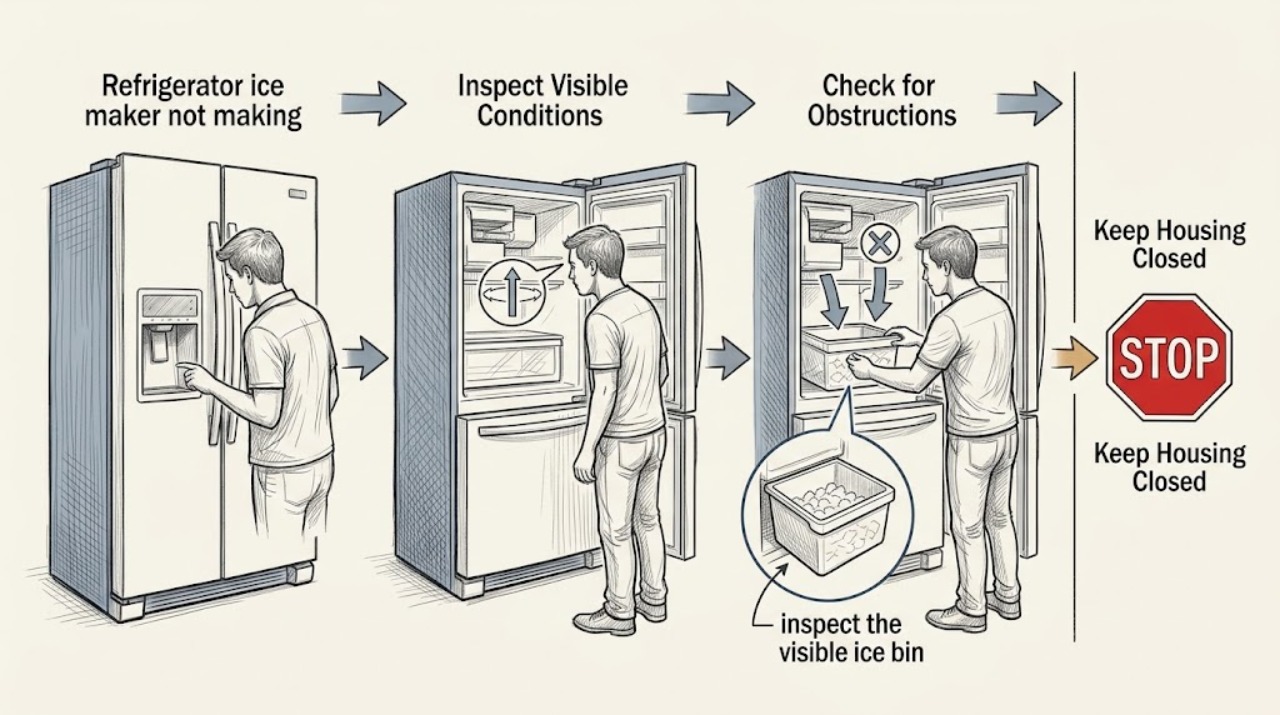
Refrigerator ice maker not making ice: What to Check and What to Do Next
Start with the visible controls, freezer temperature display, ice bin, door closure, and water-dispenser or filter symptoms. A newly installed refrigerator may need time to cool and begin an ice cycle. If the ice maker is on but the freezer is cold and no ice is produced, do not remove panels or perform live electrical tests; arrange qualified refrigerator service. Shut off the refrigerator's water supply before any hose or water-connection service.
-
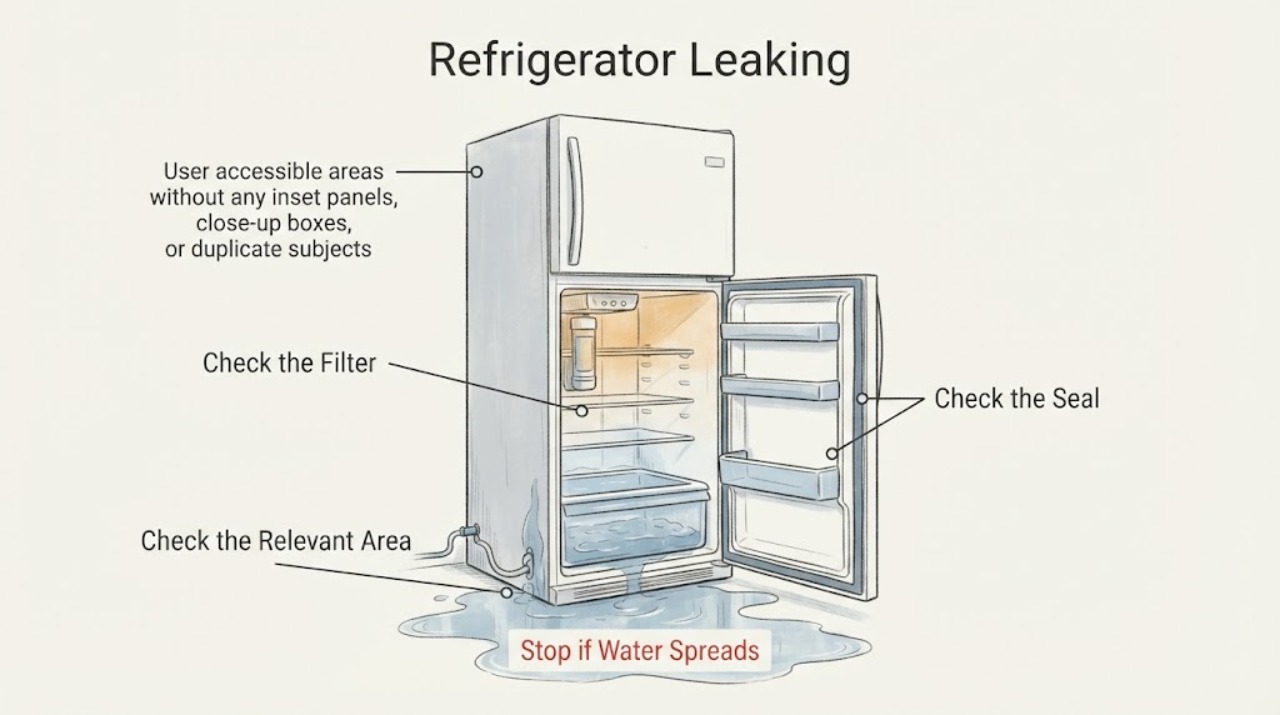
Refrigerator Leaking
Find where refrigerator water starts before trying to fix it: inside the fresh-food area, under the front, at the dispenser/filter, or behind the cabinet. Unplug and close the water supply before inspecting a visible line or filter, clean only accessible drain areas as the manual permits, and check level and door closure. Arrange service for an internal drain, valve, sealed line, repeated leak, or water near electrical parts.
-
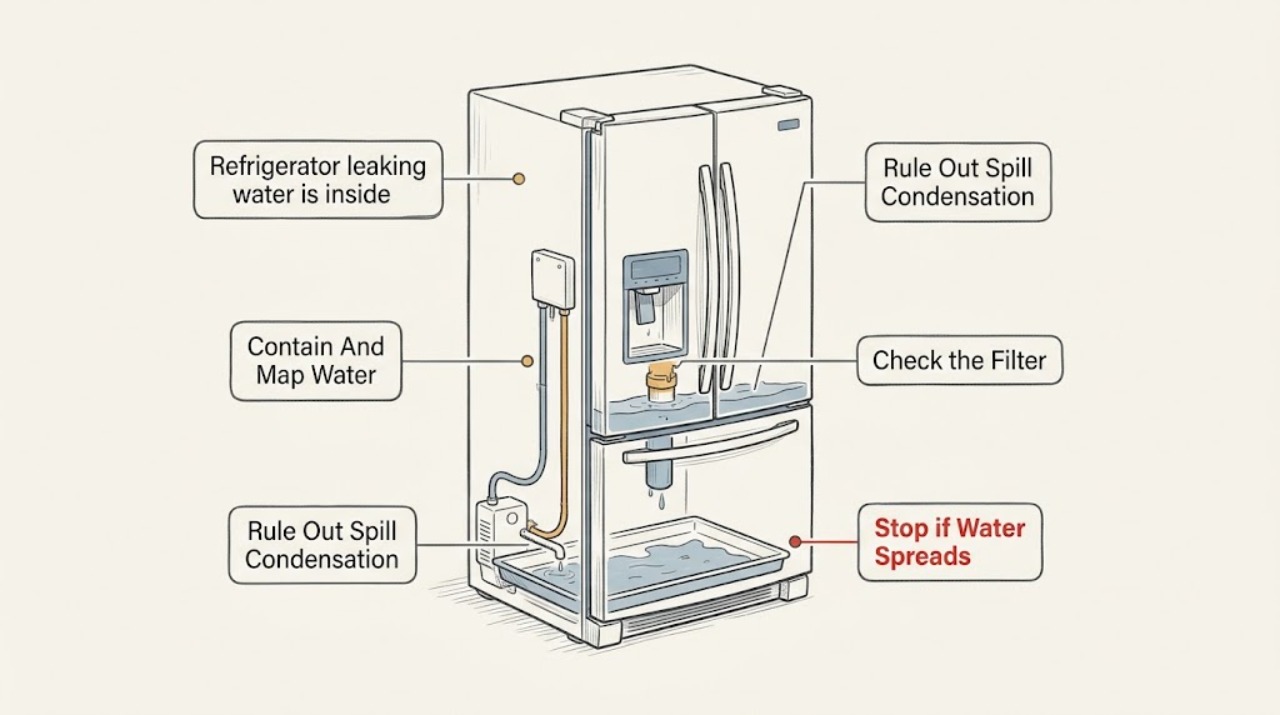
Refrigerator leaking water is inside or beneath fridge: What to Check and What to Do Next
Protect the floor first, then locate the highest wet point rather than assuming the puddle started underneath. If the refrigerator has a dispenser or ice maker, close its household water shutoff when a supply-line leak is suspected; unplug the refrigerator only when water or inspection conditions make that safe and food can be kept cold elsewhere.
-
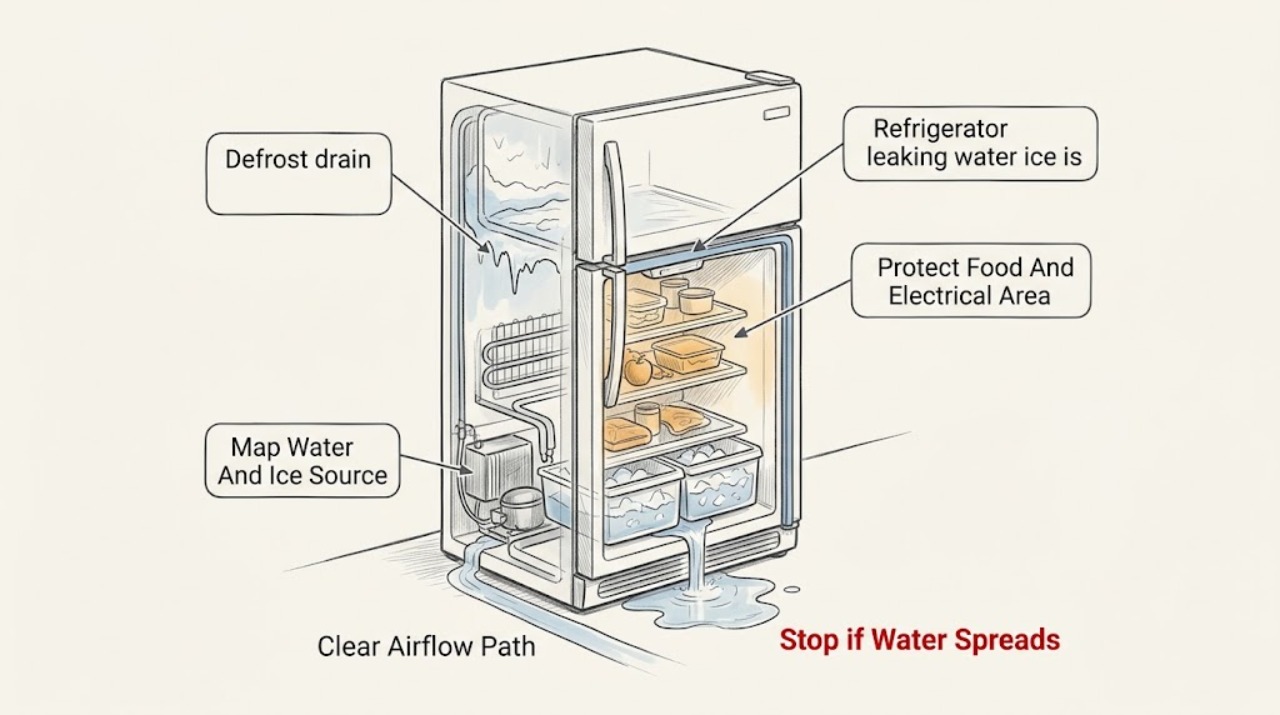
Refrigerator leaking water ice is present: What to Check and What to Do Next
When a refrigerator is leaking and ice is present, the water may be meltwater that cannot reach the drain pan because ice or debris blocks the defrost drain, or it may come from a door seal, ice maker, water connection, or another source. Move perishable food to safe cold storage, contain water from a dry position, and inspect only accessible door, food, vent, and visible tubing areas.
-
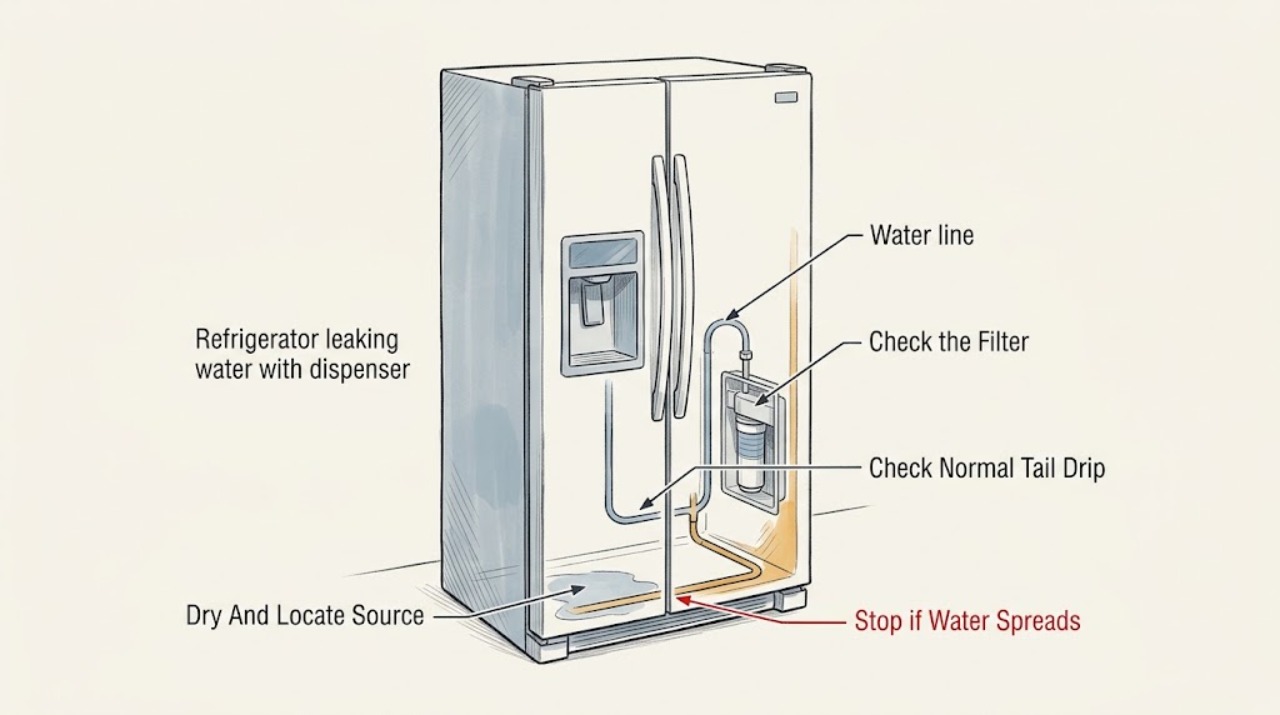
Refrigerator leaking water with dispenser possibly involved: What to Check and What to Do Next
A refrigerator dispenser can leave a few drops immediately after dispensing, but water that continues when the dispenser is idle is a leak to isolate. Dry the area, identify whether water is coming from the dispenser outlet, filter area, door tubing, rear supply line, ice chute, or inside the cabinet, and check whether the leak began after a filter change, installation, door removal, or a stuck dispenser lever.
-
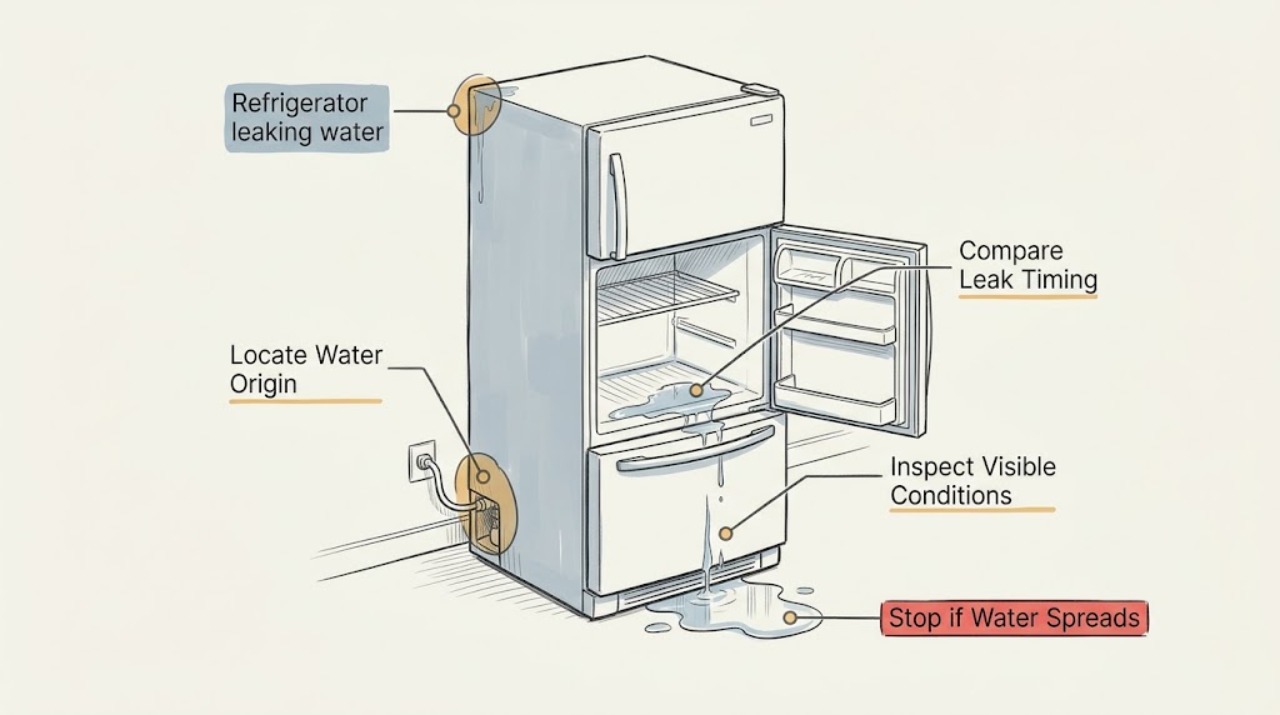
Refrigerator leaking water: What to Check and What to Do Next
First identify where the water appears and whether it follows dispenser or ice-maker use, a defrost cycle, or door opening. From a dry position, look for moisture inside the cabinet, around the door gasket, under the appliance, and at any visible water connection.
-
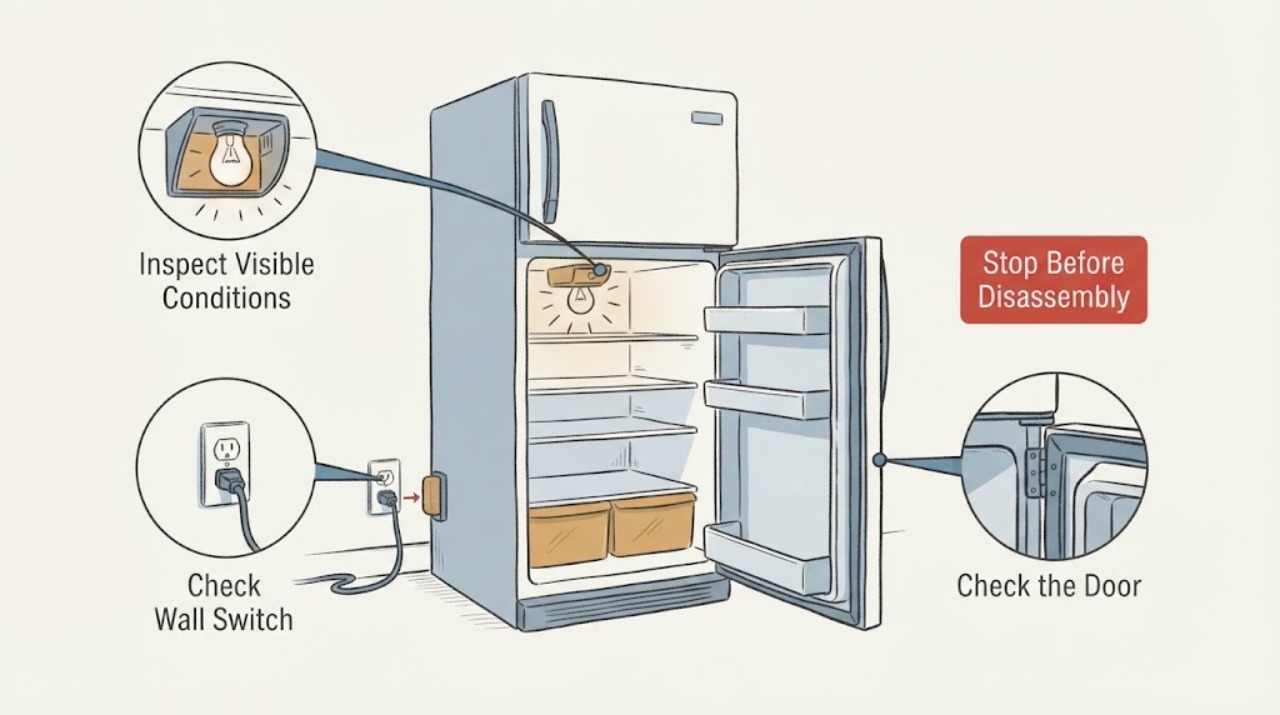
Refrigerator Light Flickering
Watch whether flicker follows door movement, verify the outlet and door closure, and follow the exact model guide for any user-replaceable lamp. Integrated LED, switch, hinge-wiring, or persistent flicker needs qualified service, especially with heat or sparking.
-
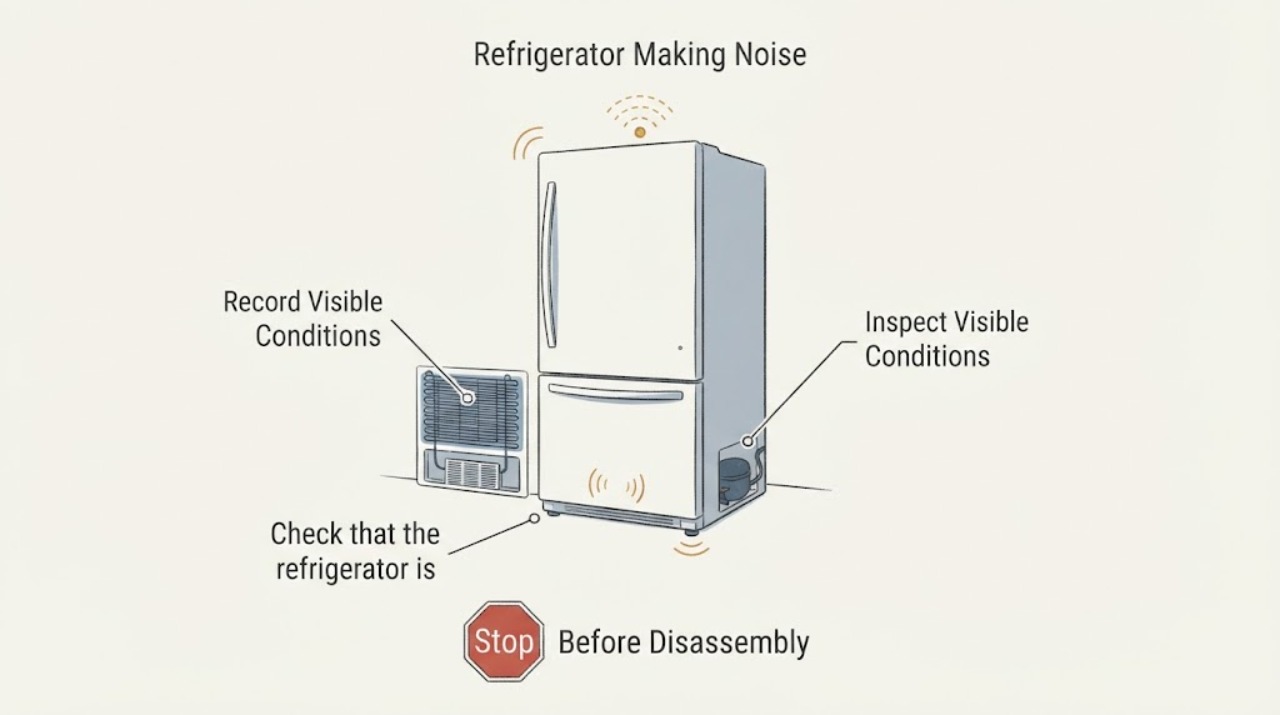
Refrigerator Making Noise
A refrigerator making noise should be classified by sound, timing and cooling performance. Humming, gurgling, hissing, clicking and brief cracking can be normal compressor, fan, refrigerant or defrost sounds; persistent rattling can come from leveling, clearance or fan frost. If the noise is new, harsh, accompanied by poor cooling, water or a burning smell, stop owner troubleshooting and arrange service.
-
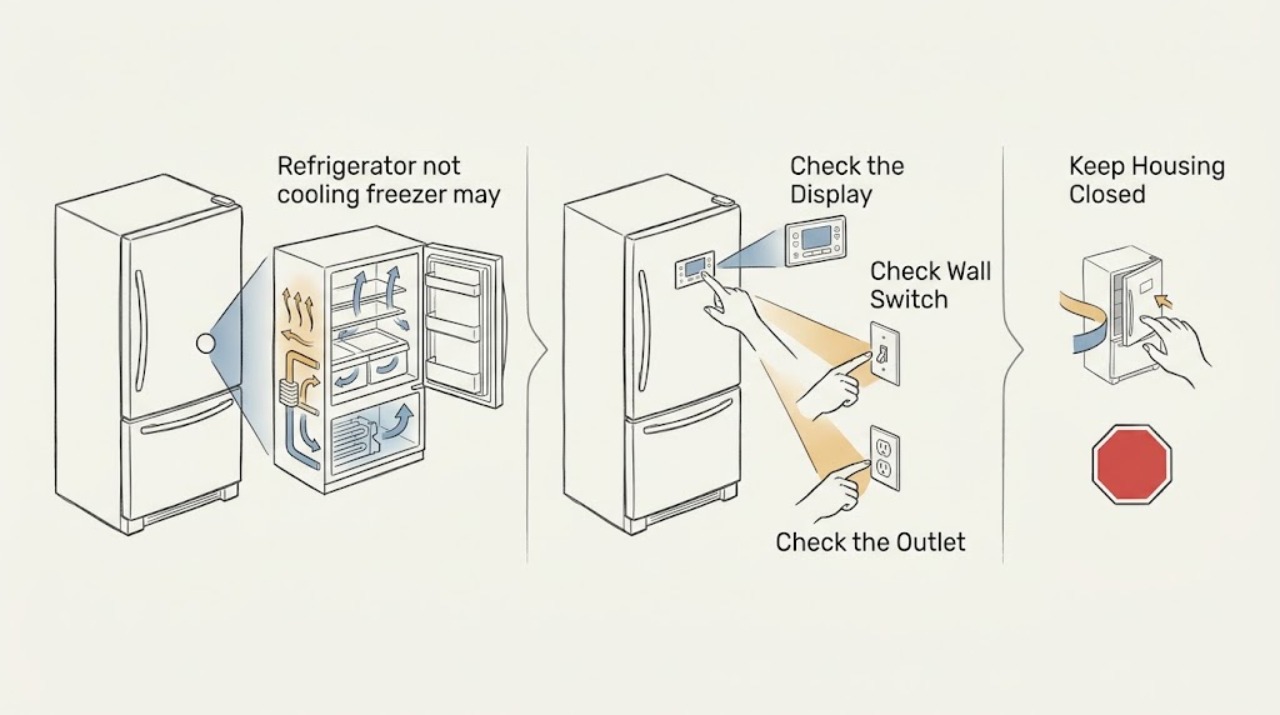
Refrigerator not cooling freezer may be cold: What to Check and What to Do Next
When the refrigerator compartment is warm but the freezer may still be cold, the cooling system may be running while cold air is not reaching the fresh-food section. First verify the actual temperatures and that the refrigerator is powered and not in Cooling Off, Demo, or Showroom mode.
-
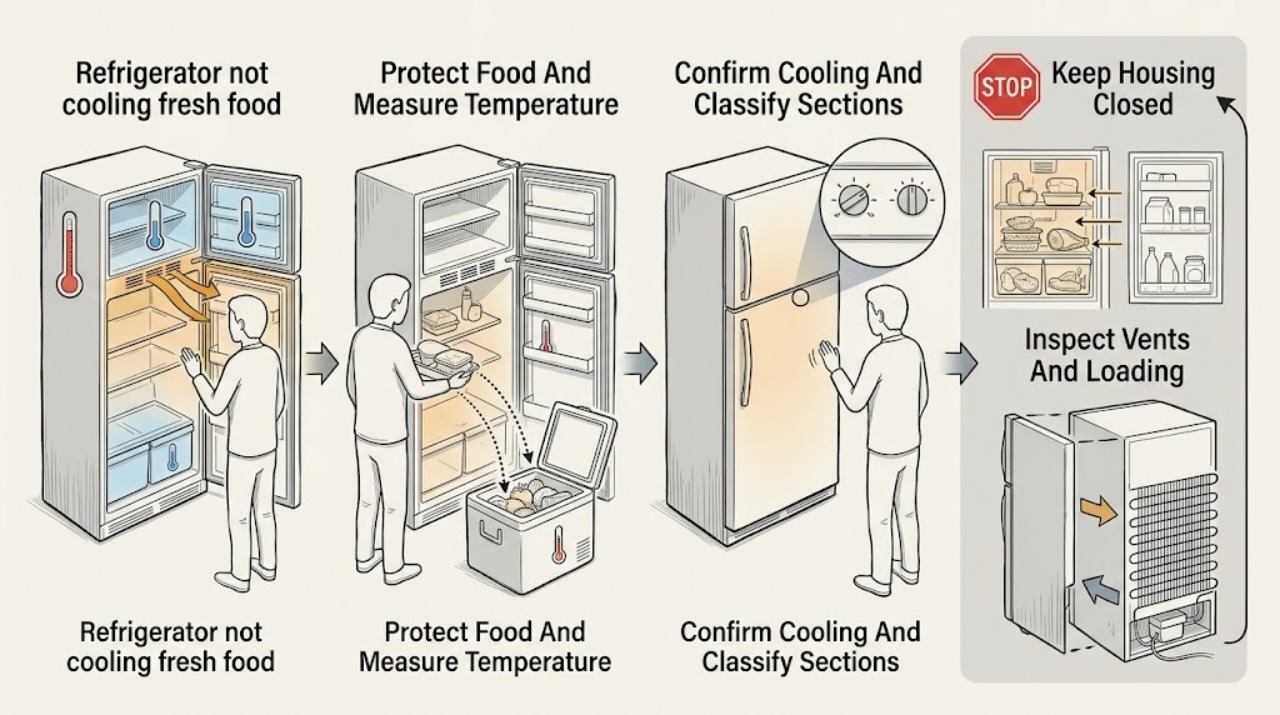
Refrigerator not cooling fresh food section is warm: What to Check and What to Do Next
A warm fresh-food section can result from blocked air vents, a crowded cabinet, a door that is not sealing, an incorrect control or showroom setting, a recent power interruption or food load, frost blocking the shared freezer-to-refrigerator airflow, or a cooling-system fault. First protect perishable food and measure the refrigerator with an appliance thermometer; FDA guidance says the refrigerator should be at or below 40°F.
-
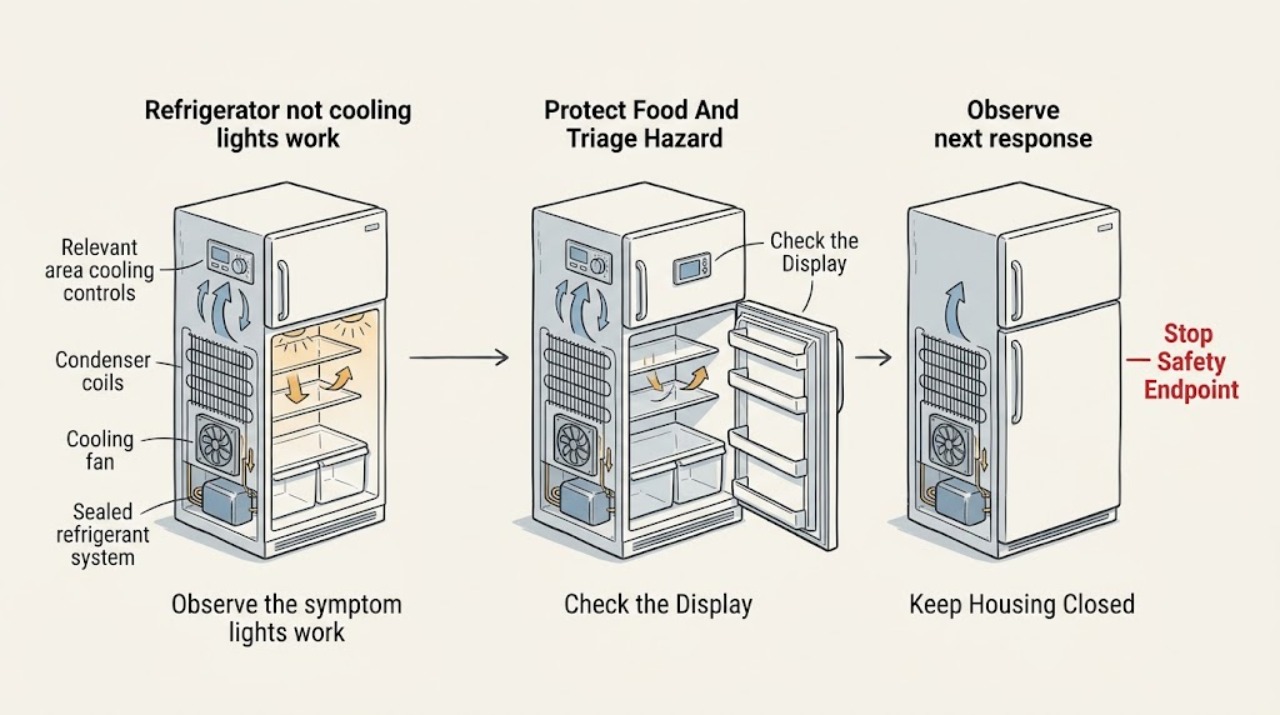
Refrigerator not cooling lights work: What to Check and What to Do Next
Interior lights can work even when a refrigerator is not cooling, so they confirm only that some power or control functions are present. Check the external power connection, cooling-on or showroom setting, temperature control, door closure, visible airflow, recent installation or power interruption, and the room conditions.
-
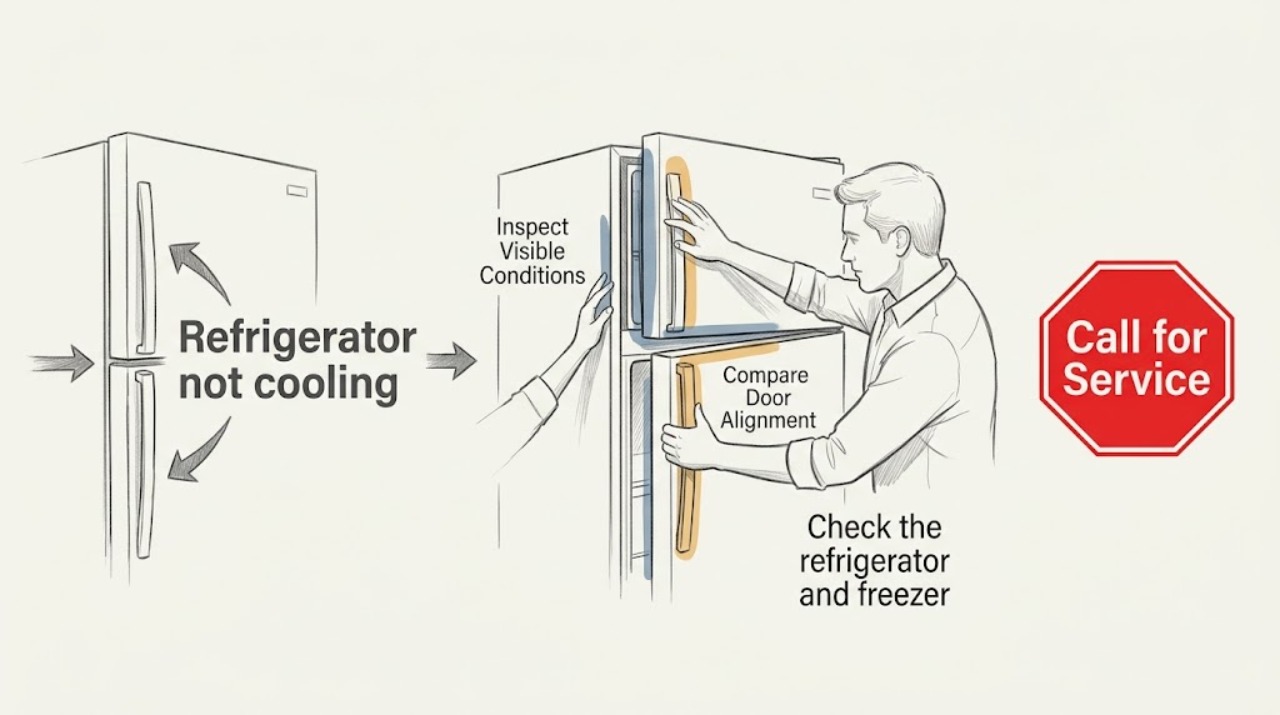
Refrigerator not cooling: What to Check and What to Do Next
Protect the food first, then check the actual compartment temperature, cooling setting, door seal, blocked vents, visible frost, and the sound of the refrigerator running. A recent power interruption, demo mode, crowded vents, or a door that does not seal can make a refrigerator feel warm.
-
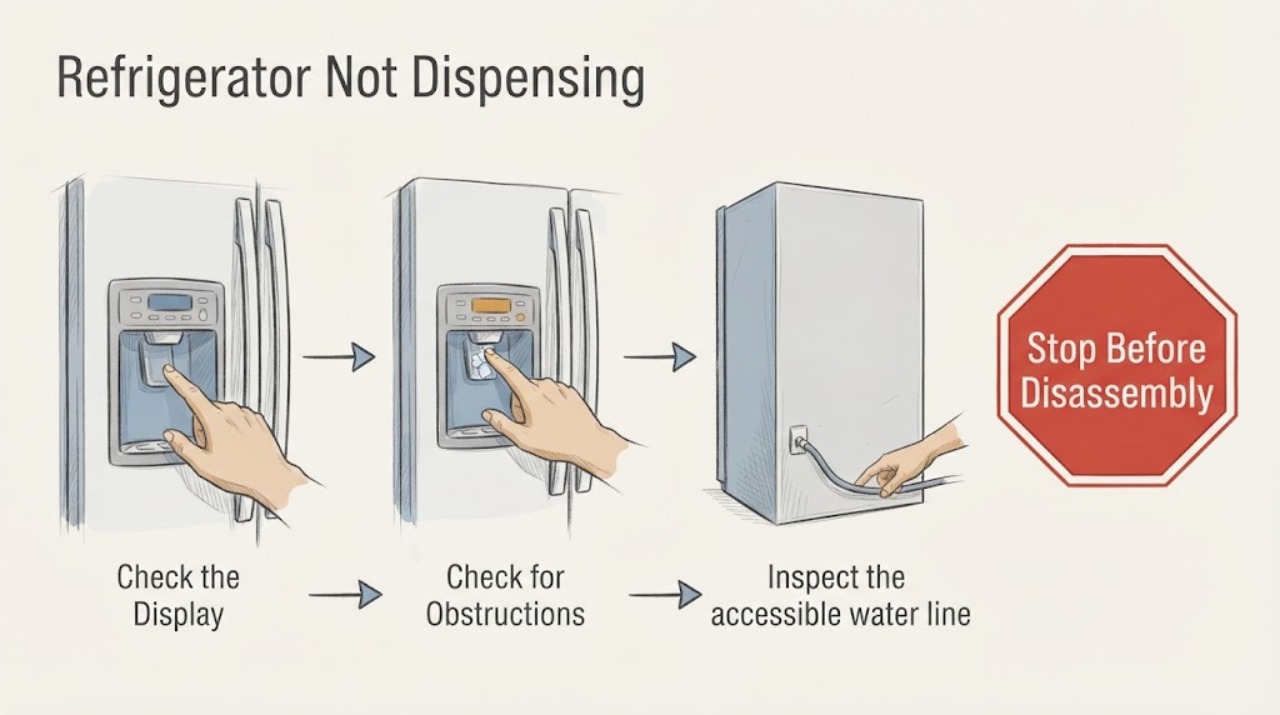
Refrigerator Not Dispensing
For a refrigerator that is not dispensing, first identify whether ice, water, or both are affected. Firmly engage the correct dispenser paddle, check Control Lock, inspect the water line for kinks, and check a recently changed or clogged filter. Use the exact owner’s manual for model-specific details.
-
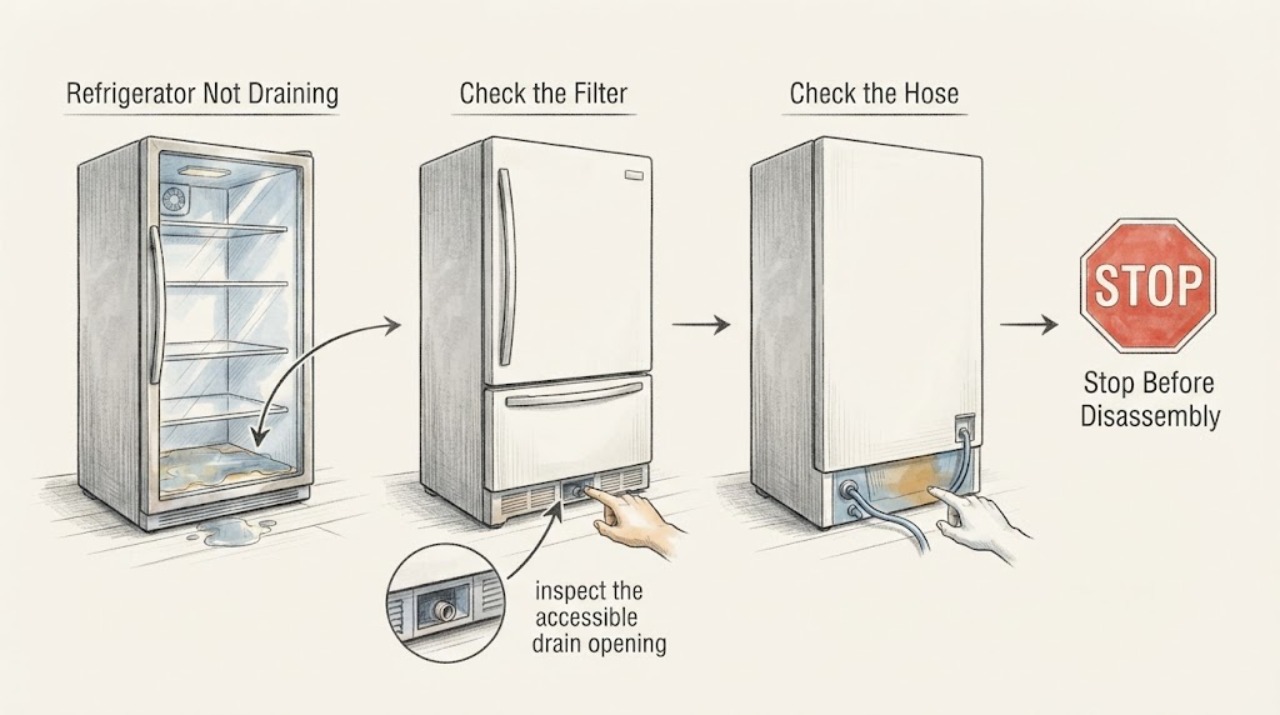
Refrigerator Not Draining
A refrigerator that is not draining usually shows water under drawers or on the floor because defrost water is blocked by ice or debris, or because a drain pan or hose is damaged. Dry the visible spill, check the drain area and pan only as the model manual permits, and do not chip ice with a sharp tool or open sealed panels. Persistent water, a cracked pan, or a frozen drain needs service.
-
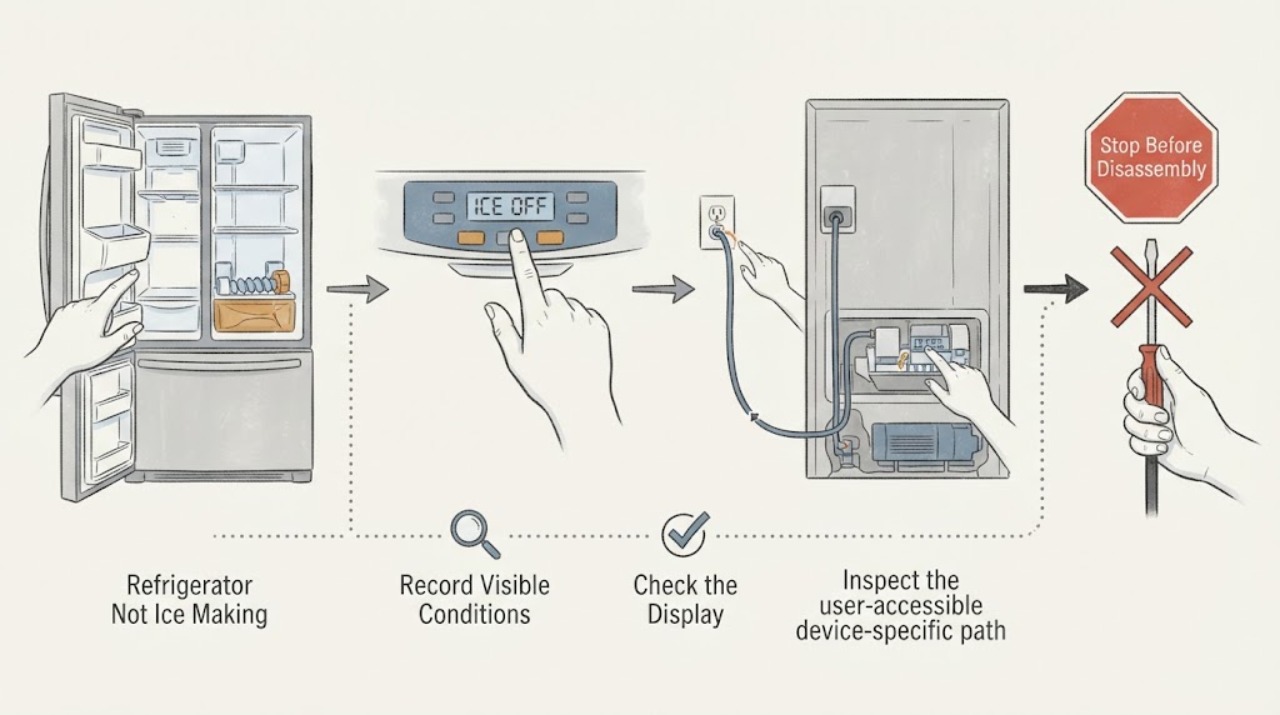
Refrigerator Not Ice Making
For a refrigerator not making ice, check that the ice maker is on, the bin is seated, the freezer is cold, the water valve and line are open, the filter is installed, and the shutoff arm is down. Whirlpool says controls vary by model; use the exact manual and service persistent no ice.
-
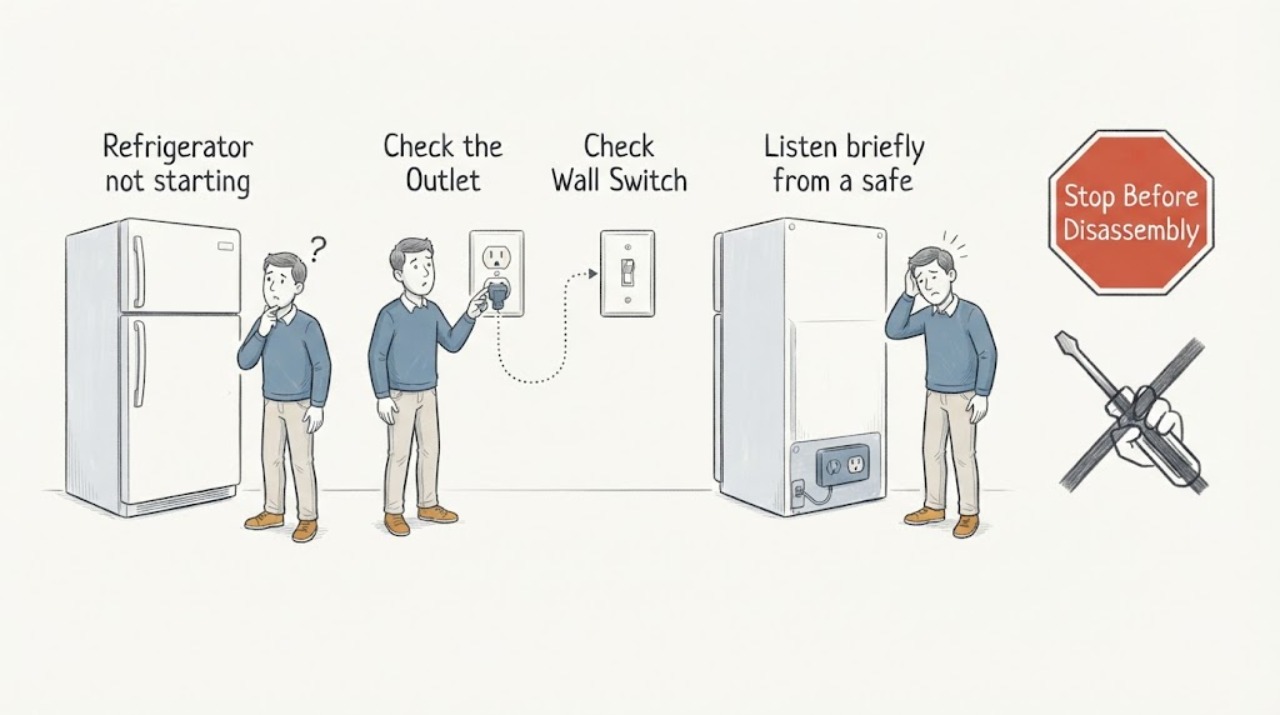
Refrigerator not starting
A refrigerator that is not starting should be checked for household power, a firmly seated plug, control setting/lock, door closure, and whether the compressor or fans respond. Check the outlet and breaker once without repeatedly cycling power. If the display is dead with confirmed supply, the compressor only clicks, or the unit trips, heats, or smells burnt, arrange qualified service.
-
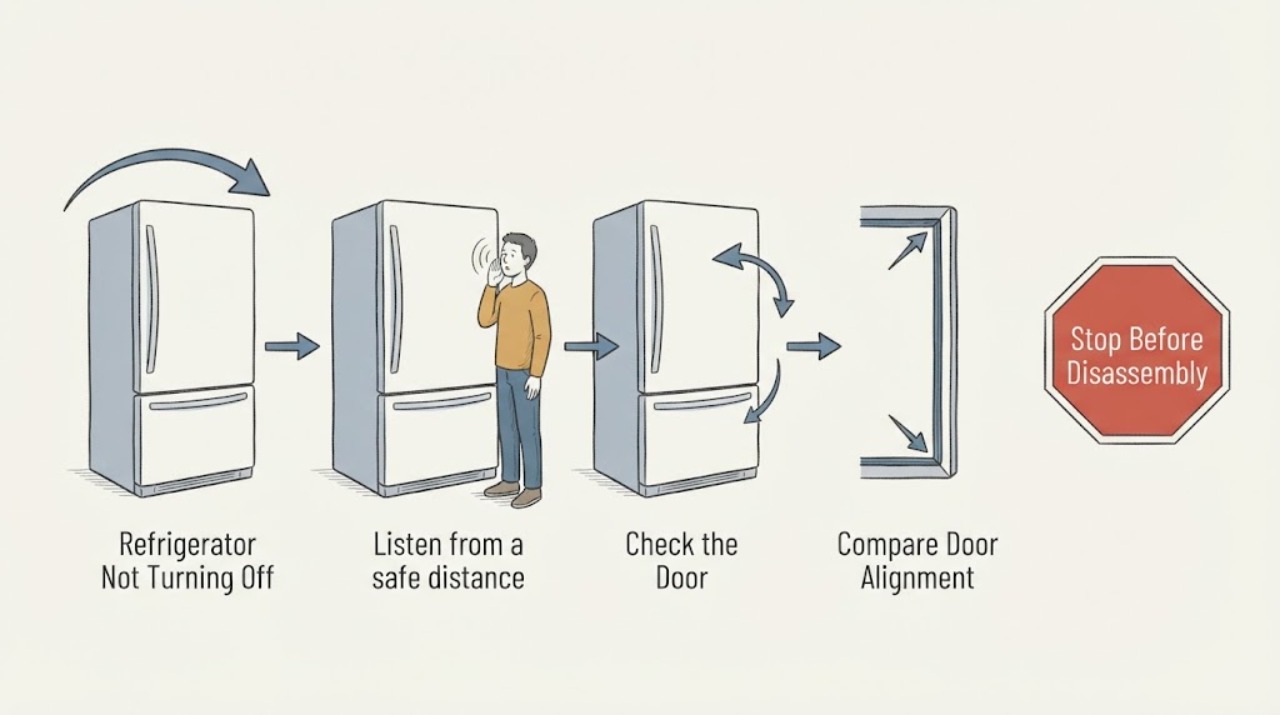
Refrigerator Not Turning Off
A refrigerator compressor may run for long periods, and Frigidaire notes that many variable-speed French-door compressors run continuously except during defrost. Check whether the sound is truly the compressor, whether doors seal, whether warm food or frequent openings are adding heat, and whether vents and rear clearance are adequate.
-
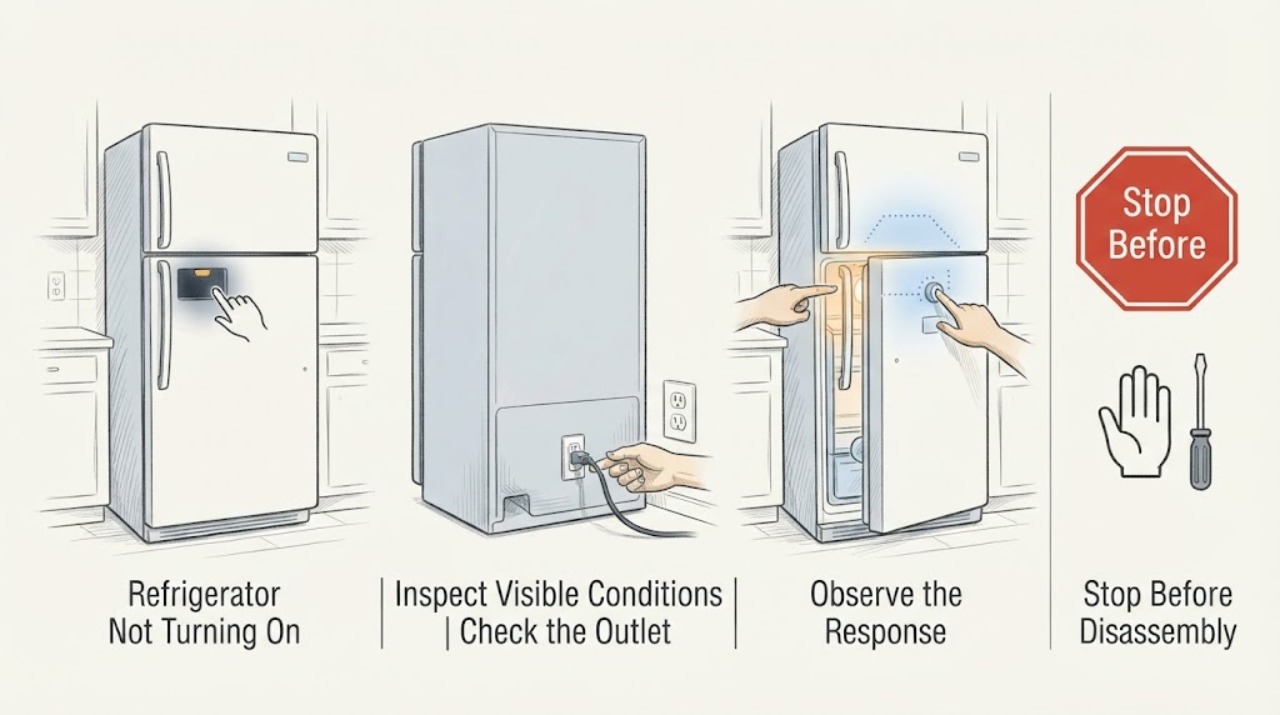
Refrigerator Not Turning On
If a refrigerator is not turning on, distinguish a dead household supply from a refrigerator with no lights or controls. Check outlet, breaker/GFCI, plug, and interior light only from a dry safe position. One controlled reset may clear a temporary state, but a repeat trip, hot/damaged cord, smoke, or refrigerator that stays dead needs qualified electrical or appliance service.
-
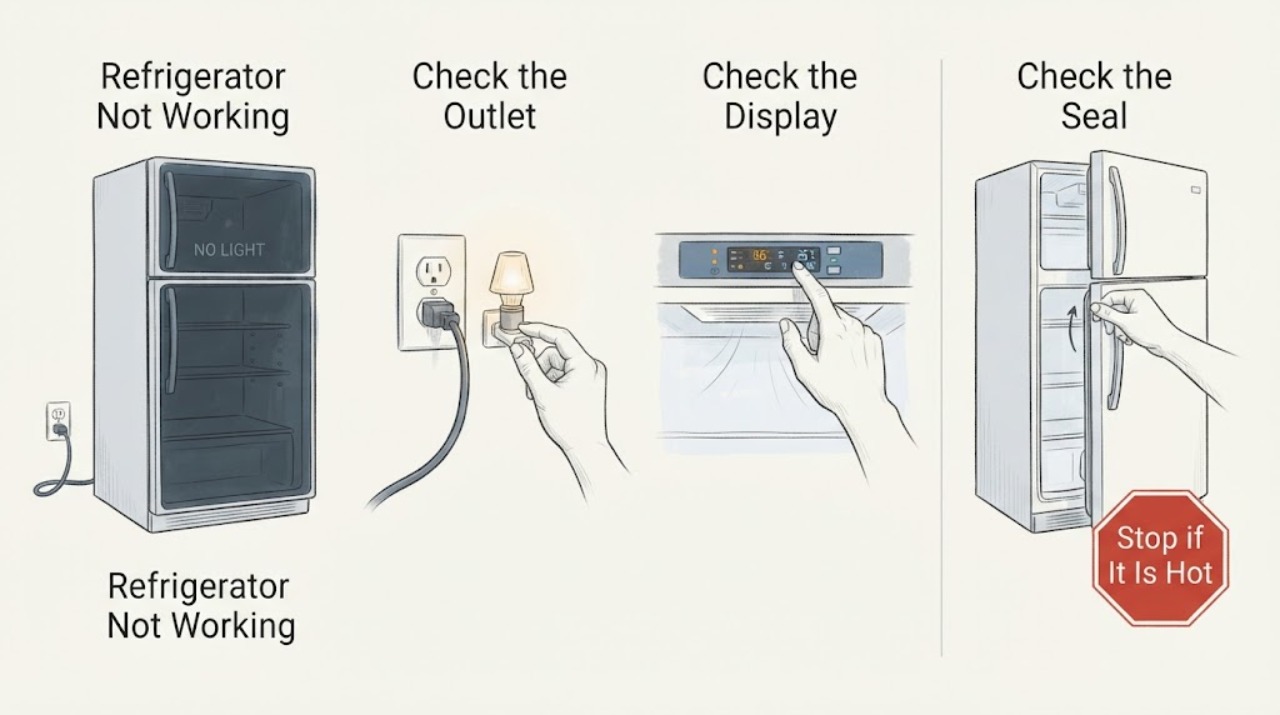
Refrigerator Not Working
“Not working” can mean no power, lights but no cooling, or cooling that stopped after a move, outage, or large load. Check the outlet and breaker, confirm cooling is enabled rather than Demo mode, keep vents clear, and verify doors and seals close. Allow the stabilization period in the manual after installation or a large load; arrange service for persistent warmth, no power with a good outlet, unusual heat/odor, or a failed compressor/fan symptom.
-
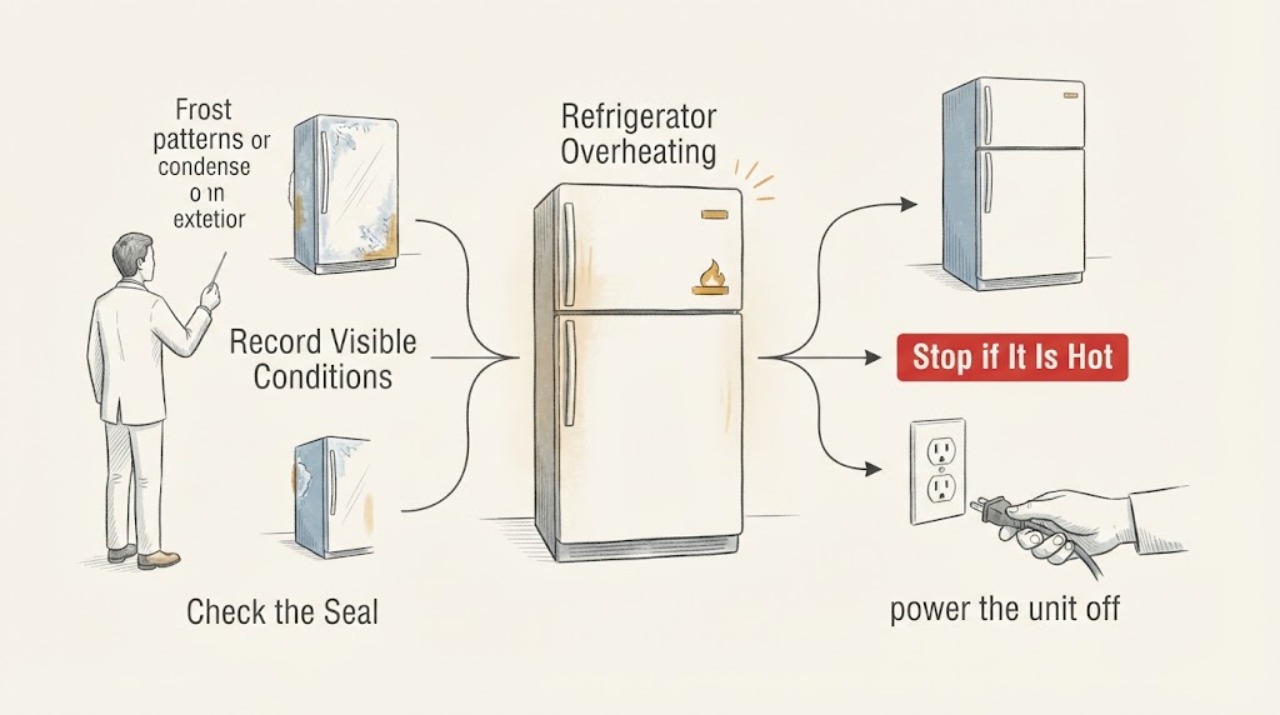
Refrigerator Overheating
First distinguish normal warmth at the mullion or frame from cabinet-wide heat with rising food temperature. Check door seals, vents, grille clearance, and permitted condenser cleaning; persistent heat with poor cooling requires refrigeration service.
-
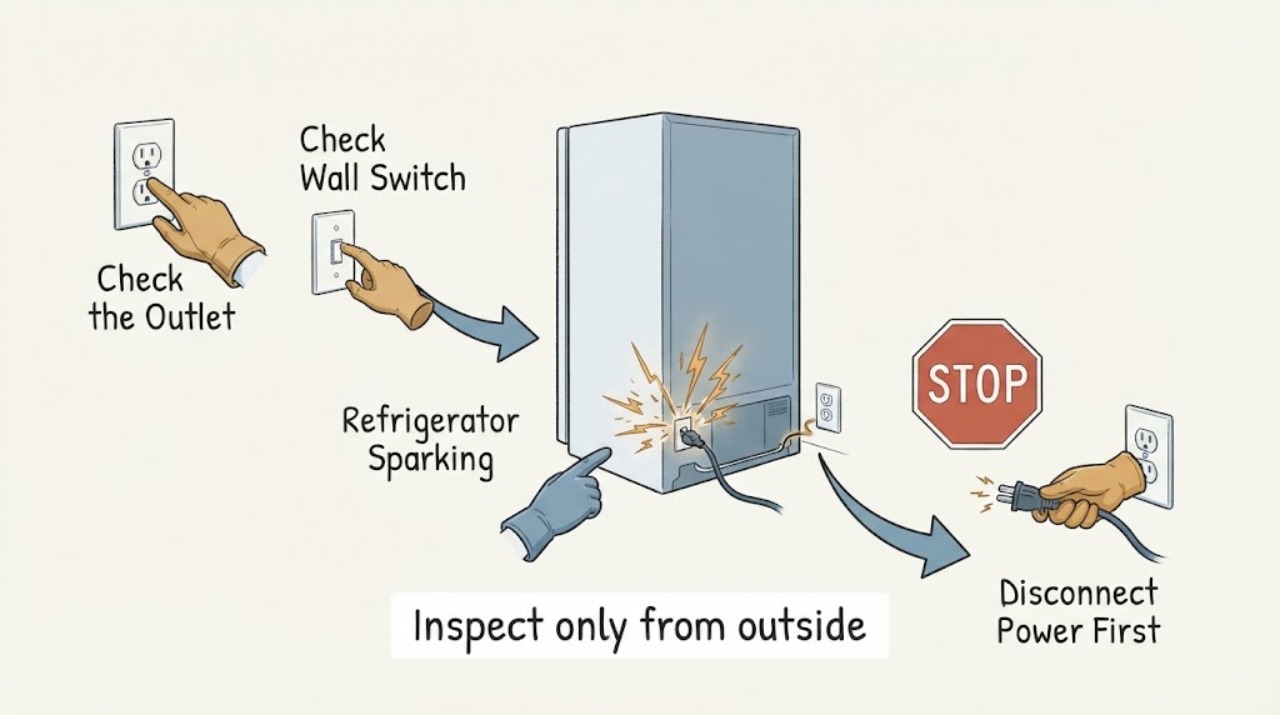
Refrigerator Sparking
A refrigerator that sparks is an electrical safety event, even if cooling continues. Stop using it, keep hands and water away, and disconnect power only if the plug or upstream switch can be reached safely without touching a wet or damaged connection. The opened refrigerator safety guidance says not to operate a damaged or abnormal appliance and not to disassemble it; arrange qualified appliance or electrical service.
-
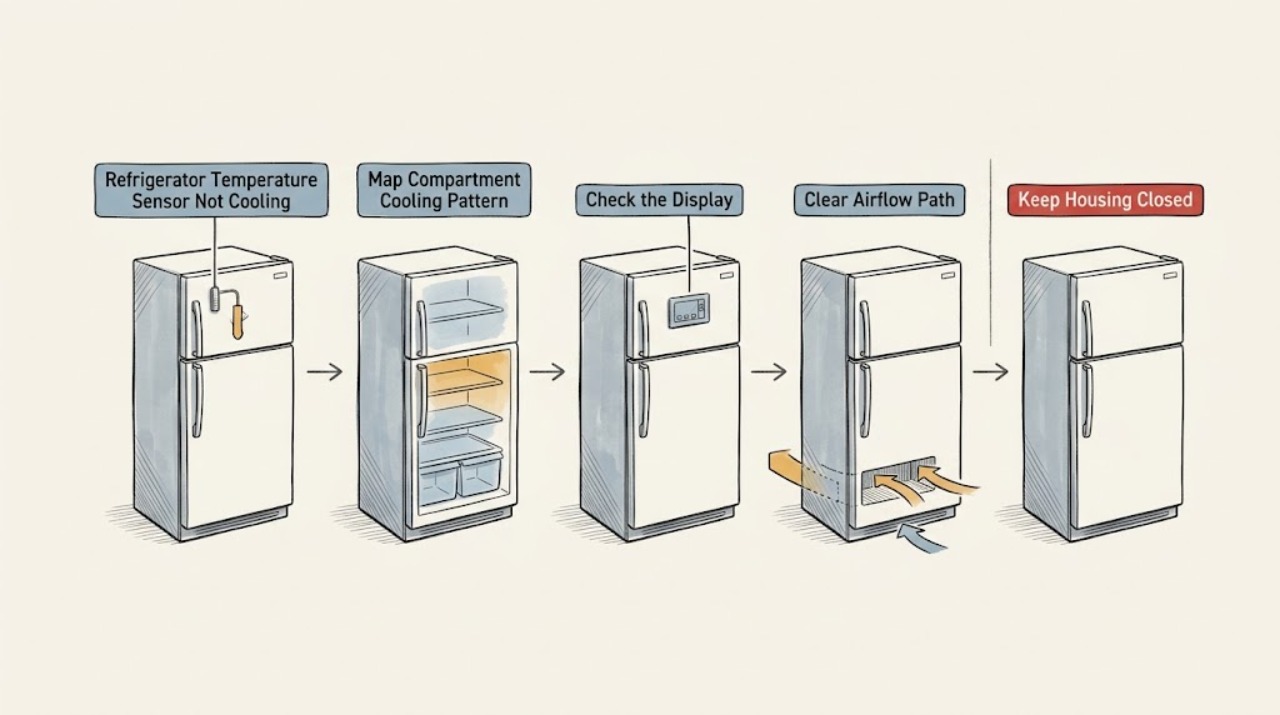
Refrigerator Temperature Sensor Not Cooling: What to Check and What to Do Next
A refrigerator temperature sensor, often called a thermistor in service information, reports compartment conditions to the control system; a sensor fault can therefore produce incorrect cooling, but a warm refrigerator does not prove the sensor is bad.
-
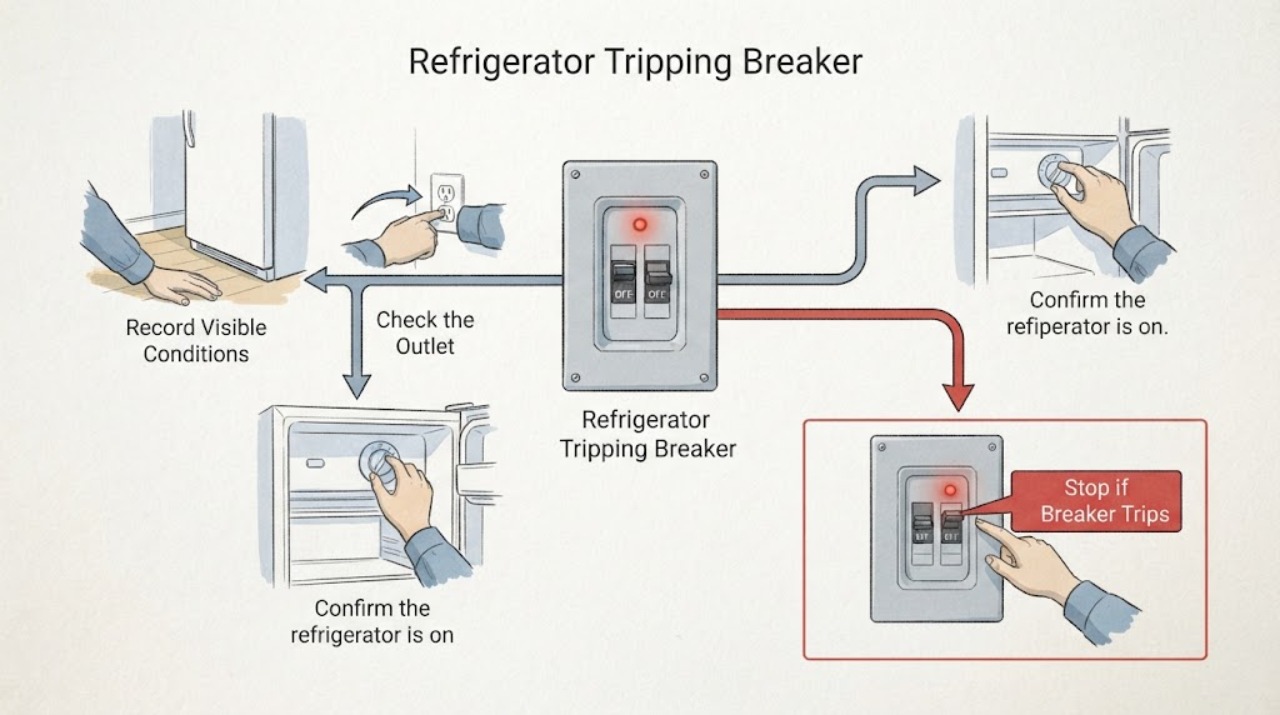
Refrigerator Tripping Breaker
A refrigerator that trips a breaker needs an electrical safety response before cooling diagnosis. Note whether the breaker trips immediately or after the compressor starts, check the plug and outlet from outside, and do not repeatedly reset it. Whirlpool calls for a grounded supply, suitable dedicated circuit, and electrician help when the trip continues.
-
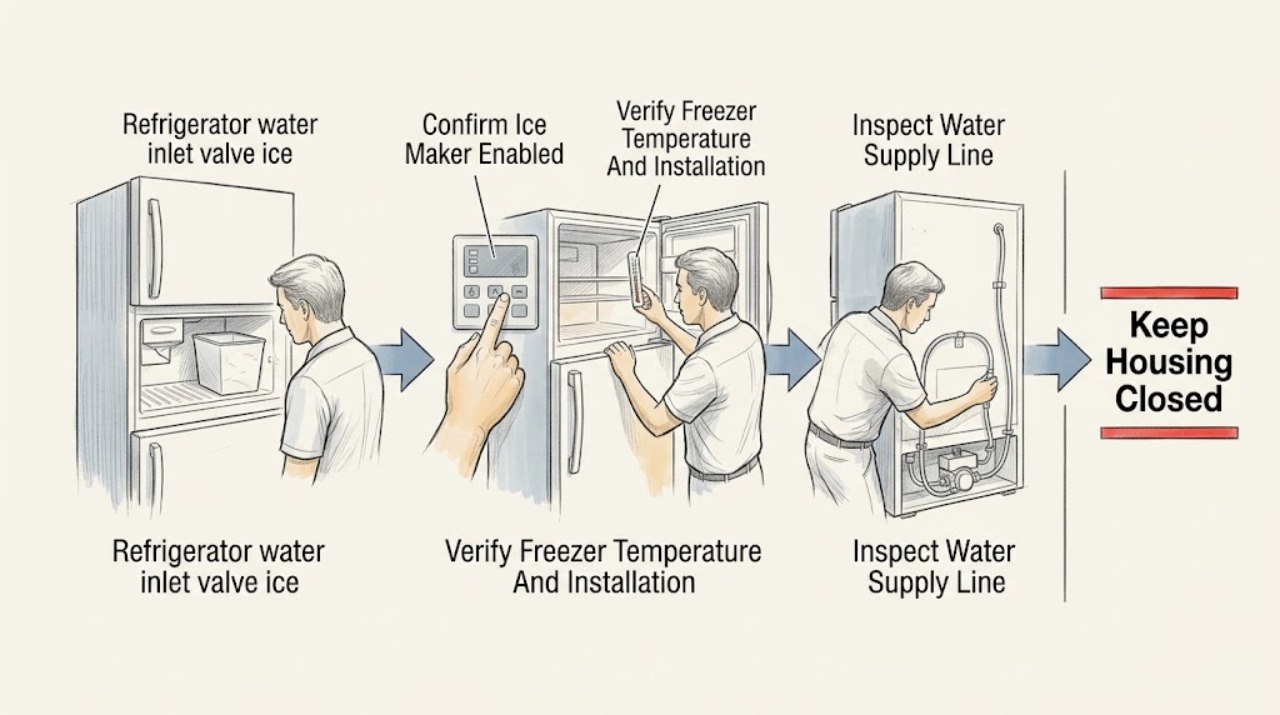
Refrigerator water inlet valve ice maker not making ice: What to Check and What to Do Next
If a refrigerator ice maker is not making ice and the water inlet valve is suspected, first confirm that ice production is enabled, the feeler arm or paddle can move, and the freezer is at the model's ice-making temperature. Then check the accessible water shutoff, supply line, filter, dispenser flow, and fill-tube area without pulling the refrigerator or opening the rear panel.
-
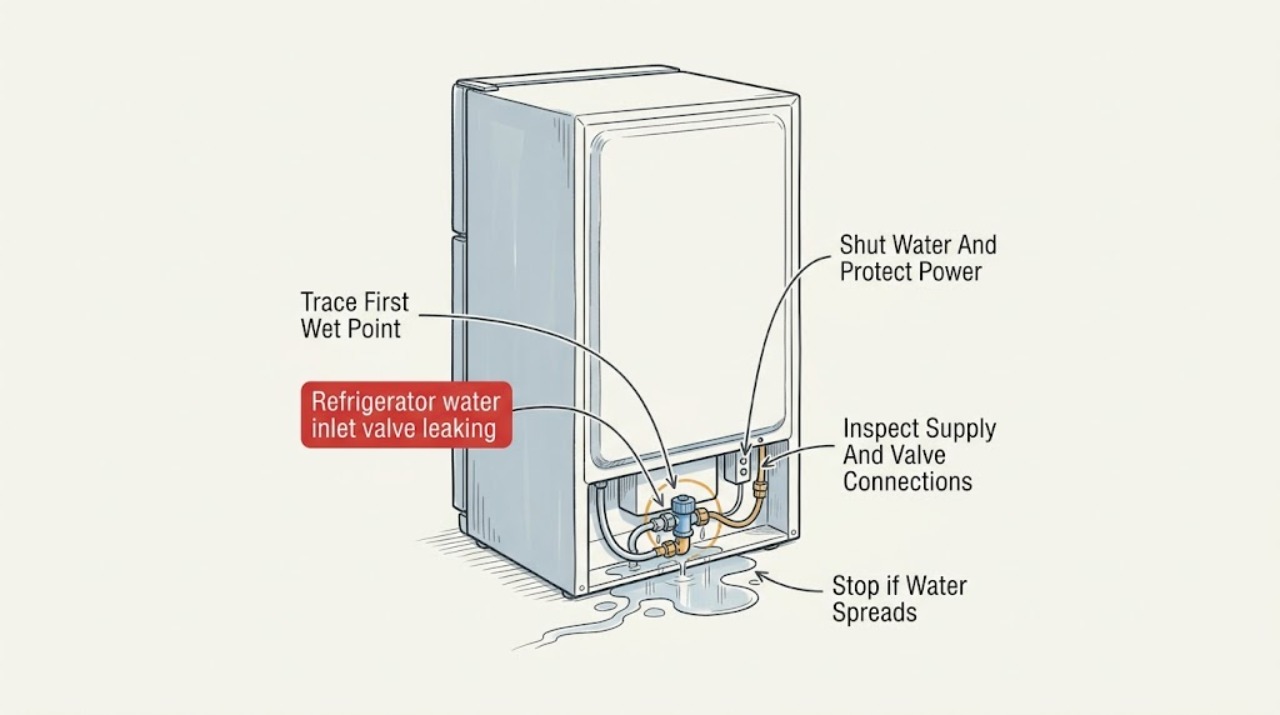
Refrigerator water inlet valve leaking: What to Check and What to Do Next
Turn off the refrigerator water shutoff valve first, then unplug the refrigerator if it is safe to do so and the floor or outlet is dry. Wipe the valve, fittings, and nearby tubing completely dry with a paper towel and trace the first point that becomes wet.