
On this page
Start here
Quick answer
A bad smell from a refrigerator usually comes from uncovered food, spills, the drip area, or damp residue rather than a mechanical part. Remove spoiled food, clean shelves and interior surfaces with the model-approved method, check the door seal and standing water, and use an odor absorber if appropriate. A burning/electrical odor, smoke, or a smell from wiring needs immediate stop-use and service.
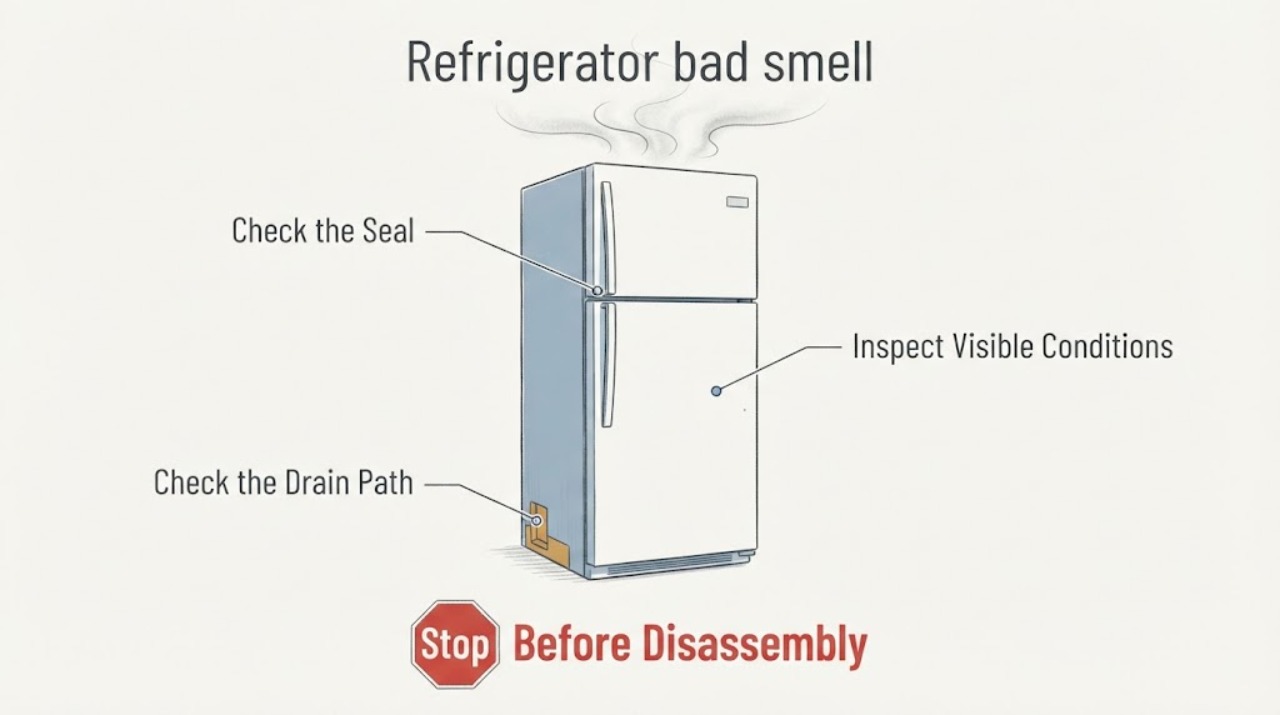
Work through in order
Diagnostic checks
Use only checks that match the exact appliance or system and its official guide.
-
Check 1
Identify odor character and location: spoiled/fermented food, musty moisture, chemical cleaner, or burning/electrical near light/controls/compressor.
Expected result: Odor is localized to food/shelf/drip area or is burning-like/with heat/smoke.
Next step: For burning/smoke/heat, stop and isolate power only if safe; otherwise continue with cool cleaning checks.
Why this matters
Why: Food/spill odor supports cleaning; burning/electrical odor is a stop condition.
-
Check 2
Remove and seal suspect food, inspect shelves, bins, gaskets, and accessible drip/pan areas for spills or standing water.
Expected result: Spoiled food/spill/moisture is visible or compartment is clean.
Next step: Clean and dry with the owner-approved method; do not use bleach/ammonia.
Why this matters
Why: GE identifies food and spills as primary odor sources in enclosed refrigerator space.
-
Check 3
Clean accessible walls/shelves and odor-absorber areas, then verify door closure and seal contact without removing panels.
Expected result: Odor improves, door seal is poor, or odor remains after cleaning.
Next step: Correct only accessible seal/closure conditions and arrange service if hidden or electrical access is needed.
Why this matters
Why: A seal/moisture problem can reintroduce odor; persistence after cleaning points to drain/hidden contamination or non-food source.
-
Check 4
Monitor one cooling cycle/day after cleaning and record whether odor returns with compressor/defrost/light operation.
Expected result: Odor fades, returns with moisture/defrost, or appears during electrical operation.
Next step: Keep the refrigerator out of use and arrange service for electrical or persistent hidden odor.
Why this matters
Why: Trend and timing distinguish residue from a component or wiring concern.
Use your observations
Decision map
Find the observation that best matches what you see, then follow the next safe action.
-
PATH 01Next step
What you see
Odor tracks an uncovered food or spill and fades after cleaning.
Do this next
Keep food sealed and maintain the approved cleaning routine.
Why this path and its safety boundary
Why it matters: Food/residue is the likely source.
-
PATH 02Next step
What you see
Odor is musty with standing water, wet gasket, or recurring condensation.
Do this next
Dry accessible areas, check door closure, and arrange service if drainage or sealed access is needed.
Why this path and its safety boundary
Why it matters: Moisture/drain/seal conditions may be sustaining the smell.
-
PATH 03Next step
What you see
Odor persists after food/interior cleaning or comes from behind panels.
Do this next
Do not remove panels; arrange qualified refrigerator service.
Why this path and its safety boundary
Why it matters: Hidden drain, insulation, or electrical source needs diagnosis.
-
PATH 04Next step
What you see
Burning smell, smoke, sparking, hot wiring/plug, or repeated trip occurs.
Do this next
Stop use and isolate power only if safe, then obtain qualified service.
Why this path and its safety boundary
Why it matters: Immediate electrical safety boundary.
Helpful context
Understand the symptom
Refrigerator odor diagnosis begins with the compartment and food, then separates drain/door-seal moisture from electrical odor.
Do not introduce harsh cleaners or dismantle liner panels.
When checks do not resolve it
Need a professional?
Arrange refrigerator service when odor persists after safe food/interior cleaning, recurs with leaks/defrost, or appears from wiring/compressor areas.
Common questions
FAQ
Can refrigerator plastic create a smell?
A new refrigerator can have a plastic odor that dissipates, but persistent or burning odor needs separate diagnosis.
What cleaner should I use?
GE recommends a baking-soda solution and warns against bleach, ammonia, and lemon-scented cleaners that can damage/affect plastic.
Why does smell return after cleaning?
Recurring moisture, spills, door-seal issues, or hidden drain contamination may remain; arrange service if accessible cleaning does not resolve it.
Read the exact guide
Official sources
- Refrigerator & Freezer - OdorsGE Appliances · refrigerator odor sources and cleaning
- Why is My Refrigerator Light Not Working?Whirlpool · refrigerator door/light and wiring safety context
Community feedback
Share a repair observation
Share a plain-text repair observation. Accepted observations are published automatically; this page may take a moment to update.