
On this page
Start here
Quick answer
Start by identifying the smell and protecting food. A sour or rotten odor is most often found in spoiled food, a spill under a drawer, packaging, or a dirty gasket; discard food with a strange smell or color. Danby's official guidance for a new-plastic smell is to remove packing material, clean the interior according to the owner manual, and use an open box of baking soda. With power disconnected from a dry, safe position, remove and wash only detachable shelves, bins, and gaskets, dry them fully, and check the accessible defrost drain/channel only if the exact manual permits it. On the DAR125SLDD manual, the drain outlet feeds a drain pan above the compressor, so a persistent odor from that area is not a reason to open the rear or sealed system. If the odor is burnt, electrical, solvent-like, or refrigerant-like, or comes with heat, smoke, arcing, a leak, or abnormal cooling, stop using the refrigerator and arrange qualified service. After a prolonged power failure, keep the door closed as much as possible and discard questionable perishables rather than tasting them.
Before you begin
Safety first
- The user may discard questionable food, remove packing, clean detachable parts and the gasket, and clear an accessible drain outlet only as the exact manual permits with power disconnected. Drain pans above compressors, sealed tubing, evaporator areas, compressors, fans, wiring, and all energized testing are for qualified personnel.
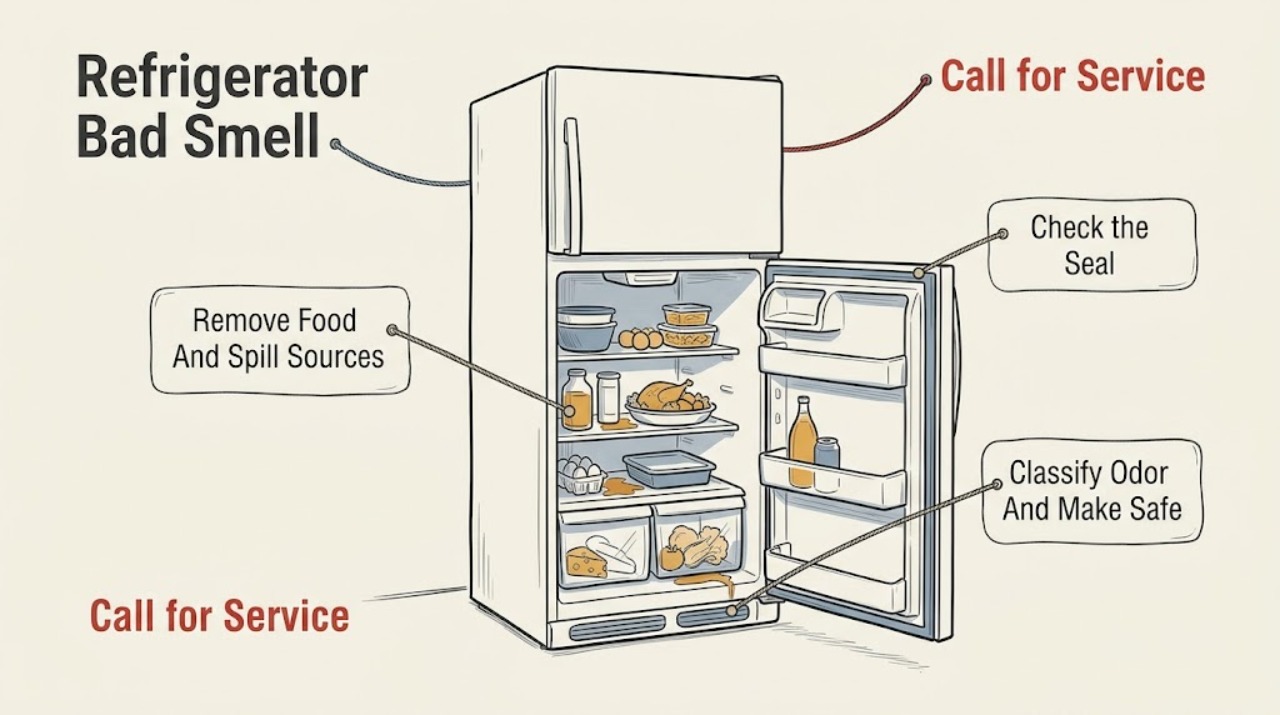
Work through in order
Diagnostic checks
Use only checks that match the exact appliance or system and its official guide.
-
Check 1
From outside the cabinet, identify whether the odor is food-like/sour, musty, new-plastic, burnt/electrical, solvent-like, or refrigerant-like. If there is smoke, arcing, unusual heat, a damaged cord, a leak, or a strong chemical/electrical odor, stop opening the appliance and disconnect power only from a dry, safe position.
Expected result: The smell is consistent with food or moisture and no hazard is present, or it is burnt/electrical/chemical-like or accompanied by a physical hazard.
Next step: For any hazard odor or physical hazard, keep the refrigerator out of service and arrange qualified service. For a food/musty/new-plastic odor, protect the food and continue with the safe inventory check.
Stop if: Do not energize an appliance that smells burnt or electrical, spray deodorizer into vents, or open the rear cover to locate a chemical odor.
Why this matters
Why: Food, spills, and moisture can be investigated with unpowered cleaning. A burnt, electrical, solvent-like, or refrigerant-like odor can indicate an electrical or sealed-system problem and is not a deodorizing task.
-
Check 2
With the door open only as long as needed, inspect every container, drawer, shelf edge, door bin, and the area under removable crispers for spoiled food or a dried spill. Discard food with a strange smell or color, remove leaking containers, and check for packaging that has absorbed liquid or odor.
Expected result: A spoiled item or spill is found and removed, or no food/packaging source is found and the odor remains strongest near the rear wall, drain area, gasket, or outside of the cabinet.
Next step: Bag and remove the source, then proceed to unpowered cleaning. If there is no source or the smell is not food-like, do not keep the door open searching; use the service branch if the odor is chemical, burnt, or external.
Stop if: Do not taste questionable food, scrape mold with bare hands, or reach into a wet rear compartment.
Why this matters
Why: A localized food or spill source is more likely than a cooling-system fault when the odor follows a container or shelf. An odor that persists after the interior source is removed shifts attention to moisture, drain/gasket contamination, or an external mechanical/electrical source.
-
Check 3
Disconnect the refrigerator before cleaning. Remove only detachable shelves, bins, and other parts the exact manual identifies as removable; wash them with mild detergent and water, wipe the interior with the manual-approved mild solution, clean the door gasket without tearing it, and dry everything completely before reassembly.
Expected result: Residue, mold-like buildup, or moisture is found on a removable part or gasket and the odor improves after cleaning, or surfaces are clean but the odor remains.
Next step: Reassemble only when dry and reconnect power when safe. If the odor returns quickly or remains despite cleaning, continue with the drain/condensation branch and arrange service if it is inaccessible.
Stop if: Do not pour water into vents, lamp housings, controls, or the rear cabinet; do not use abrasive cleaners, solvents, bleach mixtures, or electrical appliances for drying.
Why this matters
Why: Residue trapped in detachable parts or the gasket can explain a localized food or musty odor. No improvement after a complete dry cleaning makes a hidden drain, drain pan, persistent leak, or external source more likely.
-
Check 4
If the exact model manual identifies an accessible defrost outlet or drain channel, inspect it with power disconnected and clear only the described food-particle blockage using the approved non-sharp method. Check for water under drawers or on the floor and inspect the gasket and door closure from the outside. Do not remove the rear panel to reach a drain pan above the compressor.
Expected result: The model-approved outlet is blocked, water or residue is present under the drawers, the door gasket is damaged/contaminated, or the accessible path is clear but the odor persists from behind the cabinet.
Next step: Clear only the documented accessible path, dry the area, and monitor one normal cooling period. If water returns or the smell remains behind the cabinet, keep the unit out of service and arrange qualified service.
Stop if: Do not push sharp tools into a drain, remove the drain pan, puncture tubing, move sealed-system parts, or spray cleaner into the channel without the manual's instruction.
Why this matters
Why: A blocked drain or poor door seal can retain moisture and produce musty odors; the DAR125SLDD manual specifically routes defrost water through an interior outlet to a pan above the compressor. A hidden pan, tube, leak, or evaporator-area odor cannot be safely confirmed externally.
-
Check 5
For a new-plastic smell, verify that all packing material has been removed, clean and dry the cabinet according to the owner manual, and place an open box of baking soda in the refrigerator as Danby suggests. If the refrigerator recently lost power, keep the door closed as much as possible and separate/discard questionable perishables rather than tasting them.
Expected result: The odor fades after packing removal and cleaning, or it persists after cleaning; the unit experienced a short or prolonged outage and food condition is uncertain.
Next step: Continue normal use only when the cabinet is dry and the odor is benign and improving. If the odor persists, cooling is abnormal, or food safety is uncertain, arrange service and replace questionable food as appropriate.
Stop if: Do not mask a burnt, electrical, solvent-like, or refrigerant-like odor with baking soda or fragrance.
Why this matters
Why: A transient new-plastic odor is different from a persistent odor after cleaning. During an outage, food safety is a separate decision from odor removal; an unusual smell or color is a reason to discard the food.
-
Check 6
After the safe inventory, unpowered cleaning, and any model-approved accessible drain check, record where the odor is strongest, whether it returns with the door closed, whether cooling or condensation changed, and whether any hazard symptom occurred. Do not repeatedly unplug and restart a refrigerator with a persistent chemical or electrical odor.
Expected result: The odor resolves and cooling is normal, or it returns from the rear/underside, accompanies abnormal cooling or heat, or is burnt/electrical/chemical-like.
Next step: For a recurring or hazardous odor, keep the appliance out of service and contact Danby support or a qualified refrigeration technician with the model and observations. Protect food in a safe alternative appliance.
Stop if: Do not open the sealed system, inspect energized wiring, clean around a hot compressor, or continue operating after smoke, arcing, or a strong chemical odor.
Why this matters
Why: A resolved food, gasket, or new-plastic odor is more consistent with an external cleanable source. A recurring rear/underside odor or any hazard odor may involve the drain pan, wiring, motor/compressor area, refrigerant circuit, or another internal fault.
Use your observations
Decision map
Find the observation that best matches what you see, then follow the next safe action.
-
PATH 01Safety boundary
What you see
The odor is sour/rotten or localized to a container, shelf, drawer, door bin, or visible spill, with no electrical or chemical hazard.
Do this next
Discard questionable food, remove the spill, wash detachable parts and the gasket with the manual-approved mild method, and dry fully.
Why this path and its safety boundary
Why it matters: Spoiled food, absorbed packaging, or residue is more likely than a sealed cooling fault.
Safety stop: Do not taste food to decide whether it is safe.
-
PATH 02Safety boundary
What you see
The odor is musty and returns after food/spill cleaning, with moisture under drawers, a dirty/damaged gasket, or a model-documented accessible drain blockage.
Do this next
Clean the gasket and only the manual-approved accessible drain path with power isolated. Request service if water returns or the odor is strongest behind the cabinet.
Why this path and its safety boundary
Why it matters: Retained condensation, drain-channel residue, or a poor door seal is more likely; the exact drain and pan arrangement is model-specific.
Safety stop: Do not remove a hidden drain pan or rear panel or use sharp tools in the drain.
-
PATH 03Safety boundary
What you see
The odor is mild plastic-like on a new or recently unpacked unit, with no heat, smoke, leak, or cooling abnormality.
Do this next
Remove all packing, clean and dry according to the manual, and use an open box of baking soda. Escalate if the smell does not improve or changes character.
Why this path and its safety boundary
Why it matters: Remaining packing material or normal new-material odor is more likely than a refrigeration or electrical fault.
Safety stop: Do not use fragrance to conceal a burnt or chemical odor.
-
PATH 04Safety boundary
What you see
The smell began after a power outage or extended period with the door closed, and food condition is uncertain.
Do this next
Keep the door closed while assessing, discard food with a strange smell or color, clean only after power is safely disconnected, and arrange service if cooling does not recover.
Why this path and its safety boundary
Why it matters: Food spoilage and temperature exposure are more likely than a new mechanical odor; the odor itself cannot establish food safety.
Safety stop: Do not taste questionable food or reconnect a wet appliance.
-
PATH 05Safety boundary
What you see
The odor is burnt, electrical, solvent-like, or refrigerant-like, or it comes from the rear/underside with heat, smoke, arcing, abnormal cooling, or a leak.
Do this next
Stop using the refrigerator, isolate power only from a safe dry position, protect the food elsewhere, and arrange qualified refrigeration/electrical service.
Why this path and its safety boundary
Why it matters: An electrical, motor/compressor, sealed-system, or inaccessible drain-pan problem is more likely than a cleanable food source.
Safety stop: Do not open the rear cabinet, touch hot or energized parts, puncture tubing, or continue operation to see whether the odor clears.
Helpful context
Understand the symptom
Classify the smell before cleaning
A food or sour smell calls for a careful inventory of food, containers, drawers, and gaskets. A new-plastic smell can follow unpacking and is addressed by removing packing material and cleaning the cabinet. A burnt, electrical, solvent-like, or refrigerant-like odor is a stop condition: do not try to deodorize an energized appliance or diagnose the sealed cooling system.
Drain and gasket checks are model-specific
Danby's DAR125SLDD manual identifies a defrost-water outlet and channel that lead to a drain pan above the compressor, and says to keep the outlet free of food particles. That does not make every Danby drain or pan owner-accessible. Clean only an accessible outlet or channel when the exact manual says how; a recurring wet, musty odor from behind the cabinet belongs to service. A contaminated or damaged door gasket can also trap residue and moisture, so inspect it from the outside and clean it without removing sealed parts.
Clean after an outage without risking the food or appliance
Disconnect power before cleaning, use only the mild method in the model manual, and dry all surfaces before reconnecting. Danby's guidance for power failures is to minimize door openings and protect food during a longer outage. If food has an unexplained smell or color, discard it; do not use tasting as a safety test.
Safety boundary
Stop conditions
- Stop using the refrigerator for burnt, electrical, solvent-like, or refrigerant-like odor; smoke, arcing, unusual heat, a damaged cord, a leak, or repeated electrical protection trips. Isolate power only from a safe, dry position.
- Do not taste questionable food. Discard food with a strange smell or color, especially after a prolonged outage or temperature loss.
- Disconnect power before cleaning. Do not pour liquid into vents, lamps, controls, or the rear cabinet, and do not use solvents, abrasive cleaners, or electrical appliances for drying.
- Do not remove a hidden drain pan, rear panel, compressor cover, sealed-system tubing, wiring harness, or evaporator cover. Internal drain, motor/compressor, refrigerant, and electrical work is for qualified service personnel.
- Do not assume the DAR125SLDD drain layout or cleaning instructions apply to every Danby refrigerator; use the owner manual for the exact model.
When checks do not resolve it
Need a professional?
Contact Danby support or a qualified refrigeration technician when odor persists after removing food/packing, cleaning detachable parts and the gasket, and performing any model-approved accessible drain check; when water or odor returns from behind the cabinet; or immediately for burnt, electrical, solvent-like, refrigerant-like odor, smoke, arcing, heat, leaks, damaged cord, or abnormal cooling.
Safety scope: The user may discard questionable food, remove packing, clean detachable parts and the gasket, and clear an accessible drain outlet only as the exact manual permits with power disconnected. Drain pans above compressors, sealed tubing, evaporator areas, compressors, fans, wiring, and all energized testing are for qualified personnel.
Common questions
FAQ
How do I get a bad food smell out of a Danby refrigerator?
Discard food with a strange smell or color, remove spills and odor-absorbing packaging, then disconnect power and clean detachable shelves, bins, the interior, and gasket using the exact owner manual's mild method. Dry completely before reconnecting. Danby also suggests an open box of baking soda for a new-plastic odor.
Can a clogged defrost drain cause a bad smell?
It can allow moisture and residue to remain, but the drain layout is model-specific. The DAR125SLDD manual identifies an accessible defrost outlet and channel leading to a drain pan above the compressor. Clear only the path and method described by your exact manual; do not remove a rear panel or drain pan yourself.
What should I do if the smell started after a power outage?
Keep the door closed as much as possible while assessing the appliance. Discard food with a strange smell or color and clean only after power is safely disconnected. If cooling does not recover or the odor is burnt, electrical, chemical, or refrigerant-like, stop using the refrigerator and arrange service.
When is a refrigerator smell an electrical or refrigeration emergency?
Treat a burnt, electrical, solvent-like, or refrigerant-like smell, especially with smoke, arcing, unusual heat, a leak, damaged cord, or abnormal cooling, as a stop condition. Isolate power only from a safe dry position and arrange qualified refrigeration or electrical service; do not open the cabinet or sealed system.
Read the exact guide
Official sources
- Customer SupportDanby Appliances · Support route; service availability depends on model and market.
- DAR125SLDD Owner's ManualDanby · DAR125SLDD model family; drain layout and cleaning procedure must not be generalized to other Danby refrigerators.
- DFF180E1WDB / DFF180E2SSDB Frost Free Refrigerator Owner's ManualDanby · DFF180E1WDB/DFF180E2SSDB family; cleaning and odor guidance remains model-specific.
- Refrigeration FAQsDanby Appliances · General refrigeration guidance; model manuals control exact drain and cleaning procedures.
- My fridge smells like new plastic. How do I make it go away?Danby Appliances · General new-unit odor guidance; the exact owner manual controls cleaning details.
Community feedback
Share a repair observation
Share a plain-text repair observation. Accepted observations are published automatically; this page may take a moment to update.