
On this page
Start here
Quick answer
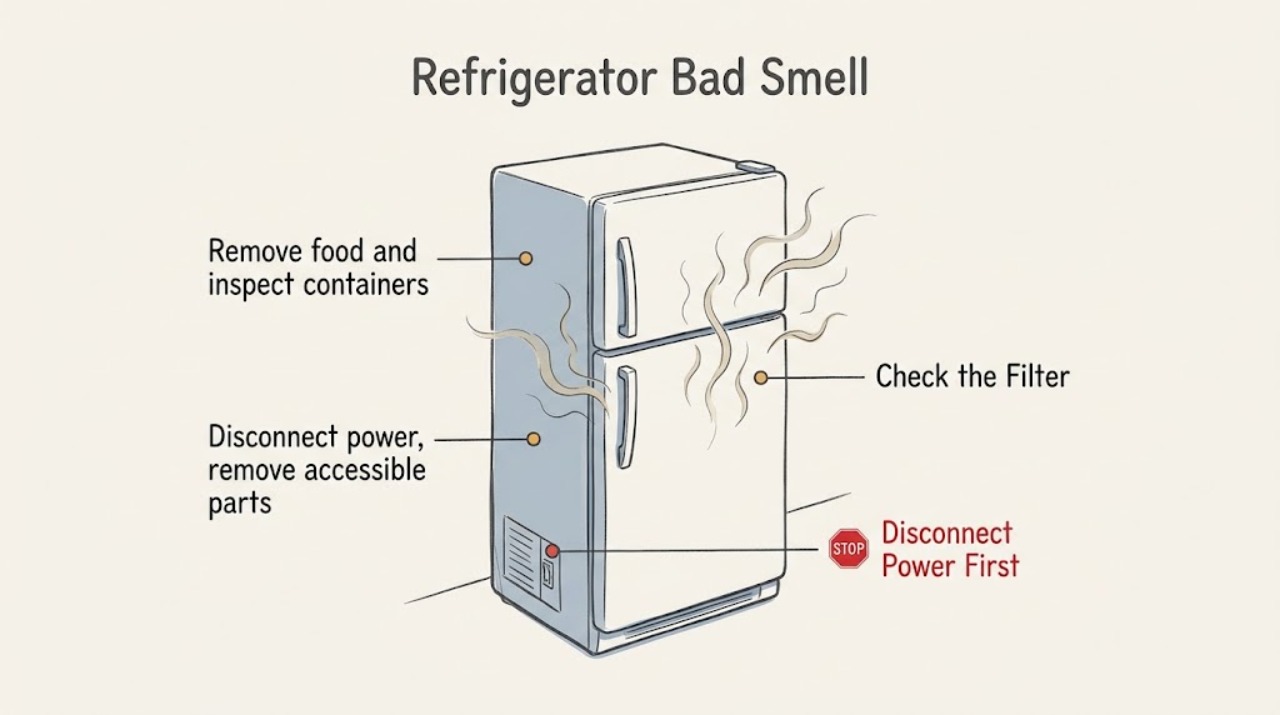
Remove spoiled or spilled food, disconnect power, and clean both refrigerator and freezer sections because air circulates between them. Wash removable parts and interior surfaces with mild detergent and warm water, dry them, and inspect underneath. Persistent or unusual odors need service.
Before you begin
Safety first
- Disconnect power before cleaning and avoid harsh, flammable, or petroleum-based cleaners.
Work through in order
Diagnostic checks
Use only checks that match the exact appliance or system and its official guide.
-
Check 1
Remove food and inspect containers, bins, shelves, drawers, and both compartments for spoilage or spills.
Expected result: A source is found or the odor has no visible source.
Next step: Discard unsafe food and clean both sections.
Why this matters
Why: Food residue is common, and air transfer means the other compartment may also retain odor.
-
Check 2
Disconnect power, remove accessible parts, and wash and dry them with mild detergent and warm water using a soft cloth.
Expected result: The odor improves after complete cleaning or remains.
Next step: Reconnect power and keep food sealed; do not use abrasive or flammable cleaners.
Why this matters
Why: Improvement indicates food residue; harsh cleaners can damage plastics, liners, and gaskets.
-
Check 3
Inspect accessible space beneath and around the refrigerator and check any model-specific air-filter indicator.
Expected result: Debris is present or odor persists despite cleaning.
Next step: Clean accessible areas only and consult the exact manual or service.
Why this matters
Why: External debris, a model-specific filter, or a concealed source may be involved.
Use your observations
Decision map
Find the observation that best matches what you see, then follow the next safe action.
-
PATH 01Next step
What you see
Odor improves after spoiled food removal and cleaning both sections
Do this next
Keep food covered and wipe spills promptly.
Why this path and its safety boundary
Why it matters: Food residue or odor transfer was likely.
-
PATH 02Next step
What you see
Odor persists or smells chemical/burning after cleaning
Do this next
Stop using the appliance if unsafe and request qualified service.
Why this path and its safety boundary
Why it matters: A concealed or non-food source remains possible.
When checks do not resolve it
Need a professional?
Arrange service for a persistent or unusual odor.
Safety scope: Disconnect power before cleaning and avoid harsh, flammable, or petroleum-based cleaners.
Common questions
FAQ
Why clean both refrigerator sections?
KitchenAid notes that air circulates between sections, so an odor in one can transfer to the other.
Can I use bleach to remove refrigerator odor?
No. KitchenAid advises against harsh, flammable, petroleum-based, and abrasive cleaners on interiors and gaskets.
Read the exact guide
Official sources
- Removing and Preventing OdorsKitchenAid Product Help · KitchenAid refrigerators
Community feedback
Share a repair observation
Share a plain-text repair observation. Accepted observations are published automatically; this page may take a moment to update.