
Kitchenaid appliance guidance
Kitchenaid Refrigerator Repair Guides
Troubleshooting and repair guidance for published Kitchenaid Refrigerator problems, symptoms, and maintenance questions.
Published Kitchenaid Refrigerator guides
Choose the guide whose symptom or condition most closely matches what you are seeing.
-
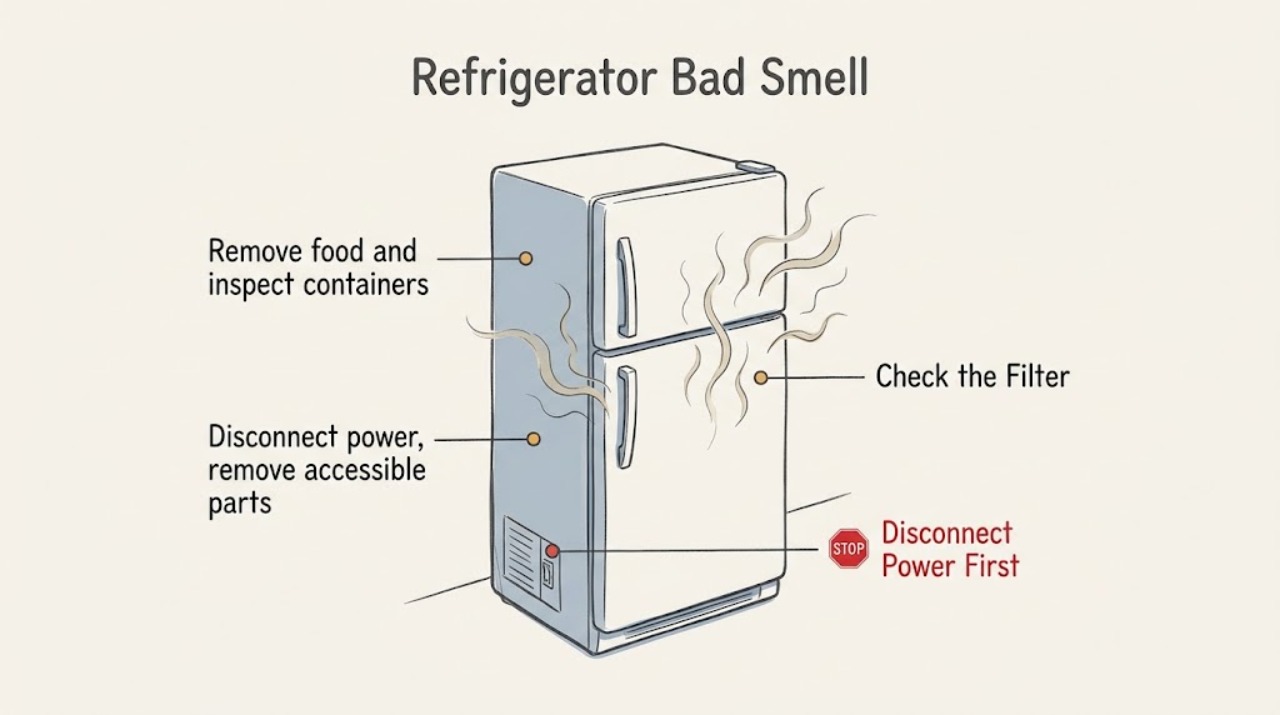
KitchenAid Refrigerator Bad Smell
Remove spoiled or spilled food, disconnect power, and clean both refrigerator and freezer sections because air circulates between them. Wash removable parts and interior surfaces with mild detergent and warm water, dry them, and inspect underneath. Persistent or unusual odors need service.
-
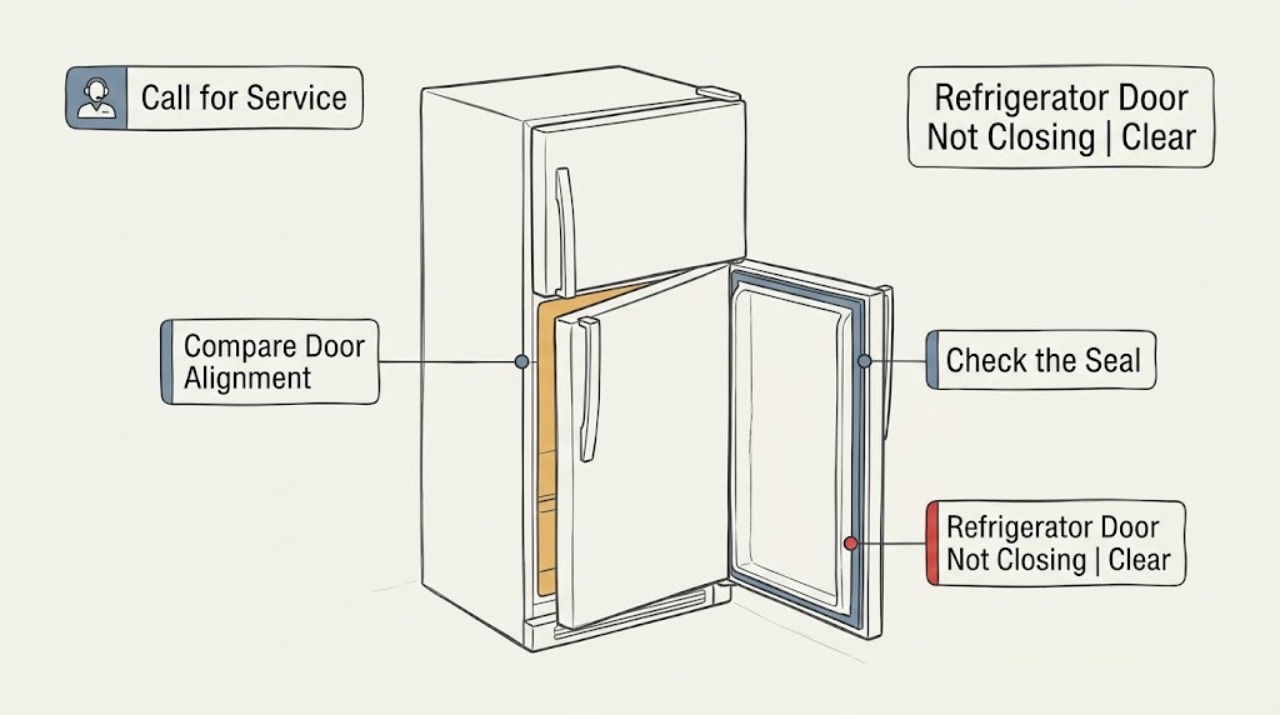
KitchenAid Refrigerator Door Not Closing: Find the Obstruction First
Check bins, shelves, food packages, leveling, and the gasket in that order. KitchenAid identifies blocked contents as a common cause and says alignment or seal issues may need service. Do not force the door or adjust hinges without the exact model instructions.
-
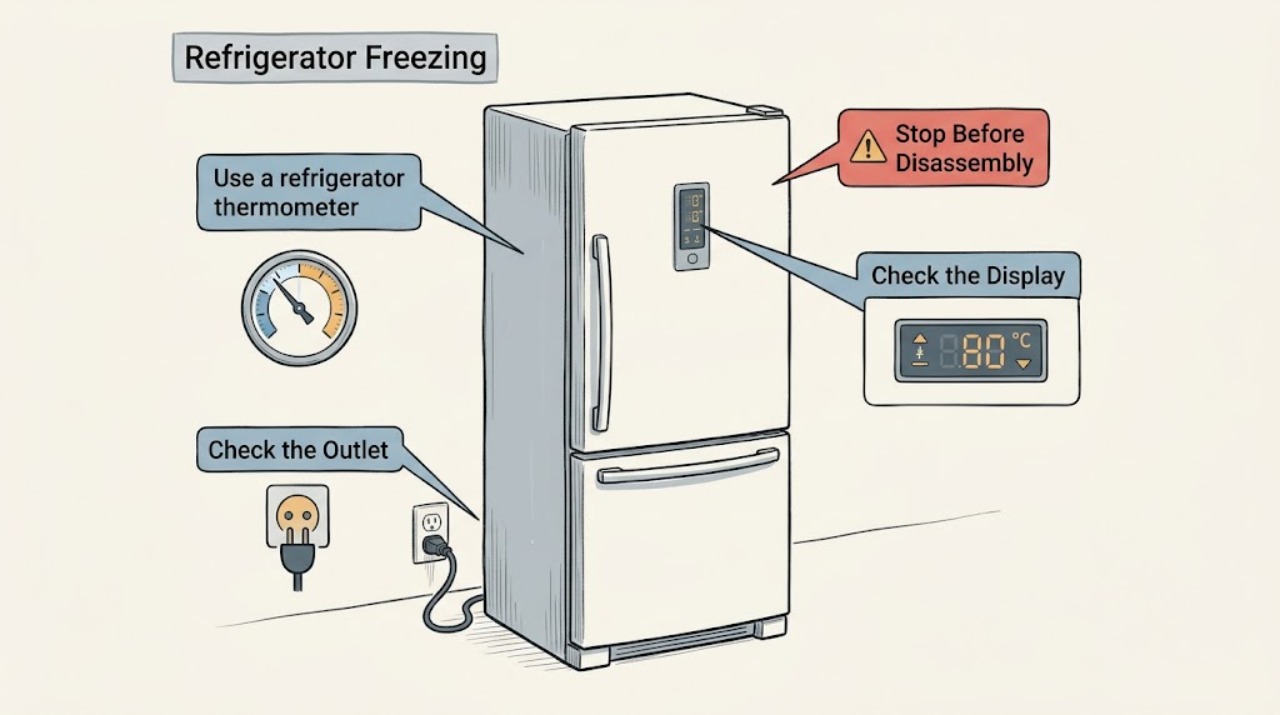
KitchenAid Refrigerator Freezing
Determine whether the whole compartment is freezing or only the meat pan/crisper. Check blocked vents, food against cold surfaces, and model-specific control settings. If the main compartment remains below the intended range after these checks, protect food and request service.
-
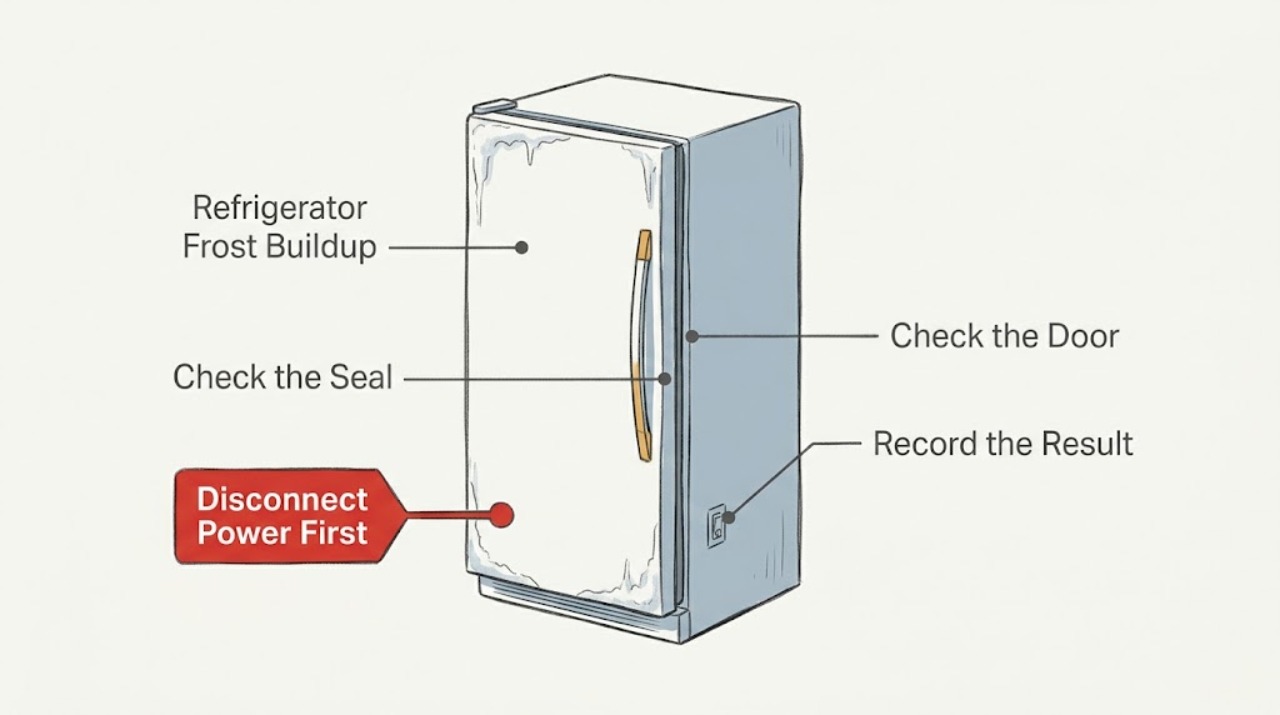
KitchenAid Refrigerator Frost Buildup
First map whether the frost is a light, even layer or a thick patch at a door edge, vent, or back wall. Light frost can follow humid air or a recent load; a poor door seal, blocked vent, or frost that returns quickly after the accessible checks needs model-specific service.
-
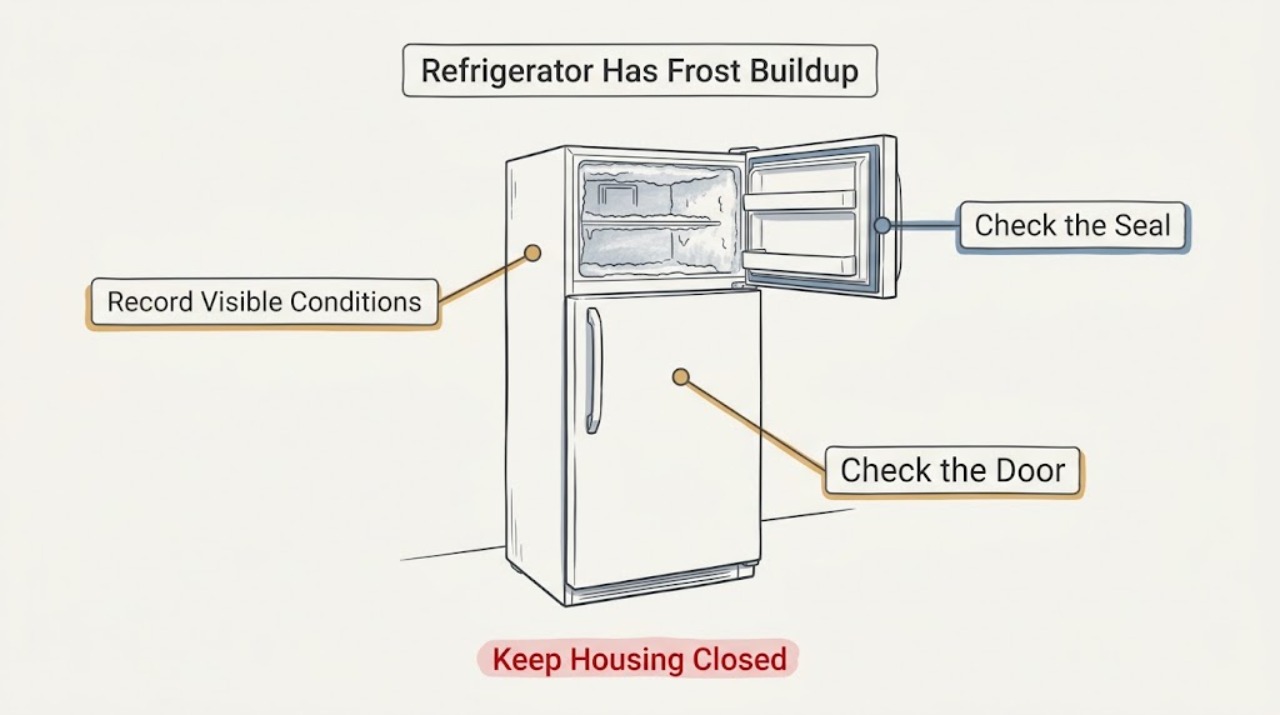
KitchenAid Refrigerator Has Frost Buildup: What to Check and What to Do Next
Frost buildup in a KitchenAid refrigerator usually starts with humid air entering through a door that is left open, blocked, or not sealing, but blocked vents, leveling, temperature settings, or an internal cooling or defrost problem can also be involved. First record where the frost is forming, confirm the doors close and the gaskets make contact, clear the model-specific air vents, and check that food is not holding a door open.
-
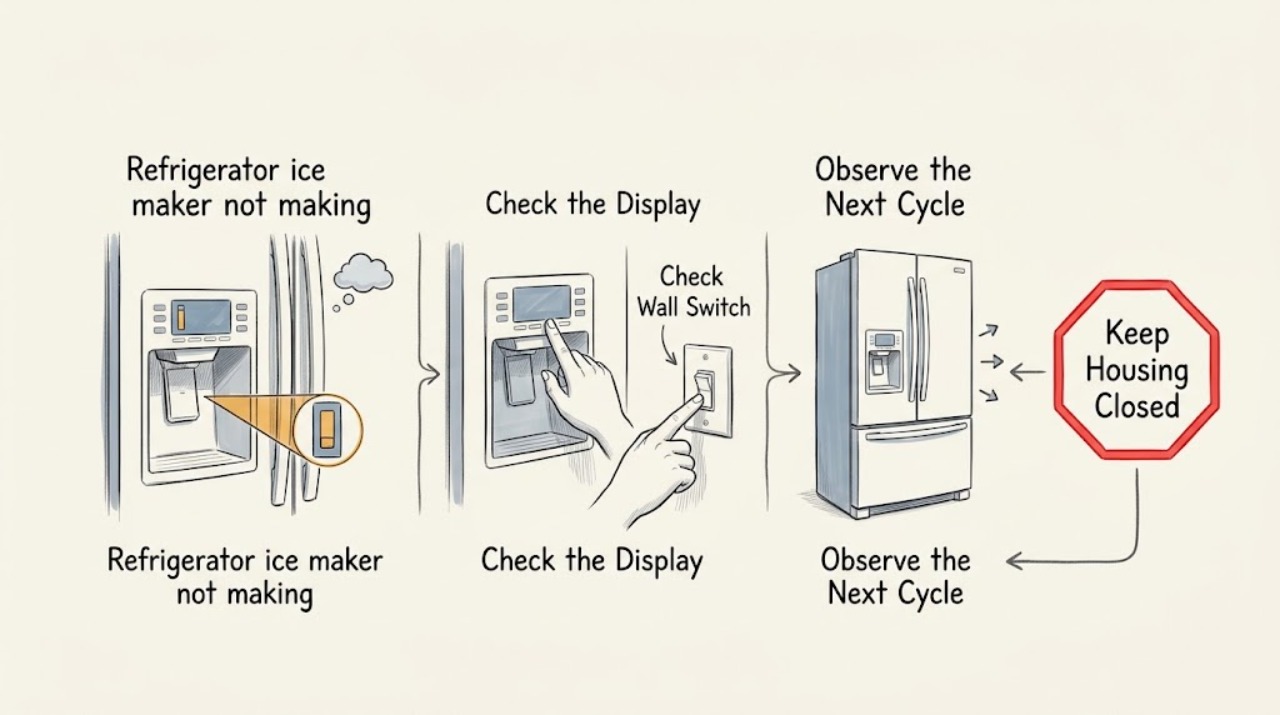
KitchenAid refrigerator ice maker not making ice: identify the missing step before replacing a part
Start by separating a production problem from a dispensing problem: look for cubes in the KitchenAid ice bin, then check the maker's model-specific on state, freezer cooling, water flow, and filter seating. KitchenAid's troubleshooting guidance points to a closed or restricted water supply, an incorrectly installed or clogged filter, freezer temperature, and an ice maker that is off as common causes.
-
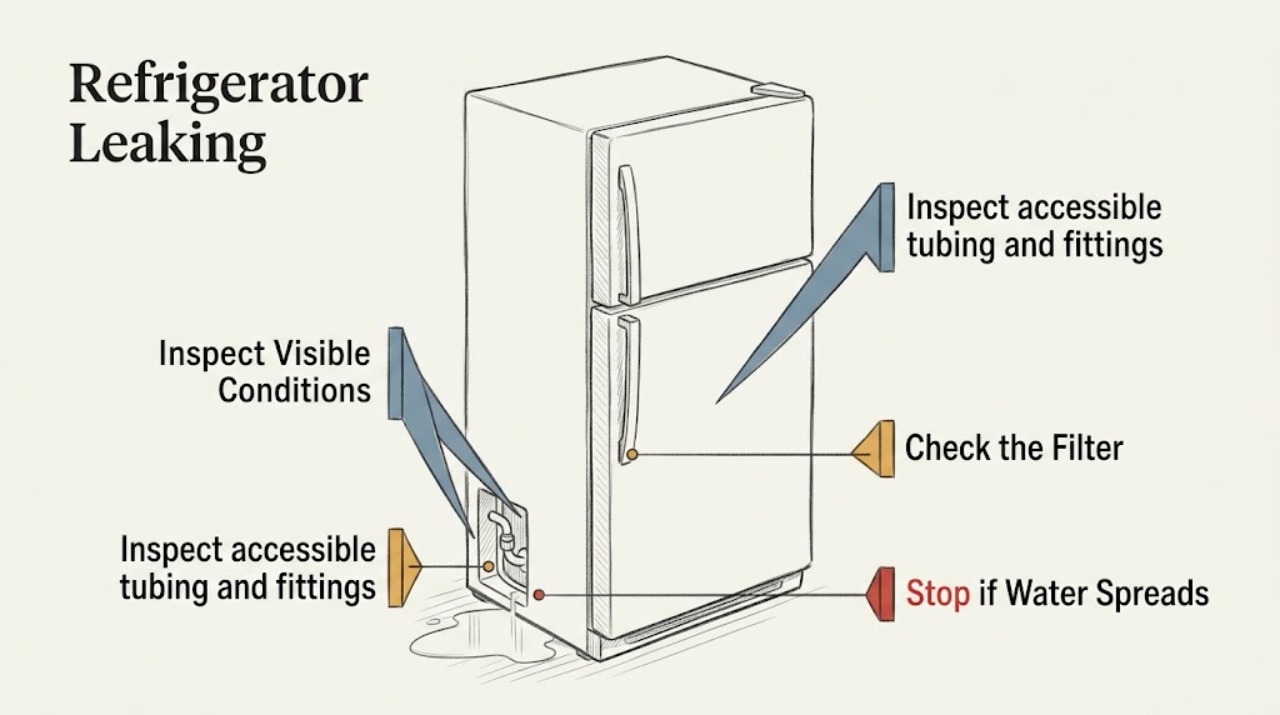
KitchenAid Refrigerator Leaking
Protect the floor, close the refrigerator water shutoff, and find the first wet point. Check the accessible supply line, filter seating, and dispenser area. A cracked line, concealed leak, or water near electrical parts needs the appliance kept off and service.
-
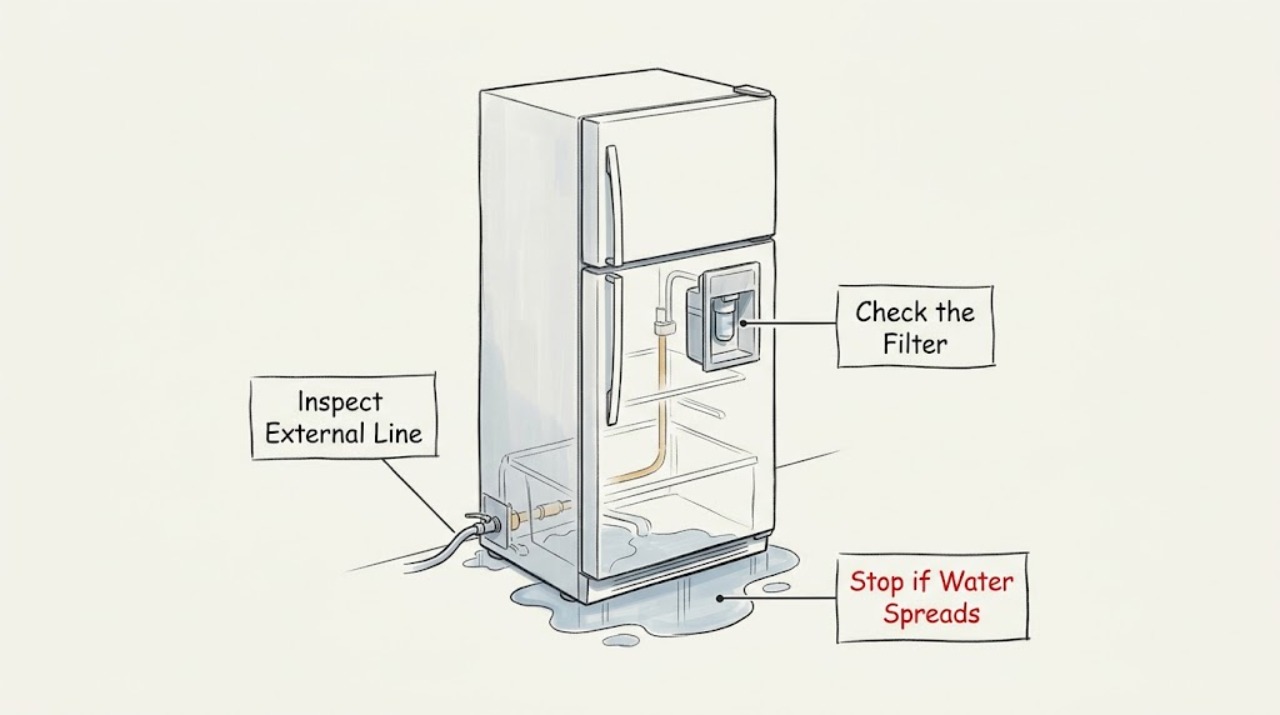
KitchenAid refrigerator leaking water: What to Check and What to Do Next
Start by locating where the water begins: inside the refrigerator, at the dispenser or door hinge, around the filter, or at the rear supply line. KitchenAid identifies damaged or loose water tubing, a leaking shutoff connection, an incorrectly installed or damaged filter and O-rings, dispenser tubing, and condensation as different possibilities.
-
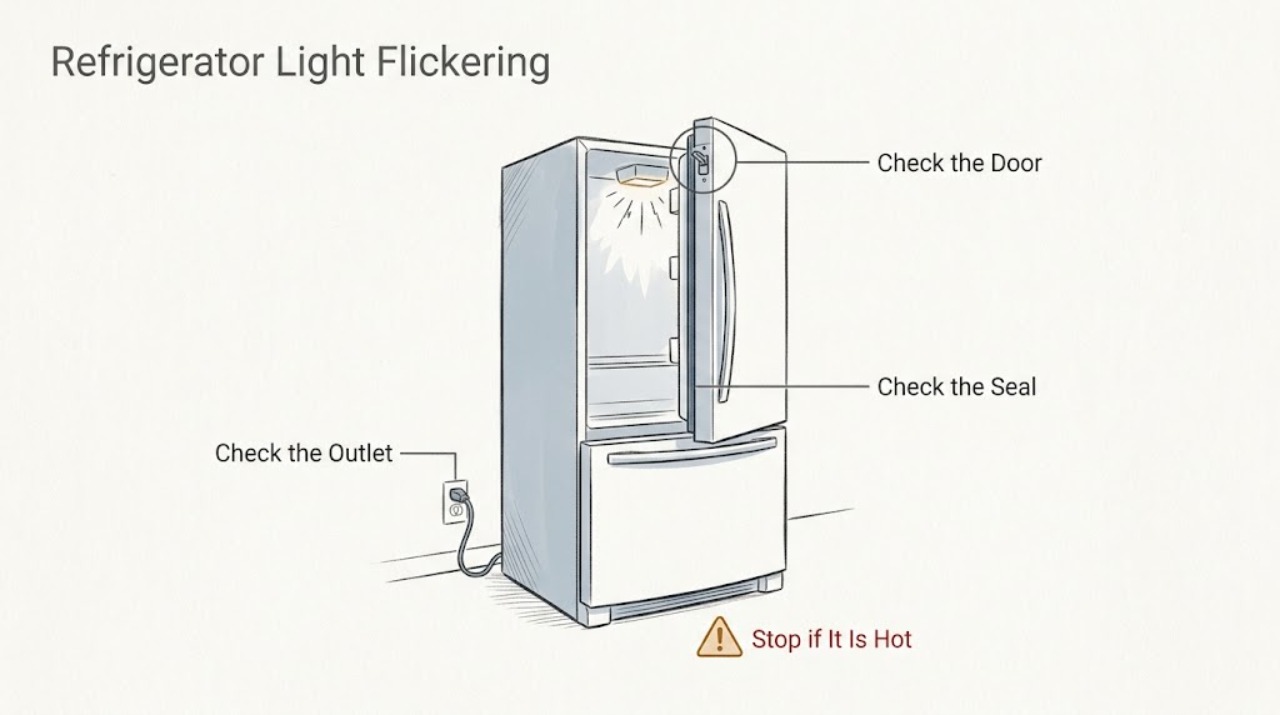
KitchenAid Refrigerator Light Flickering: What to Check
A flickering KitchenAid refrigerator light can follow inconsistent door-switch contact, door alignment, a loose or failing light module, or unstable power. Check whether the flicker changes as the door moves and whether cooling is normal. Do not probe wiring; arrange service if the light flickers with heat, odor, arcing, or broader power symptoms.
-
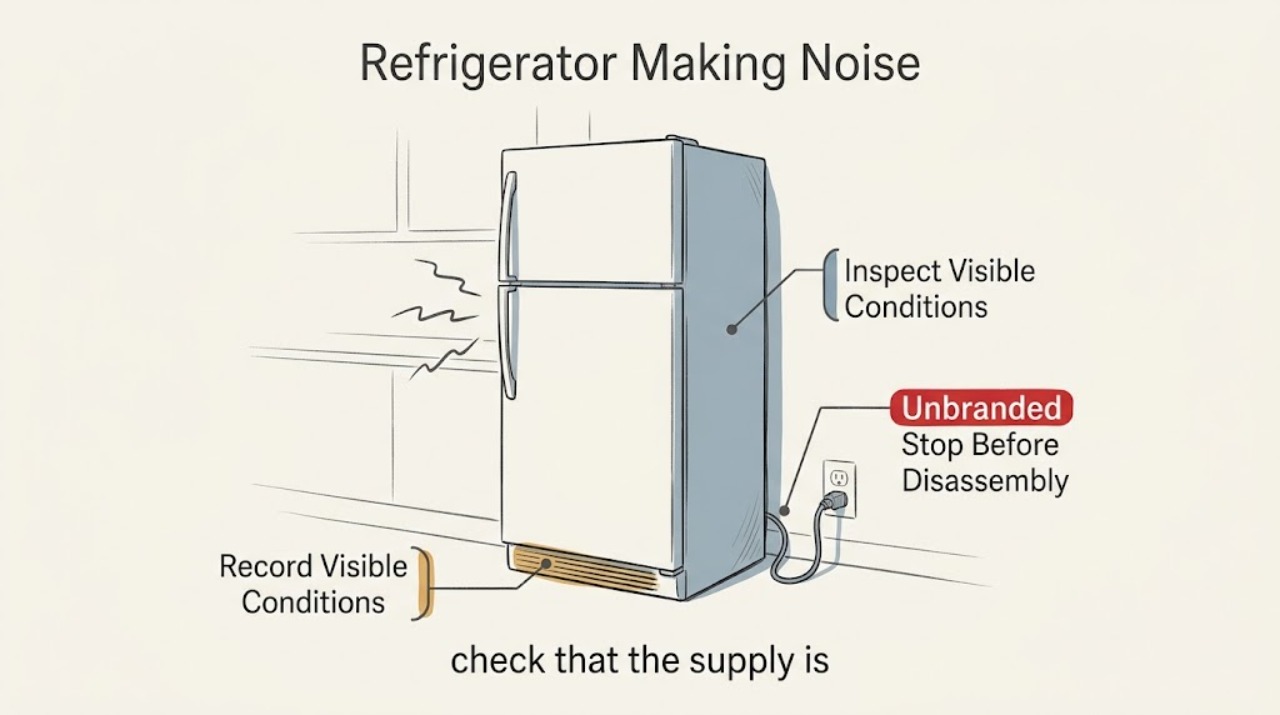
KitchenAid Refrigerator Making Noise
Brief humming, gurgling, clicking, popping, and airflow sounds can be normal as a KitchenAid refrigerator cools and defrosts. Identify the sound and timing, check leveling and external vibration, and arrange service for persistent grinding, harsh vibration, or cooling loss.
-
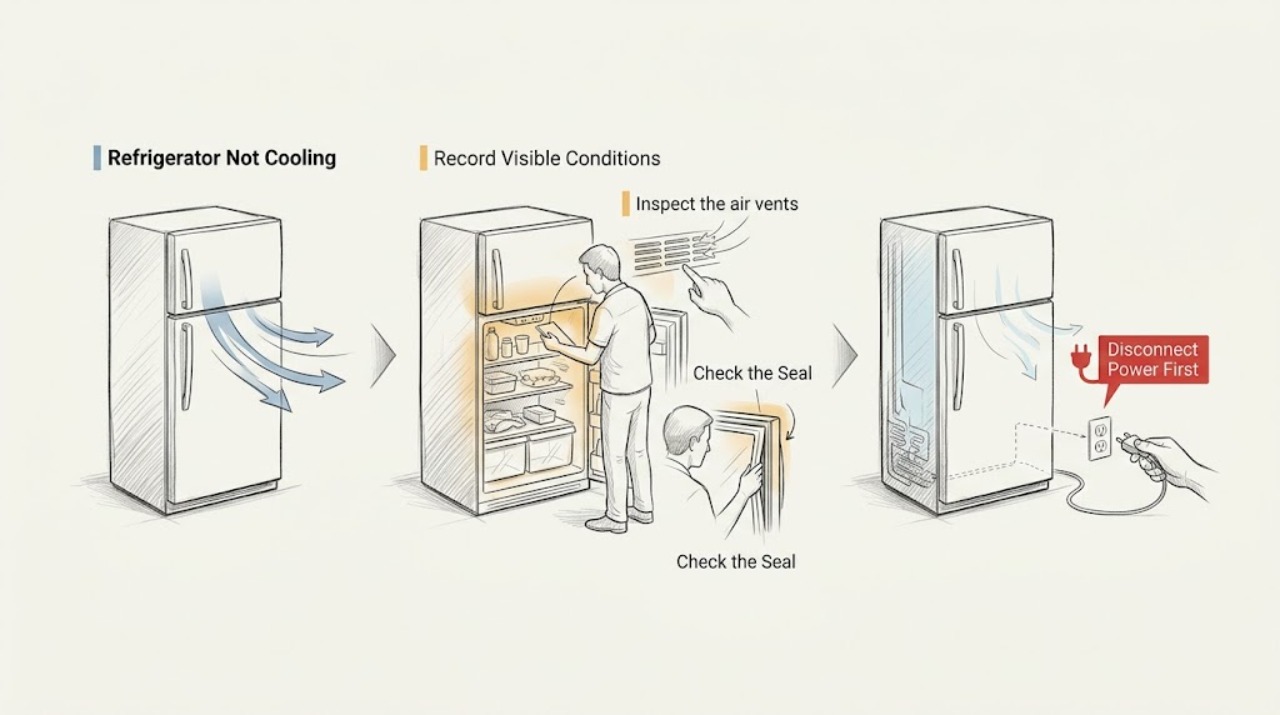
KitchenAid Refrigerator Not Cooling
If the KitchenAid refrigerator has power but food is warm, start with the cooling setting and the temperature symptom rather than replacing a part. Then restore air circulation, account for a recent load or hot room, and check accessible condenser care; persistent warmth after those checks needs service diagnosis.
-
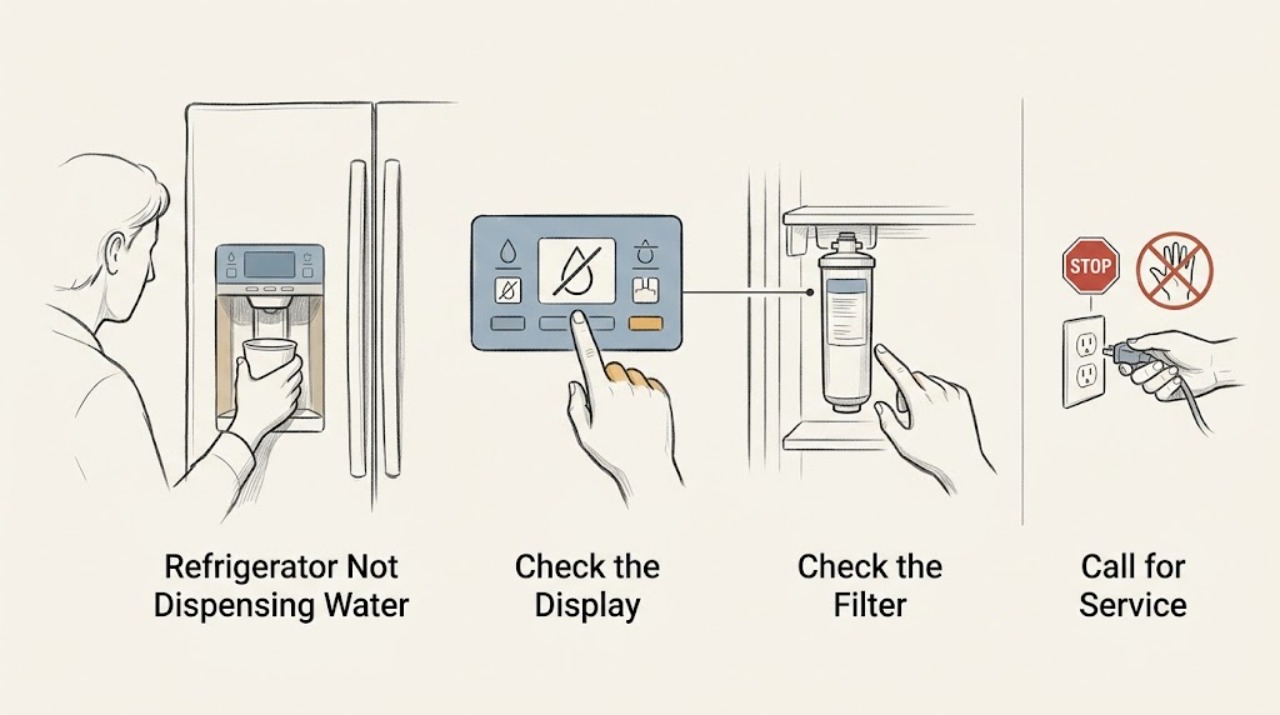
KitchenAid Refrigerator Not Dispensing Water: Trace the Flow in Order
Start with Control Lock and paddle engagement, then check the filter, water line, and supply. KitchenAid says a clogged or incorrectly installed filter, kinked line, low pressure, or incomplete paddle engagement can stop flow. If the checks do not restore water, request service.
-
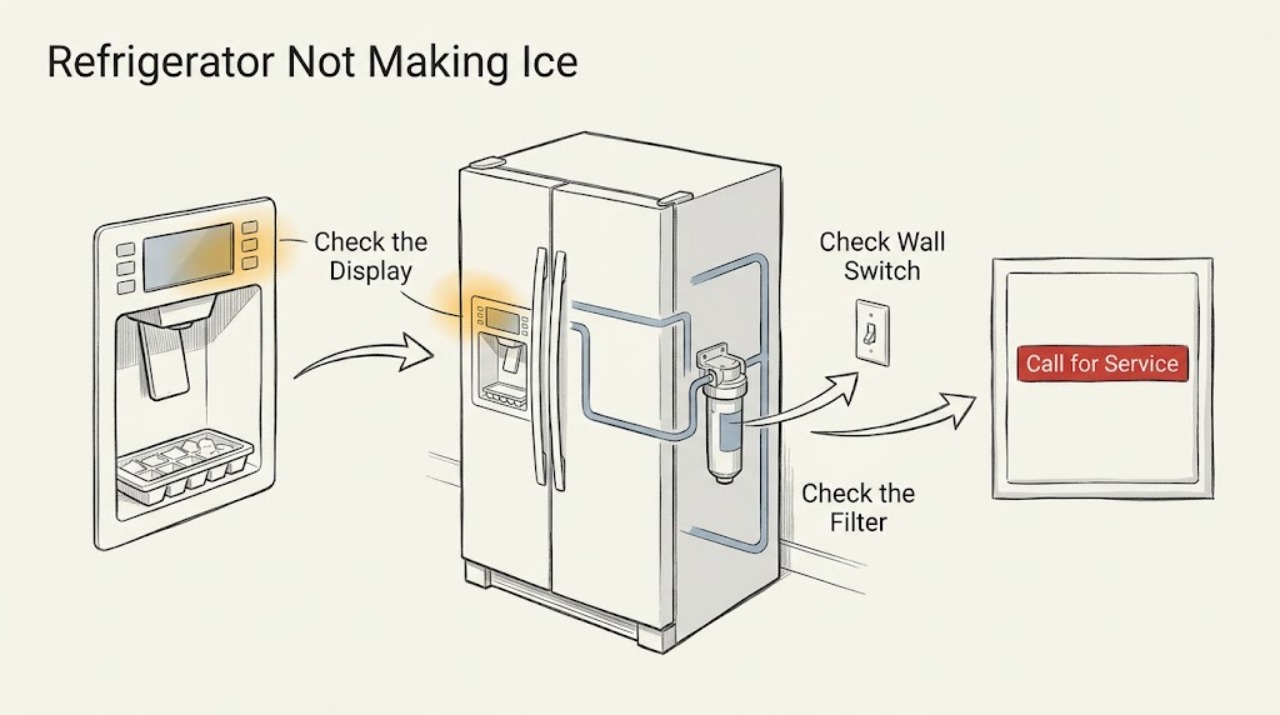
KitchenAid Refrigerator Not Making Ice
Check that the ice maker is on, the water shutoff valve is open, the supply line is not kinked, the filter is flowing, and the freezer is around 0°F. New or recently serviced refrigerators need time to stabilize. If the model-specific reset or test fails, arrange service instead of forcing the ice maker.
-
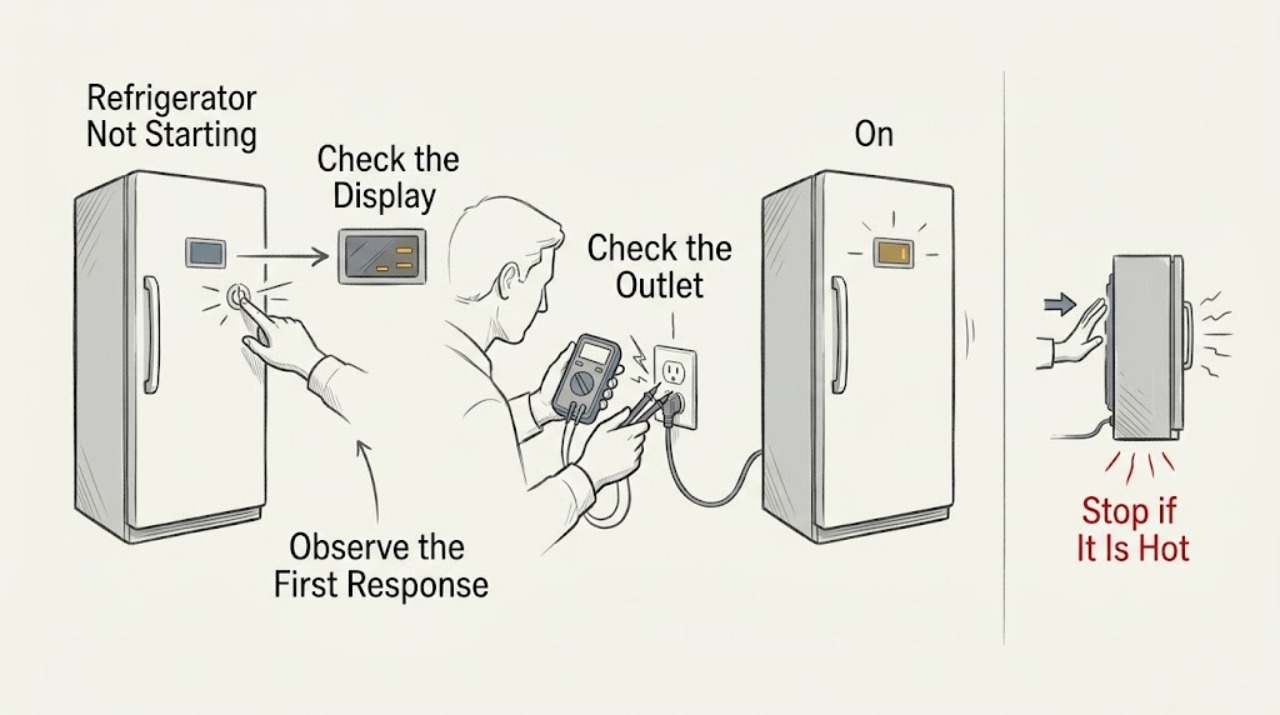
KitchenAid Refrigerator Not Starting
Check whether the interior light and display work, confirm normal cooling controls, and verify the outlet and breaker. If power and controls are normal but the unit stays silent or clicks repeatedly, stop and arrange service.
-
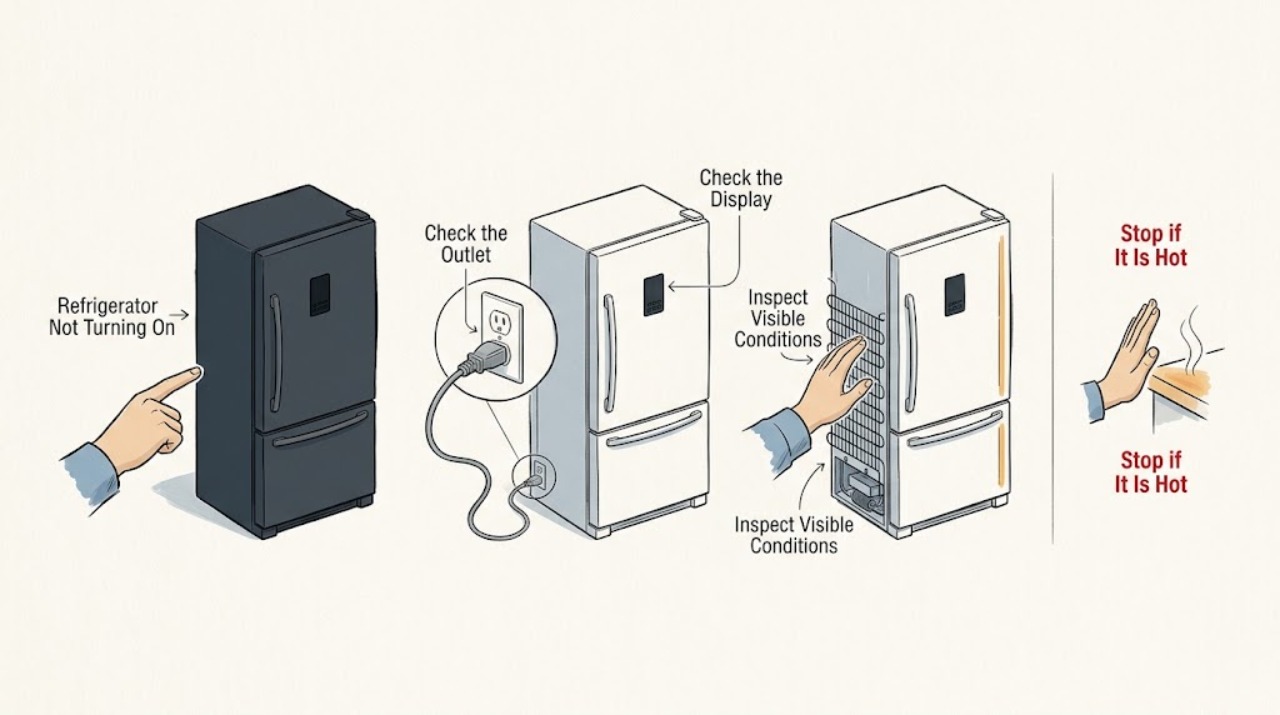
KitchenAid Refrigerator Not Turning On
Check the outlet and breaker, then confirm the refrigerator controls are set for cooling. If the outlet is live but the unit remains dark, do not open electrical covers; arrange service.
-
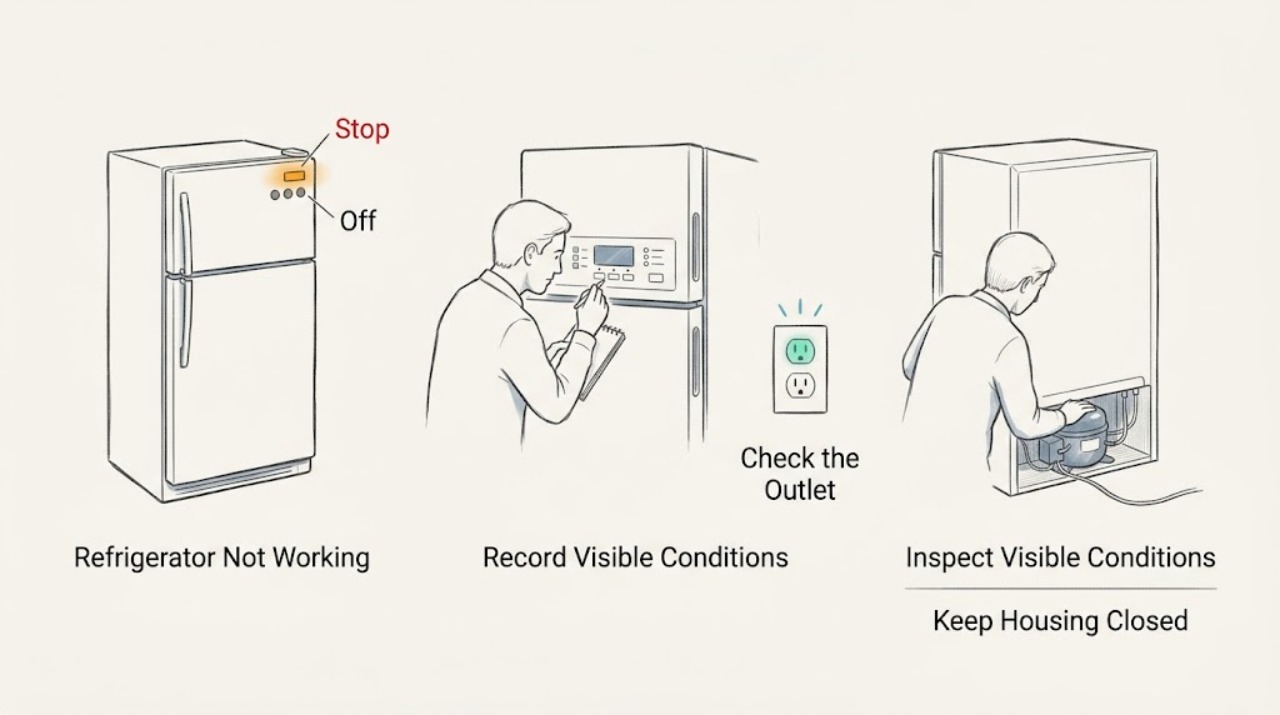
KitchenAid Refrigerator Not Working
For a KitchenAid refrigerator that appears completely dead, first separate loss of household power from a refrigerator control that is off. Check the outlet, cord, breaker or GFCI, and the refrigerator controls using the owner's manual. If the outlet works but the refrigerator still has no lights, display, sounds, or response, stop before opening panels and arrange service; a powered refrigerator that is merely warm follows a different cooling diagnosis.
-
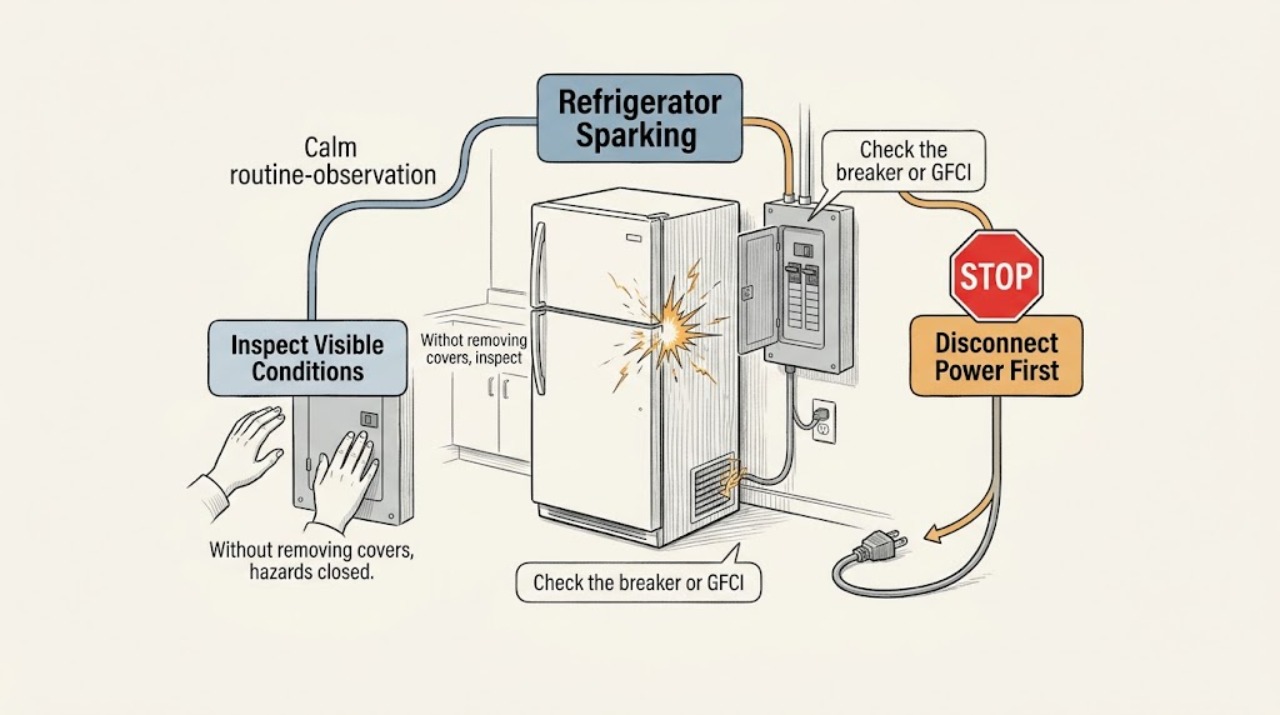
KitchenAid Refrigerator Sparking
Treat sparks, smoke, a burning smell, heat, or a discolored plug as an electrical hazard. From a dry safe position, isolate power at the plug or breaker, keep the refrigerator off, and arrange qualified electrical or appliance service.
-
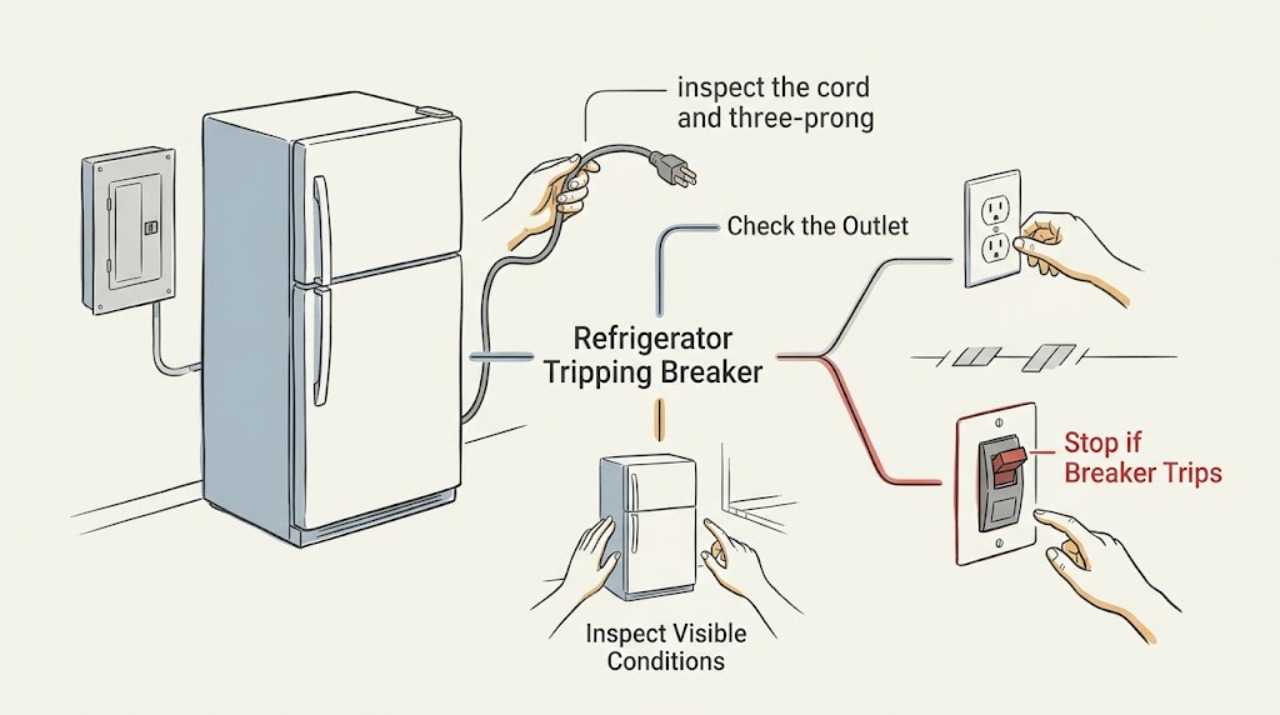
KitchenAid Refrigerator Tripping Breaker
Check the grounded outlet, plug, breaker or GFCI once. If protection trips again, leave the refrigerator disconnected and call a qualified electrician or appliance technician instead of repeatedly resetting it.