
On this page
Start here
Quick answer
First map whether the frost is a light, even layer or a thick patch at a door edge, vent, or back wall. Light frost can follow humid air or a recent load; a poor door seal, blocked vent, or frost that returns quickly after the accessible checks needs model-specific service.
Before you begin
Safety first
- Disconnect power before cleaning accessible surfaces. Do not chip ice with sharp tools, open sealed refrigeration circuits, or remove internal panels.
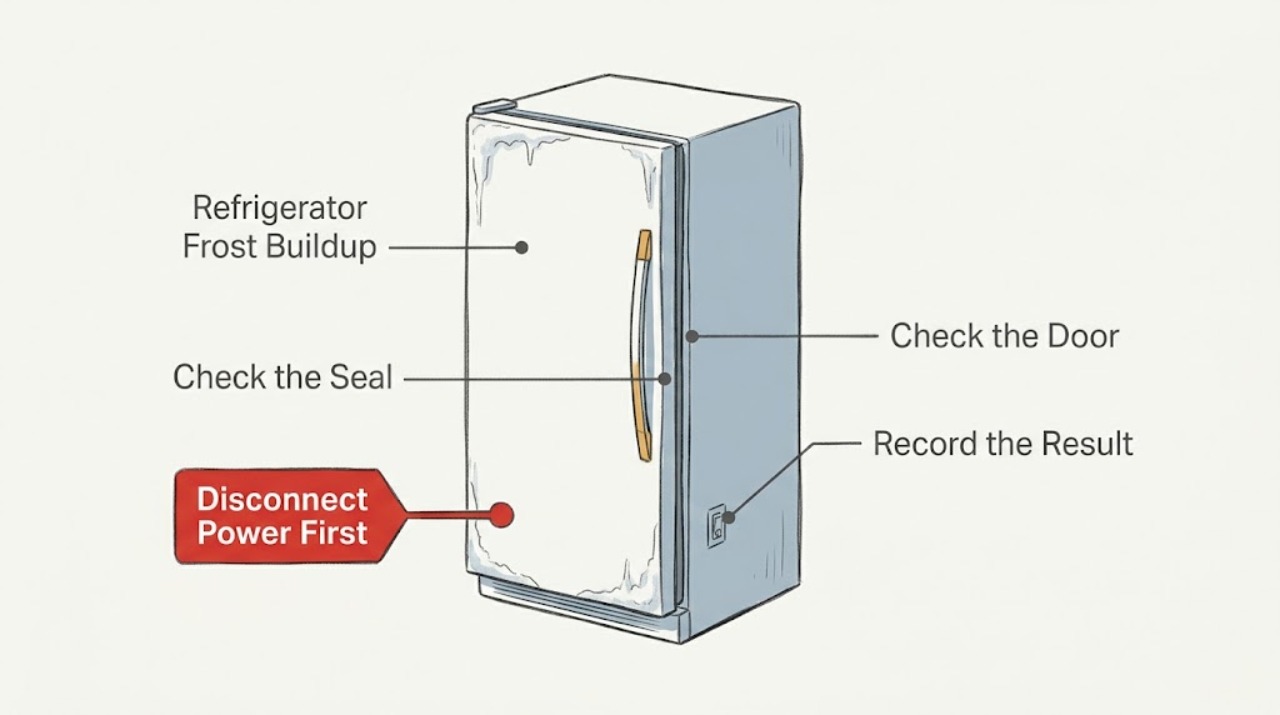
Work through in order
Diagnostic checks
Use only checks that match the exact appliance or system and its official guide.
-
Check 1
Map the frost before removing anything: note which compartment it is in, whether it is a thin even film or a thick patch, and whether it clusters around a door edge, vent, or back wall.
Expected result: A thin, even layer appears after humid use, while a localized or rapidly thickening patch follows a door edge, vent, or rear panel.
Next step: Photograph the pattern and continue with the matching seal and airflow checks; do not chip ice from a panel or use a sharp tool.
Why this matters
Why: A light, temporary layer can be normal moisture; localized or persistent buildup points toward air entry or restricted airflow and should not be treated as a generic temperature problem.
-
Check 2
Inspect the refrigerator and freezer door gaskets all the way around. Remove a container or shelf that prevents closure, clean the gasket with mild soap and water, dry it, and close the door on a sheet of paper to check for a snug grip.
Expected result: The door closes fully and holds the paper around the perimeter, or a corner is loose, obstructed, dirty, or unable to hold the paper.
Next step: Correct only the accessible obstruction or cleaning issue and monitor normal use. If the gasket still does not seal, provide the frost location and model number to a technician.
Why this matters
Why: A gap lets humid room air enter and can create frost; a clean, unobstructed gasket that seals shifts attention toward airflow or a model-specific service diagnosis.
-
Check 3
Locate the air vents in both compartments and move food or containers away from them and the rear wall. Keep liquids covered, let hot food cool before storage, and reduce prolonged door openings while checking the frost pattern again.
Expected result: A vent is covered or the compartment is overpacked, or the vents are open and the frost continues to build.
Next step: Restore clearance and observe one normal operating period. If frost returns or blocks a panel/vent, stop at external checks and arrange model-specific service.
Why this matters
Why: Blocked airflow can produce moisture and excessive frost; open vents with recurring buildup make an internal airflow or defrost fault more likely than a loading habit.
-
Check 4
Compare the frost with recent conditions: a long-open door, frequent openings, warm unwrapped food, high room humidity, or a recent power outage/load. Check the temperature controls using the model guide rather than moving them repeatedly.
Expected result: The buildup follows a temporary moisture event and diminishes after the door seals and airflow are corrected, or it recurs without a matching event.
Next step: Keep the doors closed promptly and reassess the pattern. Request service for recurring heavy frost, temperature loss, a returning code, or any leak, smoke, burning odor, or electrical concern.
Why this matters
Why: A temporary moisture source can explain light frost; recurrence without that source is evidence that the symptom needs a model-specific diagnosis.
Use your observations
Decision map
Find the observation that best matches what you see, then follow the next safe action.
-
PATH 01Next step
What you see
The frost is a thin, even layer after humid conditions or a recent warm-food load, and the doors seal with vents clear.
Do this next
Cover liquids, cool food before storing, minimize door-open time, and monitor for recurrence.
Why this path and its safety boundary
Why it matters: The pattern is consistent with temporary moisture rather than proof of a failed part.
-
PATH 02Next step
What you see
A thick patch follows a gasket edge or a door cannot close cleanly.
Do this next
Clear the obstruction and clean the gasket once; if the seal remains loose or frost returns, arrange model-specific service.
Why this path and its safety boundary
Why it matters: Warm humid air is likely entering through the closure path.
-
PATH 03Next step
What you see
Frost blocks a vent or back panel, or returns after the seal, loading, and humidity checks are corrected.
Do this next
Do not pry off the ice or open internal panels; stop using affected functions as needed and give a qualified technician the model, frost location, and photographs.
Why this path and its safety boundary
Why it matters: An internal airflow or defrost issue remains possible and cannot be identified safely from the frost pattern alone.
When checks do not resolve it
Need a professional?
Request service when heavy frost returns after the accessible seal and airflow checks, the door gasket will not seal, temperatures become unsafe, or there is a leak, smoke, burning odor, repeated breaker trip, or electrical concern.
Safety scope: Disconnect power before cleaning accessible surfaces. Do not chip ice with sharp tools, open sealed refrigeration circuits, or remove internal panels.
Have this ready
- Provide the exact frost location and pattern, door-seal result, vent-clearance result, recent humidity/load conditions, model number, and photographs.
Common questions
FAQ
Is a small amount of frost always a refrigerator failure?
No. KitchenAid describes light, temporary frost or condensation as possible after humid air, frequent door openings, or warm food enters. A thick, localized, or recurring pattern after the door and vent checks deserves service diagnosis.
Should I scrape the frost off to test the refrigerator?
Do not use a sharp tool or open an internal panel. Record the pattern, correct only accessible door or airflow conditions, and arrange model-specific service when buildup blocks a vent or returns.
Read the exact guide
Official sources
- Frost or Condensation in Refrigerator - Built-In RefrigeratorKitchenAid Product Help · KitchenAid refrigerator frost, door sealing, and air vents
- What's Normal Condensation or FrostKitchenAid Product Help · KitchenAid refrigerator normal frost, moisture, seals, and airflow
Community feedback
Share a repair observation
Share a plain-text repair observation. Accepted observations are published automatically; this page may take a moment to update.