
On this page
Start here
Quick answer
Admiral refrigerators sold as frost-free should not develop a growing layer of frost as normal operation. Start by locating the frost: a door-edge pattern points to a sealing or warm-air entry problem, while frost with water in the fresh-food compartment or on the floor points toward the drain or defrost-water path. Check that the door closes fully, inspect the magnetic gasket for gaps or damage, and reduce prolonged door opening and uncovered moisture inside the cabinet. On models with an accessible defrost pan or drain, inspect only the visible, model-approved parts; do not chip ice with a sharp tool or open sealed panels. If frost returns quickly, blocks vents, is behind an interior cover, or is accompanied by water, temperature loss, abnormal noise, or a damaged gasket, stop and arrange qualified appliance service.
Before you begin
Safety first
- Do not chip frost with sharp tools, apply high heat, open sealed panels, probe a drain, move a heavy or built-in refrigerator alone, or test live defrost components. Stop if water reaches electrical equipment or cooling is not maintaining safe food temperature.
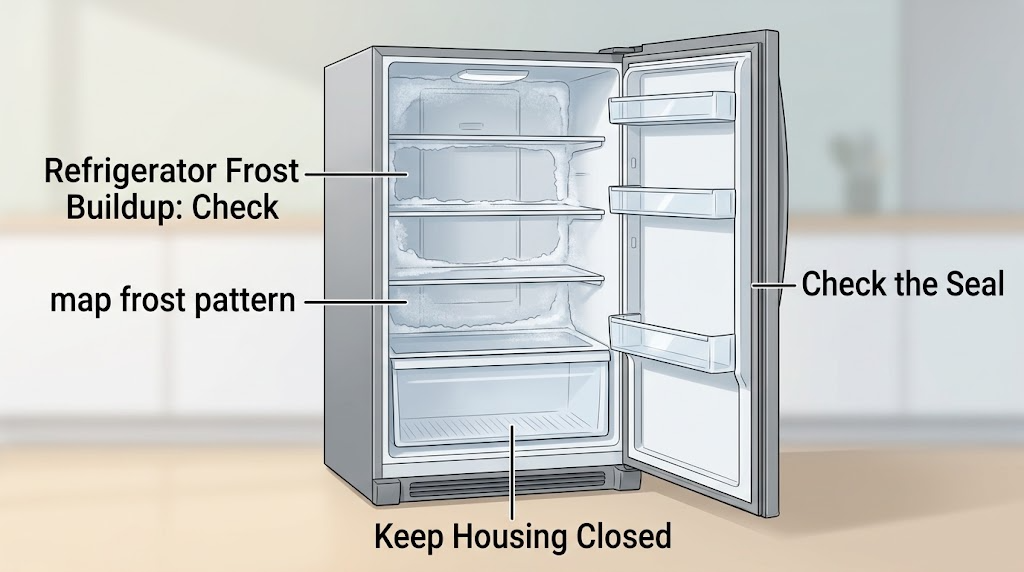
Work through in order
Diagnostic checks
Use only checks that match the exact appliance or system and its official guide.
-
Check 1
Record which compartment has frost, where it sits, how thick or widespread it is, whether it returns after a clear period, and whether there is water in the fresh-food compartment or under the cabinet.
Expected result: Frost is concentrated at a door edge, on a rear wall or vent, across much of a compartment, or accompanied by water or a temperature change.
Next step: Continue with the matching external check and photograph the pattern for service. Do not remove interior covers or chip at the frost.
Stop if: Do not use a knife, ice pick, heat gun, or other sharp or high-heat tool, and do not reach behind wet electrical components.
Why this matters
Why: A door-edge pattern makes an air-seal or warm-air path more likely; frost with water makes the defrost-drain or pan path more relevant; widespread or rapidly recurring frost can require internal service. The pattern alone does not identify a failed heater, sensor, or control.
-
Check 2
With the door closed and the cabinet stable, inspect the visible magnetic gasket around the affected door for dirt, twists, compression, tears, or a gap where it does not contact the cabinet.
Expected result: The gasket contacts the cabinet continuously, or there is a visible gap, damage, or an item preventing the door from closing fully.
Next step: Remove only an obvious obstruction and clean the accessible gasket according to the model guide. If the gasket is damaged, the door is misaligned, or frost returns after the external seal check, arrange service.
Stop if: Do not remove the gasket, bend hinges, force the door, or move a built-in or heavy refrigerator to inspect the rear seal.
Why this matters
Why: Admiral's guide says the magnetic gasket should create an airtight seal and specifically directs checking for gaps. A gap can admit warmer moist air and support frost, but a continuous seal does not rule out a defrost-system fault.
-
Check 3
Observe the use pattern around the affected compartment: repeated or prolonged door opening, uncovered moist food, a door that is left ajar, or stored items touching the seal or blocking closure.
Expected result: The door is often open, food is uncovered, or storage prevents a full seal; alternatively, the door closes promptly and contents are covered with no obvious obstruction.
Next step: Cover open food, keep door openings brief, and rearrange only items that visibly obstruct closure. Monitor the exact frost location; if it continues to build, use the service branch.
Stop if: Do not scrape frost into food, disassemble shelves or vents to reach hidden ice, or change sealed-system settings.
Why this matters
Why: Admiral's guide links covered food with reduced moisture loss and lists prolonged door openings among conditions that increase moisture. These conditions can contribute to frost, but they do not explain a persistent frost block after normal use is restored.
-
Check 4
If frost is paired with water in the fresh-food compartment or under the cabinet, inspect only the visible, model-approved defrost-pan and drain area without pulling the refrigerator or opening the sealed cabinet.
Expected result: The accessible pan is missing or visibly out of position, the drain area is visibly blocked, or the water source is concealed and the external area appears normal.
Next step: Follow the exact model guide for any permitted external cleaning or pan-position check. If access requires moving the refrigerator, the drain is concealed, or water/frost persists, stop and arrange service.
Stop if: Do not pour liquids into an unknown opening, use a wire or sharp tool in the drain, move a heavy appliance alone, or touch wet electrical parts.
Why this matters
Why: Admiral's guide says defrost water should drain to a shallow pan, identifies a plugged drain tube with water in the fresh-food compartment, and identifies a missing or incorrectly positioned pan with water under the cabinet. A concealed blockage or recurring water needs service.
-
Check 5
Prepare a service handoff with the exact Admiral model and serial information, frost location and pattern, time to return, door-gasket observations, moisture or water location, temperature symptoms, and any unusual noise.
Expected result: Frost returns quickly, covers vents or an interior cover, the door seal is damaged, water persists, temperatures rise, or the external checks do not change the pattern.
Next step: Keep the refrigerator operating only if food temperature is being maintained and there is no electrical or flooding hazard; otherwise move perishable food safely and arrange qualified appliance service. Provide the recorded model and pattern to the technician.
Stop if: Do not open sealed panels, bypass a defrost control, test live wiring, or replace a defrost part solely from the frost symptom.
Why this matters
Why: A temporary moisture or closure issue differs from a recurring frost block, drainage fault, or internal defrost problem. The evidence does not justify naming or replacing a heater, sensor, fan, timer, or control board without model-specific diagnosis.
Use your observations
Decision map
Find the observation that best matches what you see, then follow the next safe action.
-
PATH 01Next step
What you see
Frost is concentrated along a door edge or near the gasket, and the gasket has a gap, dirt, twist, damage, or an obstruction prevents full closure.
Do this next
Remove only the visible obstruction and clean the accessible seal as the exact guide permits. If the gap or frost remains, arrange service for door alignment or gasket assessment.
-
PATH 02Next step
What you see
The gasket appears continuous, but the door is opened for long periods, food is uncovered, or moist items prevent normal closure.
Do this next
Cover food, shorten door openings, and restore clear closure. If frost keeps accumulating despite the changed use pattern, treat it as unresolved rather than normal moisture.
-
PATH 03Next step
What you see
Frost is accompanied by water in the fresh-food compartment or under the cabinet, and a visible pan, drain, or pan position is abnormal.
Do this next
Use only the exact model's permitted external pan or drain check. Do not move the refrigerator or probe a drain; persistent water or a concealed blockage requires service.
-
PATH 04Next step
What you see
Frost rapidly returns, blocks a vent or interior cover, appears across a large area, temperatures rise, or the door and visible drain checks are normal.
Do this next
Stop DIY diagnosis and arrange qualified appliance service. Do not remove covers or test the defrost heater, sensor, fan, or control board.
Helpful context
Understand the symptom
Frost location is the first useful clue
Admiral's current cooling lineup includes frost-free and no-frost models, but the exact cabinet and defrost design varies. Frost along one door edge, frost on a rear wall, frost around vents, and water at the bottom of the fresh-food compartment do not lead to the same check. Note the compartment and pattern before moving food or attempting a defrost.
Check the air seal before blaming a hidden part
The opened Admiral guide describes magnetic door gaskets that should contact the cabinet all around and recommends checking for visible gaps. Prolonged door openings and uncovered food also add moisture. A dirty, twisted, loose, or damaged gasket can therefore make a frost pattern more likely, but a quick return after the seal check needs model-specific service rather than a guessed replacement.
Treat water and heavy recurring frost as a service boundary
The guide says defrost water drains to a pan, and it lists a plugged drain tube and a missing or incorrectly positioned pan among water symptoms. Keep the refrigerator stable and do not dismantle the cabinet or defrost system. If frost is concealed, rapidly returns, blocks airflow, or is paired with water or loss of cooling, arrange qualified service.
When checks do not resolve it
Need a professional?
Arrange qualified appliance service when frost returns quickly, blocks airflow or an interior cover, persists after the visible door and moisture checks, is paired with recurring water or temperature loss, or involves a damaged gasket or concealed drain/defrost path.
Safety scope: Do not chip frost with sharp tools, apply high heat, open sealed panels, probe a drain, move a heavy or built-in refrigerator alone, or test live defrost components. Stop if water reaches electrical equipment or cooling is not maintaining safe food temperature.
Have this ready
- Exact Admiral model and serial information
- Compartment and location of frost
- How quickly frost returns and whether it blocks vents
- Door-gasket, drain-pan, water, temperature, and noise observations
Common questions
FAQ
Is frost buildup normal in an Admiral frost-free refrigerator?
A growing frost layer is not expected as normal operation for a model listed as frost-free or no-frost. Start with the door seal and moisture pattern, then arrange service if frost returns or blocks airflow.
Can a bad door gasket cause frost in an Admiral refrigerator?
Yes, a gap or damaged magnetic gasket can let warmer moist air into the cabinet. Check for visible gaps or obstructions without removing the gasket; persistent frost after that check needs service.
Why is there frost and water in the fresh-food compartment?
Admiral's guide identifies a plugged drain tube as a possible water symptom and says defrost water drains to a pan. Inspect only visible, model-approved parts and arrange service if the drain is concealed or the water persists.
Can I use a knife or heat to remove the frost?
No. Do not chip frost with sharp tools or apply uncontrolled heat. Follow the exact model guidance or use qualified service when frost is heavy, concealed, or recurring.
Read the exact guide
Official sources
- Norge Admiral Refrigerator Repair Manual NT19HX3GL 8D58B NT19HX3GL 8D78B NT19HX3GL 9D46A NT19HX3GL 9D46B NT19HX3GLAdmiral · Admiral refrigerator use-and-care guidance for magnetic door gaskets, defrost pan, drain symptoms, moisture, and service handoff
- Admiral Refrigerators, Freezers, and Chillers - Keep Your Food FreshAdmiral Appliances · Admiral refrigerator product features including Frost Free, Total No Frost, door seal, and cooling designs
Community feedback
Share a repair observation
Share a plain-text repair observation. Accepted observations are published automatically; this page may take a moment to update.