
Repair problem
Frost Buildup Troubleshooting Guides
Published FixGraph guidance for diagnosing and responding to frost buildup.
Matching published guides
Choose a guide that matches the service, equipment, and conditions you are seeing.
-
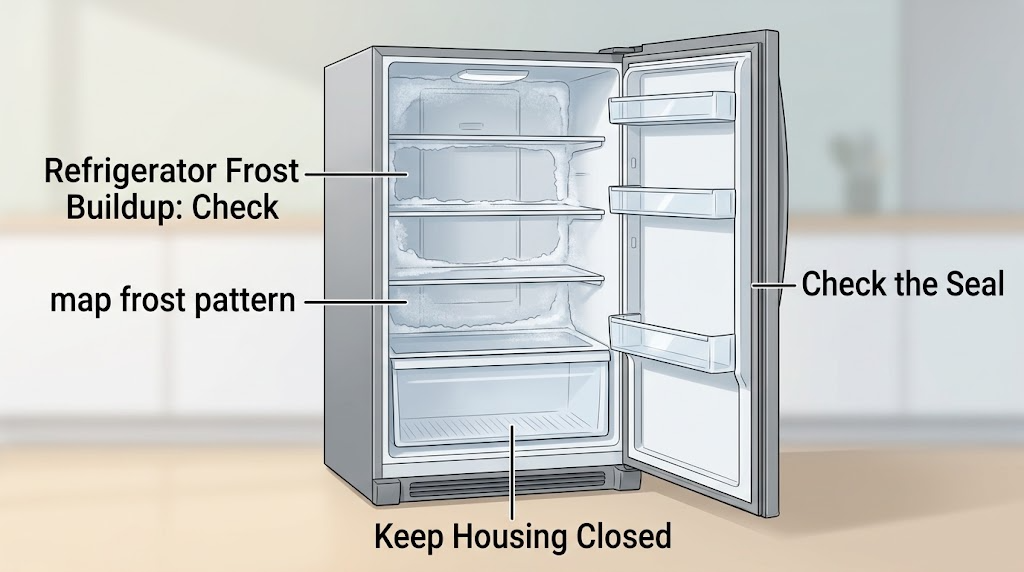
Admiral Refrigerator Frost Buildup: Check the Door Seal and Defrost Path
Admiral refrigerators sold as frost-free should not develop a growing layer of frost as normal operation. Start by locating the frost: a door-edge pattern points to a sealing or warm-air entry problem, while frost with water in the fresh-food compartment or on the floor points toward the drain or defrost-water path.
-
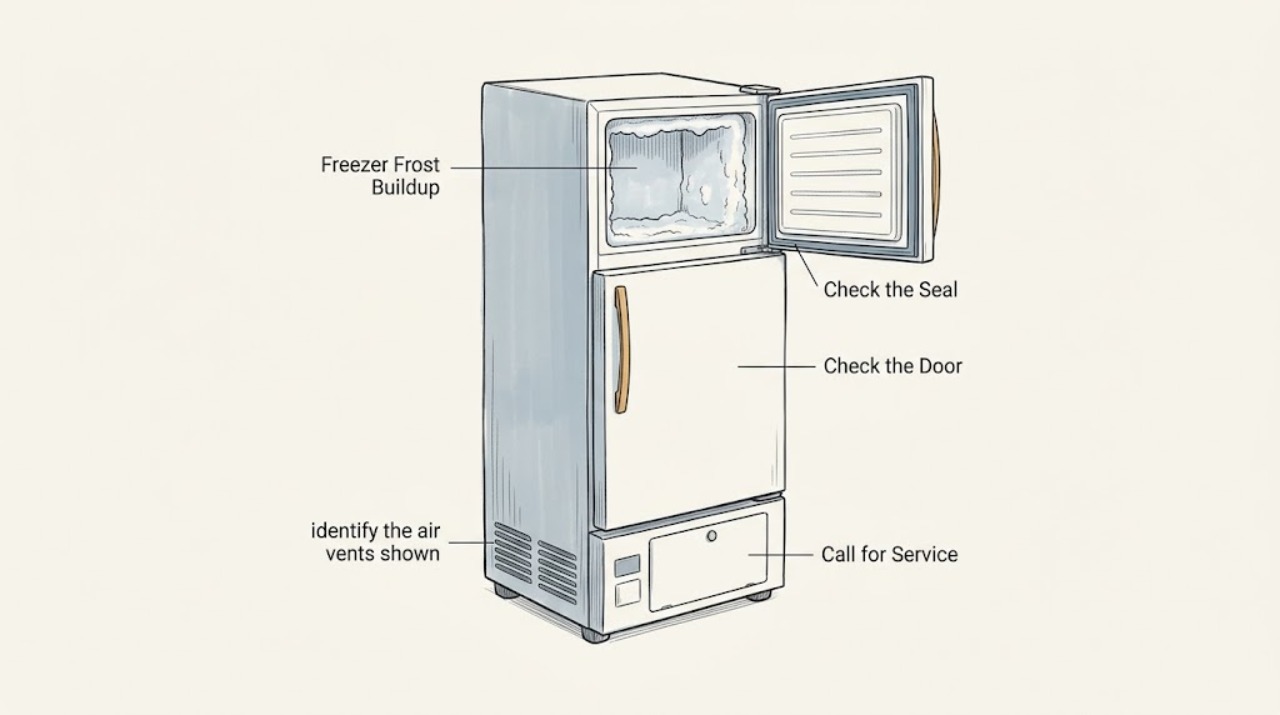
Amana Freezer Frost Buildup: Safe Checks and Next Steps
Amana freezer frost usually means humid air is entering, the door or lid is not sealing, airflow is blocked, or the freezer needs the model-approved defrost procedure. Start by checking the closure and gasket, then look for blocked vents and habits that add warm moisture.
-
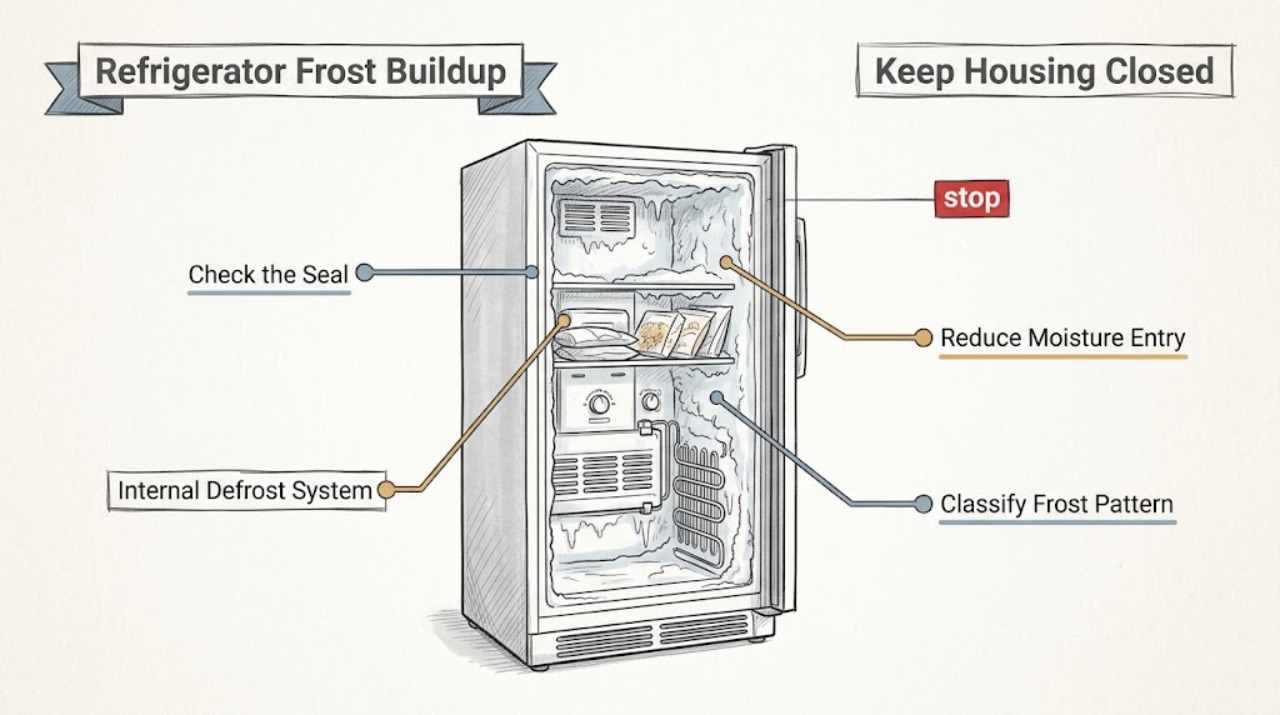
Amana Refrigerator Frost Buildup: Check the Door Seal, Airflow, and Humidity
A light, even frost layer or a few ice droplets can be normal, especially on a manual-defrost freezer, near vents, after a humid door opening, or during a defrost cycle. For heavier or recurring Amana refrigerator frost, first make sure the doors close fully and the gaskets are clean and unobstructed.
-
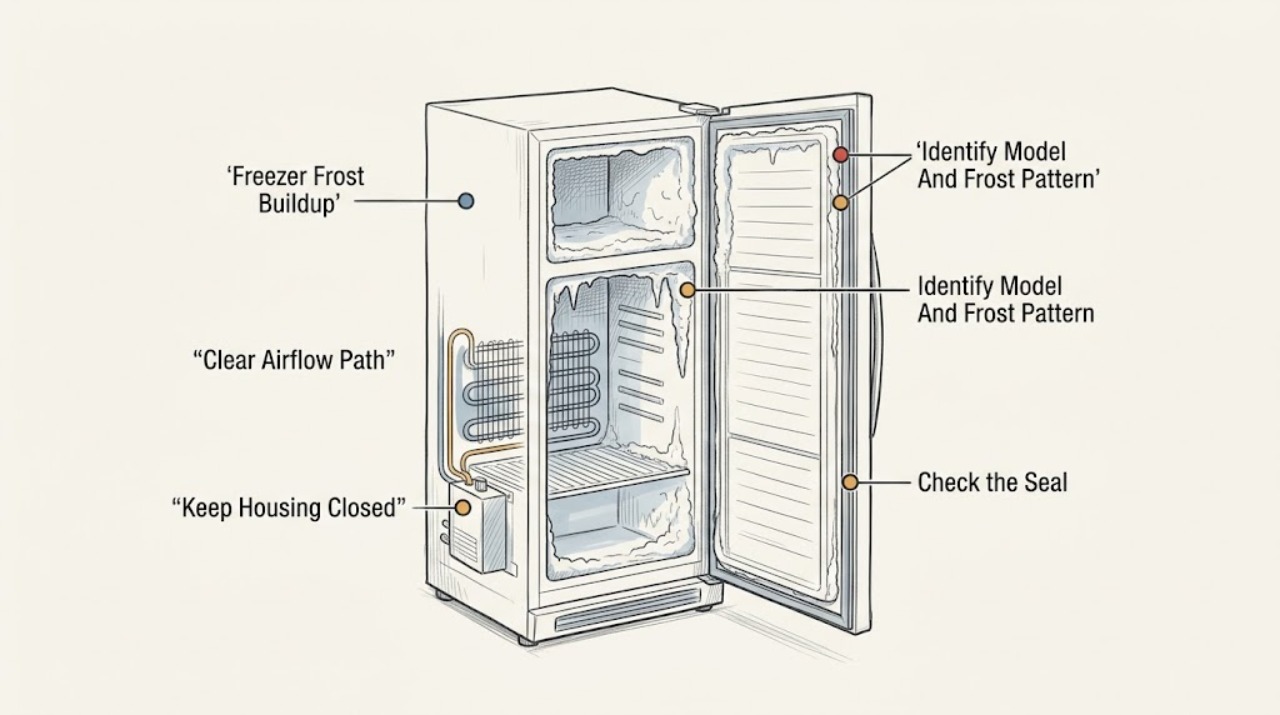
Beko Freezer Frost Buildup: Check the Seal and Defrost Safely
Start by checking whether your Beko freezer is a manual-defrost or Frost Free model, where the frost is forming, and whether the door closes and seals completely. Beko says warm humid air entering during frequent or prolonged openings, gaps or damage in the door seal, warm food, blocked airflow, and an unsuitable temperature setting can increase frost.
-
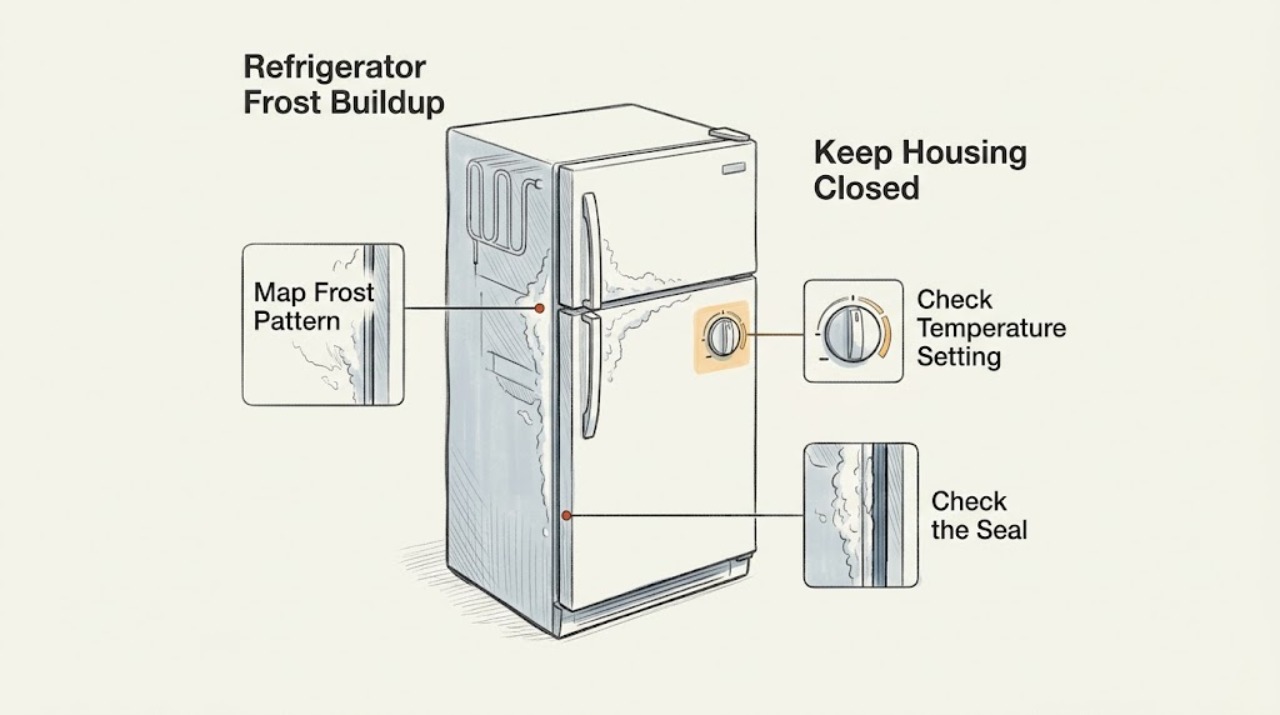
Beko Refrigerator Frost Buildup
A thin frost layer on the rear wall of a Beko refrigerator can be normal, but dense or recurring ice is a symptom to investigate. First identify whether frost is limited to the rear wall or covers shelves, side walls, or the freezer, then check the temperature setting and the door seal for gaps, cracks, or tears.
-
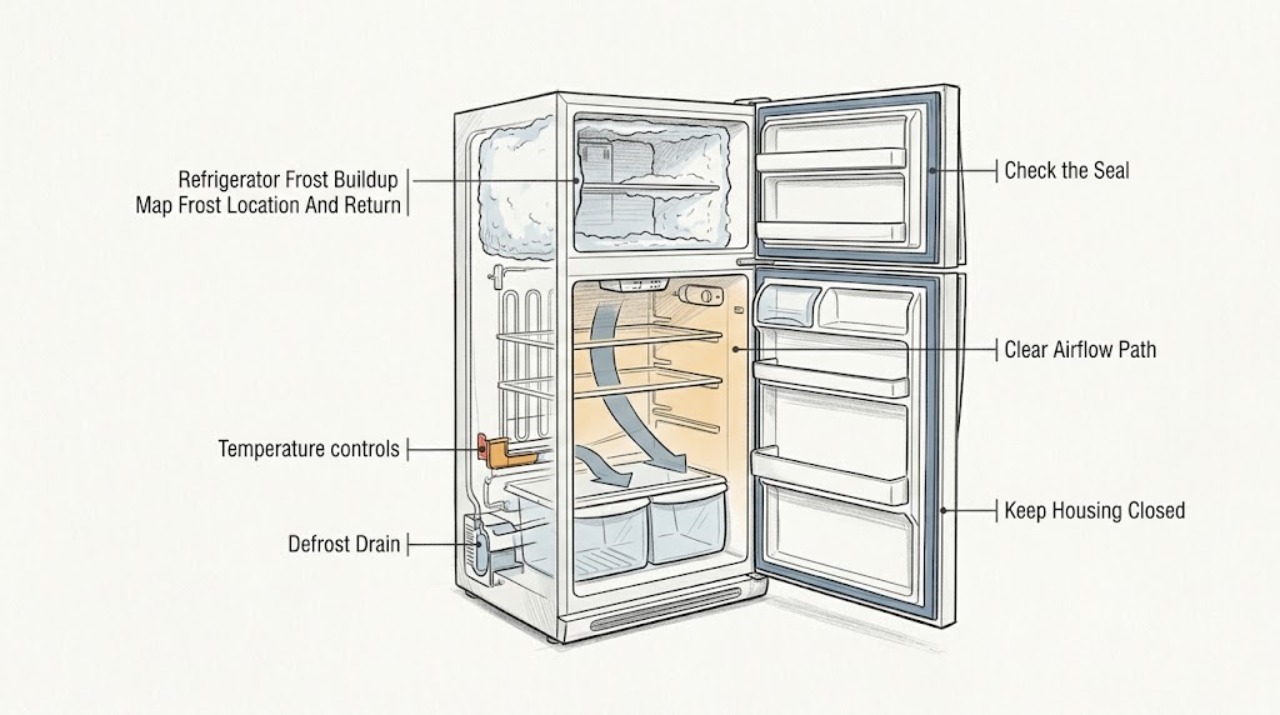
Blomberg Refrigerator Frost Buildup
A small amount of ice or water on the rear wall of a Blomberg refrigerator can occur during normal cooling and defrosting, but constant droplets, thick frost, or frost that blocks airflow needs investigation. First note whether the frost is on the refrigerator rear wall, around the door edge, or across the freezer compartment, and whether it returns after a defrost cycle.
-
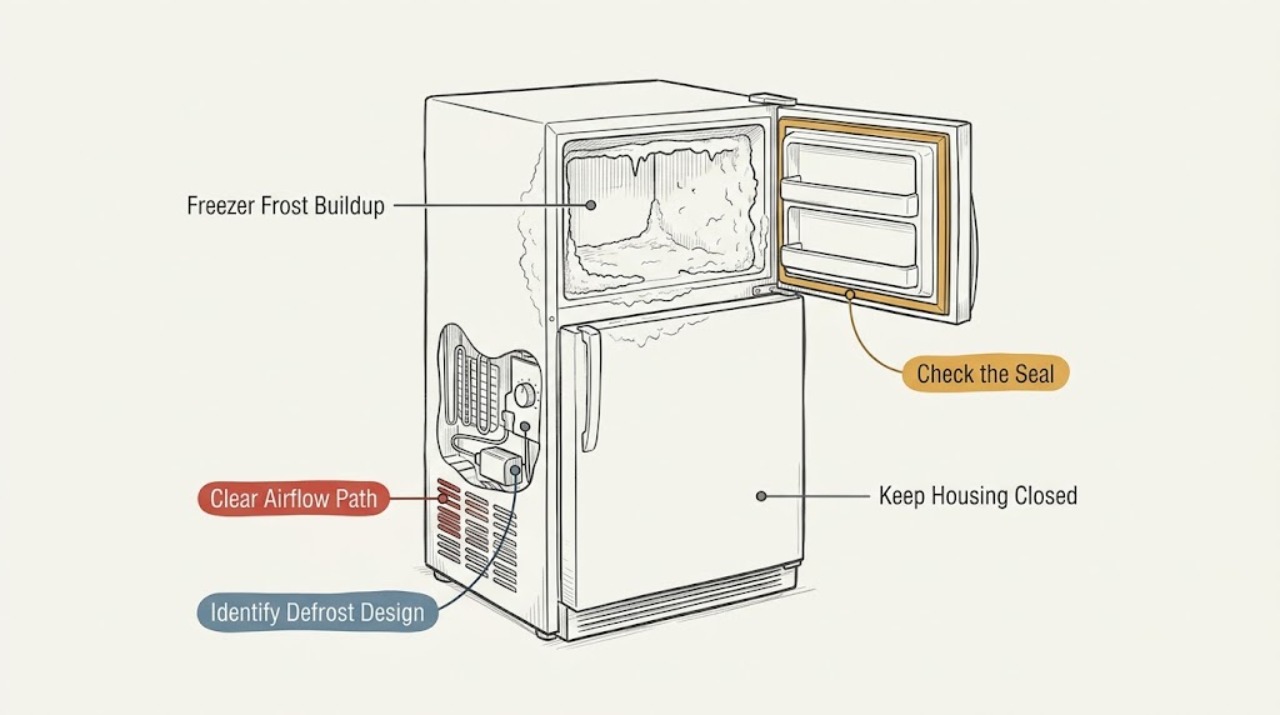
Bosch Freezer Frost Buildup: Check the Door Seal, Airflow, and Defrost Path
A small amount of frost can be normal, but heavy or rapidly returning frost on a Bosch freezer usually points first to a door-seal or loading problem; after those checks, perform only the model-approved unplugged defrost procedure and arrange service if frost returns or the freezer is not holding temperature.
-
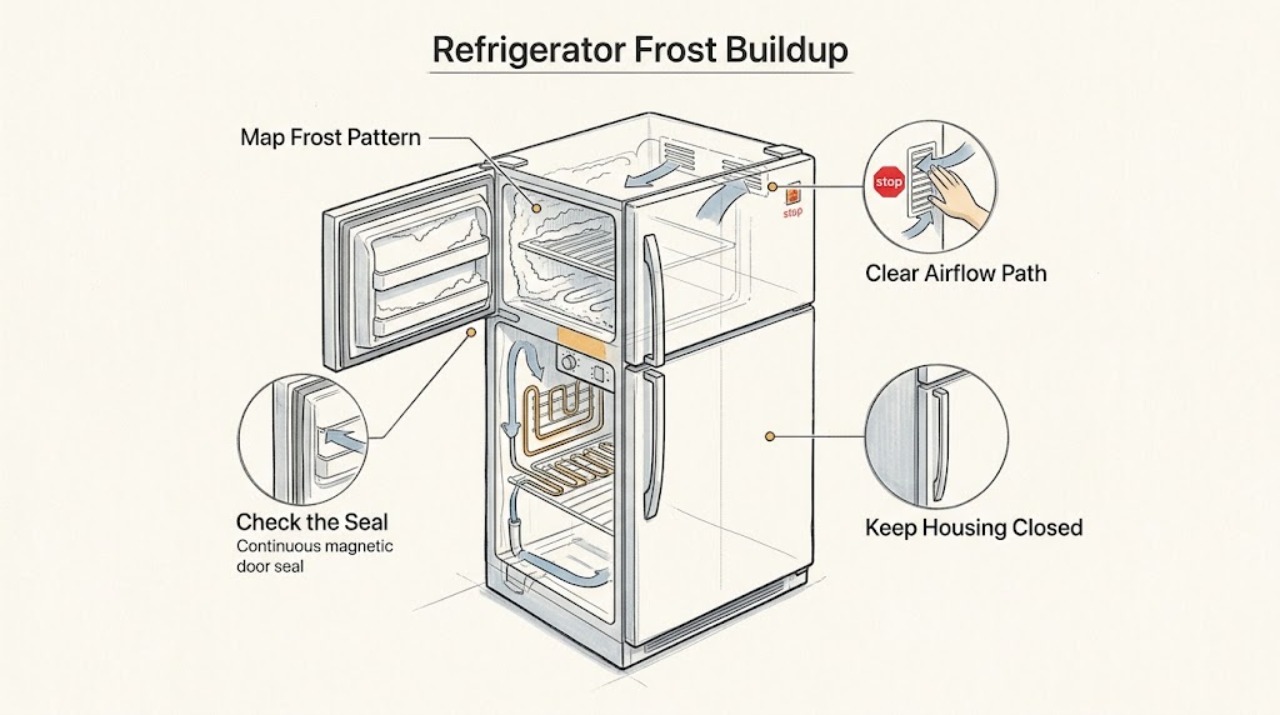
Bosch Refrigerator Frost Buildup
A light layer of frost or condensation on the rear wall of a Bosch refrigerator compartment can be part of normal cooling when that wall defrosts automatically. Frost that is thick, returns quickly, covers a freezer broadly, forms around a door edge, or appears with water at the base needs a different check.
-
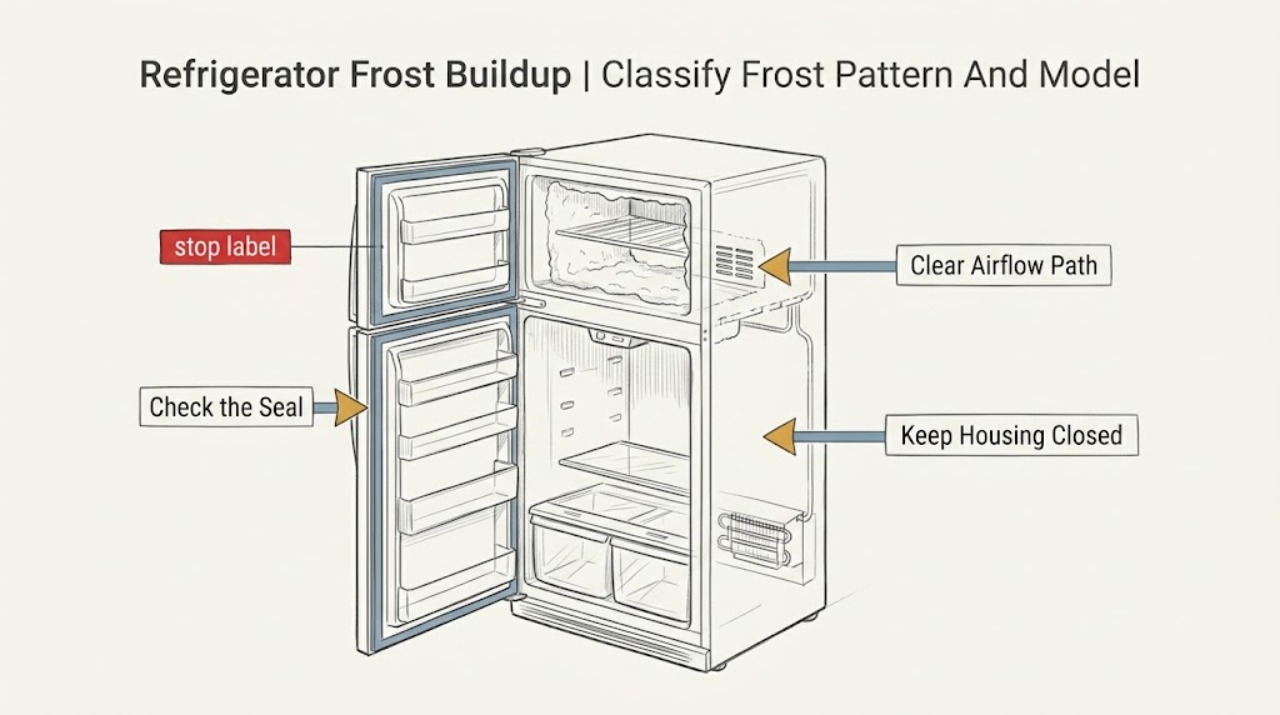
Crosley Refrigerator Frost Buildup: Safe Checks and Defrost Boundaries
Some frost or ice crystals can follow humid air, frequent door opening, warm or uncovered food, or a package touching the freezer wall. Heavy frost is different: on a frost-free Crosley refrigerator it commonly points to a door that is not sealing, blocked airflow, or a defrost/air-circulation fault.
-
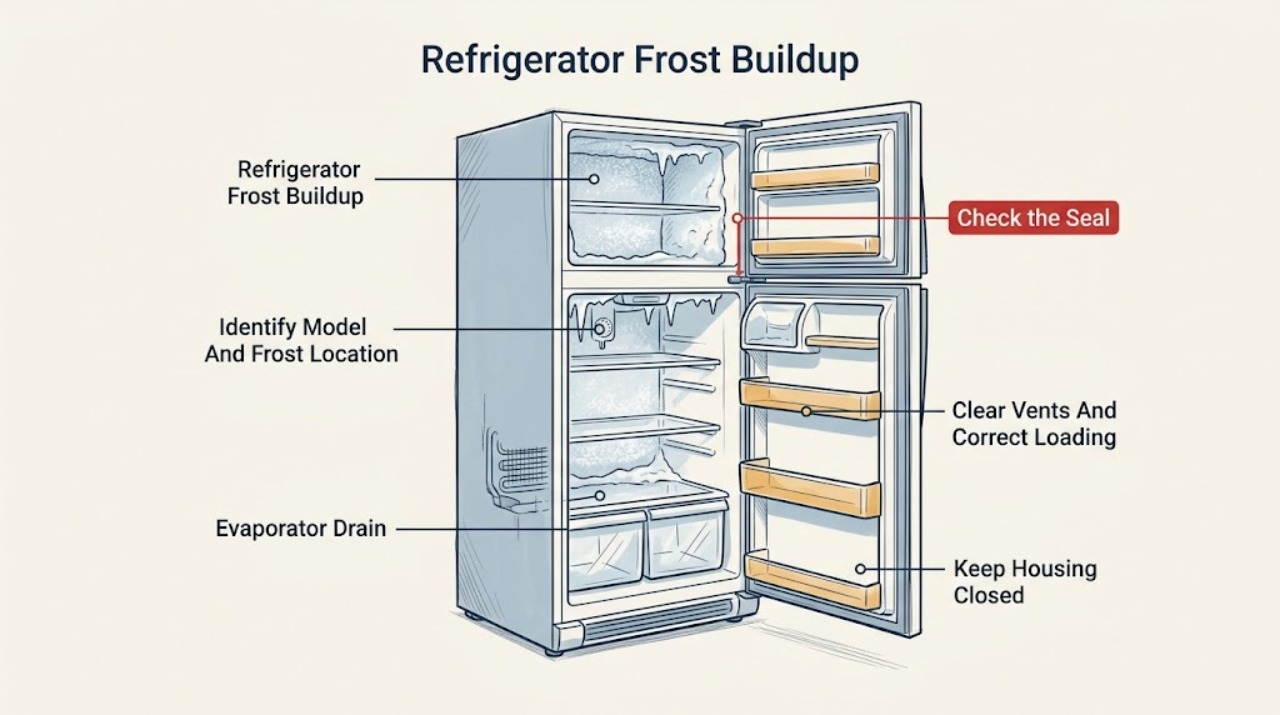
Dacor Refrigerator Frost Buildup: Check the Door Seal and Airflow First
Dacor manuals identify frost around vents as a possible result of food blocking the vents, and frost on interior walls as a possible result of a door that is not closing properly; their first user checks are to clear the door/airflow path and clean the door gasket. Confirm the exact model before applying any procedure because Dacor columns, French-door, and side-by-side refrigerators have different layouts.
-
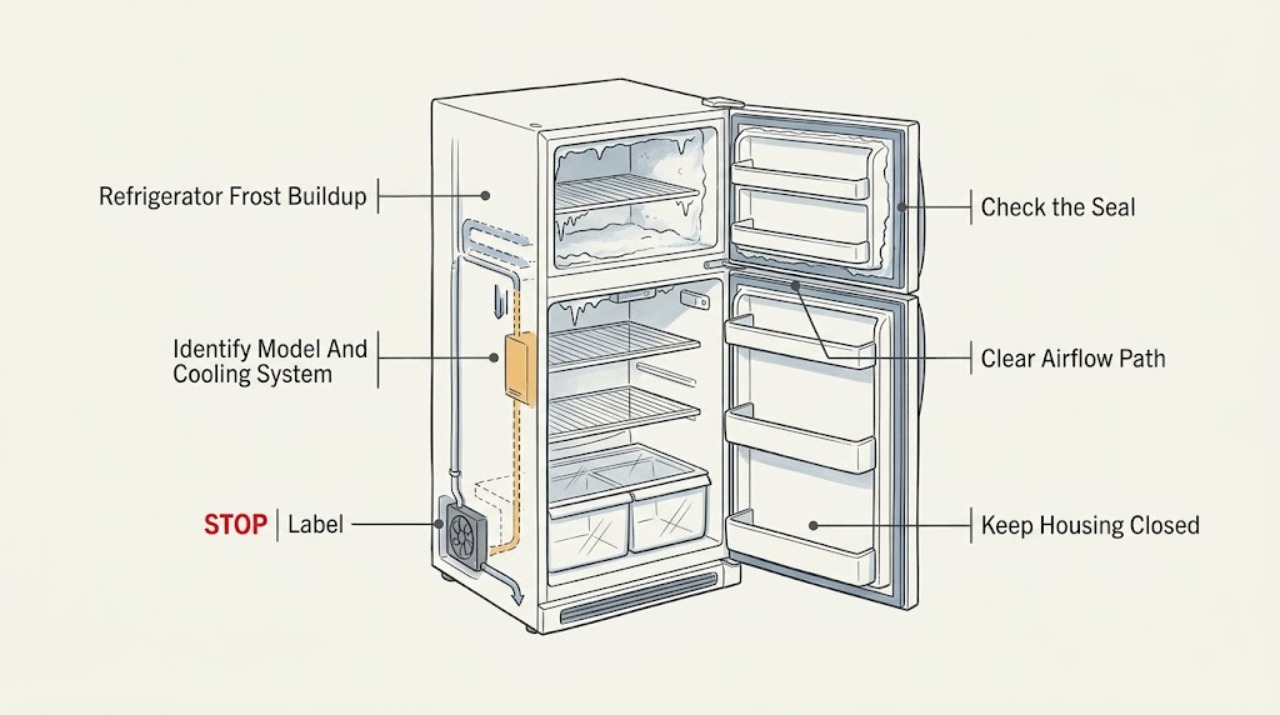
Daewoo Refrigerator Frost Buildup
First identify the Daewoo model and whether it uses Direct/Lil-Frost, Frost Free, or High-Tech No Frost cooling; the official Daewoo catalog shows that these systems and features differ by model. A light, localized frost layer can follow frequent or prolonged door opening, a package preventing the door from sealing, warm or uncovered food, or blocked air circulation.
-
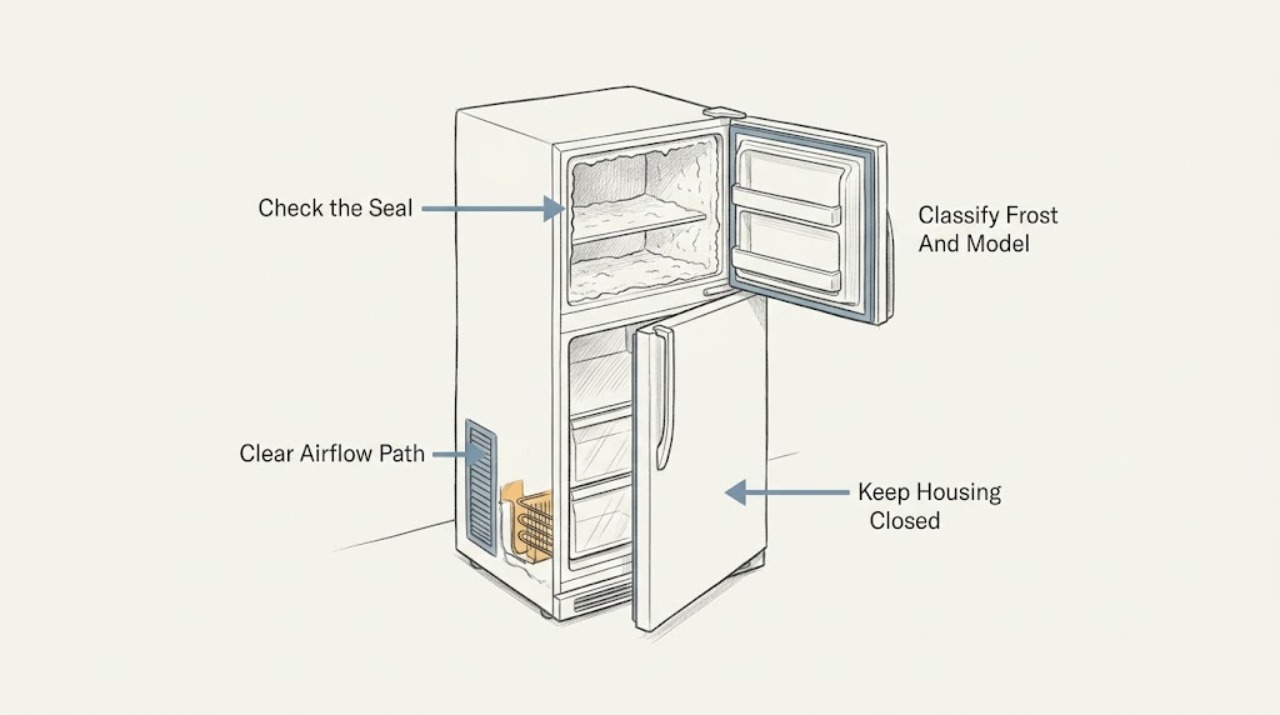
Danby Freezer Frost Buildup: Safe Checks and Defrosting Next Steps
Some frost is expected in a manual-defrost Danby freezer, but heavy or recurring buildup needs a cause check. First determine whether the unit is manual-defrost or frost-free, then inspect from ordinary access for a door that does not close or seal, frequent opening, warm food, blocked air passages, or a temperature setting outside the model guidance.
-
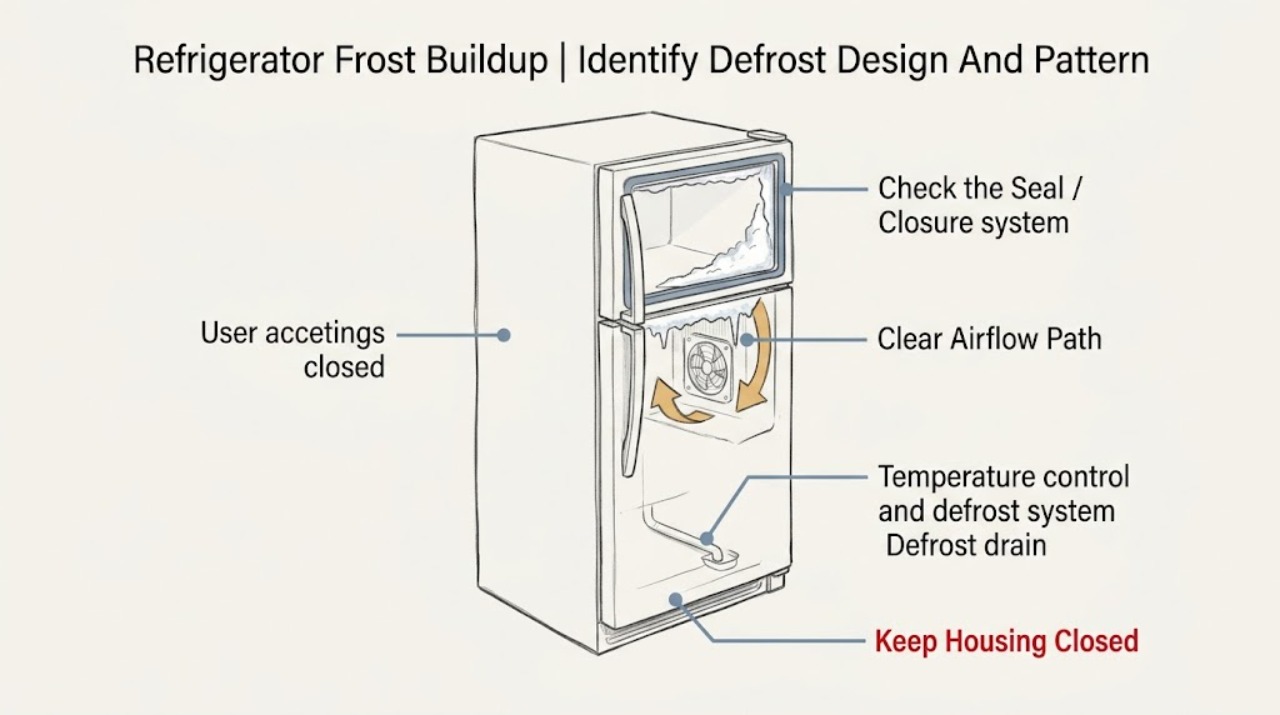
Danby Refrigerator Frost Buildup: Door, Airflow, and Defrost Checks
First identify whether the Danby is frost-free or a manual/partial-defrost model. Danby's current frost-free guidance points to frequent door opening, damaged door seals, and an incorrect temperature setting as common contributors, while non-frost-free units require the exact manual's manual-defrost procedure.
-
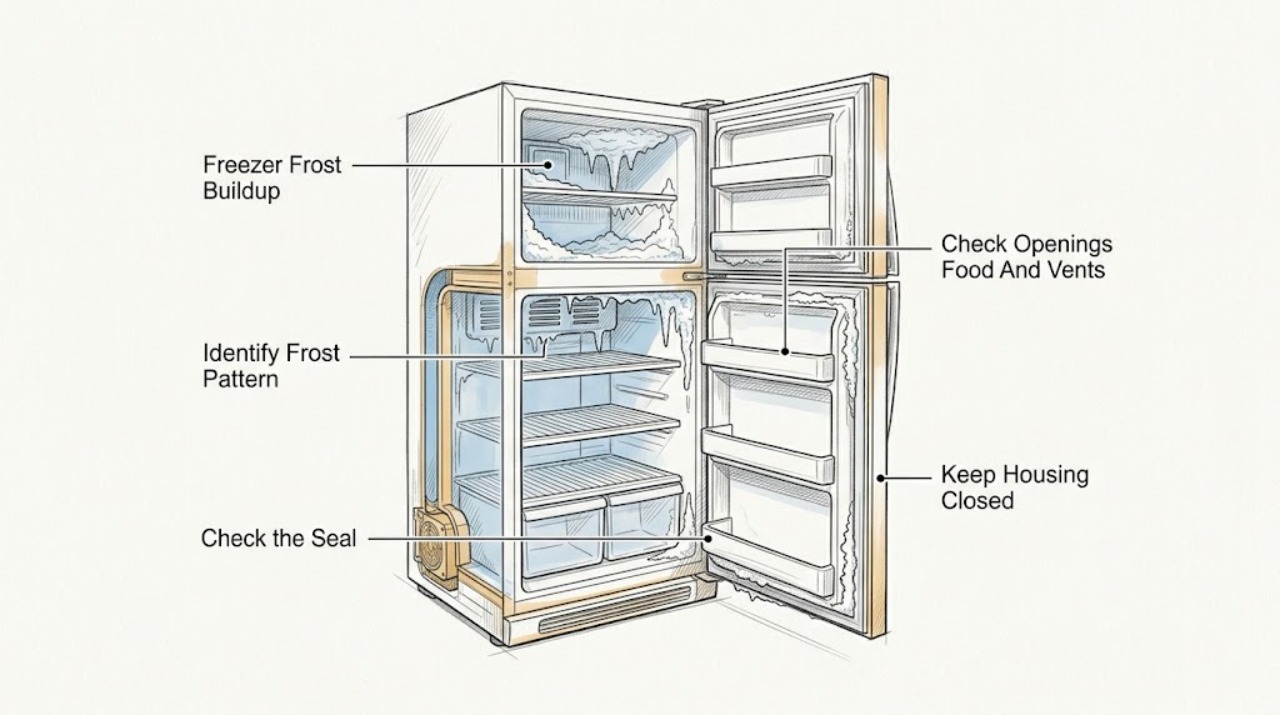
Electrolux Freezer Frost Buildup: Safe Checks and Defrost Boundaries
Some frost can be normal in an Electrolux Low Frost freezer, because moisture enters when the door opens; a No Frost model should not develop ongoing ice during normal operation. Start by identifying which design your model has, then check that the door or lid closes and seals, food is not blocking the seal or internal vents, openings are not unnecessarily frequent, and food is covered.
-
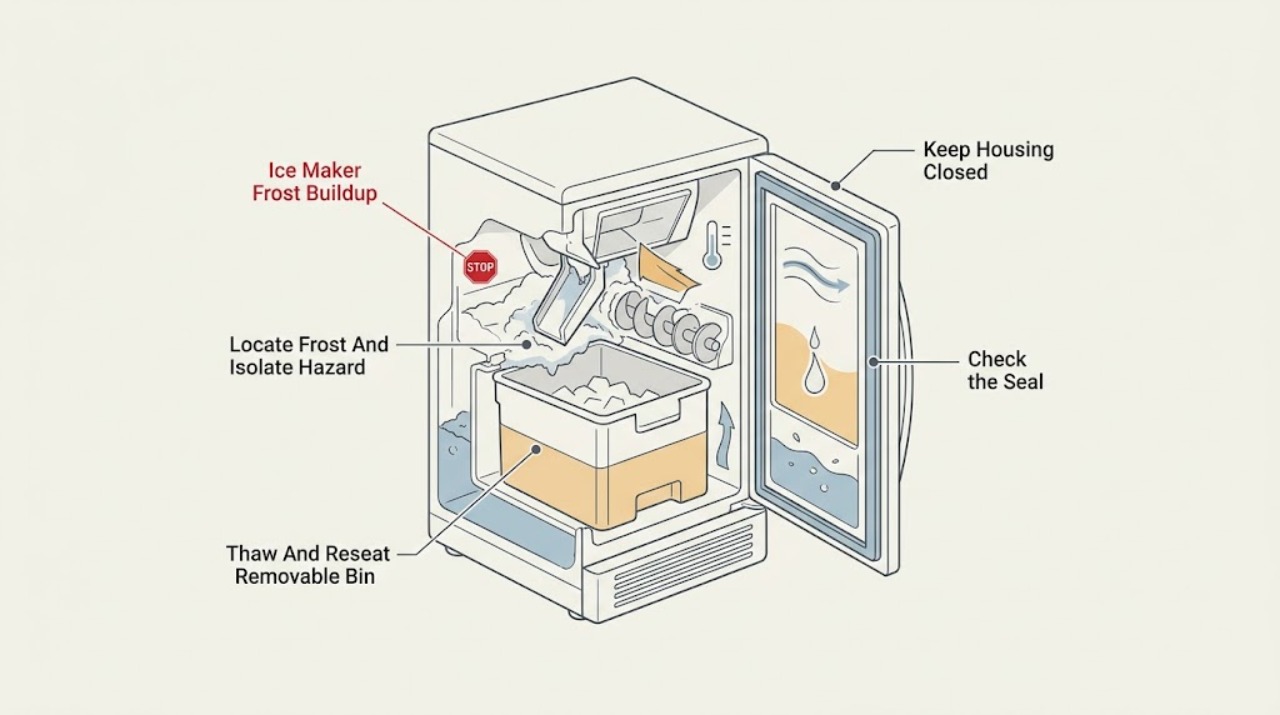
Electrolux Ice Maker Frost Buildup: Bin, Chute, Door Seal, and Safe Checks
First locate the frost: in the removable ice bin, around the dispenser chute/flap, on the ice maker or water-fill area, or across the freezer compartment. Electrolux says frost forms when warm moist air meets a below-freezing surface; an incompletely sealed door, a warped gasket, a chute flap that does not close, very cold settings, or blocked airflow can contribute.
-
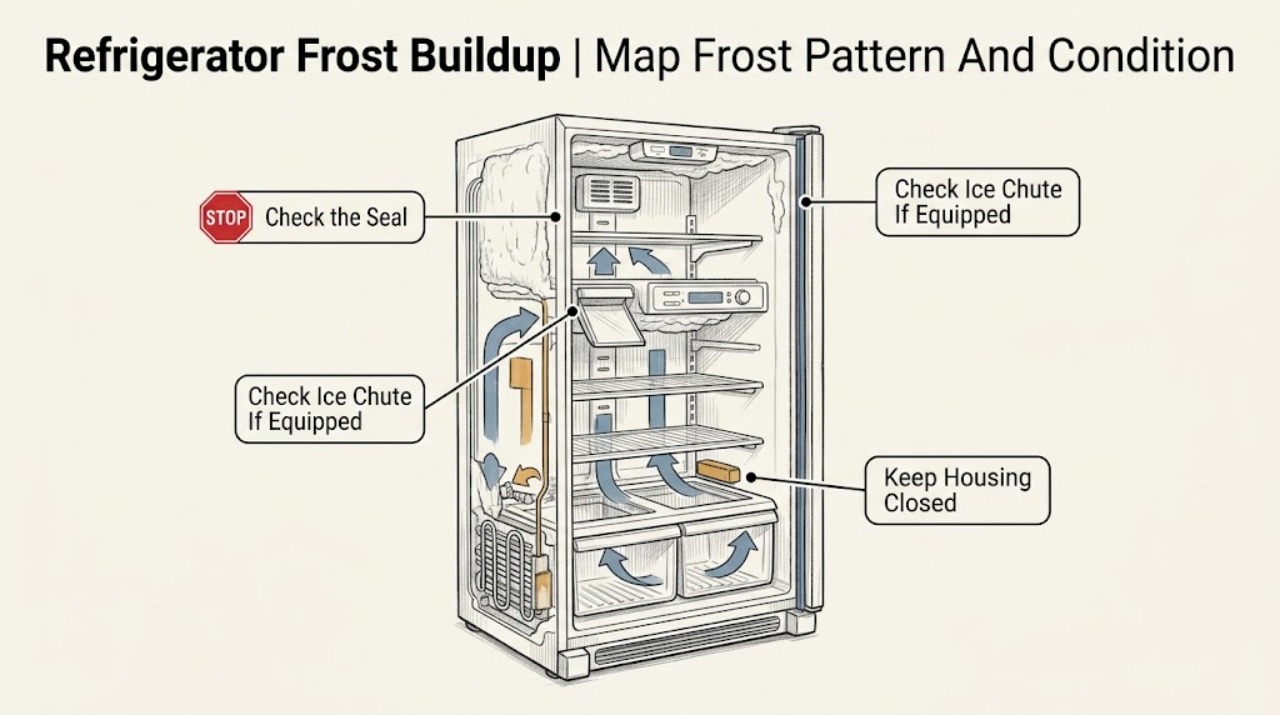
Electrolux Refrigerator Frost Buildup: Find the Air-Leak or Airflow Cause
Electrolux explains that frost forms when warm air and cold air meet in a below-freezing area. Start by locating the frost: a thin patch near a door edge, chute, or a blocked vent points toward warm-air entry or restricted airflow, while a thick or recurring blanket can also prevent the door from sealing and needs service if the external checks do not resolve it.
-
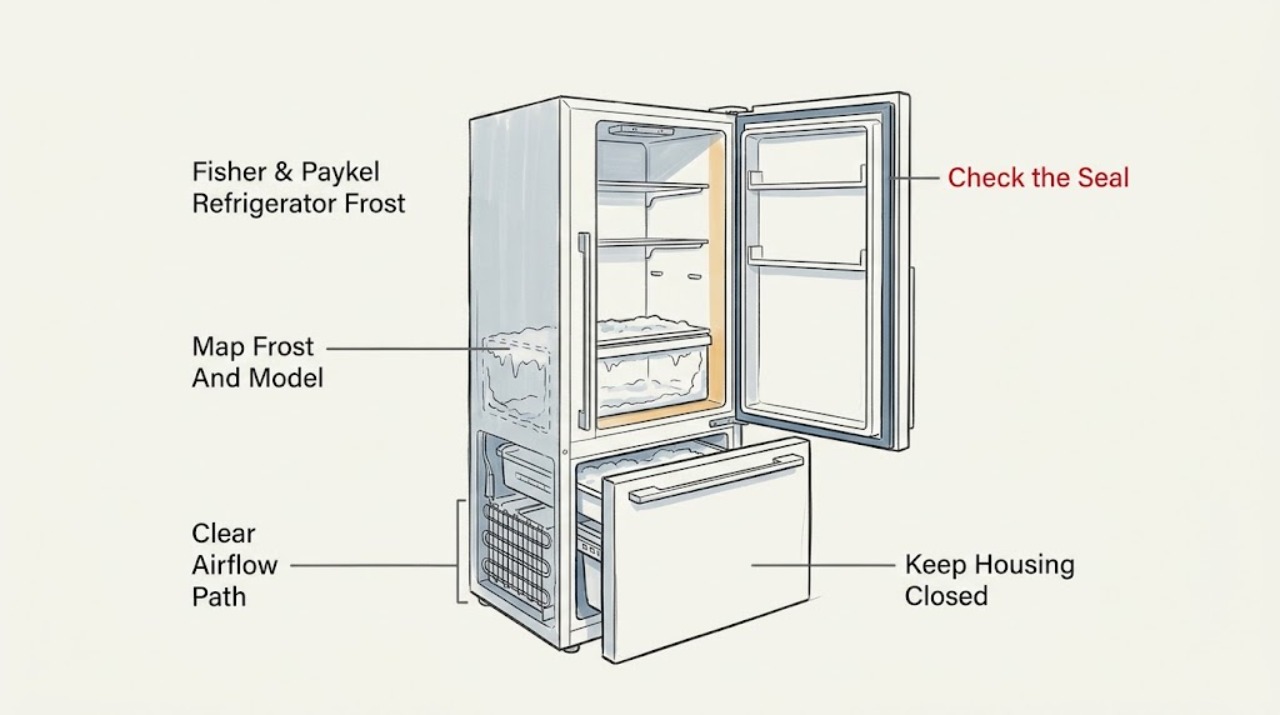
Fisher & Paykel Refrigerator Frost Buildup: Door, Moisture, and Hidden Frost Checks
First locate the frost and record the exact model: a thin, temporary change during an automatic defrost event is different from ice that returns or grows on the freezer wall, around the door, or behind an air outlet. On Fisher & Paykel frost-free and integrated examples, frequent or long door openings, a door that does not close tightly, a dirty or leaking gasket, high humidity, or blocked airflow are the safe external checks.
-
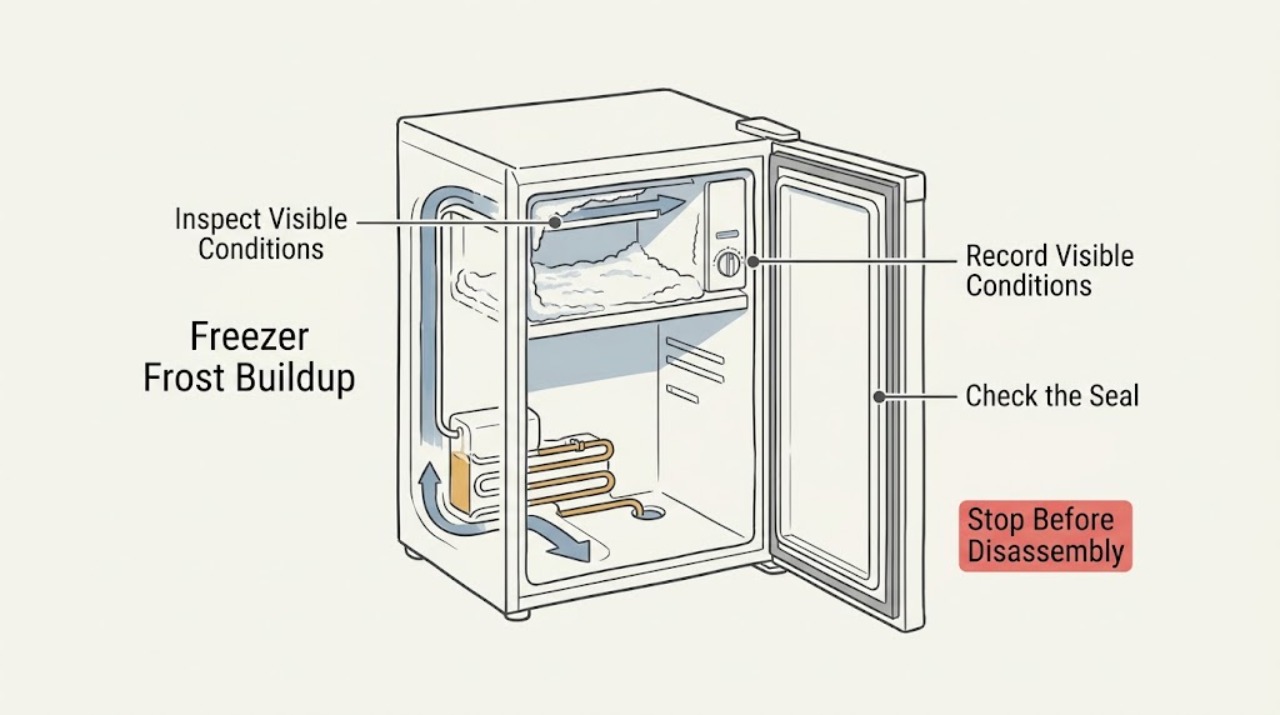
Freezer Frost Buildup: Find the Air Leak, Blocked Flow, or Defrost Fault
Some light, even frost can be normal, especially after humid air enters or on a manual-defrost freezer. Thick, fast-growing, one-sided, or recurring frost usually means warm air is entering through the door seal, packages are holding the door open, vents are blocked, loading or temperature is causing poor circulation, or an automatic defrost or fan path needs service.
-
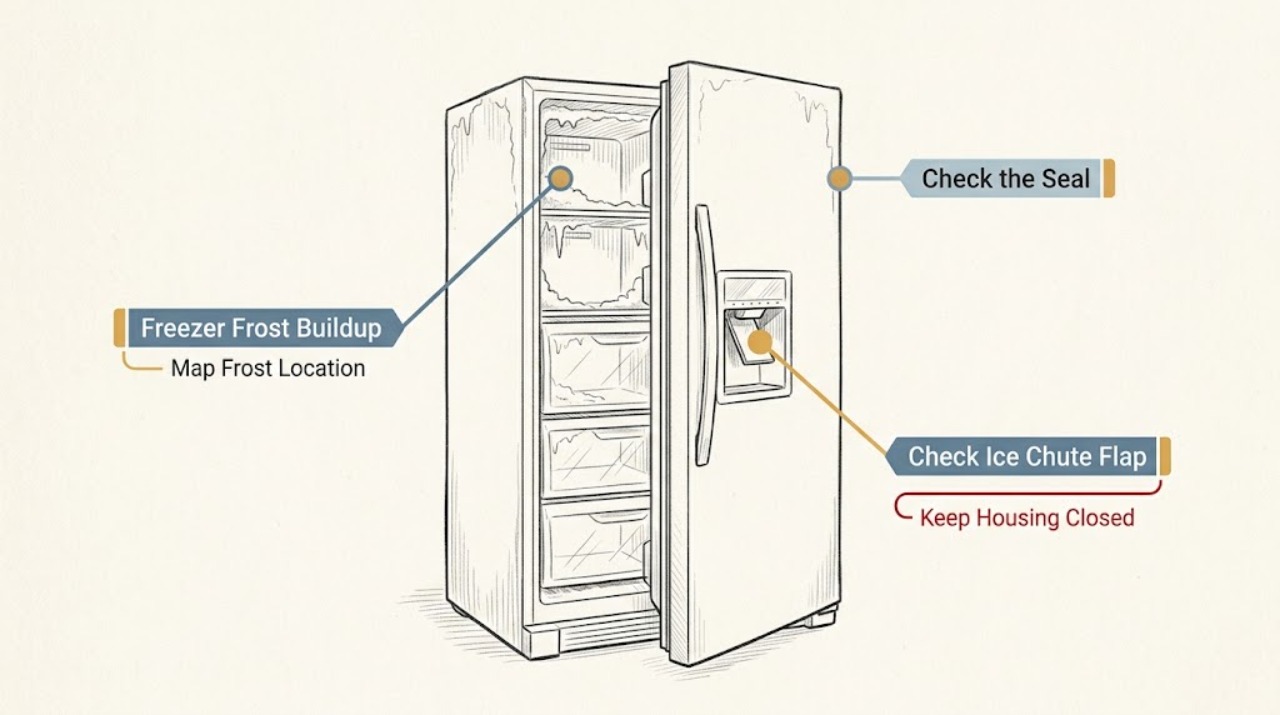
Frigidaire Freezer Frost Buildup: Check the Seal and Airflow First
Frigidaire says frost forms when warm, moist air meets the cold freezer interior. Start by making sure the door or lid closes fully, nothing is obstructing it, and the gasket seals around the entire opening.
-
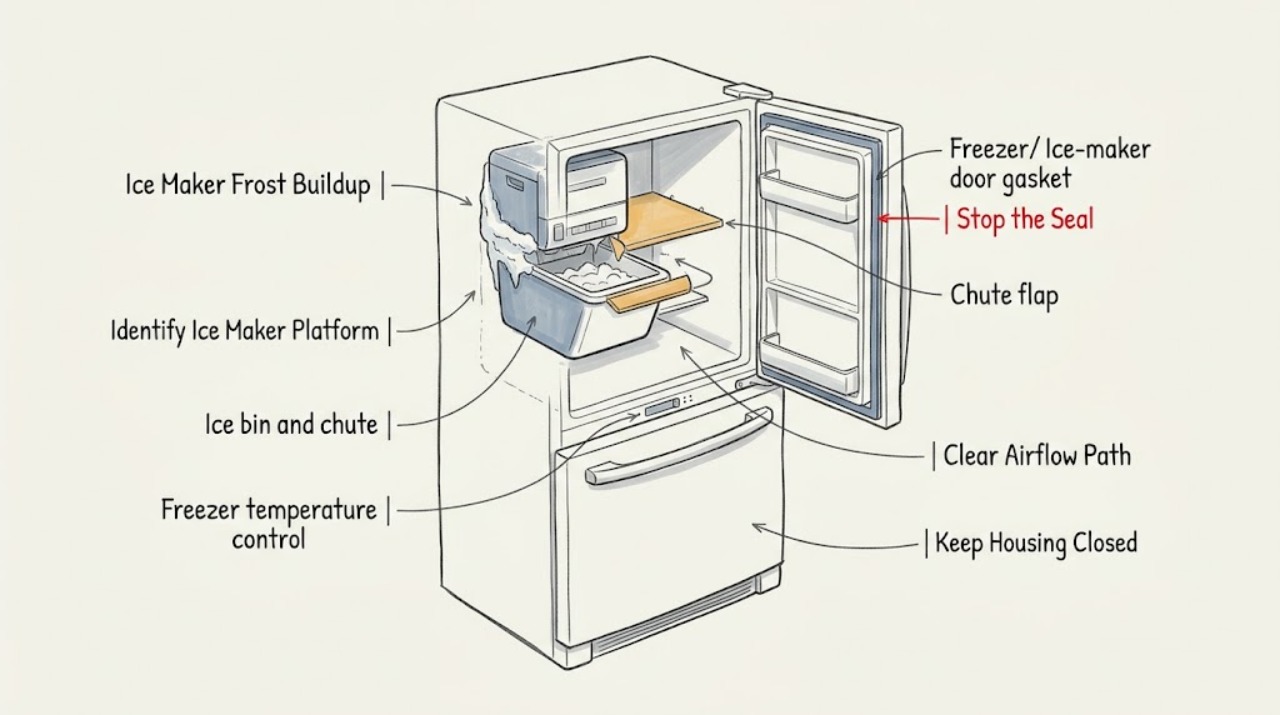
Frigidaire Ice Maker Frost Buildup: Locate the Frost and Check the Air Seal Safely
First locate the frost before assuming the ice maker itself is defective. Frost only on the ice bin or dispenser chute is often an accessible air-seal or ice-path issue: check that the ice chute flap closes, the door or freezer gasket seals, and no ice or food prevents closure.
-
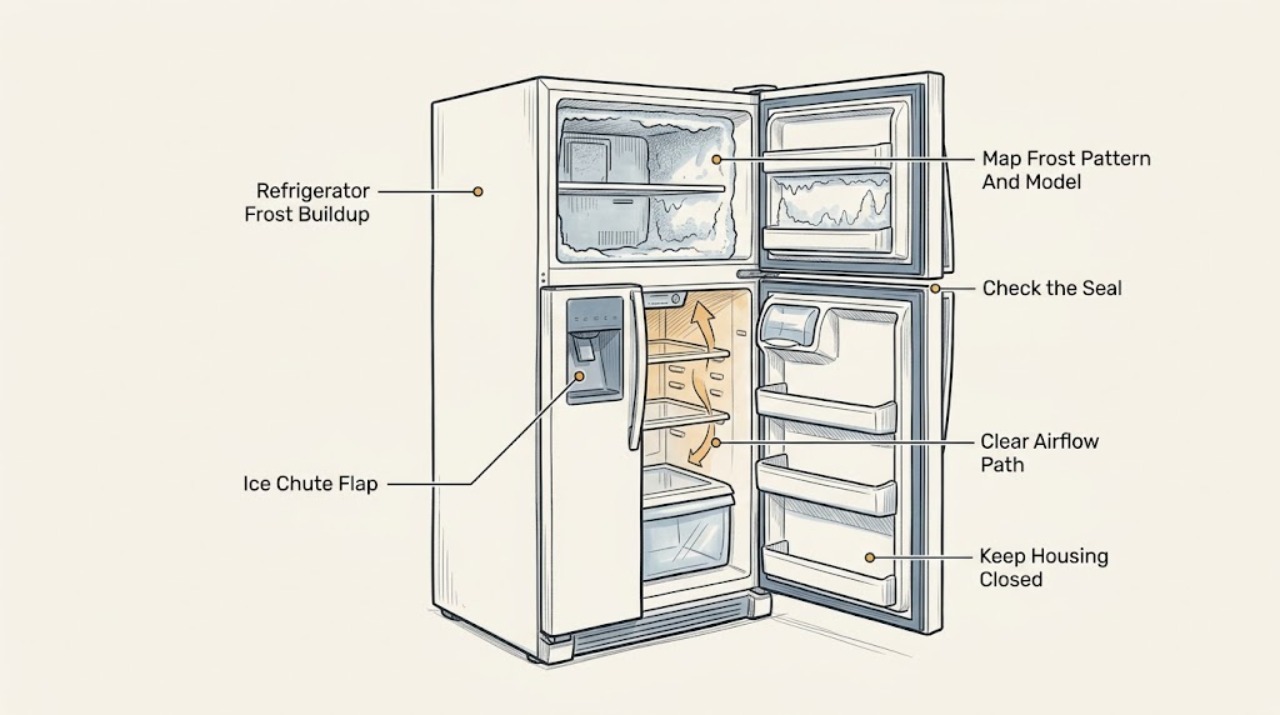
Frigidaire Refrigerator Frost Buildup: Read the Frost Pattern Before Defrosting
First photograph and locate the frost before removing anything. Frigidaire explains that frost forms when warm and cold air combine below 32°F, and identifies an imperfect door or gasket seal, an ice-chute flap that does not close, an excessively low freezer setting, and blocked airflow as causes.
-
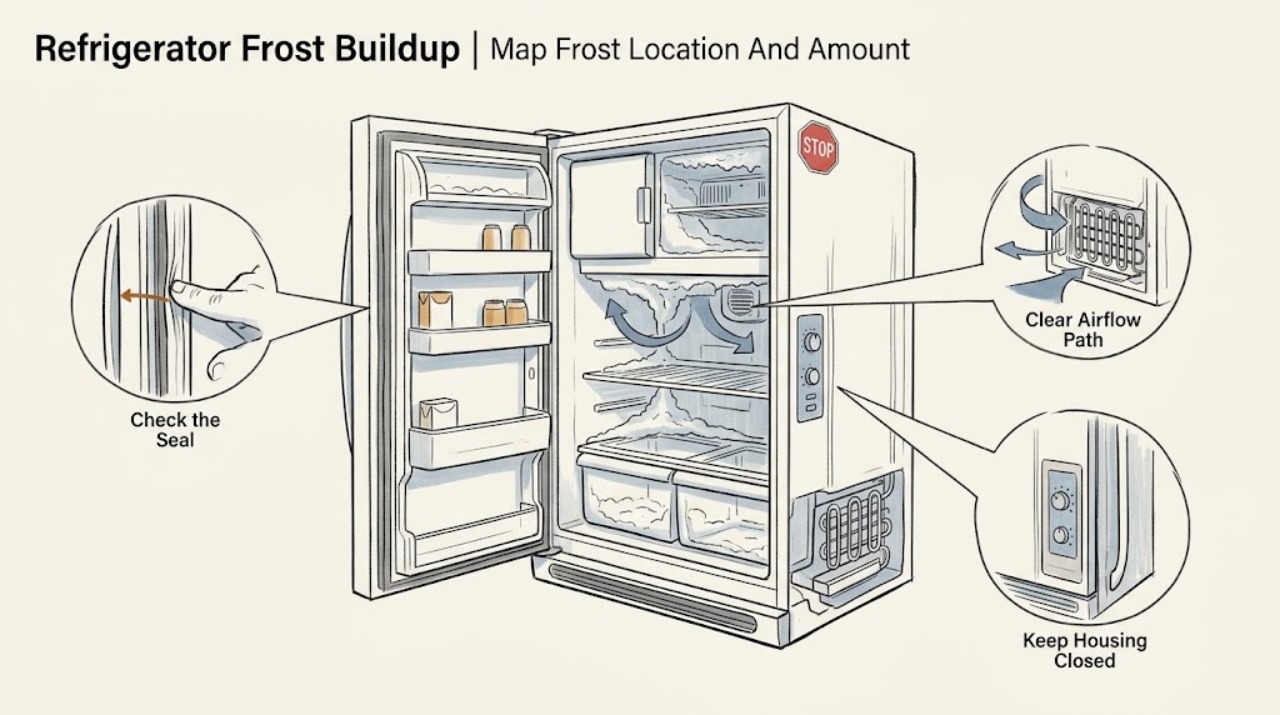
Gaggenau Refrigerator Frost Buildup: Separate Normal Rear-Wall Frost from a Seal or Defrost Fault
First identify where the frost is: a light, temporary film on the refrigerator's rear wall can be normal on models whose rear panel defrosts automatically, while a thick or returning layer, frost around the door edge, or ice covering food and air paths is not a one-size-fits-all condition. Check the exact Gaggenau model before acting.
-
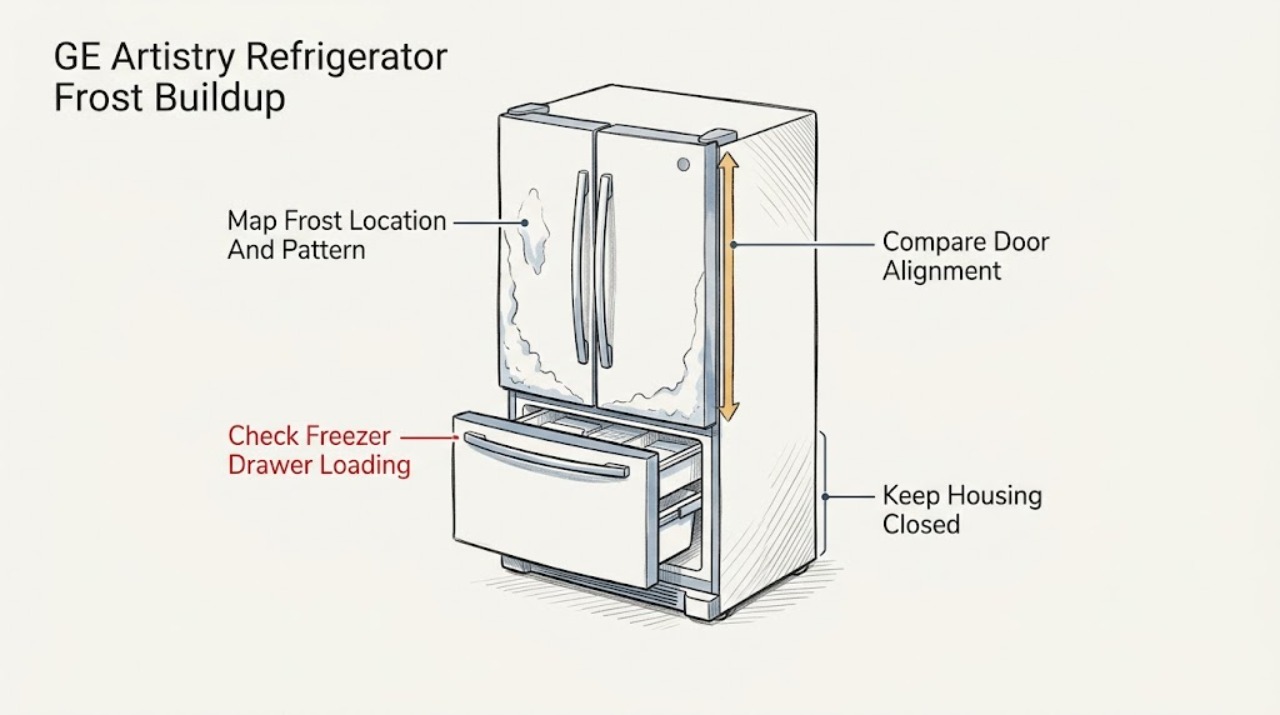
GE Artistry Refrigerator Frost Buildup: Check the Drawer Seal and Airflow
GE's official Owner Center identifies the Artistry ABE20EGEBS as a bottom-freezer refrigerator, while the model page says its defrost type is Frost Guard and it has a Multiflow Air Tower. For frost buildup, first note whether frost is on the freezer drawer, food, rear wall, or around the gasket.
-
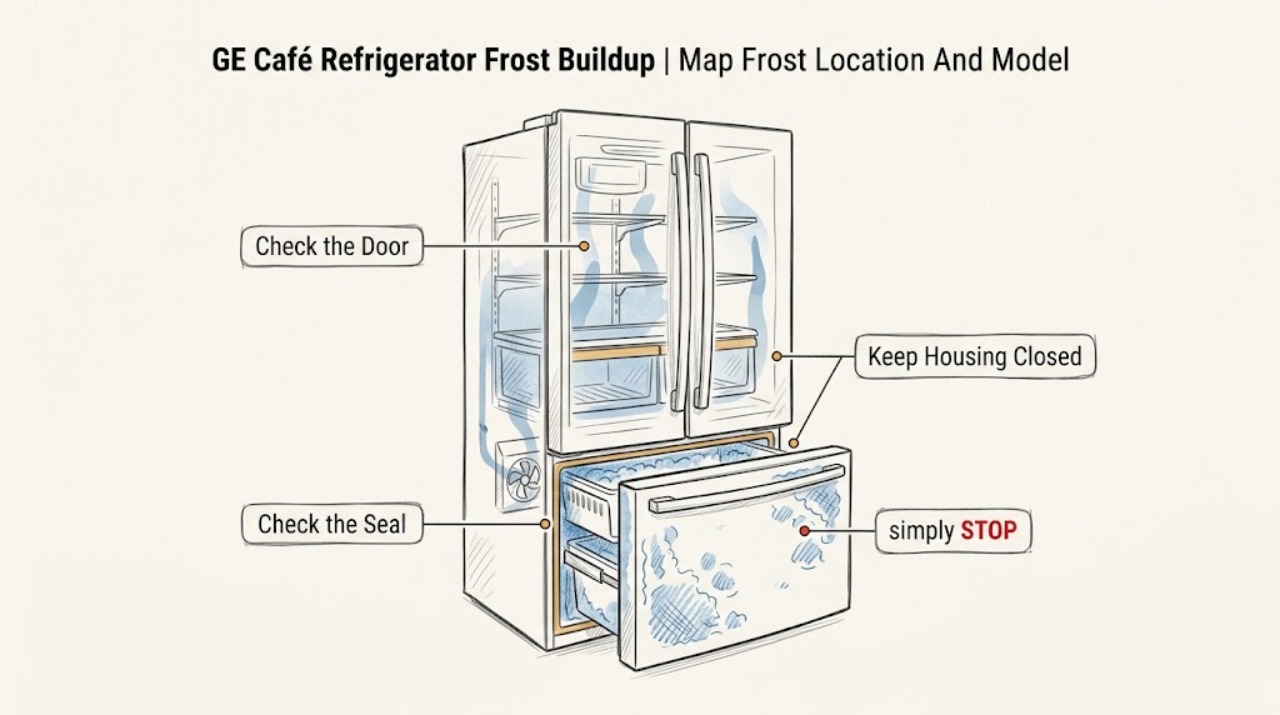
GE Café Refrigerator Frost Buildup: Check Door Seals, Airflow, and Defrost Behavior
First locate the frost: a little frost on food packages after opening the freezer or adding warm food can be normal, but heavy frost on a wall, around a door or drawer, or across the compartment is not expected on a frost-free model. Check for packages, shelves, baskets, or shipping material preventing the freezer from closing; inspect that the gasket touches the frame evenly and that the door or drawer is aligned and fully seated.
-
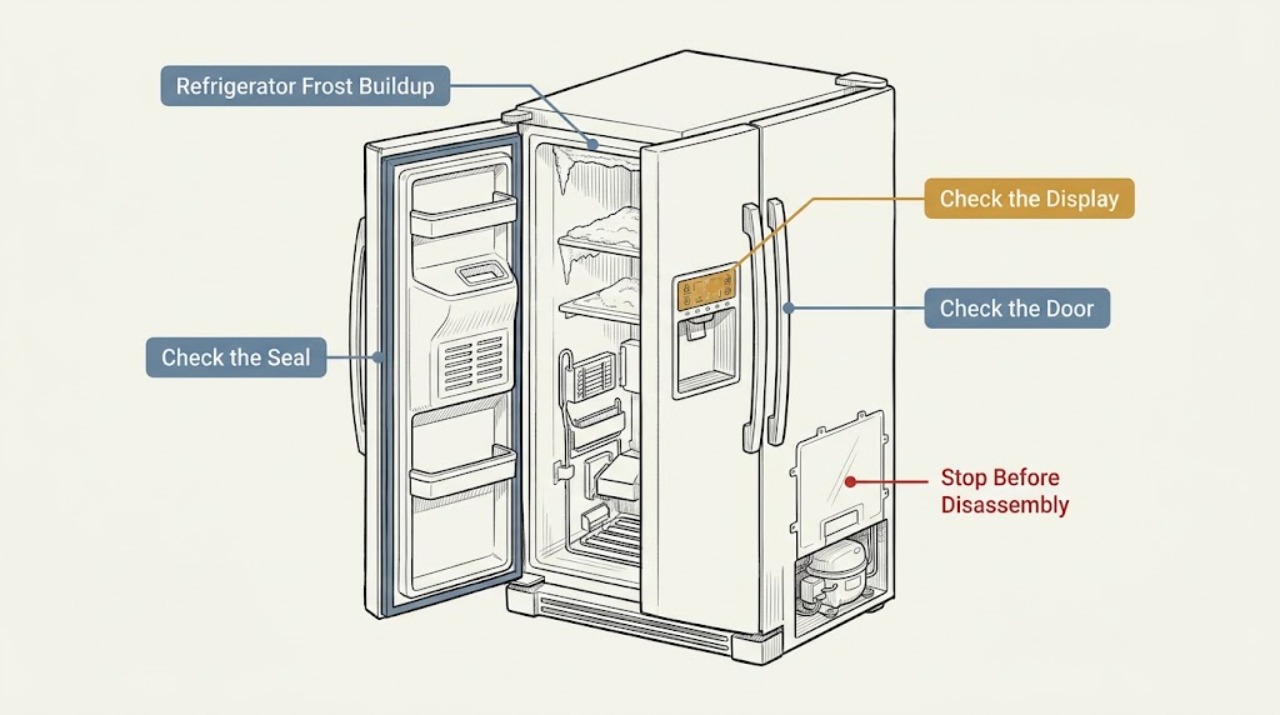
GE Eterna Refrigerator Frost Buildup
For frost buildup on a GE Eterna refrigerator, first identify whether the frost is a light layer on packages, a thick layer on the freezer walls, or an unusual concentration on one wall. Eterna is a discontinued legacy GE line, so the exact model manual matters more than the badge.
-
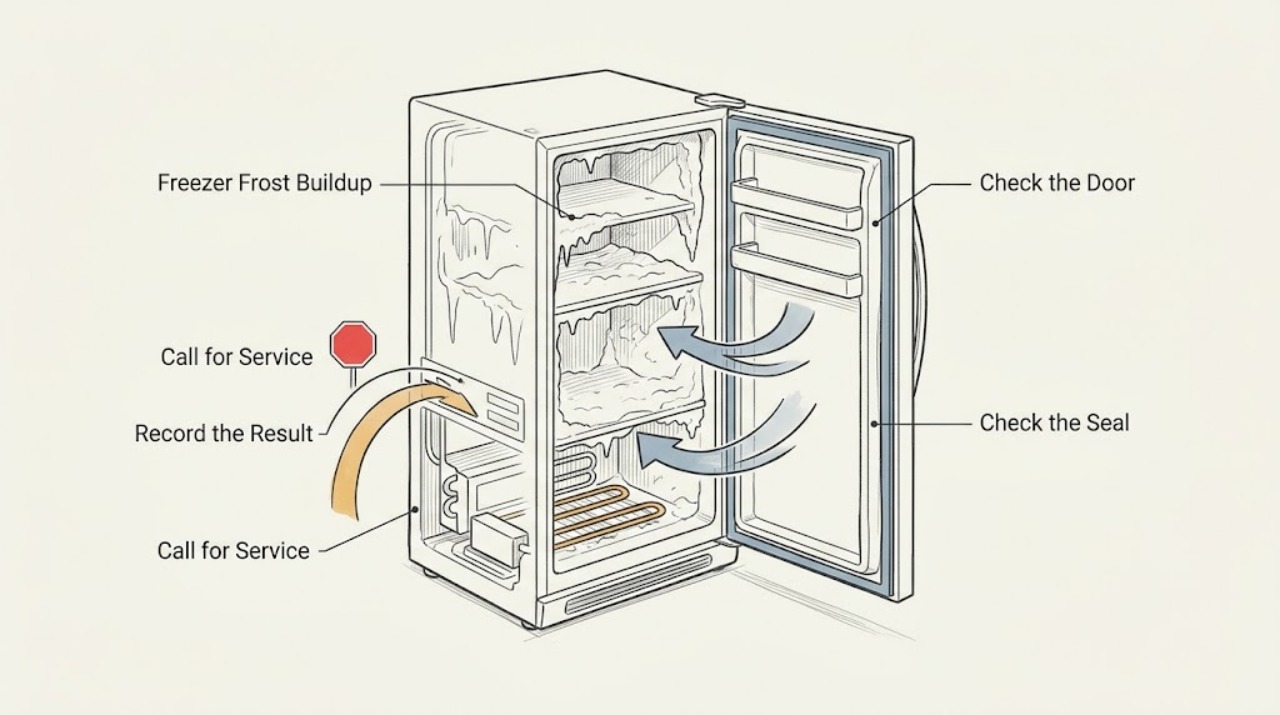
Ge Freezer Frost Buildup
A small amount of frost on a package can be normal, but heavy frost on a GE freezer wall, around the opening, or over a vent usually means humid air is getting in, storage is preventing a seal, airflow is blocked, or the defrost system needs attention.
-
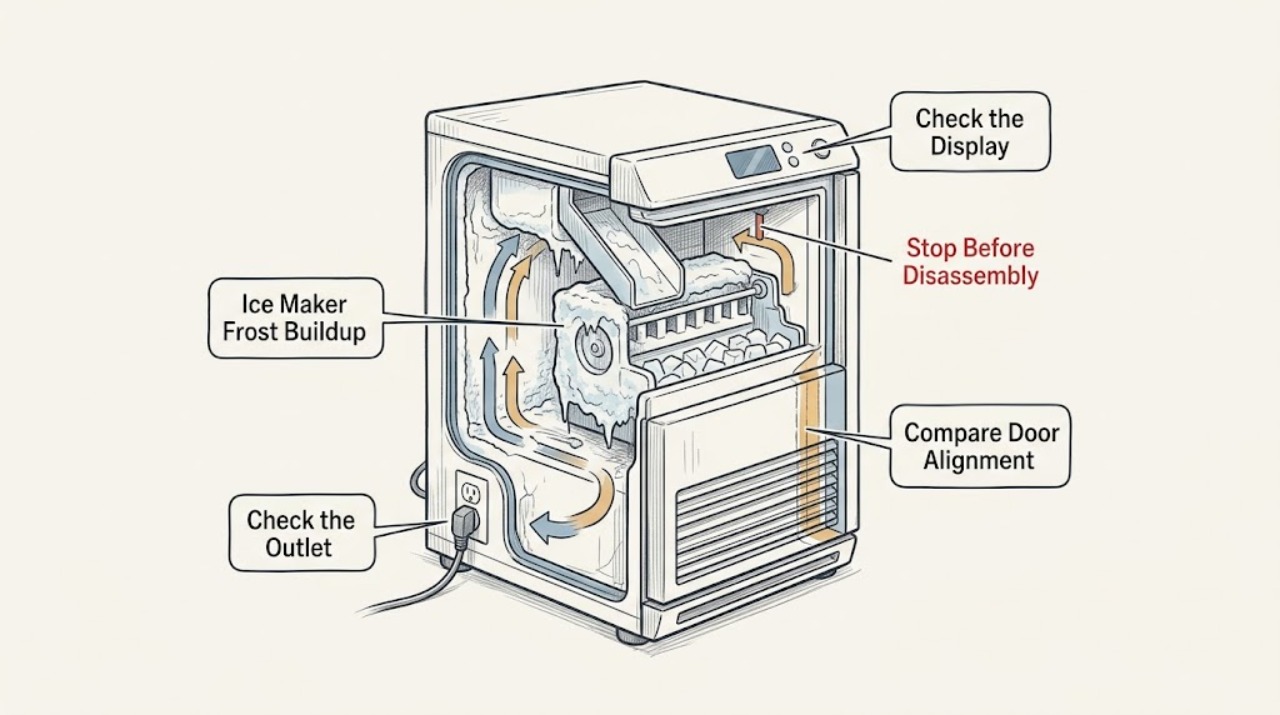
GE Ice Maker Frost Buildup
First identify whether this is a GE refrigerator's built-in ice maker or a separate GE Profile Opal countertop ice maker; their frost and defrost behavior is different. In a refrigerator, frost on the freezer wall or around the ice chute commonly follows warm humid air entering through a door, gasket, package, or dispenser flap; a small amount in a chute after repeated crushed-ice dispensing can be normal.
-
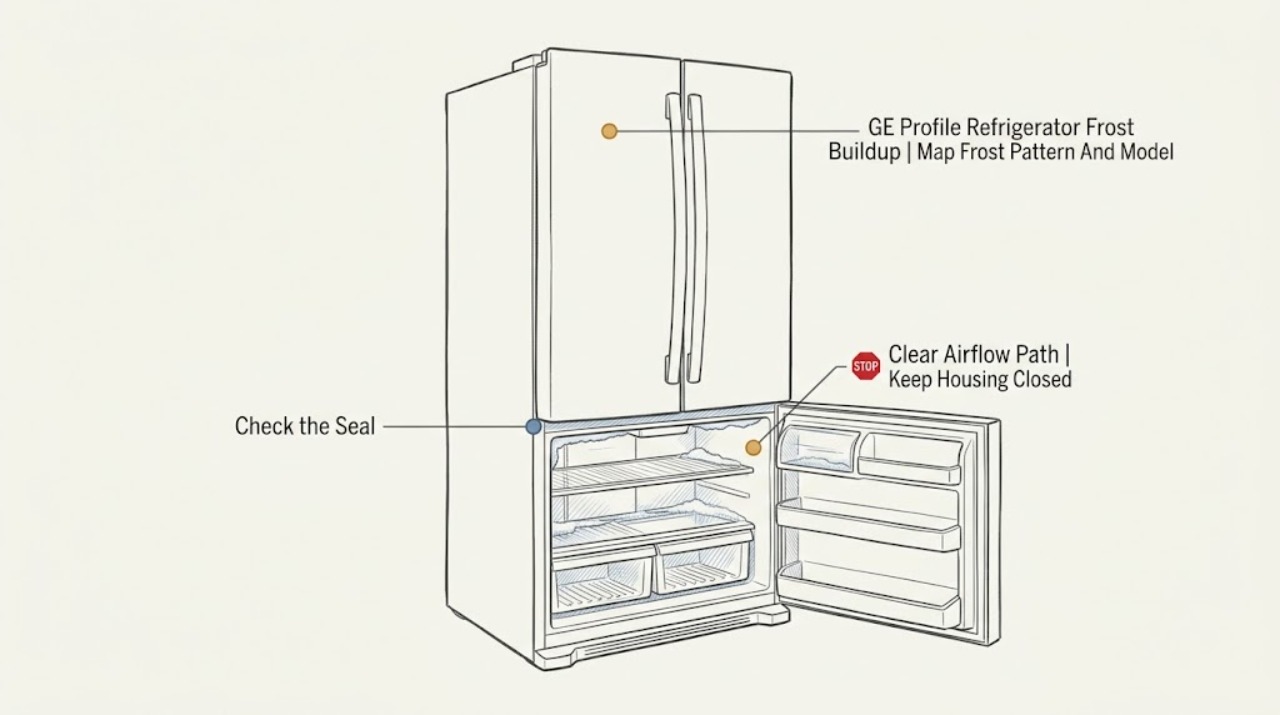
GE Profile Refrigerator Frost Buildup: Check the Seal and Airflow Before Defrosting
Start by identifying whether the frost is on packages, around the freezer opening, on one wall, or across much of the freezer, and whether the unit is a frost-free GE Profile model or a manual/cycle-defrost model. In a frost-free refrigerator, heavy wall frost is not expected: check for a package, shelf, basket, or drawer preventing full closure; inspect the visible gasket for a gap, tear, or loose section; and consider frequent opening, high humidity, or warm uncovered food.
-
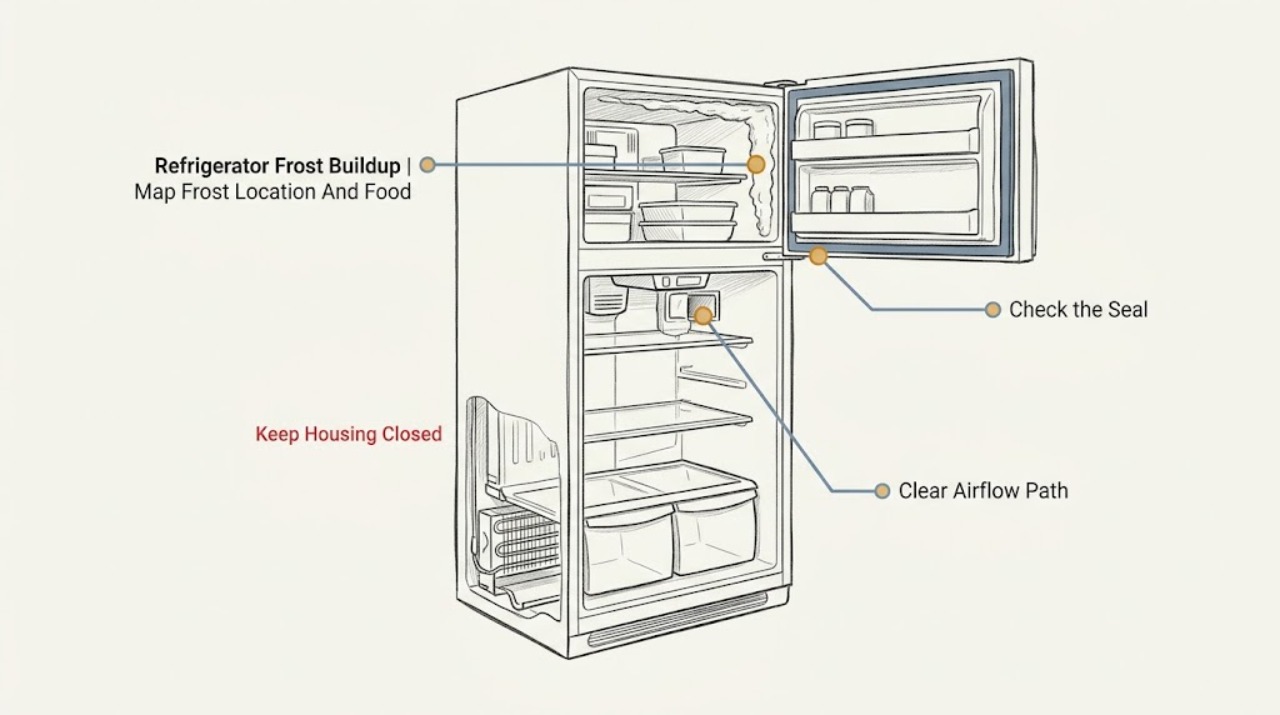
GE Refrigerator Frost Buildup: Find the Air, Door, or Defrost Branch
On a GE frost-free refrigerator, first map the frost: a light film on packages after humid weather or frequent door opening can be an air-intrusion or loading issue, while a growing sheet on the freezer wall, a blocked air duct, ice on the freezer floor, or water below the refrigerator needs a different branch.
-
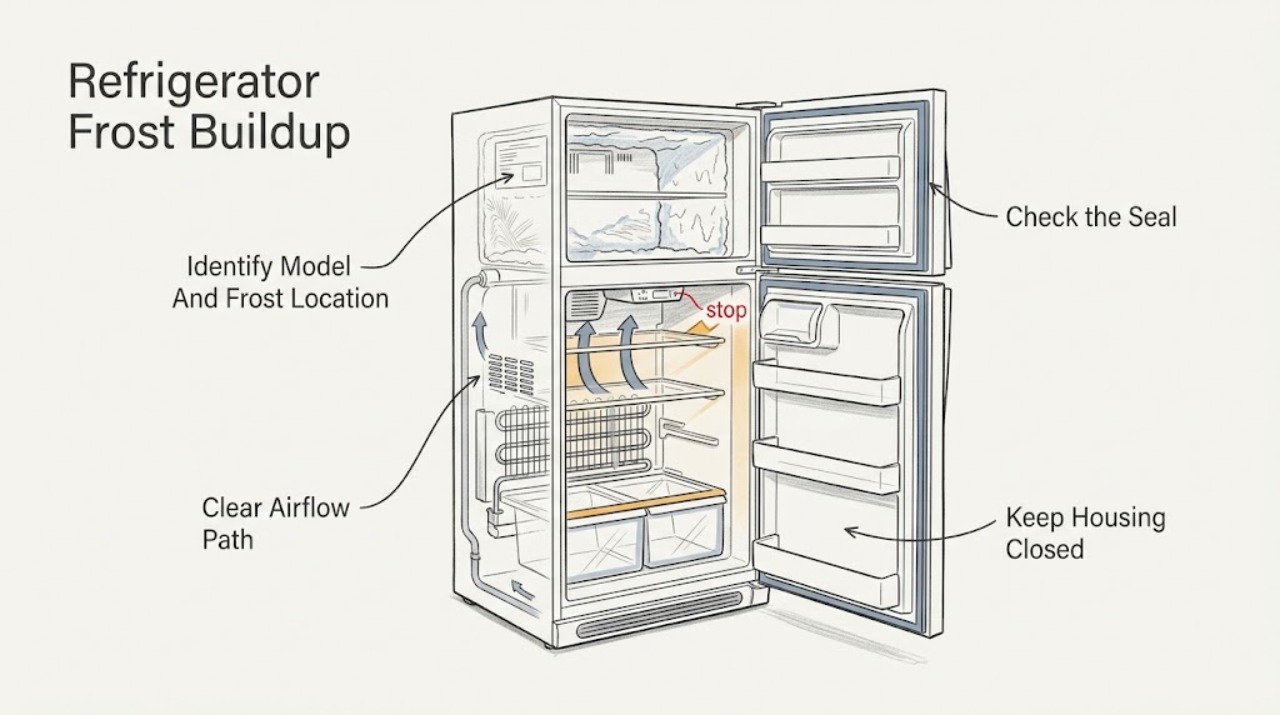
Gladiator Refrigerator Frost Buildup
A light, short-lived frost film can follow humid air entering a refrigerator, a recent warm load, or a normal defrost cycle. Persistent or thick frost usually begins with a door that is not sealing, blocked vents or overpacking, incorrect temperature settings, or a refrigerator operating outside the conditions for which its exact model was designed.
-
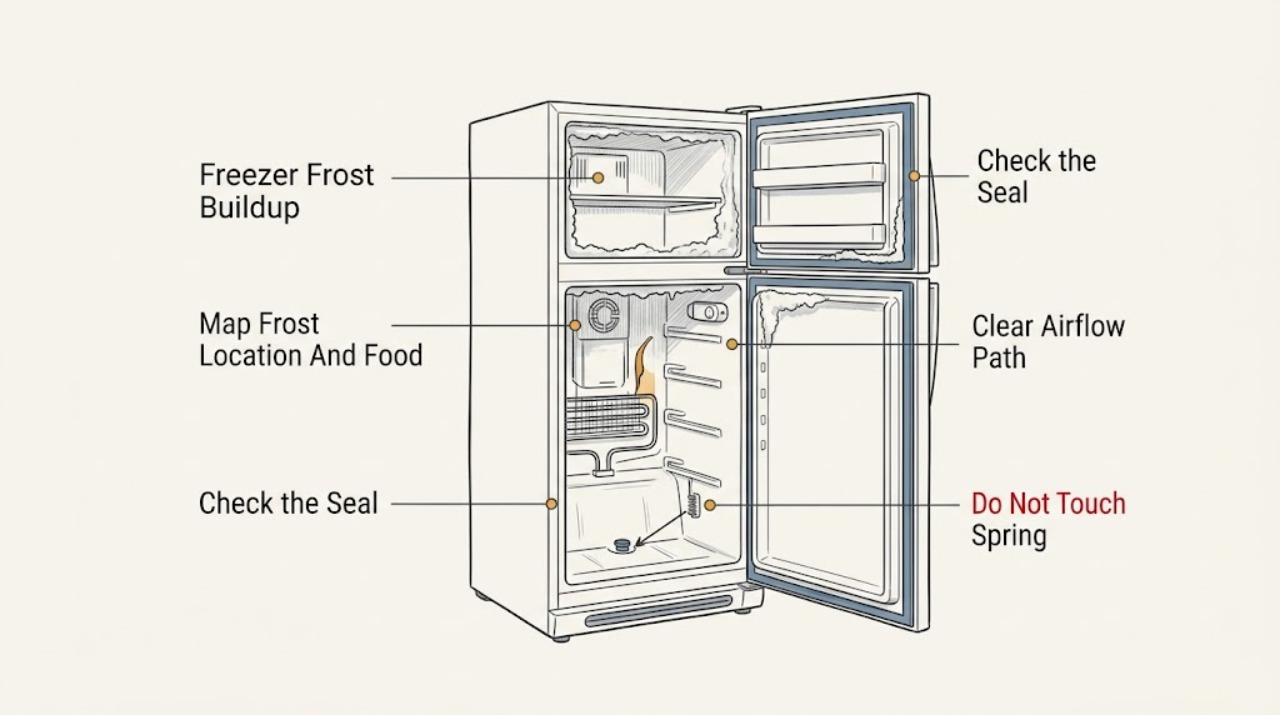
Haier Freezer Frost Buildup: Find the Air Leak Before Defrosting
Frost in a Haier freezer usually means moisture entered and froze, but the right response depends on whether the unit is a manual-defrost chest freezer, a frost-free upright, or a refrigerator freezer compartment. First check the door gasket, lid or door closure, opening frequency, hot or uncovered food, and blocked airflow.
-
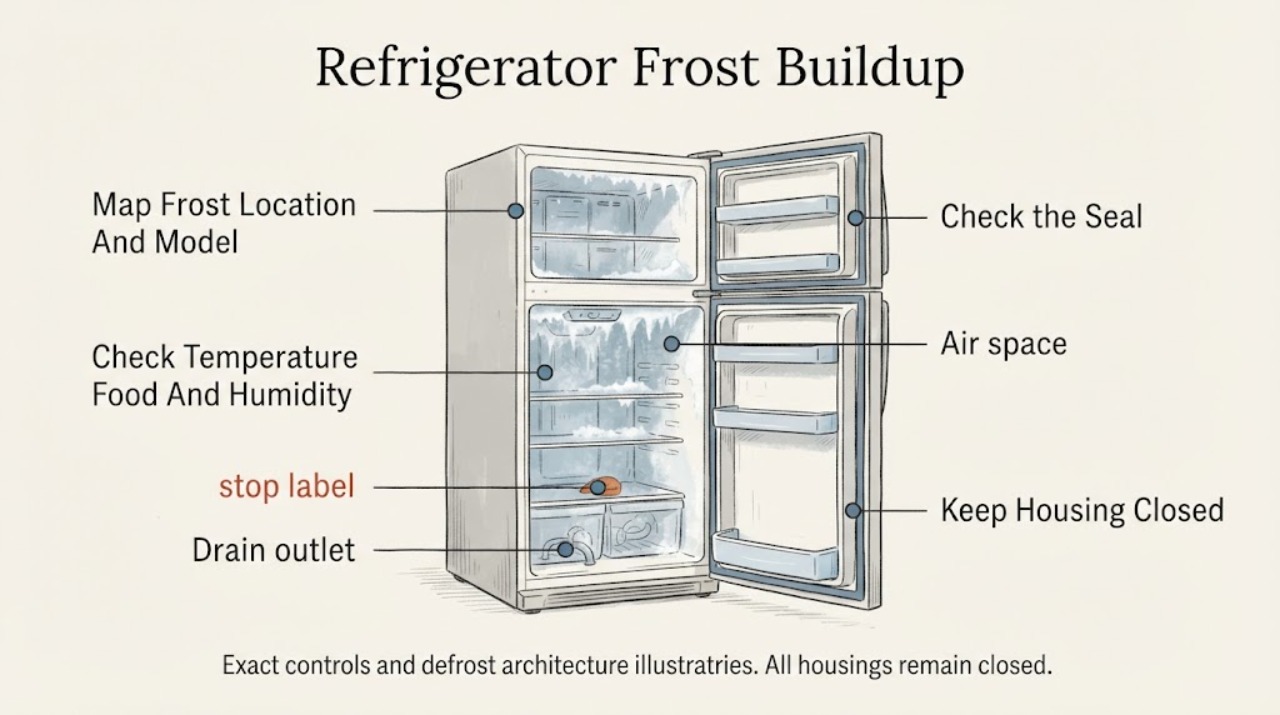
Haier Refrigerator Frost Buildup: Check the Frost Location and Defrost Type
First note where the frost is. A light film that forms and melts on a refrigerator back wall can be normal, while thick recurring ice, frost around a door, or frost that blocks a freezer drawer needs a different check.
-
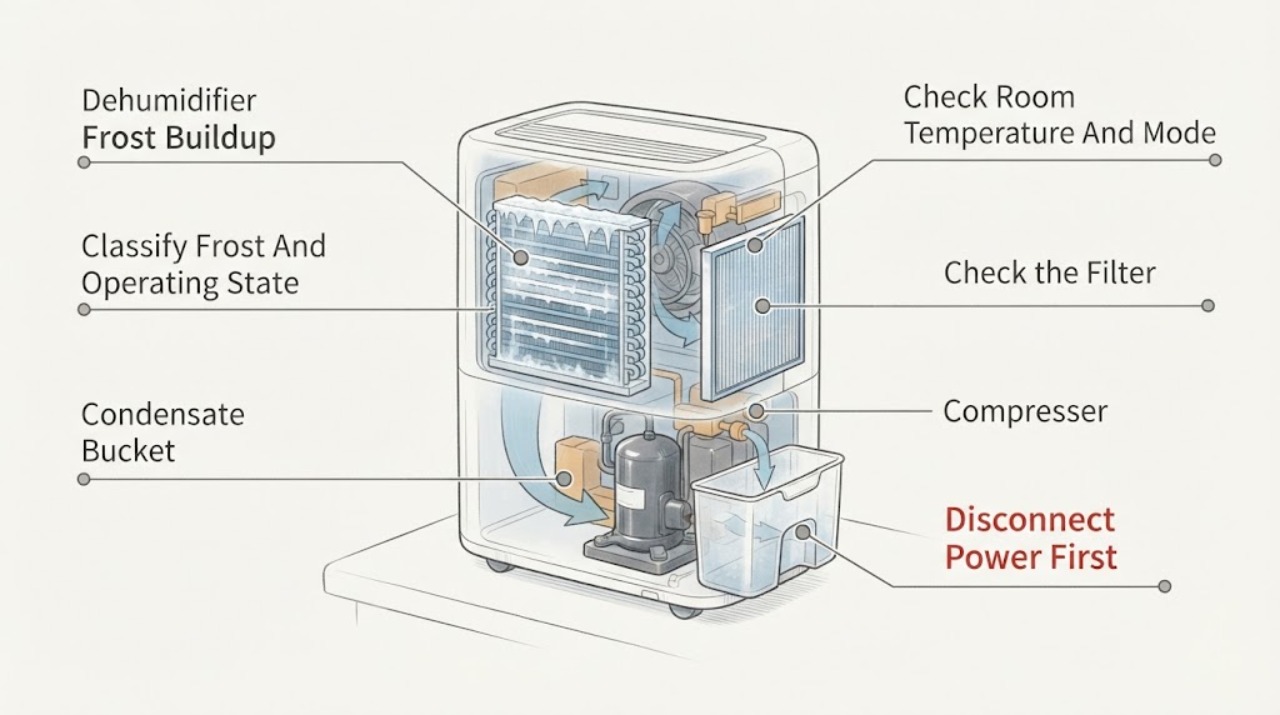
Hisense Dehumidifier Frost Buildup
A thin layer of frost on a Hisense dehumidifier coil can be temporary when the unit's automatic de-icing cycle turns the compressor off and lets the fan run. Low room temperature can also cause some freezing.
-
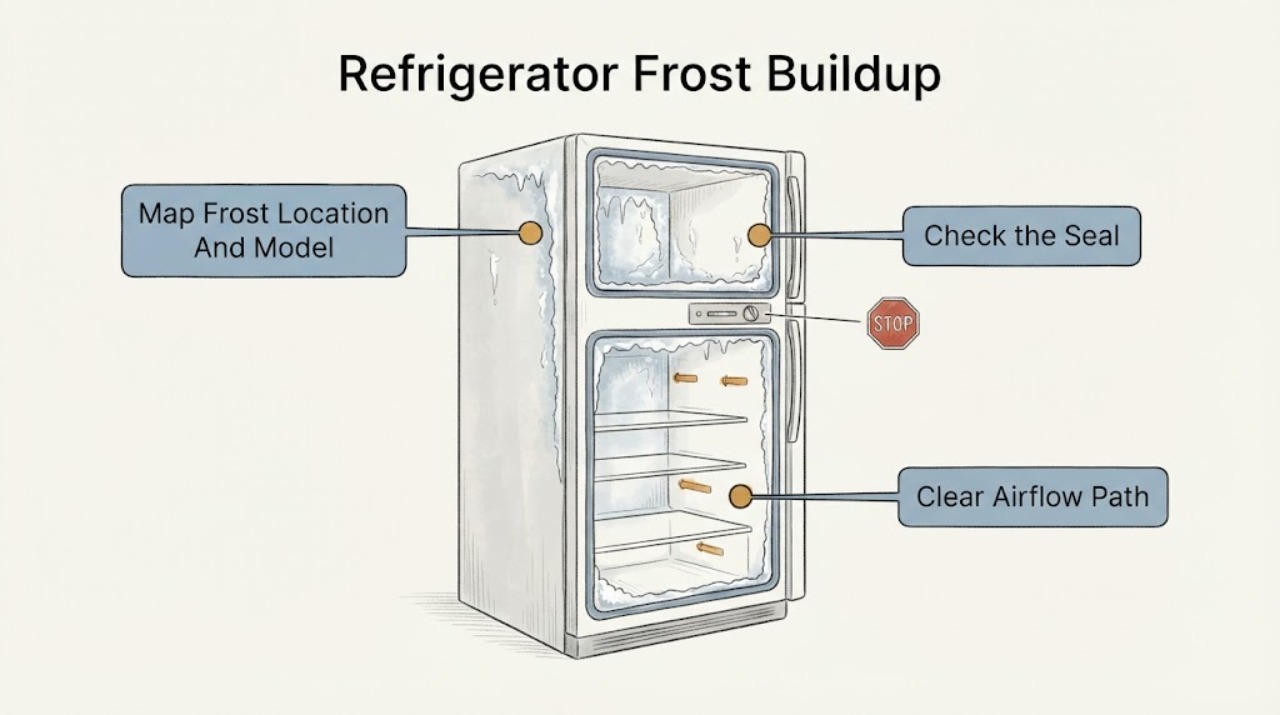
Hisense Refrigerator Frost Buildup: Check the Seal, Airflow, and Defrost Type
First photograph where the frost is forming and record the exact Hisense model. A little frost in a freezer can follow frequent or prolonged door opening, a door that does not seal, blocked airflow, or a manual-defrost design; it is not enough to diagnose a failed part.
-
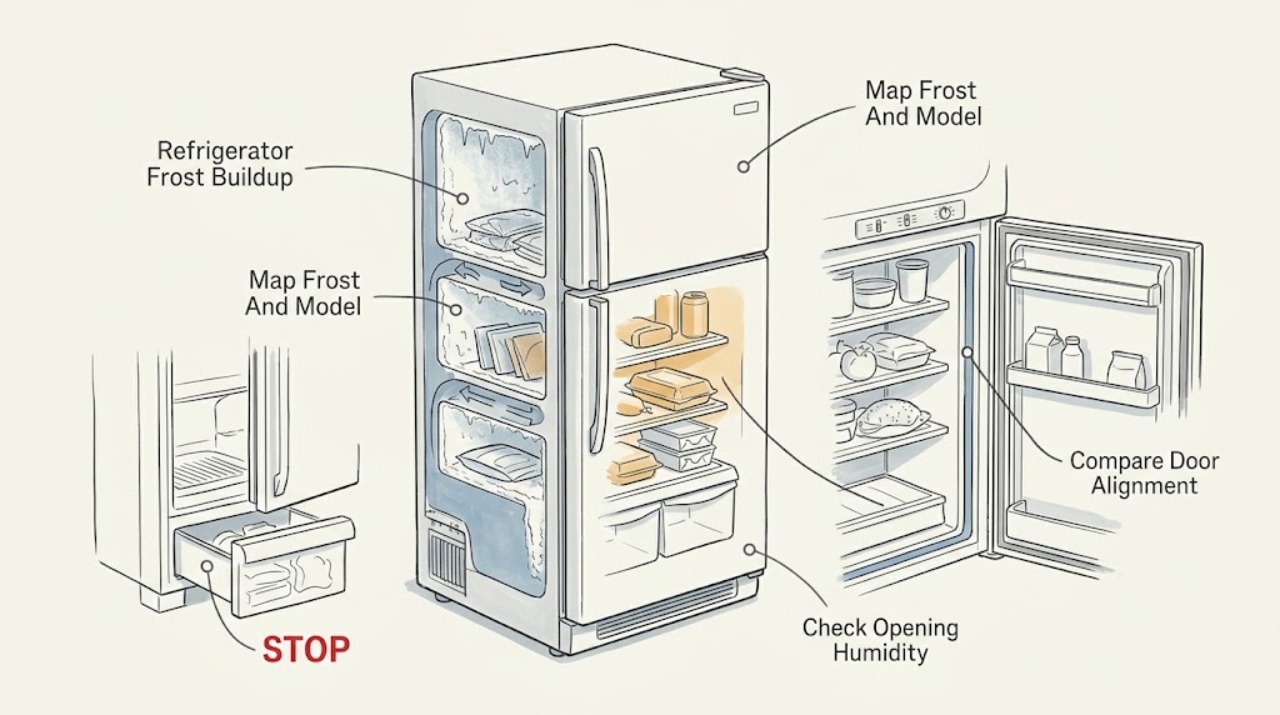
Hitachi Refrigerator Frost Buildup: Check the Door Seal, Airflow, and Defrost Type
First locate the frost and identify the exact Hitachi model and defrost architecture. Frost on frozen food or freezer walls after frequent or prolonged door opening, high humidity, a trapped package, or a dirty or distorted gasket usually points to humid air entering; frost around an air channel can also be worsened by blocked airflow.
-
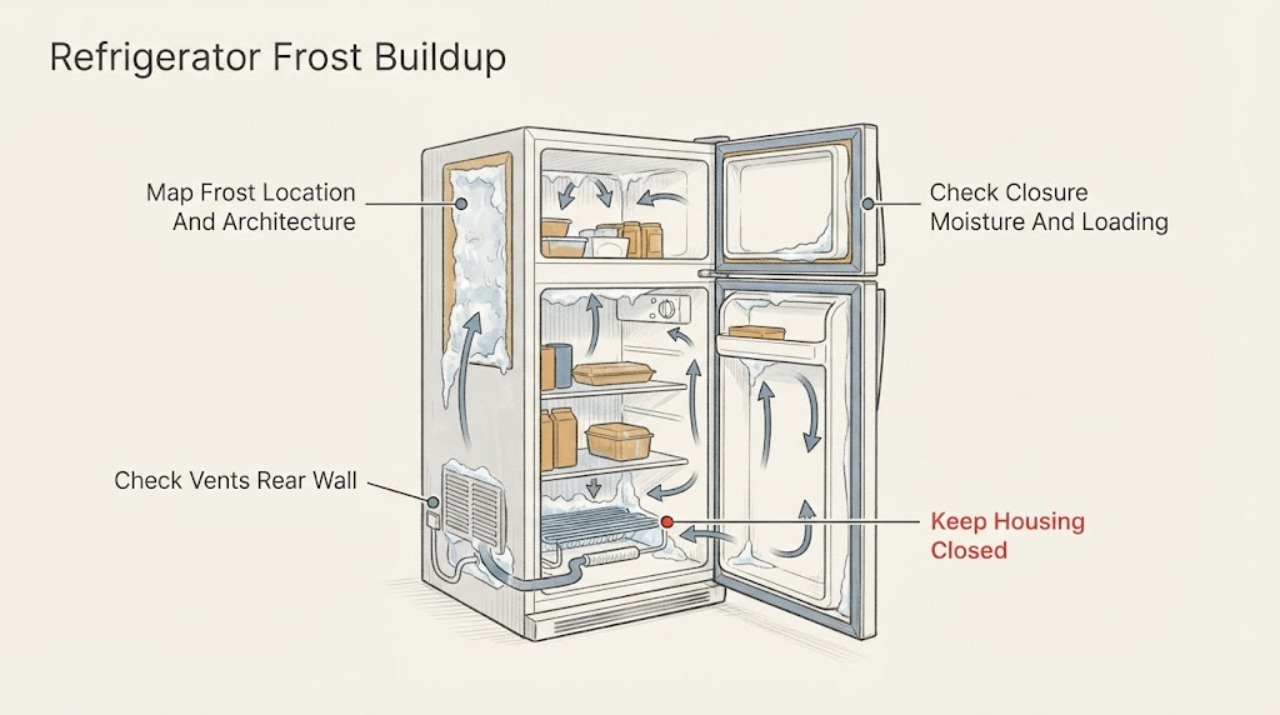
Hotpoint Refrigerator Frost Buildup
First identify where the frost is and whether the appliance is frost-free, low-frost, or a manual-defrost model; Hotpoint sells multiple refrigerator architectures, so one defrost interval or remedy does not apply to all of them.
-
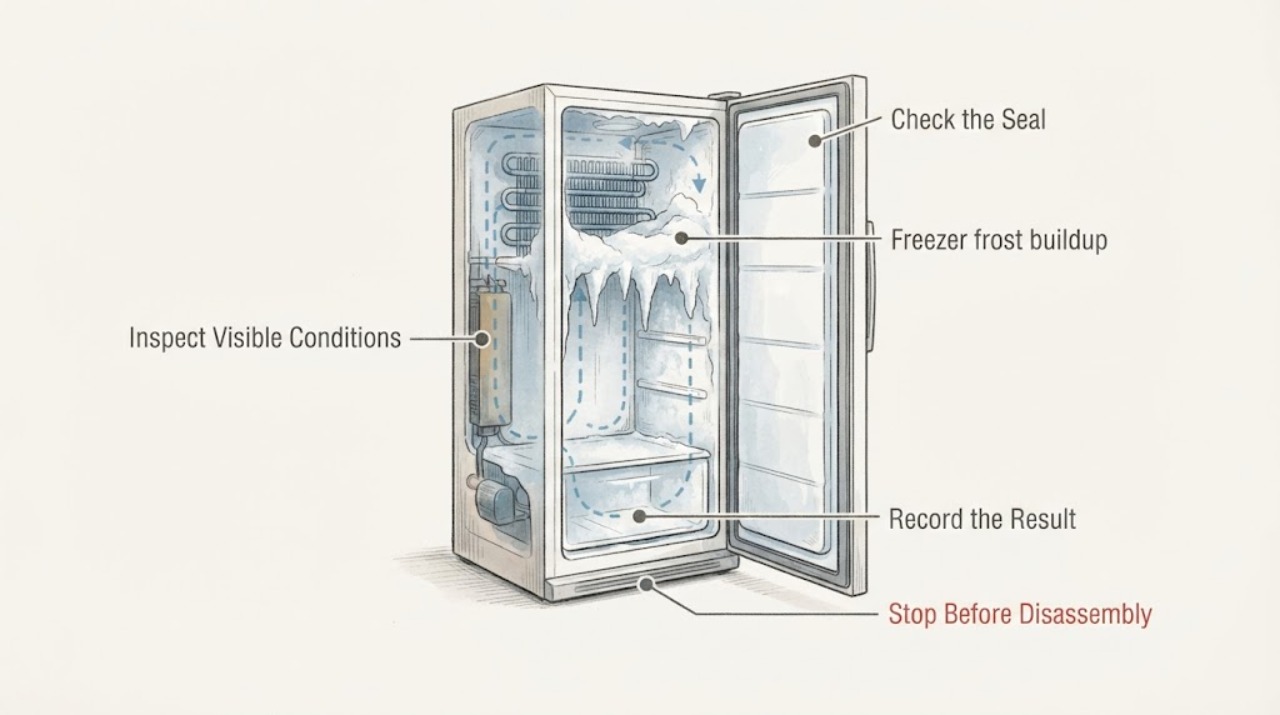
How to Stop Frost Buildup in a Hotpoint Freezer
Frost in a Hotpoint freezer usually points to moist room air entering through a door that is not sealing or closing, blocked airflow, or a defrost condition that depends on the model. First identify whether the cabinet is frost-free, then check the closure and airflow without disturbing the sealed refrigeration tubing.
-
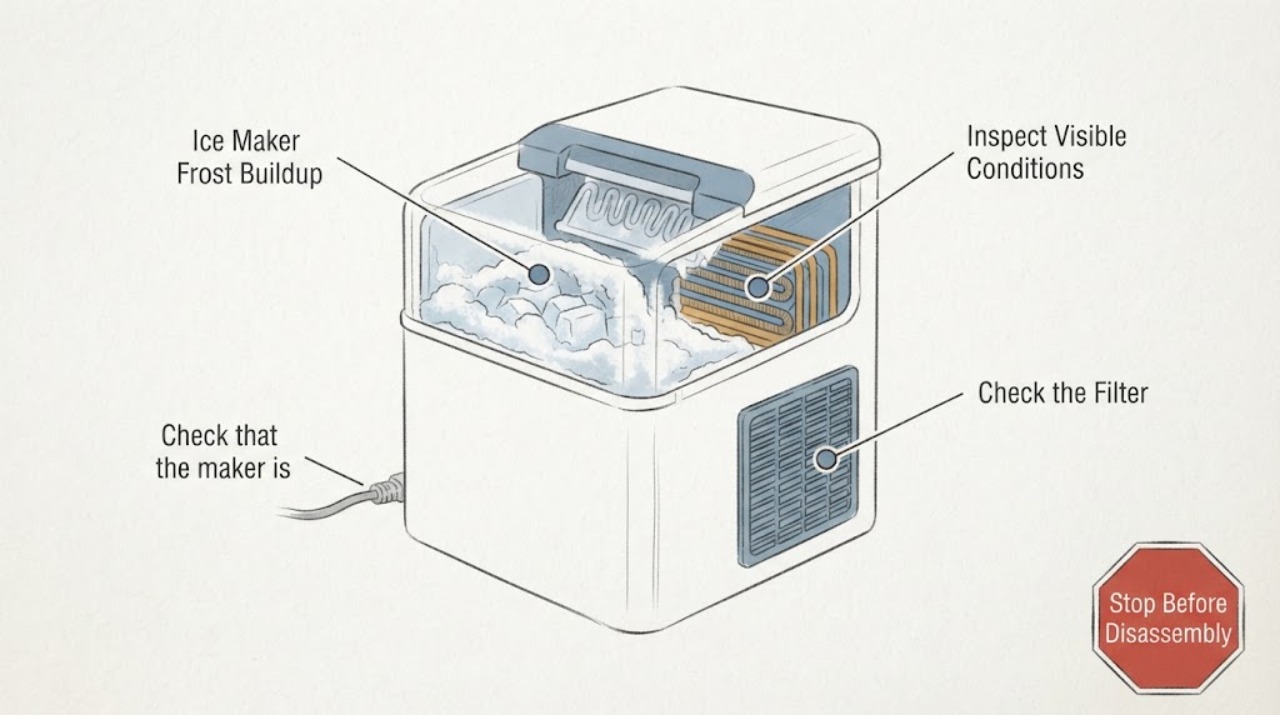
Ice Maker Frost Buildup
To troubleshoot a ice maker that is frost buildup, first identify the exact stage and accompanying signs, then make only the safe external checks supported by the owner guidance. Stop for hazards or recurrence and arrange qualified service.
-
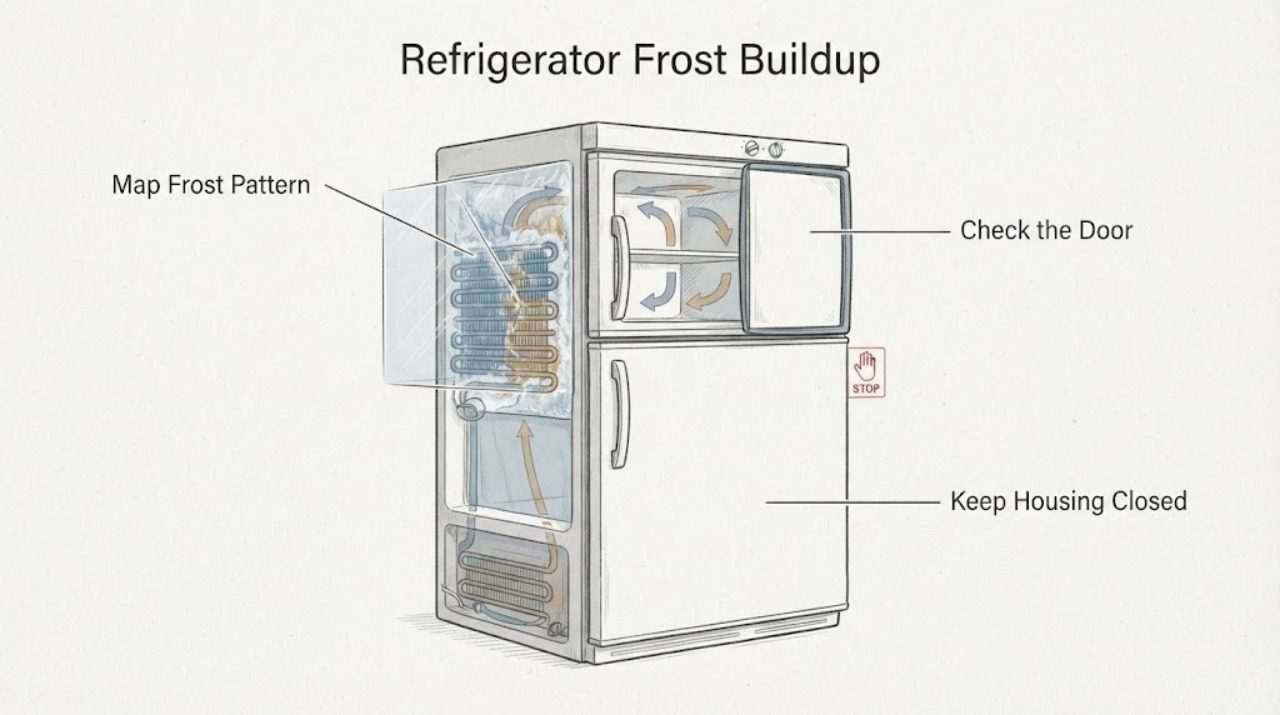
IKEA Refrigerator Frost Buildup
Do not assume an IKEA refrigerator has one universal defrost procedure: IKEA sells appliances made by IKEA and external vendors, and its range includes manual-defrost, low-frost, and no-frost designs. First find the exact model, article number, serial number, and manufacturer from the rating plate or paperwork without moving or dismantling the unit.
-
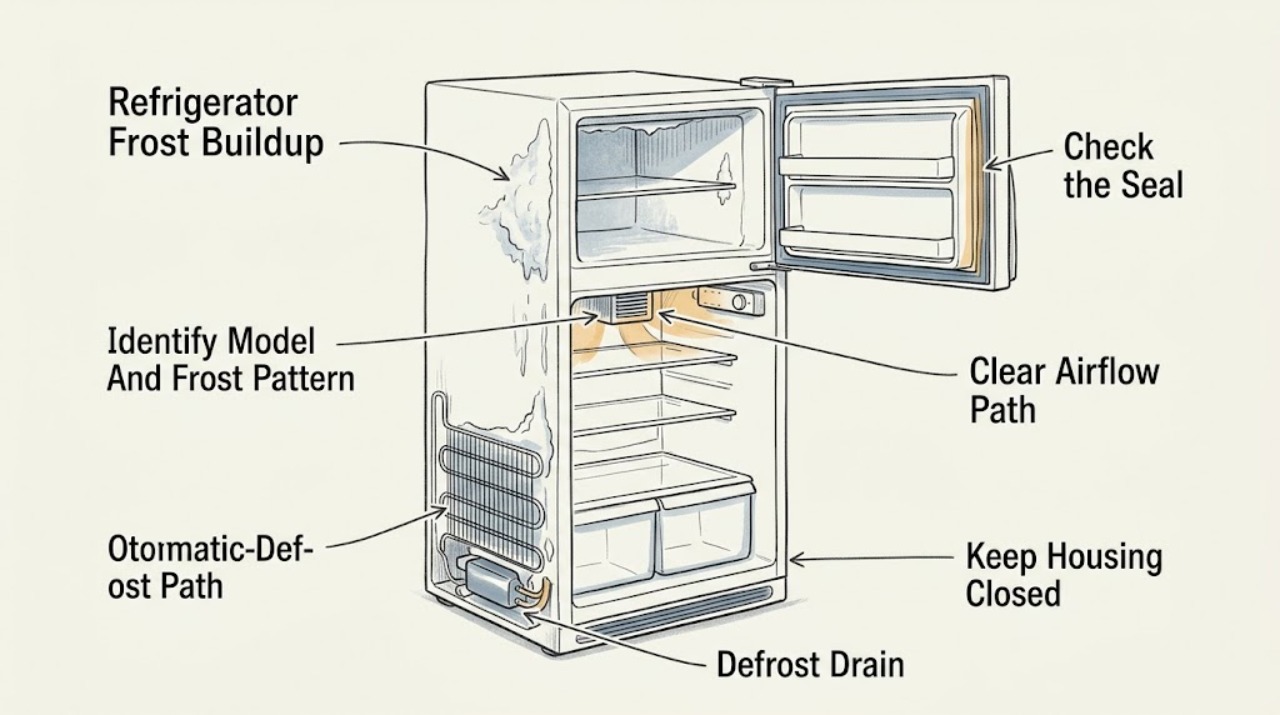
Inglis Refrigerator Frost Buildup: Identify the Pattern and Defrost Safely
A small, thin, even frost layer or brief moisture can be normal, especially after frequent door openings, warm or uncovered food, a humid room, or a recent load. Heavy, localized, or recurring frost is more useful diagnostically: check that the door closes fully, the gasket is clean and contacting the cabinet, food is not blocking the vents, and the controls match the exact Inglis owner’s guide.
-
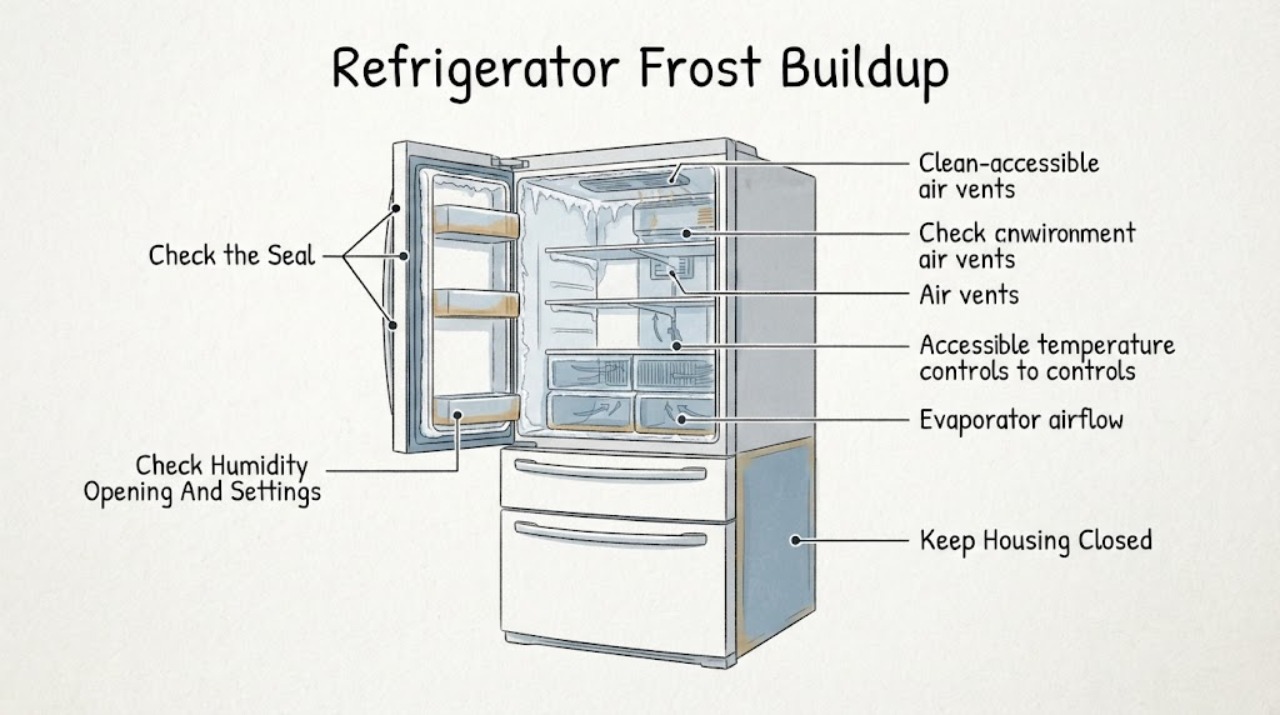
JennAir Refrigerator Frost Buildup
Start with where the frost is, not just how much there is. A light, short-lived film on a freezer back wall or near vents can be normal, especially after humid-air entry, warm food, or a defrost cycle.
-
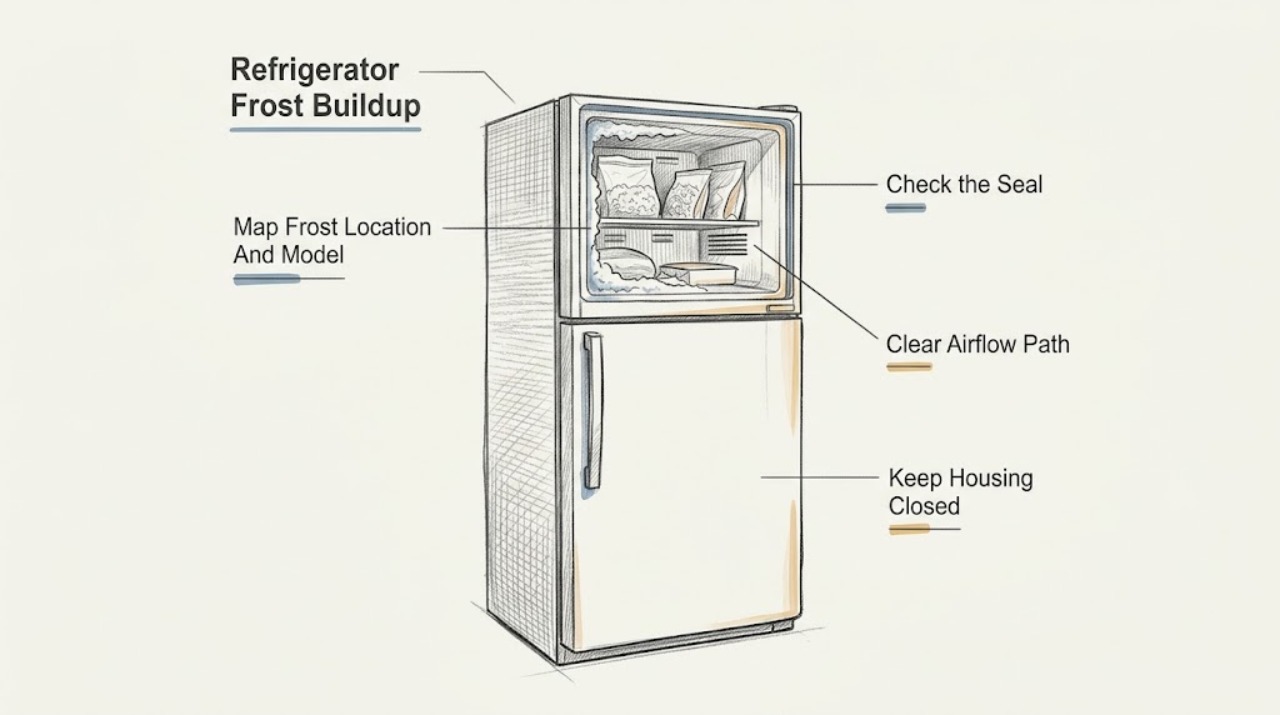
Kelvinator Refrigerator Frost Buildup: Read the Frost Pattern Before Defrosting
Do not treat every white layer as the same fault. Kelvinator's official troubleshooter distinguishes frost on an evaporator cover as normal operation until it becomes ice, ice at the front of the freezer as a door that is not completely closed, frost across the rear wall as a possible failed defrost system, and frost on the liner as possible wet insulation requiring workshop repair.
-
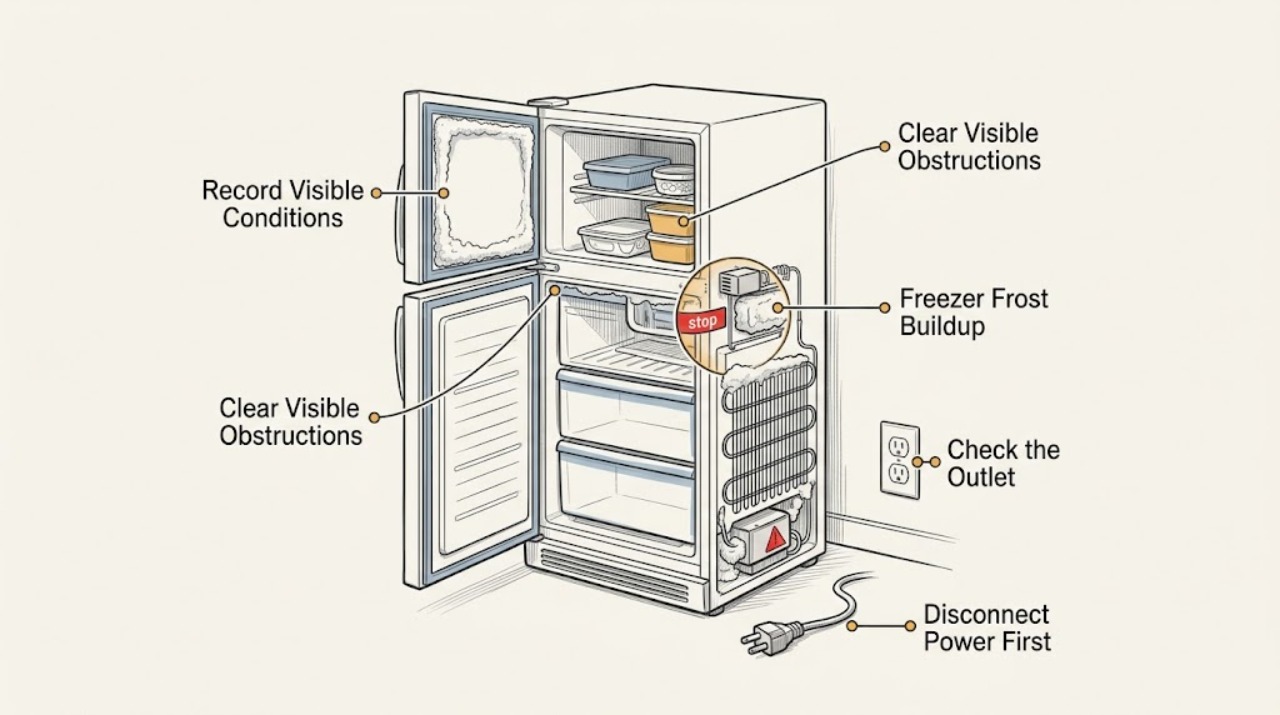
Kenmore Freezer Frost Buildup: Find the Air Leak Before Replacing Parts
A Kenmore freezer usually develops frost because warm, moist air is entering through a door that is ajar or not sealing, because the door is opened frequently, or because a manual-defrost unit needs defrosting. First note where the frost is concentrated, check the gasket and obstructions, keep packages away from vents, and confirm whether your exact model is manual-defrost or frost-free.
-
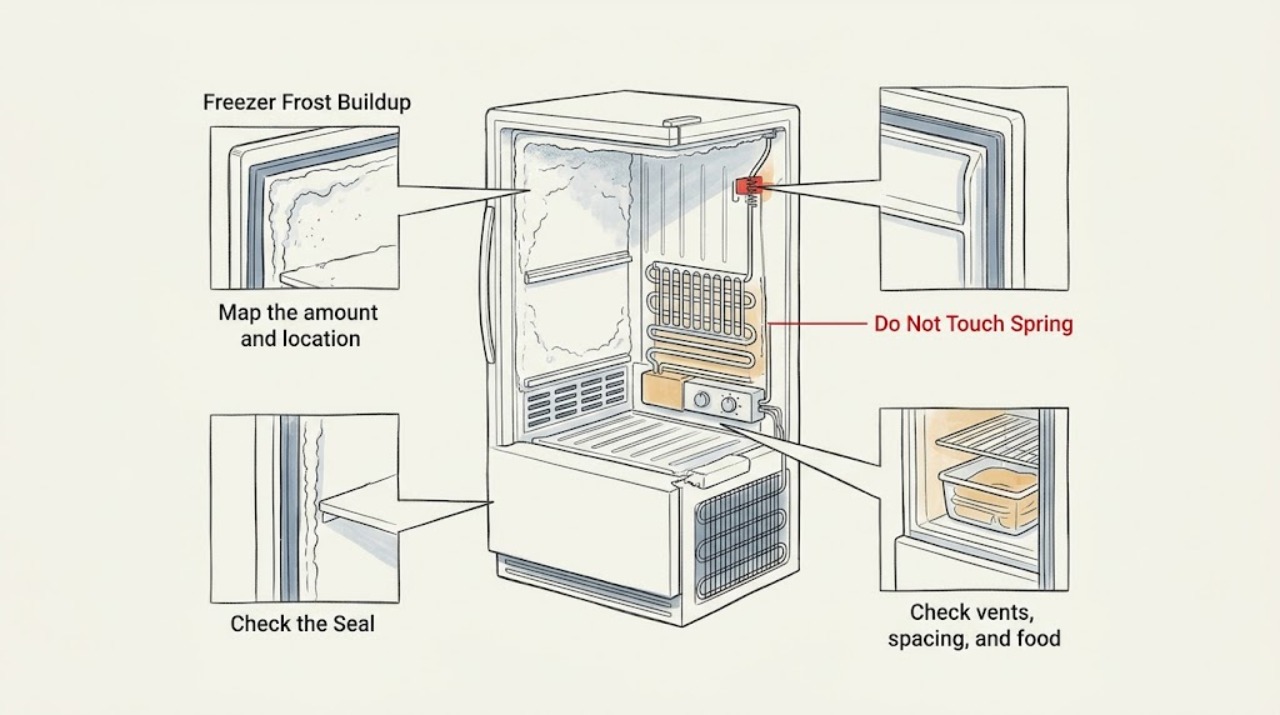
KitchenAid Freezer Frost Buildup
A thin, even frost layer can be normal on some KitchenAid freezers, but thick or recurring frost usually means warm humid air is entering or airflow and defrosting are being disrupted. Check that the door closes fully, the gasket is clean and continuous, food is not blocking vents, and the freezer is not overpacked.
-
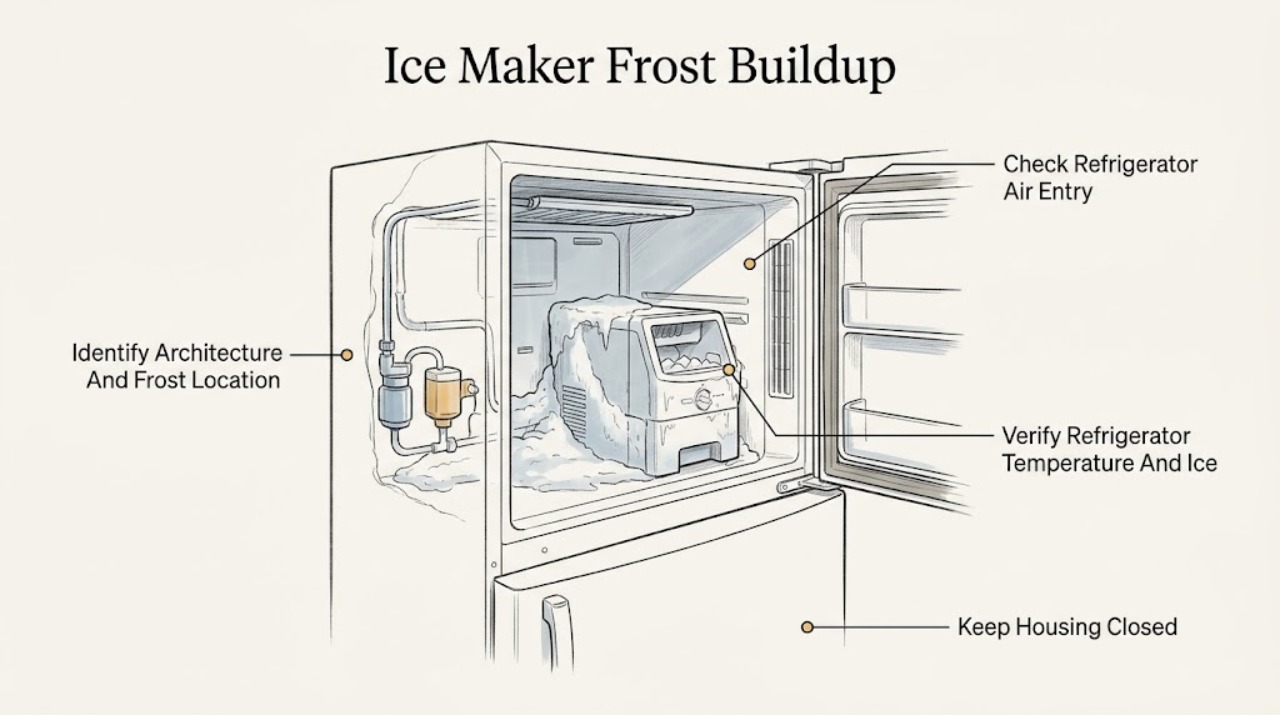
KitchenAid Ice Maker Frost Buildup: Identify the Model Before Defrosting
First identify the architecture and the exact frost location: KitchenAid documents both standalone or undercounter ice makers and ice makers built into refrigerators, and their cold surfaces and service steps are different. On a freestanding/undercounter KUIX or KUID-type machine, a hard deposit that keeps an ice block on the freezing plate can be mineral scale; keep the unit level and use only the model's approved cleaning cycle.
-
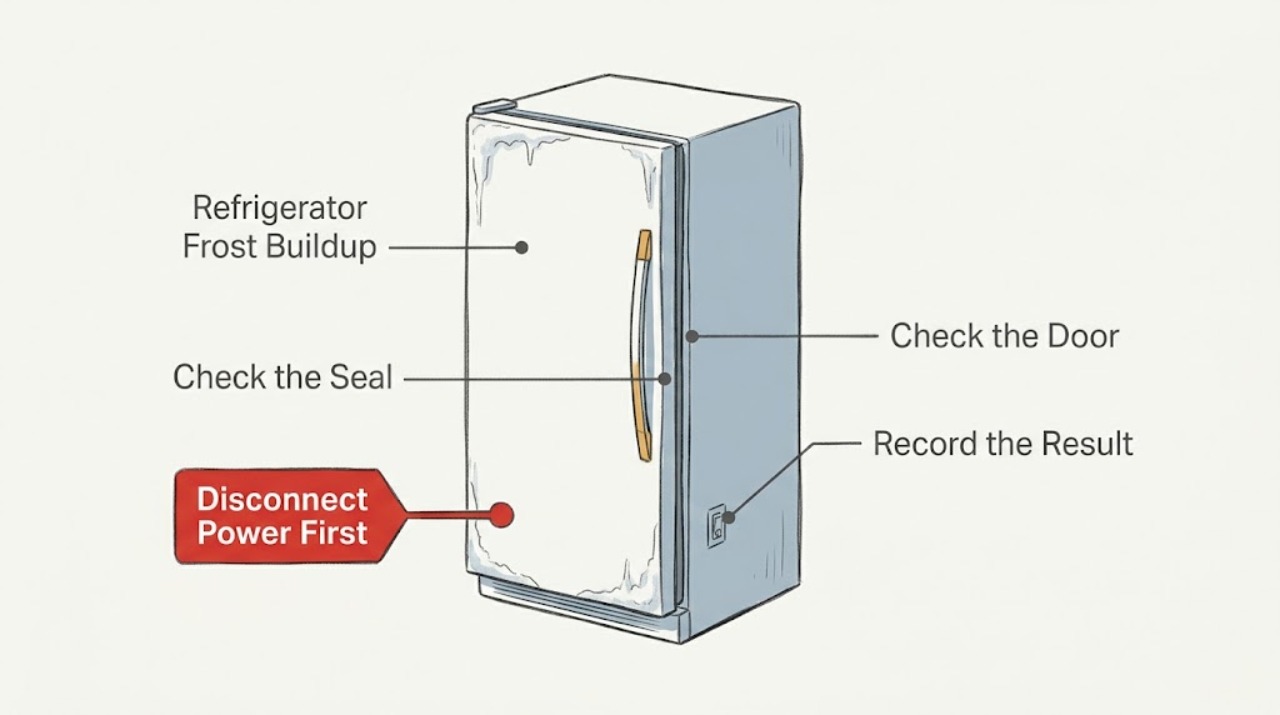
KitchenAid Refrigerator Frost Buildup
First map whether the frost is a light, even layer or a thick patch at a door edge, vent, or back wall. Light frost can follow humid air or a recent load; a poor door seal, blocked vent, or frost that returns quickly after the accessible checks needs model-specific service.
-
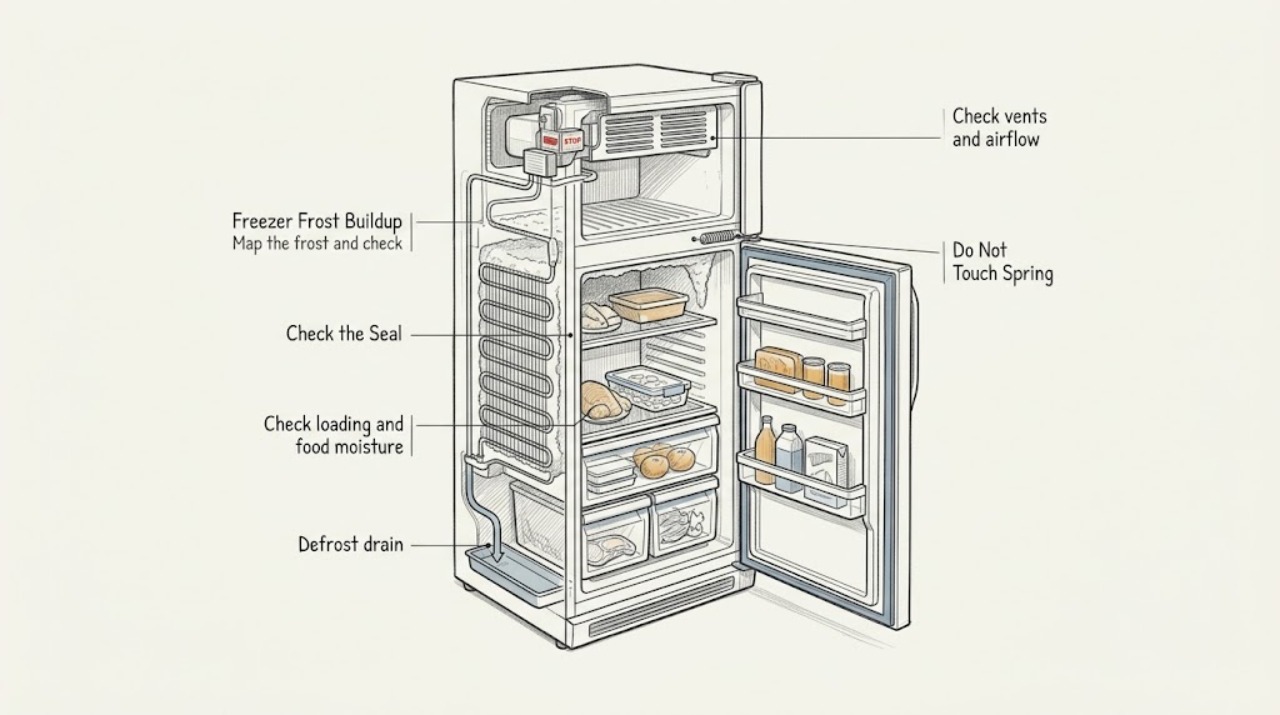
LG Freezer Frost Buildup
A small amount of frost can form when humid air or moisture from food freezes, but recurring or heavy frost usually means warm air is entering or defrost water is not draining. First note where the frost is concentrated, then remove anything blocking the LG freezer door or drawer, reseat drawers and shelves, and inspect the gasket for dirt, gaps, looseness, or damage.
-
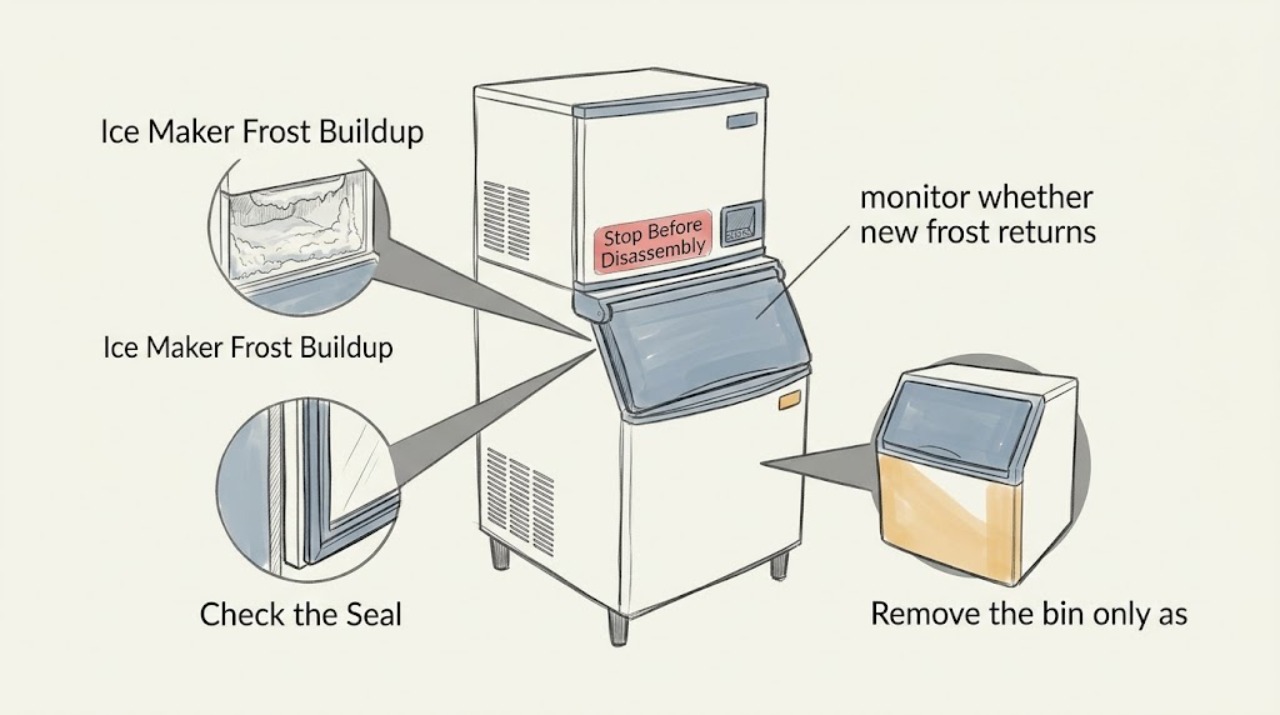
LG Ice Maker Frost Buildup
Check the ice-maker door and gasket for gaps, then inspect the accessible ice passage for frost. Use only a non-sharp method to clear loose frost; recurring frost requires service.